期末语法复习句型讲义 -2024-2025学年外研版七年级英语上册
2024-12-05
|
8页
|
1006人阅读
|
27人下载
普通
资源信息
| 学段 | 初中 |
|---|---|
| 学科 | 英语 |
| 教材版本 | 初中英语外研版七年级上册 |
| 年级 | 七年级 |
| 章节 | - |
| 类型 | 教案-讲义 |
| 知识点 | - |
| 使用场景 | 同步教学-期末 |
| 学年 | 2024-2025 |
| 地区(省份) | 全国 |
| 地区(市) | - |
| 地区(区县) | - |
| 文件格式 | DOCX |
| 文件大小 | 30 KB |
| 发布时间 | 2024-12-05 |
| 更新时间 | 2024-12-05 |
| 作者 | Tita English |
| 品牌系列 | - |
| 审核时间 | 2024-12-05 |
| 下载链接 | https://m.zxxk.com/soft/49125370.html |
| 价格 | 0.50储值(1储值=1元) |
| 来源 | 学科网 |
内容正文:
七年级2024版外研社期末语法复习句型练习
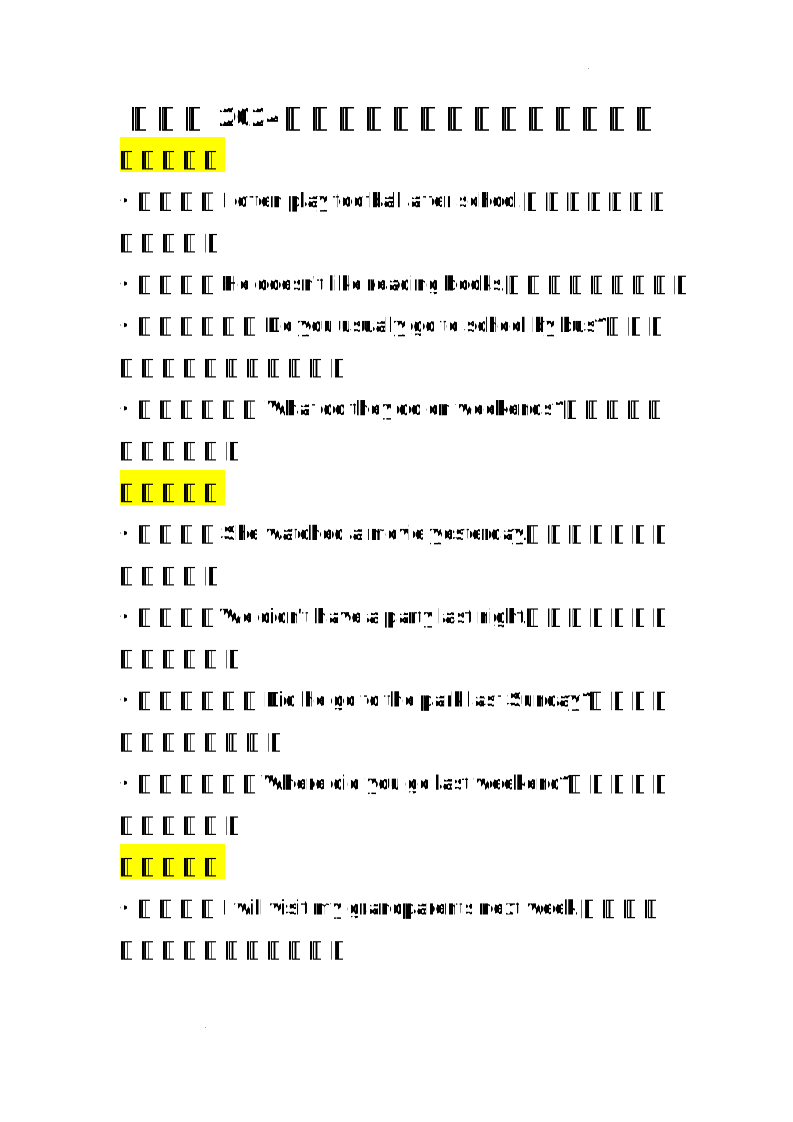
一般现在时
• 肯定句:I often play football after school.(我经常放学后踢足球。)
• 否定句:He doesn't like reading books.(他不喜欢读书。)
• 一般疑问句:Do you usually go to school by bus?(你通常坐公交车去上学吗?)
• 特殊疑问句:What do they do on weekends?(他们在周末做什么?)
一般过去时
• 肯定句:She watched a movie yesterday.(她昨天看了一部电影。)
• 否定句:We didn't have a party last night.(我们昨晚没有举办派对。)
• 一般疑问句:Did he go to the park last Sunday?(他上周日去公园了吗?)
• 特殊疑问句:Where did you go last weekend?(你上周末去哪儿了?)
一般将来时
• 肯定句:I will visit my grandparents next week.(我下周将去看望我的祖父母。)
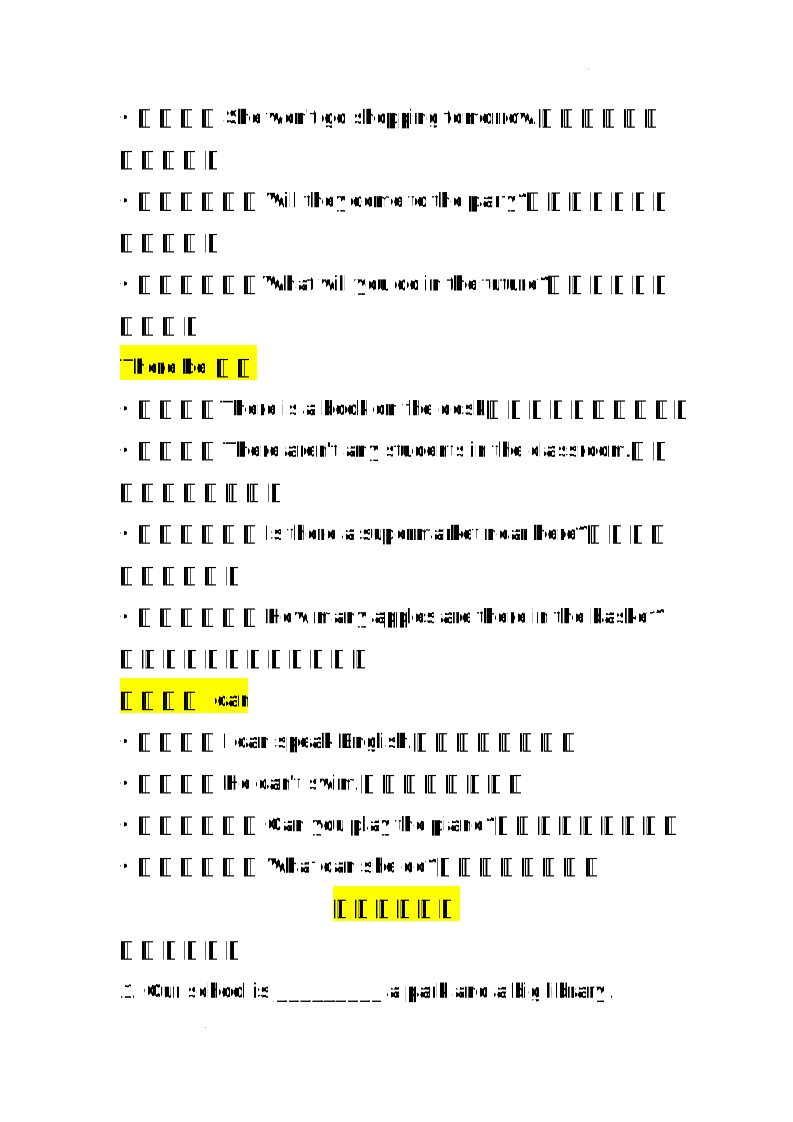
• 否定句:She won't go shopping tomorrow.(她明天不会去购物。)
• 一般疑问句:Will they come to the party?(他们会来参加派对吗?)
• 特殊疑问句:What will you do in the future?(你将来想做什么?)
There be 句型
• 肯定句:There is a book on the desk.(桌子上有一本书。)
• 否定句:There aren't any students in the classroom.(教室里没有学生。)
• 一般疑问句:Is there a supermarket near here?(这附近有超市吗?)
• 特殊疑问句:How many apples are there in the basket?(篮子里有多少个苹果?)
情态动词 can
• 肯定句:I can speak English.(我会说英语。)
• 否定句:He can't swim.(他不会游泳。)
• 一般疑问句:Can you play the piano?(你会弹钢琴吗?)
• 特殊疑问句:What can she do?(她会做什么?)
语法练习题:
一、单项选择
1. Our school is _________ a park and a big library .
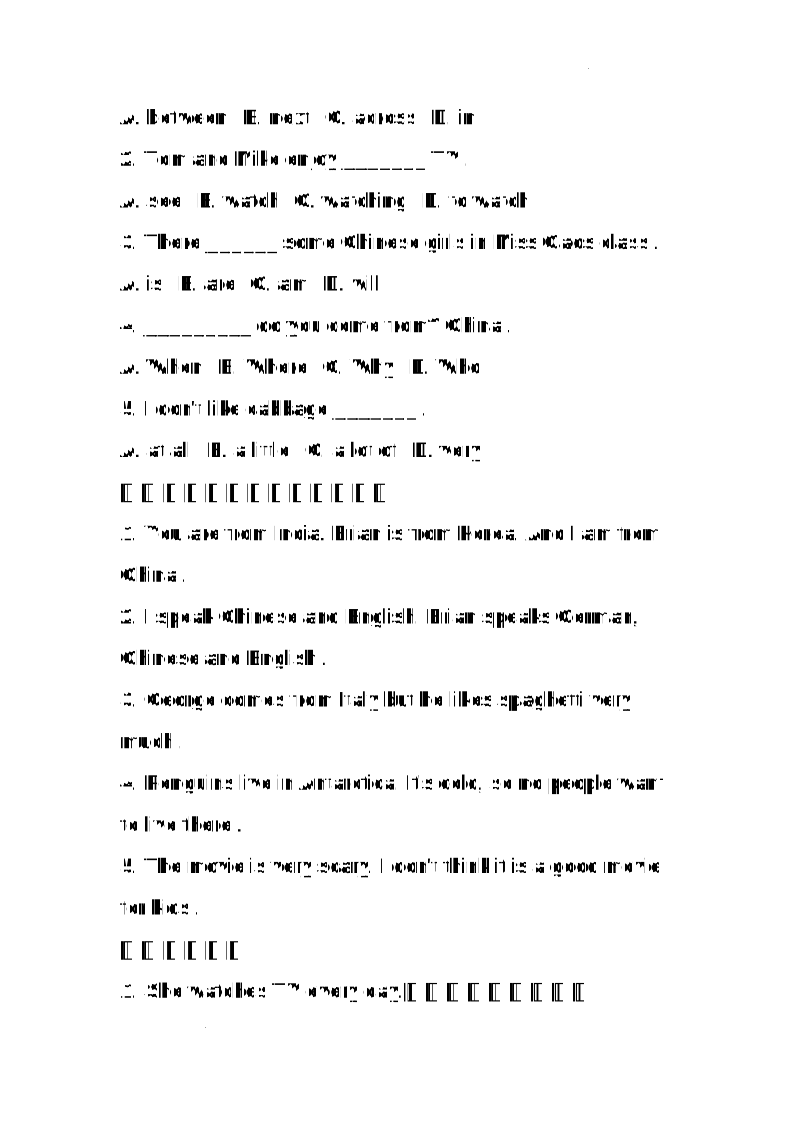
A. between B. next C. across D. in
2. Tom and Mike enjoy _______ TV .
A. see B. watch C. watching D. to watch
3. There ______ some Chinese girls in Miss Gaos class .
A. is B. are C. am D. will
4. _________ do you come from? China .
A. When B. Where C. Why D. Who
5. I don't like cabbage _______ .
A. at all B. a little C. a lot of D. very
二、用所给词的适当形式填空
1. You are from India. Brian is from Korea. And I am from China .
2. I speak Chinese and English. Brian speaks German, Chinese and English .
3. George comes from Italy but he likes spaghetti very much .
4. Penguins live in Antarctica. It's cold, so no people want to live there .
5. The movie is very scary. I don't think it is a good movie for kids .
三、句型转换
1. She watches TV every day.(改为一般疑问句)
Does she watch TV every day?
2. They went to the zoo yesterday.(对划线部分提问)
Where did they go yesterday?
3. I can speak English.(改为否定句)
I can't speak English.
4. There is some water in the glass.(改为否定句)
There isn't any water in the glass.
四、用适当的介词填空
1. My family often buy clothes at HuaXing store on weekends .
2. Can you help the children with English? You may come to our club .
3. I'm looking for some presents. These shops may have many kinds of things on sale .
4. How many cities are there in Greece ?
5. Mr. Green always goes to work by bus. He has to get up at 6 o'clock in the morning .
答案及分析:
一、单项选择
1. 答案:A
• 分析:“between...and...”表示“在……和……之间”,符合句意“我们的学校在一个公园和一个大图书馆之间”。B选项“next”后接“to”表示“紧挨着”;C选项“across”后接“from”表示“在……对面”;D选项“in”表示“在……里面”,都不符合题意。
2. 答案:C
• 分析:“enjoy doing sth.”表示“喜欢做某事”,是固定搭配,所以这里用“watching”。A选项“see”是“看见”;B选项“watch”是动词原形;D选项“to watch”是动词不定式,都不符合“enjoy”的用法。
3. 答案:B
• 分析:“There be”句型中,“be”动词的单复数形式取决于后面的主语,“some Chinese girls”是复数,所以用“are”。A选项“is”用于单数主语;C选项“am”用于主语是“I”的情况;D选项“will”是“将要”,用于一般将来时,不符合此句型。
4. 答案:B
• 分析:根据答语“China”可知,问句是询问地点,“Where”表示“哪里”,用于对地点提问。A选项“When”用于询问时间;C选项“Why”用于询问原因;D选项“Who”用于询问人,都不符合题意。
5. 答案:A
• 分析:“not...at all”表示“一点也不”,符合句意“我一点也不喜欢卷心菜”。B选项“a little”表示“一点;少量”,通常用于肯定句;C选项“a lot of”表示“许多”,用于修饰可数名词复数或不可数名词;D选项“very”是副词,“非常”,不能直接用于否定句中表达“一点也不”的意思。
二、用所给词的适当形式填空
1. 分析:本题考查be动词的用法。第一人称单数用“am”,第二人称和复数用“are”,第三人称单数用“is”。
• 答案:are;is;am
2. 分析:本题考查一般现在时中动词的形式。主语是第一人称单数“I”时,动词用原形;主语是第三人称单数“Brian”时,动词要加“s”或“es”(speak后加“s”)。
• 答案:speak;speaks
3. 分析:“George”是第三人称单数,一般现在时中,谓语动词“come”要加“s”;“like”也要加“s”,表示“喜欢”这个一般情况。
• 答案:comes;likes
4. 分析:“Penguins”是复数,一般现在时中,谓语动词用原形“live”;“want to do sth.”是固定搭配,所以用“to live”。
• 答案:live;to live
5. 分析:“I think...”的否定形式通常是“I don't think...”,这是一种英语的习惯表达,在这种结构中,否定词放在“think”前面,而不是后面的从句中。
• 答案:don't think
三、句型转换
1. 分析:一般现在时的句子改为一般疑问句,当主语是第三人称单数时,需要借助助动词“Does”,并将动词还原为原形。
• 答案:Does she watch TV every day?
2. 分析:对地点“the zoo”提问,用特殊疑问词“Where”,然后将句子变为一般疑问句语序,因为原句是一般过去时,所以借助助动词“Did”,动词“went”还原为“go”。
• 答案:Where did they go yesterday?
3. 分析:含有情态动词“can”的句子改为否定句,直接在“can”后加“not”,缩写为“can't”。
• 答案:I can't speak English.
4. 分析:“There be”句型的否定句,在“be”动词后加“not”,“some”要变为“any”。
• 答案:There isn't any water in the glass.
四、用适当的介词填空
1. 分析:“at + 小地点”表示“在……”,“on weekends”表示“在周末”,是固定搭配。
• 答案:at;on
2. 分析:“help sb. with sth.”表示“在某方面帮助某人”;“come to...”表示“来到……”。
• 答案:with;to
3. 分析:“look for”表示“寻找”;“many kinds of...”表示“许多种……”;“on sale”表示“在促销;在销售”。
• 答案:for;of;on
4. 分析:“in + 国家/城市等大地点”,表示“在……里面”,这里表示“在希腊”。
• 答案:in
5. 分析:“by + 交通工具”表示“乘坐……”;“在具体时刻”用“at”;“in the morning”表示“在早上”。
• 答案:by;at;in
学科网(北京)股份有限公司
$$
资源预览图
1
2
3
相关资源
由于学科网是一个信息分享及获取的平台,不确保部分用户上传资料的 来源及知识产权归属。如您发现相关资料侵犯您的合法权益,请联系学科网,我们核实后将及时进行处理。