Unit 4 Information technology Lesson 3 Internet and friendships 说课 课件-2024-2025学年高一上学期英语北师大版(2019)必修第二册
2024-11-26
|
38页
|
2890人阅读
|
8人下载
精品
资源信息
| 学段 | 高中 |
|---|---|
| 学科 | 英语 |
| 教材版本 | 高中英语北师大版必修第二册 |
| 年级 | 高一 |
| 章节 | Lesson 3 Internet and friendships |
| 类型 | 课件 |
| 知识点 | - |
| 使用场景 | 同步教学-新授课 |
| 学年 | 2024-2025 |
| 地区(省份) | 全国 |
| 地区(市) | - |
| 地区(区县) | - |
| 文件格式 | PPTX |
| 文件大小 | 27.99 MB |
| 发布时间 | 2024-11-26 |
| 更新时间 | 2024-11-26 |
| 作者 | 匿名 |
| 品牌系列 | - |
| 审核时间 | 2024-11-26 |
| 下载链接 | https://m.zxxk.com/soft/48928816.html |
| 价格 | 3.00储值(1储值=1元) |
| 来源 | 学科网 |
内容正文:
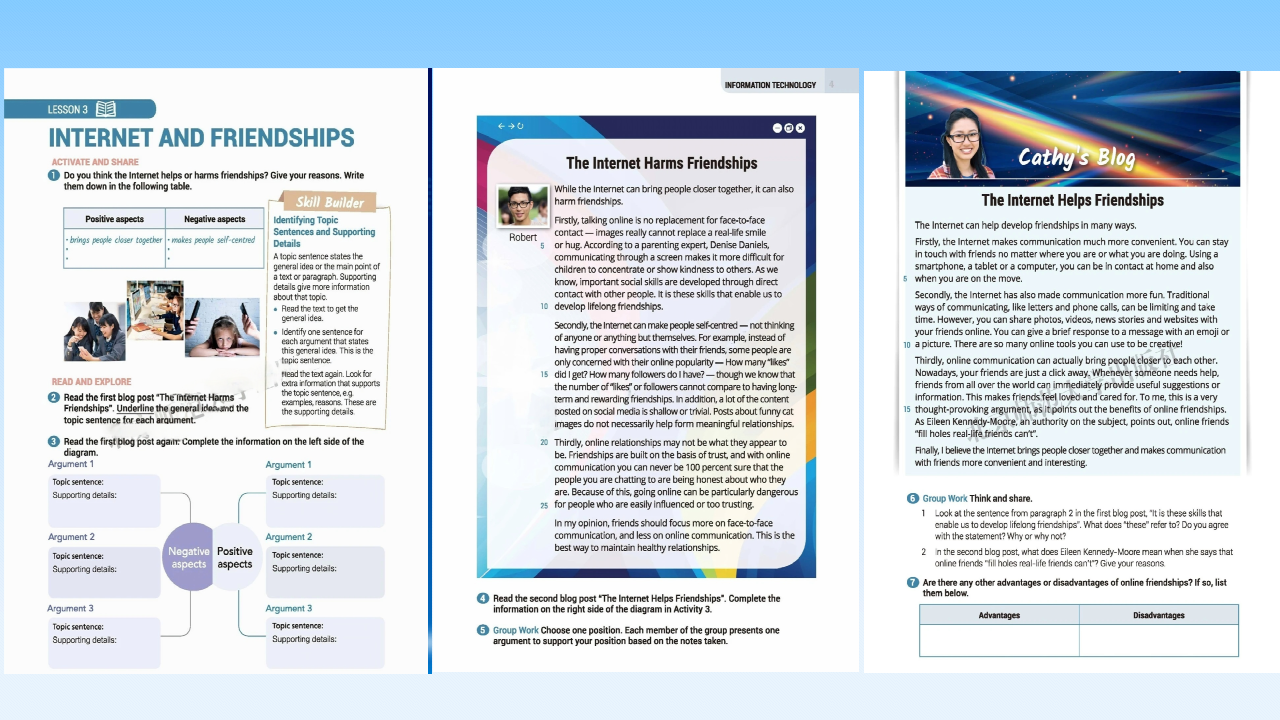
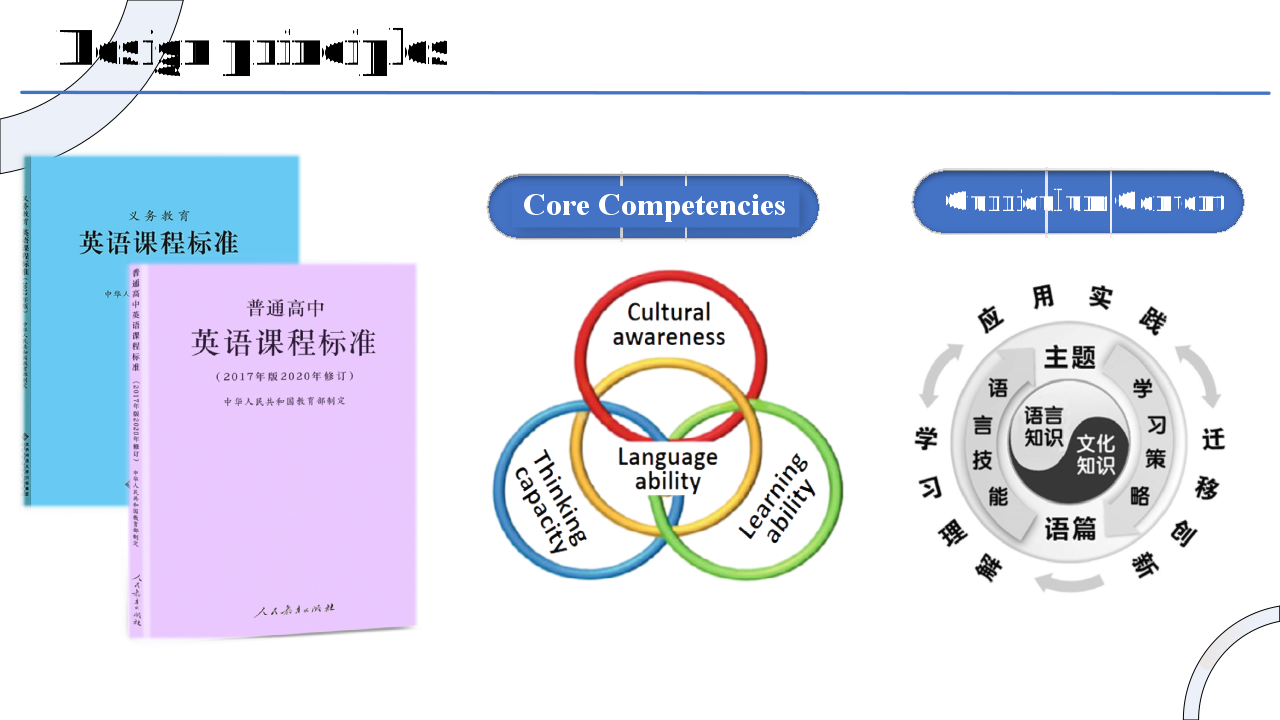
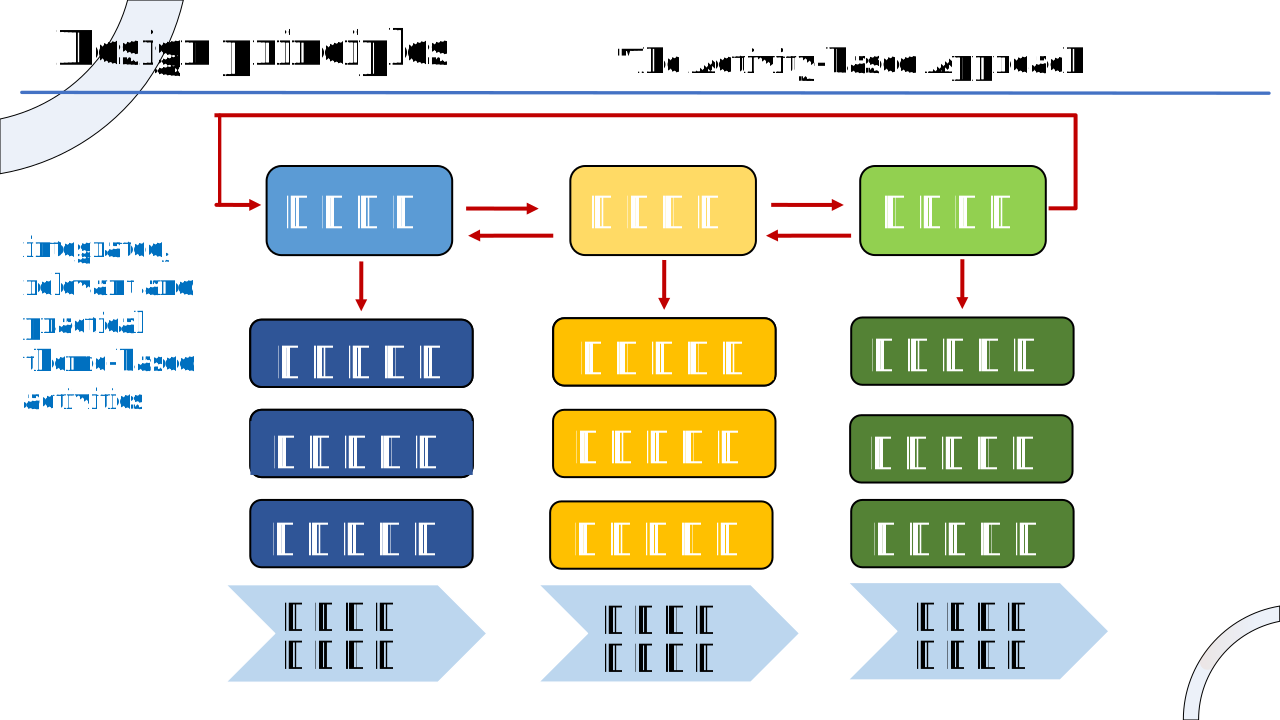
北师大版必修二 Unit 4 Information Technology Lesson 3 Internet and Friendships 高一 阅读课 第一课时 Contents Design Principles General Introduction Teaching procedures Teaching Reflection 01 02 03 04 Design Principles 01 Design principles Core Competencies Curriculum Content 感知与注意 迁移创新 获取与梳理 描述与阐释 推理与论证 批判与评价 基于语篇 建构知识 深入语篇 转化能力 超越语篇 形成素养 The Activity-based Approach integrated, relevant and practical theme-based activities 想象与创造 学习理解 感知与注意 应用实践 获取与梳理 概括与整合 描述与阐释 分析与判断 内化与运用 基于语篇 建构知识 Design principles General Introduction 02 02 General Introduction 1. Content-related big idea and small ideas of this unit 2. Language-related big idea and small ideas of this unit 3. Teaching objectives of this unit 5. Analysis of students 4. Analysis of teaching material 6. Teaching objectives of this period Topic talk Influence of Apps 听力(对话) Lesson1 Avatars 阅读(说明文) Lesson2 Apps 听力(对话) Lesson3 Internet and Friendships 阅读(议论文) Viewing Workshop Publishing in the Digital Age 视听(回文诗) Writing Workshop A Personal Profile 写作(个人简介) Reading Club 1 Digitizing Ancient Art 补充阅读 Reading Club 2 Wearable Technology 补充阅读 Project 4 Designing A New App 实践活动 北师大新版(2019)高中英语必修二 Theme: Man and Society Unit 4 Information Technology 主题大观念 语言大观念 单元目标 文本分析 学情分析 课时目标 Topic Talk Reading Club 2 Wearable Technology 了解智能手环的特点和功能 评价判断信息技术 Lesson 3 Internet and Friendships 对互联网影响友谊的正反观点 Viewing Workshop Publishing in the Digital Age 电子书取代纸质书的正反观点 合理利用信息技术 Reading Club 1 Digitizing Ancient Arts 利用数字化技术传承传统文化 Writing Workshop A Personal Profile 利用网络平台介绍自己 Lesson 2 APPs 利用软件提升生活质量 认识了解信息技术的应用和影响 合理利用信息技术造福社会 输出小观念1: 梳理知识结构图并对信息技术进行介绍 输出小观念2: 通过辩论,输出自己对互联网的影响的观点 输出小观念3: 设计一款应用软件并对其设立理念和用途进行描述 单元大观念:正确认识信息技术,合理利用信息技术,提高网络安全意识 主题大观念 语言大观念 单元目标 文本分析 学情分析 课时目标 认识了解信息技术 Lesson 1 Avatars 了解网络虚拟形象(定义、发展历程、用途及人们对其评价) 语言大观念 1. 描述app功能 TT: get updated news... L2: make life easier RC2: keep track of yourself 2. 描述Avatars功能 L1: express/represent oneself 小观念1:通过语篇结合语境概括整合信息技术话题词汇和相关表达 小观念2:运用所学,批判评价信息技术对人们生活的双重影响,表达个人观点 单元大观念:运用信息技术话题词汇,采取多维度论证方式,描述功能,分析影响,批判表达个人观点 描述功能 1. 积极影响 TT: make communication convenient... L1: give room for creativity L3: make communication more convenient/fun RC1: make art come alive 2. 消极影响 TT: addicted to it... L1: cheat others oline L3: make people self-centered VW:be distracted by IT 分析影响 辩证看待,合理利用 L3/WW: In my opinion, ... From my perspective... It is widely believed that... According to statistics... It does harm to... It is of great benefit to... 表达观点 总分总 General idea Topic sentence supporting details Conclusion 语篇结构 a. citing ideas from experts or authorities b. giving examples c. using data d. referring to common knowledge e. using comparison and contrast 论证方式 主题大观念 语言大观念 单元目标 文本分析 学情分析 课时目标 通过本单元的学习,学生能够: 1.认识了解信息技术: 描述APP的功能及其影响,讨论如何合理利用信息技术提升生活质量。(Topic Talk & Reading Club 2) 介绍虚拟化身,谈论如何提高信息安全意识,规避网络风险。(Lesson 1) 2.评价判断信息技术: 概括电子书取代纸质书的正反观点,谈论数字化时代下人们的阅读形式选择。(Viewing Workshop) 阐述互联网对友谊的正负面影响,分析评价互联网的利弊并就如何合理利用提出建议。(Lesson 3) 3.合理利用信息技术: 撰写线上个人简介,应用信息技术推荐自己。(Writing Workshop) 获取利用数字化技术传承传统文化的方法,论证如何利用信息技术发扬文化。( Reading Club 1) 整合APP的种类用途,设计APP (Project),应用信息技术解决现实问题。(Lesson 2) 主题大观念 语言大观念 单元目标 文本分析 学情分析 课时目标 Main content: Thematic topic: Man Society What 主题大观念 语言大观念 单元目标 文本分析 学情分析 课时目标 no replacement for face to face communication make people self- centered online relationships are not real negative √ more convenient √ more fun √ bring people closer positive Opposite views on the impact of the Internet on friendships. What How 主题大观念 语言大观念 单元目标 文本分析 学情分析 课时目标 opposite views Main content: Thematic topic: Structure: Argumentation Introduction Arguments(1,2,3) Conclusion Writing techniques: citing ideas from experts or authorities giving examples using data referring to common knowledge using comparison and contrast Language style: Logical Objective & Concise Vivid Man Society What How 主题大观念 语言大观念 单元目标 文本分析 学情分析 课时目标 opposite views Main content: Thematic topic: Structure: Argumentation Introduction Arguments(1,2,3) Conclusion Writing techniques: Language style: Logical Objective & Concise Vivid Why Purpose to view the influence of Internet on friendships dialectically; to cultivate readers’ awareness of using the Internet rationally. Man Society Know the basic application of information technology; Master reading skills of skimming and scanning; Express their opinions on information technology simply with related language. Desire to know how to make their views convincing; Want more language knowledge concerning topic. Understand the dual impact of technology deeply; Build up confidence in expressing their opinions; Cultivate awareness of thinking critically and using the Internet rationally. What they Wonder What they will Learn What they have Known 1. 你知道网络在人们生活中的具体应用吗? 2. 你会花费大量时间和亲友线上交流吗? 主题大观念 语言大观念 单元目标 文本分析 学情分析 课时目标 1. 获取、梳理网络对友谊的影响的正反观点和论据;理解议论文的文体 结构和写作手法;(语言小观念2) 2. 整合、内化Robert和Cathy的观点,借助思维导图进行演讲;(语言小观念1) 3. 运用所学表达自己对网络利弊的看法,分析其对友谊和生活的影响;(语言小观念2) 4. 学会批判性思考,树立合理使用网络的意识。(主题小观念2) 通过本节课的学习,学生能够: 主题大观念 语言大观念 单元目标 文本分析 学情分析 课时目标 1. 获取、梳理网络对友谊的影响的正反观点和论据;理解议论文的文体结构和写作手法; 2. 整合、内化Robert和Cathy的观点,借助思维导图进行演讲; 3. 运用所学表达自己对网络利弊的看法,分析其对友谊和生活的影响; 4. 学会批判性思考,树立合理使用网络的意识。 Focal points 主题大观念 语言大观念 单元目标 文本分析 学情分析 课时目标 通过本节课的学习,学生能够: 1. 获取、梳理网络对友谊的影响的正反观点和论据;理解议论文的文体结构和写作手法; 2. 整合、内化Robert和Cathy的观点,借助思维导图进行演讲; 3. 运用所学表达自己对网络利弊的看法,分析其对友谊和生活的影响; 4. 学会批判性思考,树立合理使用网络的意识。 Difficult points 主题大观念 语言大观念 单元目标 文本分析 学情分析 课时目标 通过本节课的学习,学生能够: Teaching Procedures 03 聚焦“情境化素养课堂”,深化课堂改革,着力打造“6C课堂范式”,课堂实施通常包含: 1.情境创设(Context) 2.思维碰撞(Communication) 3.合作探究(Cooperation) 4.知识构建(Construction) 5.多元评价(Comment) 6.迁移创新(Creation) 6C课堂 教学范式 迁移 创新 情境 创设 思维 碰撞 合作 探究 知识 构建 多元 评价 Teaching model Teaching Procedures 21 Context & Communication Cooperation & Construction Comment & Creation Step 1 Activate and share Step 2 Read for general idea Step 3 Read for details Step 4 Explore argumentative techniques Step 5 Make a speech Step 6 Prepare a debate Step 7 Think critically Homework Put oral pratice into composition Teaching Procedures 22 Step 1 Activate and share (IW) Negative Positive Q1: What do you know about information technology? Q2: Does the Internet help or harm friendships? Give your reasons. to activate students’ prior knowledge and get them prepared for reading argumentation Context & Communication Example: I think the Internet harms friendship. (Position/General view) Firstly, the Internet makes people self-focused. (Argument 1) For example.... (Supporting ideas) 23 Step 2 Read for general idea (CW & IW) Read the two blog posts. Underline the general idea and the topic sentences for each argument. Skill Builder Topic General idea Topic Sentence 1 Topic Sentence 2 Topic Sentence 3 Conclusion Text Type Argumentation to identify topic sentences of argumentation and conclude the basic structure of argumentation Context & Communication Cooperation & Construction Step 3 Read for detailed information (CW & IW) Read the two blog posts again. Look for the supporting details and complete your mind maps. Context & Communication Cooperation & Construction to sort out arguments and corresponding supporting details through mind maps and construct the model of argumentation Step 4 Explore argumentative techniques (CW & IW) Read the two blog posts again. Identify what methods the writers used to support their arguments. a. citing ideas from experts or authorities e.g. According to... b. giving examples e.g. for example c. using data d. referring to common knowledge e.g. As we know; It is known to us all... e. using comparison and contrast e.g. However; But... to explore common argumentative techniques Context & Communication Cooperation & Construction Step 5 Make a speech (PW) Choose either of the positions. Make a 2-minute speech under the guidance of your mind-map. The Internet harms friendships no replacement for face-to-face contact make people self-centered not be what they appear to be The Internet helps friendships much more convenient more fun much closer to each other a. citing ideas from experts or authorities e.g. According to... b. giving examples e.g. for example c. using data d. referring to common knowledge e.g. As we know; It is known to us all... e. using comparison and contrast e.g. However; But... The Internet and Friendships Context & Communication Cooperation & Construction Step 5 Make a speech (PW) Choose either of the positions. Make a 2-minute speech under the guidance of your mind-map. The Internet harms friendships no replacement for face-to-face contact make people self-centered not be what they appear to be The Internet helps friendships much more convenient more fun much closer to each other a. citing ideas from experts or authorities e.g. According to... b. giving examples e.g. for example c. using data d. referring to common knowledge e.g. As we know; It is known to us all... e. using comparison and contrast e.g. However; But... The Internet and Friendships Context & Communication Cooperation & Construction to internalize and retell the structure knowledge based on the mind maps; to pave the way of expressing their own opinions 语言小观念1:分析影响√ Step 6 Prepare a debate (GW) Pros(正方) Cons(反方) Online friendships help us Online friendships harm us Context & Communication Cooperation & Construction Comment & Creation Rules: Work in group of 4. (Pros: student A, B; Cons: student C, D) Student A/C gives your argument and supporting details, and student C/D refutes the other side’s arguments. Is it good to make friends online? Lesson 1 Avatars Step 6 Prepare a debate (GW) Context & Communication Cooperation & Construction Comment & Creation Is it good to make friends online? Step 6 Prepare a debate (GW) Pros(正方) Cons(反方) Online friendships help us Online friendships harm us to analyze the influence of Internet on interpersonal relationships; to inspire and instruct them to express their personal ideas logically and convincingly Context & Communication Cooperation & Construction Comment & Creation Rules: Work in group of 4. (Pros: student A, B; Cons: student C, D) Student A/C gives your argument and supporting details, and student C/D refutes the other side’s arguments. Is it good to make friends online? 语言小观念2:表达观点√ Step 7 Think critically (CW & IW) Talk about your opinion on such convenient but risky Internet and put forward suggestions on how to use it. positive aspects negative aspects suggestions to cultivate students' awareness of thinking critically and using the Internet rationally Context & Communication Cooperation & Construction Comment & Creation The world has multiple aspects. Take a more holistic view of things and make decisions based on a comprehensive understanding. Participant & Guide Homework Compulsory: Write an argumentative passage on how we should use the Internet by following the structure of Lesson 3. Give your general idea and supporting details; Don’t forget to use argumentative techniques learnt in this lesson. Optional: Make a speech about how the Internet affects our life, and share it with your classmates next lesson. to consolidate what they have learned in class; to transform the results of thinking and discussion into words Context & Communication Cooperation & Construction Cooperation & Construction Blackboard Design Internet and Friendships The Internet harms friendships no replacement for face-to-face contact make people self-centered not be what they appear to be The Internet helps friendships much more convenient more fun much closer to each other a. citing ideas from experts or authorities e.g. According to... b. giving examples e.g. for example c. using data d. referring to common knowledge e.g. As we know; It is known to us all... e. using comparison and contrast e.g. However; But... The Internet and Friendships Suggestions: have F-to-F contact; form meaningful relationships; be aware of online safety; use online tools rationally... 34 Teaching Reflection 04 Teaching Reflection 特色: Highlights: 1. Apply student-oriented activities to get students involved actively; 2. Provide scaffolding materials to assist students; 3. Detect the effect of the activities during the process. Weaknesses: 1. Some students can not acquire all the expressions they need in class; 2. Some students lack ability and confidence in oral practice. Improvements: 1. Provide relevant words and expressions for students from time to time after class; 2. Encourage students to express themselves by using what they learned to build up their confidence. Teaching Reflection Thanks for your attention! 38 $$
资源预览图

1
2

3

4
5
6
相关资源
由于学科网是一个信息分享及获取的平台,不确保部分用户上传资料的 来源及知识产权归属。如您发现相关资料侵犯您的合法权益,请联系学科网,我们核实后将及时进行处理。