Unit 6 第3课时 Reading 2(分层练习)-【上好课】2024-2025学年八年级英语上册同步精品课堂(牛津译林版)
2024-10-21
|
2份
|
13页
|
425人阅读
|
5人下载
资源信息
| 学段 | 初中 |
|---|---|
| 学科 | 英语 |
| 教材版本 | 初中英语译林版(2012)八年级上册 |
| 年级 | 八年级 |
| 章节 | Reading |
| 类型 | 作业-同步练 |
| 知识点 | - |
| 使用场景 | 同步教学-新授课 |
| 学年 | 2024-2025 |
| 地区(省份) | 全国 |
| 地区(市) | - |
| 地区(区县) | - |
| 文件格式 | ZIP |
| 文件大小 | 198 KB |
| 发布时间 | 2024-10-21 |
| 更新时间 | 2024-10-21 |
| 作者 | 东北老师 |
| 品牌系列 | 上好课·上好课 |
| 审核时间 | 2024-10-21 |
| 下载链接 | https://m.zxxk.com/soft/48096890.html |
| 价格 | 2.00储值(1储值=1元) |
| 来源 | 学科网 |
内容正文:
Unit 6 第3课时
Reading 2
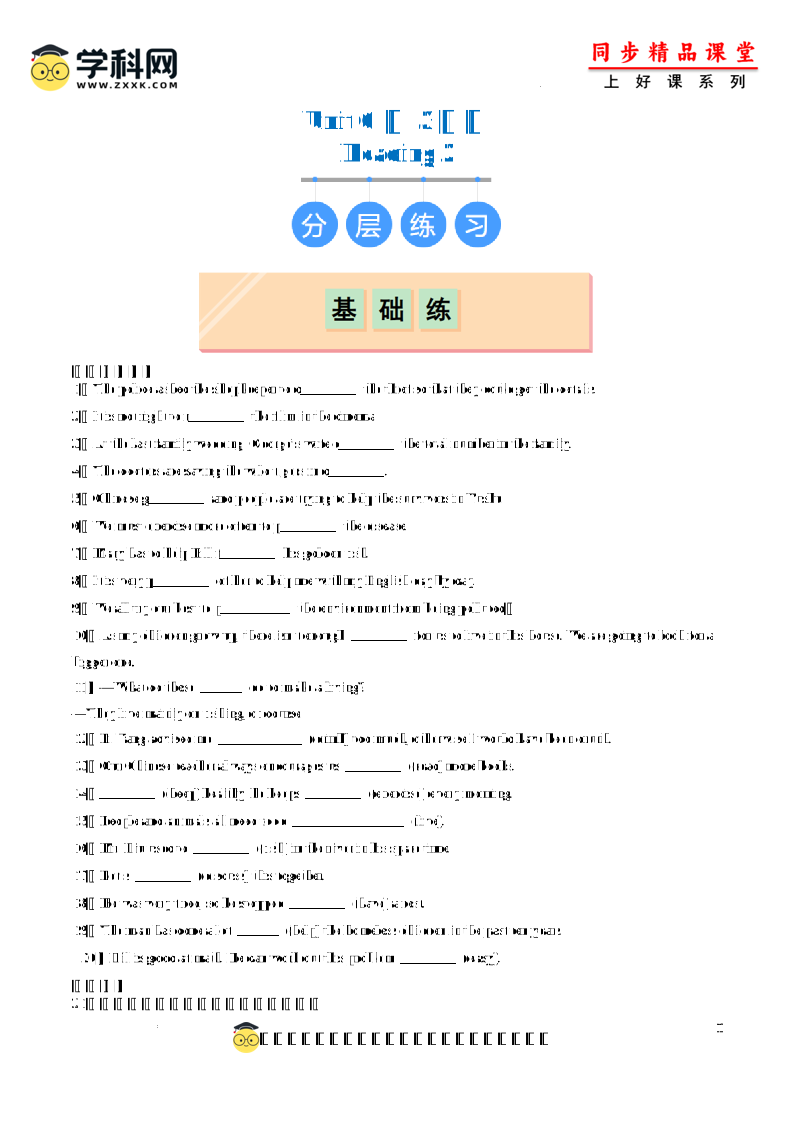
一、单词拼写
1.The police asked the shopkeeper to d the thief so that they could get the details.
【答案】(d)escribe
【详解】句意:警察请店主描述一下小偷的模样,以便了解详情。根据“they could get the details.”可知,了解详情需要描述一下小偷的模样,describe“描述”,动词,不定式符号to后加动词原形,故填(d)escribe。
2.It is not right to r the film in the cinema.
【答案】(r)ecord
【详解】句意:在电影院录影是不对的。根据“It is not right to r...the film in the cinema.”可知在电影院录电影是不对的,record“录(像)”,动词,空前有不定式符号,动词用原形,故填(r)ecord。
3.At the last family wedding, George’s wife c the total number in the family.
【答案】(c)ounted
【详解】句意:在上次家庭婚礼上,乔治的妻子数了一下家里的人数。根据“the total number”可知此处表示数人数,count“数数”,再由“At the last family wedding”可知用一般过去时,count的过去式counted。故填(c)ounted。
4.The doctors are saving the wild tigers in d .
【答案】(d)anger
【详解】句意:医生们正在拯救处于危险中的野生老虎。根据“The doctors are saving the wild tigers in d...”可知,野生老虎处于危险中,in danger“处于危险中”符合语境,故填(d)anger。
5.Chinese g and people are trying to help the survivors in Yushu.
【答案】(g)overnment
【详解】句意:中国政府和人民正在努力帮助玉树的幸存者。根据空后“and people”和首字母提示可知,此处指中国政府和人民,故空处应是government“政府”,此处用单数。故填(g)overnment。
6.We must exercise more often to p the disease.
【答案】(p)revent
【详解】句意:我们必须经常锻炼以预防疾病。根据句意可知,锻炼的目的是预防疾病,prevent“预防”,to为不定式符号,后跟动词原形。故填(p)revent。
7.Mary has to help Bill f his golden fish.
【答案】(f)eed
【详解】句意:玛丽必须帮助比尔喂他的金鱼。根据空后“his golden fish”和首字母提示可知,空处应是feed “喂养”,动词;help sb. do sth.“帮助某人干某事”,固定用法。故填(f)eed。
8.It is very p of her to help me with my English day by day.
【答案】perfect
【详解】句意:她每天帮助我学英语,真是太好了。本句是固定句式It's + adj. + of/for sb. to do sth.,表示“某人做某事真是……”;根据句意结构和首字母提示,可知填perfect。
9.We all try our best to p the environment from being polluted.
【答案】(p)rotect
【详解】句意:我们都应该尽最大努力保护环境免受污染。try one’s best to do sth.为固定短语,意为“尽某人最大努力去做…”;protect sth./sb. from doing为固定短语,意为“保护某物/人免受……”。故填(p)rotect。
10.As my children grow up, there isn’t enough for us to live in this house. We are going to look for a bigger one.
【答案】space/room
【详解】句意:随着孩子们长大,我们住的房子没有足够的居住空间。我们要找一个更大的房子。根据“As my children grow up”及“We are going to look for a bigger one.”可知我们住的房子空间不够,结合题干中“there isn't enough”可知要用不可数名词。故填space/room。
11.—What do these do to make a living?
—They live mainly on fishing, of course.
【答案】fishermen
【详解】句意:——这些渔民靠什么谋生?——他们当然主要靠捕鱼为生。根据“They live mainly on fishing”可知,以捕鱼为生的是渔民。fisherman“渔民”,these修饰复数名词。故填fishermen。
12.Li Yang advised me (drink) too much, otherwise I would have been drunk.
【答案】not to drink
【详解】句意:李阳劝我不要喝太多,否则我就醉了。advise sb (not) to do sth“建议某人(不)要做某事”,根据“I would have been drunk”可知,建议不要喝太多,故填not to drink。
13.Our Chinese teacher always encourages us (read) more books.
【答案】to read
【详解】句意:我们的语文老师总是鼓励我们多读书。encourage sb to do sth“鼓励某人做某事”,动词不定式作宾补,故填to read。
14. (keep) healthy, he keeps (exercise) every morning.
【答案】 To keep exercising
【详解】句意:为了保持健康,他每天早上坚持锻炼。“保持健康”是坚持锻炼的目的,用动词不定式to keep;keep doing sth.“一直做某事,坚持做某事”,第二空用动名词exercising。故填To keep;exercising。
15.People and animals all need food (live).
【答案】to live
【详解】句意:人和动物都需要食物来生存。“人和动物都需要食物”的目的是“为了生存”,动词不定式可用来表目的,作目的状语。故填to live。
16.Mr. Liu used to (fish) in the river in his spare time.
【答案】fish
【详解】句意:刘先生过去常在业余时间在河里钓鱼。短语used to do sth表示“去常常做某事”,to后接动词原形。故填fish。
17.Let’s (discuss) this together.
【答案】discuss
【详解】句意:让我们一起讨论这个问题。let sb. do sth.意为“让某人做某事”,不带to的动词不定式作宾语补足语,故填discuss。
18.He was very tired, so he stopped (have) a rest.
【答案】to have
【详解】句意:他很累了,所以他停下来去休息。根据“He was very tired”可知,应是停下来去休息,stop to do sth.“停下来(正在做的事情)去做(另外的)某事”。故填to have。
19.The man has done a lot (help) the homeless children in the past ten years.
【答案】to help
【详解】句意:在过去的十年里,这个男人为帮助无家可归的孩子做了很多事情。分析句子可知,谓语动词是has done,所以help用非谓语形式,“has done a lot”的目的是“help the homeless children”,表目的用不定式,故填to help。
20.Bill is good at math. He can work out this problem (easy).
【答案】easily
【详解】句意:比尔擅长数学。他能很容易地解决这个问题。分析句子可知,空处修饰动词work out,应使用副词。故填easily。
二、翻译
21.我们必须采取措施来保护野生动物。
【答案】We must take action to protect wildlife.
【详解】我们:We,在句中作主语;必须:must,情态动词,其后跟动词原形;采取措施做某事:take action to do sth.;保护:protect;野生动物:wildlife。故填We must take action to protect wildlife.
22.直到15岁的时候他才明白学习英语的重要性。
【答案】He did not understand the importance of learning English until he was 15 years old.
【详解】“直到……才”为not…until,引导时间状语从句;“他”为he;“明白”为understand;“学习英语的重要性”为the importance of learning English;“十五岁”为15 years old。结合语境可知,此句应用一般过去时,否定句的助动词应用did not。故填He did not understand the importance of learning English until he was 15 years old.
23.如果你在湖边作短暂停留,就能很轻易地抓到鱼。
【答案】If you stay by the lake for a short time, you can catch the fish easily.
【详解】如果“if”,在湖边“by the lake”,短暂“for a short time”,抓到鱼“catch the fish”,容易“easily”,修饰动词需要用副词。if引导条件状语从句,此句主句含情态动词,从句用一般现在时。故填If you stay by the lake for a short time, you can catch the fish easily.
24.自然保护区为丹顶鹤提供食物和庇护所。
【答案】The nature reserve provides food and cover for the red-crowned cranes.
【详解】the nature reserve自然保护区,provide...for...“为……提供……”,food and cover食物和庇护所,red-crowned cranes丹顶鹤。时态为一般现在时,动词用三单形式,故填The nature reserve provides food and cover for the red-crowned cranes.
25.他告诉我们慢慢地走,别吓着鸟。
【答案】He told us to walk slowly and not to frighten the birds.
【详解】根据中文句意可知,tell sb (not) to do“告诉某人(不要)做某事”;walk slowly“慢慢地走”;frighten the birds“吓着鸟”。此处由and并列两个不定式,句子为一般过去时,第二个不定式为否定结构。故填He told us to walk slowly and not to frighten the birds.
三、完成句子
26.托尼愿出500美元雇他做这份工作。
Tony offered him 500 dollars the work.
【答案】 to do
【详解】由中英文对比可知,缺少“做”,英文表达为do;再根据汉意和题干可知,花500元的目的是为了雇他做这份工作,故此处要用不定式表示目的。故填to;do。
27.我们每个人都可以给十个学生打电话并要求他们来。
We could each ten students and them come.
【答案】 call up ask to
【详解】call up“给……打电话”,动词短语;ask sb. to do sth.“要求某事做某事”,固定句型;根据“could”为情态动词可知,后接动词原形。故填call;up;ask;to。
28.我们会尽最大努力确保你在这里的安全。
We will do our best to that you are safe here.
【答案】 make sure
【详解】do one’s best to do sth表示“尽某人最大的努力做某事”,因此第一空应填入动词原形。“确保”是动词短语make sure,后接that引导的宾语从句。故填make;sure。
29.为了取得好成绩,进入好的大学,他们应该把时间花在学业上。
They should their time schoolwork get good grades and get into a good university.
【答案】 spend on in order to
【详解】根据语境可知,情态动词should后接动词原形,spend...on sth.“在某事上花费……”,固定搭配in order to“为了”,后接动词原形。故填spend;on;in;order;to。
30.我读书是为我的报告收集信息。
I read books to my report.
【答案】collect information for
【详解】collect“收集”,动词,空前有动词不定式符号,动词用原形;information“信息”,不可数名词;for“为了”,介词。故填collect information for。
四、阅读理解
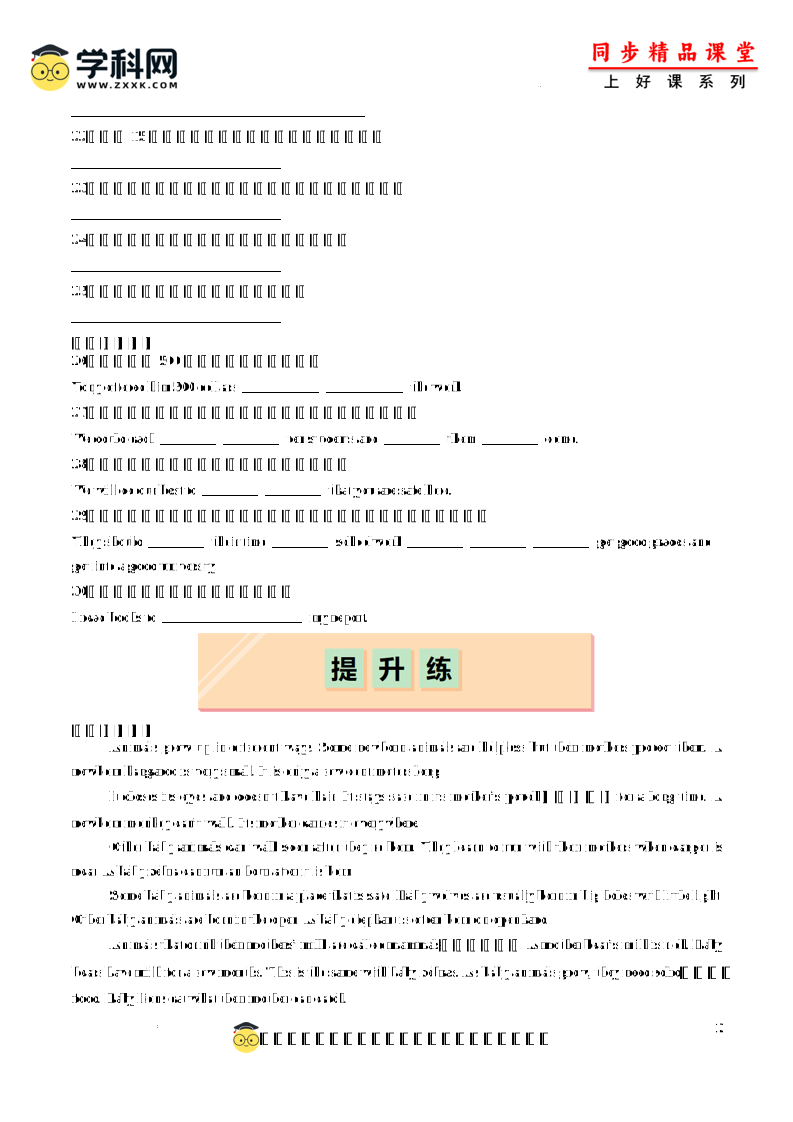
Animals grow up in different ways. Some newborn animals are helpless but their mothers protect them. A newborn kangaroo is very small. It is only a few centimeters long.
It closes its eyes and doesn’t have hair. It stays safe in its mother’s pouch(育儿袋)for a long time. A newborn monkey can’t walk. Its mother carries it everywhere.
Other baby animals can walk soon after they’re born. They learn to run with their mothers when danger is near. A baby zebra can run an hour after it is born.
Some baby animals are born in a place that is safe. Baby wolves are usually born in big holes with little light. Other baby animals are born in the open. A baby elephant is often born on open land.
Animals that drink their mothers’ milk are called mammals(哺乳动物). A mother bear’s milk is rich. Baby bears have milk for a few months. This is the same with baby zebras. As baby animals grow, they need solid(固体)food. Baby lions eat what their mother can catch.
31.According to the passage, many newborn animals need their mothers’ help because the babies can’t .
A.eat any food B.look after themselves
C.walk by themselves D.drink milk
32.A newborn monkey’s mother carries it everywhere because .
A.it is small B.it closes its eyes C.it can’t walk D.danger is near
33.Baby wolves are usually born in a(n) place.
A.open B.bright C.safe D.small
34.Newborn mammals’ main food is .
A.milk B.mother’s milk C.solid food D.smaller animals
35.How many kinds of baby animals are mentioned(被提及)in this passage?
A.Five. B.Six. C.Seven. D.Eight.
【答案】31.B 32.C 33.C 34.B 35.C
【导语】本文主要讲述的是不同的动物成长方式不同,初生的小动物通常需要它们母亲的帮助。
31.推理判断题。根据“Some newborn animals are helpless but their mothers protect them.”可知刚出生的动物不能自己照顾自己,所以需要它们妈妈的帮助和保护。故选B。
32.细节理解题。根据“A newborn monkey can’t walk. Its mother carries it everywhere.”可知新生的猴子不会走路,所以它的母亲得带着它,故选C。
33.推理判断题。根据“Some baby animals are born in a place that is safe. Baby wolves are usually born in big holes with little light.”可知狼宝宝通常出生在一个几乎没有亮光的洞里,这是一个安全的地方。故选C。
34.细节理解题。根据“Animals that drink their mothers’ milk are called mammals. A mother bear’s milk is rich. Baby bears have milk for a few months.”可知新生哺乳动物主要是喝母乳。故选B。
35.细节理解题。通读全文可知文章主要提及了袋鼠、猴子、斑马、狼、大象、熊和狮子这七种动物。故选C。
五、完形填空
Long long ago, there was a swan (天鹅) with golden feathers. She lived in a lake. A woman lived in a small house 36 the lake with her two daughters. They were very poor. They worked hard all year round, 37 still, they lived a hard life and sometimes they even didn’t have enough 38 to buy food.
The swan was 39 to see that. She said to herself, “I’ll give one of my 40 to them each day, then they can live a happy life with the money selling my feathers.” That evening, she 41 to the poor woman’s house and left a golden feather on the table without saying 42 . From then on, the swan came every day and gave them a feather. The woman was very happy because their life was much 43 than before.
But day after day, the woman became greedy(贪婪). She said to her 44 . “The swan may fly away one day. If so, we will be poor again. We should 45 all her feathers if she comes next time.”
“Oh, no, Mom!” cried the daughters, “This will 46 the swan. She helps us a lot!” But the mother wouldn’t listen. When the 47 came as usual, the mother caught her and took all her feathers. But suddenly, the golden feathers 48 chicken feathers.
Then, the Golden Swan said, “Poor Mother, I came to 49 you, but you wanted to kill me. Now, I am leaving and will 50 come back. Never be greedy!” With these words, the swan left.
36.A.above B.over C.near D.under
37.A.and B.but C.so D.or
38.A.money B.time C.room D.power
39.A.happy B.surprised C.sad D.excited
40.A.presents B.coins C.feathers D.collections
41.A.flew B.ran C.climbed D.walked
42.A.something B.everything C.nothing D.anything
43.A.poorer B.better C.busier D.harder
44.A.brothers B.sisters C.sons D.daughters
45.A.take B.bring C.brush D.cut
46.A.hurt B.save C.leave D.help
47.A.woman B.daughter C.chicken D.swan
48.A.heard of B.changed into C.looked for D.came from
49.A.trouble B.help C.teach D.invite
50.A.sometimes B.always C.usually D.never
【答案】36.C 37.B 38.A 39.C 40.C 41.A 42.D 43.B 44.D 45.A 46.A 47.D 48.B 49.B 50.D
【导语】本文介绍了湖里住着一只有着金羽毛的天鹅。湖边住着一个贫穷的女人,她带着两个女儿过着艰难的生活。为了帮助她们过上好日子,天鹅每天送给她们一支金羽毛。然而贪心的女人却要拔走天鹅所有的羽毛。
36.句意:一个妇女和她的两个女儿住在湖附近的一间小房子里。
above在……上方;over在……上面;near在……附近;under在……下面。根据句中“lived in a small house”和“lake”,并结合选项可知,此处是“她们住的房子在湖的附近”。故选C。
37.句意:她们一年到头辛勤工作,但仍过着艰苦的生活,有时甚至没有足够的钱买食物。
and并且;but但是;so所以;or或者。根据句中“worked hard all year round”和“lived a hard life”可知,此处是“她们辛勤工作,但是仍然过着艰苦的生活”。前后两句是转折关系,使用but,故选B。
38.句意:他们一年到头辛勤工作,但仍过着艰苦的生活,有时甚至没有足够的钱买食物。
money钱;time时间;room房间;power力量。根据句中“lived a hard life”和“to buy food”可知,买食物需要钱。故选A。
39.句意:这只天鹅看到这种情形很难过。
happy开心的;surprised惊讶的;sad难过的;excited激动的。根据上文中“they lived a hard life”可知,这个妇女和她的两个女儿生活艰辛,所以此处是“天鹅看到这种情形以后很难过”。故选C。
40.句意:我每天给她们一根我的羽毛,然后她们就可以用卖我的羽毛得来的钱过上幸福的生活。
presents礼物;coins硬币;feathers羽毛;collections收集物。根据句中feathers可知,此处是“她们可以卖掉天鹅的羽毛得到钱,并过上幸福的生活,所以天鹅每天给他们一根羽毛”。故选C。
41.句意:那天晚上,她飞到那个可怜的妇女家,在桌子上留下了一根金色的羽毛,什么也没说。
flew飞;ran跑;climbed爬;walked步行。根据句中“left a golden feather”可知,此处是she代指swan,天鹅飞到了那个妇女家,并留下了一根金色的羽毛。故选A。
42.句意:那天晚上,她飞到那个可怜的妇女家,在桌子上留下了一根金色的羽毛,什么也没说。
something一些事情;everything每件事情;nothing没有什么;anything任何事情。根据句中without可知,句中是否定含义,所以此处是“这只天鹅什么也没有说”。故选D。
43.句意:那个妇女很高兴,因为她们的生活比以前好多了。
poorer更穷的;better更好的;busier更忙的;harder更难的。根据句中“The woman was very happy”可知,那个妇女很高兴,因为她们的生活比以前好多了。故选B。
44.句意:她对她的女儿们说“天鹅总有一天会飞走的,如果是这样,我们又会变穷”。
brothers兄弟们;sisters姐妹们;sons儿子们;daughters女儿们。根据下文中“Oh,no,Mom! cried the daughters”可知,此处是这个妇女对女儿们说话。故选D。
45.句意:下次她来的时候,我们应该把她所有的羽毛都拔掉。
take拿;bring带来;brush刷;cut剪。根据“the woman became greedy”可知,妇女变得贪婪,所以是要拿走天鹅的所有羽毛。故选A。
46.句意:这样会伤害这只天鹅的,她给予了我们很多帮助。
hurt伤害;save解救;leave离开;help帮助。根据下文中“but you wanted to kill me”可知,此处是这个妇女拔光羽毛的行为会伤害这只天鹅。故选A。
47.句意:当这只天鹅像往常一样来的时候,这个妈妈抓住了她,并把她所有的羽毛都拔掉了。
woman妇女;daughter女儿;chicken小鸡;swan天鹅。根据句中“the mother caught her and took all her feathers”可知,按照之前恶毒的计划,妇女抓住了天鹅。故选D。
48.句意:但是突然间,金色的羽毛变成了鸡毛。
heard of听说;changed into变成;look for寻找;came from来自。根据句中“golden feathers”和“chicken feathers”可知,此处是“金色羽毛变成了鸡毛”。故选B。
49.句意:可怜的母亲,我来这帮助你,但是你却想杀死我。
trouble麻烦;help帮助;teach教;invite邀请。根据上文中“She helps us a lot!”可知,此处是“这只天鹅是来帮助这个妇女的”。故选B。
50.句意:现在我要离开,再也不回来了。
sometimes有时;always总是;usually通常;never从不。根据上一句中“I came to help you, but you wanted to kill me.”可知,此处是天鹅感到很失望,她是来帮助妇女的,但是妇女却要杀掉她,所以她是永远都不会来回来了。故选D。
原创精品资源学科网独家享有版权,侵权必究!2
学科网(北京)股份有限公司
学科网(北京)股份有限公司
$$
Unit 6 第3课时
Reading 2
一、单词拼写
1.The police asked the shopkeeper to d the thief so that they could get the details.
2.It is not right to r the film in the cinema.
3.At the last family wedding, George’s wife c the total number in the family.
4.The doctors are saving the wild tigers in d .
5.Chinese g and people are trying to help the survivors in Yushu.
6.We must exercise more often to p the disease.
7.Mary has to help Bill f his golden fish.
8.It is very p of her to help me with my English day by day.
9.We all try our best to p the environment from being polluted.
10.As my children grow up, there isn’t enough for us to live in this house. We are going to look for a bigger one.
11.—What do these do to make a living?
—They live mainly on fishing, of course.
12.Li Yang advised me (drink) too much, otherwise I would have been drunk.
13.Our Chinese teacher always encourages us (read) more books.
14. (keep) healthy, he keeps (exercise) every morning.
15.People and animals all need food (live).
16.Mr. Liu used to (fish) in the river in his spare time.
17.Let’s (discuss) this together.
18.He was very tired, so he stopped (have) a rest.
19.The man has done a lot (help) the homeless children in the past ten years.
20.Bill is good at math. He can work out this problem (easy).
二、翻译
21.我们必须采取措施来保护野生动物。
22.直到15岁的时候他才明白学习英语的重要性。
23.如果你在湖边作短暂停留,就能很轻易地抓到鱼。
24.自然保护区为丹顶鹤提供食物和庇护所。
25.他告诉我们慢慢地走,别吓着鸟。
三、完成句子
26.托尼愿出500美元雇他做这份工作。
Tony offered him 500 dollars the work.
27.我们每个人都可以给十个学生打电话并要求他们来。
We could each ten students and them come.
28.我们会尽最大努力确保你在这里的安全。
We will do our best to that you are safe here.
29.为了取得好成绩,进入好的大学,他们应该把时间花在学业上。
They should their time schoolwork get good grades and get into a good university.
30.我读书是为我的报告收集信息。
I read books to my report.
四、阅读理解
Animals grow up in different ways. Some newborn animals are helpless but their mothers protect them. A newborn kangaroo is very small. It is only a few centimeters long.
It closes its eyes and doesn’t have hair. It stays safe in its mother’s pouch(育儿袋)for a long time. A newborn monkey can’t walk. Its mother carries it everywhere.
Other baby animals can walk soon after they’re born. They learn to run with their mothers when danger is near. A baby zebra can run an hour after it is born.
Some baby animals are born in a place that is safe. Baby wolves are usually born in big holes with little light. Other baby animals are born in the open. A baby elephant is often born on open land.
Animals that drink their mothers’ milk are called mammals(哺乳动物). A mother bear’s milk is rich. Baby bears have milk for a few months. This is the same with baby zebras. As baby animals grow, they need solid(固体)food. Baby lions eat what their mother can catch.
31.According to the passage, many newborn animals need their mothers’ help because the babies can’t .
A.eat any food B.look after themselves
C.walk by themselves D.drink milk
32.A newborn monkey’s mother carries it everywhere because .
A.it is small B.it closes its eyes C.it can’t walk D.danger is near
33.Baby wolves are usually born in a(n) place.
A.open B.bright C.safe D.small
34.Newborn mammals’ main food is .
A.milk B.mother’s milk C.solid food D.smaller animals
35.How many kinds of baby animals are mentioned(被提及)in this passage?
A.Five. B.Six. C.Seven. D.Eight.
五、完形填空
Long long ago, there was a swan (天鹅) with golden feathers. She lived in a lake. A woman lived in a small house 36 the lake with her two daughters. They were very poor. They worked hard all year round, 37 still, they lived a hard life and sometimes they even didn’t have enough 38 to buy food.
The swan was 39 to see that. She said to herself, “I’ll give one of my 40 to them each day, then they can live a happy life with the money selling my feathers.” That evening, she 41 to the poor woman’s house and left a golden feather on the table without saying 42 . From then on, the swan came every day and gave them a feather. The woman was very happy because their life was much 43 than before.
But day after day, the woman became greedy(贪婪). She said to her 44 . “The swan may fly away one day. If so, we will be poor again. We should 45 all her feathers if she comes next time.”
“Oh, no, Mom!” cried the daughters, “This will 46 the swan. She helps us a lot!” But the mother wouldn’t listen. When the 47 came as usual, the mother caught her and took all her feathers. But suddenly, the golden feathers 48 chicken feathers.
Then, the Golden Swan said, “Poor Mother, I came to 49 you, but you wanted to kill me. Now, I am leaving and will 50 come back. Never be greedy!” With these words, the swan left.
36.A.above B.over C.near D.under
37.A.and B.but C.so D.or
38.A.money B.time C.room D.power
39.A.happy B.surprised C.sad D.excited
40.A.presents B.coins C.feathers D.collections
41.A.flew B.ran C.climbed D.walked
42.A.something B.everything C.nothing D.anything
43.A.poorer B.better C.busier D.harder
44.A.brothers B.sisters C.sons D.daughters
45.A.take B.bring C.brush D.cut
46.A.hurt B.save C.leave D.help
47.A.woman B.daughter C.chicken D.swan
48.A.heard of B.changed into C.looked for D.came from
49.A.trouble B.help C.teach D.invite
50.A.sometimes B.always C.usually D.never
原创精品资源学科网独家享有版权,侵权必究!2
学科网(北京)股份有限公司
学科网(北京)股份有限公司
$$
资源预览图
1
2
所属专辑

相关资源
由于学科网是一个信息分享及获取的平台,不确保部分用户上传资料的 来源及知识产权归属。如您发现相关资料侵犯您的合法权益,请联系学科网,我们核实后将及时进行处理。