Unit 2 Learning about Trade and Economy Reading B 课件-2023-2024学年高中英语上外版(2020)选择性必修第四册
2024-09-06
|
15页
|
100人阅读
|
38人下载
普通
内容正文:
《 高 中 英 语 》 ( 上 外 版 )
选择性必修第四册第二单元
Learning about Trade and Economy
授课教师 :
课时 授课内容
1 Getting Started/ Reading A
1 Reading A/ Vocabulary Focus
1 Reading A/ Grammar in Use
1.5 Listening, Viewing and Speaking
1 Reading B
0.5 Critical Thinking
1 Writing
1 Further Exploration/ Self-assessment
《 高 中 英 语 》 ( 上 外 版 )
选择性必修第四册第二单元
学习目标 Learning Objectives:
At the end of the lesson, you will be able to ...
1. 能通过阅读、解释和分析文本,理解故事的原因、过程和结果,以及故事背后的
经济理论。
understand the cause, the course and the outcome of the story and economic theory behind
it through reading, explaining and analyzing the text.
2. 能通过讨论和批判性思维,根据文本内容简要描述作者的经历,阐释作
者的个人价值。
briefly describe the author's experience and interpret the author's personal value
according to the content of the text through discussing and critical thinking.
3. 能通过合作,分享并表达自己对文本中体现的作者一贯哲学的看法。 share and express own views on the consistent philosophy of the author as
reflected in the text through cooperation.
4. 能结合具体情况和经济原则做出明智的决定。
make a wise decision by combining specific situations and economic principles.
Pre-reading Stage:
Look at the picture in the text and then answer the following questions .
●How about the chicken?
Delicious, inviting, finger-licking ect.
●If the restaurant serves the rancid chicken for you, what will you do?
Negotiate with the manager, seek redress, not pay for the meal ect.
While-reading Stage:
Activity 1:
Scan to find out the setting and the narrator’s feeling .
● What did the restaurant offer before or after the food was served?
Before : food that was slow in coming.
After : the chicken that didn’t look good.
● What the narrator did before or after the food was served?
Before: I waited patiently while catching up with friend.
After: I took a bite, spat it out and called the waitress.
● How did narrator might feel before or after the food was served?
Before : Fine with that.
After: absolutely awful.
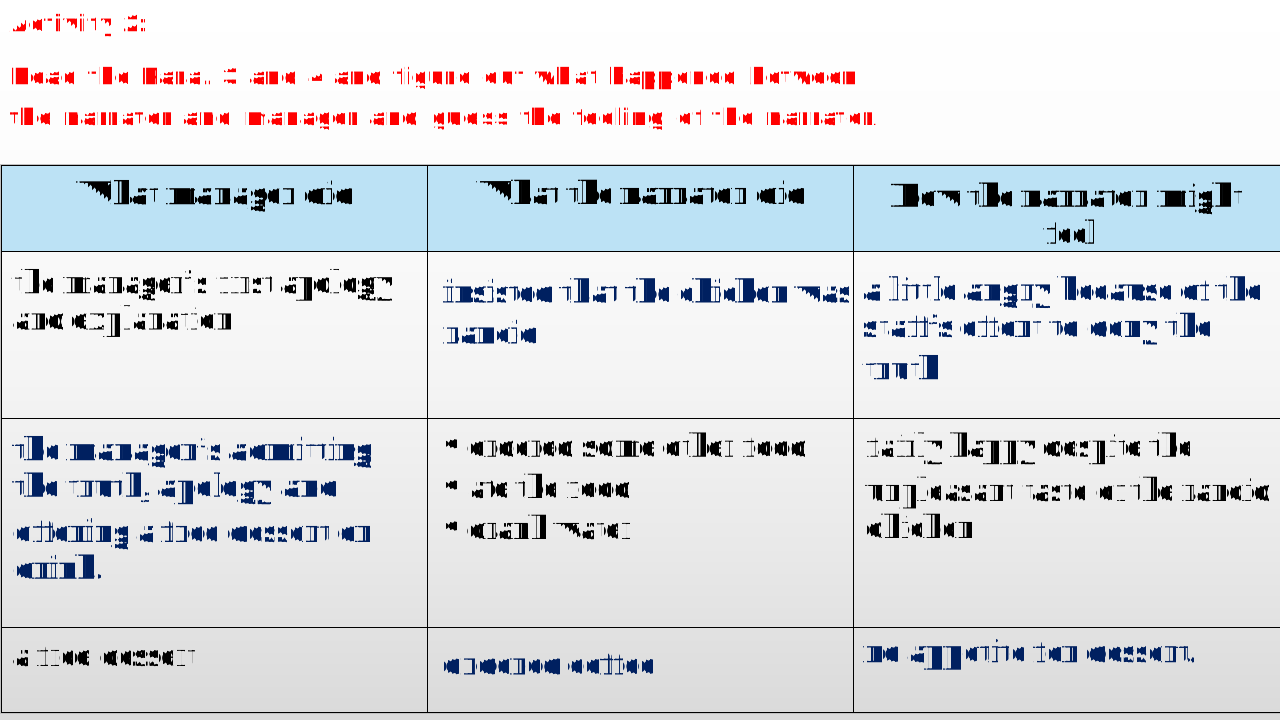
What manager did What the narrator did How the narrator might feel
the manager’s first apology and explanation insisted that the chicken was rancid a little angry because of the staff’s effort to deny the
truth
the manager’s admitting the truth, apology and
offering a free dessert or drink. • ordered some other food
• ate the food
• drank water fairly happy despite the
unpleasant taste of the rancid chicken
a free dessert ordered coffee no appetite for dessert.
Activity 2:
Read the Para . 3 and 4 and figure out what happened between the narrator and manager and guess the feeling of the narrator.
Activity 3: Read the Para . 6 and 7 and find out how many options
we faced and what decision we have made? Tell the reasons .
1st option: take the chicken off the check
2nd option: get a discount
Why did I choose the second option?
Because I had a better chance to negotiate for a lower price. The first option only deals with the price of the chicken. Though the second option involves a bigger risk, it could bring about better benefits.
Activity 4: Discussion
If you were the manager, what would you do for the
narrator and his friends? And Why?
Activity 5: Read the Para.8 to 11 and think about what
risk the manager took .
●What did manager offer at last?
Only free wine instead of free chicken.
●What risk did the manager take?
The manager took the risk that the customer might refuse the proposal, unwilling to pay the bill and make a scene by talking about food safety loudly, which might do harm to the restaurant’s reputation, a worse consequence than financial loss.
●What enabled the manager to take the risk that was financially and
psychologically in her favour?
On one hand, the narrator got free wines. On the other hand, the narrator had been friendly throughout the conversation and never raised any voice. So the manager assumed the narrator would not overreact and make a scene.
Activity 6: Discussion
● What did I do at last? How did I feel?
I paid the check and, along with a $5 tip and felt unsatisfied but accepted it
● If you were the narrator, how would you negotiate with the manager?
We should keep it in mind that what a restaurant manager really cares is not
one customer’s personal awful experience in the restaurant, but all the present and potential guests’ concerns and impression of the food quality in the
restaurant. If I were the narrator, I would write a letter of complaint to the
manager and would offer some constructive advice to the manager in the hope that he would take my complaint seriously and do something to improve the
situation. (Answers may vary.)
Activity 7: Summary
Trilby and I had late lunch in a restaurant . Although we
were fine with that
waited for a long time, we . When
chicken arrived, I took a bite, spat it out and called waitress
At this time, I felt . The manager came and
apologized. But at first, he , which made me
angry . Five minutes later, he admitted their mistake and
_______
offered us free drink or de rIt felt fairly happy . At this time, Trilby had
had water and I had had two glasses of wine . When we talked about the
check, I thought that the manager should give us a discount When the check
arrived, I asked it for manager, but he insisted that
we had had free wineand I wouldn’t raise my voice . Finally, I accepted it though I felt unsatisfied .
an
ss
denied it
awful
Post-reading Stage:
Activity 1: Critical thinking I
● What kind of economic theory or principle was it when the narrator made a decision? And how did the narrator use the theory?
Anchoring theory. The narrator had two options first. He used the first choice as a reference, and he thought the second was the better decision he would made, which would bring him huger profits.
● What kind of person is the narrator?
rational and consistent.
● Analyze the manager’s economic theory in decision-making and describe his psychological process when making a decision based on his economic
theory.
Opportunity Cost. From the perspective of manager, the
restaurant can provide the free drink to make up for the
rancid chicken because the cost of two bottle of wine is
less than or equal to a chicken, which can minimize the
loss of the restaurant and gave the customer comfort if the
customers are not difficult people.
explaining how the decisions are made .
Paying for rancid chicken
anchoring theory
____________________ Choosing a cost-effective flight
opportunity cost, i.e., the potential benefits one might miss out on choosing one alternative
_____________________________
Not accepting shells in trading when everyone has too many shells
supply and demand
___________________ Ranking items in order of importance when making a budget plan
The process used to measure the benefits
of a decision or taking action minus the costs associate with taking that
action, involving measurable financial metrics such as revenue earned or costs
saved as a result of the decision to
pursue a project by balancing costs and benefits.
____________________________________
● Fill in the blanks with economic theories or principles that are useful in
d
Activity 2: Critical thinking II
● Think of some important decisions on spending that your family has made and choose a theory or principle you learned in this unit to explain them .
One important decision on spending that my family has made recently is about the travelling expenses. We decide that we set aside 500 yuan each month for travelling during the holidays. Since our family is
anything but rich, we have to cut expenses on other items like buying clothes etc. After weighing pros and cons, we think it is worthwhile to do so since travelling together with your family can not only be a
bonding time for the family members but also as individuals we can enjoy some eye-opening experiences during the journey, thus
broadening our horizons.
T h a n k y o u !
$$
资源预览图

1

2

3

4

5
6

相关资源
示范课
由于学科网是一个信息分享及获取的平台,不确保部分用户上传资料的 来源及知识产权归属。如您发现相关资料侵犯您的合法权益,请联系学科网,我们核实后将及时进行处理。