Unit 2 Language and Mind Reading A Grammar in use 学案 -2024-2025学年高中英语上外版(2020)选择性必修第二册
2024-08-25
|
2份
|
9页
|
112人阅读
|
18人下载
普通
资源信息
| 学段 | 高中 |
|---|---|
| 学科 | 英语 |
| 教材版本 | 高中英语沪外版选择性必修第二册 |
| 年级 | 高二 |
| 章节 | Reading A |
| 类型 | 学案 |
| 知识点 | - |
| 使用场景 | 同步教学-新授课 |
| 学年 | 2024-2025 |
| 地区(省份) | 全国 |
| 地区(市) | - |
| 地区(区县) | - |
| 文件格式 | ZIP |
| 文件大小 | 288 KB |
| 发布时间 | 2024-08-25 |
| 更新时间 | 2024-08-25 |
| 作者 | 匿名 |
| 品牌系列 | - |
| 审核时间 | 2024-08-25 |
| 下载链接 | https://m.zxxk.com/soft/47008204.html |
| 价格 | 0.00储值(1储值=1元) |
| 来源 | 学科网 |
内容正文:
上外版 高二年级 必修二 第二单元 第 3 课时 学案(学生版)
课时目标:
能在语篇中识别主语从句和表语从句形式,说明其表意功能;
能根据表达的需要,恰当地运用主语从句和表语从句描述人物和事件,表达观点和意图。
1. What has been argued for thousands of years?
2. Study the sentences and underline the subordinate clauses. What functions do they have in the sentences?
(1) It is accepted that our language and thought are both influenced by culture.
(2) What the researchers have found is how brilliant and flexible the human mind is.
(3) Whether language shapes the way we think has been a question for centuries.
(4) A common belief is that any language can be learned with enough practice.
(5) How language learning can benefit young learners has attracted a lot of researchers ’ interest recently.
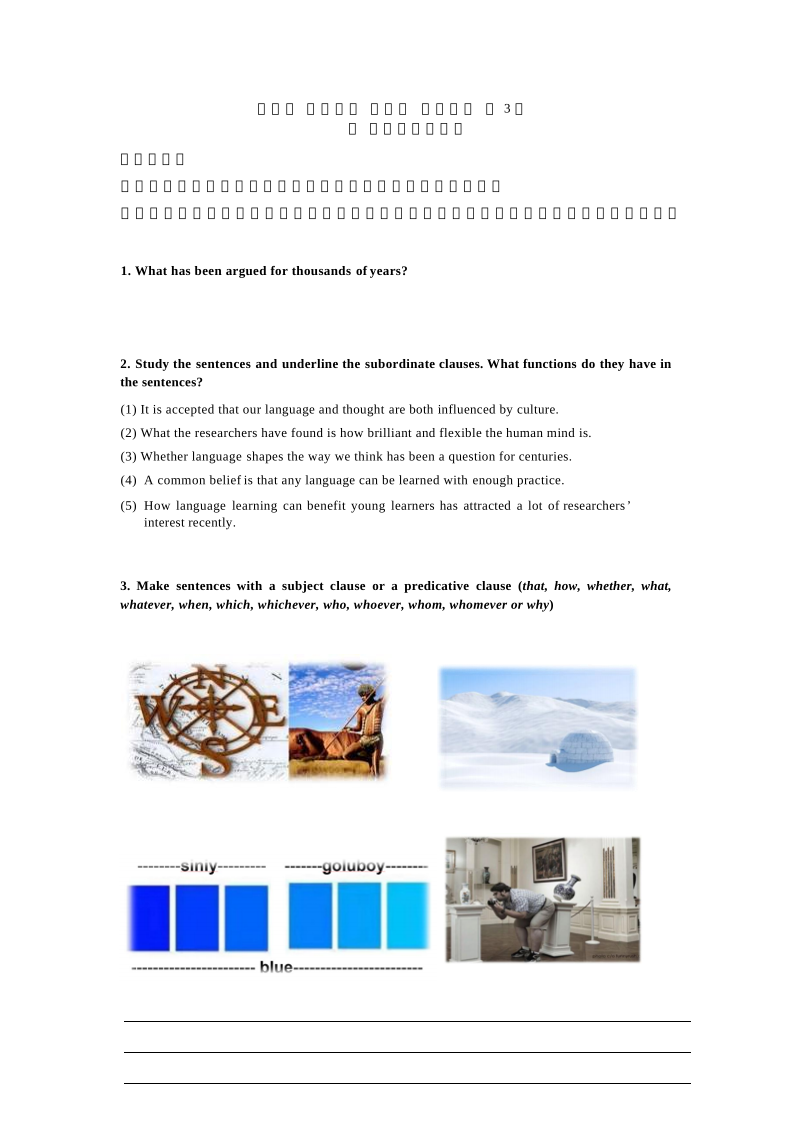
3. Make sentences with a subject clause or a predicative clause (that, how, whether, what, whatever, when, which, whichever, who, whoever, whom, whomever or why)
_____________________________________________________________________________________
_____________________________________________________________________________________
4. Read the passage and answer the questions by using subject or predicative clauses.
One of the oldest questions in the study of language involves how it influences our thought. According to a highly debatable response from Benjamin Whorf, a student of the famous linguist Edward Sapir, “Language not only influences thought, but it determines thought as well.” The Sapir-Whorf hypothesis, at least in its strongest form, has been rejected by many psychologists. After all, it’s not difficult to come up with examples of thought that does not involve language. But a weaker form of the hypothesis has yet to be challenged: the idea that the language we speak does to a certain extent affect our thought.
(1) What is one of the oldest questions in the study of language?
One of the oldest questions in the study of language is .
(2) What is suggested in the Sapir-Whorf hypothesis?
It is suggested .
(3) What has been proved by examples according to the passage?
It has been proved .
(4) What has yet to be challenged?
has yet to be challenged.
5. Answer the questions with information from the passage above, using subject and
predicative clauses.
(1) What is the stronger form of the Sapir-Whorf hypothesis?
(2) What is the weaker form of the Sapir-Whorf hypothesis?
(3) What can be used as evidence to reject the stronger form?
6. Answer the questions by using subject or predicative clauses.
Currently, the list of endangered language is growing day by day.
In an article recently published in The New Yorker, it was reported that up to half of today’s living languages are in danger and will be extinct by the end of the 21st century.
Languages die out for many reasons. Some can be hard to preserve if most of their traditions are orally maintained, with few written records ever in existence. Other causes of linguistic death have to do with cultural domination. Many cultures have been colonized or otherwise dominated.
Losing a language can also mean losing crucial knowledge about that group’s history, culture, or even local environment.
Many linguists and academics, who recognise the value of dying languages, are working to preserve them.
(1) What concern is expressed in the article in The New Yorker?
(2) What has led to the dying of language?
(3) What are your suggestions on preserving dying languages?
学科网(北京)股份有限公司
$$
上外版 高二年级 必修二 第二单元 第 3 课时 学案(教师版)
1. What has been argued for thousands of years?
What has been argued for thousands of years is whether language shapes the way we think.
2. Study the sentences and underline the subordinate clauses. What functions do they have in the sentences?
(1) It is accepted that our language and thought are both influenced by culture.
(2) What the researchers have found is how brilliant and flexible the human mind is.
(3) Whether language shapes the way we think has been a question for centuries.
(4) A common belief is that any language can be learned with enough practice.
(5) How language learning can benefit young learners has attracted a lot of researchers ’ interest recently.
备注: 以上红色为主语从句,划线为表语从句
3. Make sentences with a subject clause or a predicative clause (that, how, whether, what, whatever, when, which, whichever, who, whoever, whom, whomever or why).
E.g.
1. That Kuuk Thaayorre use cardinal direction helps them have better sense of direction.
2. That Spanish and English people pay attention to different things decides the way they describe the accidents.
3. It is widely known that Russian people are more skilled at distinguishing colours.
4. What I want to know is why Eskimos have so many words for snow.
4. Read the passage and answer the questions by using subject or predicative clauses.
One of the oldest questions in the study of language involves how it influences our thought. According to a highly debatable response from Benjamin Whorf, a student of the famous linguist Edward Sapir, “Language not only influences thought, but it determines thought as well.” The Sapir-Whorf hypothesis, at least in its strongest form, has been rejected by many psychologists. After all, it’s not difficult to come up with examples of thought that does not involve language. But a weaker form of the hypothesis has yet to be challenged: the idea that the language we speak does to a certain extent affect our thought.
(1) What is one of the oldest questions in the study of language?
One of the oldest questions in the study of language is how language influences our thought.
(2) What is suggested in the Sapir-Whorf hypothesis?
It is suggested that language not only influences thought, but it determines thought as well.
(3) What has been proved by examples according to the passage?
It has been proved that thought does not always involve language.
(4) What has yet to be challenged?
That the language we speak does to a certain extent affect our thought has yet to be challenged.
5. Answer the questions with information from the passage above, using subject and
predicative clauses.
(1) What is the stronger form of the Sapir-Whorf hypothesis?
The Sapir-Whorf hypothesis, in its stronger form, is that language influences and determines thought.
(2) What is the weaker form of the Sapir-Whorf hypothesis?
The Sapir-Whorf hypothesis, in its weaker form, is that the language we speak affects our thought to some extent.
(3) What can be used as evidence to reject the stronger form?
That thought does not always involve language is the evidence to reject the stronger form of the Sapir-Whorf hypothesis,
6. Answer the questions by using subject or predicative clauses.
Currently, the list of endangered language is growing day by day.
In an article recently published in The New Yorker, it was reported that up to half of today’s living languages are in danger and will be extinct by the end of the 21st century.
Languages die out for many reasons. Some can be hard to preserve if most of their traditions are orally maintained, with few written records ever in existence. Other causes of linguistic death have to do with cultural domination. Many cultures have been colonized or otherwise dominated.
Losing a language can also mean losing crucial knowledge about that group’s history, culture, or even local environment.
Many linguists and academics, who recognise the value of dying languages, are working to preserve them.
(1) What concern is expressed in the article in The New Yorker?
The concern in the article in The New Yorker is that up to half of today’s living languages are in danger and will be extinct by the end of the 21st century.
(2) What has led to the dying of language?
That some languages can be hard to preserve if most of their traditions are orally maintained , with few written records ever in existence and that many cultures have been colonized or otherwise dominated have led to the dying of languages.
(3) What are your suggestions on preserving dying languages?
l That we use modern technology such as recording might be a good way to preserve some dying languages.
l My suggestion on preserving dying languages is that governments should establish policies/take action to protect dying languages.
学科网(北京)股份有限公司
$$
资源预览图
1

2
相关资源
由于学科网是一个信息分享及获取的平台,不确保部分用户上传资料的 来源及知识产权归属。如您发现相关资料侵犯您的合法权益,请联系学科网,我们核实后将及时进行处理。