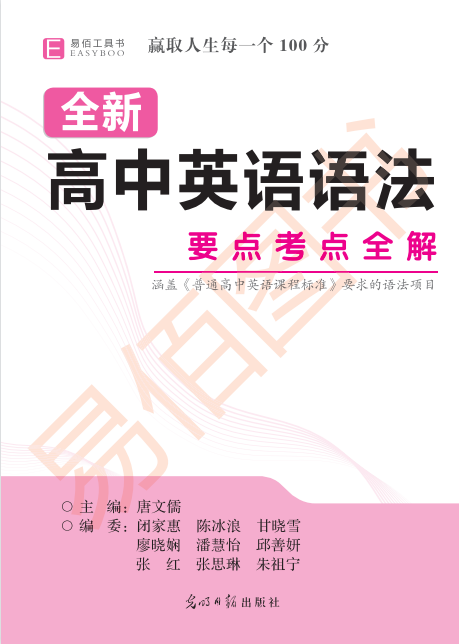
第11章 情态动词-2024年全新高中英语语法要点考点全解
2024-03-21
|
26页
|
184人阅读
|
7人下载
教辅

内容正文:
第
章
情态动词
易伯·高中英语语法要点考点全解
第十一章 情态动词
情态动词表示说话人对某一动作或状
态的看法和态度。情态动词不能独立作谓
语,只能和其他动词原形一
一起构成谓语。
情态动词的特征和形式
1.情态动词的特征
(1)情态动词(除haveto外)没有人称和
数的变化
例:He can ride abike now.他现在会骑自行
车了
(he为第三人称单数,依然用can)
(2)情态动词后只能接动词原形
例: You ought to take care of your family.
你必须照顾你的家人。
(3)情态助动词只有现在时和过去时两种
236
第章 情态动词
基本形式
例:Would
please
you
e pass me the book?
请把那本书递给我好吗?
(4)情态动词一般不用助动词do构成否定
句和疑问句
例: CanI really have
your jeans when you go?
你走后,我真的可以穿你的牛仔裤吗
They
can't handle the problem.
他们处理不了这个问题
(5)情态动词有一定的词义,但是助动词
没有
例: The work must be
completed within a
certaintimelimit.这项工作必须在一定
期限内完成。
(must意为必须)
I will summarize what I have done.我将
概述我所做的事情。(have无词义)
237
易伯·高中英语语法要点考点全解
2.情态动词的形式
情态动词
否定式
can
cannot/can not/can't
could
could not/couldn't
may
may not
might
might not
must
must not/mustn't
shall
shall not
should
should not/shouldn't
will
will not/won't
would
would not/wouldn't
need
need
not/needn't
dare
dare not
had
better
had better not
have
to
do not have to /don't have to
ought to
ought not to /oughtn't to
used not to/did not use to/didn't
used to
use to
238
第章情态动词
情态动词的基本用法
1. can和could的用法
(1)表示具有某种能力,指有能力做某事
例:
When she was young, she could
dance
verywell.她年轻时跳舞跳得很好
(2)表示“征求许可”时,没有把握得到
允许或委婉表达时,用could
例:Can you help me with this trunk?
你能否帮我搬一下这箱子?
Could
1 you give me a hand with the box?
你能否帮我搬一下这箱子?
(3)表示可能性
表达
“理论上的可能性”,
即事件或情况
可能发生。
例:
Anybody can make mistakes.
任何人都可能犯错误。
239
易伯·高中英语语法要点考点全解
表示说话者主观猜测的“可能性”
这时
can和could没有时态上的差别,但could
的语气没有can的语气肯定
例:You can't be hungry already-you had
lunch only two hours ago.
你不可能饿了一
你两个小时前刚刚
吃过饭。(对现在的猜测)
Your friend
could be still waiting for you
togoswimming.你的朋友或许还在等
你去游泳呢
对现在的猜测)
2.may和might的用法
(1)表示征求许可。表示给予许可时,用
may,不用might
例:Areader may
borrow up to six books at
onetime.读者一次可以借6本书
May/Might I have a few words with your
240
第章情态动词
manager tomorrow?
我明天可以和你们经理谈一谈吗
(2)may和might表示可能性时,可以对现
在、过去或将来进行推测。might所表示的
可能性比may所表示的可能性要小
例:There may
be
another
problem that we
don'tknowabout.可能有我们不知道的
其他问题。
might
have
here
Someone
come
last
nig
资源预览图

1

2

3

4
相关资源
示范课
由于学科网是一个信息分享及获取的平台,不确保部分用户上传资料的 来源及知识产权归属。如您发现相关资料侵犯您的合法权益,请联系学科网,我们核实后将及时进行处理。