Unit 2 Section Ⅲ Using language—Grammar(Word教参)-【优化指导】2023-2024学年新教材高中英语选择性必修第四册(外研版2019)
2024-05-06
|
4页
|
110人阅读
|
3人下载
教辅

资源信息
| 学段 | 高中 |
|---|---|
| 学科 | 英语 |
| 教材版本 | 高中英语外研版选择性必修第四册 |
| 年级 | 高二 |
| 章节 | Using language |
| 类型 | 教案-讲义 |
| 知识点 | - |
| 使用场景 | 同步教学-新授课 |
| 学年 | 2024-2025 |
| 地区(省份) | 全国 |
| 地区(市) | - |
| 地区(区县) | - |
| 文件格式 | DOCX |
| 文件大小 | 102 KB |
| 发布时间 | 2024-05-06 |
| 更新时间 | 2024-05-06 |
| 作者 | 山东接力教育集团有限公司 |
| 品牌系列 | 优化指导·高中同步学案导学与测评 |
| 审核时间 | 2024-03-13 |
| 下载链接 | https://m.zxxk.com/soft/43851362.html |
| 价格 | 2.00储值(1储值=1元) |
| 来源 | 学科网 |
内容正文:
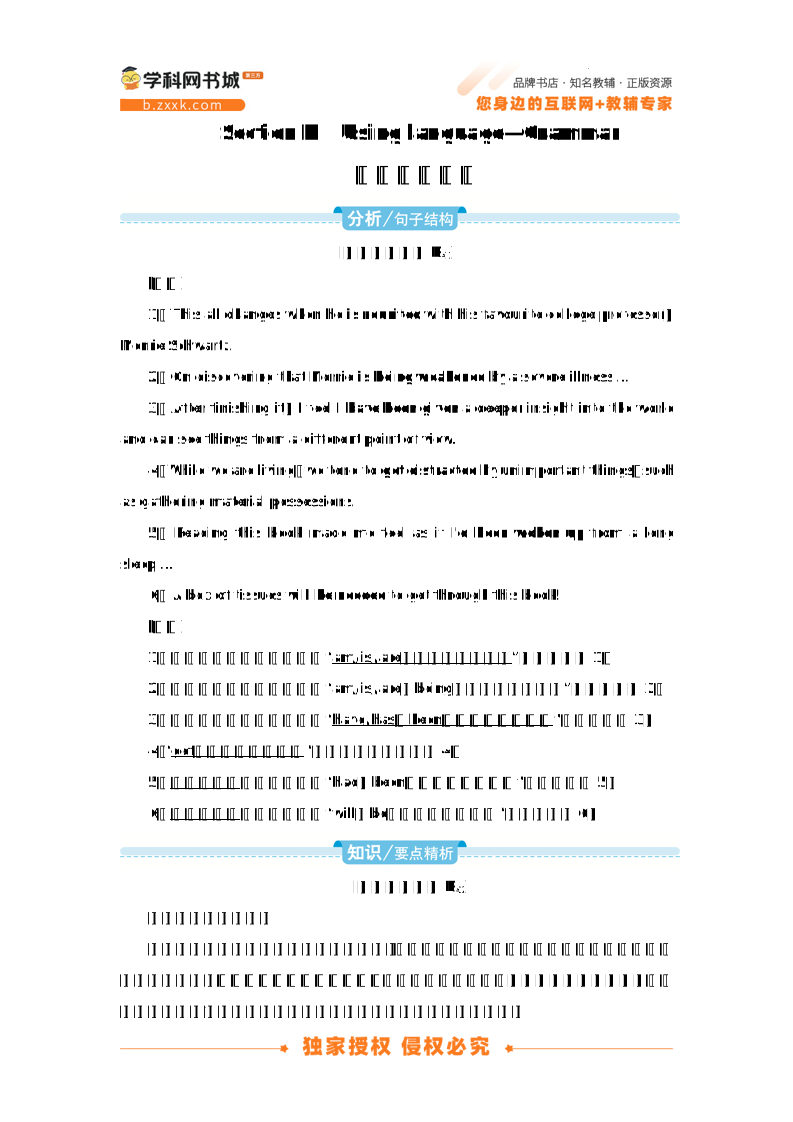
Section Ⅲ Using language—Grammar
复习被动语态
[对应学生用书P41]
[观察]
1.This all changes when he is reunited with his favourite college professor,Morrie Schwartz.
2.On discovering that Morrie is being by a severe illness ...
3.After finishing it,I feel I have been given a deeper insight into the world and can see things from a different point of view.
4.While we are living,we tend to get distracted by unimportant things,such as gathering material possessions.
5.Reading this book made me feel as if I'd been woken up from a long sleep ...
6.A box of tissues will be needed to get through this book!
[归纳]
1.一般现在时的被动语态由“am/is/are+动词的过去分词”构成,如句1。
2.现在进行时的被动语态由“am/is/are+being+动词的过去分词”构成,如句2。
3.现在完成时的被动语态由“have/has+been+动词的过去分词”构成,如句3。
4.“get+动词的过去分词”也可表示被动,如句4。
5.过去完成时的被动语态由“had+been+动词的过去分词”构成,如句5。
6.一般将来时的被动语态由“will+be+动词的过去分词”构成,如句6。
[对应学生用书P42]
英语的语态有主动语态和被动语态两种。决定动词用主动语态还是被动语态主要看动词和主语的关系。如果主语是动作的执行者,即它们是主动关系,此时动词用主动语态;如果主语是动作的承受者,即它们是被动关系,此时动词用被动语态。
英语的被动语态由“be+过去分词”构成,其中be有时态、人称和数的变化。
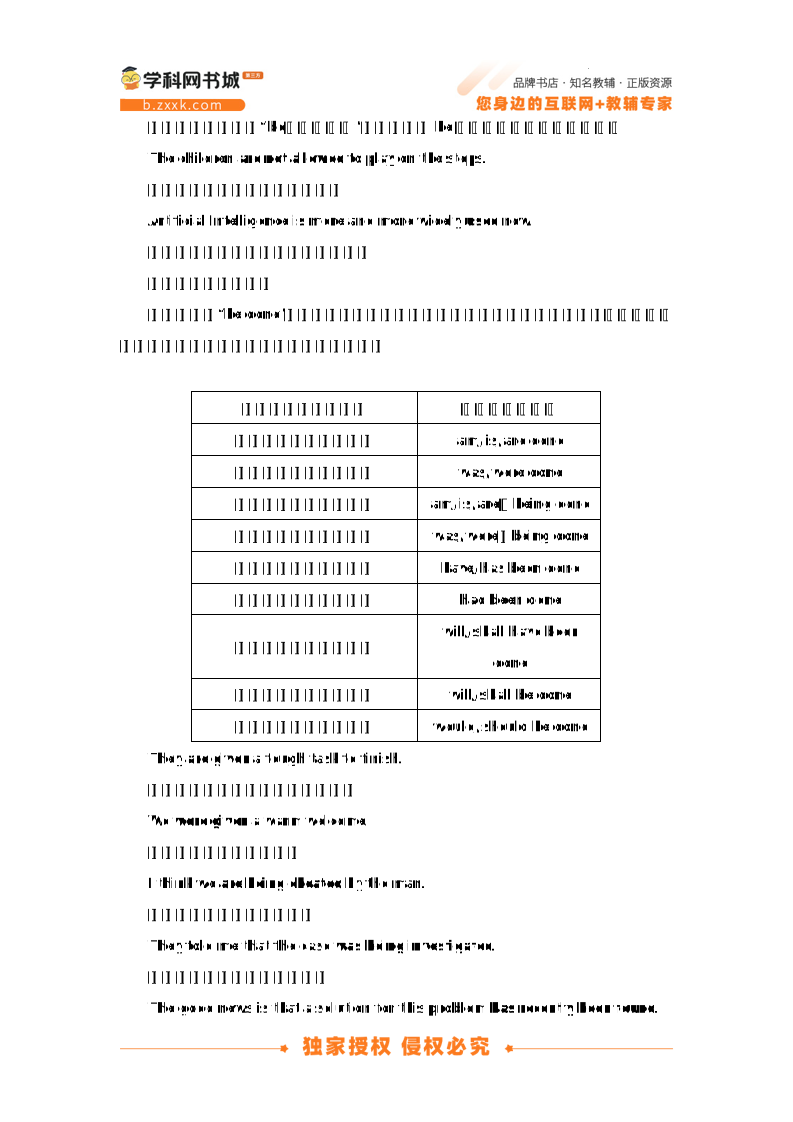
The children are not allowed to play on the steps.
孩子们不被允许在台阶上玩耍。
Artificial Intelligence is more and more widely used now.
现在人工智能被越来越广泛地使用。
被动语态由“be done”形式构成。这里要强调一定是及物动词的过去分词,因为不及物动词不能带宾语,也就不可能有被动语态。
各种时态的被动语态
被动语态的构成
一般现在时的被动语态
am/is/are done
一般过去时的被动语态
was/were done
现在进行时的被动语态
am/is/are+being done
过去进行时的被动语态
was/were+being done
现在完成时的被动语态
have/has been done
过去完成时的被动语态
had been done
将来完成时的被动语态
will/shall have been done
一般将来时的被动语态
will/shall be done
过去将来时的被动语态
would/should be done
They are given a tough task to finish.
他们有一个很棘手的任务要完成。
We were given a warm welcome.
我们受到了热烈的欢迎。
I think we are being cheated by the man.
我想这个人正在欺骗我们。
They told me that the case was being investigated.
他们告诉我案子正在被调查。
The good news is that a solution for this problem has recently been found.
好消息就是目前已经找到了这个问题的解决方法。
The phone which he lost has been recovered.
他丢的那部手机已经被找到了。
As long as you check carefully,any mistakes will be caught.
只要你仔细检查,所有错误都能被找出来。
If it were to rain tomorrow,the sports meeting wo
资源预览图
1
2
相关资源
由于学科网是一个信息分享及获取的平台,不确保部分用户上传资料的 来源及知识产权归属。如您发现相关资料侵犯您的合法权益,请联系学科网,我们核实后将及时进行处理。