Unit 2 Exploring English第一课时starting out &vocabulary课件-2023-2024学年高一英语外研版(2019)必修第一册同步教学课件
2023-02-10
|
16页
|
2093人阅读
|
23人下载
精品
内容正文:
Unit2 Exploring English
高一英语备课组
1. Have a certain understanding of the development history of English language by watching videos.
2. Get information from charts, data and videos, and learn to analyze data with charts.
3. Master the five key words on P18-20.
Chart 1 Top 5 languages by
number of native speakers
Which language has
the largest number
of native speakers?
Chinese has the largest number of native speakers.
Because China has the largest population in the world.
Chart 2 Top 5 languages by number
of learners around the world
Which language has
the largest number of learners?
English has the largest number of learners.
Among these 1,500 million English learners, do you know how many learners are there in China?
Chart 3 English learners in China
What can you learn from Chart 3?
50 million
200 million
300 million
The number of English learners in China is increasing.
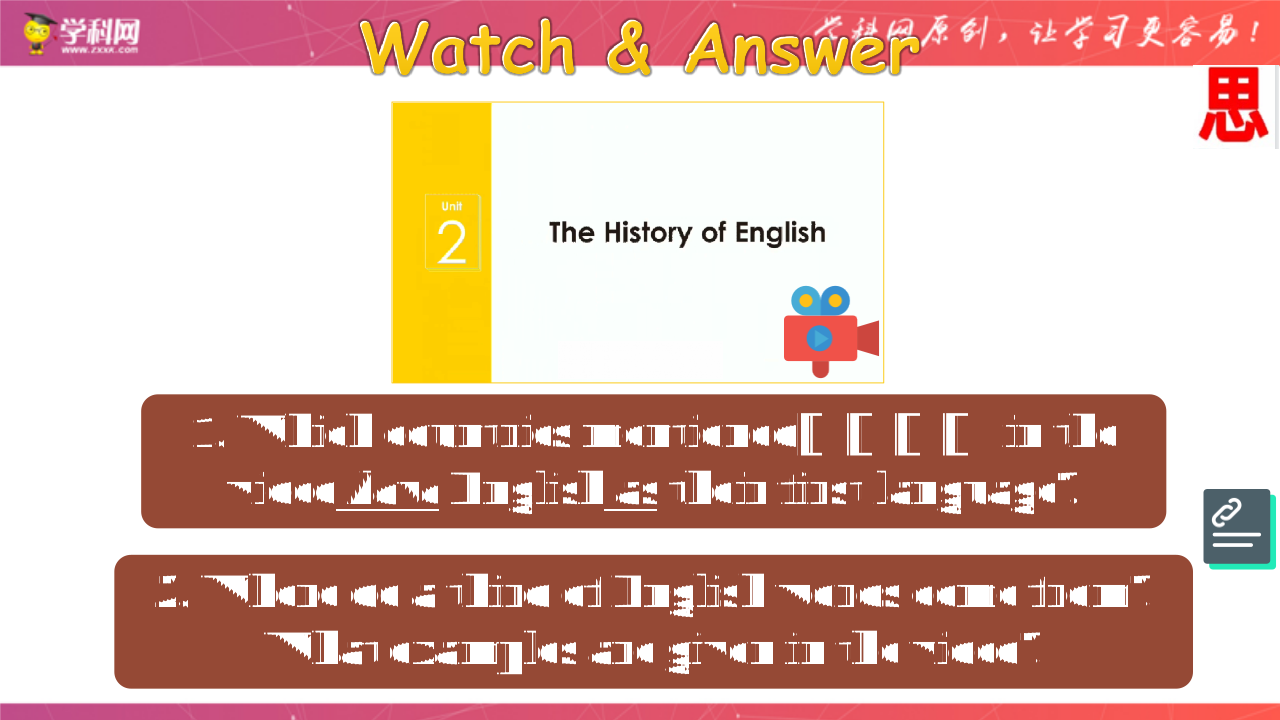
1. Which countries mentioned(提到) in the video have English as their first language?
2. Where do a third of English words come from? What examples are given in the video?
1. Which countries mentioned in the video have English as their first language?
the UK
The Untied Kingdom
Ireland
the USA
The United States of America
Canda
New Zeland
Australia
2. Where do a third of English words come from? What examples are given in the video?
· More than a third of English words come from
French.
· For example, “fruit”, “table”, “crocodile” and
“invasion”.
Vocabulary Learning
1. opposing adj.
opposite
oppose v. 反对,抵制(后跟名词/动词ing形式)
搭配: be opposite to 与……相反
①相反的
②对立的
观点、意见
队组、军队、力量
①prep. 在……对立面
②adj.
③adv.
④n.
1. I would ________ changing the law.
2. Be opposite ________ the fact, he didn’t finished his work.
oppose
to
2. behavior n.
行为举止
behave v. 表现;举止规矩有理
搭配:
be on one’s best behavior 尽可能好地表现
behave oneself 举止规矩有礼
be well-behaved, behave well 表现好
1. He is _____________, he never talks dirty language.
He _____________, he never talk
资源预览图

1

2

3

4

5
6

相关资源
示范课
由于学科网是一个信息分享及获取的平台,不确保部分用户上传资料的 来源及知识产权归属。如您发现相关资料侵犯您的合法权益,请联系学科网,我们核实后将及时进行处理。