Unit 2 The road to success 首字母填空(热点题型专练)英语新教材外研版九年级下册
|
3份
|
24页
|
13人阅读
|
0人下载

内容正文:
Unit 2 The road to success
首字母填空题型专练(话题:人与自我——成功之路)
热点题型概览
题型夯基提升
巩固基础·专项突破
Passage 1
Nan Rendong was a famous s 1 . For more than twenty years, he devoted himself to building the world’s largest r 2 telescope in the mountains of Guizhou—the “China Sky Eye”. Before that, he had studied the universe abroad, but he came back because he wanted to do something for his c 3 .
The work was much h 4 than people thought. The telescope had to be built in a deep mountain a 5 far from cities. Nan climbed the hills almost every day, rain or s 6 .
In 2016, the great “China Sky Eye” was finally c 7 . It can “hear” sounds from deep s 8 . Sadly, Nan Rendong died in 2017, one year l 9 . He did not live long enough to see all its great d 10 , but people will remember him forever.
【答案】
1.scientist/cientist 2.radio/adio 3.country/ountry 4.harder/arder 5.area/rea 6.shine/hine 7.completed/ompleted 8.space/pace 9.later/ater 10.discoveries/iscoveries
【导语】本文主要讲述了南仁东耗费二十余年,克服重重困难建成中国天眼,却未能亲眼见证它全部重大发现的事迹,人们将永远铭记他。
【详解】
1.句意:南仁东是一位著名的科学家。根据“Nan Rendong”以及首字母s提示,南仁东是科学家,scientist表示“科学家”,不定冠词a后使用名词单数。
2.句意:二十多年来,他致力于在贵州山区建造世界最大的射电望远镜——“中国天眼”。根据“China Sky Eye”以及首字母r提示,radio telescope是固定短语,表示“射电望远镜”。
3.句意:在那之前,他曾在国外研究宇宙,但他选择回国,因为他想为自己的国家做些贡献。根据前文他回国建设天眼,结合首字母c提示,country表示“国家”,形容词性物主代词his后接名词。
4.句意:这项工作比人们想象的要艰难得多。根据后面的than可知,此处要用形容词比较级,结合首字母h提示,hard表示“困难的”,比较级为harder,much用来修饰比较级。
5.句意:望远镜必须建造在远离城市的深山区域。根据“deep mountain”以及首字母a提示,area表示“区域,地区”,a deep mountain area表示“一片深山区域”。
6.句意:南仁东几乎每天都要爬山,风雨无阻。固定短语rain or shine,意为“风雨无阻;无论晴雨”,shine名词,表示“晴天”,符合首字母 s 提示。
7.句意:2016年,宏伟的“中国天眼”终于竣工。本句为一般过去时的被动语态(was+过去分词),结合首字母c提示,complete表示“完成”,过去分词是completed,指工程被完工。
8.句意:它能够“听到”来自外太空深处的声音。根据望远镜观测宇宙,结合首字母s提示,deep space为固定搭配,表示“太空深处”。
9.句意:令人惋惜的是,南仁东于2017年逝世,也就是(天眼建成)一年之后。one year later是固定表达,表示“一年之后”,later副词,符合首字母l提示。
10.句意:他没能等到见证它所有重大发现的那一天,但人们会永远记住他。形容词great修饰名词,结合首字母d提示,discovery表示“发现”;all后面要用复数形式discoveries。
Passage 2
My grandfather is a man with a strong will. He was b 1 in a poor family and had to work hard from a young age. He always tells me the story of how he became a doctor.
When he was 18, he d 2 to become a doctor. But his family couldn’t a 3 to send him to medical school. Instead of g 4 up, he worked during the day and studied at night. He saved every penny he could. After five years of hard work, he finally got into medical school.
Even after he became a doctor, he faced many c 5 . He worked long hours and often had to d 6 with difficult patients. But he never let anything stop him. He always said, “Difficulties are just c 7 to become stronger.”
Now my grandfather is retired, but he still helps people in n 8 . He often goes to the community centre to give free health a 9 . He has inspired many people with his kindness and determination. I hope I can be someone l 10 him when I grow up.
【答案】
1.born/orn 2.decided/ecided 3.afford/fford 4.giving/iving 5.challenges/hallenges 6.deal/eal 7.chances/hances 8.need/eed 9.advice/dvice 10.like/ike
【导语】本文讲述了作者的祖父出身贫寒,凭借顽强意志克服重重困难成为一名医生,退休之后依旧热心帮助他人,深深激励着作者的故事。
【详解】
1.句意:他出生在一个贫困家庭,从小就不得不努力干活。根据“in a poor family”可知,此处表达出生,结合所给首字母,固定搭配be born表示“出生”,符合语境,故填born。
2.句意:在他 18 岁的时候,他决定成为一名医生。根据“When he was 18”可知时态为一般过去时,结合“to become a doctor”以及首字母,decide表示“决定”符合语境,decide to do sth.意为“决定做某事”,decide的过去式为decided。
3.句意:但是他的家庭负担不起送他去医学院上学的费用。根据“couldn’t”以及“to send him to medical school”,结合首字母,固定搭配afford to do sth.表示“负担得起做某事”符合语境,情态动词couldn’t后接动词原形,故填afford。
4.句意:他没有放弃,而是白天工作,晚上学习。根据后文“he worked during the day and studied at night”可知他没有放弃,结合首字母,固定搭配give up表示“放弃”符合语境,介词of后面接动名词形式,give的动名词为giving。
5.句意:甚至在他成为一名医生之后,他面临许多困难。根据“faced many”以及后文讲述的种种难处,结合首字母,challenge表示“挑战,困难”符合语境,many后接可数名词复数,故填challenges。
6.句意:他工作时间很长,并且常常要应对难相处的病人。根据“with difficult patients”,结合首字母,固定搭配deal with表示“处理,应对”符合语境,had to后面接动词原形,故填deal。
7.句意:他总是说:“困难只是变得更强大的机会。” 根据“Difficulties are just…to become stronger”,结合首字母,chance表示“机会”符合语境,主语Difficulties为复数,此处用复数形式chances。
8.句意:现在我的祖父退休了,但他仍然帮助处于困境中的人们。根据“helps people”,结合首字母,固定搭配in need表示“在困境中,有需要的”符合语境,故填need。
9.句意:他经常去社区中心提供免费的健康建议。根据“give free health”,结合首字母,advice表示“建议”符合语境,为不可数名词,health advice意为“健康建议”。
10.句意:我希望我长大后能成为像他一样的人。根据“be someone … him”,结合首字母,like表示“像……一样”符合语境,故填like。
Passage 3
13-year-old Chinese girl Yu Zidi shone in the swimming pool at the 20th Aichi-Nagoya Asian Games. The teenager won three gold medals at her first Asian Games. She is r 1 as a rising swimming star by a wide audience. Her excellent performance made her the youngest MVP in Asian Games history.
Yu was born in Baoding, Hebei Province in 2012. Her swimming story started by accident. W 2 she was six years old, she went to a water park with her father. Her coach Li Chao found that swimming could s 3 her natural talent in water. From then on, she went to the pool to train every day after school. The road to success was never smooth. The difficulties she faced were beyond many people’s i 4 . She once suffered from huge s 5 from training and schoolwork. At that time, she felt so tired that she even considered giving up swimming. With encouragement from her parents and coaches, she chose to face the challenge b 6 . She managed to achieve a balance between training and her lessons and stayed f 7 on every practice. Little by little, her efforts paid off.
“I am confident in m 8 . I will keep improving my skills and compete in the Olympic Games one day.” Yu said to a reporter from China Daily.
Yu’s growth tells us t 9 talent alone cannot bring success. It is perseverance and courage that help us go t 10 difficulties and move forward.
【答案】
1.regarded/egarded 2.When/hen 3.show/how 4.imagination/magination 5.stress/tress 6.bravely/ravely 7.focused/ocused 8.myself/yself 9.that/hat 10.through/hrough
【导语】本文是一篇记叙文(新闻报道),主要讲述了13岁中国游泳选手于子迪在亚运会上取得优异成绩及其背后的成长故事,强调了坚持和勇气的重要性。
【详解】
1.句意:她被广大观众视为一颗冉冉升起的游泳明星。be regarded as为固定搭配,意为“被视为……”,此处是被动语态结构,需用过去分词。故填regarded。
2.句意:当她六岁时,她和父亲去了一个水上公园。根据句意及首字母,此处引导时间状语从句,表示“当……时候”,句首首字母大写。故填When。
3.句意:她的教练李超发现游泳可以展现她在水中的天赋。结合“her natural talent in water”和首字母“s”提示可知,是展示天赋,show意为“展示”,符合语境。could为情态动词,后接动词原形。故填show。
4.句意:她面临的困难超出了许多人的想象。beyond one’s imagination为固定短语,意为“超出某人的想象”,many people’s后接名词复数或不可数名词,此处用不可数名词。故填imagination。
5.句意:她曾经遭受来自训练和学业的巨大压力。结合句意和首字母“s”提示可知,训练和学业带来的是压力。huge为形容词,修饰名词,stress意为“压力”,符合训练和学业带来的负担语境,是不可数名词。故填stress。
6.句意:在父母和教练的鼓励下,她选择勇敢地面对挑战。结合“face” 和首字母“b”提示可知,她选择勇敢地面对挑战;此处修饰动词face,需用副词形式,bravely是副词,意为“勇敢地”。故填bravely。
7.句意:并在每次练习中保持专注。stay为系动词,后接形容词作表语,focused 意为“专注的”,stay focused on“专注于”,为常用搭配。故填focused。
8.句意:我对自己有信心。be confident in oneself “对自己有信心”,固定短语;主语是I,介词in后接反身代词表示“对自己”,I的反身代词是myself。故填myself。
9.句意:于子迪的成长告诉我们,仅靠天赋不能带来成功。此处引导宾语从句,从句结构完整,只起连接作用,无实际意义,用that。故填that。
10.句意:是毅力和勇气帮助我们渡过困难并向前迈进。go through为固定短语,意为“经历;渡过”,符合克服困难的语境。故填through。
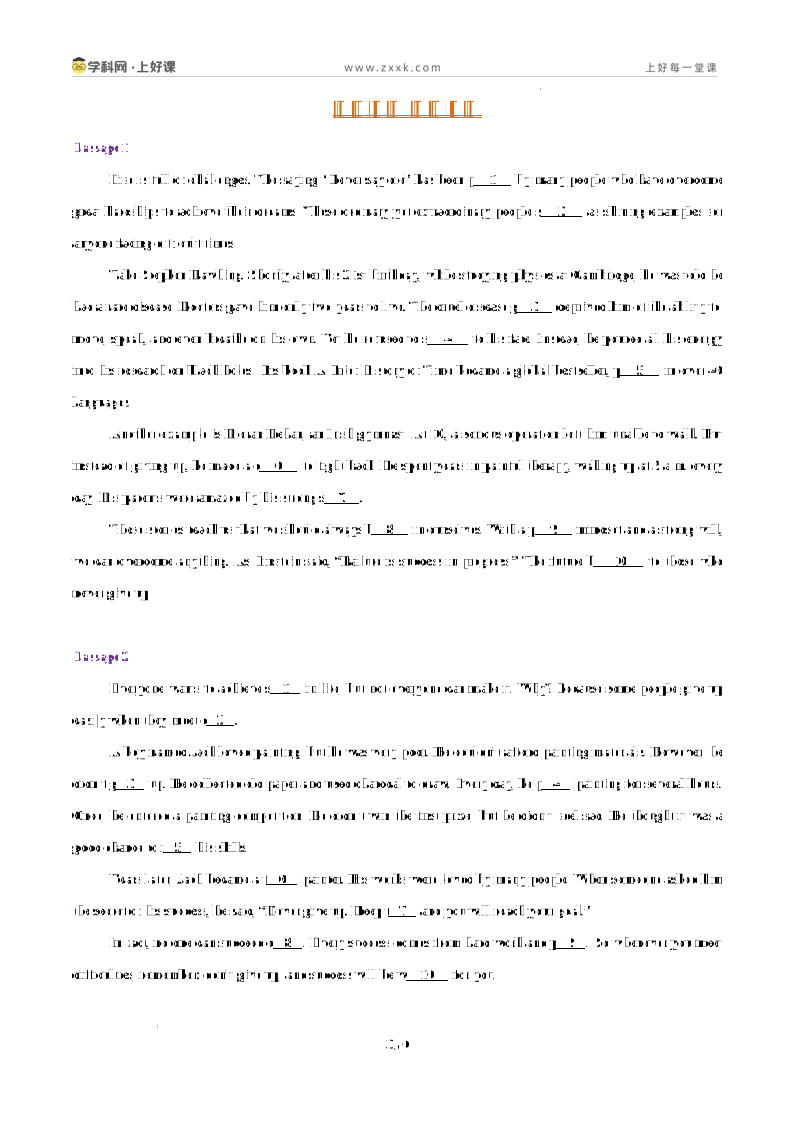
培优拔高·挑战攻坚
Passage 1
Life is full of challenges. The saying “Never say die” has been p 1 by many people who have overcome great hardships to achieve their dreams. These ordinary yet extraordinary people s 2 as shining examples for anyone facing difficult times.
Take Stephen Hawking. Shortly after his 21st birthday, while studying physics at Cambridge, he was told he had a rare disease. Doctors gave him only two years to live. The cruel disease g 3 deprived him of the ability to move, speak, and even breathe on his own. Yet he refused to s 4 to his fate. Instead, he poured all his energy into his research on black holes. His book A Brief History of Time became a global bestseller, p 5 in over 40 languages.
Another example is Kieran Behan, an Irish gymnast. At 10, a serious operation left him unable to walk. But instead of giving up, he made a c 6 to fight back. He spent years in painful therapy, waking up at 5 a.m. every day. His parents were amazed by his strong s 7 .
These stories teach us that we should always b 8 in ourselves. With a p 9 mindset and a strong will, we can overcome anything. As Einstein said, “Failure is success in progress.” The future b 10 to those who never give up.
【答案】
1.proved/roved 2.serve/erve 3.gradually/radually 4.surrender/urrender 5.published/ublished 6.choice/hoice 7.spirit/pirit 8.believe/elieve 9.positive/ositive 10.belongs/elongs
【导语】本文是议论文,文章借两位励志人物事例,告诫人们心怀信念、永不放弃方能战胜磨难、掌控未来。
【详解】
1.句意:“永不言弃”这句名言,已经被许许多多克服重重磨难、实现了梦想的人所印证。此处表达“永不言弃这句名言已经被许多克服重重困难实现梦想的人所证实”,句子为现在完成时的被动结构“has been + 过去分词”,结合首字母p,prove(证实)的过去分词proved符合语法和语义逻辑。
2.句意:这些平凡却又了不起的人,为所有身处困境的人树立了光辉榜样。固定搭配serve as意为“充当、作为”,句意为“这些平凡却不凡的人成为了所有身处困境的人的光辉榜样”,主语是集体名词people,一般现在时中谓语用动词原形serve,契合首字母s提示。
3.句意:这残酷的疾病渐渐剥夺了他活动、说话,甚至自主呼吸的能力。此处需要副词修饰动词deprived(剥夺),语境指残酷的疾病逐步剥夺了他自主行动、说话甚至呼吸的能力,结合首字母g,gradually(逐渐地、逐步地)符合疾病慢慢侵蚀身体的过程描述。
4.句意:但他拒绝向自己的命运低头屈服。固定搭配surrender to one’s fate意为“向命运屈服”,句意为“然而他拒绝向自己的命运投降”,refuse to do sth结构中需要接动词原形,结合首字母s,surrender符合语义和搭配要求。
5.句意:他的著作《时间简史》成了全球畅销书,被以四十多种语言出版发行。此处是过去分词作后置定语,修饰名词A Brief History of Time,表示这本书被翻译成40多种语言,publish(出版、发行)的过去分词published和主语book构成被动关系,契合首字母p提示与语境逻辑。
6.句意:但他没有就此放弃,而是选择顽强抗争。固定搭配make a choice to do sth意为“做出做某事的选择”,句意为“他没有放弃,而是选择反击”,不定冠词a后接可数名词单数,结合首字母c,choice符合搭配和语义。
7.句意:他的父母都被他顽强的精神所震撼。句意为“他的父母都为他强大的精神意志感到震惊”,形容词strong后接名词,结合前文他多年坚持痛苦康复训练的语境与首字母s,spirit(精神、意志)符合描述人物品质的要求。
8.句意:这些故事告诉我们,我们应当永远相信自己。固定搭配believe in oneself意为“相信自己”,情态动词should后接动词原形,结合首字母b,believe符合“这些故事教会我们要始终相信自己”的语义。
9.句意:只要拥有积极的心态和坚定的意志,我们就可以战胜一切困难。此处需要形容词修饰名词mindset(心态),结合后文“强大的意志可以克服一切”的正向语境与首字母p,positive(积极的)构成常用搭配positive mindset(积极心态),符合语义。
10.句意:未来属于那些永不放弃的人。固定搭配belong to意为“属于”,句意为“未来属于永不言弃的人”,主语future是单数概念,句子为一般现在时,谓语用第三人称单数形式belongs,契合首字母b提示与语法规则。
Passage 2
Everyone wants to achieve s 1 in life, but not everyone can make it. Why? Because some people give up easily when they meet c 2 .
A boy named Jack loved painting, but he was very poor. He couldn’t afford painting materials. However, he didn’t g 3 up. He collected old paper and used charcoal to draw. Every day, he p 4 painting for several hours. Once, he entered a painting competition. He didn’t win the first prize, but he didn’t feel sad. He thought it was a good chance to i 5 his skills.
Years later, Jack became a f 6 painter. His works were loved by many people. When someone asked him the secret of his success, he said, “Never give up. Keep t 7 and you will reach your goal.”
In fact, no one can succeed o 8 . Every success comes from hard work and p 9 . So whenever you meet difficulties, remember: don’t give up, and success will be w 10 for you.
【答案】
1.success/uccess 2.challenges/hallenges 3.give/ive 4.practiced/racticed/practised/ractised 5.improve/mprove 6.famous/amous 7.trying/rying 8.overnight/vernight 9.persistence/ersistence 10.waiting/aiting
【导语】本文通过杰克出身贫寒但坚持学画最终成名的励志故事,告诉我们成功不会轻易到来,只有不惧困难、坚持努力的人才能收获成功。
【详解】
1.句意:每个人都想在生活中取得成功,但不是每个人都能做到。根据首字母提示及语境,achieve success是固定搭配,表示“获得成功”,首字母s对应success,此处表示“成功”这一概念,使用原形即可。
2.句意:因为有些人遇到挑战时就轻易放弃了。动词meet后需接名词,表“遇到挑战”,和后文“遇到困难不要放弃”呼应。首字母c对应名词challenge表示“挑战”,此处表示泛指,需用复数形式challenges。
3.句意:然而他没有放弃。首字母g对应动词短语give up表示“放弃”,didn’t后接动词原形,故填give。
4.句意:每天他都练习画画好几个小时。讲述过去的事用一般过去时,表示联系画画,固定短语practice/practise doing sth.表示“练习做某事”,此处需使用practice/practise的过去式,首字母p对应practiced/practised。
5.句意:他认为这是提升自己技能的好机会。to后接动词原形,表示目的。动词短语improve skills表示“提升技能”符合语境,首字母i对应improve。
6.句意:多年后,Jack成为了一名著名的画家。修饰名词painter“画家”需用形容词,首字母f对应famous“著名的”符合语境。
7.句意:持续尝试,你就会达成目标。keep doing sth.表示“持续做某事”,因此空格处需填入动名词形式。首字母t对应动词try表示“尝试”,其动名词为trying符合“坚持”的主题。
8.句意:事实上,没有人能一夜之间成功。succeed overnight是固定表达“一夜成名/轻易快速成功”,符合语境,首字母o对应overnight。
9.句意:每一次成功都来自努力和坚持。空格处是和hard work并列的积极品质,首字母p对应,名词persistence“毅力/坚持”完全契合全文“不放弃”的主题。
10.句意:所以当你遇到困难时记住:不要放弃,成功将会等待着你。空格处在be动词后,且表达主动含义,应填入动词现在分词形式。根据首字母提示,固定搭配wait for表示“等待”,首字母w对应现在分词形式waiting。
Passage 3
Everyone wants to achieve success, but not everyone knows how to keep going when facing d 1 . Here is a story about a young runner. He loved running but he was not born with great s 2 . He often failed in races, but he never gave up. Every morning, he got up early to p 3 running. Even when it rained heavily, he still kept t 4 himself. His parents were worried about his health, but he told them he would k 5 on.
One year later, he took part in a national race. During the race, his foot hurt badly, but he didn’t stop. He kept running u 6 he crossed the finish line. He didn’t win the first prize, but he won people’s r 7 . Many people were touched by his s 8 and perseverance.
This story tells us that success doesn’t come e 9 . We need to keep trying and never give up. No matter what h 10 , we should hold on to our dreams.
【答案】
1.difficulties/ifficulties 2.speed/peed 3.practice/ractice 4.training/raining 5.keep/eep 6.until/ntil 7.respect/espect 8.spirit/pirit 9.easily/asily 10.happens/appens
【导语】本文主要讲述了一个年轻跑步者虽然天赋不佳,但通过坚持不懈的努力和顽强的精神赢得尊重的故事。
【详解】
1.句意:每个人都想取得成功,但并不是所有人都知道在面对困境时该如何坚持下去。facing后面需要接名词作宾语。根据首字母d和上下文(后文提到他经常失败、脚受伤等),这里指遇到的阻碍。通常用复数形式表示泛指各种困难,所以填difficulties符合语境。
2.句意:他热爱跑步,却并非生来就有出众的速度。这是一个关于跑步者(runner)的故事,评价跑步天赋最重要的指标通常是速度。首字母是s,且great speed是常用搭配,所以填speed符合语境。
3.句意:每天早上,他都早起练习跑步。to后面接动词原形表示目的。为了弥补速度的不足,他需要勤加练习。首字母p对应动词practice符合语境。
4.句意:即使大雨滂沱,他依然坚持训练。句型keep doing sth.意为“坚持做某事/一直做某事”,所以动词要用ing形式。结合首字母t,training(训练)符合他依然坚持训练的语境。
5.句意:父母很担心他的身体,可他告诉父母自己会坚持下去。短语keep on意为“继续”,符合他不放弃的语境。would是情态动词,后接动词原形,首字母k提示填keep符合语境。
6.句意:他一直坚持跑到冲过终点线。这里需要一个连词来引导时间状语从句,表示动作持续的终点。首字母u对应的连词是until。
7.句意:他没有拿到第一名,却赢得了人们的尊重。虽然他没得第一名(didn’t win the first prize),但他带伤坚持跑完全程的精神令人敬佩。people’s是所有格,后面接名词。首字母r提示填respect“尊重”符合语境。
8.句意:许多人被他的意志和坚持不懈打动了。这里需要一个名词与perseverance(毅力)并列,形容他的品质。首字母s提示填spirit(精神)符合语境,常用来形容这种顽强拼搏的状态。
9.句意:这个故事告诉我们,成功不会轻易降临。这里需要一个副词来修饰动词come。根据文章主旨(努力、坚持),成功是不容易的。首字母e提示填easily“容易地”符合语境。
10.句意:无论发生什么,我们都要坚守自己的梦想。No matter what引导让步状语从句,缺谓语动词。主语是what(指代事情),视为第三人称单数,且陈述客观事实用一般现在时。首字母h提示填happens“发生”符合语境。
Passage 4
Throughout history, many great people have s 1 from immense hardships, yet they never surrendered. Their stories c 2 inspire us to persevere when we encounter difficulties.
Helen Keller is a remarkable example. She was d 3 with blindness and deafness at a very young age. However, she didn’t let these disabilities s 4 in her way. With the help of her teacher, she learned to communicate and made great c 5 to society.
Thomas Edison is a 6 an inspiring figure. He failed thousands of times before inventing the light bulb. F 7 , his persistence paid off and changed the world.
No matter what challenges we face, we should maintain a positive a 8 and a strong will. R 9 the saying: “Failure is the mother of success.” We can a 10 our goals if we refuse to give up.
【答案】
1.suffered/uffered 2.continually/ontinually 3.diagnosed/iagnosed 4.stand/tand 5.contributions/ontributions 6.also/lso 7.Finally/inally 8.attitude/ttitude 9.Remember/emember 10.achieve/chieve
【导语】本文通过海伦·凯勒和爱迪生的事例,说明伟人虽历经磨难却永不屈服,激励我们面对困难时应保持积极态度、坚强意志,坚持不懈终能实现目标。
【详解】
1.句意:纵观历史,许多伟人都遭受过巨大的苦难,但他们从未屈服。根据首字母是s,搭配from immense hardships,可知,固定短语suffer from“遭受……”符合语境。“经历苦难”且时态为现在完成时have+过去分词,suffer的过去分词形式为suffered。
2.句意:他们的故事不断地激励我们在遇到困难时坚持下去。首字母是c,位于动词inspire“激励”的前面,结合爱迪生失败多次后成功的经历可知,continually“不断地”符合语境,他们的故事不断地激励我们。
3.句意:她在很小的时候就被诊断出失明和失聪。首字母是d,根据搭配with+疾病 )blindness and deafness),可知,被动语态was+过去分词。固定表达be diagnosed with“被诊断为……”符合语境。故填diagnosed。
4.句意:然而,她没有让这些残疾阻碍她。根据首字母是s,搭配in her way“挡路”,可知,本题考查固定短语stand in one’s way“阻碍某人”。let+宾语+动词原形(使役动词结构),故填动词原形stand。
5.句意:在老师的帮助下,她学会了交流并对社会做出了巨大贡献。结合海伦·凯勒的事迹,根据首字母是c,搭配make great…to society “对社会做出巨大的……”,可知,固定短语make great contributions to“对……做出了巨大贡献”符合语境。great后面需用名词复数形式contributions。
6.句意:托马斯·爱迪生也是一位鼓舞人心的人物。首字母是a,前文已介绍Helen Keller,此处引出另一位,表示“也/又一个”。also“也”符合语境。
7.句意:最终,他的坚持得到了回报并改变了世界。首字母是F,句首需大写,前文说“失败了数千次”,此处转折到“成功”,表示时间上Finally“最终”。副词作状语,位于句首。
8.句意:无论面对什么挑战,我们都应该保持积极的态度和坚强的意志。首字母是a,搭配positive“积极的”,不定冠词a+单数名词。固定搭配a positive attitude“积极的态度”符合语境。故填attitude。
9.句意:记住这句谚语:“失败是成功之母”。首字母R大写,祈使句动词原形开头 + 引号内容为谚语,Remember“记住”符合语境。故填Remember。
10.句意:如果我们拒绝放弃,我们就能实现目标。首字母是a,搭配our goals“我们的目标”,can + 动词原形。固定搭配achieve one’s goals“实现目标”符合语境。故填achieve。
Passage 5
Thomas Edison was one of the greatest inventors in history. He is f 1 for inventing the practical light bulb. But before he succeeded, he failed thousands of times. When someone asked him how he felt about those f 2 , he said they were not failures but valuable lessons. He l 3 a lot from each mistake and kept trying without stopping.
Edison’s s 4 didn’t come easily. He spent most of his time working in his lab day and night. He had a s 5 will and never gave up, even when others laughed at his “useless” experiments. He c 6 still continue his research day after day.
One day, after hundreds of t 7 , he finally made the light bulb light up. It was a great moment that changed the world. His invention brought bright light to people’s lives.
Edison’s story tells us that success r 8 perseverance and hard work. No matter how hard things get, we should never g 9 up. As long as we keep trying and learn from mistakes, we will a 10 our goals in the end.
【答案】
1.famous/amous 2.failures/ailures 3.learned/earned 4.success/uccess 5.strong/trong 6.could/ould 7.tries/ries 8.requires/equires 9.give/ive 10.achieve/chieve
【导语】本文是一篇记叙文,讲述发明家托马斯・爱迪生发明实用灯泡的经历,告诉我们成功依靠毅力与努力,不要轻言放弃。
【详解】
1.句意:他因发明实用灯泡而出名。固定搭配be famous for“因……闻名”,首字母f提示填famous。
2.句意:当有人问他对于那些失败作何感想时,他说这些算不上失败,而是宝贵的经验教训。后文“they were not failures”给出提示,those后接可数名词复数,首字母f提示填failures。
3.句意:他从每一次失误中学到很多,不停地坚持尝试。全文主体时态为一般过去时;固定搭配learn from“从……学习”,首字母l提示填learned。
4.句意:爱迪生的成功来之不易。后文讲述他日夜在实验室工作,结合上下文与首字母s,此处指“成功”,应填success。
5.句意:他拥有坚定的意志,即便别人嘲笑他“无用”的实验,他也永不放弃。固定搭配strong will“坚定的意志”,形容词修饰名词will,首字母s提示填strong。
6.句意:他仍然能够日复一日继续自己的研究。句子时态为一般过去时,结合语境与首字母c,应填could。
7.句意:有一天,经过数百次尝试之后,他终于让灯泡亮了起来。hundreds of后接可数名词复数;结合实验背景,首字母t提示填tries。
8.句意:爱迪生的故事告诉我们成功依靠毅力与辛勤付出。主语success为不可数名词,主句是一般现在时,谓语动词使用三单形式;结合句意与首字母r提示填requires。
9.句意:无论处境多么艰难,我们永远不能放弃。固定搭配give up“放弃”;情态动词should后接动词原形,首字母g提示填give。
10.句意:只要我们不断尝试、从错误中吸取教训,最终我们将会实现目标。固定搭配achieve one’s goals“实现目标”;will后接动词原形,首字母a提示填achieve。
Passage 6
Nick is a famous runner. He started running when he was 8 years old. At first, he was not good at it and often f 1 races. But he never gave up. He practiced every day, even on rainy or snowy days. His parents always e 2 him to keep going.
As he grew up, he faced more c 3 . Once, he hurt his leg badly and had to stay in bed for two months. Everyone thought he would s 4 running, but he didn’t. After he got better, he started training even harder.
Finally, in an important race, he won the first prize. His success b 5 him great joy and made him well-known. Now, many young people look up to him and take him as their h 6 . Nick often says, “Never give up, and you will a 7 your dream one day.“
Last month, he gave a speech at our school. He told us that every d 8 we meet is a chance to grow. We should not be a 9 of failure. Instead, we should learn from it and try again.
His story t 10 us that perseverance is the key to success.
【答案】
1.failed/ailed 2.encouraged/ncouraged 3.challenges/hallenges 4.stop/top 5.brought/rought 6.hero/ero 7.achieve/chieve 8.difficulty/ifficulty 9.afraid/fraid 10.tells/ells
【导语】本文讲述著名赛跑运动员尼克的成长经历。尼克自幼练习跑步,初期屡屡失利,但他不曾放弃,在父母鼓励下坚持训练。成长途中他遭遇伤病等重重挑战,却依旧坚持,最终赢得了重要比赛。
【详解】
1.句意:起初,他并不擅长跑步,经常输掉比赛。文章整体时态为一般过去时,结合“he was not good at it”可知他比赛失利,结合首字母“f”,应填failed,意为“失败;输掉”,是fail的过去式形式。
2.句意:他的父母总是鼓励他坚持下去。结合上下文语境,父母持续给予他支持,全文时态为一般过去时,结合首字母“e”,应填encouraged,意为“鼓励”,是encourage的过去式形式。
3.句意:随着他长大,他面临更多挑战。more后接可数名词复数,后文腿部受伤就是其中一项困难,结合首字母“c”,应填challenges,意为“挑战”,是可数名词复数形式。
4.句意:所有人都认为他会停止跑步,但是他没有。would后接动词原形,结合后文“but he didn’t”形成转折关系,结合首字母“s”,应填stop,意为“停止”,属于动词原形。
5.句意:他的成功给他带来了巨大喜悦,也让他声名远扬。文章时态为一般过去时,bring sb. sth.表示“给某人带来某物”,结合首字母“b”,应填brought,意为“带来”,是bring的过去式形式。
6.句意:如今很多年轻人敬仰他,把他当作自己的偶像。形容词性物主代词their后接名词,结合语境年轻人以他为榜样,结合首字母“h”,应填hero,意为“偶像,英雄”,属于可数名词单数形式。
7.句意:永不放弃,终有一天你将会实现你的梦想。will后接动词原形,achieve one’s dream是常用搭配,表示“实现梦想”,结合首字母“a”,应填achieve,意为“实现;达成”,属于动词原形。
8.句意:他告诉我们我们遇到的每一个困难都是成长的机会。every后面接可数名词单数,后文提到不要畏惧失败,对应前进路上的困难,结合首字母“d”,应填 difficulty,意为“困难”,属于可数名词单数形式。
9.句意:我们不应该害怕失败。be afraid of为固定短语,表示“害怕……”,结合首字母“a”,应填afraid,意为“害怕的”,属于形容词。
10.句意:他的故事告诉我们坚持不懈是成功的关键。主语“his story”为单数,句子为一般现在时,谓语动词使用第三人称单数形式,结合首字母“t”,应填tells,意为“告诉”,是tell的第三人称单数形式。
Passage 7
Peng Huidi is a swimmer born in Shandong Province in 2004. When she was two years old, a sudden high fever robbed her of most of her hearing, which c 1 changed her life. S 2 from this hearing loss, she was once so shy that she was even afraid to speak to others. To help her build up courage and confidence, Peng’s father took her to the nearest swimming pool, where she unexpectedly found her lifelong passion for swimming. Balancing her intensive daily swimming training and regular schoolwork was extremely c 3 for the young girl. D 4 countless moments when she thought about giving up, she kept reminding herself that her future would be totally different only if she held on. W 5 difficulties came her way, she overcame them all with great determination. When pressure grew p 6 hard to bear, she followed her parents’ advice to take a break. After that, she returned to training with an even stronger w 7 , Her c 8 efforts finally paid off on December 10, 2025, when Peng Huidi claimed the championship in the women’s 100mbackstroke S15 final at the 12th National Games for Persons with Disabilities and the 9th National Special Olympic Games. This life-changing experience was far more than a pursuit of v 9 in competitions; it was a meaningful journey that let her push her limits, grow more confident, and become an i 10 to countless young people chasing their dreams.
【答案】
1.completely/ompletely 2.Suffering/uffering 3.challenging/hallenging 4.Despite/espite 5.Whenever/henever 6.pretty/retty 7.will/ill 8.continuous/ontinuous 9.victory/ictory 10.inspiration/nspiration
【导语】本文是一篇记叙文,主要讲述了听障游泳运动员彭惠迪克服困难、坚持训练,最终在全国残运会上夺冠的励志故事。
【详解】
1.句意:两岁时,一场突发高烧夺走了她的大部分听力,这完全改变了她的人生。空处位于“changed her life”之前,修饰动词change,应用副词。根据“robbed her of most of her hearing”可知,听力丧失是一个巨大的转折,“彻底”改变了她的人生。首字母c提示completely“完全地”符合语境。
2.句意:遭受听力损失,她曾非常害羞,甚至不敢和别人说话。句中已有系动词“was”,空处应用非谓语动词作状语。根据“from this hearing loss”及首字母S可知,此处表示“遭受”听力损失,suffer from为固定搭配;主语She与suffer之间为主动关系,用现在分词作状语,句首首字母大写,故填Suffering。
3.句意:平衡密集的每日游泳训练和常规学业对这个年轻女孩来说极其具有挑战性。空前“was extremely”后接形容词作表语,描述“平衡训练和学业”这件事的性质。根据“intensive daily swimming training and regular schoolwork”可知,同时兼顾两者是非常困难的。首字母c提示challenging“具有挑战性的”符合语境。
4.句意:尽管有无数次想要放弃的时刻,她仍不断提醒自己,只有坚持下去,未来才会完全不同。空后“countless moments when she thought about giving up”为名词短语。根据“she kept reminding herself”可知,此处表示“尽管”有无数想放弃的时刻,她仍坚持。首字母D提示Despite“尽管”符合语境,句首首字母大写。
5.句意:每当困难降临,她都凭借强大的决心战胜所有困难。根据“difficulties came her way”及首字母W,可知,引导让步状语从句,意为“无论什么时候”,指无论困难何时降临,她都以强大的决心克服了它们。Whenever符合语境。
6.句意:当压力变得相当难以承受时,她听从父母的建议稍作休息。空前“grew p…hard to bear”中,空处需填副词修饰形容词hard,且首字母为p,用副词pretty表示“相当、非常”,指当压力变得几乎难以承受时。
7.句意:之后,她以更坚强的意志重返训练。由“stronger”可知,空处应用名词作介词with的宾语;根据“returned to training”可知,休息后她带着更坚定的“意志”回来。首字母w提示will“意志”符合语境。
8.句意:她持续不断的努力终于在2025年12月10日得到了回报——在第十二届全国残疾人运动会暨第九届特殊奥林匹克运动会上,彭惠迪在女子100米仰泳S15决赛中夺得冠军。空后“efforts”是名词,此处应用形容词作定语;根据“finally paid off”可知,努力是持续不断的,首字母c提示continuous“持续的、不断的”符合语境。
9.句意:这次改变人生的经历远不止是对比赛中胜利的追求,更是一段有意义的旅程,让她突破极限、变得更加自信,并成为无数追梦年轻人的榜样。of后接名词作宾语;根据“competitions”及首字母v可知,比赛追求的是“胜利”,故填victory“胜利”。
10.句意:这次改变人生的经历远不止是对比赛中胜利的追求,更是一段有意义的旅程,让她突破极限、变得更加自信,并成为无数追梦年轻人的激励。不定冠词an后接可数名词单数;根据“to countless young people chasing their dreams”可知,她成为年轻人的“激励”。首字母i提示inspiration“激励”符合语境。
1 / 13
学科网(北京)股份有限公司
学科网(北京)股份有限公司
$
Unit 2 The road to success
语法填空题型专练(话题:人与自我——成功之路)
参考答案
题型夯基提升
巩固基础·专项突破
Passage1:
1.scientist, 2.radio, 3.country, 4.harder, 5.area, 6.shine, 7.completed, 8.space, 9.later, 10.discoveries
Passage2:
1.born, 2.decided, 3.afford, 4.giving, 5.challenges, 6.deal, 7.chances, 8.need, 9.advice, 10.like
Passage3:
1.regarded, 2.When, 3.show, 4.imagination, 5.stress, 6.bravely, 7.focused, 8.myself, 9.that, 10.through
培优拔高·挑战攻坚
Passage1:
1.proved, 2.serve, 3.gradually, 4.surrender, 5.published, 6.choice, 7.spirit, 8.believe, 9.positive, 10.belongs Passage2:
1.success, 2.challenges, 3.give, 4.practiced/practised, 5.improve, 6.famous, 7.trying, 8.overnight, 9.persistence, 10.waiting
Passage3:
1.difficulties, 2.speed, 3.practice, 4.training, 5.keep, 6.until, 7.respect, 8.spirit, 9.easily, 10.happens
Passage4:
1.suffered, 2.continually, 3.diagnosed, 4.stand, 5.contributions, 6.also, 7.Finally, 8.attitude, 9.Remember, 10.achieve
Passage5:
1.famous, 2.failures, 3.learned, 4.success, 5.strong, 6.could, 7.tries, 8.requires, 9.give, 10.achieve
Passage6:
1.failed, 2.encouraged, 3.challenges, 4.stop, 5.brought, 6.hero, 7.achieve, 8.difficulty, 9.afraid, 10.tells
Passage7:
1.completely, 2.Suffering, 3.challenging, 4.Despite, 5.Whenever, 6.pretty, 7.will, 8.continuous, 9.victory, 10.inspiration
1 / 13
学科网(北京)股份有限公司
学科网(北京)股份有限公司
$
Unit 2 The road to success
首字母填空题型专练(话题:人与自我——成功之路)
热点题型概览
题型夯基提升
巩固基础·专项突破
Passage 1
Nan Rendong was a famous s 1 . For more than twenty years, he devoted himself to building the world’s largest r 2 telescope in the mountains of Guizhou—the “China Sky Eye”. Before that, he had studied the universe abroad, but he came back because he wanted to do something for his c 3 .
The work was much h 4 than people thought. The telescope had to be built in a deep mountain a 5 far from cities. Nan climbed the hills almost every day, rain or s 6 .
In 2016, the great “China Sky Eye” was finally c 7 . It can “hear” sounds from deep s 8 . Sadly, Nan Rendong died in 2017, one year l 9 . He did not live long enough to see all its great d 10 , but people will remember him forever.
Passage 2
My grandfather is a man with a strong will. He was b 1 in a poor family and had to work hard from a young age. He always tells me the story of how he became a doctor.
When he was 18, he d 2 to become a doctor. But his family couldn’t a 3 to send him to medical school. Instead of g 4 up, he worked during the day and studied at night. He saved every penny he could. After five years of hard work, he finally got into medical school.
Even after he became a doctor, he faced many c 5 . He worked long hours and often had to d 6 with difficult patients. But he never let anything stop him. He always said, “Difficulties are just c 7 to become stronger.”
Now my grandfather is retired, but he still helps people in n 8 . He often goes to the community centre to give free health a 9 . He has inspired many people with his kindness and determination. I hope I can be someone l 10 him when I grow up.
Passage 3
13-year-old Chinese girl Yu Zidi shone in the swimming pool at the 20th Aichi-Nagoya Asian Games. The teenager won three gold medals at her first Asian Games. She is r 1 as a rising swimming star by a wide audience. Her excellent performance made her the youngest MVP in Asian Games history.
Yu was born in Baoding, Hebei Province in 2012. Her swimming story started by accident. W 2 she was six years old, she went to a water park with her father. Her coach Li Chao found that swimming could s 3 her natural talent in water. From then on, she went to the pool to train every day after school. The road to success was never smooth. The difficulties she faced were beyond many people’s i 4 . She once suffered from huge s 5 from training and schoolwork. At that time, she felt so tired that she even considered giving up swimming. With encouragement from her parents and coaches, she chose to face the challenge b 6 . She managed to achieve a balance between training and her lessons and stayed f 7 on every practice. Little by little, her efforts paid off.
“I am confident in m 8 . I will keep improving my skills and compete in the Olympic Games one day.” Yu said to a reporter from China Daily.
Yu’s growth tells us t 9 talent alone cannot bring success. It is perseverance and courage that help us go t 10 difficulties and move forward.
培优拔高·挑战攻坚
Passage 1
Life is full of challenges. The saying “Never say die” has been p 1 by many people who have overcome great hardships to achieve their dreams. These ordinary yet extraordinary people s 2 as shining examples for anyone facing difficult times.
Take Stephen Hawking. Shortly after his 21st birthday, while studying physics at Cambridge, he was told he had a rare disease. Doctors gave him only two years to live. The cruel disease g 3 deprived him of the ability to move, speak, and even breathe on his own. Yet he refused to s 4 to his fate. Instead, he poured all his energy into his research on black holes. His book A Brief History of Time became a global bestseller, p 5 in over 40 languages.
Another example is Kieran Behan, an Irish gymnast. At 10, a serious operation left him unable to walk. But instead of giving up, he made a c 6 to fight back. He spent years in painful therapy, waking up at 5 a.m. every day. His parents were amazed by his strong s 7 .
These stories teach us that we should always b 8 in ourselves. With a p 9 mindset and a strong will, we can overcome anything. As Einstein said, “Failure is success in progress.” The future b 10 to those who never give up.
Passage 2
Everyone wants to achieve s 1 in life, but not everyone can make it. Why? Because some people give up easily when they meet c 2 .
A boy named Jack loved painting, but he was very poor. He couldn’t afford painting materials. However, he didn’t g 3 up. He collected old paper and used charcoal to draw. Every day, he p 4 painting for several hours. Once, he entered a painting competition. He didn’t win the first prize, but he didn’t feel sad. He thought it was a good chance to i 5 his skills.
Years later, Jack became a f 6 painter. His works were loved by many people. When someone asked him the secret of his success, he said, “Never give up. Keep t 7 and you will reach your goal.”
In fact, no one can succeed o 8 . Every success comes from hard work and p 9 . So whenever you meet difficulties, remember: don’t give up, and success will be w 10 for you.
Passage 3
Everyone wants to achieve success, but not everyone knows how to keep going when facing d 1 . Here is a story about a young runner. He loved running but he was not born with great s 2 . He often failed in races, but he never gave up. Every morning, he got up early to p 3 running. Even when it rained heavily, he still kept t 4 himself. His parents were worried about his health, but he told them he would k 5 on.
One year later, he took part in a national race. During the race, his foot hurt badly, but he didn’t stop. He kept running u 6 he crossed the finish line. He didn’t win the first prize, but he won people’s r 7 . Many people were touched by his s 8 and perseverance.
This story tells us that success doesn’t come e 9 . We need to keep trying and never give up. No matter what h 10 , we should hold on to our dreams.
Passage 4
Throughout history, many great people have s 1 from immense hardships, yet they never surrendered. Their stories c 2 inspire us to persevere when we encounter difficulties.
Helen Keller is a remarkable example. She was d 3 with blindness and deafness at a very young age. However, she didn’t let these disabilities s 4 in her way. With the help of her teacher, she learned to communicate and made great c 5 to society.
Thomas Edison is a 6 an inspiring figure. He failed thousands of times before inventing the light bulb. F 7 , his persistence paid off and changed the world.
No matter what challenges we face, we should maintain a positive a 8 and a strong will. R 9 the saying: “Failure is the mother of success.” We can a 10 our goals if we refuse to give up.
Passage 5
Thomas Edison was one of the greatest inventors in history. He is f 1 for inventing the practical light bulb. But before he succeeded, he failed thousands of times. When someone asked him how he felt about those f 2 , he said they were not failures but valuable lessons. He l 3 a lot from each mistake and kept trying without stopping.
Edison’s s 4 didn’t come easily. He spent most of his time working in his lab day and night. He had a s 5 will and never gave up, even when others laughed at his “useless” experiments. He c 6 still continue his research day after day.
One day, after hundreds of t 7 , he finally made the light bulb light up. It was a great moment that changed the world. His invention brought bright light to people’s lives.
Edison’s story tells us that success r 8 perseverance and hard work. No matter how hard things get, we should never g 9 up. As long as we keep trying and learn from mistakes, we will a 10 our goals in the end.
Passage 6
Nick is a famous runner. He started running when he was 8 years old. At first, he was not good at it and often f 1 races. But he never gave up. He practiced every day, even on rainy or snowy days. His parents always e 2 him to keep going.
As he grew up, he faced more c 3 . Once, he hurt his leg badly and had to stay in bed for two months. Everyone thought he would s 4 running, but he didn’t. After he got better, he started training even harder.
Finally, in an important race, he won the first prize. His success b 5 him great joy and made him well-known. Now, many young people look up to him and take him as their h 6 . Nick often says, “Never give up, and you will a 7 your dream one day.“
Last month, he gave a speech at our school. He told us that every d 8 we meet is a chance to grow. We should not be a 9 of failure. Instead, we should learn from it and try again.
His story t 10 us that perseverance is the key to success.
Passage 7
Peng Huidi is a swimmer born in Shandong Province in 2004. When she was two years old, a sudden high fever robbed her of most of her hearing, which c 1 changed her life. S 2 from this hearing loss, she was once so shy that she was even afraid to speak to others. To help her build up courage and confidence, Peng’s father took her to the nearest swimming pool, where she unexpectedly found her lifelong passion for swimming. Balancing her intensive daily swimming training and regular schoolwork was extremely c 3 for the young girl. D 4 countless moments when she thought about giving up, she kept reminding herself that her future would be totally different only if she held on. W 5 difficulties came her way, she overcame them all with great determination. When pressure grew p 6 hard to bear, she followed her parents’ advice to take a break. After that, she returned to training with an even stronger w 7 , Her c 8 efforts finally paid off on December 10, 2025, when Peng Huidi claimed the championship in the women’s 100mbackstroke S15 final at the 12th National Games for Persons with Disabilities and the 9th National Special Olympic Games. This life-changing experience was far more than a pursuit of v 9 in competitions; it was a meaningful journey that let her push her limits, grow more confident, and become an i 10 to countless young people chasing their dreams.
1 / 13
学科网(北京)股份有限公司
学科网(北京)股份有限公司
$
资源预览图