Unit 1 Knowing Me, Knowing You Developing ideas 课件-2026-2027学年高一外研版英语必修第三册
2026-09-21
|
15页
|
74人阅读
|
0人下载
特供
内容正文:
Unit 1
Knowing me, knowing you
Developing ideas
Activity 1 Look at the pictures. If you were student B,
Possible answers:
B: Oh, sorry to hear that. But I did no better than you.
B: Come on. Actually you did good. I did worse than you.
B: Well, I did just so-so.
1) would you tell student A your real scores?
2) what would you say to him?
Activity 1 Look at the pictures. If you were student B,
1. Why do people lie?
2. What is a white lie?
White lies: little lies that we tell to protect others from the truth. They are often told for others’ benefit.
3.Tell us about the white lies you have been told and your feelings.
Activity 3 Read the passage carefully and figure out the structure of the passage.
Part 1
Part 2
Part 3
Paragraph 1-4
Paragraph 5-7
Paragraph 8
We know lying is wrong, so why do we tell white lies?
Three reasons to show why people tell white lies.
Even white lies have results we cannot know in advance.
Introduction
Main body
Conclusion
E
S
SAY
the aims and an overview of the essay
a series of paragraphs that explore and develop the argument
a summary of the ideas without any new materials here
Introduction
Main body
Conclusion
E
S
SAY
Learning to learn
link
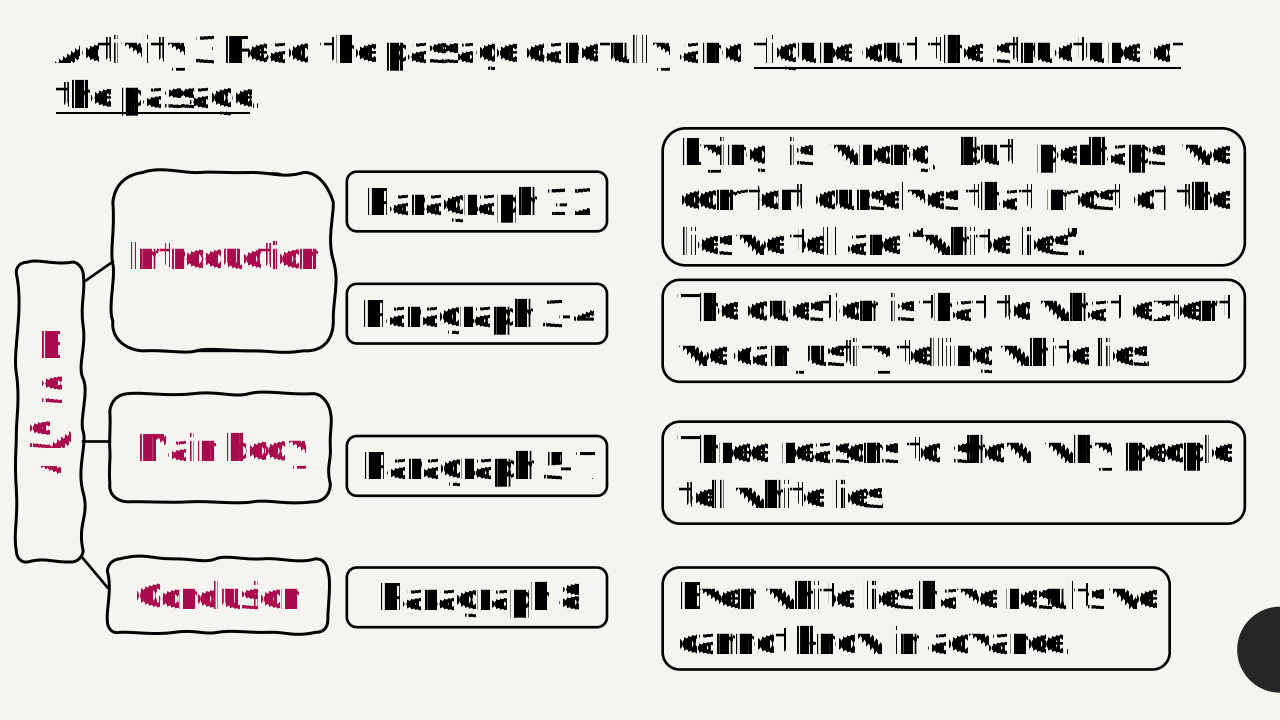
Activity 3 Read the passage carefully and figure out the structure of the passage.
Part 1
Part 2
Part 3
Part 4
Paragraph 1-2
Paragraph 3-4
Paragraph 5-7
Paragraph 8
Lying is wrong, but perhaps we comfort ourselves that most of the lies we tell are “white lies”.
The question is that to what extent we can justify telling white lies.
Three reasons to show why people tell white lies.
Even white lies have results we cannot know in advance.
Main body
Conclusion
E
S
SAY
Introduction
Activity 4-1 Read paragraph 1-4 (introduction) and answer the questions.
It refers to the effects of lying. If a person starts out by telling one lie, then they have to follow it up with another, and end up being trapped in the dishonesty.
adj. twisted together in an untidy way
v. to make sb believe sth. that is not true
Walter Scott
Honesty is an important value and lying is wrong.
However, we lie in real life.
We comfort ourselves that most of the lies are white lies.
What do the excerpts of the poem mean?
To what extent can we justify telling white lies?
to show that sb/sth is right or reasonable
Activity 4-2 Read paragraph 5-7 (main body) and complete the diagram.
Reason 1: To make others .
Examples: Someone’s cooking .
.
. Someone’s haircut .
Analysis: Perhaps we lie to protect ourselves .
.
feel better
a meal for us that we don’t like. The majority of us don’t tell the truth---we lie and say that the food is delicious
is awful, but we say “it’s great”
from the disappointment or anger from others.
Reason 2: .
Examples: .
.
Analysis: Perhaps your friend wants .
. Perhaps they need to know .
.
To give encouragement.
some frank comments from you so that they can improve
You say your friend’s singing is wonderful, despite
secretly thinking that your cat can sing better
that they should look for a different hobby
Reason 3: .
Example: .
. Analysis: Perhaps your parents .
.
To protect others from bad news
You have had a bad day, but you hide your tears and lie to your parents that your day was “fine”
would want to listen to you and understand your feelings
Activity 4-3 Read paragraph 8 (conclusion) and answer the questions.
1. What is the author’s attitude toward white lies?
Even white lies have results we cannot predict. Telling white lies is wrong.
2. Do you agree with the author’s point and why?
Smart sentence
Perhaps we comfort ourselves with the knowledge that most of the lies we tell are “white lies”: little lies that we tell to protect others from the truth.
knowledge: n.[U] the state of knowing about a particular fact or situation
appositive clause
: to support a word or a phrase by describing or modifying it
with the knowledge that most of the lies we tell are “white lies”
Maybe we think that most of the lies we tell are harmless “white lies”. We tell these lies to protect others from being hurt by the truth. Thinking this way, we feel comforted.
Smart sentence
to … extent: used to show how far sth. is true or how great an effect sth. has
to what extent: to what degree or limit of something
But to what extent can we justify telling white lies like this?
justify: v. to show or prove to be right or reasonable
eg: Her success justified the faith her teachers had put in her.
But how far can we prove telling white lies like this are right?
Smart expressions (P10-13)
苏格兰诗歌里最有名的节选
编织一张缠结的网
欺骗 v.
知道…
有…的经历
证明…正确 v.
在……的程度上
撒关于…的谎
说没有恶意的谎言
征求意见
向某人隐瞒真相
由…组成
以…结束
the most well known excerpts of Scottish poetry
weave a tangled web
deceive
with the knowledge that…
have an experience of …
Justify
to … extent
lie about …/tell a lie about…
tell white lies
ask for advice
hide (the) truth from sb.
consist of(无被动;无进行时)
end with…
$
资源预览图

1

2

3

4

5
6
相关资源
示范课
由于学科网是一个信息分享及获取的平台,不确保部分用户上传资料的 来源及知识产权归属。如您发现相关资料侵犯您的合法权益,请联系学科网,我们核实后将及时进行处理。