Unit 3 语法讲义 2026-2027学年外研版八年级英语下册
2026-09-20
|
6页
|
35人阅读
|
1人下载
普通
摘要:
本讲义聚焦初中英语情态动词(should、can、must等)核心语法点,系统梳理其定义(无人称和数的变化,后接动词原形)、功能(should表建议、can表能力/许可/可能性、must表必须/禁止)及给建议句型(Why not…?/What about…?),通过难点突破与综合训练构建完整学习支架。
资料以“团队合作”主题为语境,将语法与实际沟通结合提升语言能力,通过mustn't与needn't等对比辨析培养思维品质,设计分层练习(单选、语篇填空)和速记口诀助力学习能力。课中辅助教师高效授课,课后帮助学生查漏补缺,强化知识应用。
内容正文:
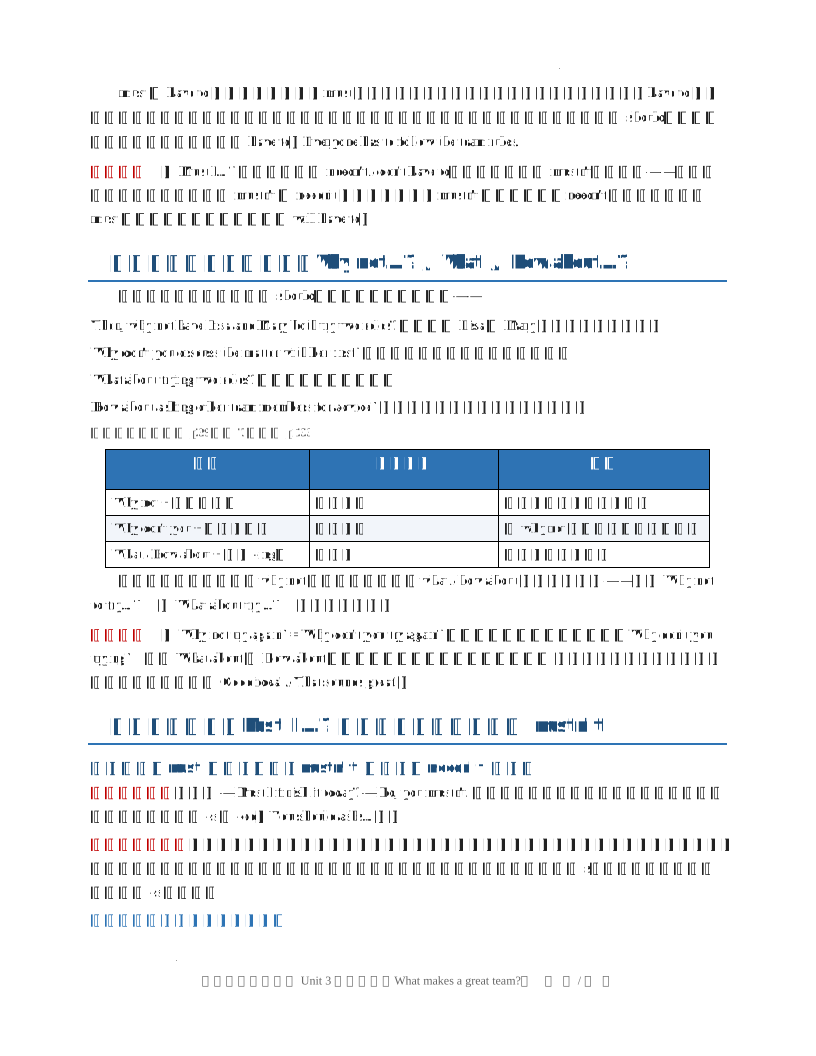
Unit 3 What makes a great team? 语法讲义 外研版(2022年版课程标准修订) 八年级下册 语法板块:情态动词(1):should, can, must 等 Unit 3 的主题是「什么造就一支好团队」。课文是一封老师写给导演 Tony 的回信,讲的正是团队里「该怎么说、该怎么做」——First, you should discuss the matter with Lisa.(首先,你应该和 Lisa 商量这件事)You should work with her to find out.(你应该和她一起找出答案)Then, why not have Lisa and Mary both try two roles?(那何不让 Lisa 和 Mary 都试试两个角色呢?)(教材 p39 活动 5)。should、why not——这些给建议、提要求的表达,都要靠情态动词撑起来,就是本单元的核心语法(教材附录 Guide to the language use p131–133)。 一、情态动词是什么:它自己不变,后面跟原形 教材的说明是:情态动词(modal verb)本身有一定的词义,表示说话人的语气或情态,但它不能独立作谓语,只能和动词原形一起构成谓语。情态动词没有人称和数的变化。例句—— You should discuss the matter with Lisa. 你应该和 Lisa 商量这件事。 You can vote for the most suitable person. 你可以投票选出最合适的人。 We must work together to make it happen. 我们必须齐心协力才能把它做好。 【教材出处】教材附录 p131 「没有人称和数的变化」这一条最要紧:无论主语是 I、he 还是 they,情态动词都保持原形,后面的动词也永远是原形。教材特别提醒——不要写 You shoulds / He cans 这类形式。 要点 说明 正例与错例 不能独立作谓语 必须与动词原形一起构成谓语 You should discuss… / You should. 没有人称和数的变化 I / he / they + should 形式相同 He should go. / He shoulds go. 后面跟动词原形 不带 to,不加 -s / -ed You must work… / You must works… 【教材出处】教材附录 p131 二、should 与 shouldn't:最常用的「建议」 教材的说明是:should 表示「应该」,常用来提建议或提出要求;否定形式是 shouldn't,表示「不应该」。例句—— You should work with her to find out. 你应该和她一起找出答案。 You should ask your team members for advice. 你应该向你的队员们征求建议。 You shouldn't deal with all the problems yourself. 你不应该独自处理所有问题。 We shouldn't argue with each other. 我们不应该互相争吵。 【教材出处】教材附录 p131–132 课文原句把 should 的建议功能发挥得很到位:第四点里老师说 Remember: You're the director, but you don't have to deal with all the problems yourself. You have a whole team, so ask them, too!(记住:你是导演,但不必所有问题都自己扛。你有一整支队伍,所以也问问他们!)——「该做」用 should,「不必做」用 don't have to,两句一正一反,把分寸讲得刚刚好。 中考考法 单选高频考 should 与 had better 的区分:You talk with your teammates before making a decision. A. should B. shouldn't C. mustn't D. needn't——按句意「应该」选 A。写作题的「建议信」是 should 的主场:开头 I think you should…,结尾 You shouldn't worry too much. 这两句背下来就是现成的加分句式。 三、can 与 can't:能力、许可与可能性 教材的说明是:can 表示能力(「能、会」)、许可(「可以」)或可能性;否定形式 can't。例句—— All the team members can vote for the most suitable person. 所有队员都可以投票选出最合适的人。 You can ask your teacher for help. 你可以向老师求助。 She can play Snow White very well. 她能把白雪公主演得很好。 You can't do everything alone. 你不可能一个人把所有事都做了。 【教材出处】教材附录 p132 can 与 be able to 意思接近,但 can 只有现在式和过去式(could),将来时或完成时要用 be able to:You will be able to work better in a team. (你将能在团队中更好地工作)。此外 could 除了是 can 的过去式,还能让语气更委婉:Could you help me with this role?(你能帮我处理这个角色吗?)——比 Can you… 更客气。 四、must 与 mustn't:必须与禁止 教材的说明是:must 表示「必须」,语气较强;mustn't 表示「禁止、不准」。注意 mustn't 回答 Must I…? 的问句时表示「不许」,而「不必」要用 needn't 或 don't have to。例句—— We must work together to make the play a success. 我们必须齐心协力才能让这部戏成功。 You mustn't laugh at your teammates. 你不许嘲笑你的队友。 —Must I finish it today? —No, you needn't. / No, you don't have to. (我必须今天完成吗?——不,你不必。) 【教材出处】教材附录 p132 must 与 have to 的区别值得一说:must 强调说话人的主观意志(「我认为你必须」),have to 强调客观需要(「情况要求你不得不」)。课文里的建议多数是「主观认为该做」,所以用 should;一旦涉及「客观规定」,就该换 have to:Everyone has to follow the team rules. 易错点睛 ① Must I…? 的否定回答是 needn't / don't have to(不必),不是 mustn't(不许)——这是中考单选的经典陷阱;② mustn't 与 needn't 意思完全不同:mustn't 是「禁止」,needn't 是「不必」;③ must 不能用于将来时,将来时用 will have to。 五、给建议的其他句型:Why not…? / What / How about…? 课文里老师的建议不只用 should,还用了更灵活的句型—— Then, why not have Lisa and Mary both try two roles? 那何不让 Lisa 和 Mary 都试试两个角色呢? Why don't you discuss the matter with her first? 你何不先和她商量一下这件事呢? What about trying two roles? 试试两个角色怎么样? How about asking other team members for advice? 向其他队员征求一下建议怎么样? 【教材出处】教材 p39 活动 7 与附录 p133 句型 后接形式 语气 Why not + 动词原形? 动词原形 直接、随和,口语最常用 Why don't you + 动词原形? 动词原形 与 why not 意思相同,主语更明确 What / How about + 动词 -ing? 动名词 商量口吻,最委婉 注意后接形式的差别:why not 后面跟动词原形,what / how about 后面跟动名词——写成 Why not to try…? 或 What about try…? 都是高频错例。 易错点睛 ① Why not try again? = Why don't you try again? 两句同义,但结构不能混搭:Why don't you trying? ;② What about 与 How about 意思相同、可互换,后接动名词;③ 这三个句型都用于给对方提建议,回答赞同常用 Good idea! / That sounds great!。 六、难点突破:Must I…? 的否定回答为什么不是 mustn't 难点突破|must 的两个否定:mustn't 是禁止,needn't 是不必 难点是什么|学生把 —Must I finish it today? —No, you mustn't. 当成正确的答语;写建议句时又常把情态动词后面的动词加 -s 或 -ed(You should asks…)。 学生为什么错|汉语里「不必」和「不许」有时都笼统说成「不用」,学生没有区分「禁止」与「不必」的意识;另一方面情态动词「无人称变化」这条规则与一般现在时「第三人称加 s」的习惯冲突,学生顺手就把 -s 加上了。 怎么判断(可教给学生的话)| (1) 第一步:判语气。mustn't 表示「不许(禁止)」,needn't / don't have to 表示「不必(没有义务)」。 (2) 第二步:看问句。Must I…? 是在问「有没有必要」,所以否定回答用 needn't / don't have to。 (3) 第三步:检查动词形式。情态动词后一律跟动词原形,不加 -s / -ed,也不带 to。 (4) 第四步:回读确认。整句只出现一个情态动词,动词保持原形。 教材例证|—Must I finish it today? —No, you needn't. / No, you don't have to. (我必须今天完成吗?——不,你不必。教材附录 p132 原句;若答 No, you mustn't. 就变成「不,你不许完成」,意思完全反了) 当堂变式|① 改错:You should asks your teammates for advice.( should ask)② 改错:—Must I hand it in today? —No, you mustn't.( No, you needn't. 若表「不必」)③ 完成句子:你不应该独自处理所有问题。You deal with all the problems yourself.( shouldn't) 一句话纠偏|一句话:禁止用 mustn't,不必用 needn't;情态动词后面永远跟原形。 七、综合训练(共 40 分) 练习一 单项选择(每小题 2 分,共 10 分) 1. You discuss the matter with Lisa first. It's the best way. A. should B. shouldn't C. mustn't D. can't 2. —Must I finish the work today? —No, you . A. mustn't B. needn't C. can't D. shouldn't 3. have Lisa and Mary both try two roles? A. Why not B. Why don't C. What about D. How about 4. You laugh at your teammates. It's not polite. A. needn't B. mustn't C. shouldn't have D. don't have to 5. All the team members vote for the most suitable person. A. can B. cans C. can to D. canning 练习二 用适当的情态动词填空(每小题 2 分,共 10 分) 1. You work with her to find out the answer.(应该) 2. We work together to make the play a success.(必须) 3. You deal with all the problems yourself.(不必,用 don't have to) 4. you help me with this role? It would be so nice of you.(委婉请求) 5. You argue with each other in a team.(不应该) 练习三 句型转换与翻译(每小题 2 分,共 10 分) 1. Why don't you discuss the matter with Lisa?(改为同义句,用 Why not) 2. What about trying two roles?(改为同义句,用 How about) 3. You should deal with all the problems yourself.(改为否定句) 4. 我们应该向队员们征求建议。(汉译英) 5. 你不应该独自承担一切。(汉译英,用 shouldn't) 练习四 语篇填空(每空 1 分,共 10 分) 下面是老师回复导演 Tony 的建议信,根据语境填入恰当的情态动词或所给动词的适当形式(依据教材 p39 课文改编)。 Dear Tony, I completely understand your difficulties. Teamwork 1. (be) hard to achieve sometimes. The leader 2. take responsibility in times of disagreement. Here is my advice. First, you 3. discuss the matter with Lisa. You 4. (ask) her why she wants to play Snow White, and you should work with her to find out her strengths and weaknesses. Then, 5. not have Lisa and Mary both try two roles? What 6. asking all the team members to vote for the most suitable person for each role? Remember: you're the director, but you 7. (not have to) deal with all the problems yourself. You have a whole team, so you 8. ask them, too! And you 9. (not laugh) at anyone — everyone 10. be respected in a team. I hope my advice is helpful. Best wishes, Ms White 参考答案与解析 练习一:1. A(提建议用 should,教材 p39 课文原句)。2. B(Must I…? 的否定回答表示「不必」,用 needn't,附录 p132 原句)。3. A(why not + 动词原形,教材 p39 课文原句)。4. B(「不许嘲笑」是禁止,用 mustn't)。5. A(情态动词无人称变化,can 后接原形,附录 p131 原句)。 练习二:1. should(建议)。2. must(必须,语气较强)。3. don't have to(客观的不必)。4. Could(委婉请求;Could you… 比 Can you… 更客气)。5. shouldn't(不应该)。 练习三:1. Why not discuss the matter with Lisa?(both 后接动词原形)。2. How about trying two roles?(what about 与 how about 同义,后接动名词)。3. You shouldn't deal with all the problems yourself.(否定在 should 后加 not)。4. We should ask our team members for advice.(ask sb for advice 征求意见)。5. You shouldn't deal with everything alone. / You shouldn't carry everything by yourself. 练习四:1. can be(有时候团队合作可能很难,can 表可能性)。2. should(领导者应该承担责任)。3. should(建议:你应该和 Lisa 商量)。4. should ask(情态动词后跟原形)。5. Why(Why not + 动词原形,提建议)。6. about(What about + 动名词,提建议)。7. don't have to(不必,客观情况)/ needn't。8. should(也应该问问他们)。9. mustn't laugh / shouldn't laugh(不许嘲笑;若按「不应该」用 shouldn't)。10. should(团队里的每个人都应该被尊重)。解析:本题集中考查情态动词的核心两条——「后接动词原形」与「语气辨析(应该/必须/不必/禁止)」。 速记口诀 情态动词真特别,人称数它都不变;后面只跟动词原形,不to不加 -s;should 应该 must 必须,can 能 could 更客气;mustn't 禁止 needn't 不必,回答 Must I 用 needn't。 外研版八年级下册 Unit 3 语法讲义(What makes a great team?) 第 页 / 共 页 学科网(北京)股份有限公司 $
资源预览图

1

2
3
相关资源
示范课
由于学科网是一个信息分享及获取的平台,不确保部分用户上传资料的 来源及知识产权归属。如您发现相关资料侵犯您的合法权益,请联系学科网,我们核实后将及时进行处理。