Units1-4六选四阅读专项练习-2026-2027学年沪教版高中英语选择性必修第一册
2026-09-18
|
6页
|
46人阅读
|
0人下载
摘要:
**基本信息**
聚焦高中英语六选四阅读,通过8篇主题式文章系统训练上下文逻辑衔接能力,强化语言理解与思维推断
**专项设计**
|模块|题量/典例|题型特征|知识逻辑|
|----|-----------|----------|----------|
|Unit1-4|8篇(每单元2篇)|六选四阅读,考查主旨句、过渡句、例证及转折等逻辑衔接|以"心理-社会行动-代价-感官"为主题链条,文章内部逻辑清晰,选项设置覆盖不同衔接关系,形成"主题认知-逻辑分析-语言应用"的递进训练|
内容正文:
Units1-4六选四阅读专项练习
Unit 1 Feeling good
Passage 1 The power of daily gratitude
Many of us spend lots of time thinking about what we lack instead of what we already own. Practising gratitude is a simple way to improve our feelings and mental state. 1.__________ It does not require expensive tools or much spare time.
You can keep a gratitude journal. Before going to bed, write down three small good things that happened during the day. They do not have to be big events. It may be a warm talk with your friend or a tasty snack. 2.__________ Over time, your brain will gradually get used to noticing positive details around you.
Some people argue that gratitude only makes people ignore real problems. 3.__________ It helps us face difficulties with more courage rather than pretending troubles do not exist. Gratitude does not mean you cannot feel upset. It just offers another way to see the world.
Start this practice slowly. Do not push yourself too hard. Even on tough days, there is still something worth noticing. 4.__________
A. It is easy to begin this habit in daily life.
B. You will be surprised at the change it brings to your mood.
C. This small action trains your mind to search for good things.
D. However, this opinion misunderstands what gratitude really means.
E. Many students feel stressed and have trouble controlling their feelings.
F. Mental health problems are becoming common among teenagers nowadays.
Passage 2 How exercise lifts your mood
When we talk about exercise, we often only think about losing weight or building strong bodies. Few people realize its influence on our feelings. Physical activity is a natural way to help us feel good. 1._________You do not need to take hard sports training. A 20-minute walk, a quick dance or a simple jog all work. When you move your body, your brain releases special chemicals. These chemicals can reduce feelings of worry and sadness. 2.__________
One common mistake is waiting until you feel terrible to exercise. Actually, it works better as daily maintenance. 3.__________ It prevents low moods from building up before they become serious.
Do not choose sports you hate. If you dislike running, try cycling or badminton. 4.__________ The key is to pick something you can stick to.
A. It can effectively lighten our bad moods.
B. Exercise is helpful for both body and mind.
C. Doing it regularly keeps your emotional state balanced.
D. Choose activities that bring you pleasure instead of pain.
E. Many people spend too much time sitting and seldom move.
F. People often give up exercise because they set too high goals.
Unit 2 Making a difference
Passage 1 Small acts of kindness
We usually connect “making a difference” with big projects or famous heroes. Yet most changes in the world come from ordinary people’s small acts of kindness. 1.__________ These little actions can warm someone’s whole day.
Kindness does not need money. Holding the door for others, listening patiently to a sad friend or sending an encouraging message all count. 2.__________ Even a few kind words may help a person get through a hard time.
Some people believe one single person cannot influence the world. 3.__________ When your kindness touches one person, that person may pass warmth on to others. Goodness spreads silently.
You can start right where you are. Look around your classroom or community. There is always someone who needs a little help. 4.__________
A. It is never too late to offer kindness.
B. Small kind acts cost little but mean a lot.
C. But kindness creates a chain reaction.
D. It is never too late to offer kindness.
E. Famous people often get praise for their great achievements.
F. Many people are too busy to notice people in need around them.
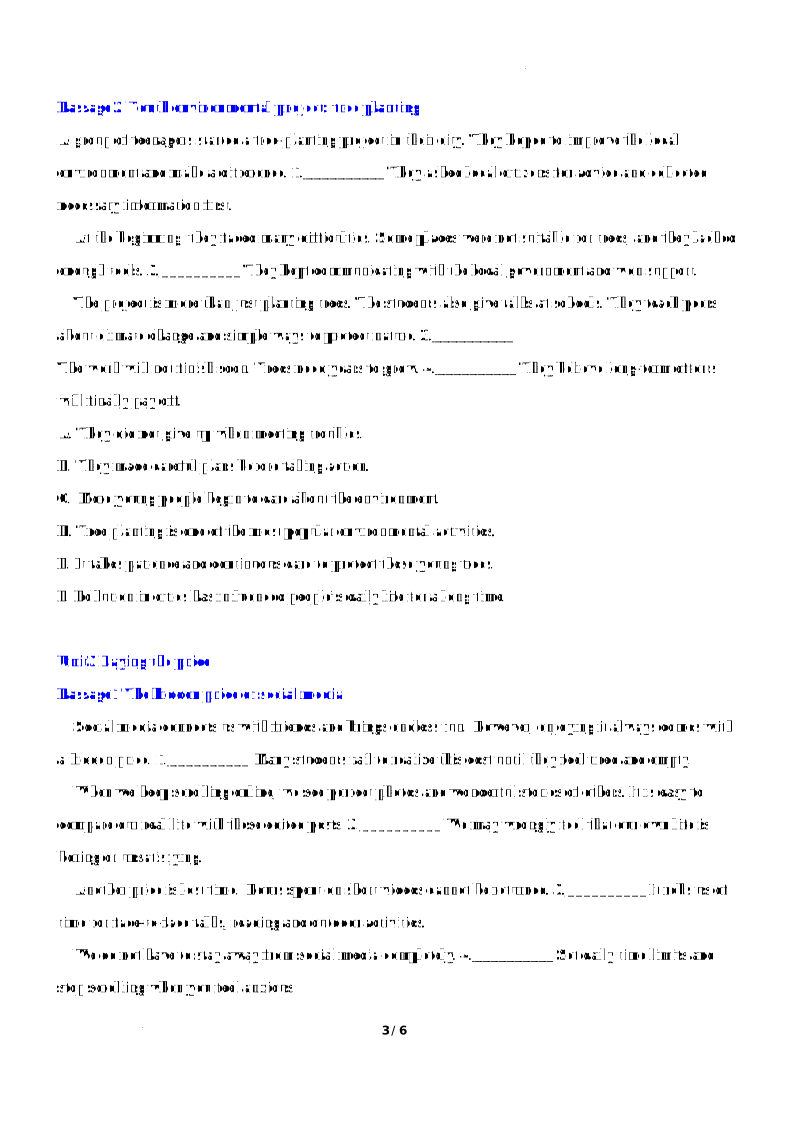
Passage 2 Youth environmental project: tree planting
A group of teenagers started a treeplanting project in their city. They hoped to improve the local
environment and make a difference. 1.__________ They asked local citizens for advice and collected necessary information first.
At the beginning, they faced many difficulties. Some places were not suitable for trees, and they lacked enough tools. 2.__________ They kept communicating with the local government and won support.
The project is more than just planting trees. The students also give talks at schools. They teach peers about climate change and simple ways to protect nature. 3.__________
The work will not finish soon. Trees need years to grow. 4.__________ They believe long-term efforts will finally pay off.
A. They did not give up when meeting troubles.
B. They made careful plans before taking action.
C. More young people begin to care about the environment.
D. Tree planting is one of the most popular environmental activities.
E. It takes patience and continuous care to protect these young trees.
F. Pollution in cities has influenced people’s daily life for a long time.
Unit3 Paying the price
Passage1 The hidden price of social media
Social media connects us with friends and brings endless fun. However, enjoying it always comes with a hidden price. 1.__________ Many students fail to realize this cost until they feel tired and empty.
When we keep scrolling online, we see perfect photos and wonderful stories of others. It is easy to compare our real life with these edited posts. 2.__________ We may wrongly feel that our own life is boring or unsatisfying.
Another price is lost time. Hours spent on short videos cannot be returned. 3.__________ It robs us of time for face-to-face talks, reading and outdoor activities.
We do not have to stay away from social media completely. 4.__________ Set daily time limits and stop scrolling when you feel anxious.
A. That can lead to low self-confidence.
B. The price mainly lies in our mental energy and time.
C. Many teenagers spend most of their spare time online.
D. But we should learn to use it in a controlled way.
E. Online information spreads much faster than ever before.
F. Social media helps people share their daily life easily.
Passage2 The price of pursuing quick success
Nowadays, many people expect to get good results immediately. They want quick success without realizing the price they have to pay. 1.__________ True progress usually takes time and continuous effort.Some students try to find shortcuts for study. They hope to get high marks without solid daily practice. 2.__________ Once challenges appear, their weak foundation will show up quickly.
Businesses also face this problem. Some companies chase short-term profit and ignore product quality. 3.__________ In the long run, they will lose customers and trust.
We should accept that valuable goals cannot be achieved overnight. 4.__________ Be ready to pay the price of patience and hard work.
A. Such shortcuts only bring weak and unstable results.
B. The price of quick success is often hidden at first.
C. Good results never come without proper preparation.
D. They gain fast money but risk destroying their reputation.
E. People tend to admire those who achieve goals rapidly.
F. Modern society pushes people to seek fast success.
Unit4 The senses
Passage1 How our sense of taste works
We often think taste is simple: food is sweet, sour, salty or bitter. In fact, taste is closely linked with other senses, especially smell. 1.__________ Your nose sends messages to your brain while you eat.
Taste buds sit on your tongue. They can pick up different tastes. 2.__________ If your nose is blocked when you have a cold, food tastes much less flavorful. That explains why meals seem tasteless then.
Our taste preferences change as we grow up. Babies prefer sweet food, while adults gradually accept bitter flavours such as coffee. 3.__________ This helps our body avoid dangerous or poisonous food.
Our taste is a useful warning system. Bitter tastes often mean something may be unsafe to eat. 4.__________ It protects us from harmful things without us noticing.
A. But taste alone cannot decide how food “tastes”.
B. Our sense of taste works together with smell.
C. The brain uses taste information to judge safety.
D. We rely on taste buds to enjoy different foods.
E. Many people do not know how complex taste really is.
F.This natural preference protects us from harm.
Passage2 Sensory adaptation
Have you ever stepped into a quiet room after a noisy street? At first, it feels extremely quiet, but soon you get used to it. This is sensory adaptation. 1.__________ It happens to sight, hearing, smell and touch as well.Sensory adaptation has a clear purpose. It helps our brain ignore unchanging information. 2.__________ In this way, it can pay more attention to new or important changes around us.
For example, when you put on a watch, you feel it on your wrist at first. After some time, you hardly feel its weight. 3.__________ The touch sensors get used to the steady pressure.
Sensory adaptation is not always helpful. If you enter a room with bad smell, you will stop noticing it after a while. 4.__________ This may stop us from noticing possible dangers.
A. It is not limited to one single sense.
B. Our brain focuses on new signals rather than fixed ones.
C. This is a typical example of touch sensory adaptation.
D. It shows our senses are not always reliable warning tools.
E. People often ignore small changes around their environment.
F. Strong smells can cause damage to our sense of smell.
Keys
Unit1 Feeling good
Passage1:1.A 2.C 3.D 4.B Passage2:1.B 2.A 3.C 4.D
Unit2 Making a difference
Passage1:1.B 2.A 3.C 4.D Passage2:1.B 2.A 3.C 4.E
Unit3 Paying the price
Passage1:1.B 2.A 3.C 4.D Passage2:1.F 2.A 3.D 4.C
Unit4 The senses
Passage1:1.B 2.A 3.F 4.C Passage2:1.A 2.B 3.C 4.D
2 / 2
学科网(北京)股份有限公司
$
资源预览图

1

2
3

相关资源
示范课
由于学科网是一个信息分享及获取的平台,不确保部分用户上传资料的 来源及知识产权归属。如您发现相关资料侵犯您的合法权益,请联系学科网,我们核实后将及时进行处理。