Unit 3 Smart Learning Grammar Focus 课件 2026-2027学年人教版英语九年级上册
2026-09-17
|
13页
|
3414人阅读
|
29人下载
普通
摘要:
该初中英语课件聚焦宾语从句语法点,涵盖that引导陈述句、if/whether引导疑问句及“主现从任意、主过从过、真理永一现”时态规则。课堂以歌曲《I believe I can fly》导入,引导学生从找简单句宾语过渡到识别从句,搭建由易到难的学习支架。
其亮点在于融合语言能力、文化意识与学习能力培养,通过歌曲激发兴趣提升语言感知,结合数学家华罗庚事迹渗透自主学习方法,分层练习巩固语法规则。既助学生提升语法运用与思维品质,也为教师提供生动高效的语法教学资源。
内容正文:
Unit 3
Smart Learning
Grammar Focus
Let’s listen and enjoy a song.
I believe I can fly.
I believe I can touch the sky.
I think about it every night and day.
Spread my wings and fly away.
I believe I can soar.
I see me running through that open door.
I believe I can fly.
• Can you find the objects?
I believe you.
I believe
I can fly.
(that)
主
谓
宾
从句
代词
What is the difference between the two sentences?
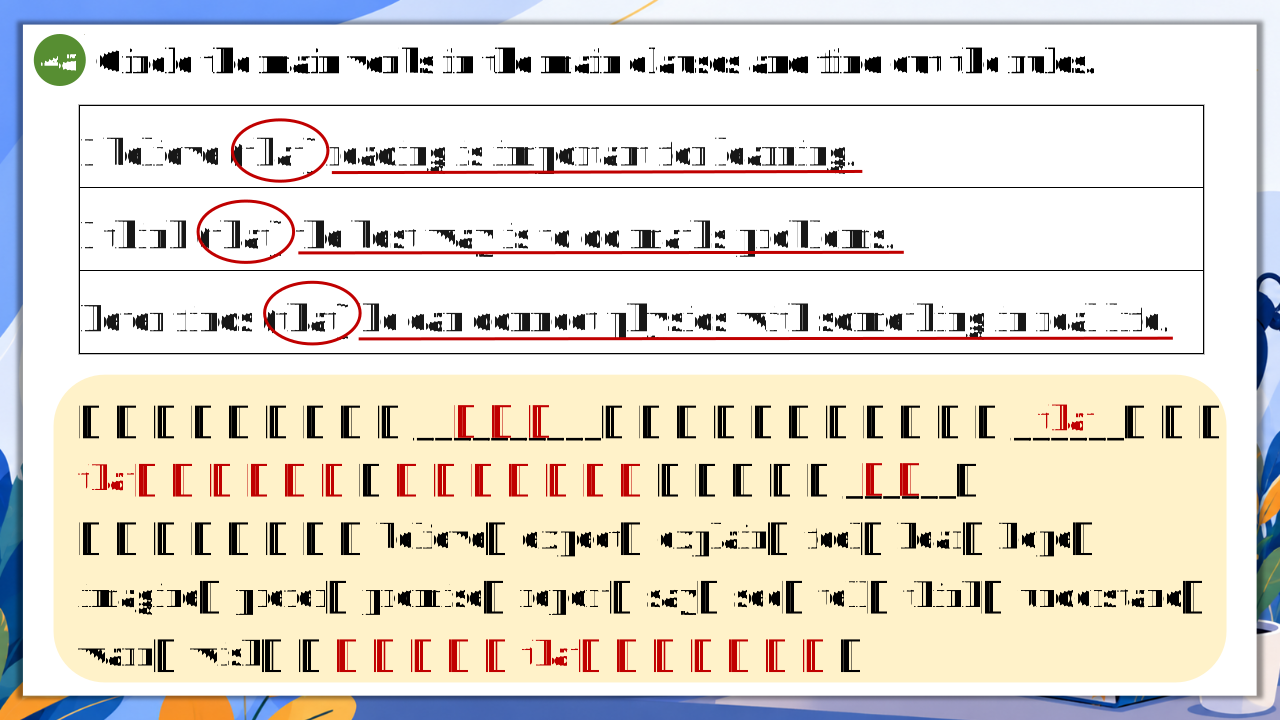
I believe (that) reading is important for learning.
I think (that) the best way is to do maths problems.
Peter finds (that) he can connect physics with something in real life.
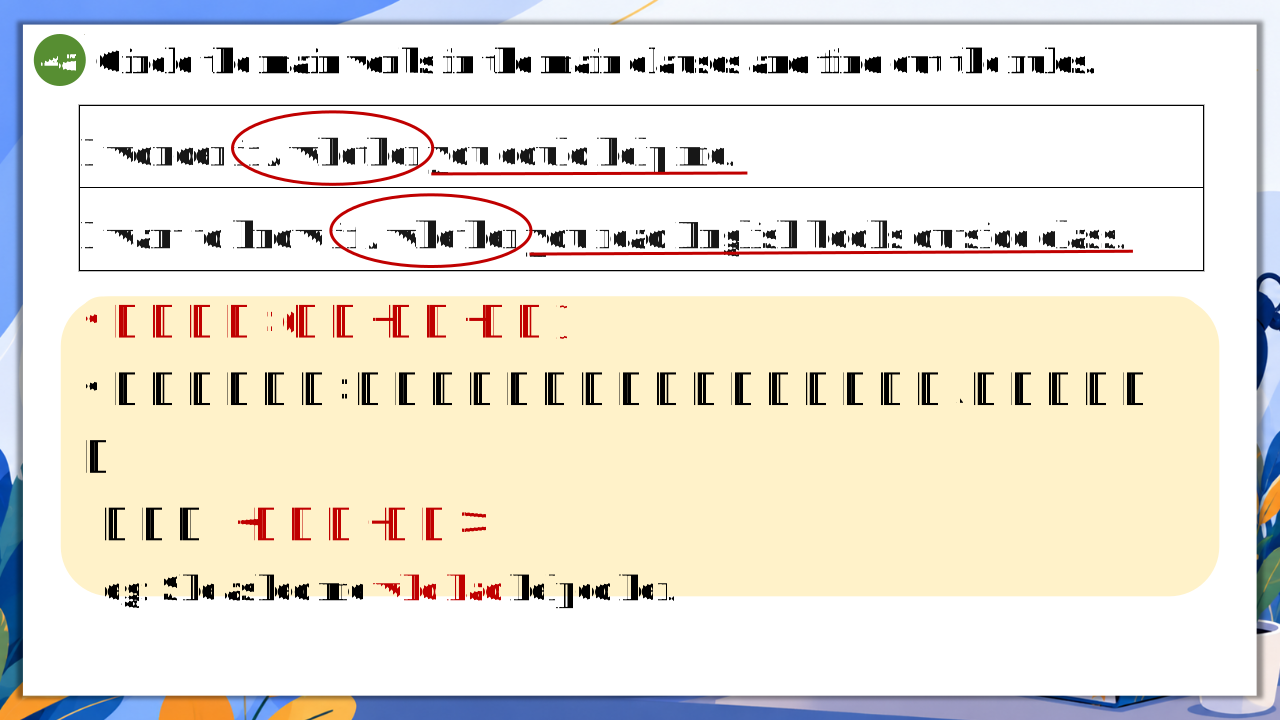
I wonder if / whether you could help me.
I want to know if / whether you read English books outside class.
4a
Read the sentences, circle the connecting words and underline the object clauses.
We use for statements (a normal sentence).
We use for indirect yes/no questions.
that
if/whether
I believe (that) reading is important for learning.
I think (that) the best way is to do maths problems.
Peter finds (that) he can connect physics with something in real life.
4a
Circle the main verbs in the main clauses and find out the rules.
当及物动词后接一个__________作宾语时,该从句通常由______引导。that没有实际意义,不充当从句成分,通常可以______。
常见的谓语动词如believe、expect、explain、feel、hear、hope、imagine、prefer、promise、report、say、see、tell、think、understand、warn、wish等,其后可以接that引导的宾语从句。
陈述句
that
省略
4a
Circle the main verbs in the main clauses and find out the rules.
当主句表达“想知道、不确定一件事是不是真的”,就要用_____ 或__________引导宾语从句,意为“是否”,不可省略。
if
I wonder if / whether you could help me.
I want to know if / whether you read English books outside class.
whether
• 陈述语序:(主语+谓语+其他)
• 语序特殊情况:当连接词本身就是宾语从句的主语时,后面直接加谓
语动词 <连接词+谓语>
eg: She asked me who had helped her.
What are the differences between “ if ” and “ whether ” ?
• I don’t know if / whether I can improve my English.
• She asked if / whether I had read the English book.
• It depends on whether I practise speaking every day.
• I wonder whether to memorize more words or not.
• Whether learning English is fun depends on your attitude.
1. 当 if 和 whether 用在动词后面表示“是否”时, 两者可互换。
2. 下列三种情形,只能用whether:
当宾语从句置于______之后时,引导词只能用whether。
当从句以“whether + _______________”的结构出现时,引导词只能用whether。
当whether引导的从句置于_____充当主语时,引导词只能用whether。
介词
不定式 (to do)
句首
The tense of the object clauses.
• I hear that she was a worker two years ago.
• I hear that she is an English teacher now.
• I hear that she will come back tomorrow.
主现从任意
• He told me that he liked playing football.
• I said that she would come.
主过从过
• He says the moon goes around the earth.
• He told me that light travels faster than sound.
真理永一现
4b
Complete the sentences with that or whether / if.
Jim doesn’t know _________ he can take part in the research project or not.
My parents think ______ they need to be stricter about my studies.
Ms Gao understands _____ some students need more time to improve.
Terry wonders ___________ it will be easy to study courses on AI.
Could you tell me ___________ this sentence is correct in English?
whether
that
that
whether/if
whether/if
Look at the picture and answer the questions.
1. Do you know who the man in the picture is?
He is the mathematician Hua Luogeng.
2. Do you know what achievements he has made?
Hua Luogeng achieved great success in maths.
Many of his studies are famous around the world
and helped develop China’s mathematics greatly.
People created the Hua Luogeng Mathematics
Award to honor his great work for Chinese
mathematics.
4c
Complete the passage with the correct sentence parts.
As a youth, Hua Luogeng left high school to support his family. However, he loved maths and did not want to give up. ______ there was a way to continue learning. Finally, he decided to teach himself ______. Huo Luogeng later introduced a reading and learning method to young learners. _______ learners should read and take notes very carefully, and then summarize the key points. He once said, “A book starts heavy and thick but becomes thinner as you understand it better.” As an active learner, Hua Luogeng stayed positive no matter what difficulties he met in his life and studies. ______ that such a talent also failed exams in school, but that was true for him. He said that _____ and it was important to take things step by step.
A. by studying maths books B. He suggested that
C. He wondered whether D. learning had many challenges
E. It is hard to believe
A. by studying maths books
C. He wondered whether
E. It is hard to believe
B. He suggested that
D. learning had many challenges
C
A
B
E
D
4c
Read again and answer the questions.
1. What difficulties did Hua Luogeng face?
He left school early.
He had to support his family.
He failed exams.
Learning was challenging.
2. What helped him succeed?
He never gave up.
He learned by himself.
He stayed positive.
He read actively and took notes.
3. What are Hua Luogeng’s learning methods?
◆ Read carefully. ◆ Summarize key points.
◆ Take notes. ◆ Review regularly.
$
资源预览图

1

2

3

4
5
6
相关资源
示范课
由于学科网是一个信息分享及获取的平台,不确保部分用户上传资料的 来源及知识产权归属。如您发现相关资料侵犯您的合法权益,请联系学科网,我们核实后将及时进行处理。