Unit 2 Teenage problems 单元重点单词及词性转换分层必考100 题专项训练 2026-2027学年译林版九年级上册英语
2026-09-10
|
2份
|
12页
|
91人阅读
|
1人下载
摘要:
**基本信息**
本专项通过“基础识记→词汇变形→语境解题”三阶递进训练,系统构建单元词汇学习链条,提升语言能力与学习能力。
**专项设计**
|模块|题量/典例|方法提炼|知识逻辑|
|----|-----------|----------|----------|
|基础识记|35题(汉译英写词)|立足核心四会词,依托短句巩固词义规范拼写|从单元基础词汇入手,夯实拼写与词义理解基础|
|能力提升|35题(词形转换)|覆盖名词单复数、时态等易错考点,融合词汇与语法|衔接语法知识,攻克词形变化失分难点|
|综合拓展|30题(首字母填空)|依托完整句子创设情境,考查词义辨析与固定搭配|通过语境训练上下文推理选词能力,实现词汇综合应用|
内容正文:
答案解析
第一部分:基础识记层级(35 分)
根据句意及汉语提示写出单词(共35小题,每小题1分)
1.答案:bottom。解析:at the bottom of 为固定介词短语,意为“在……的底部”;定冠词the后接名词bottom(底部)。
2.答案:dialogue。解析:have a dialogue 固定搭配“进行一场对话”;不定冠词a后接可数名词单数dialogue(对话)。
3.答案:youth。解析:in one’s youth 固定短语“在某人的青年时期”;youth此处为不可数名词,表青春、青年时代。
4.答案:probably。解析:本句用副词probably(很可能)修饰谓语动词rain;will后接副词修饰后面实义动词。
5.答案:go through。解析:have to 后接动词原形短语;go through 固定短语,意为“经历;遭受”,后接hard times(艰难时光)。
6.答案:unkind。解析:It’s +adj.+to do sth.固定句型“做某事是……的”;此处填形容词unkind(不友善的)作表语。
7.答案:stranger。解析:不定冠词a后接可数名词单数stranger(陌生人);talk with a stranger 和陌生人交谈。
8.答案:stand up for。解析:should情态动词后接动词原形短语;stand up for sb.固定短语,意为“支持、维护某人”。
9.答案:bedtime。解析:before bedtime固定搭配“在就寝时间之前”;bedtime为不可数名词。
10.答案:put up with。解析:It’s +adj.+to do,to后接动词原形短语;put up with 固定短语“忍受,容忍”,宾语为his bad temper。
11.答案:upset。解析:may情态动词后接动词原形upset(使沮丧、使心烦);主语为事物,upset sth/sb 使某人情绪低落。
12.答案:is in low spirits。解析:时间标志now,用一般现在时;主语he,be动词选用is;be in low spirits固定短语“情绪低落”。
13.答案:lately。解析:lately(最近)是现在完成时标志性时间副词,常用于现在完成时的句末。
14.答案:decision。解析:make a decision 固定搭配“做决定”;不定冠词a后接可数名词单数decision(决定)。
15.答案:mobile phone。解析:谓语is提示主语为单数;mobile phone名词短语,意为“手机”。
16.答案:cut back on。解析:need to后接动词原形短语;cut back on sth.固定短语,意为“减少、削减(某物)”,后接spending开支。
17.答案:hate。解析:一般现在时,主语I,谓语用动词原形hate(厌恶);hate sth 厌恶某物。
18.答案:normal。解析:It is +adj.+to do sth句型;形容词normal(正常的)作句子表语。
19.答案:communicate。解析:learn to do sth,to后接动词原形;communicate with sb固定搭配“和某人交流、沟通”。
20.答案:dictionary。解析:形容词性物主代词your后接名词单数dictionary(词典);look up words in your dictionary 在词典查单词。
21.答案:stage。解析:at an important stage 固定搭配“在一个重要阶段”;an后接可数名词单数stage(阶段)。
22.答案:experience。解析:will情态动词后接动词原形experience(体验;经历);travel abroad出国旅行,体验不同文化。
23.答案:rapid。解析:形容词rapid(快速的)修饰后面名词development;rapid development “快速的发展”。
24.答案:risk。解析:Don’t祈使句否定形式后接动词原形;risk doing sth固定搭配“冒险做某事”。
25.答案:bully。解析:have the right to do sth,to后接动词原形bully(欺凌,恐吓);bully weaker classmates 欺凌弱小同学。
26.答案:screen。解析:谓语is提示主语单数;screen(屏幕),the screen of my computer我的电脑屏幕。
27.答案:pain。解析:have a pain in+身体部位,固定搭配“身体某部位疼痛”;a后接名词单数pain(疼痛)。
28.答案:shame。解析:What a shame!感叹固定句型,意为“真遗憾!”;a后接名词单数shame(遗憾的事,羞耻)。
29.答案:Adults。解析:谓语set为原形,主语用复数名词adults(成年人);句首首字母必须大写。
30.答案:teenage。解析:形容词teenage(青少年的)修饰后面名词boys and girls,作定语。
31.答案:mad。解析:get mad固定搭配“变得气愤、生气”;get为系动词,后接形容词mad作表语。
32.答案:stick to。解析:must情态动词后接动词原形;stick to固定短语“坚持”,to不可省略;stick to it 坚持它。
33.答案:stress。解析:too much修饰不可数名词stress(精神压力);stress from study来自学习的压力。
34.答案:waste。解析:Don’t引导祈使句否定,后接动词原形waste(浪费);waste time on sth“在……上面浪费时间”。
35.答案:regret。解析:will情态动词后接动词原形regret(后悔,懊悔);regret sth 后悔某事。
第二部分:能力提升层级(35 分)
用括号内所给单词的适当形式填空(共35小题,每小题1分)
1.答案:dictionaries。解析:three提示后面可数名词dictionary变为复数;以“辅音字母+y”结尾名词,变y为i再加‑es。
2.答案:screens。解析:many后接可数名词复数;screen复数直接加‑s。
3.答案:stages。解析:three different提示可数名词stage用复数,直接加‑s。
4.答案:moods。解析:different后接可数名词复数;mood复数直接加‑s。
5.答案:bedtimes。解析:different后接可数名词复数;bedtime复数直接加‑s。
6.答案:adults。解析:Most“大多数”,后接可数名词复数adult,复数直接加‑s。
7.答案:exams。解析:two important final提示可数名词exam变为复数,直接加‑s。
8.答案:normally。解析:此处需要副词修饰后面实义动词drinks;形容词normal的副词形式normally。
9.答案:rapidly。解析:本句为现在进行时is growing;需要副词rapidly修饰动词growing。
10.答案:young。解析:形容词young(年轻的)修饰名词people,作定语,用原形。
11.答案:focus。解析:should情态动词,后面必须接动词原形focus;focus one’s attention on“把注意力集中于……”。
12.答案:probably。解析:will后面用副词probably修饰后面动词give up;形容词probable副词形式probably。
13.答案:communication。解析:形容词good修饰名词;动词communicate的名词形式communication,意为“交流,沟通”,不可数名词。
14.答案:decision。解析:不定冠词a后接名词;动词decide的名词形式decision(决定)。
15.答案:argument。解析:不定冠词a后接名词;动词argue的名词形式argument(争论,争辩)。
16.答案:kindness。解析:动词show后面接名词作宾语;形容词kind的名词kindness(善良),不可数名词。
17.答案:painful。解析:be动词is后接形容词作表语;名词pain的形容词painful“疼痛的,痛苦的”。
18.答案:shameful。解析:It is +adj.+to do;名词shame变为形容词shameful(可耻的)作表语。
19.答案:experienced。解析:不定冠词an后接形容词修饰名词doctor;experience变为形容词experienced“有经验的”。
20.答案:patient。解析:be动词be后接形容词;名词patience(耐心)变为形容词patient(有耐心的);be patient with sb对某人有耐心。
21.答案:wasting。解析:It’s no use doing sth固定句型“做某事是没用的”,后面动词需要动名词形式;waste动名词wasting。
22.答案:walking。解析:risk doing sth固定搭配“冒险做某事”,risk后接动名词;walk动名词walking。
23.答案:Bullying。解析:本空作句子主语;动词bully变动名词bullying;动名词作主语,句首首字母大写。
24.答案:getting。解析:hate doing sth固定搭配“厌恶做某事(长期习惯)”;get动名词getting。
25.答案:stressed。解析:系动词feel后接形容词作表语;stressed(感到焦虑不安的)修饰人,feel stressed感到焦虑。
26.答案:stressed。解析:be动词are后面接形容词stressed作表语,描述人的心理状态。
27.答案:lately。解析:现在完成时标志性副词lately(最近),放在句末。
28.答案:regretted。解析:时间状语yesterday afternoon(昨天下午)提示一般过去时;regret重读闭音节,双写t+‑ed,变为regretted。
29.答案:stuck。解析:并列谓语made为一般过去时;stick的过去式为不规则变化stuck;stick to “坚持”。
30.答案:driven。解析:was + 过去分词构成一般过去时被动语态;drive不规则变化,过去分词driven。
31.答案:stranger。解析:定冠词the后接名词;动词strange(形容词,奇怪的)变为名词stranger(陌生人);谓语stopped提示单数。
32.答案:sillier。解析:后面than提示要用形容词比较级;silly以“辅音字母+y”结尾,变y为i加‑er。
33.答案:madder。解析:than提示比较级;mad重读闭音节,双写末尾辅音字母d+‑er,madder。
34.答案:uglier。解析:much修饰形容词比较级;than提示比较;ugly变y为i+‑er,uglier。
35.答案:teenagers。解析:介词for后接名词;teenage形容词变为名词teenager;本句表一类人,使用复数teenagers。
第三部分:综合拓展层级(30 分)
根据句意及首字母提示补全单词(共30小题,每小题1分)
1.答案:dictionary。解析:定语“look up new English words查阅英语生词”提示d开头名词dictionary(词典);不定冠词a,单数。
2.答案:stress。解析:too much修饰不可数名词stress(压力);stress from heavy schoolwork来自繁重学业的压力。
3.答案:normal。解析:It is normal for sb. to do sth固定句型;n开头形容词normal(正常的)。
4.答案:Adults。解析:系动词are提示主语复数;A开头Adults(成年人),句首大写。
5.答案:teenage。解析:形容词teenage(青少年的)修饰名词students;t开头。
6.答案:mood。解析:one’s mood 某人的心情;m开头名词mood;be good 心情不错。
7.答案:screen。解析:电脑上展示图片视频的部件;s开头名词screen屏幕;谓语is提示单数。
8.答案:young。解析:too…to…固定结构“太……而不能……”;y开头形容词young(年轻的)。
9.答案:pain。解析:医生问诊场景;p开头名词pain疼痛;have a pain in…身体部位疼痛。
10.答案:ugly。解析:u开头形容词ugly丑陋的;look为系动词后接形容词;refuse to wear拒绝佩戴,提示外貌不好看。
11.答案:patience。解析:动词need后接名词;p开头patience(耐心);for it takes time因为需要时间,学技能需要耐心。
12.答案:waste。解析:Don’t祈使句后接动词原形;waste time doing固定搭配“浪费时间做……”,w开头。
13.答案:focus。解析:祈使句please后接动词原形;focus attention on固定搭配,f开头focus(集中)。
14.答案:exam。解析:take an exam固定搭配“参加考试”;e开头名词exam;stay up late to review熬夜复习。
15.答案:silly。解析:It’s silly of sb. to do sth固定句型;s开头形容词silly(傻的)。
16.答案:regret。解析:if条件状语从句,主语you后接动词原形;r开头regret(后悔),做错事后道歉。
17.答案:communicate。解析:should后接动词原形;communicate with sb和某人沟通;c开头。
18.答案:mad。解析:make sb.+形容词;make me mad使我生气;m开头mad;shouted at大喊佐证情绪。
19.答案:risk。解析:can’t后接动词原形;risk doing冒险做;r开头risk;risk losing your health拿健康冒险。
20.答案:decide。解析:will后接动词原形decide;decide whether to do决定是否做某事;d开头。
21.答案:stuck。解析:并列谓语gave up一般过去时;stick to坚持,s开头,过去式stuck。
22.答案:shame。解析:It’s a shame to do固定句型;s开头名词shame,意为“憾事”。
23.答案:argued。解析:yesterday提示一般过去时;argue with sb和某人争吵;a开头,过去式argued。
24.答案:bully。解析:should后接动词原形;b开头bully(欺凌);校园场景,不要欺凌弱小同学。
25.答案:driven。解析:was +过去分词构成被动语态;drive驾驶,d开头,过去分词driven。
26.答案:experiences。解析:many后接可数名词复数;e开头experience表“经历”可数;复数experiences。
27.答案:rapid。解析:形容词修饰名词change;r开头rapid(快速的);后文bigger and faster提示变化速度快。
28.答案:probable。解析:It is probable that…固定从句句型;p开头形容词probable“很可能的”。
29.答案:strange。解析:形容词修饰名词noise;s开头strange(奇怪的);unlike any sound I knew和已知声音不一样。
30.答案:stage。解析:at an important stage固定搭配“在重要阶段”;s开头名词stage。
学科网(北京)股份有限公司
$
译林版(新教材)九年级上册Unit 2 Teenage problems
单元重点词汇变形分层100题
学校:______________ 班级:______________ 姓名:______________
(考试时间:60分钟 满分:100分)
资料说明
整套词汇专项实行三阶递进训练,构建 “基础识记→词汇变形→语境解题” 学习链条,攻克拼写易错、词形失分、语境选词困难三大问题:
1. 基础识记(35分):句意汉语提示写词。立足单元核心四会单词,依托短句巩固词义、规范拼写,夯实词汇基础。
2. 能力提升(35分):词形转换专项。覆盖名词单复数、时态变化、词性转换、形副词转换等易错考点,融合词汇与语法,攻克变形失分难点。
3. 综合拓展(30分):语境首字母填空。依托完整句子创设情境,考查词义辨析与固定搭配,训练结合上下文推理选词的解题能力。
第一部分:基础识记层级(35 分)
根据句意及汉语提示写出单词(共35小题,每小题1分)
1. If you want the teacher to see your name clearly, please write your name at the ________ (底部) of the whole page.
2. During the break, they had a long and meaningful ________ (对话) about their future school plans yesterday afternoon.
3. In his ________ (青年时期), he was full of energy and loved travelling around the world to meet different people.
4. Look at those dark heavy clouds in the sky. It will ________ (很可能) rain later, so remember to take your umbrella with you.
5. When facing unexpected troubles, many people have to ________ ________ (经历) all kinds of hard times in their whole life.
6. It’s really ________ (不友善的) to laugh at others’ silly mistakes when they try their best to do something.
7. As parents always warn us, don’t talk with a ________ (陌生人) when you walk alone outside on the street.
8. As team members, we should bravely ________ ________ ________ (支持) our teammates when they are in trouble and nobody believes them.
9. My mom always tells me to brush my teeth and wash my face carefully before ________ (就寝时间) every night.
10. It’s really hard for me to ________ ________ ________ (忍受) his bad temper and rude words for such a long time.
11. Too much heavy homework and endless exams may ________ (使沮丧) many young students.
12. He ________ ________ ________ ________ (情绪低落) now because he failed the important exam last week.
13. I have been busy with my schoolwork these days, so I haven’t seen him ________ (最近).
14. When you face a difficult choice, it’s important to make a careful ________ (决定) after deep thinking.
15. My ________ ________ (手机) suddenly stopped working and is broken, so I can’t call you or send messages now.
16. If we want to save more money for our coming summer trip, we need to ________ ________ ________ (减少) our daily spending.
17. I ________ (厌恶) cold and rainy days because they always make me feel bored and stay inside the house all day.
18. Many teachers think it is completely ________ (正常的) to feel nervous before a big and important test.
19. Kids at this age should learn to ________ (交流) with their parents more often when they meet problems.
20. When you meet new unknown words while reading, you can look up the new word carefully in your ________ (词典).
21. The big environmental protection project is at an important ________ (阶段) and needs more volunteers now.
22. You will ________ (体验) different cultures and special customs when you travel abroad to different countries.
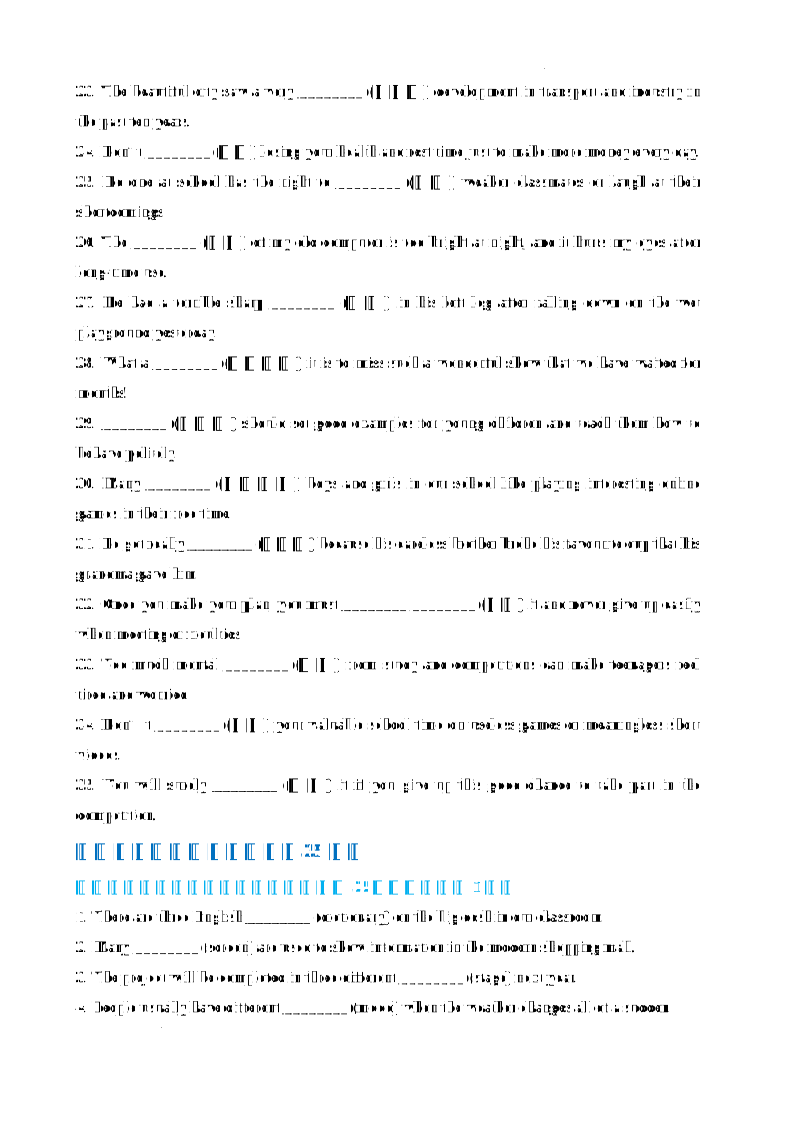
23. The beautiful city saw a very ________ (快速的) development in transport and industry in the past ten years.
24. Don’t ________ (冒险) losing your health and rest time just to make more money every day.
25. No one at school has the right to ________ (欺凌) weaker classmates or laugh at their shortcomings.
26. The ________ (屏幕) of my old computer is too bright at night, and it hurts my eyes after long-time use.
27. He had a terrible sharp ________ (疼痛) in his left leg after falling down on the wet playground yesterday.
28. What a ________ (遗憾的事) it is to miss such a wonderful show that we have waited for months!
29. ________ (成年人) should set good examples for young children and teach them how to behave politely.
30. Many ________ (青少年的) boys and girls in our school like playing interesting online games in their free time.
31. He got really ________ (气愤的) because his careless brother broke his favourite cup that his grandma gave him.
32. Once you make your plan, you must ________ ________ (坚持) it and never give up easily when meeting difficulties.
33. Too much mental ________ (压力) from study and competitions can make teenagers feel tired and worried.
34. Don’t ________ (浪费) your valuable school time on useless games or meaningless short videos.
35. You will surely ________ (后悔) it if you give up this good chance to take part in the competition.
第二部分:能力提升层级(35 分)
用括号内所给单词的适当形式填空(共35小题,每小题1分)
1. There are three English ________ (dictionary) on the big desk in our classroom.
2. Many ________ (screen) are used to show information in the modern shopping mall.
3. The project will be completed in three different ________ (stage) next year.
4. People usually have different ________ (mood) when the weather changes all of a sudden.
5. Parents often set different ________ (bedtime) for their children during summer holidays.
6. Most ________ (adult) can understand the heavy pressure that teenagers are facing nowadays.
7. Students in Grade Nine will take two important final ________ (exam) at the end of this term.
8. The little girl ________ (normal) drinks a cup of milk before she goes to bed every night.
9. The population of this small town is ________ (rapid) growing because more people move here.
10. Many ________ (young) people like to watch short videos on their mobile phones in their free time.
11. You should ________ (focus) all your attention on what your teacher says during the English class.
12. He will ________ (probable) give up this difficult plan after thinking twice.
13. Good ________ (communicate) between parents and teenagers can solve many family problems.
14. My father made a clear ________ (decide) that we would take a trip to the countryside this weekend.
15. They had a hot ________ (argue) about who should clean the shared classroom after school yesterday.
16. We should show ________ (kind) to strangers around us and try not to be unkind to anyone.
17. The deep cut on his left arm is very ________ (pain), so he can hardly move his arm freely now.
18. It is ________ (shame) to laugh at those poor people who are in trouble and need our help.
19. My uncle is an ________ (experience) doctor and he has saved many sick people in the local hospital.
20. You need to be ________ (patience) with your little sister because she is only five.
21. It’s no use ________ (waste) so much time playing online games when you have lots of homework to do.
22. Don’t risk ________ (walk) alone through the thick forest when there is no light at night.
23. ________ (bully) other students at school is bad behavior and it is strictly forbidden by our school rules.
24. The boy hates ________ (get) up early on cold winter mornings, because he wants to sleep for more time.
25. Many students feel ________ (stress) before important exams, so they need proper ways to relax themselves.
26. If you are ________ (stress) all the time, you’d better talk with your parents about your worries and troubles.
27. I haven’t seen my old friend ________ (late) because I have been busy with my exams these days.
28. He ________ (regret) arguing with his mother about his mobile phone use yesterday afternoon.
29. He ________ (stick) to his dream of being a volunteer and finally made it come true last year.
30. The car was ________ (drive) by a young man when the terrible traffic accident happened on the road.
31. The ________ (strange) stopped me on the street and asked me the way to the city public library a moment ago.
32. The boy is ________ (silly) than his elder brother and he often makes some funny and careless mistakes.
33. Tom became ________ (mad) after hearing the bad news about the competition than he was before.
34. This oil painting looks much ________ (ugly) than that famous one hanging on the wall of the hall.
35. This magazine is written for ________ (teenage). It mainly talks about school life and teenagers’ troubles.
第三部分:综合拓展层级(30 分)
根据句意及首字母提示补全单词(共30小题,每小题1分)
1. A d________ is a useful book for us to look up new English words.
2. Too much s________ from heavy schoolwork makes teenagers feel under great pressure.
3. It is n________ for students to feel nervous before an important test.
4. A________ are people who are over 18 years old.
5. The t________ students usually care much about their friends and school life.
6. My m________ is good today, so I want to go out for a walk.
7. The s________ of the computer shows us many pictures and videos.
8. This young man is too y________ to understand such difficult problems.
9. The doctor asked about his p________ in his back, because he could hardly move freely.
10. The little boy thinks that the mask makes him look u________, so he refuses to wear it.
11. You need p________ when you are learning a new skill, for it takes time.
12. Don’t w________ your time playing games when you have lots of homework to finish.
13. Please f________ your attention on your textbook instead of your phone in class.
14. Tom will take an e________ next week, so he stays up late to review lessons.
15. It is s________ of you to believe such a simple lie.
16. If you r________ what you have done, you should say sorry to him at once.
17. We should c________ with our parents when we have trouble in our daily life.
18. The bad weather made me m________, so I shouted at my little sister.
19. You can’t r________ losing your health for more money; it is not worth it.
20. She will d________ whether to join the club after talking with her teacher.
21. He s________ to his plan and never gave up, so he finally succeeded.
22. It is a s________ to make fun of disabled people in public.
23. The students a________ with each other yesterday because they had different ideas about the plan.
24. No one should b________ weaker classmates at school; it is bad behavior.
25. The car was d________ by a young man when the accident happened.
26. He had many interesting e________ when he travelled around Europe last year.
27. There was a r________ change in the city; everything became much bigger and faster in only three years.
28. It is p________ that it will rain this afternoon, so you’d better take an umbrella.
29. I heard a s________ noise outside. It sounded unlike any sound I knew, so I went out to see what it was.
30. The project is now at an important s________, so we must be more careful.
学科网(北京)股份有限公司
$
资源预览图

1

2
3

相关资源
示范课
由于学科网是一个信息分享及获取的平台,不确保部分用户上传资料的 来源及知识产权归属。如您发现相关资料侵犯您的合法权益,请联系学科网,我们核实后将及时进行处理。