Unit 4 课时1 A Viewing and listening & B Speaking(分层作业)英语新教材沪教版五四学制六年级上册
2026-08-31
|
2份
|
15页
|
71人阅读
|
0人下载
摘要:
**基本信息**
该同步练习以"核心知识速记+四阶分层"设计,覆盖Unit4 Sports核心词汇、句型及语篇应用,通过基础巩固到思维迁移的梯度设计,提升语言能力与思维品质。
**分层设计**
|层次|知识覆盖|设计特色|
|----|----------|----------|
|基础达标|核心词汇拼写、短语翻译|通过音标填词、中英互译夯实基础|
|能力提升|句型结构应用、语法规则|以句子补全强化功能句型运用|
|拓展培优|情景对话、词形变化|创设运动场景对话,训练语法综合应用|
|思维进阶|语篇理解、写作表达|通过故事阅读与演讲写作,培养跨情境迁移能力|
内容正文:
Unit4 Sports
课时1 A Viewing and listening & B Speaking分层作业
核心知识速记
03拓展培优
01基础达标
04思维进阶
02能力提升
一、核心词汇
(
1
/
6
)
学科网(北京)股份有限公司
sports safety /spɔːts ˈseɪfti/ n. 运动安全
sports day /spɔːts deɪ/ n. 运动会
timeline /ˈtaɪmlaɪn/ n. 时间安排表
race /reɪs/ n. 赛跑
long jump /lɒŋ dʒʌmp/ n. 跳远
high jump /haɪ dʒʌmp/ n. 跳高
table tennis /ˈteɪbl ˈtenɪs/ n. 乒乓球
basketball /ˈbɑːskɪtbɔːl/ n. 篮球
football /ˈfʊtbɔːl/ n. 足球
volleyball /ˈvɒlibɔːl/ n. 排球
running /ˈrʌnɪŋ/ n. 跑步
swimming /ˈswɪmɪŋ/ n. 游泳
training /ˈtreɪnɪŋ/ n. 训练
practice /ˈpræktɪs/ n. 练习
warm‑up /ˈwɔːm ʌp/ n. 热身
stretch /stretʃ/ v. 伸展
exercise /ˈeksəsaɪz/ n. 练习;运动
helmet /ˈhelmɪt/ n. 头盔
knee pad /niː pæd/ n. 护膝
elbow pad /ˈelbəʊ pæd/ n. 护肘
water bottle /ˈwɔːtə ˈbɒtl/ n. 水瓶
first aid kit /fɜːst eɪd kɪt/ n. 急救包
coach /kəʊtʃ/ n. 教练
teammate /ˈtiːmeɪt/ n. 队友
safety rule /ˈseɪfti ruːl/ n. 安全规则
risk /rɪsk/ n. 风险
injury /ˈɪndʒəri/ n. 受伤
accident /ˈæksɪdənt/ n. 意外
careful /ˈkeəfl/ adj. 小心的
safe /seɪf/ adj. 安全的
fit /fɪt/ adj. 健康的
active /ˈæktɪv/ adj. 活跃的
strong /strɒŋ/ adj. 强壮的
tired /ˈtaɪəd/ adj. 疲惫的
hungry /ˈhʌŋɡri/ adj. 饥饿的
thirsty /ˈθɜːsti/ adj. 口渴的
early /ˈɜːli/ adv. 早地
regularly /ˈreɡjələli/ adv. 有规律地
properly /ˈprɒpəli/ adv. 正确地
Sports Day 运动会
50m sprint 50米短跑
4×50m relay 4×50米接力赛
do warm‑up exercises 做热身运动
sports clothes 运动服
running shoes 跑鞋
sports gear 运动装备
drink enough water 喝足够的水
cold drinks 冷饮
hurt one’s ankle 扭伤脚踝
play in a football match 参加足球比赛
sign up for 报名参加
二、核心句型
1.—What sport do you want to play? 你想参加什么运动?
—I want to play basketball. 我想打篮球。
2.—What’s the matter? / What’s wrong? 你怎么了?
—I hurt my ankle in the football match. 我在足球比赛中扭伤了脚踝。
3.—Did you warm up before the match? 比赛前你做热身了吗?
—No. I was late and didn’t have time. 没有,我迟到了,没时间。
4.You have to do warm‑up exercises before you do sports. 运动前你必须做热身。
5.You should wear sports clothes and running shoes. 你应当穿运动服和跑鞋。
6.Don’t have cold drinks after exercise. 运动后不要喝冷饮。
7.Which sports events do you want to sign up for? 你想报名哪些比赛项目?
8.We must watch out for others when we play sports. 运动时我们必须留意身边同学。
一、单词拼写(根据音标或句意完成单词)
1.[sprɪnt] __________ (n. 短跑)
2.[ˈklɪnɪk] __________ (n. 诊所)
3.I want to __________ (报名) up for the basketball match.
4.You should do __________ (热身) exercises before doing sports.
5.He hurt his __________ (脚踝) in the football game.
二、短语翻译
1.运动会 __________
2.做热身运动 __________
3.报名参加 __________
4.运动装备 __________
5.drink enough water __________
6.tug‑of‑war __________
三、根据要求完成句子
1.运动会时间表是记录各类比赛项目的表格。
The Sports Day timetable is __________________________________________________.
2.运动前我们必须做热身运动来保护自己。
We __________ __________ do warm‑up exercises before sports to protect ourselves.
3.我想报名参加攀岩和4×50米接力赛。
I’d like to __________ __________ __________ rock‑climbing and the 4×50m relay.
4.—你运动时怎么了?
—我扭伤了脚踝。
—__________________________________________________?
—I hurt my ankle.
5.运动之后我们不应该喝冷饮。
We shouldn’t __________________________________________________.
一、根据情景,在语篇中填入适当的内容
(A)
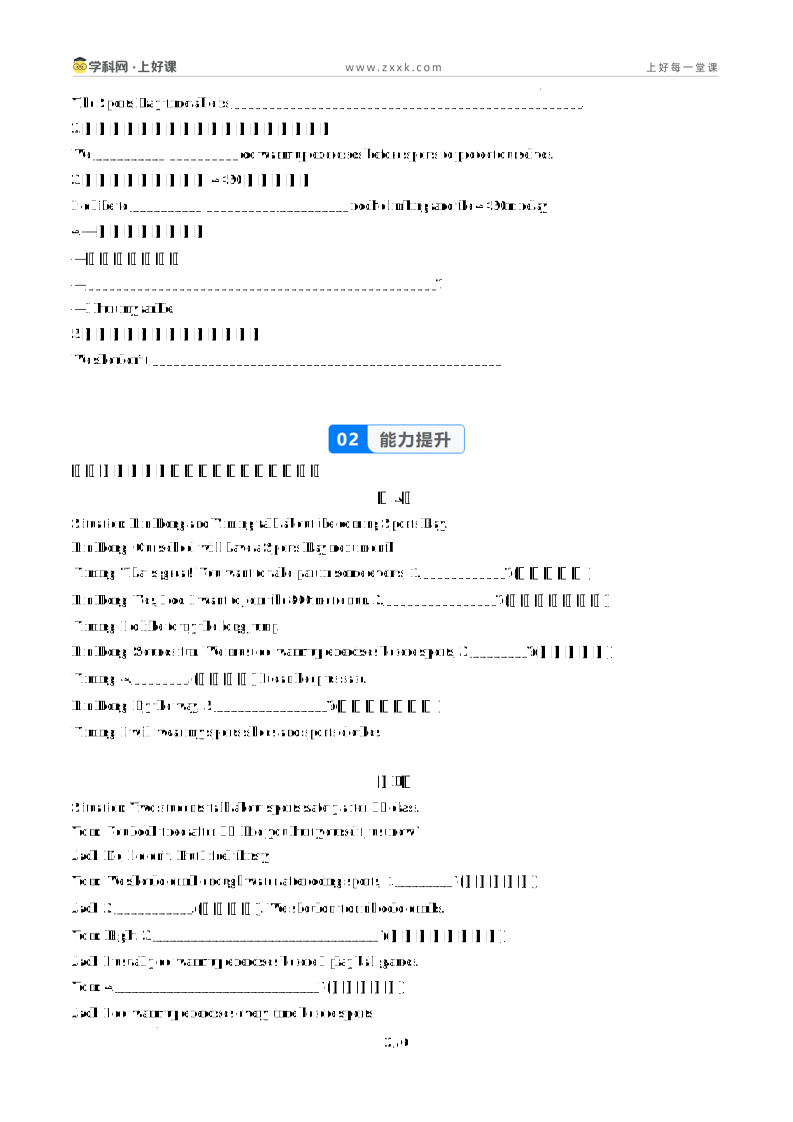
Situation: Lin Dong and Yiming talk about the coming Sports Day.
Lin Dong: Our school will have a Sports Day next month.
Yiming: That’s great! You want to take part in some events, 1.____________?(反意疑问句)
Lin Dong: Yes, I do. I want to join the 800‑metre run. 2.________________?(对比赛项目提问)
Yiming: I’d like to try the long jump.
Lin Dong: Sounds fun. We must do warm‑up exercises before sports, 3.________?(反意疑问句)
Yiming: 4.________.(肯定回答) It can keep us safe.
Lin Dong: By the way, 5.________________?(对运动装备提问)
Yiming: I will wear my sports shoes and sports clothes.
(B)
Situation: Two students talk about sports safety after PE class.
Tom: You look tired after PE. Did you hurt yourself just now?
Jack: No, I didn’t. But I feel thirsty.
Tom: We should drink enough water after doing sports, 1.________?(反意疑问句)
Jack: 2.___________.(肯定回答). We shouldn’t drink cold drinks.
Tom: Right. 3.________________________________?(对运动前活动提问)
Jack: I usually do warm‑up exercises before I play ball games.
Tom: 4._____________________________?(对频率提问)
Jack: I do warm‑up exercises every time before sports.
Tom: Good. 5.__________________________?(提建议,至少写1条运动安全建议)
Jack: Good idea. Let’s learn more rules to protect ourselves.
二、用单词的适当形式填空
1. We need two knee ________ (pad) for sports training.
2. There are many sports ________ (event) on the Sports Day timeline.
3. You must follow safety ________ (rule) when you take part in races.
4. Too little warm‑up exercise may cause sports ________ (injury).
5. Several football ________ (teammate) will sign up for the 4×50m relay.
6. You should stretch your body ________ (proper) before doing sports.
7. Doing sports ________ (regular) can make us strong and fit.
8. Be ________ (care) when you run in the 50m sprint. Don’t fall down.
9. It is ________ (safety) to do warm‑up exercises before running.
10. Many ________ (accident) happen because students skip warm‑up exercises.
11. Look! The sports ________ (coach) are telling us about sports safety.
12. After the long jump, most players feel ________ (tire) and thirsty.
13. Take your water bottle. You will get ________ (thirst) after swimming.
14. One of the ________ (helmet) is for the boy on the football team.
15. He often ________ (hurt) his ankle when he plays ball games carelessly.
一、语法选择
My son is Tommy. He is 1 8-year-old boy. He plays soccer very well. Now, he is playing on the football field. It is my 2 time to see him play soccer at school. Five minutes before the game stops, the score is 2:1. Tommy’s class will win soon. Everyone is excited. Time goes quickly and there 3 little time to go. Just then, the ball comes to Mike, a classmate of my 4 . Mike gets the ball and says, “Let me 5 .” To everyone’s surprise, the ball goes 6 the wrong goal (球门). The game is over with a score of 2:2. But Mike shouts, “I score! Everybody wins!” 7 face is full of joy. He seems to feel 8 .
Mike has Down’s Syndrome (唐氏综合征) and he doesn’t know it’s a wrong goal. He just 9 getting the ball into any goal. I am glad to see my son smile to Mike 10 say to him, “Good job, Mike!”
That night, when my daughter asks who wins the game, my son smiles and answers, “Everybody wins!”
1.A.a B.an C.the
2.A.one B.the first C.first
3.A.is B.are C.be
4.A.son B.son’s C.sons
5.A.try B.to try C.trying
6.A.for B.in C.with
7.A.His B.He C.Him
8.A.happily B.happy C.happiness
9.A.enjoys B.enjoying C.enjoy
10.A.so B.but C.and
二、语法填空
On May 11, 2026, the World Table Tennis Championships 1 (take) place in London. The event was exciting, and all eyes were on the Chinese team. They had trained hard for 2 (month), and their confidence was clear from the start.
In both men’s and women’s team matches, the Chinese players showed great courage. They faced dangerous moments, but neither of the teams felt discouraged. Instead, they kept 3 (fight) and scored point after point. Thanks to their daily practice, they stayed calm even when the pressure was high.
The final match was 4 (forget). The 5 (play) skills were magical, and their teamwork was like a bridge connecting them to success. The gold medals around their necks were not just 6 (prize). They were proof (证明) of their lifelong effort. As the crowd waved flags, the players 7 (hold) their heads high. This victory is not just about 8 (win) a match; it is about believing in themselves. The moments will remain in my heart forever.
If you meet difficulties in life and study, never give 9 and go on fighting. You must be 10 (succeed).
Part 1: Read the passage and answer the questions.
Today was Jacob’s favourite day of the whole year. It was the Sports Day. He had been waiting all week and hoping that it wouldn’t rain.
It was a hot sunny day and Mrs. Rogers, the caretaker, had put chairs out on the far side of the field. The parents sat down and the children sat on mats ready for their races.
First was the egg-and-spoon race. Jacob watched his friends as they tried to carry the eggs to the finish line. They had to keep stopping as the eggs rolled off the spoons.
Next was the obstacle race. You had to jump over a bench, step in at the hoops, crawl under the net and then skip to the finish line. Jacob’s friend nearly won but he got his foot stuck in the giant net.
Finally, it was time for Jacob’s race—the sack race. He climbed into his sack and stood on the start line. The headteacher blew the whistle and everyone started jumping. Jacob was sweating and getting out of breath, but he kept going. Everyone was cheering and Jacob could see the finish line. He took one last huge jump and crossed the line. Mrs. Rogers gave Jacob a green sticker—he had come third. He was very pleased.
Jacob was sad when it was time to go home but he was already looking forward to next year’s Sports Day.
1.What day does Jacob like best of the whole year?
___________________________________________________________________________________________
2.The parents helped Mrs. Rogers put the chairs out, didn’t they?
___________________________________________________________________________________________
3.What should the children do in the egg-and-spoon race?
___________________________________________________________________________________________
4.Why did Jacob’s friend lose the obstacle race?
___________________________________________________________________________________________
5.What race did Jacob take part in?
___________________________________________________________________________________________
Part 2: Creative Task
Suppose you are going to introduce your favourite school activity to your classmates. Please write a short speech (about 60 words) including the following points:
1. What is your favourite school activity?
2. Why do you like it?
3. What can you learn from it?
__________________________________________________________________________________________
__________________________________________________________________________________________
__________________________________________________________________________________________
__________________________________________________________________________________________
$Unit4 Sports
课时1 A Viewing and listening & B Speaking分层作业
核心知识速记
03拓展培优
01基础达标
04思维进阶
02能力提升
一、核心词汇
(
1
/
6
)
学科网(北京)股份有限公司
sports safety /spɔːts ˈseɪfti/ n. 运动安全
sports day /spɔːts deɪ/ n. 运动会
timeline /ˈtaɪmlaɪn/ n. 时间安排表
race /reɪs/ n. 赛跑
long jump /lɒŋ dʒʌmp/ n. 跳远
high jump /haɪ dʒʌmp/ n. 跳高
table tennis /ˈteɪbl ˈtenɪs/ n. 乒乓球
basketball /ˈbɑːskɪtbɔːl/ n. 篮球
football /ˈfʊtbɔːl/ n. 足球
volleyball /ˈvɒlibɔːl/ n. 排球
running /ˈrʌnɪŋ/ n. 跑步
swimming /ˈswɪmɪŋ/ n. 游泳
training /ˈtreɪnɪŋ/ n. 训练
practice /ˈpræktɪs/ n. 练习
warm‑up /ˈwɔːm ʌp/ n. 热身
stretch /stretʃ/ v. 伸展
exercise /ˈeksəsaɪz/ n. 练习;运动
helmet /ˈhelmɪt/ n. 头盔
knee pad /niː pæd/ n. 护膝
elbow pad /ˈelbəʊ pæd/ n. 护肘
water bottle /ˈwɔːtə ˈbɒtl/ n. 水瓶
first aid kit /fɜːst eɪd kɪt/ n. 急救包
coach /kəʊtʃ/ n. 教练
teammate /ˈtiːmeɪt/ n. 队友
safety rule /ˈseɪfti ruːl/ n. 安全规则
risk /rɪsk/ n. 风险
injury /ˈɪndʒəri/ n. 受伤
accident /ˈæksɪdənt/ n. 意外
careful /ˈkeəfl/ adj. 小心的
safe /seɪf/ adj. 安全的
fit /fɪt/ adj. 健康的
active /ˈæktɪv/ adj. 活跃的
strong /strɒŋ/ adj. 强壮的
tired /ˈtaɪəd/ adj. 疲惫的
hungry /ˈhʌŋɡri/ adj. 饥饿的
thirsty /ˈθɜːsti/ adj. 口渴的
early /ˈɜːli/ adv. 早地
regularly /ˈreɡjələli/ adv. 有规律地
properly /ˈprɒpəli/ adv. 正确地
Sports Day 运动会
50m sprint 50米短跑
4×50m relay 4×50米接力赛
do warm‑up exercises 做热身运动
sports clothes 运动服
running shoes 跑鞋
sports gear 运动装备
drink enough water 喝足够的水
cold drinks 冷饮
hurt one’s ankle 扭伤脚踝
play in a football match 参加足球比赛
sign up for 报名参加
二、核心句型
1.—What sport do you want to play? 你想参加什么运动?
—I want to play basketball. 我想打篮球。
2.—What’s the matter? / What’s wrong? 你怎么了?
—I hurt my ankle in the football match. 我在足球比赛中扭伤了脚踝。
3.—Did you warm up before the match? 比赛前你做热身了吗?
—No. I was late and didn’t have time. 没有,我迟到了,没时间。
4.You have to do warm‑up exercises before you do sports. 运动前你必须做热身。
5.You should wear sports clothes and running shoes. 你应当穿运动服和跑鞋。
6.Don’t have cold drinks after exercise. 运动后不要喝冷饮。
7.Which sports events do you want to sign up for? 你想报名哪些比赛项目?
8.We must watch out for others when we play sports. 运动时我们必须留意身边同学。
一、单词拼写(根据音标或句意完成单词)
1.[sprɪnt] __________ (n. 短跑)
2.[ˈklɪnɪk] __________ (n. 诊所)
3.I want to __________ (报名) up for the basketball match.
4.You should do __________ (热身) exercises before doing sports.
5.He hurt his __________ (脚踝) in the football game.
【答案】1.sprint 2.clinic 3.sign 4.warm‑up 5.ankle
二、短语翻译
1.运动会 __________
2.做热身运动 __________
3.报名参加 __________
4.运动装备 __________
5.drink enough water __________
6.tug‑of‑war __________
【答案】1.Sports Day 2.do warm‑up exercises 3.sign up for 4.sports gear 5.喝足够的水 6.拔河
三、根据要求完成句子
1.运动会时间表是记录各类比赛项目的表格。
The Sports Day timetable is __________________________________________________.
2.运动前我们必须做热身运动来保护自己。
We __________ __________ do warm‑up exercises before sports to protect ourselves.
3.我想报名参加攀岩和4×50米接力赛。
I’d like to __________ __________ __________ rock‑climbing and the 4×50m relay.
4.—你运动时怎么了?
—我扭伤了脚踝。
—__________________________________________________?
—I hurt my ankle.
5.运动之后我们不应该喝冷饮。
We shouldn’t __________________________________________________.
【答案】
1.a form of all kinds of sports events 2.have to 3.sign up for
4.What’s wrong / What’s the matter with you (when you do sports) 5.have cold drinks after exercise
一、根据情景,在语篇中填入适当的内容
(A)
Situation: Lin Dong and Yiming talk about the coming Sports Day.
Lin Dong: Our school will have a Sports Day next month.
Yiming: That’s great! You want to take part in some events, 1.____________?(反意疑问句)
Lin Dong: Yes, I do. I want to join the 800‑metre run. 2.________________?(对比赛项目提问)
Yiming: I’d like to try the long jump.
Lin Dong: Sounds fun. We must do warm‑up exercises before sports, 3.________?(反意疑问句)
Yiming: 4.________.(肯定回答) It can keep us safe.
Lin Dong: By the way, 5.________________?(对运动装备提问)
Yiming: I will wear my sports shoes and sports clothes.
【答案&解析
1.don’t you
解析:反意疑问句,前肯后否,主语you。
2.What would you like to try
解析:针对答句跳远,提问想参加什么项目。
3.mustn’t we
解析:must引导反意疑问,用mustn’t +主语。
4.Yes, we must
解析:must的肯定简短回答。
5.What will you wear for sports
解析:针对运动装备提问。
(B)
Situation: Two students talk about sports safety after PE class.
Tom: You look tired after PE. Did you hurt yourself just now?
Jack: No, I didn’t. But I feel thirsty.
Tom: We should drink enough water after doing sports, 1.________?(反意疑问句)
Jack: 2.___________.(肯定回答). We shouldn’t drink cold drinks.
Tom: Right. 3.________________________________?(对运动前活动提问)
Jack: I usually do warm‑up exercises before I play ball games.
Tom: 4._____________________________?(对频率提问)
Jack: I do warm‑up exercises every time before sports.
Tom: Good. 5.__________________________?(提建议,至少写1条运动安全建议)
Jack: Good idea. Let’s learn more rules to protect ourselves.
【答案&解析】
1.shouldn’t we
解析:should反意疑问句,前肯后否。
2.Yes, we should
解析:should肯定简短回答。
3.What do you usually do before playing ball games
解析:针对答句“做热身”提问运动前做什么。
4.How often do you do warm‑up exercises
解析:How often对频率提问,六年级核心考点。
5.We should look out for our classmates when we do sports
二、用单词的适当形式填空
1. We need two knee ________ (pad) for sports training.
2. There are many sports ________ (event) on the Sports Day timeline.
3. You must follow safety ________ (rule) when you take part in races.
4. Too little warm‑up exercise may cause sports ________ (injury).
5. Several football ________ (teammate) will sign up for the 4×50m relay.
6. You should stretch your body ________ (proper) before doing sports.
7. Doing sports ________ (regular) can make us strong and fit.
8. Be ________ (care) when you run in the 50m sprint. Don’t fall down.
9. It is ________ (safety) to do warm‑up exercises before running.
10. Many ________ (accident) happen because students skip warm‑up exercises.
11. Look! The sports ________ (coach) are telling us about sports safety.
12. After the long jump, most players feel ________ (tire) and thirsty.
13. Take your water bottle. You will get ________ (thirst) after swimming.
14. One of the ________ (helmet) is for the boy on the football team.
15. He often ________ (hurt) his ankle when he plays ball games carelessly.
【答案&解析】
1. pads 解析:two后面接可数名词复数,pad护垫,复数pads。
2. events 解析:many后接可数名词复数,event项目,复数events。
3. rules 解析:safety rule为可数短语,无冠词,用复数rules,safety rules安全规则。
4. injuries 解析:sports injuries固定表达,运动损伤,复数表一类事物。
5. teammates 解析:several后接可数名词复数,teammate队友,复数teammates。
6. properly 解析:副词修饰动词stretch;proper形容词,副词properly正确地。
7. regularly 解析:副词修饰动词do;regular形容词,副词regularly有规律地。
8. careful 解析:固定搭配be careful小心;care动词/名词,形容词careful。
9. safe 解析:It is + 形容词;safety名词,形容词safe安全的。
10. accidents 解析:many后接可数名词复数,accident意外,复数accidents。
11. coaches 解析:are提示主语复数;coach教练,ch结尾,复数加‑es。
12. tired 解析:feel后接形容词,修饰人用tired疲惫的。
13. thirsty 解析:get后接形容词作表语;thirst名词,形容词thirsty口渴的。
14. helmets 解析:one of + 可数名词复数,helmet头盔,复数helmets。
15. hurts 解析:often 表示经常性动作,用于一般现在时;主语 he 为第三人称单数,动词 hurt 变 hurts。
一、语法选择
My son is Tommy. He is 1 8-year-old boy. He plays soccer very well. Now, he is playing on the football field. It is my 2 time to see him play soccer at school. Five minutes before the game stops, the score is 2:1. Tommy’s class will win soon. Everyone is excited. Time goes quickly and there 3 little time to go. Just then, the ball comes to Mike, a classmate of my 4 . Mike gets the ball and says, “Let me 5 .” To everyone’s surprise, the ball goes 6 the wrong goal (球门). The game is over with a score of 2:2. But Mike shouts, “I score! Everybody wins!” 7 face is full of joy. He seems to feel 8 .
Mike has Down’s Syndrome (唐氏综合征) and he doesn’t know it’s a wrong goal. He just 9 getting the ball into any goal. I am glad to see my son smile to Mike 10 say to him, “Good job, Mike!”
That night, when my daughter asks who wins the game, my son smiles and answers, “Everybody wins!”
1.A.a B.an C.the
2.A.one B.the first C.first
3.A.is B.are C.be
4.A.son B.son’s C.sons
5.A.try B.to try C.trying
6.A.for B.in C.with
7.A.His B.He C.Him
8.A.happily B.happy C.happiness
9.A.enjoys B.enjoying C.enjoy
10.A.so B.but C.and
【答案】1.B 2.C 3.A 4.B 5.A 6.B 7.A 8.B 9.A 10.C
【导语】本文讲述了一个患有唐氏综合征的男孩在足球赛中误将球踢进自家球门,但大家依然为他欢呼的故事,体现了包容与快乐。
【详解】1.句意:他是一个8岁男孩。
a不定冠词,表泛指,用于以辅音音素开头的单词前;an不定冠词,表泛指,用于以元音音素开头的单词前;the定冠词,表特指。此处表示泛指的含义,8-year-old以元音音素开头,an符合。故选B。
2.句意:这是我第一次看到他在学校踢足球。
one一;the first第一,the+序数词;first第一。It is my first time to do sth.“这是我第一次做某事”,是固定句式。故选C。
3.句意:时间过得很快,剩下的时间不多了。
is是,主语为第三人称单数形式;are是,主语为复数或you;be是,原形。time是不可数名词,用is。故选A。
4.句意:就在这时,球传给了我儿子的同学迈克。
son儿子,单数形式;son’s儿子的;sons儿子,复数形式。此处需用所有格表示“儿子的同学”。故选B。
5.句意:让我试试。
try尝试,动词原形;to try尝试,不定式;trying尝试,现在分词。let sb. do sth.“让某人做某事”,是固定搭配。故选A。
6.句意:令所有人惊讶的是,球进错了球门。
for为了;in在……里面;with和。根据“I score!”可知,球射进了球门里,in符合。故选B。
7.句意:他的脸上充满了喜悦。
His他的,形容词性物主代词;He他 ,人称代词主格;Him他 ,人称代词宾格。分析句子结构可知,此处应用形容词性物主代词,修饰“face”。故选A。
8.句意:他似乎感到高兴。
happily开心地;happy开心的;happiness幸福。分析句子结构可知,此处应用形容词,作表语。故选B。
9.句意:他就是喜欢把球踢进任何球门。
enjoys喜爱,三单形式;enjoying喜爱,现在分词;enjoy喜爱,动词原形。空处为句子的谓语,主语为“He”,用三单形式enjoys。故选A。
10.句意:我很高兴看到儿子对迈克微笑,对他说:“干得好,迈克!”
so所以;but但是;and和。根据“I am glad to see my son smile to Mike…say to him…”的语境可知,此处表示并列关系,and符合。故选C。
二、语法填空
On May 11, 2026, the World Table Tennis Championships 1 (take) place in London. The event was exciting, and all eyes were on the Chinese team. They had trained hard for 2 (month), and their confidence was clear from the start.
In both men’s and women’s team matches, the Chinese players showed great courage. They faced dangerous moments, but neither of the teams felt discouraged. Instead, they kept 3 (fight) and scored point after point. Thanks to their daily practice, they stayed calm even when the pressure was high.
The final match was 4 (forget). The 5 (play) skills were magical, and their teamwork was like a bridge connecting them to success. The gold medals around their necks were not just 6 (prize). They were proof (证明) of their lifelong effort. As the crowd waved flags, the players 7 (hold) their heads high. This victory is not just about 8 (win) a match; it is about believing in themselves. The moments will remain in my heart forever.
If you meet difficulties in life and study, never give 9 and go on fighting. You must be 10 (succeed).
【答案】1.took 2.months 3.fighting 4.unforgettable 5.players’ 6.prizes 7.held 8.winning 9.up 10.successful
【导语】本文是一篇记叙文,主要讲述2026年5月11日世界乒乓球锦标赛在伦敦举办,中国乒乓男女队奋力拼搏收获金牌,以及这件事带给我们面对困难永不放弃的人生启示。
【详解】1.句意:2026年5月11日,世界乒乓球锦标赛在伦敦举行。句中关键词On May 11, 2026为过去时间状语,句子时态为一般过去时,take的过去式为took,故填took。
2.句意:他们已经刻苦训练数月,从一开始信心十足。关键词for后接时间段,month为可数名词,此处表示多个月份,需使用复数形式months,故填months。
3.句意:相反,他们持续战斗。固定搭配keep doing sth.表示“持续做某事”,keep后动词需要使用动名词形式,fight的动名词为fighting,故填fighting。
4.句意:这场决赛令人难忘。句中关键词The final match是事物,空格处需要填入形容词作表语,forge变形不符合语境,unforgettable为形容词,含义是“令人难忘的”,贴合比赛紧张精彩的语境,故填unforgettable。
5.句意:运动员们的技术十分出色。句中关键词skills是名词,空格需要名词所有格作定语修饰skills,players表示多名运动员,复数名词所有格直接在词尾加’,players’表示“运动员们的”,故填players’。
6.句意:他们脖子上的金牌不只是奖品。主语medals为复数,对应奖品也为多个,prize是可数名词,使用复数形式prizes,故填prizes。
7.句意:当观众挥舞旗帜时,运动员们高高挺起胸膛。句中时态为一般过去时,固定搭配hold high表示“高举、挺起”,hold的过去式为held,贴合全文过去时态叙事逻辑,故填held。
8.句意:这场胜利不只是赢得比赛,更是相信自我。固定搭配about为介词,介词后动词用动名词形式,win的动名词为winning,故填winning。
9.句意:如果你在生活和学习中遇到困难,永远不要放弃,继续拼搏。固定搭配give up表示“放弃”,为固定短语,故填up。
10.句意:你一定会成功。固定结构be动词后接形容词作表语,succeed的形容词形式为successful,故填successful。
Part 1: Read the passage and answer the questions.
Today was Jacob’s favourite day of the whole year. It was the Sports Day. He had been waiting all week and hoping that it wouldn’t rain.
It was a hot sunny day and Mrs. Rogers, the caretaker, had put chairs out on the far side of the field. The parents sat down and the children sat on mats ready for their races.
First was the egg-and-spoon race. Jacob watched his friends as they tried to carry the eggs to the finish line. They had to keep stopping as the eggs rolled off the spoons.
Next was the obstacle race. You had to jump over a bench, step in at the hoops, crawl under the net and then skip to the finish line. Jacob’s friend nearly won but he got his foot stuck in the giant net.
Finally, it was time for Jacob’s race—the sack race. He climbed into his sack and stood on the start line. The headteacher blew the whistle and everyone started jumping. Jacob was sweating and getting out of breath, but he kept going. Everyone was cheering and Jacob could see the finish line. He took one last huge jump and crossed the line. Mrs. Rogers gave Jacob a green sticker—he had come third. He was very pleased.
Jacob was sad when it was time to go home but he was already looking forward to next year’s Sports Day.
1.What day does Jacob like best of the whole year?
___________________________________________________________________________________________
2.The parents helped Mrs. Rogers put the chairs out, didn’t they?
___________________________________________________________________________________________
3.What should the children do in the egg-and-spoon race?
___________________________________________________________________________________________
4.Why did Jacob’s friend lose the obstacle race?
___________________________________________________________________________________________
5.What race did Jacob take part in?
___________________________________________________________________________________________
Part 2: Creative Task
Suppose you are going to introduce your favourite school activity to your classmates. Please write a short speech (about 60 words) including the following points:
1. What is your favourite school activity?
2. Why do you like it?
3. What can you learn from it?
__________________________________________________________________________________________
__________________________________________________________________________________________
__________________________________________________________________________________________
__________________________________________________________________________________________
【答案】Part 1
1.The Sports Day. 2.No, they didn’t.
3.The children should carry the eggs to the finish line without dropping them off the spoons.
4.Because he got his foot stuck in the giant net. 5.The sack race.
Part 2例文
My favourite school activity is Sports Day. I really look forward to it every year. I love it because I can join many interesting races and cheer loudly for my classmates on the playground. Though I cannot always get good prizes, I learn to keep trying bravely and enjoy the happy time with my close friends.
【导语】本文讲述了Jacob最喜欢的运动会日,他参加了各种比赛并在袋鼠跳比赛中获得了第三名,以及他对此活动的期待与愉悦。
【详解】1.根据“Today was Jacob’s favourite day of the whole year. It was the Sports Day”可知,Jacob一年中最喜欢的日子是体育日。故填The Sports Day.
2.根据“Mrs. Rogers, the caretaker, had put chairs out on the far side of the field”可知,是Mrs. Rogers自己把椅子摆好的,并没有提到家长帮忙。故填No, they didn’t.
3.根据“Jacob watched his friends as they tried to carry the eggs to the finish line. They had to keep stopping as the eggs rolled off the spoons”可知,在蛋与勺比赛中,孩子们需要把蛋运到终点线,同时防止它们从勺子上掉下来。故填The children should carry the eggs to the finish line without dropping them off the spoons.
4.根据“Jacob’s friend nearly won but he got his foot stuck in the giant net”可知,Jacob的朋友输掉障碍赛是因为他的脚卡在了巨大的网中。故填Because he got his foot stuck in the giant net.
5.根据“Finally, it was time for Jacob’s race—the sack race”可知,Jacob参加的是麻袋赛跑。故填The sack race.
$
资源预览图

1

2
3

相关资源
示范课
由于学科网是一个信息分享及获取的平台,不确保部分用户上传资料的 来源及知识产权归属。如您发现相关资料侵犯您的合法权益,请联系学科网,我们核实后将及时进行处理。