Unit 3 Reading Plus讲练讲义2026-2027学年人教版英语九年级上册
2026-08-25
|
6页
|
221人阅读
|
0人下载
普通
摘要:
本讲义围绕“拖延症”这一核心主题,以凯西拖延写作文的生活化事例导入,系统梳理拖延的成因(逃避负面情绪)、危害(恶性循环)、解决思路(处理负面情绪)及具体方法(直面恐惧、拆分任务等),并以重点词汇、句型和语法知识为学习支架。
资料以贴近学生生活的语篇提升语言理解与表达能力,通过问题分析与解决培养思维品质,分层精练和答题模板助力学习能力发展。课中辅助教师系统授课,课后帮助学生巩固知识、规范答题,有效查漏补缺。
内容正文:
Unit 3 Reading Plus讲练讲义2026-2027学年九年级上册人教版
一、语篇整体概览
Para.1 原文:Cathy knows that she has an essay due on Monday. However, instead of beginning work on it today, she waits until the last minute, and starts work on Sunday night. Of course, it is impossible to do a good job writing an essay in one night, so she gets a bad grade. She then kicks herself for not starting earlier and promises to do better next time, but she doesn't.
Para.1 译文:凯西知道自己周一有一篇作文要交。然而,她没有当天动笔,而是拖到最后一刻,在周日晚上才开始写。可想而知,一晚上根本写不出高质量的作文,因此她成绩很差。事后她懊悔自己没有早点开始,也承诺下次一定改正,却始终没有做到。
Para.2 原文:Does Cathy's story sound familiar? Like Cathy, many of us procrastinate—we put off doing something important until the last moment. But why do we do this? Some research shows that we procrastinate because of negative feelings, such as fear or worry. We are afraid of doing a poor job or getting bad grades. We think that we might fail. We put off doing the work in order to avoid having these bad feelings. Sadly, we are more likely to fail or do poorly when we procrastinate. This creates even more negative feelings and makes it more likely that we will procrastinate the next time.
Para.2 译文:凯西的经历你是否似曾相识?和凯西一样,我们很多人都会拖延——把重要的事情拖到最后一刻才做。但我们为什么会这样?有研究表明,拖延的根源是恐惧、焦虑等负面情绪。我们害怕做事敷衍、成绩糟糕,担心自己会失败,于是通过拖延工作来逃避这些糟糕的感受。但遗憾的是,拖延只会让我们更容易失败、做事更差,进而产生更多负面情绪,导致下一次更容易拖延,形成恶性循环。
Para.3 原文:The long-term solution to this problem is to deal with our negative feelings. We need to forgive ourselves for failing. We need to accept that sometimes we will not meet the mark. We also need to realize that difficult work isn't always a bad thing. It is through difficulty that we learn and grow.
Para.3 译文:解决拖延问题的长久办法,是正视并化解自身的负面情绪。我们要接纳自己的失误与失败,坦然接受自己偶尔会达不到预期标准。同时我们要明白,棘手的任务并非坏事,我们正是在克服困境的过程中不断学习、获得成长。
Para.4 原文:So what can we do? Here are some tips. First, realize that once we face our fears and get started, our fears often go away, and we start to enjoy the work. Second, break large projects into small parts, each with their own smaller deadline. Take each thing step by step. Third, reward yourself for getting a step done. Relax or do something fun, then get back to work. Finally, remove temptation. This means if you watch TV to put off work, then work at the library. If you chat with friends to put off work, then work alone and turn off your phone. Find a place to work that does not have such distractions.
Para.4 译文:那么我们该如何克服拖延?这里有几个实用方法。第一,要明白一旦直面恐惧、主动开始行动,内心的畏惧感就会消散,我们也会慢慢享受做事的过程。第二,将繁杂的大任务拆解成多个小任务,为每个小任务设置截止时间,循序渐进、分步完成。第三,完成阶段性任务后适当奖励自己,放松身心、做点有趣的事,之后再回归学习和工作。最后,主动远离诱惑。如果看电视会让你拖延,就去图书馆学习;如果和朋友闲聊耽误做事,就独处学习、关掉手机,找一个无干扰的环境专注做事。
Para.5 原文:In the end, it is up to you and the actions you take to overcome procrastination. So what are you waiting for?
Para.5 译文:归根结底,能否克服拖延,取决于你自身和你的实际行动。所以,你还在犹豫什么呢?
文体与主题
本文为说明文,围绕“拖延症”这一学生常见问题展开。以凯西拖延写作文的生活化事例导入,剖析拖延行为的成因、恶性循环危害,针对性给出长期解决思路和具体实操方法,最后号召读者主动行动、克服拖延。文章贴近学生日常学习生活,逻辑清晰、层层递进,兼具知识性和指导性。
语篇结构(总-分-总)
•导入(Para.1):列举凯西拖延写作文、最终成绩不佳且屡教不改的典型事例,引出拖延话题。
•分析问题(Para.2):点明大众普遍存在拖延问题,剖析拖延核心成因(逃避负面情绪),阐述拖延引发的恶性循环危害。
•解决思路(Para.3):提出克服拖延的长期根本方法——正视并化解自身负面情绪。
•具体方法(Para.4):给出四条简单可落地的实操技巧,帮助摆脱拖延。
•总结升华(Para.5):强调克服拖延关键在于自身行动,发出积极行动的号召。
核心主旨
The passage mainly tells us the cause and harm of procrastination, and offers practical ways to overcome this bad habit, encouraging us to take action to stop procrastinating.
译文:本文介绍了拖延症的成因与危害,提供了克服拖延的实用方法,鼓励我们主动行动、摆脱拖延陋习。
二、核心重难点精讲
(一)重点词汇(必背+拓展)
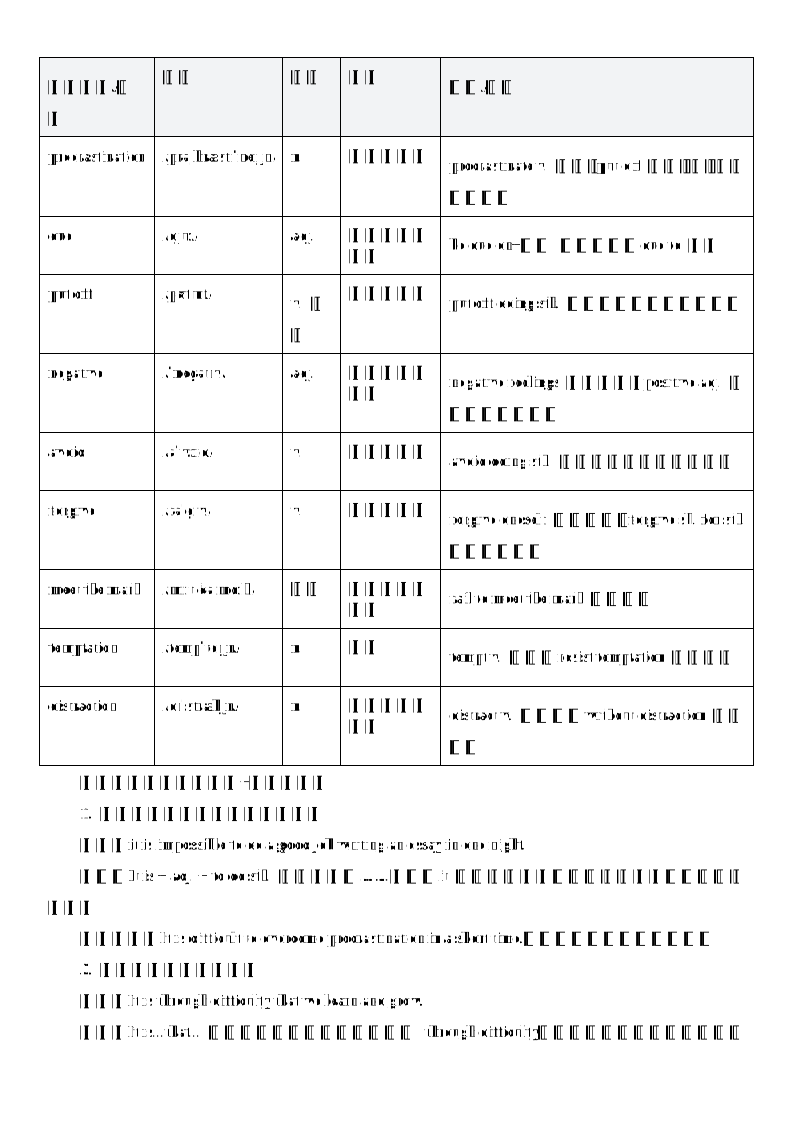
核心单词/短语
音标
词性
释义
拓展/搭配
procrastination
/prəˌkræstɪˈneɪʃn/
n.
拖延,耽搁
procrastinate v. 拖延;put off 推迟,拖延(同义替换)
due
/djuː/
adj.
到期的,应付的
be due on+日期 某日到期;due to 由于
put off
/pʊt ɒf/
v. 短语
推迟,拖延
put off doing sth. 推迟做某事(高频考点)
negative
/ˈneɡətɪv/
adj.
消极的,负面的
negative feelings 负面情绪;positive adj. 积极的(反义词)
avoid
/əˈvɔɪd/
v.
避免,回避
avoid doing sth. 避免做某事(必考搭配)
forgive
/fəˈɡɪv/
v.
原谅,宽恕
forgive oneself 自我谅解;forgive sb. for sth. 原谅某人某事
meet the mark
/miːt ðə mɑːk/
短语
达到标准,达标
fail to meet the mark 未能达标
temptation
/tempˈteɪʃn/
n.
诱惑
tempt v. 诱惑;resist temptation 抵制诱惑
distraction
/dɪˈstrækʃn/
n.
干扰,分心事物
distract v. 使分心;without distraction 不受干扰
(二)重点句型(仿写+语法精讲)
1. 形式主语句型(高频写作句型)
原句:it is impossible to do a good job writing an essay in one night.
精讲:It is + adj. + to do sth. (做某事是……的),it 为形式主语,真正的主语是后面的动词不定式。
拓展仿写:It is difficult to overcome procrastination in a short time.(短期内克服拖延很难。)
2. 强调句型(难点理解)
原句:It is through difficulty that we learn and grow.
精讲:It is...that... 强调句型,本句强调方式状语 through difficulty(历经困境),去掉句型框架后句子依然完整:We learn and grow through difficulty.
译文:我们正是在困境中学习与成长。
3. 状语从句嵌套(阅读长难句)
原句:Once we face our fears and get started, our fears often go away, and we start to enjoy the work.
精讲:once 引导时间状语从句,意为“一旦……”,遵循“主将从现”原则,是阅读与写作高频连词。
仿写:Once you make a plan, you should stick to it.(一旦制定计划,就要坚持执行。)
(三)核心语法考点
1.非谓语动词:高频考查 put off doing、avoid doing、start doing 等后接动名词的固定搭配,是单选、语法填空必考点。
2.it 形式主语:固定句型 It is + adj. + to do sth.,常用于写作、句型转换题型。
3.once 引导状语从句:掌握“主将从现”用法,区分 once 表“一旦”的语境含义。
三、分层精练
基础过关练
Ⅰ. 根据句意及首字母提示完成单词
1. It is a bad habit to p________ important things until the last minute.
2. We should face difficulties bravely instead of holding n________ attitudes.
3. You should a________ making the same mistake again.
4. There are too many d________ at home, so I can’t focus on my study.
5. We need to f________ ourselves for our small mistakes.
Ⅱ. 用所给词的适当形式填空
1. He puts off ________ (finish) his homework every day.
2. It is necessary ________ (face) your fears bravely.
3. Once you ________ (start) working, you will find it not that hard.
4. Difficulties help us ________ (learn) and grow.
5. Removing temptation is a good way ________ (stop) procrastinating.
能力提升练
Ⅲ. 阅读理解(根据短文内容,选择最佳答案)
1. Why do people procrastinate according to the passage?
A. They are too busy with other things
B. They want to avoid negative feelings
C. They think work is too easy
D. They have no time to prepare
2. What is the long-term solution to procrastination?
A. Finish work at the last minute
B. Avoid difficult work
C. Deal with negative feelings properly
D. Ask others for help all the time
3. Which of the following is NOT the tip to stop procrastinating?
A. Break big tasks into small parts
B. Reward yourself after finishing tasks
C. Stay in a noisy place to work
D. Face your fears and start working
Ⅳ. 简答(阅读表达题型)
1. What will happen if we always procrastinate?
2. What does the writer want to tell us in the passage?
四、参考答案与详细解析
基础过关练
Ⅰ. 单词填空
1. procrastinate 解析:句意:把重要事情拖到最后一刻是坏习惯,不定式后接动词原形。
2. negative 解析:negative attitudes 消极的态度,对应文中负面情绪话题。
3. avoid 解析:avoid doing sth. 避免做某事,固定搭配。
4. distractions 解析:many 后接可数名词复数,distractions 干扰因素。
5. forgive 解析:need to do sth. 需要做某事,forgive oneself 自我谅解。
Ⅱ. 词形变换
1. finishing 解析:put off doing sth. 推迟做某事,固定搭配。
2. to face 解析:It is + adj. + to do sth. 形式主语句型。
3. start 解析:once 引导时间状语从句,遵循“主将从现”,用一般现在时。
4. (to) learn 解析:help sb. (to) do sth. 帮助某人做某事。
5. to stop 解析:a way to do sth. 做某事的方法,不定式作后置定语。
能力提升练
Ⅲ. 阅读理解
1. B 解析:细节理解题。根据原文第二段“Some research shows that we procrastinate because of negative feelings... We put off doing the work in order to avoid having these bad feelings.”可知拖延是为了逃避负面情绪。
2. C 解析:细节理解题。根据原文第三段“The long-term solution to this problem is to deal with our negative feelings.”可知长期解决方法是妥善处理负面情绪。
3. C 解析:细节判断题。根据第四段可知,克服拖延需要远离干扰、在无干扰的环境学习,C选项“在嘈杂的地方学习”与原文相悖。
Ⅳ. 简答(标准答题模板)
1. We are more likely to fail or do poorly, and we will have more negative feelings and procrastinate more easily next time.
2. The passage tells us the cause and harm of procrastination and teaches us practical ways to overcome it, and we should take action to stop procrastinating.
五、满分答题模板(考场必备)
1. 主旨大意题模板
The passage mainly talks about the reasons, harm and solutions to procrastination, and encourages us to take action to get rid of procrastination.
2. 原因类简答题模板
People procrastinate mainly because they want to avoid negative feelings like fear and worry.
3. 建议做法类模板
To overcome procrastination, we should face our fears, divide big tasks into small ones, reward ourselves for finishing tasks and stay away from distractions.
学科网(北京)股份有限公司
$
资源预览图

1

2
3
相关资源
示范课
由于学科网是一个信息分享及获取的平台,不确保部分用户上传资料的 来源及知识产权归属。如您发现相关资料侵犯您的合法权益,请联系学科网,我们核实后将及时进行处理。