Unit5~Unit6 词汇句型(综合训练)-2026-2027学年译林版(三起)英语五年级上册
2026-08-16
|
6页
|
143人阅读
|
7人下载
摘要:
**基本信息**
聚焦Unit5-6核心词汇与语法,通过多题型整合考查周末活动与人际交往主题的语言应用,知识逻辑从基础词汇到语法结构再到语篇理解,层层递进。
**综合设计**
|模块|题量/典例|题型特征|知识逻辑|
|----|-----------|----------|----------|
|单项选择|10题|考查动词时态、固定搭配|覆盖一般现在时、过去时及介词用法,关联单元主题语境|
|适当形式填空|10题|动词时态与非谓语应用|从基础动词变形到复杂时态(现在进行时),强化语法规则|
|英汉互译|10题|核心短语双向转换|衔接单元重点词汇(如play Chinese chess、get along with others)|
|句型转换/连词成句|各5题|句子结构与句式变换|从简单句到复杂句式,提升语言组织与表达能力|
|阅读理解|5题|语篇综合信息提取|融合两单元主题,考查情境化语言理解与思维品质|
内容正文:
2026年秋译林版五年级英语上册 Unit5~Unit6 词汇句型综合专项训练
测试范围:Unit 5 At weekends、Unit 6 Getting along with others
一、单项选择
( ) 1. My cousin ________ Chinese chess with his grandpa every Sunday morning.
A. play B. plays C. playing
( ) 2. —What does your sister do at weekends?
—She often ________ with her friends on the Internet.
A. chat B. chats C. chatting
( ) 3. We should be friendly ________ our classmates and neighbours.
A. between B. to C. with
( ) 4. Why not ________ a letter to your new neighbour to say hello?
A. write B. to write C. writing
( ) 5. Lily ________ a picnic with her family near the lake last weekend.
A. have B. has C. had
( ) 6. Sometimes we ________ good advice when we have problems at school.
A. get B. gets C. getting
( ) 7. —Does Tom visit his grandparents every month?
—Yes, he ________.
A. do B. does C. is
( ) 8. There is a small space ________ the two houses in the neighbourhood.
A. next B. between C. on
( ) 9. I plan ________ the piano for an hour after finishing homework on Saturdays.
A. practise B. to practise C. practising
( ) 10. On their way back home, they talk ________ their little problems.
A. about B. for C. at
二、用所给单词的适当形式填空
1. My uncle always ________ (spend) his free time watching TV at weekends.
2. We enjoy ________ (get) along well with all the students in our class.
3. Look! The girl ________ (play) the piano in the music room now.
4. You need ________ (be) friendly when you meet new neighbours.
5. They ________ (have) a wonderful picnic in the park last Saturday.
6. Giving others advice ________ (help) people solve small problems.
7. Sometimes my parents ________ (visit) their old friends on Sundays.
8. Why don’t you ________ (share) your storybook with your deskmate?
9. She ________ (not chat) online on weekdays. She only does it on weekends.
10. Those boys ________ (walk) on their way back to the community now.
三、英汉互译
1. play Chinese chess ____________
2. 和他人和睦相处 ____________
3. chat on the Internet ____________
4. 在某人回去的路上 ____________
5. have a picnic ____________
6. 给出建议 ____________
7. visit grandparents ____________
8. 在……旁边;紧邻 ____________
9. play the piano ____________
10. 邻里之间的矛盾 ____________
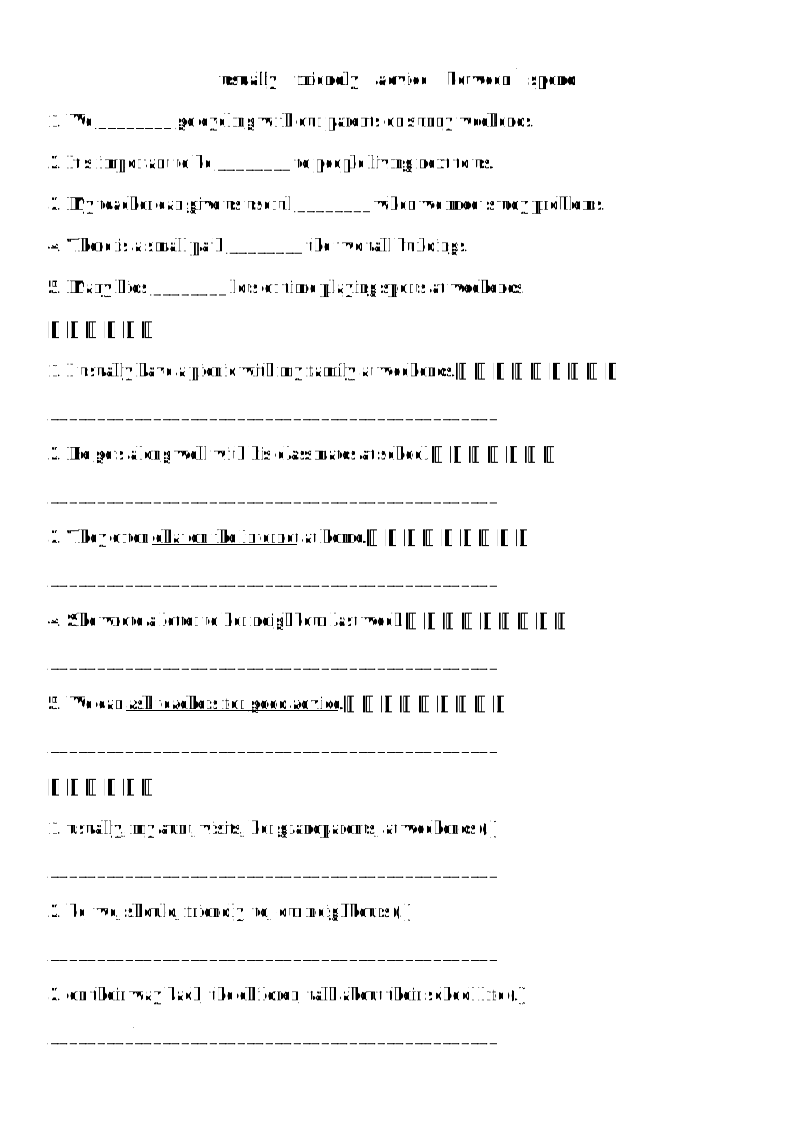
四、选词填空
usually friendly advice between spend
1. We ________ go cycling with our parents on sunny weekends.
2. It’s important to be ________ to people living next to us.
3. My teacher can give us useful ________ when we meet study problems.
4. There is a small path ________ the two tall buildings.
5. Many kids ________ lots of time playing sports at weekends.
五、句型转换
1. I usually have a picnic with my family at weekends.(改为一般疑问句)
________________________________________________
2. He gets along well with his classmates at school.(改为否定句)
________________________________________________
3. They often chat on the Internet at home.(对画线部分提问)
________________________________________________
4. She wrote a letter to her neighbour last week.(改为一般现在时)
________________________________________________
5. We can ask teachers for good advice.(对画线部分提问)
________________________________________________
六、连词成句
1. usually, my aunt, visits, her grandparents, at weekends (.)
________________________________________________
2. be, we, should, friendly, to, our neighbours (.)
________________________________________________
3. on their way back, the children, talk about their school life (.)
________________________________________________
4. why not, write a letter, to, your new neighbour (?)
________________________________________________
5. plays the piano, my cousin, for one hour, every Saturday (.)
________________________________________________
七、阅读理解
Weekends are full of happy activities for children, and getting along with others makes life nicer. Lucy always has busy but happy weekends. She usually visits her grandparents on Saturday morning. In the afternoon, she plays the piano or plays Chinese chess with her grandpa. Sometimes she chats with her pen pals on the Internet when she stays at home.
Lucy lives next to a new family in her neighbourhood. At first, she didn’t know how to talk with her new neighbours. Her mum gives her some good advice: be friendly, say hello when you meet them, and share small things together. On their way back from the park last Sunday, Lucy met the neighbour’s kid. They talked and became good friends soon. Lucy learns that being polite and friendly helps people get along well.
( ) 1. What does Lucy usually do on Saturday mornings?
A. She chats online
B. She visits her grandparents
C. She plays chess at home
( ) 2. Who does Lucy play Chinese chess with?
A. Her pen pals
B. Her grandpa
C. Her neighbour
( ) 3. Where does Lucy’s new neighbour live?
A. Between two parks
B. Next to Lucy’s home
C. Far from the community
( ) 4. What advice does Lucy’s mum give her?
A. Stay at home all weekends
B. Be friendly to new neighbours
C. Write letters every day
( ) 5. What can we learn from the passage?
A. Being friendly helps us get along with others
B. Lucy never has picnics with her family
C. Lucy only chats online on weekdays
参考答案
一、单项选择
1. B 2. B 3. B 4. A 5. C 6. A 7. B 8. B 9. B 10. A
二、用所给单词的适当形式填空
1. spends 2. getting 3. is playing 4. to be 5. had 6. helps 7. visit 8. share 9. doesn’t chat 10. are walking
三、英汉互译
1. 下国际象棋 2. get along with others 3. 网上聊天 4. on one's way back 5. 野餐 6. give advice 7. 探望祖父母 8. next to 9. 弹钢琴 10. problems between neighbours
四、选词填空
1. usually 2. friendly 3. advice 4. between 5. spend
五、句型转换
1. Do you usually have a picnic with your family at weekends?
2. He doesn’t get along well with his classmates at school.
3. What do they often do at home?
4. She writes a letter to her neighbour every week.
5. What can we do?
六、连词成句
1. My aunt usually visits her grandparents at weekends.
2. We should be friendly to our neighbours.
3. The children talk about their school life on their way back.
4. Why not write a letter to your new neighbour?
5. My cousin plays the piano for one hour every Saturday.
七、阅读理解
1. B 2. B 3. B 4. B 5. A
学科网(北京)股份有限公司
$
资源预览图

1

2
3
相关资源
示范课
由于学科网是一个信息分享及获取的平台,不确保部分用户上传资料的 来源及知识产权归属。如您发现相关资料侵犯您的合法权益,请联系学科网,我们核实后将及时进行处理。