Unit 5 Exploring space (知识清单)-2026-2027学年人教PEP版英语六年级上册
2026-08-07
|
6页
|
106人阅读
|
2人下载
普通
摘要:
该小学英语知识清单围绕“探索太空”主题,系统梳理从天空与地球现象、太空天体认知到探索工具与方式的知识脉络。以核心词汇(如Earth、spaceship)、关键句型(What can you see...?)和语法(can、there be、一般现在时)为基础,搭建阅读信息梳理与“太空一日”写作的学习支架。
知识链路按“现象观察—天体认知—探索实践—生活应用”逻辑展开,通过分类词汇表、句型模板和阅读方法指导,培养学生语言能力。结合信息分类梳理与结构化写作模板,提升思维品质与学习能力,助力学生系统构建太空知识体系并实现语言输出。
内容正文:
人教版 PEP 六年级上册 · Unit 5 Exploring space
人教版 PEP 六年级上册
Unit 5 Exploring space
探索太空 · 单元知识清单
单元主题句
Where are we in the universe?
我们在宇宙中的何处?
本单元你将会
谈论地球与外太空;说出太空天体;描述太空探索方式;阅读并梳理太空生活关键信息;写一篇“太空一日”短文。
单元核心任务
从“天空所见—地球与邻近星球—太空探索—航天员生活”四个角度,用英语介绍太空知识。
一、单元知识地图
知识板块
核心内容
天空与地球
the Sun, the Moon, the stars, clouds, birds, planes, oceans, mountains
太空天体
Earth, Mars, planet, star, Moon, satellite, alien, living things
太空探索
telescope, spaceship, space station, rover, astronaut
核心问答
What can you see...? Is there any...? How can we explore space?
语法重点
can + 动词原形;there is/are;some/any;一般现在时描述科学事实
阅读能力
梳理太空生活的关键事件和信息类别
写作输出
写一篇关于航天员一天生活的短文
二、太空主题词汇
词汇
中文义
常用搭配/例句
universe
宇宙
in the universe
outer space
外太空
from outer space
Earth
地球
our planet Earth
planet
行星
Earth is a planet.
star
恒星;星星
the Sun is a star
the Sun / the Moon
太阳 / 月亮
see the Sun and the Moon
Mars
火星
the red planet
satellite
人造卫星;卫星
Satellites travel around Earth.
ocean / mountain
海洋 / 山脉
see oceans and mountains
cloud
云;云朵
see clouds in the sky
alien / living thing
外星人 / 生物
There aren’t any living things.
sunrise / sunset
日出 / 日落
see the sunrise and sunset
三、太空探索工具与活动
表达
中文义
例句/用法
look into space
观察太空
We can look into space with telescopes.
telescope
望远镜
use a telescope
spaceship
宇宙飞船
use a spaceship to fly into space
space station
空间站
live on a space station
rover
探测车
put a rover on Mars
astronaut / taikonaut
宇航员 / 中国航天员
Astronauts go into space.
travel around
绕……运行
Earth travels around the Sun.
grow vegetables and rice
种植蔬菜和水稻
They grow vegetables and rice.
give classes
授课
give classes to children
keep healthy and strong
保持健康强壮
do exercise to keep healthy
四、核心句型
询问所见
What can you see in the sky?
We can see the Sun, clouds, birds and planes.
天空中你能看见什么?我们能看见太阳、云、飞鸟和飞机。
询问从哪里看见
What can you see from outer space?
We can see mountains, oceans and clouds.
从外太空你能看见什么?我们能看见山脉、海洋和云层。
询问某处是否有某物
Is there any water on Mars?
Yes, there is. / No, there isn’t.
火星上有水吗?有。/ 没有。
询问多个事物
Are there any aliens on Mars?
Yes, there are. / No, there aren’t.
火星上有外星人吗?有。/ 没有。
询问探索方式
How can we explore space?
We can use telescopes, spaceships and space stations.
我们如何探索太空?我们可以使用望远镜、宇宙飞船和空间站。
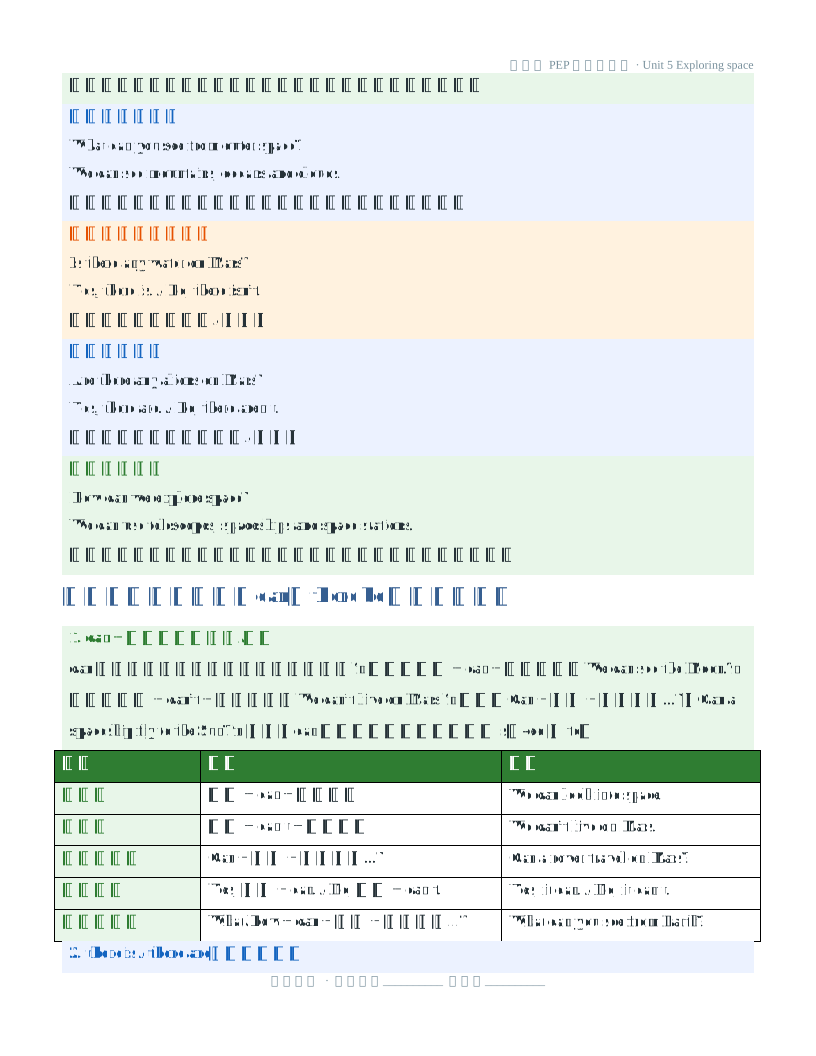
五、核心语法精讲:can、there be 与一般现在时
1. can + 动词原形:能够/可以
can 表示能力、可能或建议的探索方式。
肯定:主语 + can + 动词原形:We can see the Moon.
否定:主语 + can’t + 动词原形:We can’t live on Mars.
提问:Can + 主语 + 动词原形...?:Can a spaceship fly to the Sun?
注意:can 后永远用动词原形,不加 s、-ed 或 to。
句式
结构
例句
肯定句
主语 + can + 动词原形
We can look into space.
否定句
主语 + can’t + 动词原形
We can’t live on Mars.
一般疑问句
Can + 主语 + 动词原形...?
Can a rover travel on Mars?
简短回答
Yes, 主语 + can. / No, 主语 + can’t.
Yes, it can. / No, it can’t.
特殊疑问句
What/How + can + 主语 + 动词原形...?
What can you see from Earth?
2. there is / there are:某处有某物
There is + 单数名词或不可数名词:There is water on Mars.
There are + 复数名词:There are oceans on Earth.
否定:There isn’t any water. / There aren’t any aliens.
提问:Is there any water? / Are there any aliens?
数量
肯定句
否定句/疑问句
单数
There is a planet.
There isn’t a planet. / Is there a planet?
不可数
There is water.
There isn’t any water. / Is there any water?
复数
There are stars.
There aren’t any stars. / Are there any stars?
3. some 与 any
some 通常用于肯定句:There is some water. / There are some stars.
any 通常用于否定句和疑问句:There isn’t any water. / Are there any aliens?
注意:water 是不可数名词,不能说 two waters 表示“两处水”。
4. 一般现在时描述科学事实
介绍长期存在的事实、规律或习惯时,用一般现在时:
Earth travels around the Sun. The Moon travels around Earth.
主语是 he/she/it 或单数名词时,动词通常加 s:Earth looks like a blue marble.
主语是 I/you/we/they 或复数名词时,用动词原形:Satellites travel around Earth.
5. 易错提醒
① can 后用原形:can see(不是 can sees)。
② there is/are 根据后面的名词判断:There is water. / There are mountains。
③ any 常用于否定句和疑问句:Are there any aliens?
④ Earth、Sun、Moon 等专有名称首字母要大写;the Sun、the Moon 前通常有 the。
六、阅读方法:梳理太空生活信息
信息类别
阅读问题
关键词/内容
Getting ready 起居
航天员如何洗漱?
get up; wet cloth; special toothpaste
Everyday tasks 日常工作
他们每天做什么?
grow vegetables and rice; give classes; answer questions
Health 健康
为什么锻炼?
do exercise; keep healthy and strong
Interesting parts 趣味见闻
太空生活有什么特别?
see sunrise and sunset 16 times a day; amazing view
先看标题和小标题,判断文章介绍的是哪一类太空生活。
圈出人物、地点、工具和动作,按时间或类别整理信息。
关注 because、so、but,理解原因、结果和转折。
回答 Why 问题时,要从文章中找出 because 或目的表达。
语篇结构
总体评价 → 早晨起居 → 日常工作 → 健康活动 → 特别见闻。
写“太空一日”时,可按照 morning—daytime—afternoon/evening 的顺序组织内容。
七、口语与写作表达
表达目的
可直接使用的句型
介绍天体
Earth is a planet. The Sun is a star.
介绍所见
From ______, we can see ______.
介绍存在
There is/are ______ on/in ______.
介绍工具
We can explore space with/by ______.
介绍航天员工作
Astronauts work in ______. They use ______ to ______.
描述太空生活
Their life in space is special because ______.
写作模板:A day in space
It is special to be an astronaut.
Early in the morning, I get up and get ready with ______.
During the day, I ______ and ______.
In the afternoon, I do exercise to ______.
The view from space is amazing. I can see ______.
小组知识卡模板
Facts about ______
It is a ______. There is/are ______.
We can see ______ from ______.
We can explore/learn more about it with ______.
八、单元核心词句速记
核心词
universe · outer space · Earth · planet · star · Mars · satellite · ocean · mountain · astronaut · telescope · spaceship · space station
核心句
What can you see in the sky/from outer space?
Is there any water on Mars? Are there any aliens?
How can we explore space? We can...
核心语法
can + 动词原形;there is/are;some/any;一般现在时描述科学事实。
知识清单 · 学习者:__________ 日期:__________
学科网(北京)股份有限公司
$
资源预览图

1

2
3
相关资源
示范课
由于学科网是一个信息分享及获取的平台,不确保部分用户上传资料的 来源及知识产权归属。如您发现相关资料侵犯您的合法权益,请联系学科网,我们核实后将及时进行处理。