Unit 5 Language Around the World 词汇拓展清单+单元词汇作文 清单 -2026-2027学年高中英语人教版必修第一册
2026-07-30
|
6页
|
376人阅读
|
9人下载
普通
摘要:
该高中英语知识清单系统梳理了2019人教版必修一Unit 5词汇拓展内容。从34个核心词汇的派生词、短语搭配、易错点及辨析入手,结合高频短语速查表和动词+-ence构词规律,构建从词汇基础到语用输出的学习支架,配套应用文建议信和读后续写模板。
知识链路按“词汇深度拓展—短语应用—构词规律—写作实践”逻辑展开,每个词汇附文化背景如“carve on bones and shells”渗透文化意识。写作模板融合单元词汇,通过四步续写指导提升语言运用能力,构词法总结助力学生掌握学习策略,体现学习能力培养。
内容正文:
2019人教版高中英语必修一 Unit 5 词汇拓展清单
一、核心词汇深度拓展
1. billion /ˈbɪljən/ n. 十亿
核心短语:billions of 数十亿的(Billions of people speak Chinese.)
易错点:前有具体数字时,不加 s(two billion people);表示“数十亿”时,用 billions of。
2. native /ˈneɪtɪv/ adj. 出生地的;本地的;土著的 n. 本地人
派生词:natively (adv.) 天然地;本土地 / nativity (n.) 出生(正式)
核心短语:native language / tongue 母语(English is his native language.)
native speaker 说母语的人(She speaks like a native speaker.)
be native to 原产于……(This plant is native to China. 这种植物原产于中国。)
辨析:native(出生地的/土生土长的);local(当地的,范围更广)
3. reference /ˈrefrəns/ n. 指称关系;参考
派生词:refer (v.) 提到;参考;查阅
核心短语:in/with reference to 关于(正式)(I’m writing in reference to your job application.)
reference book 参考书
make reference to 提及;参考(He made reference to the ancient dynasty.)
4. refer /rɪˈfɜː(r)/ vi. 提到;参考;查阅 vt. 查询;叫……求助于
核心短语:refer to 指的是;描述;提到;查阅(What does this word refer to?)
refer to... as... 把……称为……(China is referred to as a country with a long history.)
refer sb to 叫某人去……(The teacher referred me to the dictionary.)
易错点:过去式/过去分词为 referred(双写 r + ed),现在分词为 referring(双写 r + ing)。
5. system /ˈsɪstəm/ n. 体系;制度;系统
核心短语:writing system 书写系统 / education system 教育体系 / social system 社会制度
派生词:systematic (adj.) 系统的;有条理的 / systematically (adv.) 系统地
6. despite /dɪˈspaɪt/ prep. 即使;尽管
核心用法:despite + 名词/动名词(= in spite of),不接从句。(He succeeded despite great difficulties.)
易错点:despite 是介词,后接名词/动名词,不接句子(despite it was raining ❌)。如需接句子,使用despite the fact that 或用 although / though。
7. ups and downs 浮沉;兴衰;荣辱
写作例句:Life is full of ups and downs.(人生充满起伏。)
8. factor /ˈfæktə(r)/ n. 因素;要素
核心短语:key factor 关键因素 / contributing factor 促成因素
写作例句:Language is a key factor in cultural exchange.
9. based /beɪst/ adj. 以(某事)为基础的;以……为重要部分(或特征)的
派生词:base (n./v.) 基础;以……为基础 / baseless (adj.) 毫无根据的
核心短语:be based on 以……为基础(The film is based on a true story.)
10. base /beɪs/ vt. 以……为据点;以……为基础 n. 底部;根基
派生词:basis n. 基础 / 根据
basic (adj.) 基本的 / basically (adv.) 基本上
核心短语:base... on... 把……建立在……基础上(You should base your opinion on facts.)
at the base of 在……的底部
11. date back [to ...] 追溯到
核心用法:date back to + 时间点(The castle dates back to the 14th century.)
date back + 时间段(The tradition dates back hundreds of years.)
易错点:date back 只用主动语态,不用被动(is dated back to ❌),常用一般现在时。
12. symbol /ˈsɪmbl/ n. 符号;象征
派生词:symbolic (adj.) 象征的 / symbolise (v.) 象征(英式)/ symbolize (v.) 象征(美式)
核心短语:a symbol of ……的象征(The Great Wall is a symbol of China.)
13. carve /kɑːv/ vt. & vi. 雕刻
核心短语:carve on/in 在……上雕刻 / carve out 开辟;创造(He carved out a successful career.)
文化背景:carving 在汉字演变(如甲骨文)中频繁出现,carve on bones and shells 即甲骨文的描述。
14. variety /vəˈraɪəti/ n. (植物、语言等的)变体;异体;多样化
派生词:various (adj.) 各种各样的 / vary (v.) 变化
核心短语:a variety of 各种各样的(There are a variety of languages in the world.)
varieties of 多种多样的(同义)
15. major /ˈmeɪdʒə(r)/ adj. 主要的;重要的;大的 n. 主修课程;主修学生 vi. 主修;专门研究
派生词:majority (n.) 大多数(the majority of students)
核心短语:major in 主修……(I major in English.)
a major factor 一个主要因素
辨析:major(主要的,与 minor 相对);
main(最主要的,强调“最重要的”);
chief(首要的/首席的)
16. no matter where, who, what, etc. 不管……
核心用法:引导让步状语从句,相当于 wherever / whoever / whatever。
No matter where you go, you will find Chinese speakers.
= Wherever you go, you will find Chinese speakers.
17. means /miːnz/ n. 方式;方法;途径
核心短语:by means of 通过……方式(We communicate by means of language.)
by all means 当然可以(口语)(“May I come in?” “By all means.”)
by no means 决不(= not at all,置于句首时部分倒装)(She is by no means stupid.)
a means of ……的方式(Language is a means of communication.)
易错点:means 单复数同形(a means / many means),注意谓语动词的单复数。
18. classic /ˈklæsɪk/ adj. 传统的;最优秀的;典型的 n. 经典作品;名著
派生词:classical (adj.) 古典的(常指音乐/文化)
辨析:classic(经典的/一流的);classical(古典的,与“现代的”相对)
19. regard /rɪˈɡɑːd/ n. 尊重;关注 vt. 把……视为;看待
派生词:regarding (prep.) 关于(= concerning)
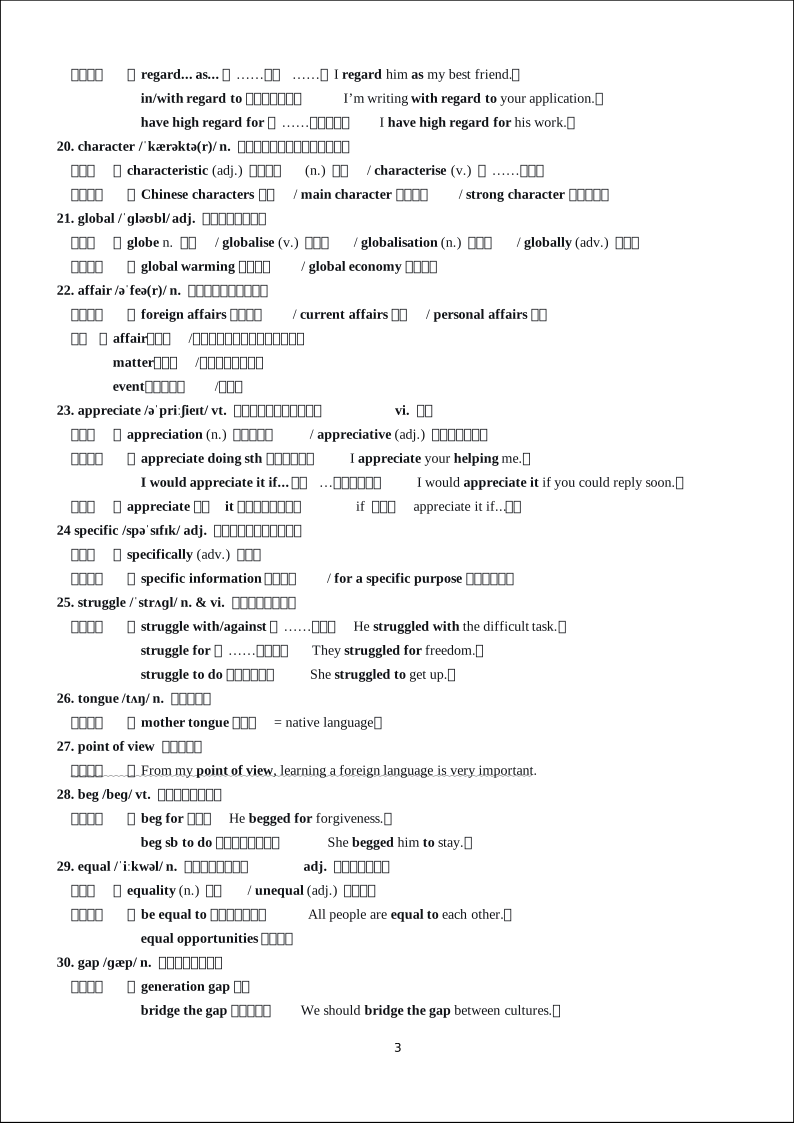
核心短语:regard... as... 把……视为……(I regard him as my best friend.)
in/with regard to 关于(正式)(I’m writing with regard to your application.)
have high regard for 对……高度尊重(I have high regard for his work.)
20. character /ˈkærəktə(r)/ n. 文字;符号;角色;品质;特点
派生词:characteristic (adj.) 独特的;(n.) 特征 / characterise (v.) 是……的特征
核心短语:Chinese characters 汉字 / main character 主要角色 / strong character 坚强的性格
21. global /ˈɡləʊbl/ adj. 全球的;全世界的
派生词:globe n. 地球 / globalise (v.) 全球化 / globalisation (n.) 全球化 / globally (adv.) 全球地
核心短语:global warming 全球变暖 / global economy 全球经济
22. affair /əˈfeə(r)/ n. 公共事务;事件;关系
常见搭配:foreign affairs 外交事务 / current affairs 时事 / personal affairs 私事
辨析:affair(事务/事件,常指公共或政治事务);
matter(事情/问题,更日常);
event(重大事件/活动)
23. appreciate /əˈpriːʃieɪt/ vt. 欣赏;重视;感激;领会 vi. 增值
派生词:appreciation (n.) 欣赏;感激 / appreciative (adj.) 感激的;赏识的
核心短语:appreciate doing sth 感激做某事(I appreciate your helping me.)
I would appreciate it if... 如果…我会很感激(I would appreciate it if you could reply soon.)
易错点:appreciate 后接 it 作形式宾语,再接 if 从句(appreciate it if...)。
24 specific /spəˈsɪfɪk/ adj. 特定的;明确的;具体的
派生词:specifically (adv.) 具体地
核心短语:specific information 具体信息 / for a specific purpose 为了特定目的
25. struggle /ˈstrʌɡl/ n. & vi. 斗争;奋斗;搏斗
核心短语:struggle with/against 与……斗争(He struggled with the difficult task.)
struggle for 为……而奋斗(They struggled for freedom.)
struggle to do 努力做某事(She struggled to get up.)
26. tongue /tʌŋ/ n. 舌头;语言
核心短语:mother tongue 母语(= native language)
27. point of view 观点;看法
写作例句:From my point of view, learning a foreign language is very important.
28. beg /beɡ/ vt. 恳求;祈求;哀求
核心短语:beg for 乞求(He begged for forgiveness.)
beg sb to do 恳求某人做某事(She begged him to stay.)
29. equal /ˈiːkwəl/ n. 同等的人;相等物 adj. 相同的;同样的
派生词:equality (n.) 平等 / unequal (adj.) 不平等的
核心短语:be equal to 等于;能胜任(All people are equal to each other.)
equal opportunities 平等机会
30. gap /ɡæp/ n. 间隔;开口;差距
核心短语:generation gap 代沟
bridge the gap 缩小差距(We should bridge the gap between cultures.)
31. demand /dɪˈmɑːnd/ n. 要求;需求 vt. 强烈要求;需要
派生词:demanding (adj.) 要求高的;费力的
核心短语:in demand 有需求的(Good teachers are always in demand.)
meet/satisfy the demand 满足需求
demand that + 从句(should + 动词原形) 要求……(He demanded that I(should)leave.)
demand to do 要求做某事(She demanded to see the manager.)
32. vocabulary /vəˈkæbjələri/ n. 词汇
核心短语:build up one‘s vocabulary 增加词汇量
33. description /dɪˈskrɪpʃn/ n. 描写(文字);形容
派生词:describe (v.) 描述 / descriptive (adj.) 描述的
核心短语:give a description of 描述……(Can you give a description of your hometown?)
34. relate /rɪˈleɪt/ vt. 联系;讲述
派生词:related adj.相关的 / 有联系的 relation (n.) 关系,联系;亲戚,亲属
relationship (n.) 关系 / relative (adj.) 相对的;(n.) 亲戚
核心短语:relate to 与……相关;涉及;谈到(This topic relates to our daily life.)
relate... to... 把……与……联系起来(We should relate theory to practice.)
be related to...与……有关(Many health problems are closely related to stress and lifestyle.)
二、高频短语速查表
短语
释义
例句
refer to
指的是;提到;查阅
What does this word refer to?
date back to
追溯到
The tradition dates back to the Tang Dynasty.
a variety of
各种各样的
There are a variety of languages in the world.
major in
主修
I major in English.
by means of
通过……方式
We communicate by means of language.
by no means
决不(倒装)
He is by no means stupid.
regard... as...
把……视为……
I regard him as my best friend.
struggle with/against
与……斗争
They struggle with difficulties.
point of view
观点;看法
From my point of view,...
relate to
与……相关;涉及
This relates to our topic.
be based on
以……为基础
The film is based on a true story.
ups and downs
浮沉;兴衰
Life has its ups and downs.
三、重要后缀 (动词+-ence →名词,表“该动作的状态 / 性质 / 行为”)
动词
名词(+-ence)
中文
exist
existence
存在(状态)
prefer
preference
偏好 / 偏爱
refer
reference
参考 / 引用
infer
inference
推理 / 推断
differ
difference
差异 / 不同
persist
persistence
坚持不懈
insist
insistence
坚持(要求)
depend
dependence
依赖
occur
occurrence
发生 / 事件
四、应用文写作:关于语言学习的建议信
【题目】
假设你是李华,你的朋友 Tom 来信说他在学习中文时遇到困难,请你给他回信,提出学习中文的建议。
Dear Tom,
I’m sorry to hear that you’re having difficulty learning Chinese. Don’t worry — it’s a common challenge for every native English speaker. I‘d like to offer some practical advice from my point of view.
First, I suggest that you refer to some classic Chinese learning materials, such as textbooks and online courses. By means of these resources, you can build up your vocabulary and improve your reading skills. No matter what difficulties you meet, keep practicing every day. Besides, you should relate what you learn to real life. Try to appreciate Chinese culture, including calligraphy, Chinese characters, and even local dialects. By no means should you give up when facing ups and downs. Finally, I strongly recommend that you find a language partner to practice speaking with. You can regard every mistake as a stepping stone to progress.
I believe that with a positive attitude and persistent effort, you will make it. I would appreciate it if you could tell me about your progress!
Yours sincerely,
Li Hua
五、读后续写:“语言学习的突破之路”
第一步:受挫与焦虑(用 struggle, confused, refer to, quit, attitude)
When I first started learning Chinese, I felt extremely confused and frustrated. The characters looked like meaningless symbols to me, and I could hardly remember any of them. Every time I tried to read a passage, I had to refer to the dictionary again and again. My attitude towards the language became negative, and I began to doubt whether I was suitable for this. I even thought about quitting several times. I kept asking myself: “What if I can never master this language? What if I’m just not talented enough?”
第二步:转机与求助(用 recommend, refer to, appreciate, relate to, by means of)
Just then, my Chinese teacher recommended that I change my learning method. Instead of memorizing characters mechanically, she encouraged me to relate each word to its cultural background and history. She referred me to some classic Chinese poems and calligraphy works, which helped me appreciate the beauty of the language. By means of her guidance, I began to see Chinese not as a difficult subject, but as a window to a rich civilisation. I decided to take control of my learning and set a clear goal for myself — to read a Chinese novel by the end of the year.
第三步:突破与坚持(用 effort, struggle, vocabulary, regard... as...)
I started reading Chinese stories every day, struggling at first but gradually making progress. I kept a notebook to record new vocabulary and reviewed it regularly. I also signed up for a Chinese calligraphy class, where I not only improved my writing but also made friends who shared the same interest. I regarded every mistake as a stepping stone rather than a failure. Although I still faced ups and downs, I never gave up. With persistent effort, my reading speed and comprehension improved significantly.
第四步:成功与升华(用 point of view, no matter what, appreciate, relate to, global)
At last, I successfully finished reading my first Chinese novel. I was truly looking forward to exploring more works of Chinese literature. From my point of view, language learning is not a race — it‘s a journey of discovery. I have come to appreciate not only the language itself but also the culture and wisdom behind it. I realised that languages can relate to each other and that learning a new language gives us a global perspective. No matter what difficulties I may face in the future, I know that with a positive attitude and consistent effort, I can make it.
1
学科网(北京)股份有限公司
$
资源预览图

1

2
3

相关资源
示范课
高中英语人教版(2019)必修一 Unit5 Languages Around the World
立即播放 高中英语人教版(2019)必修一 Unit5 Languages Around the World
立即播放由于学科网是一个信息分享及获取的平台,不确保部分用户上传资料的 来源及知识产权归属。如您发现相关资料侵犯您的合法权益,请联系学科网,我们核实后将及时进行处理。