Unit 2【刷语法】一般现在时(重点语法提升练)-2026-2027学年七年级英语上册单元模块满分必刷题(新教材外研版)
2026-06-23
|
2份
|
21页
|
1125人阅读
|
45人下载

摘要:
**基本信息**
聚焦一般现在时,通过规则梳理+分层训练构建“用法-结构-应用”完整体系,强化语言能力与思维品质。
**专项设计**
|模块|题量/典例|方法提炼|知识逻辑|
|----|-----------|----------|----------|
|语法梳理|4类变化规则(直接加-s等)+实例|第三人称单数变化规则分类归纳,特殊情况单独标注|从用法概念到谓语结构,再到动词变形规则,形成“概念-结构-应用”推导链条|
|语法过关小测|单选30题+单词拼写20题+完成句子30题|句式转换(否定/疑问/单复数)技巧,语境时态判断方法|覆盖基础应用(单选)、精准拼写(单词)、综合转换(句子),由浅入深考查语法迁移能力|
内容正文:
2026-2027学年七年级英语上册单元模块满分必刷题(新教材外研版)
Unit 2 More than fun【刷语法】(重点语法提升练)
单元语法:一般现在时
(1)一般现在时用法:
(2)一般现在时的谓语结构:
行为动词第三人称单数变化规律:
规则
例子
直接在动词词尾加-s
ask-asks get-gets stay-stays
come-comes help-helps
以字母o,s,x,ch,sh结尾的动词在词尾加-es
watch-watches finish-finishes
do-does go-goes
以辅音字母加-y结尾的动词,变y为I,再加es
try-tries study-studies
cry-cries fly-flies
特殊
have-has
语法过关小测
过关测试满分:80分 时间:60分钟
一、单项选择(每小题1分,共30分)
1.We often ________ together after dinner.
A.watch TV B.watches TV C.watching TV D.to watch TV
【答案】A
【详解】句意:我们经常晚饭后一起看电视。
句子缺少谓语动词,主语We是第一人称复数,频度副词often表示经常性动作,时态为一般现在时,谓语动词需用原形,因此用watch TV。
2.Alex’s dad ________ breakfast every Saturday morning.
A.make B.makes C.making D.made
【答案】B
【详解】句意:亚历克斯的爸爸每个周六早上都做早餐。
根据时间状语“every Saturday morning”可知,句子时态为一般现在时,主语Alex’s dad是第三人称单数,谓语动词应用第三人称单数形式makes。
3.Life ________ surprises, and many are good ________.
A.is full of; one B.are full of; one C.is full of; ones D.are full of; ones
【答案】C
【详解】句意:生活充满惊喜,而且很多惊喜都是美好的。
句子时态为一般现在时,主语是Life,谓语动词应用三单形式,第一空应填is full of;后文指代复数surprises需用ones。
4.He ________ to be a good student.
A.decide B.decides C.decided D.is deciding
【答案】B
【详解】句意:他立志要做一名好学生。
根据语境提示,描述长期、一贯的想法,时态用一般现在时,主语He,谓语动词应用第三人称单数形式decides。
5.The garden ________ flowers ________ beautiful.
A.with; look B.filled with; look C.full of; looks D.filled of; looks
【答案】C
【详解】句意:这个充满鲜花的花园看起来很漂亮。
full of和filled with均表示“充满”,filled of搭配错误,排除D;主语The garden是单数,中间的短语作定语,谓语动词应用第三人称单数形式looks,排除A和B。
6.—Why are pandas in danger?
—Because they ________ enough bamboo to eat.
A.lose B.loses C.lost D.will lose
【答案】A
【详解】句意:——熊猫为什么处于危险之中?——因为它们没有足够的竹子可以吃。
lose失去;loses失去(第三人称单数);lost失去(过去式);will lose将失去。根据问句“Why are pandas in danger?”可知是一般现在时,描述客观事实,答句时态保持一致,主语they是复数,谓语动词用原形。故选A。
7.Trees ________ us fresh air, but people ________ them too much these years.
A.give; cut B.give; are cutting C.gives; cuts D.is giving; is cutting
【答案】B
【详解】句意:树木给我们提供新鲜空气,但这些年来人们一直在过度砍伐树木。
第一空:主语trees是复数名词,表示客观、常态的事实,应该用一般现在时,主语是复数形式,动词应该用原形give。gives用于三单主语;is giving 是现在进行时,不描述客观常识。第二空:时间状语these years,强调现阶段持续发生、带有负面趋势的动作,应该用现在进行时am/is/are+doing。people 意为“人们”,复数名词,动词应该用 are cutting。应填give;are cutting。
8.Alice often ________ her friends to her house on weekends.
A.invite B.invites C.invited D.inviting
【答案】B
【详解】句意:爱丽丝经常在周末邀请她的朋友来她家。
根据句中频率副词“often”及时间状语“on weekends”可知,句子时态为一般现在时;主语“Alice”是第三人称单数,谓语动词应用三单形式invites。
9.Julie’s school ________ at 9:00 a.m. every morning.
A.start B.starts C.starting D.to start
【答案】B
【详解】句意:朱莉的学校每天早上9点开始。
根据时间状语“every morning”可知,句子时态为一般现在时,主语Julie’s school是第三人称单数,谓语动词应用三单形式starts。
10.—Have you got lunch at school?
—Yes, we ________ a one-hour lunch break.
A.has got B.have got C.are got D.is got
【答案】B
【详解】句意:——你们在学校吃了午饭吗?——是的,我们有一个小时的午休时间。
根据答语主语we可知是复数,助动词应用have,have got表示“有”。has got用于第三人称单数;are got和is got搭配错误。
11.There ________ a park and two hospitals in my neighbourhood.
A.is B.are C.was D.were
【答案】A
【详解】句意:在我的社区里有一个公园和两家医院。
There be句型中be动词的形式由离它最近的主语决定,离空格最近的主语是a park,为单数,且句子描述客观事实用一般现在时,所以be动词用is。
12.Many years ago, I ________ to be a scientist. But now ________ a worker.
A.wanted; I’m B.wanted; I was C.want; I’m D.want; I was
【答案】A
【详解】句意:许多年前,我想要成为一名科学家。但是现在我是一名工人。
时间状语Many years ago表明,第一句时态为一般过去时,主语I后跟动词的过去式wanted;根据now可知,第二句描述现在的职业,属于客观事实,时态为一般现在时,主语是I,be动词用am,缩写形式为I’m。
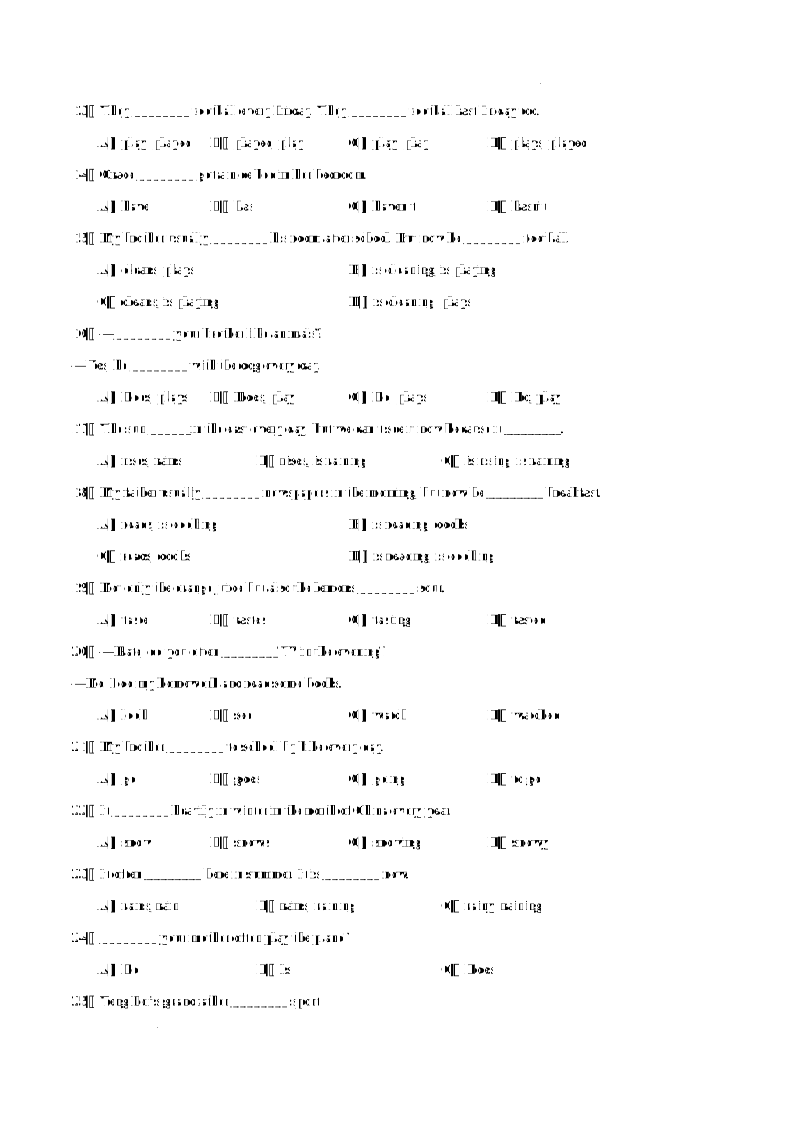
13.They ________ football every Friday. They ________ football last Friday too.
A.play; played B.played; play C.play; play D.plays; played
【答案】A
【详解】句意:他们每周五踢足球。上周五他们也踢了足球。
第一空时间状语“every Friday”表示经常性动作,应用一般现在时,主语“They”为复数,故用play;第二空时间状语“last Friday”表示过去,应用一般过去时,故用played。
14.Grace ________ got a nice bed in her bedroom.
A.have B.has C.haven’t D.hasn’t
【答案】B
【详解】句意:格蕾丝的卧室里有一张漂亮的床。
根据课文内容,句意表示肯定的“有”,have got“拥有”,描述事实,用一般现在时,题干主语Grace是第三人称单数,应填has。
15.My brother usually ________ his room after school. But now he ________ football.
A.cleans; plays B.is cleaning; is playing
C.cleans; is playing D.is cleaning; plays
【答案】C
【详解】句意:我哥哥通常放学后打扫他的房间,但现在他正在踢足球。
第一空根据“usually”可知,是经常性、习惯性动作,用一般现在时,主语“My brother”是第三人称单数,动词用cleans;第二空根据“now”可知,是正在进行的动作,用现在进行时,结构为“be+动词现在分词”,主语he对应的be动词是is,play的现在分词形式是playing。故填cleans;is playing。
16.—________ your brother like animals?
—Yes, he ________ with the dog every day.
A.Does; plays B.Does; play C.Do; plays D.Do; play
【答案】A
【详解】句意:——你哥哥喜欢动物吗?——是的,他每天都和狗一起玩。
问句主语“your brother”是第三人称单数,句中有实义动词“like”,构成一般疑问句需借助助动词“Does”;答句主语“he”是第三人称单数,根据时间状语“every day”可知,句子时态为一般现在时,谓语动词play需用第三人称单数形式plays。
17.The sun ______in the east every day, but we can’t see it now because it ________.
A.rises, rains B.rises, is raining C.is rising, is raining
【答案】B
【详解】句意:太阳每天从东方升起,但我们现在看不见它,因为正在下雨。
第一空根据时间状语“every day”可知,太阳东升西落是客观真理,应用一般现在时,主语The sun为第三人称单数,谓语动词用rises;第二空根据时间状语“now”可知,表示此刻正在进行的动作,应用现在进行时,结构为be+doing,故填is raining。
18.My father usually ________ newspapers in the morning, but now he ________ breakfast.
A.reads; is cooking B.is reading; cooks
C.reads; cooks D.is reading; is cooking
【答案】A
【详解】句意:我父亲通常早上看报纸,但现在他正在做早餐。
reads阅读,第三人称单数形式;is cooking正在烹饪,现在进行时;cooks烹饪,第三人称单数形式;is reading正在阅读,现在进行时。时间状语usually是一般现在时标志词,主语My father是第三人称单数,谓语动词用reads;时间状语now是现在进行时标志词,现在进行时的结构为“be + doing”,主语he是单数,be动词用is,cook的现在分词形式为cooking。A选项正确。
19.Not only the orange juice but also the lemons ________ sour.
A.taste B.tastes C.tasting D.tasted
【答案】A
【详解】句意:不仅橙汁而且柠檬尝起来都是酸的。
not only...but also...连接并列主语时,谓语动词遵循就近原则,离谓语最近的主语是the lemons,为复数,且陈述客观事实用一般现在时,故谓语动词用原形taste。
20.—Kate, do you often ________TV in the evening?
—No. I do my homework and read some books.
A.look B.see C.watch D.watched
【答案】C
【详解】句意:——凯特,你经常在晚上看电视吗?——不。我做作业并且读一些书。
look看;see看见;watch观看;watched观看(过去式)。根据TV可知,此处表示“看电视”,固定搭配为watch TV;且句中含助动词do,谓语动词需用原形。
21.My brother ________ to school by bike every day.
A.go B.goes C.going D.to go
【答案】B
【详解】句意:我哥哥每天骑自行车上学。
根据“every day”可知,句子时态为一般现在时;主语“My brother”是第三人称单数,因此谓语动词需用第三人称单数形式goes。
22.It ________ heavily in winter in the north of China every year.
A.snow B.snows C.snowing D.snowy
【答案】B
【详解】句意:中国北方每年冬天都会下大雪。
snow雪,下雪;snows第三人称单数;snowing现在分词;snowy下雪的(形容词)。根据“every year”可知,此处用一般现在时,主语it为第三人称单数,snow也用三单形式snows。
23.It often ________ here in summer. It is ________ now.
A.rains; rain B.rains; raining C.rainy; raining
【答案】B
【详解】句意:夏天这里经常下雨。现在正在下雨。
第一句中,时间状语“often”表示经常发生的动作,应用一般现在时,主语“It”是第三人称单数,谓语动词用“rains”。第二句中,时间状语“now”表示现在正在进行的动作,应用现在进行时,结构为“be+doing”,用raining。
24.________ your mother often play the piano?
A.Do B.Is C.Does
【答案】C
【详解】句意:你妈妈经常弹钢琴吗?
Do助动词;Is是;Does助动词。根据主语“your mother”是第三人称单数,且句中有实义动词“play”,可知变一般疑问句需借助助动词Does。故选C。
25.Teng Fei’s grandfather ________ sport.
A.love B.loves C.loving D.to love
【答案】B
【详解】句意:腾飞的爷爷喜爱运动。
love喜爱(动词原形);loves喜爱(动词第三人称单数);loving喜爱(现在分词);to love喜爱(动词不定式)。主语“Teng Fei’s grandfather”是第三人称单数,谓语动词应用第三人称单数形式。故选B。
26.Jack ________ get up at 6 every day.
A.have to B.has to C.need to
【答案】B
【详解】句意:杰克每天不得不6点起床。
have to不得不;has to不得不 (第三人称单数);need to需要。主语“Jack”是第三人称单数,时间状语“every day”表明是一般现在时,谓语动词要用第三人称单数形式。have to和need to在此处均需变为三单形式,选项A和C为原形,只有选项B是have to的第三人称单数形式。
27.—What are you doing now? —We ________ an English film. We often _________English films on weekends.
A.are watching; watches B.are watching; watch
C.watches; are watching D.watch; are watching
【答案】B
【详解】句意:——你现在正在做什么?——我们正在看一部英语电影。我们经常在周末看英语电影。
根据问句“What are you doing now?”中的“now”可知,第一空表示现在正在进行的动作,应用现在进行时,主语We搭配are watching;根据第二句中“often”和“on weekends”可知,此处表示经常性习惯性的动作,应用一般现在时,主语We是复数,谓语动词用原形watch。应填are watching;watch。
28.Peter ________ from London, but now he ________ in Beijing.
A.is; live B.is; lives C.am; live
【答案】B
【详解】句意:Peter来自伦敦,但现在他住在北京。
第一空,固定短语be from意为“来自”,句子陈述的是客观事实,用一般现在时,主语“Peter”是第三人称单数,be动词用is;第二空,固定短语live in… 意为“住在……”,句子陈述的是现在的状态,用一般现在时,主语“he”是第三人称单数,谓语动词需用三单形式lives。
29.My grandparents ________ taking a walk after dinner.
A.enjoy B.enjoys C.enjoying D.to enjoy
【答案】A
【详解】句意:我的祖父母喜欢晚饭后散步。
主语“My grandparents”是复数,一般现在时中谓语动词应用原形。应填enjoy。
30.My father ________ playing basketball.
A.like B.likes C.is like D.are like
【答案】B
【详解】句意:我父亲喜欢打篮球。
like喜欢;likes喜欢(第三人称单数);is like像(一般现在时,第三人称单数be动词);are like像(一般现在时,第二人称或复数be动词)。主语My father是第三人称单数,表示“喜欢做某事”用like doing sth.,此句为一般现在时,谓语动词需用第三人称单数形式likes。
二、单词拼写(每小题1分,共20分)
31.She ________ (cook) nice food for our family every day.
【答案】cooks
【详解】句意:她每天都为我们家人做美味的食物。句中“every day”为一般现在时的时间状语,提示动作是经常发生的习惯性行为,应用一般现在时。主语“She”是第三人称单数,谓语动词cook需变为第三人称单数形式,直接在词尾加-s,故填cooks。
32.We often ________ (visit) our aunt on weekends.
【答案】visit
【详解】句意:我们经常在周末去看望我们的阿姨。句中“often”和“on weekends”均为一般现在时的时间状语,提示动作是经常发生的习惯性行为,应用一般现在时。主语“We”是第一人称复数,谓语动词应用原形visit。
33.I ________ (have) a big and happy family.
【答案】have
【详解】句意:我有一个大而幸福的家庭。本句陈述客观事实,应用一般现在时。主语“I”是第一人称单数,谓语动词应用原形,故填have。
34.My family often ________ (watch) TV after dinner.
【答案】watch
【详解】句意:我们一家人经常晚饭后看电视。often“经常”是一般现在时标志词,表示习惯性、经常性动作,主语family此处指家里所有家庭成员,表复数含义,视为复数主语,后面动词用原形watch。
35.Robbie is smart and he ________ (do) well in his study.
【答案】does
【详解】句意:罗比很聪明,他学习成绩很好。句子时态为一般现在时,主语he是第三人称单数,谓语动词do需用第三人称单数形式does。故填does。
36.The house ________ (be) red and beautiful.
【答案】is
【详解】句意:这栋房子又红又漂亮。主语“the house”是单数名词,一般现在时中单数主语搭配be动词is,故填is。
37.David ________ (be) 39 years old and he ________ (like) helping people.
【答案】 is likes
【详解】句意:戴维39岁,他喜欢帮助别人。句子描述一般事实,时态用一般现在时。主语“David”为第三人称单数,be动词用“is”。“he”也为第三人称单数,“like”也用第三人称单数形式,在词尾加上s变为“likes”。
38.Your father ________ happy today. (look)
【答案】looks
【详解】句意:你的爸爸今天看起来很开心。句中“today”为现在的时间状语,描述当下的状态,应用一般现在时。主语Your father是第三人称单数,动词look要变为第三人称单数形式looks。
39.His uncle________ (go) swimming on Sundays.
【答案】goes
【详解】句意:他的叔叔每周日都去游泳。考查一般现在时用法,on Sundays表示经常性的动作,所以句子用一般现在时,主语为his uncle,是第三人称单数,所以动词应使用第三人称单数goes。故填goes。
40.He ________ (wash) his own clothes every day.
【答案】washes
【详解】句意:他每天自己洗衣服。根据“every day”可知此处描述的是经常性、习惯性的动作,应用一般现在时;主语He为第三人称单数,谓语动词需用第三人称单数形式。故填washes。
41.My aunt ________ (know) so much about art. She ________ (help) me a lot.
【答案】 knows helps
【详解】句意:我的姑姑非常了解艺术,她帮我很多。本句描述事实,时态用一般现在时,主语My aunt和She都是第三人称单数,谓语动词也需用第三人称单数。know的第三人称单数形式为knows;help的第三人称单数形式为helps。
42.Jerry ________ (be) tired now.
【答案】is
【详解】句意:杰瑞现在很累。now表示现在,tired是一种持续的感受,不是短暂进行的动作,不用doing形式,时态应为一般现在时;主语Jerry是第三人称单数,所以be动词选用is。故填is。
43.We ________ (be not) at school on Sunday.
【答案】aren’t
【详解】句意:我们周日不在学校。主语We是复数,对应的be动词用are,be not的否定形式就是are not,缩写为aren’t。
44.I ________ (be) fine, thanks.
【答案】am
【详解】句意:我很好,谢谢。句中描述当前状态,应用一般现在时。主语“I”为第一人称单数,be动词用am。
45.He ________ (manage) to finish all kinds of hard work with feet.
【答案】manages
【详解】句意:他设法用双脚完成各种各样的辛苦工作。空处需填动词作谓语,句子描述的是经常性的、习惯性的能力,应用一般现在时。主语“He”是第三人称单数,谓语动词需用三单形式manages。
46.My cousins always come and ________ (spend) weekends with us.
【答案】spend
【详解】句意:我的堂兄妹们总会来和我们一起度过周末。句中always为一般现在时标志词,主语My cousins是复数,and连接并列谓语,前后动词形式保持一致,come为原形,因此spend也用原形。
47.She ________ (water) flowers after the walk.
【答案】waters
【详解】句意:她散步后给花浇水。句中描述习惯性动作,使用一般现在时,主语She是第三人称单数,谓语动词要使用第三人称单数形式,water的第三人称单数形式为waters。
48.Alex’s mum ________ (take) the dog for a walk every Saturday.
【答案】takes
【详解】句意:亚历克斯的妈妈每周六都遛狗。句中“every Saturday”为一般现在时的时间标志,提示动作是经常性、习惯性的,应用一般现在时。主语Alex’s mum是第三人称单数,take的第三人称单数形式为takes。
49.Sometimes we ________(play) Chinese chess with Grandpa.
【答案】play
【详解】句意:有时我们和爷爷一起下中国象棋。时间状语Sometimes表示“有时”,是一般现在时的标志词,描述的是经常性或习惯性的动作。主语we是第一人称复数,动词用原形play。
50.Young children usually ________ (write) poems or draw pictures.
【答案】write
【详解】句意:小孩子通常写诗或者画画。usually是一般现在时标志词,主语Young children是复数,谓语动词用原形write。
三、完成句子(每小题2分,共30分)
51.My mother cooks dinner every evening.(改为否定句)
My mother ________ ________ dinner every evening.
【答案】 doesn’t cook
【详解】句意:我妈妈每天晚上做晚饭。根据时间状语every evening(每天晚上),可知原句为一般现在时。主语 My mother是第三人称单数。一般现在时中,当主语是第三人称单数时,变否定句需借助助动词doesn't,后面的谓语动词要恢复为原形。原句谓语动词cooks变为doesn’t cook。
52.They love playing basketball.(用He改写句子)
________ ________ playing basketball.
【答案】 He loves
【详解】句意:他们喜欢打篮球。原句中“They”是关键词,改为“He”后主语变为第三人称单数,谓语动词love需加-s变为loves;后接playing basketball不变。故填He;loves。
53.They do chores together every day. (改为一般疑问句,并作否定回答)
________ they ________ chores together every day?
________, they ________.
【答案】 Do do No don’t
【详解】句意:他们每天一起做家务。 变一般疑问句:原句时态为一般现在时,谓语动词“do”是实义动词(意为“做”),主语“They”是复数,变一般疑问句时需借助助动词Do置于句首,原来的谓语动词do保持原形不变。作否定回答:一般疑问句“Do…”的否定回答结构为“No, 主语 + don’t”,此处主语是they。
54.The children have some apples. (改为单数句子)
The child ________ ________ apple.
【答案】 has an
【详解】句意:孩子们有一些苹果。原句主语The children是复数,改为单数The child后,谓语动词have需变为第三人称单数形式has。原句宾语some apples是复数,改为单数时,apple是以元音音素开头的单数可数名词,前面需用不定冠词an修饰。故填has;an。
55.He has some eggs every week. (改为否定句)
He ________ ________ ________ eggs every week.
【答案】 doesn’t have any
【详解】句意:他每周吃一些鸡蛋。原句时态为一般现在时,主语是He,has是实义动词;改为否定句,应借助doesn’t,其后接动词原形have,肯定句中的some在否定句中需要改为any。故填doesn’t;have;any。
56.Kate comes from the USA.(一般疑问句)
________ Kate ________ from the USA?
【答案】 Does come
【详解】句意:凯特来自美国。原句中“comes”是关键词,表明时态为一般现在时,且主语Kate是第三人称单数,谓语为实义动词,改为一般疑问句时,需要在句首添加助动词Does;同时,助动词后接动词原形,所以comes需要改为come。
57.He goes to school at 7:30. (改为一般疑问句)
________ he ________ to school at 7:30?
【答案】 Does go
【详解】句意:他七点半去上学。句子为一般现在时,主语he是第三人称单数,谓语动词goes是实义动词,改为一般疑问句需要借助助动词Does,动词goes改为原形go。
58.Tom likes playing football. (对划线部分问)
________ ________ Tom ________?
【答案】 What does like
【详解】句意:汤姆喜欢踢足球。划线部分是喜欢做的事情,故此处疑问词用what,放句首首字母大写,句子是一般现在时,主语是Tom,变疑问句时借助助动词does放主语之前,谓语动词likes还原为like。
59.She does her homework on weekends. (对划线部分提问)
________ ________ she ________ her homework?
【答案】 When does do
【详解】句意:她在周末做作业。划线部分“on weekends”表示时间,故此处疑问词用when,放句首首字母大写;原句谓语动词是does,且主语为第三人称单数she,故变疑问句时需借助助动词does,放在主语之前,后面的实义动词还原为原形do。
60.My parents often walk the dog in the park.(对划线部分提问)
________ ________ your parents often ________ the dog?
【答案】 Where do walk
【详解】句意:我的父母经常在公园里遛狗。根据要求对划线部分提问,原句“My parents often walk the dog in the park.”中划线部分“in the park”表示地点,疑问词需用“where”。由于原句时态为一般现在时,主语“your parents”为复数,变疑问句时需借助助动词“do”,其后动词用原形“walk”。结合语句“… your parents often … the dog?”可知,①填Where;②填do;③填walk。
61.People wear nice and new clothes on New Year’s Day?
________ ________ ________ _________ on New Year’s Day?
【答案】 What do people wear
【详解】句意:人们在元旦这天穿上好看的新衣服。句中划线部分“nice and new clothes”是物品,对穿着的衣服提问要用疑问词What;本句为一般现在时,主语“people”是复数,需要借助助动词do,置于特殊疑问词和主语之间,后面接动词原形wear,故填What;do;people;wear。
62.There are 6 pieces of bread on the table. (对划线部分提问)
________ ________ ________ ________ there on the table?
【答案】 How much bread is
【详解】句意:桌子上有六片面包。bread是不可数名词,对面包的总量提问要用how much;句子时态为一般现在时,how much后接不可数名词bread,对应的be动词用单数is。
63.I usually get about 800yuan pocket money from my relative at the Spring Festival.
________ ________ pocket money ________ you usually get from your relative at the Spring Festival?
【答案】 How much do
【详解】句意:我春节通常从亲戚那里得到大约800元零花钱。划线部分为“800 yuan”,这里是提问不可数名词金钱的数量,用疑问词组How much来提问,原句主语是“I”,谓语动词是实义动词“get”,变疑问句主语由I转换为you,需借助助动词do放在主语you之前,因此应填①How ②much ③do。
64.They get up early to run in the park.(对划线部分提问)
________ ________ they get up early?
【答案】 Why do
【详解】句意:为了在公园里跑步,他们起得很早。划线部分描述的是主语早起的原因,对原因进行提问用疑问词why,位于句首,首字母要大写;含有实义动词的疑问句需借助助动词,句子是一般现在时,主语they是复数,助动词用do。故填Why;do。
65.John wants to be a lawyer when he grows up. (对划线部分提问)
________ ________ John want to be when he grows up?
【答案】 What does
【详解】解析: 句意:约翰长大后想成为一名律师。划线部分是约翰长大后想成为的职业,故此处疑问词用what,放句首首字母大写。句子是一般现在时,主语John是第三人称单数,变疑问句时要借助助动词does,位于主语之前。
学科网(北京)股份有限公司
$
2026-2027学年七年级英语上册单元模块满分必刷题(新教材外研版)
Unit 2 More than fun【刷语法】(重点语法提升练)
单元语法:一般现在时
(1)一般现在时用法:
(2)一般现在时的谓语结构:
行为动词第三人称单数变化规律:
规则
例子
直接在动词词尾加-s
ask-asks get-gets stay-stays
come-comes help-helps
以字母o,s,x,ch,sh结尾的动词在词尾加-es
watch-watches finish-finishes
do-does go-goes
以辅音字母加-y结尾的动词,变y为I,再加es
try-tries study-studies
cry-cries fly-flies
特殊
have-has
语法过关小测
过关测试满分:80分 时间:60分钟
一、单项选择(每小题1分,共30分)
1.We often ________ together after dinner.
A.watch TV B.watches TV C.watching TV D.to watch TV
2.Alex’s dad ________ breakfast every Saturday morning.
A.make B.makes C.making D.made
3.Life ________ surprises, and many are good ________.
A.is full of; one B.are full of; one C.is full of; ones D.are full of; ones
4.He ________ to be a good student.
A.decide B.decides C.decided D.is deciding
5.The garden ________ flowers ________ beautiful.
A.with; look B.filled with; look C.full of; looks D.filled of; looks
6.—Why are pandas in danger?
—Because they ________ enough bamboo to eat.
A.lose B.loses C.lost D.will lose
7.Trees ________ us fresh air, but people ________ them too much these years.
A.give; cut B.give; are cutting C.gives; cuts D.is giving; is cutting
8.Alice often ________ her friends to her house on weekends.
A.invite B.invites C.invited D.inviting
9.Julie’s school ________ at 9:00 a.m. every morning.
A.start B.starts C.starting D.to start
10.—Have you got lunch at school?
—Yes, we ________ a one-hour lunch break.
A.has got B.have got C.are got D.is got
11.There ________ a park and two hospitals in my neighbourhood.
A.is B.are C.was D.were
12.Many years ago, I ________ to be a scientist. But now ________ a worker.
A.wanted; I’m B.wanted; I was C.want; I’m D.want; I was
13.They ________ football every Friday. They ________ football last Friday too.
A.play; played B.played; play C.play; play D.plays; played
14.Grace ________ got a nice bed in her bedroom.
A.have B.has C.haven’t D.hasn’t
15.My brother usually ________ his room after school. But now he ________ football.
A.cleans; plays B.is cleaning; is playing
C.cleans; is playing D.is cleaning; plays
16.—________ your brother like animals?
—Yes, he ________ with the dog every day.
A.Does; plays B.Does; play C.Do; plays D.Do; play
17.The sun ______in the east every day, but we can’t see it now because it ________.
A.rises, rains B.rises, is raining C.is rising, is raining
18.My father usually ________ newspapers in the morning, but now he ________ breakfast.
A.reads; is cooking B.is reading; cooks
C.reads; cooks D.is reading; is cooking
19.Not only the orange juice but also the lemons ________ sour.
A.taste B.tastes C.tasting D.tasted
20.—Kate, do you often ________TV in the evening?
—No. I do my homework and read some books.
A.look B.see C.watch D.watched
21.My brother ________ to school by bike every day.
A.go B.goes C.going D.to go
22.It ________ heavily in winter in the north of China every year.
A.snow B.snows C.snowing D.snowy
23.It often ________ here in summer. It is ________ now.
A.rains; rain B.rains; raining C.rainy; raining
24.________ your mother often play the piano?
A.Do B.Is C.Does
25.Teng Fei’s grandfather ________ sport.
A.love B.loves C.loving D.to love
26.Jack ________ get up at 6 every day.
A.have to B.has to C.need to
27.—What are you doing now? —We ________ an English film. We often _________English films on weekends.
A.are watching; watches B.are watching; watch
C.watches; are watching D.watch; are watching
28.Peter ________ from London, but now he ________ in Beijing.
A.is; live B.is; lives C.am; live
29.My grandparents ________ taking a walk after dinner.
A.enjoy B.enjoys C.enjoying D.to enjoy
30.My father ________ playing basketball.
A.like B.likes C.is like D.are like
二、单词拼写(每小题1分,共20分)
31.She ________ (cook) nice food for our family every day.
32.We often ________ (visit) our aunt on weekends.
33.I ________ (have) a big and happy family.
34.My family often ________ (watch) TV after dinner.
35.Robbie is smart and he ________ (do) well in his study.
36.The house ________ (be) red and beautiful.
37.David ________ (be) 39 years old and he ________ (like) helping people.
38.Your father ________ happy today. (look)
39.His uncle________ (go) swimming on Sundays.
40.He ________ (wash) his own clothes every day.
41.My aunt ________ (know) so much about art. She ________ (help) me a lot.
42.Jerry ________ (be) tired now.
43.We ________ (be not) at school on Sunday.
44.I ________ (be) fine, thanks.
45.He ________ (manage) to finish all kinds of hard work with feet.
46.My cousins always come and ________ (spend) weekends with us.
47.She ________ (water) flowers after the walk.
48.Alex’s mum ________ (take) the dog for a walk every Saturday.
49.Sometimes we ________(play) Chinese chess with Grandpa.
50.Young children usually ________ (write) poems or draw pictures.
三、完成句子(每小题2分,共30分)
51.My mother cooks dinner every evening.(改为否定句)
My mother ________ ________ dinner every evening.
52.They love playing basketball.(用He改写句子)
________ ________ playing basketball.
53.They do chores together every day. (改为一般疑问句,并作否定回答)
________ they ________ chores together every day?
________, they ________.
54.The children have some apples. (改为单数句子)
The child ________ ________ apple.
55.He has some eggs every week. (改为否定句)
He ________ ________ ________ eggs every week.
56.Kate comes from the USA.(一般疑问句)
________ Kate ________ from the USA?
57.He goes to school at 7:30. (改为一般疑问句)
________ he ________ to school at 7:30?
58.Tom likes playing football. (对划线部分问)
________ ________ Tom ________?
59.She does her homework on weekends. (对划线部分提问)
________ ________ she ________ her homework?
60.My parents often walk the dog in the park.(对划线部分提问)
________ ________ your parents often ________ the dog?
61.People wear nice and new clothes on New Year’s Day?
________ ________ ________ _________ on New Year’s Day?
62.There are 6 pieces of bread on the table. (对划线部分提问)
________ ________ ________ ________ there on the table?
63.I usually get about 800yuan pocket money from my relative at the Spring Festival.
________ ________ pocket money ________ you usually get from your relative at the Spring Festival?
64.They get up early to run in the park.(对划线部分提问)
________ ________ they get up early?
65.John wants to be a lawyer when he grows up. (对划线部分提问)
________ ________ John want to be when he grows up?
学科网(北京)股份有限公司
$
资源预览图

1

2
3

相关资源
示范课
由于学科网是一个信息分享及获取的平台,不确保部分用户上传资料的 来源及知识产权归属。如您发现相关资料侵犯您的合法权益,请联系学科网,我们核实后将及时进行处理。