Unit 5【刷语法】一般将来时(重点语法提升练)-2026-2027学年七年级英语上册单元模块满分必刷题(新教材外研版)
2026-06-23
|
2份
|
20页
|
721人阅读
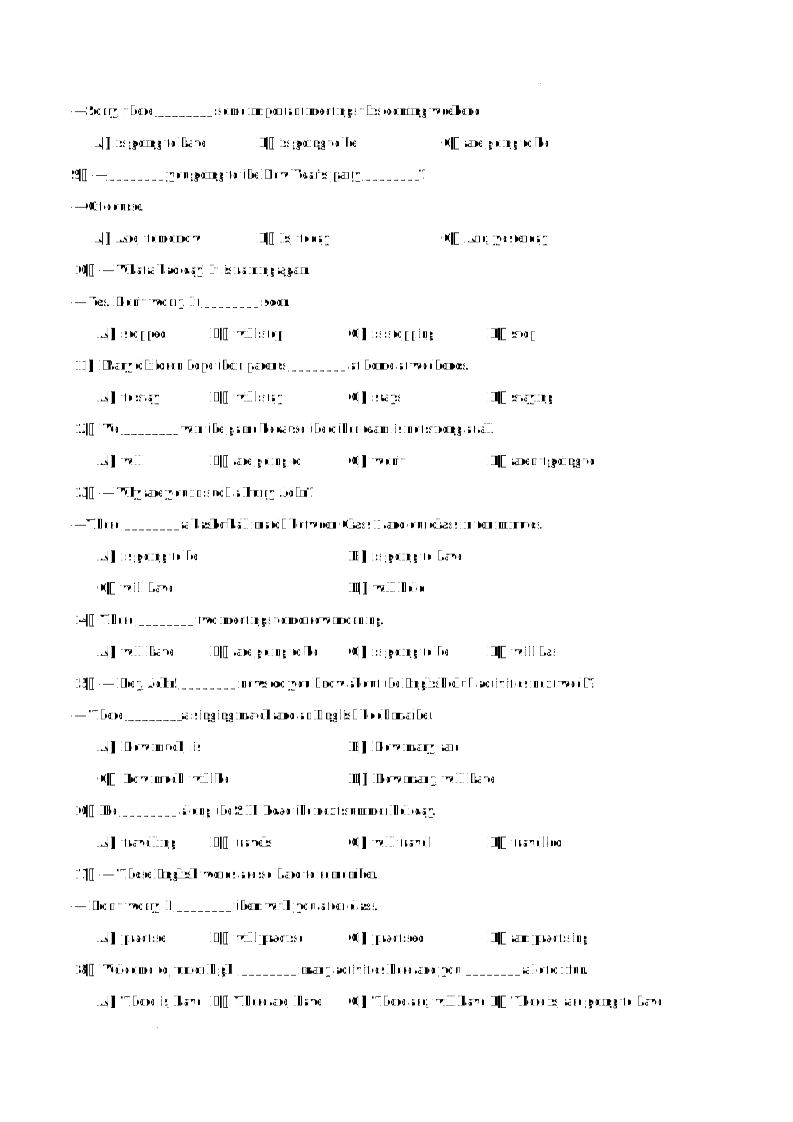
|
36人下载

摘要:
**基本信息**
聚焦一般将来时语法专项,通过系统梳理结构形式、句式变化及易混点,结合梯度化练习实现基础语法能力突破,助力语言能力与思维品质提升。
**专项设计**
|模块|题量/典例|方法提炼|知识逻辑|
|----|-----------|----------|----------|
|语法规则梳理|无(含3类表格解析)|be going to/will结构对比、there be句型将来式转换|定义→基本结构→句式变化→易混点辨析→特殊句型应用的递进链条|
|语法应用训练|70题(单选40+完成句子30)|情境化考点辨析(时间状语/语境暗示)|覆盖结构运用、句型转换、时态辨析等核心考法,实现从规则到应用的迁移|
内容正文:
2026-2027学年七年级英语上册单元模块满分必刷题(新教材外研版)
Unit 5 The power of plants【刷语法】(重点语法提升练)
一般将来时
一般将来时表示将来某一时刻的动作或状态,或将来某一段时间内经常的动作或状态。常与一些表示将来的时间状语连用,如: tomorrow(明天), next week(下周), from now on(从现在开始);in the future(将来),in a few days等。
1、基本结构:be going to+动词原形 2. will+动词原形
一般将来时:be going to+动词原形
意为自己打算做某事、计划做某事或者有意做某事,be 动词随主语不同可变为is,am,are.它的句式变化如下:
肯定句
主语+be going to do+其他
否定句
主语+be not going to do +其他
一般疑问句
Be +主语+going to do +其他?
肯定回答
Yes, 主语+be.
否定回答
No, 主语+be not.
一般将来时:will+动词原形
用于描述未来的事情或表达对将来的预测等,will没有人称和数的变化,它的句式变化为:
肯定句
主语+will do+其他
否定句
主语+will not/won’t do +其他
一般疑问句
Will +主语+ do +其他?
肯定回答
Yes, 主语+will.
否定回答
No, 主语+won’t.
2. will 和be going to 的区别
will 和be going to一般可以互用,但有时有区别:
1) 含时间和条件状语从句,如果主句是将来时,多用will.
2) 如果不是以人的意愿为转移,将来肯定会发生的动作和状态,多用will
3) be going to根据迹象推测,有可能发生的事情或计划要做的事情。
3. there be 句型的一般将来式:1.There is/are going to be 2. There will be
它的句式变化为:
肯定句
There is/are going to be+主语+其他
There will be+主语+其他
否定句
There is/are not going to be+主语+其他
There will not /won’t be+主语+其他
一般疑问句
Is/Are there going to be+主语+其他?
Will there be+主语+其他?
肯定回答
Yes, there is/are.
Yes, there will.
否定回答
No, there isn’t/aren’t.
No, there won’t.
语法过关小测
满分:70分,时间:60分钟
一、单项选择(每小题1分,共40分)
1.There will ________ an English party in our school next week.
A.have B.has C.be
【答案】C
【详解】句意:下周我们学校会有一个英语派对。
there be句型表示“某地有某物”,其将来时结构为“There will be...”;have和has表示“拥有”,主语通常是人或物,不符合there be句型的用法。
2.Look at the black clouds in the sky. I think it ________ soon.
A.rains B.rained C.is raining D.is going to rain
【答案】D
【详解】句意:看天上的乌云。我觉得很快就要下雨了。
根据“black clouds”这一迹象,推测即将下雨,需用“be going to”结构表示根据现有情况判断的将来动作。
3.Kate ________ swim in the pool tomorrow.
A.will B.is C.do D.does
【答案】A
【详解】句意:凯特明天将在游泳池里游泳。
根据“tomorrow”可知,时态为一般将来时,结构为“will+动词原形”,应填will。
4.—Look at the dark clouds in the sky!
—Oh, it ________ rain soon. We’d better take our raincoats.
A.will B.is going to C.need D.are going to
【答案】B
【详解】句意:——看天空中的乌云!——哦,快要下雨了。我们最好带上雨衣。
根据“Look at the dark clouds”可知是有客观迹象表明将要发生某事,应用be going to结构;主语it是第三人称单数,be动词用is。A项will侧重主观意愿;C项主语it后接动词需加s;D项are与主语不一致。
5.—________ you ________ to the park this weekend?
—Yes, I will.
A.Do;go B.Will;go
C.Are;going D.Are;go
【答案】B
【详解】句意:——这个周末你将要去公园吗?——是的,我将要去。
根据答语“Yes, I will.”可知,问句是由Will引导的一般疑问句,结构为“Will + 主语 + 动词原形”。应填Will;go。
6.We will ________ our trip to the zoo tomorrow.
A.start B.starts C.starting D.to start
【答案】A
【详解】句意:我们将在明天开始我们的动物园之旅。
will后接动词原形,应填start。
7.Do you know the saying “If you ________ life, life ________ you back.”?
A.love; love B.love; will love C.will love; love D.loves; will love
【答案】B
【详解】句意:你知道“如果你爱生活,生活将会爱你。”这句谚语吗?
在if引导的条件状语从句中,遵循“主将从现”原则,即主句用一般将来时,从句用一般现在时。从句主语是you,谓语动词用原形love;主句主语是life,谓语动词用will love。应填love; will love。
8.—Are you free? I’d like you to go to the museum with me.
—Sorry, there ________ some important meetings this coming weekend.
A.is going to have B.is going to be C.are going to be
【答案】C
【详解】句意:——你有空吗?我想让你和我一起去博物馆。——对不起,这个周末将有一些重要的会议。
there be句型表示“存在”,不能与have连用;根据“this coming weekend”可知时态为一般将来时,结构为there is/are going to be;主语“some important meetings”是复数,be动词用are。
9.—________ you going to the New Year’s party ________?
—Of course.
A.Are; tomorrow B.Is; today C.Are; yesterday
【答案】A
【详解】句意:——你明天打算去新年派对吗?——当然。
tomorrow明天;today今天;yesterday昨天。本句为be going to结构的一般将来时,表示将来计划或安排的用法,主语you是第二人称,be动词用are,一般将来时要用tomorrow。
10.—What a bad day! It is raining again.
—Yes. Don’t worry. It ________ soon.
A.stopped B.will stop C.is stopping D.stop
【答案】B
【详解】句意:——多糟糕的一天啊!又下雨了。——是的。别担心。雨很快会停的。
根据时间状语“soon”可知,句子描述的是将来要发生的动作,应用一般将来时,结构为“will+动词原形”。
11.Many children hope their parents ________ at home at weekends.
A.to stay B.will stay C.stays D.staying
【答案】B
【详解】句意:很多孩子希望他们的父母周末能待在家里。
hope后接宾语从句,不能用hope sb. (to) do;主语their parents是复数,不能用stays;从句表达孩子们期盼将来发生的事,用一般将来时will stay,应填will stay。
12.We ________ win the game because the other team is not strong at all.
A.will B.are going to C.won’t D.aren’t going to
【答案】B
【详解】句意:我们将会赢得这场比赛,因为对方球队根本不强。
will表示将来,侧重临时决定或预测;are going to表示将来,侧重已有迹象表明将要发生的事;won’t和aren’t going to均表示否定。根据后句“because the other team is not strong at all”可知,这是一个已经存在的客观迹象,据此推测“我们将会赢”,应用be going to结构表有迹象的预测,应填are going to。
13.—Why are you in such a hurry, John?
—There ________ a basketball match between Class 1 and our class in ten minutes.
A.is going to be B.is going to have
C.will have D.will hold
【答案】A
【详解】句意:——约翰,你为什么这么匆忙?——十分钟后一班和我们班之间将有一场篮球比赛。
is going to be将会有;is going to have将会有;will have将会举办/有;will hold将会举办。根据“There”可知,此处是there be句型,表示“某地有某物”,不能与have或hold连用,排除B、C、D 项。根据“in ten minutes”可知,时态为一般将来时,there be 句型的一般将来时结构为“there will be”或“there is/are going to be”;主语“a basketball match”是单数,be动词用is。
14.There ________ two meetings tomorrow morning.
A.will have B.are going to be C.is going to be D.will has
【答案】B
【详解】句意:明天上午将有两场会议。
will have将会有,there be句型不能与have连用,结构错误。are going to be将会有,there be句型的一般将来时。is going to be将会有,there be句型的一般将来时。will has语法错误。这是there be句型的一般将来时,there be句型的一般将来时结构为there will be或there is/are going to be,不能与have连用,主语two meetings是复数,所以be动词要用are。
15.— Hey, John!________ news do you know about the English club activities next week?
— There ________a singing match and an English book market.
A.How much; is B.How many; are
C.How much; will be D.How many; will have
【答案】C
【详解】句意:——嘿,约翰!关于下周英语俱乐部的活动你知道多少消息?——将有一场歌唱比赛和一个英语书市。
How much多少,修饰不可数名词;How many多少,修饰可数名词复数。news是不可数名词,询问数量需用How much,排除 B、D 选项;根据时间状语next week可知句子时态为一般将来时,There be句型的将来时结构为There will be,排除A选项。
16.He ________ along the Silk Road the next summer holiday.
A.travelling B.travels C.will travel D.travelled
【答案】C
【详解】句意:下个暑假他将沿着丝绸之路旅行。
句中“the next summer holiday”意为“下个暑假”,属于将来时间,要用一般将来时,应填will travel。
17.— These English words are so hard to remember.
— Don’t worry. I ________ them with you after class.
A.practise B.will practise C.practised D.am practising
【答案】B
【详解】句意:——这些英语单词太难记住了。——别担心。下课后我会和你一起练习它们。
根据“after class”可知,下课后是将来的时间,动作尚未发生,应用一般将来时。故选B。
18.Welcome to junior high. ________ many activities here and you ________ a lot of fun.
A.There is; have B.There are; have C.There are; will have D.There is; are going to have
【答案】C
【详解】句意:欢迎来到初中。这里有很多活动,你将会玩得很开心。
第一空主语“many activities”是复数,there be句型中be动词用复数形式are;第二空根据语境可知表示将来会发生的事情,用一般将来时will have。
19.There _________ an important (重要的) meeting in the company (公司) tomorrow.
A.is going to have B.will have C.is going to be D.are going to be
【答案】C
【详解】句意:明天公司将有一个重要的会议。
There be句型的一般将来时为“There is/are going to be”或“There will be”,故排除A和B。主语“an important meeting”为单数,故选用is going to be。
20.Look at the black clouds. It ________ tomorrow.
A.rains B.will be going to rain
C.is going to rain D.be going to rain
【答案】C
【详解】句意:看那些乌云。明天要下雨了。
根据“Look at the black clouds”可知,说话人通过观察眼前的迹象(乌云)来预测即将发生的事,应使用“be going to”结构表示有迹象的推测。主语It为第三人称单数,be动词用is。
21.—________ you ________ free tomorrow?
—No. I ________ free the day after tomorrow.
A.Are; going to be; will B.Are; going to; will
C.Are; going to; will be D.Are; going to be; will be
【答案】D
【详解】句意:——你明天有空吗?——不。我后天有空。
Are;going to和will都表示将要,“free”是形容词,意为“空闲的”,前面应该有be动词,在are going to和will后be动词用原形,应填“Are; going to be; will be”。
22.He ______ travel to the mountain area because he likes climbing.
A.is going to B.are going to C.will going to D.go to
【答案】A
【详解】句意:他打算去山区旅行,因为他喜欢爬山。
be going to表示计划或打算做某事。be going to结构及主谓一致。主语He是第三人称单数,be动词应用 is。应填is going to。
23.________ you visit your teacher tomorrow?
A.Do B.Did C.Will
【答案】C
【详解】句意:你明天要去看望你的老师吗?
tomorrow是一般将来时的时间标志词,Do用于一般现在时疑问句,Did用于一般过去时疑问句,Will用于一般将来时疑问句,Will后接动词原形visit,Will符合语境。
24.—What ______ you ______ for your summer holiday?
—I’m going to travel to Yunnan.
A.do; do B.are; going to do C.will; doing D.did; do
【答案】B
【详解】句意:——你暑假打算做什么?——我打算去云南旅游。
根据答语“I’m going to travel to Yunnan.”,问句询问将来的计划,应用be going to do的结构,主语为you,动词应用are。
25.The weather report says it ________ tomorrow.
A.rain B.rains C.will rain D.rained
【答案】C
【详解】句意:天气预报说明天将要下雨。
根据时间状语“tomorrow”可知,此处表示将来的事情,句子用一般将来时,应填will rain。
26.We ________ a school trip next Friday. We are so happy.
A.have B.had C.will have D.are having
【答案】C
【详解】句意:下周五我们将会有一次学校旅行,我们特别开心。
根据“next Friday”可知,时态用一般将来时,结构为“will+动词原形”,应填will have。
27.There ________ a football match this weekend.
A.will going to be B.is going to be C.will go to be D.will be going to
【答案】B
【详解】句意:这个周末将有一场足球比赛。
根据时间状语“this weekend”可知句子要用一般将来时。there be句型的将来时结构为“there will be”或“there is/are going to be”。主语“a football match”是单数,be动词应用is。应填is going to be。
28.It ________ the Year of the Rat next year.
A.is going to be B.is going to C.will D.will is
【答案】A
【详解】句意:明年将是鼠年。
根据时间状语“next year”可知,本句时态为一般将来时。一般将来时的结构为“will+动词原形”或“be going to+动词原形”。本句主语It后需接系动词be构成谓语,排除BC选项,D选项will后接动词原形,语法错误。应填is going to be。
29.—What are you going to do this weekend?
—I ________ my room.
A.clean B.cleaned C.am going to clean D.was cleaning
【答案】C
【详解】句意:——这个周末你打算做什么?——我打算打扫我的房间。
根据问句“What are you going to do”询问未来计划,答句应用be going to结构,表示打算做某事,主语为I,be动词用am,应填am going to clean。
30.Thirty years ago, Zhang Hong ________ a dancer, now he ________ an engineer, and next year he ________ be retired.
A.is, is, is B.was, is, / C.was, was, is D.was, is, will
【答案】D
【详解】句意:三十年前,张宏是一名舞者,现在他是一名工程师,明年他将退休。
is是;was是;will将。根据时间状语“Thirty years ago”可知第一空应用was;根据“now”可知第二空应用is;根据“next year”可知第三空应用will。
31.There ________ an English exam next Monday.
A.is B.are C.will be D.was
【答案】C
【详解】句意:下周一将有一场英语考试。
根据时间状语“next Monday”可知,句子时态为一般将来时,there be句型的一般将来时结构为there will be。
32.—Will you go on a trip with your friends this weekend?
— ______. I have to finish my homework first.
A.Yes, I will B.No, I won’t C.Yes, I do D.No, I don’t
【答案】B
【详解】句意:——这个周末你会和朋友去旅行吗?——不,我不会。我得先完成我的作业。
问句是由Will引导的一般疑问句,答语需用will或won’t,排除C、D选项。根据后句“我得先完成作业”可知,不能去旅行,应作否定回答。
33.Look! The sky is dark. It ________ soon.
A.rains B.is going to rain C.rained D.was raining
【答案】B
【详解】句意:看!天空变暗了。很快就要下雨了。
rains下雨(一般现在时);is going to rain将要下雨(一般将来时);rained下雨(一般过去时);was raining正在下雨(过去进行时)。根据“The sky is dark”及“soon”可知,此处表示根据现有迹象推测即将发生的事,用be going to符合语境。
34.The weather report says it ________ tomorrow. We can have a picnic.
A.will snow B.will be sunny C.is raining D.was cloudy
【答案】B
【详解】句意:天气预报说明天将是晴天。我们可以去野餐。
根据时间状语tomorrow可知句子应用一般将来时,排除C和D;根据后句“We can have a picnic”可知天气状况良好,适合户外活动,will snow不符合语境。应填will be sunny。
35.—Never walk on the left of the road, boy.
—Thanks. I________ next time.
A.will B.can’t C.don’t D.won’t
【答案】D
【详解】句意:——孩子,永远不要走在路的左边。——谢谢,我下次不会了。
will将会;can’t不能;don’t不;won’t将不。根据“next time”可知,此处表示以后不会做了,应用一般将来时的否定结构,简短回答用won’t。
36.My sister ________ a new skirt tomorrow morning.
A.buy B.buys C.bought D.will buy
【答案】D
【详解】句意:我的姐姐明天早上要买一条新裙子。
根据“tomorrow morning”可知,时态是一般将来时,结构为“will+动词原形”,应填will buy。
37.My brother ________ computer games tonight.
A.won’t play B.don’t play C.didn’t play
【答案】A
【详解】句意:我哥哥今晚不会玩电脑游戏。
根据句中“tonight”(今晚)可知动作尚未发生,应用一般将来时,应填won’t play。
38.I ________ a new book soon.
A.buy B.will buy C.bought
【答案】B
【详解】句意:我很快会买一本新书。
由句中时间标志词“soon”可知,本句描述的是将要发生的动作,需用一般将来时,因此选will buy。buy为一般现在时,用于描述经常性或习惯性的动作;bought为一般过去时,用于描述过去发生的动作,二者均与“soon”表示将来的语境不符,故排除。
39.I ________ 14 years old next year.
A.am B.will be C.was
【答案】B
【详解】句意:我明年将会是14岁。由“next year”表示将来时间可知,句子描述的是将来的状态,应用一般将来时,结构为will加动词原形,因此谓语部分应为will be。
40.They ________ a five-day journey to Xi’an next summer holiday.
A.will have B.have C.had D.are having
【答案】A
【详解】句意:他们下个暑假将有一次为期五天的西安之旅。
根据“next summer holiday”可知,该句描述的是将来要发生的事情,应使用一般将来时will have。
二、完成句子(每小题2分,共30分)
41.Mary plans to visit the space museum with her friends. (改为同义句)
Mary ________ ________ to visit the space museum with her friends
【答案】 is going
【详解】句意:玛丽计划和她的朋友们去参观太空博物馆。要求改为同义句,且给出两个空,后接to visit,我们需要用能替换plans to(计划做某事)的结构。plan to do sth.与be going to do sth.同义;主语Mary是第三人称单数,be动词用is,因此完整结构为is going to。
42.Leo is going to visit the Great Wall next Friday. (改为同义句)
Leo ___________ ___________ the Great Wall next Friday.
【答案】 will visit
【详解】句意:Leo下周五将要去参观长城。be going to do“将要做……”,与will do同义。故填will;visit。
43.Li Ming often plays soccer on weekends.(用next weekend改写句子)
Li Ming ________ ________ soccer next weekend.
【答案】 will play
【详解】句意:李明经常在周末踢足球。改写后时间状语变为next weekend,表示将来要发生的动作,因此句子时态需改为一般将来时。常见结构为“will+动词原形”或“be going to+动词原形”。题目中横线处只有两个空,因此只能选用will+play结构。
44.We are going to have a trip next week. (改为一般疑问句)
________ you ________ to have a trip next week?
【答案】 Are going
【详解】句意:我们下周打算去旅行。本句为一般将来时be going to结构,变一般疑问句时,需将句中的be动词are提前至句首并大写首字母;原句主语“we”转换为you,be动词对应变为Are,剩余going to have部分保持原样不变。
45.We are going to the mountains tomorrow. (改为否定句)
We ________ ________ to the mountains tomorrow.
【答案】
aren’t
going
【详解】句意:我们明天打算去山区。原句为一般将来时。改为否定句时,需在系动词“are”后加“not”,缩写为“aren’t”,其余语序不变。
46.It will be windy this evening. (改为一般疑问句)
________ it ________ windy this evening?
【答案】 Will be
【详解】句意:今天晚上会刮风。原句含有助动词will,改为一般疑问句时,将will提前即可,句首首字母大写,动词be保持不变。
47.There are two cinemas in that town now. (用next year改写句子)
There ________ ________ two cinemas in that town next year.
【答案】 will be
【详解】句意:现在那个镇上有两家电影院。句子是一般现在时,表示现在的状态,next year“明年”是一般将来时的时间状语,改写后的句子是一般将来时,一般将来时由“will/be going to+动词原形”构成,根据设空,此处用“will+动词原形”,应填will;be。
48.I will ask an engineer to check my computer. (改为否定句)
I ________ ________ an engineer to check my computer.
【答案】 won’t ask
【详解】句意:我会请一名工程师来检查我的电脑。原句是一般将来时,结构为will + 动词原形,变否定句时,直接在助动词will后加not,缩写为won’t,后面接动词原形ask。
49.They have a basketball match every Sunday. (用next Sunday改写)
They ________ ________ ________ have a basketball match next Sunday.
【答案】 are going to
【详解】句意:他们每周日都有一场篮球比赛。原句是一般现在时,表示经常性、习惯性的动作。当时间状语改为“next Sunday”时,句子时态要变为一般将来时。一般将来时常见的表达结构有“will + 动词原形”和“be going to + 动词原形” 。句子主语“They”是复数,所以be动词要用“are”,后面依次跟“going”和“to”,再接动词原形“have”。
50.I am going to learn English by watching English movies.(对划线部分提问)
________ ________ you going to learn English?
【答案】 How are
【详解】句意: 我打算通过看英文电影来学习英语。划线部分表示方式/方法,对其提问用how(“怎样/如何”);句子时态是一般将来时(be going to结构),主语要从I变为you,对应的be动词要从am变为are,特殊疑问句需要把be动词提前。
51.I’m going to climb Mount Taishan this summer. (对划线部分提问)
________ are you going to ________ this summer?
【答案】 What do
【详解】句意:我今年夏天打算爬泰山。根据划线部分可知,对未知的动作提问,用What,be going to后接动词原形,故填What;do
52.They will go to Shanghai tomorrow. (对划线部分提问)
________ ________ they go tomorrow?
【答案】 Where will
【详解】句意:他们明天将要去上海。划线部分Shanghai是地点,对地点提问用疑问词Where;原句为一般将来时,含助动词will,变疑问句直接将will提前至主语they前面。
53.She is going to play basketball after school.(对画线部分提问)
________ ________ she ________ ________ ________ after school?
【答案】 What is going to do
【详解】句意:她打算放学后去打篮球。原句的“play basketball”是画线部分,表示具体的动作。对具体动作提问要用疑问词What;变为特殊疑问句时,要把be动词is提到主语she 前面构成疑问语序;同时,用实义动词do替代划线部分的具体动作“play basketball” ,所以答案依次为What;is;going;to;do。
54.My sister will have an English test at school tomorrow. (对画线部分提问)
________ ________ your ________ ________ at school tomorrow?
【答案】 What will sister do
【详解】句意:我妹妹明天要在学校参加一场英语测试。 划线部分为动作事件,用What提问;原句是一般将来时,助动词will提前,主语改为your sister,谓语用动词原形do。
55.I am going to be a doctor in the future. (对划线部分提问)
______ ______ ______ going to ______ in the future?
【答案】 What are you be
【详解】句意:我将来打算成为一名医生。划线部分是“我”未来打算成为的职业,故此处疑问词用what,句首首字母大写;原句中有be动词am,变为疑问句时,第一人称I要变为第二人称you,be动词相应变为are,放在主语you之前;“be going to”后接动词原形,所以最后一个空填be。
学科网(北京)股份有限公司
$
2026-2027学年七年级英语上册单元模块满分必刷题(新教材外研版)
Unit 5 The power of plants【刷语法】(重点语法提升练)
一般将来时
一般将来时表示将来某一时刻的动作或状态,或将来某一段时间内经常的动作或状态。常与一些表示将来的时间状语连用,如: tomorrow(明天), next week(下周), from now on(从现在开始);in the future(将来),in a few days等。
1、基本结构:be going to+动词原形 2. will+动词原形
一般将来时:be going to+动词原形
意为自己打算做某事、计划做某事或者有意做某事,be 动词随主语不同可变为is,am,are.它的句式变化如下:
肯定句
主语+be going to do+其他
否定句
主语+be not going to do +其他
一般疑问句
Be +主语+going to do +其他?
肯定回答
Yes, 主语+be.
否定回答
No, 主语+be not.
一般将来时:will+动词原形
用于描述未来的事情或表达对将来的预测等,will没有人称和数的变化,它的句式变化为:
肯定句
主语+will do+其他
否定句
主语+will not/won’t do +其他
一般疑问句
Will +主语+ do +其他?
肯定回答
Yes, 主语+will.
否定回答
No, 主语+won’t.
2. will 和be going to 的区别
will 和be going to一般可以互用,但有时有区别:
1) 含时间和条件状语从句,如果主句是将来时,多用will.
2) 如果不是以人的意愿为转移,将来肯定会发生的动作和状态,多用will
3) be going to根据迹象推测,有可能发生的事情或计划要做的事情。
3. there be 句型的一般将来式:1.There is/are going to be 2. There will be
它的句式变化为:
肯定句
There is/are going to be+主语+其他
There will be+主语+其他
否定句
There is/are not going to be+主语+其他
There will not /won’t be+主语+其他
一般疑问句
Is/Are there going to be+主语+其他?
Will there be+主语+其他?
肯定回答
Yes, there is/are.
Yes, there will.
否定回答
No, there isn’t/aren’t.
No, there won’t.
语法过关小测
满分:70分,时间:60分钟
一、单项选择(每小题1分,共40分)
1.There will ________ an English party in our school next week.
A.have B.has C.be
2.Look at the black clouds in the sky. I think it ________ soon.
A.rains B.rained C.is raining D.is going to rain
3.Kate ________ swim in the pool tomorrow.
A.will B.is C.do D.does
4.—Look at the dark clouds in the sky!
—Oh, it ________ rain soon. We’d better take our raincoats.
A.will B.is going to C.need D.are going to
5.—________ you ________ to the park this weekend?
—Yes, I will.
A.Do;go B.Will;go
C.Are;going D.Are;go
6.We will ________ our trip to the zoo tomorrow.
A.start B.starts C.starting D.to start
7.Do you know the saying “If you ________ life, life ________ you back.”?
A.love; love B.love; will love C.will love; love D.loves; will love
8.—Are you free? I’d like you to go to the museum with me.
—Sorry, there ________ some important meetings this coming weekend.
A.is going to have B.is going to be C.are going to be
9.—________ you going to the New Year’s party ________?
—Of course.
A.Are; tomorrow B.Is; today C.Are; yesterday
10.—What a bad day! It is raining again.
—Yes. Don’t worry. It ________ soon.
A.stopped B.will stop C.is stopping D.stop
11.Many children hope their parents ________ at home at weekends.
A.to stay B.will stay C.stays D.staying
12.We ________ win the game because the other team is not strong at all.
A.will B.are going to C.won’t D.aren’t going to
13.—Why are you in such a hurry, John?
—There ________ a basketball match between Class 1 and our class in ten minutes.
A.is going to be B.is going to have
C.will have D.will hold
14.There ________ two meetings tomorrow morning.
A.will have B.are going to be C.is going to be D.will has
15.— Hey, John!________ news do you know about the English club activities next week?
— There ________a singing match and an English book market.
A.How much; is B.How many; are
C.How much; will be D.How many; will have
16.He ________ along the Silk Road the next summer holiday.
A.travelling B.travels C.will travel D.travelled
17.— These English words are so hard to remember.
— Don’t worry. I ________ them with you after class.
A.practise B.will practise C.practised D.am practising
18.Welcome to junior high. ________ many activities here and you ________ a lot of fun.
A.There is; have B.There are; have C.There are; will have D.There is; are going to have
19.There _________ an important (重要的) meeting in the company (公司) tomorrow.
A.is going to have B.will have C.is going to be D.are going to be
20.Look at the black clouds. It ________ tomorrow.
A.rains B.will be going to rain
C.is going to rain D.be going to rain
21.—________ you ________ free tomorrow?
—No. I ________ free the day after tomorrow.
A.Are; going to be; will B.Are; going to; will
C.Are; going to; will be D.Are; going to be; will be
22.He ______ travel to the mountain area because he likes climbing.
A.is going to B.are going to C.will going to D.go to
23.________ you visit your teacher tomorrow?
A.Do B.Did C.Will
24.—What ______ you ______ for your summer holiday?
—I’m going to travel to Yunnan.
A.do; do B.are; going to do C.will; doing D.did; do
25.The weather report says it ________ tomorrow.
A.rain B.rains C.will rain D.rained
26.We ________ a school trip next Friday. We are so happy.
A.have B.had C.will have D.are having
27.There ________ a football match this weekend.
A.will going to be B.is going to be C.will go to be D.will be going to
28.It ________ the Year of the Rat next year.
A.is going to be B.is going to C.will D.will is
29.—What are you going to do this weekend?
—I ________ my room.
A.clean B.cleaned C.am going to clean D.was cleaning
30.Thirty years ago, Zhang Hong ________ a dancer, now he ________ an engineer, and next year he ________ be retired.
A.is, is, is B.was, is, / C.was, was, is D.was, is, will
31.There ________ an English exam next Monday.
A.is B.are C.will be D.was
32.—Will you go on a trip with your friends this weekend?
— ______. I have to finish my homework first.
A.Yes, I will B.No, I won’t C.Yes, I do D.No, I don’t
33.Look! The sky is dark. It ________ soon.
A.rains B.is going to rain C.rained D.was raining
34.The weather report says it ________ tomorrow. We can have a picnic.
A.will snow B.will be sunny C.is raining D.was cloudy
35.—Never walk on the left of the road, boy.
—Thanks. I________ next time.
A.will B.can’t C.don’t D.won’t
36.My sister ________ a new skirt tomorrow morning.
A.buy B.buys C.bought D.will buy
37.My brother ________ computer games tonight.
A.won’t play B.don’t play C.didn’t play
38.I ________ a new book soon.
A.buy B.will buy C.bought
39.I ________ 14 years old next year.
A.am B.will be C.was
40.They ________ a five-day journey to Xi’an next summer holiday.
A.will have B.have C.had D.are having
二、完成句子(每小题2分,共30分)
41.Mary plans to visit the space museum with her friends. (改为同义句)
Mary ________ ________ to visit the space museum with her friends
42.Leo is going to visit the Great Wall next Friday. (改为同义句)
Leo ___________ ___________ the Great Wall next Friday.
43.Li Ming often plays soccer on weekends.(用next weekend改写句子)
Li Ming ________ ________ soccer next weekend.
44.We are going to have a trip next week. (改为一般疑问句)
________ you ________ to have a trip next week?
45.We are going to the mountains tomorrow. (改为否定句)
We ________ ________ to the mountains tomorrow.
46.It will be windy this evening. (改为一般疑问句)
________ it ________ windy this evening?
47.There are two cinemas in that town now. (用next year改写句子)
There ________ ________ two cinemas in that town next year.
48.I will ask an engineer to check my computer. (改为否定句)
I ________ ________ an engineer to check my computer.
49.They have a basketball match every Sunday. (用next Sunday改写)
They ________ ________ ________ have a basketball match next Sunday.
50.I am going to learn English by watching English movies.(对划线部分提问)
________ ________ you going to learn English?
51.I’m going to climb Mount Taishan this summer. (对划线部分提问)
________ are you going to ________ this summer?
52.They will go to Shanghai tomorrow. (对划线部分提问)
________ ________ they go tomorrow?
53.She is going to play basketball after school.(对画线部分提问)
________ ________ she ________ ________ ________ after school?
54.My sister will have an English test at school tomorrow. (对画线部分提问)
________ ________ your ________ ________ at school tomorrow?
55.I am going to be a doctor in the future. (对划线部分提问)
______ ______ ______ going to ______ in the future?
学科网(北京)股份有限公司
$
资源预览图

1

2
3

相关资源
示范课
由于学科网是一个信息分享及获取的平台,不确保部分用户上传资料的 来源及知识产权归属。如您发现相关资料侵犯您的合法权益,请联系学科网,我们核实后将及时进行处理。