Unit 6 课时2 Reading1 (教学设计) 2025-2026学年译林版英语七年级下册
2026-06-17
|
9页
|
165人阅读
|
1人下载
普通
摘要:
该初中英语教学设计聚焦骑行旅行主题,通过Simon日记学习核心动词短语(set off, get lost等)及一般过去时,训练细节信息获取与叙事逻辑梳理能力。课堂以“迷失的地图之谜”情境导入,关联上节课户外活动词汇,引导预测-验证,构建故事流程图作为学习支架。
特色在于情境化与可视化教学,利用时间轴、情感曲线辅助梳理情节与人物情感变化,分组合作提取细节,角色扮演“我是小小Simon”提升语言运用。通过情感分析培养思维品质,小组探究发展学习能力,分层作业兼顾差异,助力教师高效教学,提升学生阅读与表达素养。
内容正文:
《Unit 6 Beautiful landscapes》第2课时教案
学科
英语
年级册别
七年级下册
共7课时
教材
译林版初中英语七年级下册
授课类型
新授课(Reading: A cycling trip)
第2课时
教材分析
教材分析
本课时为Unit 7的第二课时,Reading部分题为"A cycling trip"。文章以Simon的日记形式,生动记录了一次与朋友骑自行车旅行的经历。文章按照时间顺序(After breakfast -> We cycled for another hour -> After lunch -> On our way back)叙述了从出发、迷路、到达村庄、游玩到返程修车的完整过程。文章不仅包含了丰富的动词短语(set off, get lost, take photos等),还体现了团队合作(teamwork)和解决问题的重要性。作为单元阅读课的第一部分,它旨在训练学生获取细节信息的能力,并初步感知一般过去时的语境。
学情分析
经过第一课时的学习,学生对户外活动词汇已有初步接触,但将词汇转化为描述具体经历的叙事能力尚显不足。七年级学生具备基本的扫读和略读能力,但对于长难句的理解及语篇逻辑结构的把握仍有困难。特别是对于“迷路”后的心理变化及“团队协作”解决困难的深层含义,需要教师引导深入挖掘。学生普遍喜欢听故事,利用日记体裁的亲切感可以激发他们的阅读兴趣。
课时教学目标
语言能力
1. 能够准确理解并运用核心短语:set off, get lost, tell sb. which way to go, repair, proud of, have a lot of fun。
2. 能够通过略读掌握文章大意,通过扫读提取关键事件的时间顺序和地点变化。
文化意识
1. 了解骑自行车旅行(cycling trip)作为一种健康环保的出行方式,培养亲近自然的生活态度。
2. 体会在旅行中遇到困难时保持冷静、互帮互助的积极价值观。
思维品质
1. 能够梳理文章的叙事脉络(Story Map),构建清晰的逻辑框架。
2. 能够推断人物情感变化的原因,分析解决问题的策略,提升批判性思维能力。
学习能力
1. 能够利用思维导图或流程图辅助阅读理解,提高信息整合效率。
2. 能够在小组合作中分享阅读策略,共同解决阅读障碍。
教学重点、难点
重点
1. 掌握文章中的核心动词短语及其在语境中的用法。
2. 理清故事情节发展顺序,复述Simon的骑行经历。
难点
1. 理解文中隐含的情感变化线索(worried -> excited -> tired but proud)。
2. 学习如何运用连接词(but, then, after, on our way back)使叙事连贯流畅。
教学方法与准备
教学方法
任务型教学法、情境教学法、整体语言教学法、合作探究法
教具准备
多媒体课件(含骑行路线图、天气图标)、故事地图工作单、单词卡片、计时器
教学环节
教师活动
学生活动
Step 1: Story Continuation - The "Lost Map" Mystery
【8分钟】
一、情境导入:迷失的地图之谜
(1)、复习旧知,创设悬念
教师展示上节课提到的四个卡通人物,引出Simon:"Last time, we knew Simon likes horse riding. But today, he went on a 'cycling trip'! Do you know what a cycling trip is? Let's meet Simon in his diary."
教师在PPT上展示一张模糊的、被雨水打湿的地图图片,旁边有一个问号。
提问:"Look at this map. It's from Simon's phone. What happened? Did they find the village easily?"
引导学生猜测:They got lost. They were worried.
(2)、快速浏览,验证猜测
要求学生快速浏览课文第一段和第二段,寻找关键词证实自己的猜测。
指令:"Skim the first two paragraphs. Find the words that tell us about the journey and the problem."
学生圈画出:set off, followed the map, did not give enough details, got lost, worried。
(3)、板书核心事件链
教师在黑板左侧画出简单的流程图框架:
Start (Breakfast) -> ? -> Arrive -> ? -> Return.
邀请学生根据刚才的阅读,将"Set off"和"Got lost"填入相应位置。
(4)、过渡引导
引导语:"Simon was worried, but luckily, someone helped them. How did they solve the problem? Let's read carefully."
1. 回顾Simon的人物设定,对“骑行”话题产生兴趣。
2. 观察模糊地图,结合生活经验进行大胆猜测。
3. 快速扫描课文,圈画关键词,验证猜测是否正确。
4. 积极参与板书填空,初步构建故事骨架。
评价任务
预测准确:☆☆☆
信息捕捉:☆☆☆
逻辑关联:☆☆☆
设计意图
利用“迷失的地图”这一悬念情境,迅速抓住学生注意力。通过预测和验证的策略,培养学生主动阅读的习惯,同时激活学生的背景知识,为深入理解文本做铺垫。
Step 2: Detailed Reading - The Journey Timeline
【15分钟】
一、深度阅读:绘制旅程时间轴
(1)、分段细读,填充细节
将班级分为三个大组,每组负责一个时间段的故事细节。
Group 1 (Paragraph 2): Focus on the journey to the village. Key questions: What did they follow? What was the problem? How was it solved?
Group 2 (Paragraph 3): Focus on the village visit. Key questions: What was the village like? What did they do there? How did Simon feel?
Group 3 (Paragraph 4): Focus on the return trip. Key questions: What happened to Sandy's bike? Who helped? How did they feel finally?
教师巡视,指导学生找出原文句子并翻译关键短语。
(2)、全班汇报,完善时间轴
邀请各组代表上台,将找到的关键信息(如:followed the map, driver stopped, saw flowers, repaired the bike)贴在黑板的时间轴对应位置。
教师引导全班齐读相关句子,强化记忆:
"We followed the map... but it did not give enough details."
"luckily, a driver stopped and told us which way to go."
"saw all kinds of interesting flowers and plants."
"Daniel took out his tools. We all helped repair Sandy's bike."
(3)、情感曲线分析
教师在黑板上画出一条情感波动曲线(Emotion Curve)。
提问:"How did Simon feel at each stage?"
引导学生找到形容词并标注:
Start: Excited (implied)
Problem: Worried
Arrival: Excited/Enjoyable
Return: Tired but Proud
讨论:"Why were they 'proud'? Was it just because they finished the trip?"
引导得出:Because they worked together as a team to fix the bike.
(4)、排序练习
出示课本A部分的六个句子,要求学生根据刚才梳理的时间轴,重新排列顺序。
a Sandy's bike had a problem.
b We fixed Sandy's bike.
c We arrived at the village.
d We got lost.
e We took photos.
f A driver showed us the way.
核对答案:d -> f -> c -> e -> a -> b。
1. 分组合作,仔细阅读指定段落,提取关键信息回答问题。
2. 上台展示成果,将关键词贴入时间轴,完善故事脉络。
3. 跟随教师朗读重点句型,体会语言的情感色彩。
4. 分析人物情感变化,探讨“骄傲”背后的团队精神。
5. 独立完成句子排序任务,巩固对文章结构的理解。
评价任务
细节提取:☆☆☆
情感分析:☆☆☆
排序正确:☆☆☆
设计意图
通过分块阅读和小组合作,降低长文阅读的难度。利用可视化的时间轴和情感曲线,帮助学生直观地把握文章结构和人物心理变化,突破教学难点。排序练习进一步巩固了对叙事逻辑的理解。
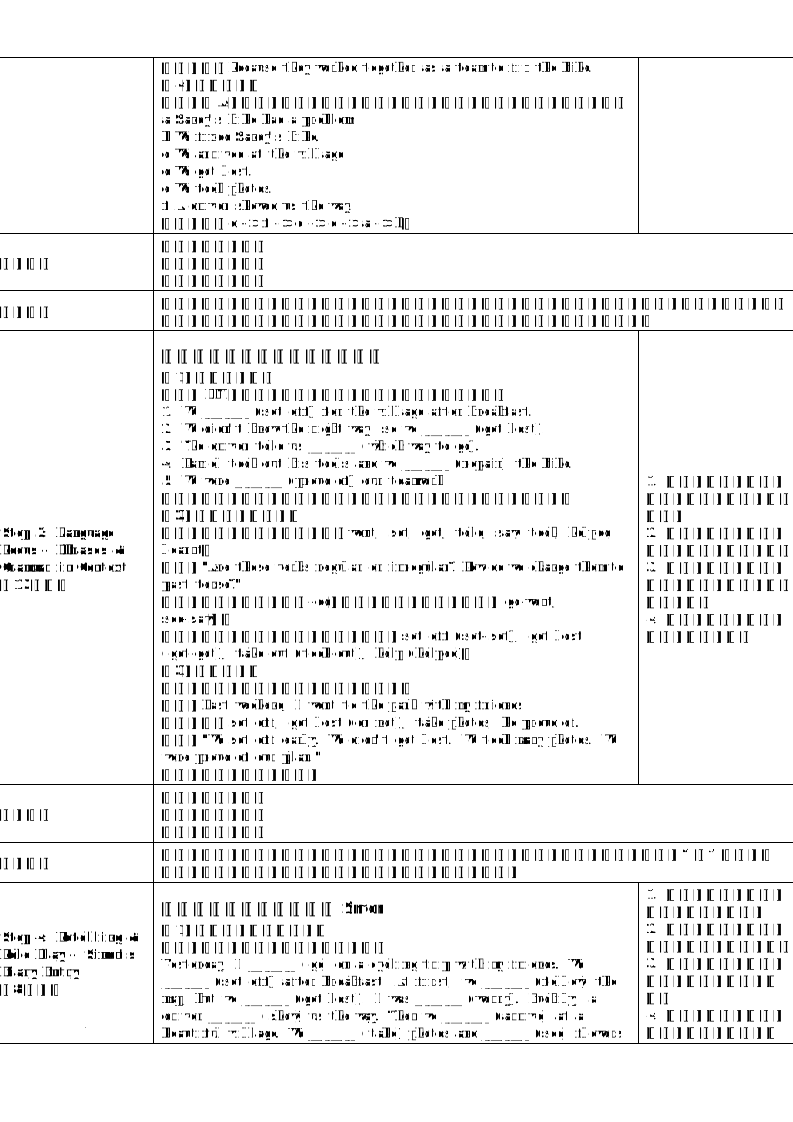
Step 3: Language Focus - Phrases & Grammar in Context
【12分钟】
一、语境聚焦:短语与语法探秘
(1)、短语大搜索
教师在PPT上展示几个包含核心短语的句子,挖空关键词。
1. We _______ (set off) for the village after breakfast.
2. We didn't know the right way, so we _______ (get lost).
3. The driver told us _______ (which way to go).
4. Daniel took out his tools and we _______ (repair) the bike.
5. We were _______ (proud of) our teamwork.
让学生结合上下文填空,并总结这些短语的时态变化(一般过去时)。
(2)、不规则动词变身
引导学生观察文中加粗的动词:went, set, got, told, saw, took, helped, learnt。
提问:"Are these verbs regular or irregular? How do we change them to past tense?"
总结规则:大多数直接加-ed,不规则动词需特殊记忆(如go-went, see-saw)。
强调文中出现的短语动词的不规则变化:set off (set-set), get lost (got-got), take out (took-out), help (helped)。
(3)、造句挑战
给出情境,要求学生用刚学的短语造句子。
情境:Last weekend, I went to the park with my friends.
要求使用:set off, get lost (or not), take photos, be proud of.
示例:"We set off early. We didn't get lost. We took many photos. We were proud of our plan."
教师点评并纠正时态错误。
1. 完成填空练习,复习并巩固核心短语的拼写和用法。
2. 观察动词变化规律,区分规则与不规则动词。
3. 尝试运用所学短语描述个人经历,进行口头或书面造句。
4. 互相纠错,共同构建正确的语法意识。
评价任务
拼写正确:☆☆☆
时态准确:☆☆☆
灵活运用:☆☆☆
设计意图
将语法和词汇教学融入具体的语境中,避免枯燥的规则讲解。通过填空和造句,让学生在“用”中掌握知识,强化一般过去时在叙事中的应用,为后续写作打下基础。
Step 4: Retelling & Role Play - Simon's Diary Entry
【8分钟】
一、输出应用:我是小小Simon
(1)、提供支架,尝试复述
教师提供一个带有提示词的复述框架:
Yesterday, I _______ (go) on a cycling trip with my friends. We _______ (set off) after breakfast. At first, we _______ (follow) the map, but we _______ (get lost). I was _______ (worry). Luckily, a driver _______ (show) us the way. Then we _______ (arrive) at a beautiful village. We _______ (take) photos and _______ (see) flowers. On the way back, Sandy's bike _______ (have) a problem. We _______ (help) repair it. We were _______ (tired) but _______ (proud). It was a great day!
学生先个人默读框架,再同桌互练。
(2)、角色扮演:模拟采访
两人一组,一人扮演记者,一人扮演Simon。
记者问题:"Hi Simon! Tell me about your cycling trip yesterday. Did you have any problems?"
Simon回答:根据复述框架,用自己的话讲述故事,加入表情和动作。
教师鼓励学生在复述中加入情感表达(如模仿担心的语气、开心的笑容)。
(3)、优秀展示
邀请2-3组上台表演。教师给予“最佳 storyteller"和“最佳演员”的称号。
1. 借助提示词框架,流利地复述文章内容。
2. 与同伴配合,进行角色互换,练习口语表达。
3. 通过肢体语言和语调变化,生动演绎故事内容。
4. 认真倾听他人复述,学习他人的表达亮点。
评价任务
复述流畅:☆☆☆
情感投入:☆☆☆
互动合作:☆☆☆
设计意图
复述是检验阅读理解最有效的方式之一。通过提供支架和角色扮演,降低了输出的难度,让学生敢于开口。这不仅锻炼了口语表达能力,也内化了文章的语言结构。
Step 5: Summary & Homework - The "Nature Explorer" Badge
【2分钟】
一、总结与拓展
(1)、课堂总结
师生共同回顾本节课的“探险成就”:
- 掌握了5个核心短语。
- 理清了故事的6个关键步骤。
- 体会到了团队合作的力量。
(2)、布置分层作业
必做题:完成课本B部分的阅读理解选择题。
选做题:仿照Simon的日记,写一篇关于自己一次难忘经历(如徒步、游泳、参观博物馆)的短文,不少于60词。
拓展题:制作一张“安全骑行指南”海报,列出3条注意事项(如戴头盔、检查刹车等)。
1. 回顾本节课的学习收获。
2. 记录作业要求。
3. 期待下节课的分享。
评价任务
知识回顾:☆☆☆
任务明确:☆☆☆
目标达成:☆☆☆
设计意图
通过简短的总结强化记忆点。分层作业满足不同层次学生的需求,将阅读延伸至写作和实践活动,深化主题意义。
作业设计
一、Reading Comprehension (阅读理解)
Read the text "A cycling trip" again and choose the best answer.
1. When did Simon go on the cycling trip?
A. Last week.
B. Yesterday.
C. This morning.
D. Next Sunday.
2. Why did Simon and his friends get lost?
A. Because they didn't have a map.
B. Because the map on the phone was not detailed enough.
C. Because they walked in the wrong direction on purpose.
D. Because the driver gave them wrong information.
3. What did they do in the village?
A. They had a picnic.
B. They slept in a hotel.
C. They walked around and took photos.
D. They visited a museum.
4. Who helped repair Sandy's bike?
A. Only Daniel.
B. Only Simon.
C. The driver.
D. All of them (Simon, Daniel, Sandy and others).
5. How did Simon feel at the end of the trip?
A. He was very sad.
B. He was angry.
C. He was tired but proud.
D. He was afraid.
二、Vocabulary & Grammar (词汇与语法)
Fill in the blanks with the correct form of the verbs in brackets.
1. We __________ (set) off for the mountains last Saturday.
2. My father __________ (buy) a new bike for me yesterday.
3. They __________ (not, see) any animals in the forest.
4. __________ (do) you __________ (visit) your grandparents last weekend?
5. The teacher __________ (tell) us a funny story just now.
三、Writing Task (写作任务)
Write a diary entry about a special experience you had recently (e.g., a school trip, a family outing, or learning a new skill).
Requirements:
1. Use the simple past tense correctly.
2. Include at least three phrases learned in class (e.g., set off, get lost, take photos, be proud of, have fun).
3. Describe how you felt before, during, and after the event.
4. Word count: About 60-80 words.
Example Structure:
Date: ______ Weather: ______
Today, I went to...
At first, we...
Then, something happened...
Finally, we...
I felt...
【答案解析】
一、Reading Comprehension
1. B (Yesterday I went on a cycling trip...)
2. B (We followed the map on my phone, but it did not give enough details...)
3. C (After lunch, we walked around... We took some great photos.)
4. D (Daniel took out his tools. We all helped repair Sandy's bike.)
5. C (We were a little tired, but we were proud of our teamwork.)
二、Vocabulary & Grammar
1. set (set off是不规则变化,过去式仍是set)
2. bought
3. didn't see
4. Did; visit
5. told
三、Writing Task
(参考范文)
Sunday, May 25th Sunny
Today, I went hiking with my parents. We set off early in the morning. The air was fresh. However, we got lost near the river! I was a little worried. Luckily, my dad used his phone GPS to find the way. We climbed to the top and took many beautiful photos. We were tired but happy. It was an amazing experience. I hope to go again next time.
板书设计
Unit 7 Reading: A cycling trip
[Timeline]
Start (Breakfast) -> Set off -> Follow map -> Got lost (Worried) -> Driver helped -> Arrived (Excited) -> Walked/Took photos (Enjoyable) -> Bike broken -> Repaired together (Tired but Proud) -> End
[Key Phrases]
set off (set-set)
get lost (got-got)
tell sb. which way to go
repair the bike
be proud of
have a lot of fun
[Grammar]
Simple Past Tense
Regular: play -> played
Irregular: go -> went, see -> saw, take -> took
[Theme]
Teamwork makes everything possible!
教学反思
成功之处
1. 故事线清晰:以“旅程时间轴”为主线,将零散的知识点串联起来,帮助学生构建了完整的叙事逻辑。
2. 情感挖掘深入:通过“情感曲线”的分析,学生不仅理解了故事表面情节,更深刻体会到了团队合作带来的自豪感,实现了情感态度价值观的渗透。
3. 活动形式多样:从填空、排序到复述、角色扮演,多种形式的输出活动有效调动了学生的积极性,课堂参与度高。
不足之处
1. 个别长难句处理不够细致:在处理"It did not give enough details about the countryside"这类句子时,部分基础薄弱的学生仍感到吃力,讲解速度稍快。
2. 写作指导时间不足:由于前面阅读和口语活动时间较长,导致最后的写作示范和指导略显仓促,部分学生未能完全掌握日记的格式要求。
3. 生生互动覆盖面:虽然安排了小组活动,但在复述环节,仍有少数学生依赖同伴,缺乏独立表达的自信。
学科网(北京)股份有限公司
$
资源预览图

1

2
3
相关资源
示范课
由于学科网是一个信息分享及获取的平台,不确保部分用户上传资料的 来源及知识产权归属。如您发现相关资料侵犯您的合法权益,请联系学科网,我们核实后将及时进行处理。