精品解析:2026年福建省漳州市初中英语学科毕业班适应性练习卷(二)
 切换试卷
切换试卷
2026-06-05
|
2份
|
37页
|
85人阅读
|
0人下载
资源信息
| 学段 | 初中 |
|---|---|
| 学科 | 英语 |
| 教材版本 | - |
| 年级 | 九年级 |
| 章节 | - |
| 类型 | 试卷 |
| 知识点 | - |
| 使用场景 | 中考复习-模拟预测 |
| 学年 | 2026-2027 |
| 地区(省份) | 福建省 |
| 地区(市) | 漳州市 |
| 地区(区县) | - |
| 文件格式 | ZIP |
| 文件大小 | 2.06 MB |
| 发布时间 | 2026-06-05 |
| 更新时间 | 2026-06-05 |
| 作者 | 匿名 |
| 品牌系列 | - |
| 审核时间 | 2026-06-05 |
| 下载链接 | https://m.zxxk.com/soft/58224936.html |
| 价格 | 5.00储值(1储值=1元) |
| 来源 | 学科网 |
内容正文:
2026年初中英语学科毕业班适应性练习卷(二)
I.听力(共三节,20小题;每小题1.5分,满分30分)
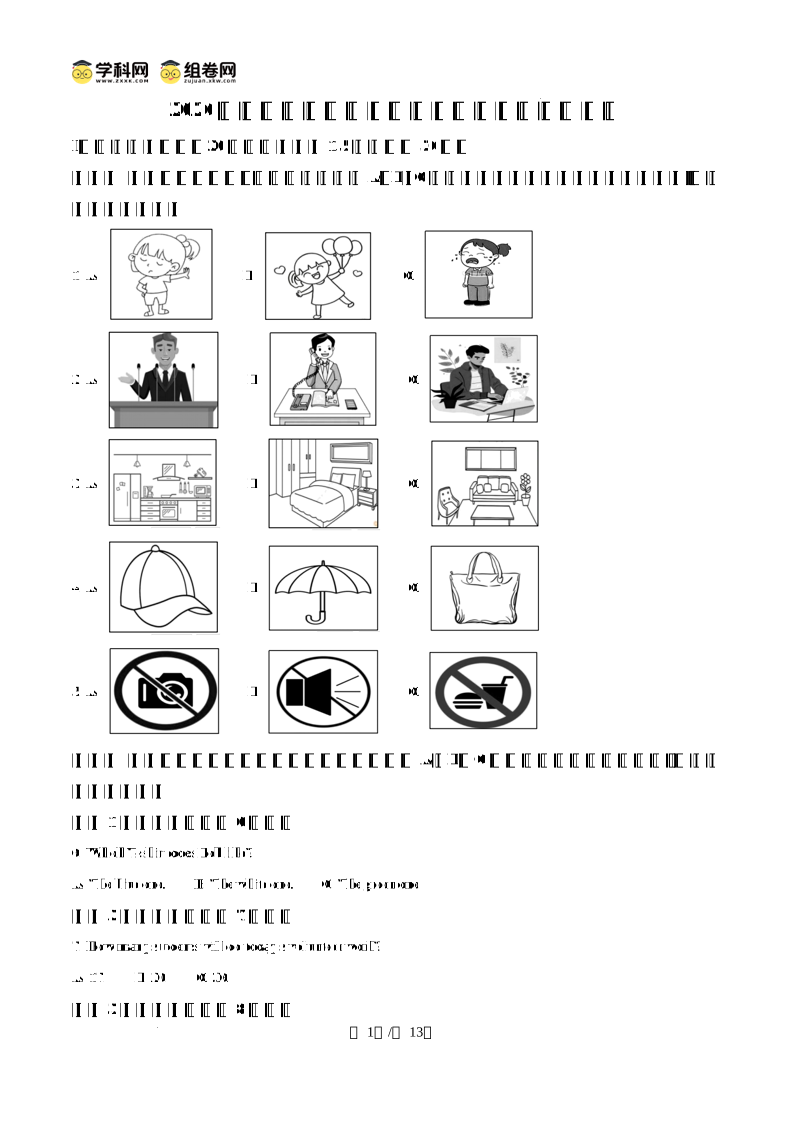
第一节 听下面五个句子,从每小题所给的A、B、C三幅图中选出与句子内容相符的选项。(每个句子读两遍)
1. A. B. C.
2. A. B. C.
3. A. B. C.
4. A. B. C.
5. A. B. C.
第二节 听对话听下面七段对话,从每小题所给的A、B、C三个选项中选出正确答案。(每段对话读两遍)
听第1段对话,回答第6小题。
6. Which T-shirt does Bob like?
A. The blue one. B. The white one. C. The green one.
听第2段对话,回答第7小题。
7. How many students will do today’s volunteer work?
A. 17. B. 20. C. 36.
听第3段对话,回答第8小题。
8. What will Jim do after school?
A. Go to the bookshop. B. Look after his cat. C. Go to the hospital.
听第4段对话,回答第9小题。
9. When did they get to the hill?
A. At 8:00 a.m. B. At 9:00 a.m. C. At 11:00 a.m.
听对话,回答小题。
10. What’s the relationship between the speakers?
A. Cousins. B. Neighbors. C. Classmates
11. How did Lily come to school?
A. By bike. B. By bus. C. On foot.
听对话,回答小题。
12. Where did Alice probably work in the past?
A. In a bank. B. In a school. C. In a company.
13. Who taught Alice Chinese?
A. Her mother. B. Her friend. C. Her teacher.
听对话,回答小题。
14. What do you think the conversation is?
A. It’s a TV report. B. It’s a piece of news. C. It’s an interview.
15. What does the woman always buy on Mondays?
A. Food B. Clothes. C. School things.
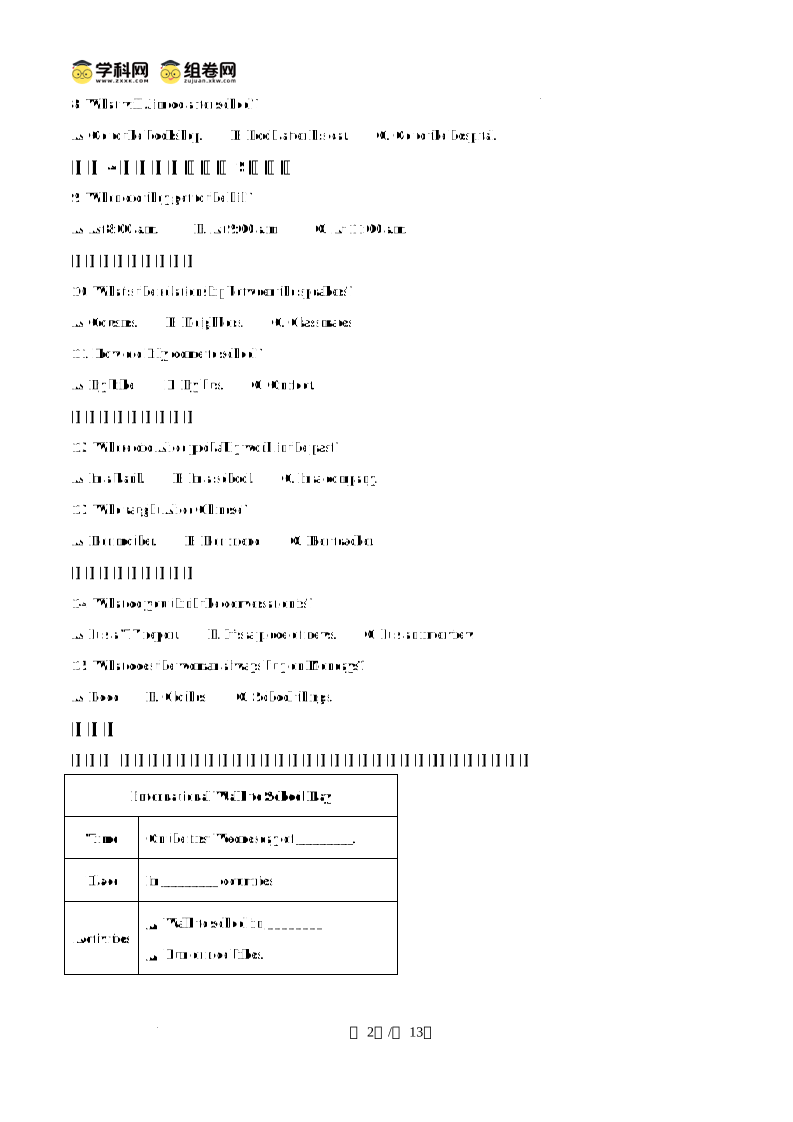
第三节
听短文 根据短文内容在空格中填入恰当的单词(每空一词)。短文读三遍。
International Walk to School Day
Time
On the first Wednesday of ________.
Place
In ________ countries.
Activities
▲ Walk to school in ________
▲ Run or ride bikes.
Purpose
▲ To ________ environmental protection.
▲ To make kids ________
▲ To teach kids traffic rules.
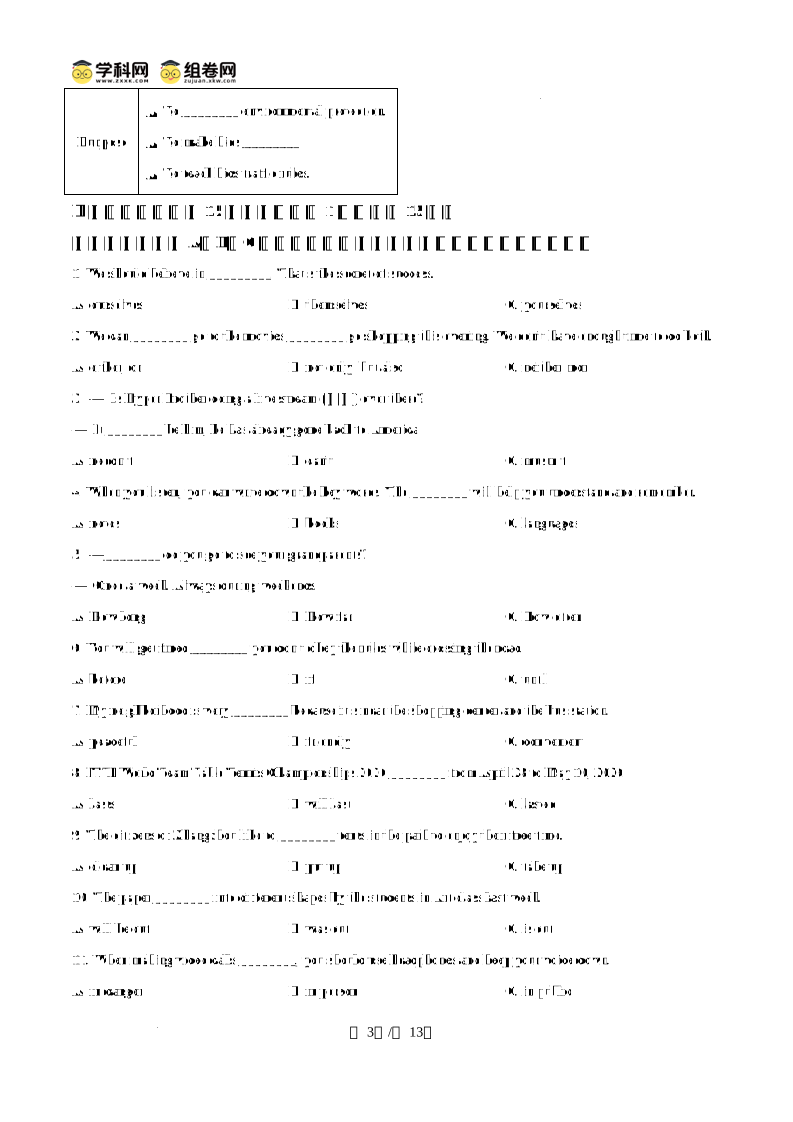
Ⅱ.选择填空(共15小题;每小题1分,满分15分)
从每小题所给的A、B、C三个选项中,选出可以填入空白处的最佳选项。
1. We should believe in _________. That’s the secret of success.
A. ourselves B. themselves C. yourselves
2. We can ________ go to the movies ________ go shopping this evening. We don’t have enough time to do both.
A. either; or B. not only; but also C. neither; nor
3. — Is Hyper Brother doing a live stream (直播) over there?
— It ________ be him, he has already gone back to America.
A. needn’t B. can’t C. mustn’t
4. When you listen, you can write down the key words. The ________ will help you understand and remember.
A. notes B. books C. languages
5. —________ do you go to see your grandparents?
— Once a week. Always during weekends.
A. How long B. How far C. How often
6. You will get fined ________ you don’t obey the rules while crossing the road.
A. before B. if C. until
7. My neighborhood is very ________ because it’s near the shopping center and the bus station.
A. peaceful B. friendly C. convenient
8. ITTF World Team Table Tennis Championships 2026 ________ from April 28 to May 10, 2026.
A. lasts B. will last C. lasted
9. The citizens of Zhangzhou like to ________ tents in the park to enjoy their free time.
A. clean up B. put up C. take up
10. The paper ________ into different shapes by the students in Art class last week.
A. will be cut B. was cut C. is cut
11. When making video calls ________, you should use headphones and keep your voice down.
A. in danger B. in person C. in public
12. —During Tomb-Sweeping Day, kids gave flowers to heroes who fought for our country.
—I did it, too. It’s a great way to _________ our respect.
A. express B. expect C. explore
13. Thanks to the talk that my teacher gave me, this is what I need now.
A. normally B. gradually C. exactly
14. —I prefer staying at home to going out. It is 8 °C today.
—It will be _______ tomorrow. The temperature will be 5 °C.
A. cold B. colder C. coldest
15. — Do you know ________?
— It was held on April 19th.
A. where the Opening Match of FJCL (闽超) took place
B. when the Opening Match of FJCL started
C. which team won the Opening Match of FJCL
Ⅲ.完形填空 (每小题1.5分,满分15分)
从每小题所给的A、B、C三个选项中,选出可以填入空白处的最佳答案。
At the age of seventeen, Maya Merhige was a long-distance swimmer. She hoped to ____16____ pediatric (儿科) cancer research. Maya did a wonderful thing recently. She finished three big swims, called the “triple crown” (三冠王) of marathon swimming. These are the Catalina Channel (20. 1 miles), the Swim Around Manhattan (28.5 miles), and the English Channel (20. 5 miles).
The English Channel swim was the most ____17____. It took her about 11 hours and 39 minutes to finish it. She had to ____18____ strong water movements, cold water, pain, sickness, and even jellyfish (水母). ____19____ she was only stung (蜇) twice. She still kept swimming because she wanted to raise money to help children with cancer from poor families.
When she swam, she had to follow some ____20____. She couldn’t get help from other people. She could only ____21____ a normal swimsuit, a cap, and goggles. Every 30 minutes, she got some food and drinks to stay ____22____. While swimming, she had conversations with herself in her head. She thought about her family and friends. The voice of “Just keep swimming.” always ____23____ with her. Maya always takes a small stone from the ____24____ where she starts her swim because it will encourage her to complete the swim. “Once you find something you love that brings you ____25____, you can use that to help others around you,” Maya says to other kids.
16. A. support B. accept C. refuse
17. A. interesting B. successful C. challenging
18. A. jump in B. fight against C. slow down
19. A. Clearly B. Normally C. Luckily
20. A. rules B. methods C. steps
21. A. touch B. borrow C. wear
22. A. energetic B. quiet C. proud
23. A. began B. stayed C. agreed
24. A. beach B. garden C. market
25. A. advice B. surprise C. joy
IV.阅读理解(共两节,满分45分)
第一节 阅读下面A、B、C、D四篇短文,根据短文内容,从题中所给的A、B、C、D四个选项中,选出最佳答案。(每小题2分,满分40分)
A
Are you interested in space? Are you dreaming of meeting astronauts? If your answers are “Yes”, then read on. LN Science Magazine is holding a competition for students in Liaoning. It can help you achieve your dream. Come and join in it!
26. Who can take part in the competition?
A. A primary school student. B. A junior high school student.
C. A pilot. D. A scientist.
27. What can you do if you win the competition?
A. Get history books. B. Fly with astronauts. C. Visit a space centre. D. Travel to Liaoning.
28. What do you need to do for the competition?
A. Work in a team of 3 students. B. Send an email by July 23.
C. Design a complete form. D. Read an interesting book.
29. What can we infer from the passage?
A. You must send the form by June 23.
B. If you are the winners, you can visit the space station.
C. You can meet astronauts if you take part in this competition.
D. All junior high school students can take part in this competition.
30. Where can we read the passage?
A. A storybook. B. A dictionary. C. A paper. D. A science magazine.
B
The sun was setting on the Pacific, and I stood enjoying the warm light through my hotel window. Suddenly, loud cries broke the silence — five white-faced monkeys jumped in, took away my bananas and rushed into the forest! This was just one of many surprising moments in Costa Rica.
A few days earlier, I first got to a lively town in this small country. It sits at the foot of Arenal Volcano (火山). When I looked up, thick clouds completely covered the volcano—there was nothing to see! But the next morning, I woke up early—and there it was! I couldn’t look away!
Then I hiked to see La Fortuna Waterfall. Going down 500 steps was tiring, but blue butterflies danced around me. The waterfall was so loud! I touched the water—it was freezing cold! Still, I jumped in like a brave penguin. That evening, I relaxed in the natural hot spring under the waterfall.
The next day, I visited Monteverde Cloud Forest with a guide. While crossing a bridge high above the trees, I couldn’t believe my eyes: plants covered everywhere in Costa Rica—mountains, beaches and even towns! Nature is truly the boss here! “Our rainforest cover has doubled from 26% to over 52% in the past 30 years,” my guide told me. “We’ve set up many nature parks to protect the rainforest.” Just as I was wowed by the sea of green, a whisper came, “Be quiet—big cats live here.”
As we left the cloud forest, my guide smiled and said, “Everyone here lives with nature.” That’s when I realized: Costa Rica’s magic isn’t just its beauty—it’s how local people work together to keep it wild.
31. How does the writer start the text?
A. By listing numbers. B. By describing a moment.
C. By comparing places. D. By asking a question.
32. Which of the following can show the writer’s journey?
A. B. C. D.
33. How did the writer feel on the bridge in the forest?
A. Bored. B. Afraid. C. Proud. D. Surprised.
34. Which of the following is True according to the passage?
A. The water of La Fortuna Waterfall was very cold for the writer.
B. The writer saw the volcano clearly on his first day in the town.
C. The writer felt easy when he walked down 500 steps to the waterfall.
D. The rainforest cover in Costa Rica has become smaller in 30 years.
35. What’s the purpose of the text?
A. To tell the development of a country.
B. To give advice on protecting animals.
C. To share a visit to a magic green land.
D. To explain an environmental problem.
C
Your own experience of learning for exams might tell you that periods of uninterrupted (不间断的) concentration can help you to better remember key pieces of information. Indeed, many students will take up in deep study just before a test — in the belief that key subject facts and figures (公式) will be memorized ready for exam day.
However, this commonly held wisdom has been proven wrong by a finding made in psychological study. Now known as the Zeigarnik effect, it was found that interruption during a task that requires focus can in fact improve a person’s ability to remember it later.
The psychologist Bluma Zeigarnik noticed the effect of interruption on memory processing in 1927. In the experiment, she asked each participant to complete a series of separate tasks, such as solving a puzzle or putting together a simple box. During around half of the tasks, participants were quietly stopped by the person in charge of the experiment, while during the remaining tasks, they were allowed time to complete them uninterrupted. Following the experiment, Zeigarnik interviewed each participant, asking them to recall details of each task that they had tried.
Zeigarnik’s early findings showed that participants were able to recall details of interrupted tasks around 90% better than those who had been able to complete undisturbed. These results suggest that a desire to complete a task can cause it to stay in a person’s memory until it has been completed, and that the finality of its completion enables the process of forgetting it to take place.
One way of employing the Zeigarnik effect when trying to memorize a detailed piece of information, such as a long phone number, or when learning a subject, might be to avoid trying to remember it in its entirety in one sitting. Take a look at the information, familiarize yourself with it, then “interrupt yourself” — look away from where it is written for a few moments and think of something else, before returning a few more times to remember the number. Finally, piece these small parts together and try to recall the number in its entirety.
36. What does the underlined phrase “this commonly held wisdom” in Paragraph 2 mean?
A. Remembering key subject facts makes sure of success in exams.
B. Interruption on memory processing brings unexpected results.
C. Uninterrupted concentration contributes to effective revision.
D. Learning with full concentration improves long-term memory.
37. How did Zeigarnik measure the effect of interruption on participants’ memory?
A. By checking brain scans. B. By judging participants’ memory.
C. By asking about task details. D. By watching physical reactions.
38. Which strategy should be used to avoid forgetting when learning a subject?
A. Repeated writing and recalling.
B. Entire remembering in one sitting.
C. Rapid memorization without breaks.
D. Breaks in review and repeating in small parts.
39. What is the passage mainly about?
A. The origin of the Zeigarnik Effect. B. The discovery of the Zeigarnik Effect.
C. The evaluation of the Zeigarnik Effect. D. The application of the Zeigarnik Effect
40. What can we learn about the Zeigarnik Effect from the text?
A. Unfinished tasks stay longer in our memory.
B. Finished tasks are much easier to remember.
C. Interruption always makes people lose focus.
D. People have no wish to finish difficult work.
D
There’s nothing better than a walk in the countryside for lifting our spirits. Connecting with nature has been proven to help our mental health. For some, the best tonic (滋补品) is to go for a walk through a forest, but as we admire the trees that surround us, it’s worth knowing these trees are doing more than just being nice things to look at.
We’re already aware of the beneficial effects of trees — they produce oxygen and clean the air we breathe by taking in about a quarter of all human-caused carbon dioxide. Cutting down trees isn’t helping with this which is why so many people want to save them. But there’s more to these impressive forms of trees and plants than we might think. Researchers have discovered evidence that proves they are actually intelligent.
It’s thought that trees talk and share resources right under our feet, using a fungal (真菌的) network. Under the ground are tree roots, and mixing among them, along with bacteria, are thousands of superfine threads of fungi, known as hyphae (菌丝). And research has shown that they are all interconnected. They can help each other by sharing nutrients, and they can even warn of possible danger. Scientists say it’s like the trees are talking to one another.
Ecologist Suzanne Simard has called this network the Wood Wide Web. She discovered that parent trees use this network to help their offspring. Speaking to the BBC, she said: “We found that parent trees would favour those young trees instead of the strangers by sending them more nutrients.” She also found that trees are smart enough to change their behaviour and have managed to adapt and survive in a changing environment.
So it seems trees really are the stars of our natural world, and with around three trillion of them on our planet, it’s time to show them some respect if we want them to grow well.
41. What’s the main idea of Paragraph 1?
A. Walking in the countryside is dangerous.
B. Trees are more useful than we usually think.
C. Forests are only good for taking photos.
D. Trees can solve all mental health problems.
42. How is the Paragraph 2 mainly connected with the first?
A. By showing how scientists study trees.
B. By describing how trees grow in the forest.
C. By explaining why people like walking in the countryside.
D. By listing more advantages of trees and introducing a new idea.
43. What is the fungal network mainly used for?
A. Helping trees grow taller and faster.
B. Making the soil richer for bacteria.
C. Stopping trees from being cut down.
D. Connecting trees to share resources and warn each other.
44. What can we infer from the last paragraph?
A. There are too many trees on Earth now.
B. Trees will die out soon without our help.
C. We should respect trees to help them grow well.
D. Trees are the only important beings in nature.
45. Which may be the best title of the passage?
A. Clever Trees B. A Wonderful Walk
C. How to Protect Trees D. The Importance of Fresh Air
第二节(共5小题;每小题1分,满分5分)
E
根据短文内容,从短文后的选项中选出能填入空白处的最佳选项。选项中有一项为多余选项。
The internet is like a giant ocean of information. But how do you find what you need and make sure it’s correct? ____46____ Here are four tips to help you.
Tip 1: Be a keyword hunter.
Don’t just type a random (随机的)sentence into the search bar. To get the best results, you must be specific. ____47____
Tip 2: Spot the official sites.
Not all websites tell the truth. Sites from schools (.edu), the government (.gov), or famous science groups are your best bets. ____48____
Tip 3: ____49____
Taking someone else’s work and saying it’s yours is called plagiarism (抄袭). Instead of “copy and paste,” try to rewrite the facts in your own words. This helps you learn better, too.
Tip 4: List your sources.
A real professional always shows where they found their information. ____50____ This proves that your research is solid (可靠的) and that you respect other people’s hard work.
Information is everywhere, but wisdom is earned. Use the right tools, find the real facts, and become the smartest explorer in the digital world!
A. Don’t be a copycat.
B. Make a list of the websites you used.
C. If a website has no name or looks messy, it might be a risk!
D. To be a smart student, you need to master the art of searching.
E. Write your question down, and circle the most important words.
F. It’s important to know what to look for and who to believe online.
V.情景交际(共5小题;每小题2分,满分10分)
根据下列答句或问句情景,在横线上填入恰当的句子,完成对话。
51. A: Welcome to China!
B: __________________________
52. A: Does he live in Shanghai?
B: __________________________. He lives in Beijing.
53. A: What about visiting the museum with me?
B: __________________________. It must be fun.
54. A: __________________________ of milk do we need?
B: Eight bottles.
55. A: _________________________?
B: I’m 15 years old.
VI.看图写话(共5小题;每小题2分,满分10分)
根据每小题所提供的图画情景和提示词,写出一个与图画情景相符的句子。
56. taste
________________________________________
57. this time yesterday
________________________________________
58. across from
________________________________________
59. enjoy
________________________________________
60. as… as
________________________________________
VII.短文填词(共10小题;每小题1分,满分10 分)
阅读下面短文,在每个空格内填入一个恰当的词或用括号内单词的正确形式填空。
China is a large country. It has special cultures with a very long history.
Chinese food plays ____61____ important role in Chinese families. Chinese people eat their meals with chopsticks. One of the main foods ____62____ (be) rice. Tea is a popular drink. The Chinese calendar is different from the one used in ____63____ (west) countries. The Chinese New Year is in late winter. It is also called the Spring Festival. And it also has some special ____64____ (tradition) customs. For example, sweeping the floor ____65____ the Chinese New Year sweeps away all the old year’s bad luck. The Chinese zodiac, known as sheng xiao, follows a twelve-year cycle. Each year ____66____ (name) after an animal. For example, the year that begins in 2026 is the Year of the Horse. Chinese is a little difficult. Chinese writing ____67____ (develop) for thousands of years. There are thousands of daily ____68____ (use) characters. A character stands ____69____ a word and also a meaning. Besides Putonghua, Chinese people speak some other ____70____ (form) of the language, and there are many kinds of dialects (方言).
Ⅷ.书面表达(15分)
71. 近阶段,一些地区试行“春秋假”,鼓励学生走出教室、亲近自然、参与社会实践、你所在学校开展“春秋假征文活动”。请围绕“How to make spring and autumn breaks meaningful!”为题,并根据以下提示,写一篇征文。
(1)词数90左右,开头和结尾已给出,不计入总词数;
(2)可以适当增加细节,以使行文连贯;
(3)不得出现真实的人名、校名等相关信息。
Spring and autumn breaks are short but important. A meaningful break can help us relax and grow at the same time.
________________________________________________________________________________________________________________________________________________________________________________________________________________________________________________________________________________________________________________________________________________________________________________________________________________________________________________________________________________________________________
第1页/共1页
学科网(北京)股份有限公司
$
2026年初中英语学科毕业班适应性练习卷(二)
I.听力(共三节,20小题;每小题1.5分,满分30分)
第一节 听下面五个句子,从每小题所给的A、B、C三幅图中选出与句子内容相符的选项。(每个句子读两遍)
1. A. B. C.
2. A. B. C.
3. A. B. C.
4. A. B. C.
5. A. B. C.
第二节 听对话听下面七段对话,从每小题所给的A、B、C三个选项中选出正确答案。(每段对话读两遍)
听第1段对话,回答第6小题。
6. Which T-shirt does Bob like?
A. The blue one. B. The white one. C. The green one.
听第2段对话,回答第7小题。
7. How many students will do today’s volunteer work?
A. 17. B. 20. C. 36.
听第3段对话,回答第8小题。
8. What will Jim do after school?
A. Go to the bookshop. B. Look after his cat. C. Go to the hospital.
听第4段对话,回答第9小题。
9. When did they get to the hill?
A. At 8:00 a.m. B. At 9:00 a.m. C. At 11:00 a.m.
听对话,回答小题。
10. What’s the relationship between the speakers?
A. Cousins. B. Neighbors. C. Classmates
11. How did Lily come to school?
A. By bike. B. By bus. C. On foot.
听对话,回答小题。
12. Where did Alice probably work in the past?
A. In a bank. B. In a school. C. In a company.
13. Who taught Alice Chinese?
A. Her mother. B. Her friend. C. Her teacher.
听对话,回答小题。
14. What do you think the conversation is?
A. It’s a TV report. B. It’s a piece of news. C. It’s an interview.
15. What does the woman always buy on Mondays?
A. Food B. Clothes. C. School things.
第三节
听短文 根据短文内容在空格中填入恰当的单词(每空一词)。短文读三遍。
International Walk to School Day
Time
On the first Wednesday of ________.
Place
In ________ countries.
Activities
▲ Walk to school in ________
▲ Run or ride bikes.
Purpose
▲ To ________ environmental protection.
▲ To make kids ________
▲ To teach kids traffic rules.
Ⅱ.选择填空(共15小题;每小题1分,满分15分)
从每小题所给的A、B、C三个选项中,选出可以填入空白处的最佳选项。
1. We should believe in _________. That’s the secret of success.
A. ourselves B. themselves C. yourselves
【答案】A
【解析】
【详解】句意:我们应该相信我们自己。那是成功的秘诀。
ourselves我们自己;themselves他们自己;yourselves你们自己。根据主语“We”可知,此处应表示“我们自己”,应用对应的反身代词ourselves。
2. We can ________ go to the movies ________ go shopping this evening. We don’t have enough time to do both.
A. either; or B. not only; but also C. neither; nor
【答案】A
【解析】
【详解】句意:我们今晚要么去看电影,要么去购物。我们没有足够的时间两件事都做。
考查并列连词辨析。either...or要么……要么;not only...but also...不但……而且;neither...nor既不……也不。根据“We don’t have enough time to do both.”可知,没有足够的时间两件事都做,所以只做其中的一种,即二选一,故选A。
3. — Is Hyper Brother doing a live stream (直播) over there?
— It ________ be him, he has already gone back to America.
A. needn’t B. can’t C. mustn’t
【答案】B
【解析】
【详解】句意:——Hyper Brother正在那边做直播吗?——不可能是他,他已经回美国了。
needn’t不必;can’t不可能;mustn’t禁止。根据“he has already gone back to America”可知,他已经回美国了,在那边直播的不可能是他,表示否定的推测用can’t。
4. When you listen, you can write down the key words. The ________ will help you understand and remember.
A. notes B. books C. languages
【答案】A
【解析】
【详解】句意:当你听的时候,你可以写下关键词。笔记将帮助你理解和记忆。
notes笔记;books书;languages语言。根据题干中“write down the key words”可知,听的时候写下关键词所做的记录是笔记,notes符合题意。
5. —________ do you go to see your grandparents?
— Once a week. Always during weekends.
A. How long B. How far C. How often
【答案】C
【解析】
【详解】句意:——你多久去看望你的祖父母一次?——一周一次。总是在周末。
How long多久,多长;How far多远;How often多久一次。根据答语“Once a week.”可知,此处是对频率进行提问,问多久看望祖父母一次,选项C符合题意。
6. You will get fined ________ you don’t obey the rules while crossing the road.
A. before B. if C. until
【答案】B
【解析】
【详解】句意:如果你过马路时不遵守规则,你将会被罚款。
before在……之前;if如果;until直到。根据“You will get fined...you don’t obey the rules”可知,不遵守规则是被罚款的条件,应用if引导条件状语从句。
7. My neighborhood is very ________ because it’s near the shopping center and the bus station.
A. peaceful B. friendly C. convenient
【答案】C
【解析】
【详解】句意:我的社区非常方便,因为它靠近购物中心和公交车站。
peaceful安静的;friendly友好的;convenient方便的。根据“because it’s near the shopping center and the bus station”可知,社区靠近购物中心和公交车站,说明生活方便,应填convenient。
8. ITTF World Team Table Tennis Championships 2026 ________ from April 28 to May 10, 2026.
A. lasts B. will last C. lasted
【答案】C
【解析】
【详解】句意:2026年国际乒联世界乒乓球团体锦标赛从2026年4月28日持续到5月10日。
句中比赛时间“April 28 to May 10, 2026”(4月至5月)已经过去,动作发生在过去,应用一般过去时。应填lasted。
9. The citizens of Zhangzhou like to ________ tents in the park to enjoy their free time.
A. clean up B. put up C. take up
【答案】B
【解析】
【详解】句意:漳州市民喜欢在公园里搭建帐篷来享受空闲时间。
put up搭建;clean up清理;take up占据。根据“tents in the park”可知,此处是指在公园里搭建帐篷,put up符合语境。故选B。
10. The paper ________ into different shapes by the students in Art class last week.
A. will be cut B. was cut C. is cut
【答案】B
【解析】
【详解】句意:上周美术课上,这张纸被学生们剪成了不同的形状。
根据时间状语“last week”可知时态为一般过去时;主语“The paper”与动词“cut”之间是被动关系,且paper为单数,所以使用一般过去时的被动语态结构was cut。
11. When making video calls ________, you should use headphones and keep your voice down.
A. in danger B. in person C. in public
【答案】C
【解析】
【详解】句意:在公共场合打视频电话时,你应该使用耳机并压低声音。
in danger处于危险中;in person亲自;in public在公共场合。根据“use headphones and keep your voice down”可知,这是在公共场合需要注意的行为,in public符合语境。
12. —During Tomb-Sweeping Day, kids gave flowers to heroes who fought for our country.
—I did it, too. It’s a great way to _________ our respect.
A. express B. expect C. explore
【答案】A
【解析】
【详解】句意:——清明节期间,孩子们向为国牺牲的英雄献花。——我也这么做了,这是表达我们敬意的很好方式。
考查动词辨析。express表达;expect期望;explore探索。根据“...our respect”可知此处需填入表示“表达(敬意)”的动词。故选A。
13. Thanks to the talk that my teacher gave me, this is what I need now.
A. normally B. gradually C. exactly
【答案】C
【解析】
【详解】句意:多亏了老师和我的谈话,这恰恰是我现在所需要的。
考查副词辨析。normally通常地,正常情况下;gradually逐渐地,逐步地;exactly恰好,正是。根据“Thanks to the talk that my teacher gave me”可知,此处是指老师的谈话内容与“我”当前需求完全契合,应用“exactly”突出精准性和针对性。故选C。
14. —I prefer staying at home to going out. It is 8 °C today.
—It will be _______ tomorrow. The temperature will be 5 °C.
A. cold B. colder C. coldest
【答案】B
【解析】
【详解】句意:——我宁愿呆在家里也不愿出门。今天是8°C。——明天会更冷。温度为5°C。
考查形容词比较级。cold冷;colder较冷;coldest最冷。根据下文“The temperature will be 5 °C .”可知,明天会更冷,应用比较级。故选B。
15. — Do you know ________?
— It was held on April 19th.
A. where the Opening Match of FJCL (闽超) took place
B. when the Opening Match of FJCL started
C. which team won the Opening Match of FJCL
【答案】B
【解析】
【详解】句意:——你知道闽超开幕赛是什么时候开始的吗?——是在4月19日举行的。
where the Opening Match of FJCL took place“闽超开幕赛在哪儿举行的”;when the Opening Match of FJCL started“闽超开幕赛什么时候开始的”;which team won the Opening Match of FJCL“闽超开幕赛哪个队获胜”。 根据回答“It was held on April 19th.”可知,此处询问的是时间,应填when引导的宾语从句。
Ⅲ.完形填空 (每小题1.5分,满分15分)
从每小题所给的A、B、C三个选项中,选出可以填入空白处的最佳答案。
At the age of seventeen, Maya Merhige was a long-distance swimmer. She hoped to ____16____ pediatric (儿科) cancer research. Maya did a wonderful thing recently. She finished three big swims, called the “triple crown” (三冠王) of marathon swimming. These are the Catalina Channel (20. 1 miles), the Swim Around Manhattan (28.5 miles), and the English Channel (20. 5 miles).
The English Channel swim was the most ____17____. It took her about 11 hours and 39 minutes to finish it. She had to ____18____ strong water movements, cold water, pain, sickness, and even jellyfish (水母). ____19____ she was only stung (蜇) twice. She still kept swimming because she wanted to raise money to help children with cancer from poor families.
When she swam, she had to follow some ____20____. She couldn’t get help from other people. She could only ____21____ a normal swimsuit, a cap, and goggles. Every 30 minutes, she got some food and drinks to stay ____22____. While swimming, she had conversations with herself in her head. She thought about her family and friends. The voice of “Just keep swimming.” always ____23____ with her. Maya always takes a small stone from the ____24____ where she starts her swim because it will encourage her to complete the swim. “Once you find something you love that brings you ____25____, you can use that to help others around you,” Maya says to other kids.
16. A. support B. accept C. refuse
17. A. interesting B. successful C. challenging
18. A. jump in B. fight against C. slow down
19. A. Clearly B. Normally C. Luckily
20. A. rules B. methods C. steps
21. A. touch B. borrow C. wear
22. A. energetic B. quiet C. proud
23. A. began B. stayed C. agreed
24. A. beach B. garden C. market
25. A. advice B. surprise C. joy
【答案】16. A 17. C 18. B 19. C 20. A 21. C 22. A 23. B 24. A 25. C
【解析】
【导语】本文讲述 17 岁游泳健将 Maya 完成三项马拉松游泳挑战,为儿科癌症研究筹款的故事,展现了她的毅力与爱心。
【16题详解】
句意:她希望支持儿科癌症研究。
根据raise money to help children(前后文逻辑),可知她想支持研究。根据语境,支持研究符合助人目的。
【17题详解】
句意:英吉利海峡游泳最具挑战性。
根据耗时长、困难多(前后文逻辑),可知最具挑战性。根据语境,困难多体现挑战性。
【18题详解】
句意:她必须对抗强劲水流等。
根据strong water movements, cold water(词汇代入法),可知需与之搏斗。根据语境,面对困难需对抗。
【19题详解】
句意:幸运地是她只被蛰了两次。
根据only stung twice(前后文逻辑),可知是幸事。根据语境,只被蛰两次是幸运的。
【20题详解】
句意:她必须遵守一些规则。
根据couldn’t get help(前后文逻辑),可知是限制规则。根据语境,限制条件属于规则。
【21题详解】
句意:她只能穿普通泳衣等。
根据swimsuit, a cap, and goggles(固定搭配),可知是穿戴。根据语境,泳衣是穿戴物品。
【22题详解】
句意:吃喝以保持精力充沛。
根据food and drinks(前后文逻辑),可知补充体力。根据语境,食物补充能量。
【23题详解】
句意:声音一直伴随她。
根据always…with her(前后文逻辑),可知声音持续。根据语境,声音在脑海中持续存在。
【24题详解】
句意:从开始游泳的海滩拿石头。
根据starts her swim(前后文逻辑),可知起点在海边。根据语境,游泳起点通常在海滩。
【25题详解】
句意:找到带给你快乐的事物。
根据something you love(前后文逻辑),可知带来快乐。根据语境,热爱的事物带来快乐。
IV.阅读理解(共两节,满分45分)
第一节 阅读下面A、B、C、D四篇短文,根据短文内容,从题中所给的A、B、C、D四个选项中,选出最佳答案。(每小题2分,满分40分)
A
Are you interested in space? Are you dreaming of meeting astronauts? If your answers are “Yes”, then read on. LN Science Magazine is holding a competition for students in Liaoning. It can help you achieve your dream. Come and join in it!
26. Who can take part in the competition?
A. A primary school student. B. A junior high school student.
C. A pilot. D. A scientist.
27. What can you do if you win the competition?
A. Get history books. B. Fly with astronauts. C. Visit a space centre. D. Travel to Liaoning.
28. What do you need to do for the competition?
A. Work in a team of 3 students. B. Send an email by July 23.
C. Design a complete form. D. Read an interesting book.
29. What can we infer from the passage?
A. You must send the form by June 23.
B. If you are the winners, you can visit the space station.
C. You can meet astronauts if you take part in this competition.
D. All junior high school students can take part in this competition.
30. Where can we read the passage?
A. A storybook. B. A dictionary. C. A paper. D. A science magazine.
【答案】26. B 27. C 28. A 29. A 30. D
【解析】
【导语】本文主要介绍了LN科学杂志在辽宁举办的一场太空竞赛的相关信息,包括参赛条件、任务要求、获胜奖励及报名方式。
【26题详解】
根据图表左上角“You must”部分的“be a junior high school student.”可知,参赛者必须是初中生。
【27题详解】
根据图表左下角“Winners can”部分的“visit a space centre.”可知,如果赢得比赛,获胜者可以参观太空中心。
【28题详解】
根据图表右上方“You need to”部分的“work in a team of three students.”可知,参赛者需要三人一组进行团队合作。
【29题详解】
根据图表右下角信息“Complete the form online and send your plan...by June 23.”可知,必须在6月23日之前完成在线填表并发送计划,A选项符合推断逻辑。
【30题详解】
根据文章开头引导语中的“LN Science Magazine is holding a competition…”可推断出,这篇关于太空竞赛的通知最有可能发布在科学杂志上。
B
The sun was setting on the Pacific, and I stood enjoying the warm light through my hotel window. Suddenly, loud cries broke the silence — five white-faced monkeys jumped in, took away my bananas and rushed into the forest! This was just one of many surprising moments in Costa Rica.
A few days earlier, I first got to a lively town in this small country. It sits at the foot of Arenal Volcano (火山). When I looked up, thick clouds completely covered the volcano—there was nothing to see! But the next morning, I woke up early—and there it was! I couldn’t look away!
Then I hiked to see La Fortuna Waterfall. Going down 500 steps was tiring, but blue butterflies danced around me. The waterfall was so loud! I touched the water—it was freezing cold! Still, I jumped in like a brave penguin. That evening, I relaxed in the natural hot spring under the waterfall.
The next day, I visited Monteverde Cloud Forest with a guide. While crossing a bridge high above the trees, I couldn’t believe my eyes: plants covered everywhere in Costa Rica—mountains, beaches and even towns! Nature is truly the boss here! “Our rainforest cover has doubled from 26% to over 52% in the past 30 years,” my guide told me. “We’ve set up many nature parks to protect the rainforest.” Just as I was wowed by the sea of green, a whisper came, “Be quiet—big cats live here.”
As we left the cloud forest, my guide smiled and said, “Everyone here lives with nature.” That’s when I realized: Costa Rica’s magic isn’t just its beauty—it’s how local people work together to keep it wild.
31. How does the writer start the text?
A. By listing numbers. B. By describing a moment.
C. By comparing places. D. By asking a question.
32. Which of the following can show the writer’s journey?
A. B. C. D.
33. How did the writer feel on the bridge in the forest?
A. Bored. B. Afraid. C. Proud. D. Surprised.
34. Which of the following is True according to the passage?
A. The water of La Fortuna Waterfall was very cold for the writer.
B. The writer saw the volcano clearly on his first day in the town.
C. The writer felt easy when he walked down 500 steps to the waterfall.
D. The rainforest cover in Costa Rica has become smaller in 30 years.
35. What’s the purpose of the text?
A. To tell the development of a country.
B. To give advice on protecting animals.
C. To share a visit to a magic green land.
D. To explain an environmental problem.
【答案】31. B 32. C 33. D 34. A 35. C
【解析】
【导语】本文讲述了作者在哥斯达黎加的旅行经历,包括酒店遇到猴子、观赏阿雷纳尔火山、游览拉福图纳瀑布、蒙特韦德云雾森林等,并感受到当地人与自然和谐共处的理念。
【31题详解】
第一段作者描述了在酒店窗前看日落时,突然被白脸猴子抢走香蕉的场景,通过描述一个具体时刻来引入文章。
【32题详解】
文中作者的旅行顺序为:到达小镇(Arenal Volcano山脚)→ 早上看到火山 → 徒步去La Fortuna Waterfall → 晚上泡温泉 → 去Monteverde Cloud Forest,选项C的地图路线符合这一顺序。
【33题详解】
由第四段“While crossing a bridge... I couldn’t believe my eyes”以及“Just as I was wowed by the sea of green”可知,作者在森林的桥上是“惊讶的”。
【34题详解】
由第三段“I touched the water—it was freezing cold!”可知,作者觉得拉福图纳瀑布的水很冷。
【35题详解】
全文记录了作者在哥斯达黎加的旅行经历和见闻,因此写作目的是“分享一次对神奇绿色土地的访问”。
C
Your own experience of learning for exams might tell you that periods of uninterrupted (不间断的) concentration can help you to better remember key pieces of information. Indeed, many students will take up in deep study just before a test — in the belief that key subject facts and figures (公式) will be memorized ready for exam day.
However, this commonly held wisdom has been proven wrong by a finding made in psychological study. Now known as the Zeigarnik effect, it was found that interruption during a task that requires focus can in fact improve a person’s ability to remember it later.
The psychologist Bluma Zeigarnik noticed the effect of interruption on memory processing in 1927. In the experiment, she asked each participant to complete a series of separate tasks, such as solving a puzzle or putting together a simple box. During around half of the tasks, participants were quietly stopped by the person in charge of the experiment, while during the remaining tasks, they were allowed time to complete them uninterrupted. Following the experiment, Zeigarnik interviewed each participant, asking them to recall details of each task that they had tried.
Zeigarnik’s early findings showed that participants were able to recall details of interrupted tasks around 90% better than those who had been able to complete undisturbed. These results suggest that a desire to complete a task can cause it to stay in a person’s memory until it has been completed, and that the finality of its completion enables the process of forgetting it to take place.
One way of employing the Zeigarnik effect when trying to memorize a detailed piece of information, such as a long phone number, or when learning a subject, might be to avoid trying to remember it in its entirety in one sitting. Take a look at the information, familiarize yourself with it, then “interrupt yourself” — look away from where it is written for a few moments and think of something else, before returning a few more times to remember the number. Finally, piece these small parts together and try to recall the number in its entirety.
36. What does the underlined phrase “this commonly held wisdom” in Paragraph 2 mean?
A. Remembering key subject facts makes sure of success in exams.
B. Interruption on memory processing brings unexpected results.
C. Uninterrupted concentration contributes to effective revision.
D. Learning with full concentration improves long-term memory.
37. How did Zeigarnik measure the effect of interruption on participants’ memory?
A. By checking brain scans. B. By judging participants’ memory.
C. By asking about task details. D. By watching physical reactions.
38. Which strategy should be used to avoid forgetting when learning a subject?
A. Repeated writing and recalling.
B. Entire remembering in one sitting.
C. Rapid memorization without breaks.
D. Breaks in review and repeating in small parts.
39. What is the passage mainly about?
A. The origin of the Zeigarnik Effect. B. The discovery of the Zeigarnik Effect.
C. The evaluation of the Zeigarnik Effect. D. The application of the Zeigarnik Effect
40. What can we learn about the Zeigarnik Effect from the text?
A. Unfinished tasks stay longer in our memory.
B. Finished tasks are much easier to remember.
C. Interruption always makes people lose focus.
D. People have no wish to finish difficult work.
【答案】36. C 37. C 38. D 39. B 40. A
【解析】
【导语】本文是一篇科普说明文,介绍了蔡加尼克效应。适当的中断反而能增强记忆效果,并且可以利用这一效应(如分段学习、主动中断、再整合)来提高学习效率。
【36题详解】
根据第一段中“periods of uninterrupted (不间断的) concentration can help you to better remember key pieces of information. Indeed, many students will take up in deep study just before a test”可知,人们普遍认为不间断的专注学习有助于考前复习和记忆。划线短语指代的正是前文提到的这一普遍观点。
【37题详解】
根据第三段中“Following the experiment, Zeigarnik interviewed each participant, asking them to recall details of each task that they had tried.”可知,Zeigarnik是通过采访参与者,询问他们回忆任务的细节来测量记忆效果的。
【38题详解】
根据最后一段中“avoid trying to remember it in its entirety in one sitting... ‘interrupt yourself’... returning a few more times...piece these small parts together”可知,建议的策略是避免一次性记忆,是要中间打断自己,分小部分重复记忆。选项D“复习中穿插休息并分小部分重复”符合这一策略。
【39题详解】
文章第一、二段引出蔡加尼克效应(推翻固有常识),第三、四段讲实验发现与原理,第五段讲学习场景的使用方法。全文围绕蔡加尼克效应的发现 、原理 和实际运用展开。B选项“The 蔡加尼克效应的发现” 可概括全文。
【40题详解】
根据第四段中“participants were able to recall details of interrupted tasks around 90% better than those who had been able to complete undisturbed...desire to complete a task can cause it to stay in a person’s memory until it has been completed”可知,未完成的任务会因为人们渴望完成它而更长久地留在记忆中。
D
There’s nothing better than a walk in the countryside for lifting our spirits. Connecting with nature has been proven to help our mental health. For some, the best tonic (滋补品) is to go for a walk through a forest, but as we admire the trees that surround us, it’s worth knowing these trees are doing more than just being nice things to look at.
We’re already aware of the beneficial effects of trees — they produce oxygen and clean the air we breathe by taking in about a quarter of all human-caused carbon dioxide. Cutting down trees isn’t helping with this which is why so many people want to save them. But there’s more to these impressive forms of trees and plants than we might think. Researchers have discovered evidence that proves they are actually intelligent.
It’s thought that trees talk and share resources right under our feet, using a fungal (真菌的) network. Under the ground are tree roots, and mixing among them, along with bacteria, are thousands of superfine threads of fungi, known as hyphae (菌丝). And research has shown that they are all interconnected. They can help each other by sharing nutrients, and they can even warn of possible danger. Scientists say it’s like the trees are talking to one another.
Ecologist Suzanne Simard has called this network the Wood Wide Web. She discovered that parent trees use this network to help their offspring. Speaking to the BBC, she said: “We found that parent trees would favour those young trees instead of the strangers by sending them more nutrients.” She also found that trees are smart enough to change their behaviour and have managed to adapt and survive in a changing environment.
So it seems trees really are the stars of our natural world, and with around three trillion of them on our planet, it’s time to show them some respect if we want them to grow well.
41. What’s the main idea of Paragraph 1?
A. Walking in the countryside is dangerous.
B. Trees are more useful than we usually think.
C. Forests are only good for taking photos.
D. Trees can solve all mental health problems.
42. How is the Paragraph 2 mainly connected with the first?
A. By showing how scientists study trees.
B. By describing how trees grow in the forest.
C. By explaining why people like walking in the countryside.
D. By listing more advantages of trees and introducing a new idea.
43. What is the fungal network mainly used for?
A. Helping trees grow taller and faster.
B. Making the soil richer for bacteria.
C. Stopping trees from being cut down.
D. Connecting trees to share resources and warn each other.
44. What can we infer from the last paragraph?
A. There are too many trees on Earth now.
B. Trees will die out soon without our help.
C. We should respect trees to help them grow well.
D. Trees are the only important beings in nature.
45. Which may be the best title of the passage?
A. Clever Trees B. A Wonderful Walk
C. How to Protect Trees D. The Importance of Fresh Air
【答案】41. B 42. D 43. D 44. C 45. A
【解析】
【导语】本文主要介绍了树木不仅有益人类健康,还具有智慧,能通过地下真菌网络交流、共享资源并预警危险,最后呼吁人们尊重树木。
【41题详解】
根据第一段最后一句“but as we admire the trees that surround us, it’s worth knowing these trees are doing more than just being nice things to look at.”可知,树木不仅仅是用来观赏的,它们比我们通常认为的更有用。
【42题详解】
第二段首先列举了树木已知的好处(产生氧气、清洁空气),接着通过“But there’s more…”转折引出新观点(研究人员发现树木实际上是有智慧的)。这是在列举更多优势的同时引入了一个新概念,与第一段结尾相呼应。
【43题详解】
根据第三段“They can help each other by sharing nutrients, and they can even warn of possible danger.”可知,真菌网络主要用于帮助树木分享养分并预警潜在危险。
【44题详解】
根据最后一段“it’s time to show them some respect if we want them to grow well.”可推断,如果我们希望树木生长良好,就应该尊重它们。
【45题详解】
文章核心内容围绕树木的智慧展开,包括它们通过真菌网络交流、照顾后代、适应环境等。A项“Clever Trees(聪明的树木)”最能概括这一主题。
第二节(共5小题;每小题1分,满分5分)
E
根据短文内容,从短文后的选项中选出能填入空白处的最佳选项。选项中有一项为多余选项。
The internet is like a giant ocean of information. But how do you find what you need and make sure it’s correct? ____46____ Here are four tips to help you.
Tip 1: Be a keyword hunter.
Don’t just type a random (随机的)sentence into the search bar. To get the best results, you must be specific. ____47____
Tip 2: Spot the official sites.
Not all websites tell the truth. Sites from schools (.edu), the government (.gov), or famous science groups are your best bets. ____48____
Tip 3: ____49____
Taking someone else’s work and saying it’s yours is called plagiarism (抄袭). Instead of “copy and paste,” try to rewrite the facts in your own words. This helps you learn better, too.
Tip 4: List your sources.
A real professional always shows where they found their information. ____50____ This proves that your research is solid (可靠的) and that you respect other people’s hard work.
Information is everywhere, but wisdom is earned. Use the right tools, find the real facts, and become the smartest explorer in the digital world!
A. Don’t be a copycat.
B. Make a list of the websites you used.
C. If a website has no name or looks messy, it might be a risk!
D. To be a smart student, you need to master the art of searching.
E. Write your question down, and circle the most important words.
F. It’s important to know what to look for and who to believe online.
【答案】46. F 47. E 48. C 49. A 50. B
【解析】
【原文】本文是一篇说明文,主要围绕如何在网上精准查找真实信息展开,分点罗列了实操建议。
【46题详解】
前文“But how do you find what you need and make sure it’s correct? ”提出“如何找到你需要的东西并确保它是正确”的问题,下文“Here are four tips to help you.”引出四条建议,F选项“知道在网上寻找什么和相信谁很重要。”既衔接了上文的疑问,又自然引出下文4条建议。
【47题详解】
根据本段小标题“Be a keyword hunter”可知,本段的主题为关键词搜索,E选项“写下问题并圈出最重要的词。”是具体的操作建议,与“keyword”和“specific”语境一致。
【48题详解】
根据本段小标题“Spot the official sites.”可知,本段是关于官方网站的内容。空前“Not all websites tell the truth. Sites from schools (.edu), the government (.gov), or famous science groups are your best bets.”介绍了好的网站,C选项“如果网站没有名称或看起来杂乱,可能有风险。”从反面补充了如何识别不可靠网站,符合语境。
【49题详解】
本段内容“Taking someone else’s work and saying it’s yours is called plagiarism (抄袭). Instead of ‘copy and paste,’ try to rewrite the facts in your own words. This helps you learn better, too.”主要围绕拒绝抄袭展开,A选项“不要做抄袭者。”精准概括整段主旨,作为本段标题最合适。
【50题详解】
本段主题“list your sources”提出要列出你的来源。空前“A real professional always shows where they found their information.”提到专业人士会展示信息来源,B选项“列出你使用过的网站清单。”是标注来源的具体操作,衔接前后文逻辑。
V.情景交际(共5小题;每小题2分,满分10分)
根据下列答句或问句情景,在横线上填入恰当的句子,完成对话。
51. A: Welcome to China!
B: __________________________
【答案】Thanks./Thank you.
【解析】
【详解】A用“Welcome to China!”表示欢迎来到中国,在英语交际用语中,受到欢迎的礼貌回应是表达感谢,因此填Thanks./Thank you,符合日常对话礼仪。
52. A: Does he live in Shanghai?
B: __________________________. He lives in Beijing.
【答案】No, he doesn’t.
【解析】
【详解】这是一个以助动词does开头的一般疑问句,询问“他住在上海吗?”。根据答语后一句“He lives in Beijing.”(他住在北京。)可知要作否定回答。does开头的一般疑问句,否定回答为No, 主语+doesn’t. 这里主语是he。故填No, he doesn’t.
53. A: What about visiting the museum with me?
B: __________________________. It must be fun.
【答案】Good idea.
【解析】
【详解】上句A使用“What about...?”句型提出建议(去参观博物馆),下句B后半部分说“It must be fun.”,表明B对该建议持肯定、赞同的态度。对建议表示赞同最标准的回答是“Good idea.”
54. A: __________________________ of milk do we need?
B: Eight bottles.
【答案】How many bottles
【解析】
【详解】答句是八瓶牛奶,回答数量,how many后接可数名词复数,bottle为可数名词,用bottles,How many bottles表示“多少瓶”。
55. A: _________________________?
B: I’m 15 years old.
【答案】How old are you/What is your age
【解析】
【详解】B回答的是“我15岁了”,由此可知A的问题应该是询问年龄。“How old are you”和“What is your age”都可用于询问年龄。
VI.看图写话(共5小题;每小题2分,满分10分)
根据每小题所提供的图画情景和提示词,写出一个与图画情景相符的句子。
56. taste
________________________________________
57. this time yesterday
________________________________________
58. across from
________________________________________
59. enjoy
________________________________________
60. as… as
________________________________________
【答案】56. The hamburger tastes nice/delicious.
57. He was watering the flowers this time yesterday.
58. There is a library across from the bank./ The library is across from the bank.
59. He enjoys singing.
60. The pear is as cheap as the apple.
【解析】
【56题详解】
根据图片和提示词“taste”可知本句应表达为“汉堡尝起来很美味”。本句是主系表结构,主语是The hamburger(单数形式),系动词是tastes(三单形式),表语是形容词nice或delicious,
【57题详解】
根据图片和提示词“this time yesterday”可知本句应表达为“昨天这个时候他正在浇花”。本句是主谓宾结构,时态为过去进行时,主语是He,谓语是was watering,宾语是the flowers,“this time yesterday”作时间状语,
【58题详解】
根据图片和提示词“across from”可知本句应表达为“图书馆在银行的对面”。本句可使用There be句型,主语是a library,介词短语across from the bank作地点状语;也可使用主系表结构,主语是The library,系动词是is,表语是across from the bank。
【59题详解】
根据图片和提示词“enjoy”可知本句应表达为“他喜欢唱歌”。本句是主谓宾结构,时态为一般现在时,主语是He,谓语是enjoys(三单形式),宾语是动名词singing(enjoy后接动名词)。
【60题详解】
根据图片(梨和苹果标注价格均为3元)和提示词“as…as”可知本句应表达为“梨和苹果一样便宜”。本句是主系表结构,同级比较“as+形容词原级+as”,主语是The pear,系动词是is,表语是as cheap as the apple。
VII.短文填词(共10小题;每小题1分,满分10 分)
阅读下面短文,在每个空格内填入一个恰当的词或用括号内单词的正确形式填空。
China is a large country. It has special cultures with a very long history.
Chinese food plays ____61____ important role in Chinese families. Chinese people eat their meals with chopsticks. One of the main foods ____62____ (be) rice. Tea is a popular drink. The Chinese calendar is different from the one used in ____63____ (west) countries. The Chinese New Year is in late winter. It is also called the Spring Festival. And it also has some special ____64____ (tradition) customs. For example, sweeping the floor ____65____ the Chinese New Year sweeps away all the old year’s bad luck. The Chinese zodiac, known as sheng xiao, follows a twelve-year cycle. Each year ____66____ (name) after an animal. For example, the year that begins in 2026 is the Year of the Horse. Chinese is a little difficult. Chinese writing ____67____ (develop) for thousands of years. There are thousands of daily ____68____ (use) characters. A character stands ____69____ a word and also a meaning. Besides Putonghua, Chinese people speak some other ____70____ (form) of the language, and there are many kinds of dialects (方言).
【答案】61. an 62. is
63. western##Western
64. traditional
65. before 66. is named
67. has developed
68. used 69. for
70. forms
【解析】
【导语】本文从饮食、节日、生肖、语言等方面简要介绍了中国的传统文化特色,展现了中国悠久的历史和丰富的文化多样性。
【61题详解】
句意:中国饮食在中国家庭中扮演着重要角色。“play an important role”为固定短语,意为“扮演重要角色”,且important以元音音素开头,故填an。
【62题详解】
句意:主要的食物之一是米饭。“one of + 可数名词复数”作主语时,谓语动词用单数,描述客观事实用一般现在时,故填is。
【63题详解】
句意:中国的历法与西方国家使用的不同。修饰名词countries需用形容词,west的形容词形式为western,意为“西方的”,泛指地理方位在西方的国家。此处的“西方国家”也可以指具有特定历史、文化和政治特征的发达国家群体,首字母大写。故western和Western都符合语境。
【64题详解】
句意:它也有一些特殊的传统习俗。修饰名词customs需用形容词,tradition的形容词形式为traditional,意为“传统的”,故填traditional。
【65题详解】
句意:例如,春节前夕扫地会把旧年的坏运气扫走。结合常识可知,中国人通常认为春节前夕扫地会把旧年的坏运气扫走,表示“在……之前”,用介词before,故填before。
【66题详解】
句意:每年以一种动物命名。主语Each year(第三人称单数)与动词name之间为被动关系,表示被命名,描述客观事实用一般现在时的被动语态,故填is named。
【67题详解】
句意:中国文字已经发展了数千年。时间状语for thousands of years提示用现在完成时,主语Chinese writing为第三人称单数,故填has developed。
【68题详解】
句意:有数千个日常使用的汉字。此处强调这些汉字是“日常使用的”,故使用use的过去分词转化的形容词used表示“被使用的”,修饰名词“characters”。
【69题详解】
句意:一个汉字代表一个单词也代表一个意思。“stand for”为固定短语,意为“代表”,故填介词for。
【70题详解】
句意:除了普通话,中国人还说其他形式的语言,有很多种方言。other后接可数名词复数,form的复数形式为forms,故填forms。
Ⅷ.书面表达(15分)
71. 近阶段,一些地区试行“春秋假”,鼓励学生走出教室、亲近自然、参与社会实践、你所在学校开展“春秋假征文活动”。请围绕“How to make spring and autumn breaks meaningful!”为题,并根据以下提示,写一篇征文。
(1)词数90左右,开头和结尾已给出,不计入总词数;
(2)可以适当增加细节,以使行文连贯;
(3)不得出现真实的人名、校名等相关信息。
Spring and autumn breaks are short but important. A meaningful break can help us relax and grow at the same time.
________________________________________________________________________________________________________________________________________________________________________________________________________________________________________________________________________________________________________________________________________________________________________________________________________________________________________________________________________________________________________
【答案】例文
How to make spring and autumn breaks meaningful
Spring and autumn breaks are short but important. A meaningful break can help us relax and grow at the same time.
First of all, we can go hiking or climb mountains to get close to nature. It helps us stay away from busy studies and relax our tired bodies and minds. Besides, we can visit museums or historical places. In this way, we can learn plenty of knowledge that we can’t get from textbooks. What’s more, taking part in some social volunteer work is also a good choice. We can learn how to care for others and improve our teamwork skills. During these activities, we will not only feel happy and confident, but also get precious life experience.
Let’s make good use of spring and autumn breaks to make them rich and meaningful.
【解析】
【详解】写作步骤
【第一步:审题立意】
确定文体:建议类议论文,全文以一般现在时为主
明确要点:假期活动、选择理由、个人收获感悟三大板块
确定人称:第一人称(We/Our)
注意事项:词数90词左右;首尾已给出不计入词数;不得透露真实姓名、学校名称
【第二步:构思布局】
三段式结构:
开头段:题干已给出,点明春秋假期短暂且宝贵
主体段:分层写可选活动、活动优势、实践收获(文章核心)
结尾段:题干已给出,呼吁合理利用假期
【第三步:要点展开】
要点一:Activities
户外自然:go hiking/climb mountains/camp outdoors/pick wild flowers/get close to nature/refresh ourselves outdoors
研学参观:visit museums/historic sites/local folk museums/science halls/pay a visit to/go on study trips
社会实践:take part in community volunteer work/do farm work/help the elderly in nursing homes/take part in social practice/do community service
要点二:Reasons
户外活动:keep away from heavy schoolwork/release pressure/put down electronic products/refresh body and mind/relax ourselves from busy studies/escape screen addiction
场馆研学:gain textbook-free knowledge/broaden horizons/know about local history and culture/expand our sight/enrich spare time
志愿劳作:learn to respect and care for others/develop teamwork spirit/cultivate sense of responsibility/improve cooperation ability
要点三:Feelings or gains
情绪收获:become cheerful and self-confident/get rid of tiredness/lift our mood/relieve study fatigue
能力收获:improve practical skills/accumulate valuable life experience/develop independent thinking/gain lifelong lessons/promote all-round development
第1页/共1页
学科网(北京)股份有限公司
$
资源预览图
1
2
3
相关资源
由于学科网是一个信息分享及获取的平台,不确保部分用户上传资料的 来源及知识产权归属。如您发现相关资料侵犯您的合法权益,请联系学科网,我们核实后将及时进行处理。