甘肃天水市甘谷县模范初级中学2025-2026学年八年级下学期5月阶段自测英语试题
2026-06-01
|
2份
|
12页
|
16人阅读
|
0人下载
资源信息
| 学段 | 初中 |
|---|---|
| 学科 | 英语 |
| 教材版本 | - |
| 年级 | 八年级 |
| 章节 | - |
| 类型 | 试卷 |
| 知识点 | - |
| 使用场景 | 同步教学-期中 |
| 学年 | 2026-2027 |
| 地区(省份) | 甘肃省 |
| 地区(市) | 天水市 |
| 地区(区县) | 甘谷县 |
| 文件格式 | ZIP |
| 文件大小 | 155 KB |
| 发布时间 | 2026-06-01 |
| 更新时间 | 2026-06-01 |
| 作者 | 匿名 |
| 品牌系列 | - |
| 审核时间 | 2026-06-01 |
| 下载链接 | https://m.zxxk.com/soft/58160285.html |
| 价格 | 1.00储值(1储值=1元) |
| 来源 | 学科网 |
摘要:
**基本信息**
融合科技前沿(如AI工具DeepSeek-R1)与文化传承(如围棋历史),梯度覆盖语言能力(听说读写)与思维品质(推理、创新),适配八年级期中检测需求。
**题型特征**
|题型|题量/分值|知识覆盖|命题特色|
|----|-----------|----------|----------|
|听力理解|20题/20分|细节捕捉(天气、安全规则)、推理判断(短文寓意)|情境真实(台风防护、古代发明),层次递进|
|完形填空|10题/15分|动词辨析(solve/learn)、上下文理解|科技主题素材,考查逻辑思维|
|阅读理解|15题/30分|信息提取(亚洲冬运会数据)、文化认知(围棋历史)|社会热点与传统文化结合,设结构分析题|
|书面表达|1题/15分|家规描述(生活/学习习惯)|贴近日常,要求结构完整与情感表达|
内容正文:
2025-2026 学年度第二学期第二次检测考试试题
八年级 英语
听力部分(20 分)
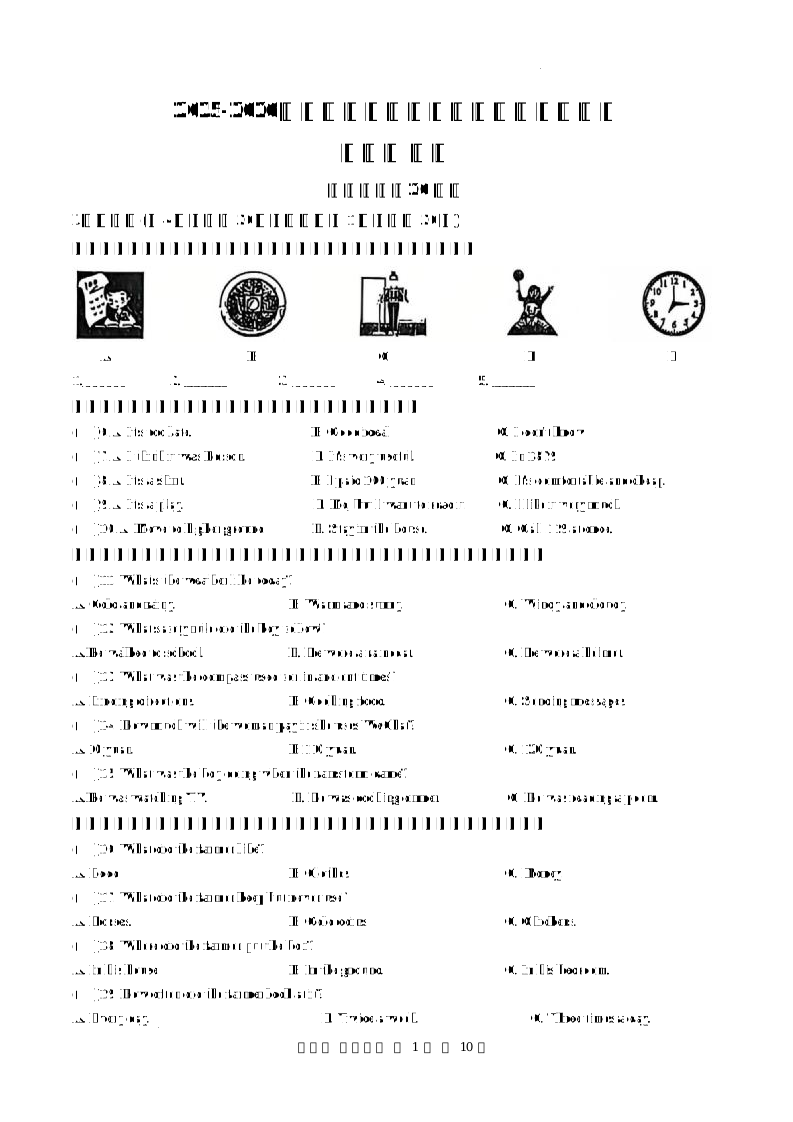
I.听力理解(分 4 小节,共 20 小题;每小题 1 分,满分 20 分)
第一节:听句子,选择与所听内容相符的图片。每个句子读两遍。
A B C D E
1.______ 2. ______ 3. ______ 4. ______ 5. ______
第二节:听句子,选择恰当的应答语。每个句子读两遍。
( )6.A. It's too late. B. Good ideal C. I don't know
( )7.A. I think it was Edison. B. It's very useful. C. In 1879.
( )8.A. It's a shirt. B. I paid 100 yuan C. It's comfortable and cheap.
( )9.A. It's a play. B. No, but I want to read it. C. I like it very much.
( )10.A. Move to higher ground. B. Stay in the house. C. Call 119 at once.
第三节:听对话及问题,选择能回答所提问题的最佳答案。每段对话读两遍。
( )11. What's the weather like today?
A. Cold and rainy. B. Warm and sunny. C. Windy and cloudy.
( )12. What safety rule did the boy follow?
A.He walked to school. B. He wore a raincoat. C. He wore a helmet.
( )13. What was the compass used for in ancient times?
A. Finding directions. B. Cooking food. C. Sending messages.
( )14. How much will the woman pay if she uses WeChat?
A.10 yuan. B.110 yuan. C. 120 yuan.
( )15. What was the boy doing when the rainstorm came?
A.He was watching TV. B. He was cooking dinner. C. He was reading a poem.
第四节:听短文,根据其内容选择能回答下列问题的最佳答案。短文读两遍。
( )16. What did the farmer like?
A. Food B. Clothes. C. Money.
( )17. What did the farmer keep but never use?
A. Horses. B. Gold coins. C. Chickens.
( )18. Where did the farmer put the box?
A. In his house. B. In the ground. C. In his bedroom.
( )19. How often did the farmer look at it?
A. Every day. B. Twice a week. C. Three times a day.
( )20. Why did the man say a stone would be just the same as the gold coins?
A. Because the stone was expensive.
B. Because the farmer never used the coins.
C. Because the stone looked like gold.
笔试部分(130 分)
Ⅱ.单项选择(每小题1分,共20分)
( )21. My father gave me ______ useful book as my birthday gift.
A. a B. an C. the D.
( )22. I want to learn more about inventions ______ I can make one myself someday.
A. so B. because C. but D. and
( )23—Excuse me, where is Grace?
—She ______ be in the school library, but I’m not sure.
A. must B. should C. might D. need
( )24. She is ______ to join the school basketball team because she’s been practicing every day after class.
A. sadly B. likely C. happily D. luckily
( )25. The cultural exchange activities ______ us with a good chance to learn from others.
A. provide B. offer C. give D. supply
( )26. The boy tried not to ______ his bicycle but landed on the ground heavily.
A. fall off B. fall down C. fall behind D. fall into
( )27. The new rule about school manners is ______ understand. Even the new students can follow it easily.
A. too clear to B. clear enough to C. too difficult to D. difficult enough
( )28. Tom studies harder than before because he wants to ______ his dream of entering a key high school.
A. achieve B. realize C. come true D. both A and B
( )29. —Many houses ______ by the strong wind during the typhoon(台风) last week.
—What a pity! Luckily, no one was hurt.
A. were damaged B. are damaged C. damaged D. was damaged
( )30. —Dad, I failed again. It’s difficult for me to learn English.
—______! I’m sure you can.
A. Well done B. Hard to say C. Take care D. Keep trying
( )31. —How long have you ______ this dictionary?
—For three years. It helps me a lot.
A. bought B. had C. borrowed D. lent
( )32. Many changes ______ in our town over the last 20 years.
A. took place B. have taken place C. were taken place D. have been taken place
( )33. —Were you born in Beijing?
—No, I wasn’t. But I have been used ______ in the city since I moved here 10 years ago.
A. to living B. to live C. Living D.lives
( )34. My parents were watching TV ______ I was reading a book.
A. until B. while C. Because D. if
( )35. —Why didn’t you answer my call at 8:00 last night?
—Sorry. I ______ basketball outside at that time.
A. play B. am playing C. was playing D. played
( )36. —Look at the triangle below, if AC=3, BC=4, how long is AB?
—It’s ______.
A. Five B. Seven C. Twelve D. six
( )37. Either his parents or he ______ to show the ID card ______ the owner (主人 of the hotel.
A. need; to B. needs; for C. needs; to D. need; for
( )38. —I always check my bike and wear a helmet before riding, even for short trips
—That’s a good habit. ______.
A. Better safe than sorry B. Silence is golden
C. Practice makes perfect D. Never too old to learn
( )39.My teacher told me that the moon ______ around the earth.
A. go B. goes C. went D. is going
( )40. What can you learn from the Chinese saying on the right?
A. We should read while we are travelling. B. Reading is no better than travelling.
C. You can't learn things until you read a lot. D. Reading can open up a new world to us.
Ⅲ.完形填空(每小题 1.5分,共15分)
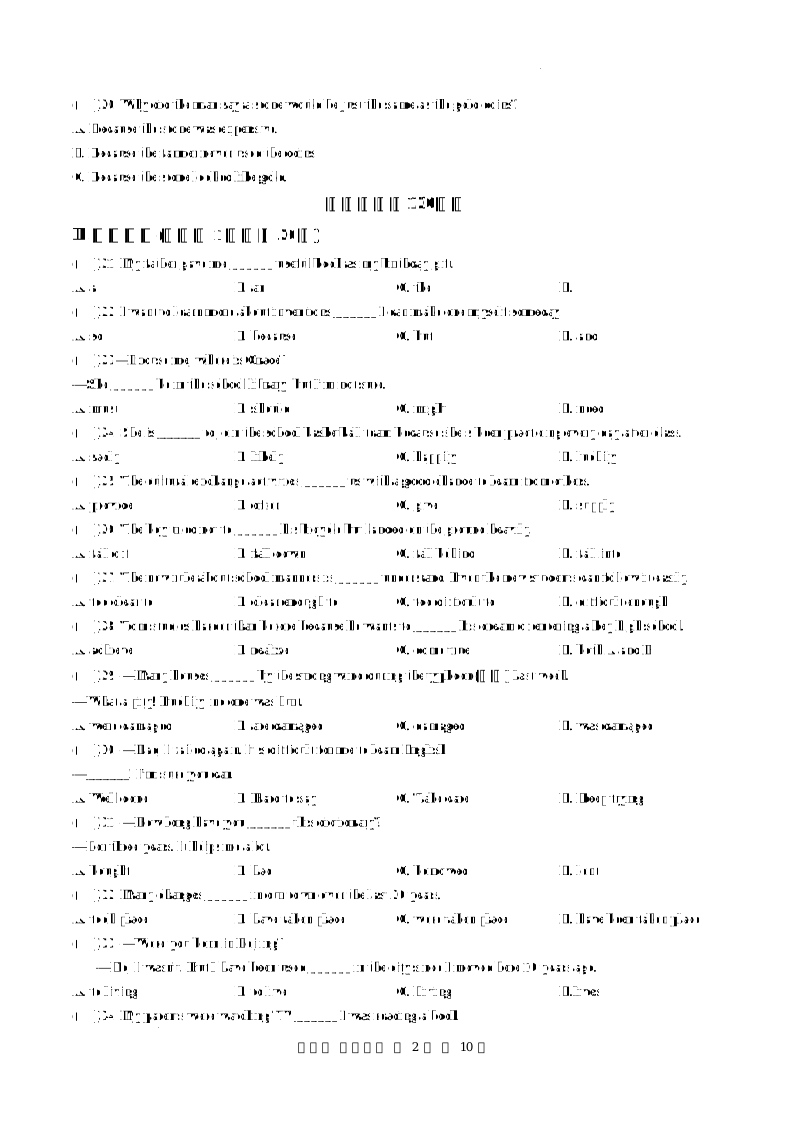
DeepSeek-R1 is a new AI tool from China. It can help people 41 math problems, write simple code (代码), and talk with people in daily life. It is different from other AI tools.
Most AI tools need many 42 from books to learn, but R1 learns by itself. It 43 by doing a lot of tasks every day, not just reading examples. This makes it very special.
With much practice, it becomes 44 Engineers say, "We let it try again and again, just like students do exercises. Soon, it can finish tasks 45 "
What is the best thing? R1 is 46 to use and change. Schools and small shops can use it for work. A village teacher says, "We don't worry about 47 now. Even poor places can get help from the smart AI. It changes our daily work."
But R1 still has problems. It makes mistakes in 48 like German. Engineers try to mark these mistakes and correct them. They say, "We want R1 to help people around the world."
This AI tool teaches us something important—great things need to be 49 more. Just having money cannot make something amazing. Let's learn from R1. It really makes a 50 to the world.
( )41.
A. mention B. solve C. predict D. ask
( )42.
A. questions B. pictures C. examples D. teachers
( )43.
A. changes B. enjoys C. plays D. learns
( )44.
A. worse B. smarter C. smaller D. shyer
( )45.
A. loud B. well C. yet D. only
( )46.
A. free B. challenging C. sincere D. dangerous
( )47.
A. trouble B. average C. money D. information
( )48.
A. countries B. languages C. cultures D. media
( )49.
A. tried out B. put out C. turn out D. give out
( )50.
A. choice B. plan C. decision D. difference
Ⅳ.阅读理解 (每小题2分,共30分)
The 9th Asian Winter Games
Host city: Harbin
Competing countries and regions(地区): 34
Athletes: more than 1,200
Date: from February 7th to February 14th, 2025
Sports: Curling, Ice hockey, Skating, Skiing, Biathlon, Ski Mountaineering which was included in the Asian Winter Games for the first time.
Slogan(口号): Dream of Winter, Love among Asia
Purpose: As the slogan suggests, this year's Asian Winter Games aim to provide athletes with a stage to realise their dreams through winter sports and show the love and friendship among Asian people.
Medal Table
GOLD
SILVER
BRONZE
TOTAL
China
32
27
26
85
Republic of Korea
16
15
14
45
Japan
10
12
15
37
Kazakhstan
4
9
7
20
阅读以上材料,判断下列句子正误。正确填 A、错误填 B。
( )51. The 9th Asian Winter Games lasted a month in Harbin.
( )52. Ski Mountaineering was a new sport at the 9th Asian Winter Games.
( )53. "One World, One Dream" is the slogan of the 9th Asian Winter Games.
( )54. China won the most gold medals at the 9th Asian Winter Games.
( )55. The purpose of this reading is to help the readers learn more about the 9th Asian Winter Games.
B
①Chongqing is a very large city with 31 million people. How do so many people move around the city on their way to work and school? So, let’s learn something about its transportation (交通运输系统).
②During the mornings and afternoons, there is the rush hour. This is the time when the traffic (交通) is very heavy with people going to and from work. In Chongqing you can
travel around the city by subway or light rail (轻轨), bus, taxi and car.
③If you are in a hurry during the rush hour, you can take the subway or light rail. It is the fastest way to get around the city. The subway runs on the railroad lines under the city. It crosses the city at different points and goes to all parts of the city. And in Chongqing, you can also see many beautiful views by taking the light rail.
④The second way to travel around the city is by public bus. It’s a slower way to travel. There are many bus lines in Chongqing, so it’s easy to take a bus. However, taking a bus in the rush hour to a far place is not a smart choice.
⑤You can also travel around the city by taxi. ▲ , but the taxi will take you to every place you want. But if the traffic is heavy, the taxi will be slow, too.
⑥The last way to get around Chongqing is using your own car. However, it’s not easy for new drivers, not only (不仅) because of the rush hour, but also (而且) the complex roads. If you are on the wrong road, maybe you will have to drive for a long time to get to the right place.
⑦In a word, Chongqing has many great ways for people to travel around the city. You can choose different traffic tools according to your time and needs. All of them make people’s lives easy and convenient (方便的) in this big city.
( )56. Why does the writer write the passage?
A. To show the beauty of Chongqing.
B. To introduce traffic ways in Chongqing.
C. To list beautiful views by light rail.
D. To ask us to take subways daily.
( )57. What does the underlined word “complex” mean?
A. difficult to understand B. easy to find C. small and narrow D. big and wide
( )58. Which sentence can we put in the ▲ ?
A. It is an expensive way to travel
B. It is very fast to go around the city
C. It is a smart choice in the rush hour
D. It is a slow way to travel around the city
( )59. What’s the structure of this passage?
A. B. C. D.
( )60. What is the fastest way to travel around Chongqing during the rush hour?
A. By bus B. By subway or light rail
C. By taxi D. By own car
C
Weiqi,also known as Go in English, is a black and white board game from ancient China. The game is considered one of the Four Arts for ancientChinese literators (文人) to master. BesidesWeiqi, they had to learn Chinese calligraphy(shu), painting (hua) and guqin playing(qin).
Weiqi has a history of over 4,000 years, even older than Chinese chess. According to some historical records,Weiqi was known as Yi in its early years. It is said to have been invented byEmperor
Yao.Seeing that his son got angry easily and didn't like to study, the emperor was quite worried. So he decided to find somethingto educate his son, and a board game came to him.
The rules of Weiqi are simple: using black and white stones, two players take turns putting their stones on empty cross points of the board.The aim is to surround (包围) a larger total area on the board while stopping one's own stones from being taken by the other side. Stones do not move and are only taken off the board if they are completely surrounded.
The scene of two people playing Weiqi appears in many traditional Chinese paintings. Theimage (形象) of a player holding a stone over the board, looking for a place to put it, was later turned into a famous Chinese idiom (成语),which means “unsure about making a move”. The idiom is still widely used today.
With its development, Weiqi grew more popular. Later, it spread to other Asian countries and Western countries. Today, it has become an international board game.
( )61. What are the Four Arts mentioned in the passage?
①Weiqi. ②Painting. ③Calligraphy. ④Guqin playing. ⑤Dancing.
A. ①②③④ B. ①②③⑤ C. ①②④⑤ D. ①③④⑤
( )62. Why did Emperor Yao invent Weiqi according to paragraph 2?
A. To have some fun. B. To teach himself.
C. To educate his son. D. To help his people.
( )63. In which part of a newspaper can you probably read this passage?
A. Music. B. News. C.Movies. D. Culture.
( )64. What is the best title for the passage?
A. History of Chinese Chess B. Game of Black and White
C. Beauty of Four Arts in China D. Development of Chinese Idioms
( )65. What can we infer from the whole passage?
A. Emperor Yao invented Weiqi mainly for his own hobby.
B. Weiqi is an important symbol of traditional Chinese culture.
C. The rules of Weiqi are very difficult for people to learn.
D. Weiqi only became popular in China in recent years.
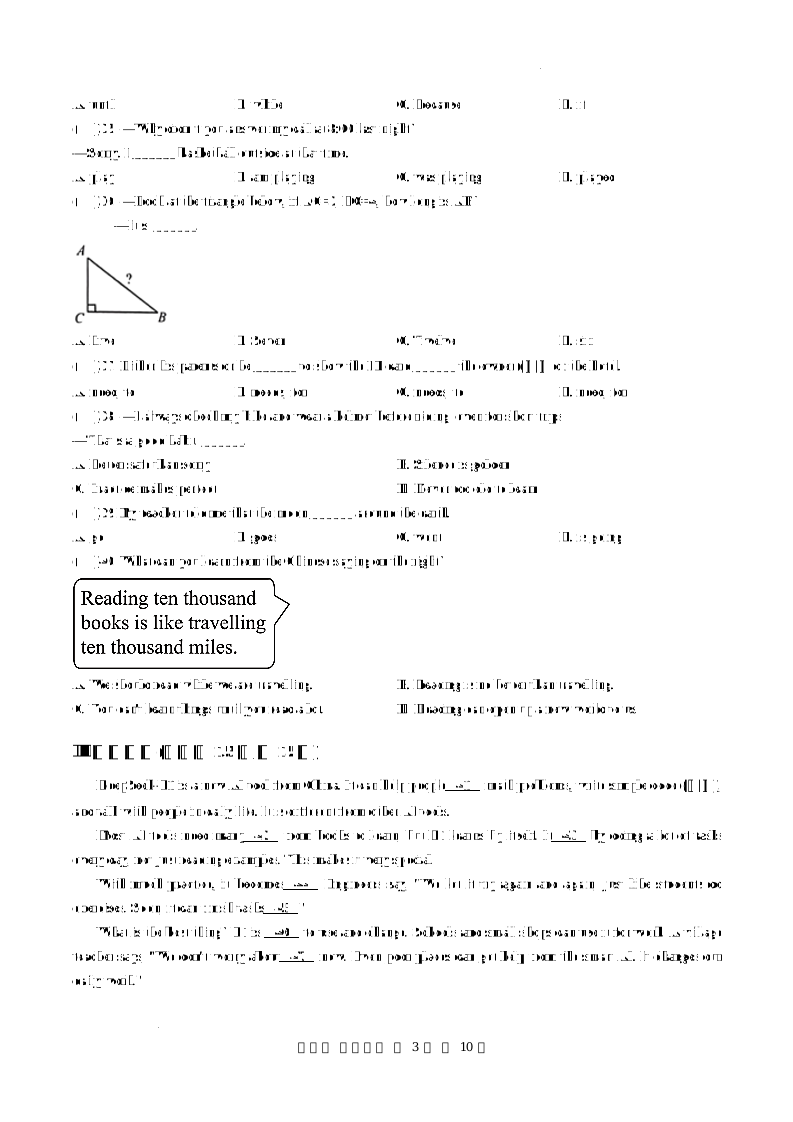
V.任务型完形填空(共 10 分,每空 1 分)
从下面方框中选出 10 个单词,将其填入短文,使短文意思正确通顺,每词限用一次。
tradition but write spirit it with popular however value create
Chinese poetry is a 66 art form that has a long history. It is not only a way to express feelings, 67 also a window to understand Chinese culture.
Many great poets have 68 wonderful works over thousands of years. For example, Li Bai, Du Fu and Su Shi are still 69 among people today. Their poems describe the beauty of nature, the joy of friendship and the 70 of loving the country.
71 , learning ancient poetry is not easy for some students. They think 72 is hard to understand the old language. In fact, poetry carries the 73 of Chinese culture. By reading poems, we can connect 74 the thoughts of ancient people and improve our own writing skills.
We should value this cultural treasure and encourage more young people 75 poems to carry forward(弘扬) the beauty of Chinese literature.
VI.任务型阅读理解(共5小题;每小题 2 分,满分 10 分)
阅读下面材料,按要求完成 76 至 80 小题。
Personal boundaries are the quiet rules that make our daily life smooth and happy. what actions to avoid. Respecting personal boundaries is never a small thing; it's the foundation of nice relationships with classmates, friends and even family members.
At school, we can see many simple ways to respect others’ boundaries. When you want to take a look at your classmate’s homework, ask first instead of leaning over their desk directly. If your friend is sitting alone and looks sad, don’t push them to talk— just sit with them quietly if they want. When you play games with your classmates, don’t touch their hair or face without asking, as some people hate unexpected physical contact. If you make a mistake and cross someone’s boundary, say sorry at once and try not to do it again.
Many teenagers think close friends can ignore personal boundaries, but that’s a wrong thought. Even the closest friends have their own comfortable zones. Respecting
those zones doesn’t make the friendship cold; it makes both sides feel valued and loved. ①When we all learn to respect each other’s personal boundaries, our school life will be full of warmth and joy for everyone.
任务一: 词性转换,根据短文内容及所给提示填空,每空一词
76. The word______ (comfortable 的副词形式) is used to describe how we act with others.
任务二: 找同义句,从文中找出与所给句子意思相近的句子,抄写完整
77. It’s not a small thing to respect personal boundaries.
________________________________________________________________________
任务三: 细节推理,根据短文内容判断正(T)误(F)
78. True friendship needs to respect each other’s comfortable zones.( )
任务四: 句式转换,将文中①处划线句改为以 If 开头的复合句,每空一词
79. ______we all learn to respect each other’s personal boundaries, our school life______ be full of warmth and joy for everyone.
任务五: 开放性表达,用英语回答,语句通顺(1-2 句)
80. What’s a good way to respect a new classmate’s personal boundaries? Why?
________________________________________________________________________
Ⅶ.补全对话(每小题 2 分,共 5 小题)
Amy is making a video call to her best friend Mia.
Amy: Hi, Mia. 81.________
Mia: Hello, Amy. Yes, I am. The weather here is really cold.
Amy: Really? Is it snowing now?
Mia: Yes. 82._______ Have a look.
Amy: Wow! The temperature must be very low.
Mia: You’re right. 83._______ But it’s really warm inside.
Amy: I see you’re just wearing a T - shirt at home. 84.________
Mia: I’m playing games with my cousins. How about you?
Amy: I am sunbathing outside. 85._________
Mia: Oh, lucky you! I miss the sunshine.
Amy: Then come back early and sunbathe with me!
Mia: OK. See you!
A. It is 20°C outside.
B. What are you doing?
C. Are you in your grandparents’ home now?
D. It is snowing heavily and the wind is blowing hard.
E. The weather here is always sunny and warm, you know.
Ⅷ.词汇考查 (共 10 小题,每小题 1 分,满分 10 分)
86. I have found it ______ (possible) to get success (成功) without hardwork.
87. With my English teacher’s ______ (encourage), I made great progress in the mid - term exam.
88. We practice both written and ______ (speak) English in this class.
89. The train was ______ (power) by coal many years ago.
90. Teenagers under 18 should not be allowed ______ (drive).
91. Our lives will be changed ______ (great) by AI in the near future.
92. I nearly ______ (freeze) when I went out without a coat.
93. She ______ (download) a movie when her mother called her.
94. His father makes a ______ (live) by selling vegetables in the market.
95. The ______ (apply) of new technology has changed our lives.
IX. 根据所给汉语提示完成句子(共5小题,每空1分,满分10分)
96. 我们不应该在考试中作弊,因为这是不诚实的。
We shouldn’t on because it’s dishonest.
97. 猎豹能以每小时120公里的速度奔跑。
The cheetah can run __________ a__________ of 120 kilometres per hour.
98. 在昨天的会议上,他摇头表示不同意这个方案。
At yesterday’s meeting, he his _________ to show that he disagreed with the plan.
99. 星星点亮了漆黑的夜空。
Stars __________ __________ the dark sky.
100. 估计每个人都听说过盲人摸象的故事。
Anybody has probably ever ________ ________ the story of the blind man and the elephant.
X. 书面表达(满分15分)
每个人的家里都有家规,家规约束我们的行为,也帮助我们养成良好的生活和学习习惯。请以
My Family Rules 为题,写一篇英语短文,介绍你的家规。
写作要求
1. 文章需结构完整:开头引入主题、中间介绍至少3条具体的家规(生活、学习方面均可)、
结尾写出自己对家规的感受和看法。
2. 内容真实贴合日常,语句通顺,逻辑清晰,无中式英语表达。
3. 书写工整规范,大小写、标点正确,文中不出现真实姓名、班级、学校等信息。
4. 适当使用简单的过渡词和固定短语,提升文章层次感。
My Family Rules
_______________________________________________________________________
_______________________________________________________________________
_______________________________________________________________________
八年级 英语试卷 第 页
学科网(北京)股份有限公司
$
2025-2026 学年度第二学期第二次检测考试试题
八年级 英语 部分参考答案
I.听力理解
略
Ⅱ. 单项选择
21. A 22. A 23. C 24. B 25. A 26. A 27. B 28. D 29. A 30. D
31. B 32. B 33. A 34. B 35. C 36. A 37. C 38. A 39. B 40. D
Ⅲ. 完形填空
41. B 42. C 43. D 44. B 45. B 46. A 47. C 48. B 49. A 50. D
Ⅳ. 阅读理解
51. B 52. A 53. B 54. A 55. A
56. B 57. A 58. A 59. A 60. B
61. A 62. C 63. D 64. B 65. B
Ⅴ. 任务型完形填空
66. traditional 67. but 68. written 69. popular 70. spirit
71. However 72. it 73. value 74. with 75. to create
Ⅵ. 任务型阅读理解
76. comfortably
77. Respecting personal boundaries is never a small thing.
78. T
79. If; will
80. We should knock before entering his or her seat. Because it shows respect.
Ⅶ. 补全对话
81. C 82. D 83. A 84. B 85. E
Ⅷ. 词汇考查
86. impossible
87. encouragement
88. spoken
89. powered
90. to drive
91. greatly
92. froze
93. was downloading
94. living
95. application
Ⅸ. 根据汉语提示完成句子
96. cheat; exams
97. at; speed
98. shook; head
99. light up
100. heard of
Ⅹ. 书面表达
略
学科网(北京)股份有限公司
$
资源预览图
1
2
3

相关资源
由于学科网是一个信息分享及获取的平台,不确保部分用户上传资料的 来源及知识产权归属。如您发现相关资料侵犯您的合法权益,请联系学科网,我们核实后将及时进行处理。