Unit 6 Crossing Cultures 易混词汇辨析 专项练 2025-2026学年人教版英语八年级下册
2026-05-31
|
19页
|
14人阅读
|
0人下载
资源信息
| 学段 | 初中 |
|---|---|
| 学科 | 英语 |
| 教材版本 | 初中英语人教版八年级下册 |
| 年级 | 八年级 |
| 章节 | Unit 6 Crossing Cultures |
| 类型 | 题集-专项训练 |
| 知识点 | - |
| 使用场景 | 同步教学-单元练习 |
| 学年 | 2026-2027 |
| 地区(省份) | 全国 |
| 地区(市) | - |
| 地区(区县) | - |
| 文件格式 | DOCX |
| 文件大小 | 52 KB |
| 发布时间 | 2026-05-31 |
| 更新时间 | 2026-05-31 |
| 作者 | 内蒙古科尔沁左翼中旗试卷 |
| 品牌系列 | - |
| 审核时间 | 2026-05-31 |
| 下载链接 | https://m.zxxk.com/soft/58141497.html |
| 价格 | 1.00储值(1储值=1元) |
| 来源 | 学科网 |
摘要:
**基本信息**
聚焦跨文化主题易混词汇与语法结构,通过“含义-搭配-辨析-应用”四阶训练体系,融合语言能力与文化意识培养。
**专项设计**
|模块|题量/典例|方法提炼|知识逻辑|
|----|-----------|----------|----------|
|重点词汇用法辨析|28个核心词汇/结构|构词法(un-/in-否定前缀)、搭配规则(如be used to doing)、语境区分(-ed/-ing形容词)|从基础词汇(shake/kiss)到语法结构(so...that.../unless),构建“词汇-短语-语法”逻辑链|
|辨析选词填空|52题|易混词对比(surprised/surprising)、功能句型(so/such...that...)|结合文化场景(问候礼仪/餐桌 manners),实现知识向跨文化交际能力迁移|
|单项选择|16题|语法应用(状语从句)、文化理解(custom/tradition)|覆盖中考高频考点,强化“词汇辨析-语法运用-文化意识”综合思维|
内容正文:
Unit 6 Crossing Cultures 易混词汇辨析 专项练 2025-2026学年
下学期初中英语人教版(2024)八年级下册
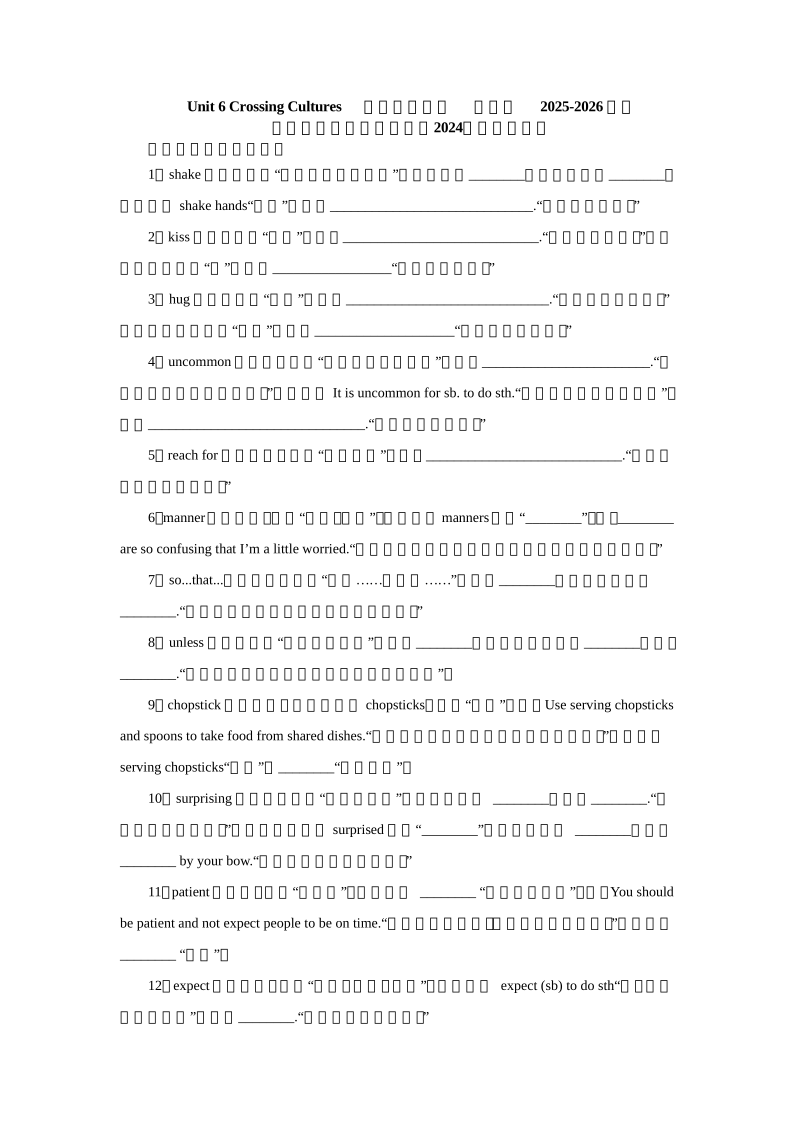
一、重点词汇用法辨析
1.shake动词,意为“摇动;抖动;握手”,过去式为________,过去分词为________,常用短语shake hands“握手”,如:_____________________________.“他们互相握手。”
2.kiss动词,意为“亲吻”,如:____________________________.“她吻别了母亲。”也可作名词,意为“吻”,如:_________________“脸颊上的一吻。”
3.hug动词,意为“拥抱”,如:_____________________________.“他们热情地拥抱。”也可作名词,意为“拥抱”,如:____________________“给某人一个拥抱。”
4.uncommon形容词,意为“不寻常的;罕见的”,如:________________________.“这种鸟在这个地区不常见。”常用短语It is uncommon for sb. to do sth.“某人做某事是不寻常的”,如:_______________________________.“他迟到很不寻常。”
5.reach for动词短语,意为“伸手去拿”,如:____________________________.“他伸手去拿桌上的手机。”
6.manner可数名词,意为“方式;方法”,常用复数manners意为“________”,如:________ are so confusing that I’m a little worried.“英国餐桌礼仪如此令人困惑,以至于我有点担心。”
7.so...that...连词结构,意为“如此……以至于……”,引导________状语从句,如:________.“这个盒子如此重,以至于我搬不动它。”
8.unless连词,意为“除非;如果不”,引导________状语从句,相当于________,如:________.“除非你更努力学习,否则你考试不会及格”。
9.chopstick可数名词,通常用复数chopsticks,意为“筷子”,如:Use serving chopsticks and spoons to take food from shared dishes.“用公筷和公勺从共享的菜盘中取食物。”常用短语serving chopsticks“公筷”,________“一副筷子”。
10.surprising形容词,意为“令人惊讶的”,常用来修饰 ________,如:________.“那真的让我很惊讶。”其过去分词形式surprised意为“________”,常用来修饰 ________,如:________ by your bow.“我对你的鞠躬感到惊讶。”
11.patient形容词,意为“耐心的”,常用短语 ________ “对某人有耐心”,如:You should be patient and not expect people to be on time.“你应该耐心一点,不要指望人们准时。”其名词为 ________ “耐心”。
12.expect及物动词,意为“预料;期待;指望”,常用结构 expect (sb) to do sth“期待(某人)做某事”,如:________.“不要指望人们准时。”
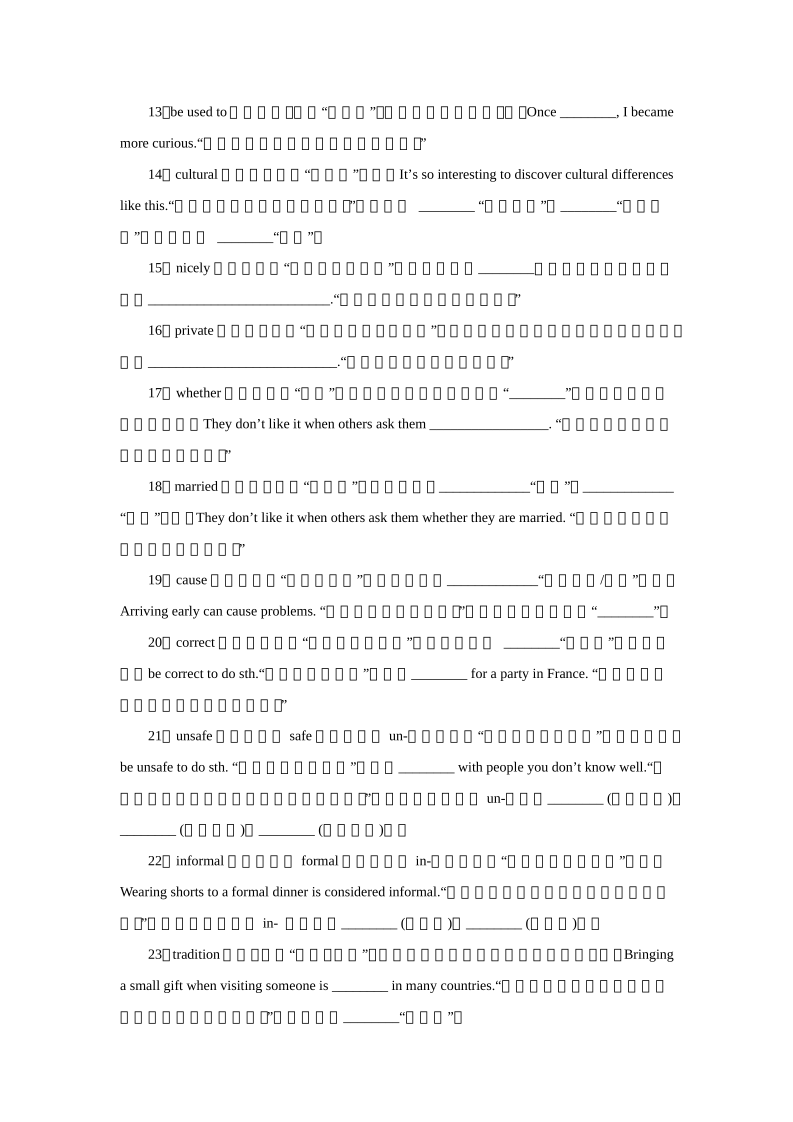
13.be used to动词短语,意为“习惯于”,后接名词或动名词,如:Once ________, I became more curious.“一旦我习惯了它,我变得更好奇了。”
14.cultural形容词,意为“文化的”,如:It’s so interesting to discover cultural differences like this.“发现这样的文化差异真有趣。”常用短语 ________ “文化差异”;________“文化冲击”。其名词为 ________“文化”。
15.nicely副词,意为“好看地;得体地”,常用来修饰________,描述做某事的方式。如:__________________________.“其他每个人都穿得非常得体。”
16.private形容词,意为“注重隐私的;私密的”,可用来描述一个人的性格或生活习惯。如:___________________________.“许多法国人非常注重隐私。”
17.whether连词,意为“是否”,常用来引导宾语从句,与“________”连用表示不确定的情况。如:They don’t like it when others ask them _________________. “他们不喜欢别人问他们是否结婚了。”
18.married形容词,意为“已婚的”,常用结构:_____________“已婚”;_____________“结婚”。如:They don’t like it when others ask them whether they are married. “他们不喜欢别人问他们是否结婚了。”
19.cause动词,意为“造成;引起”,常用结构:_____________“引起问题/麻烦”,如:Arriving early can cause problems. “早到可能会引起麻烦。”;也可作名词,意为“________”。
20.correct形容词,意为“正确的;恰当的”,其反义词为 ________“错误的”。常用结构:be correct to do sth.“做某事是正确的”。如:________ for a party in France. “在法国,准时参加聚会是正确的做法。”
21.unsafe形容词,由safe加否定前缀un-构成,意为“不安全的;危险的”。常用结构:be unsafe to do sth. “做某事是不安全的”。如:________ with people you don’t know well.“和你不熟悉的人讨论某些话题是不安全的。”其他含有否定前缀un-词汇:________ (不高兴的)、________ (不公平的)、________ (不健康的)等。
22.informal形容词,由formal加否定前缀in-构成,意为“非正式的;随便的”。如:Wearing shorts to a formal dinner is considered informal.“穿短裤参加正式晚宴被认为是非正式的。”其他含有否定前缀in- 的词汇:________ (不贵的)、________ (独立的)等。
23.tradition名词,意为“传统;惯例”,既可作可数名词也可作不可数名词。如:Bringing a small gift when visiting someone is ________ in many countries.“拜访他人时带上一份小礼物是许多国家的常见传统。”其形容词为________“传统的”。
24.receive动词,意为“收到;接到”,常用结构:receive sth from sb “从某人处收到某物”。如:I was happy to ________________________________. “我很高兴收到法国笔友的来信。”
25.main形容词,意为“主要的;最重要的”,常用来修饰名词,如_____________“主旨”、main text “正文”。如:___________________ the email is to ask for advice about Chinese customs. “这封邮件的主要目的是询问关于中国习俗的建议。”
26.false形容词,意为“错误的;不真实的;虚假的”,常用短语false impression “错误印象”。如:Doing something silly could give people ___________________ that I am a rude person. “做傻事可能会给人留下错误的印象,以为我是个粗鲁的人。”
27.impression名词,意为“印象;感想”,常用结构:make / give an impression on sb “_________________”; ________________“第一印象”。如:First impressions are so important that I don’t want to say or do anything wrong. “第一印象非常重要,我不想说错话或做错事。”
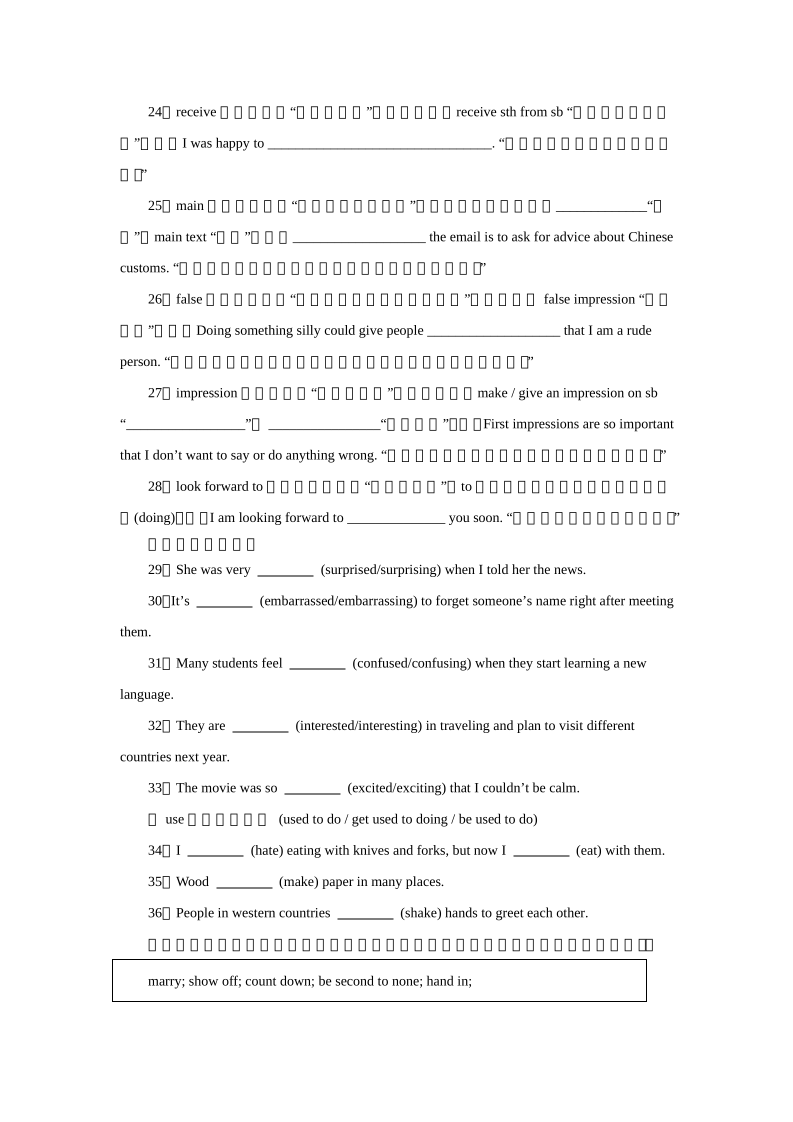
28.look forward to动词短语,意为“期待;盼望”,to为介词,后接名词、代词或动名词(doing)。如:I am looking forward to ______________ you soon. “我期待很快收到你的来信。”
二、辨析选词填空
29.She was very (surprised/surprising) when I told her the news.
30.It’s (embarrassed/embarrassing) to forget someone’s name right after meeting them.
31.Many students feel (confused/confusing) when they start learning a new language.
32.They are (interested/interesting) in traveling and plan to visit different countries next year.
33.The movie was so (excited/exciting) that I couldn’t be calm.
用use相关短语填空 (used to do / get used to doing / be used to do)
34.I (hate) eating with knives and forks, but now I (eat) with them.
35.Wood (make) paper in many places.
36.People in western countries (shake) hands to greet each other.
从方框中选择恰当的词或短语并用其正确的形式填空(每个词或短语只能用一次)。
marry; show off; count down; be second to none; hand in;
prefer; at the heart of; be tired out; make one’s way to; breaking free;
37.We the days to the May Day holiday and can’t wait to meet friends.
38.Lianyungang’s fresh and delicious seafood in Jiangsu Province.
39.I want to know where our book reports before the holiday.
40.Some students have difficulty from bad habits and developing a healthy lifestyle.
41.My parents since 2006 and they still love each other deeply.
42.Linda dancing to singing when she was young.
43.The rain was so heavy, but we still the school on time.
44.After a long day of hiking, we and fell asleep as soon as we got home.
45.Teamwork is our school sports meeting, friendship first, competition second.
选用方框中的短语填空(每个限用一次)
shake hands, bump fists, rub noses, kiss cheeks, bow
46.In Japan, people often to greet others.
47.In the US, it is common to when meeting someone for the first time.
48.Close friends in some European countries when they see each other.
49.In New Zealand, the Maori people as a traditional greeting.
50.Young people sometimes as a cool and casual way to say hello.
用so/such...that...、unless 和as soon as填空
51.It was a sudden storm we had to stay at home.
52.The alarm was loud everyone woke up at once.
53.I will tell you the result I receive it.
54.You can’t get good grades you review your lessons often.
55.It is an interesting novel I can’t put it down.
56.The story was moving many readers felt touched.
57. the bell rang, the students stopped talking.
58.He won’t go to the party he is properly invited.
59.It was a funny joke we all laughed loudly.
60.You won’t understand the culture you learn about its customs.
用should或shouldn’t填空
61.You arrive early to a party in France.
62.It’s normal to be on time or a few minutes late. You arrive on time.
63.You bring a gift when you visit someone.
64.You dress for the occasion.
65.You ask personal questions unless you know the person well.
66.You ask about someone’s age or how much money they make.
67.You talk about food and culture—they are safe topics.
68.You try to speak French whenever possible.
polite, avoid, misunderstanding, communicate with, in public
69.You should be when you talk to the elderly or strangers.
70.To unnecessary trouble, we need to know more about local customs.
71.Don’t speak or laugh too loudly as it may disturb others around you.
72.How do you usually your online friends from other countries?
73.They had a big because they didn't realize the cultural differences between them.
用方框内所给单词的适当形式填空
culture, greet, polite, gift, bow, point, shake, tradition, avoid, manner
74.It’s to talk loudly in the library in every country.
75.My friend sent me a beautiful on my birthday last week.
76.We should learn about different to communicate better with foreigners.
77.People in Thailand usually to each other instead of shaking hands.
78.Don’t at the stranger over there—it’s not a good behavior.
79.We often hands with our new classmates on the first day of school.
80.It’s a Chinese to have a big dinner on Spring Festival Eve.
81.You should making mistakes in your English composition.
82.Do you know how to people in different countries?
83.We need to learn good table when we have dinner with guests.
三、单项选择
84.In many countries, people ________ hands when they meet for the first time as a sign of friendship.
A.wave B.shake C.point D.pull
85.It is ________ to see snow in this city because the weather is usually very warm all year round.
A.common B.uncommon C.normal D.usual
86.It is good ________ to say “thank you” when someone helps you carry a heavy box.
A.habits B.customs C.manners D.traditions
87.You should wear ________ clothes for a job interview, such as a shirt and trousers, not shorts.
A.casual B.proper C.improper D.rude
88.It was ________ to learn that the shy girl won first prize in the speech competition.
A.surprising B.boring C.common D.usual
89.Learning about ________ differences can help you understand people from other countries better.
A.natural B.cultural C.personal D.private
90.I asked my mom ________ she could come to my school concert next Friday evening.
A.whether B.weather C.rather D.either
91.My aunt got ________ last spring, and she and her husband just bought a new house near the park.
A.married B.marry C.marriage D.marrying
92.Please put a tick next to the ________ answer and a cross next to the wrong one.
A.correct B.incorrect C.false D.rude
93.Giving red envelopes to children during the Lunar New Year is a long-standing ________ in China.
A.custom B.tradition C.habit D.manner
94.Every morning, the manager ________ dozens of emails from customers around the world.
A.sends B.gives C.receives D.refuses
95.The ________ character of the story is a brave young girl who saves her village from a flood.
A.rude B.minor C.false D.main
96.It’s important for us ________ the school rules.
A.follow B.to follow C.following D.followed
97.I will call you ________ I arrive at the railway station.
A.unless B.as soon as C.so that D.such that
98.People don’t kiss each other on the cheek ________ they are good friends.
A.unless B.if C.because D.though
99.The movie is ________ exciting ________ I want to watch it again.
A.too; to B.enough; to C.such; that D.so; that
参考答案
1.shake动词,意为“摇动;抖动;握手”,过去式为shook,过去分词为shaken,常用短语shake hands“握手”,如:They shook hands with each other.“他们互相握手。”故填shook;shaken;They shook hands with each other。
2.kiss动词,意为“亲吻”,如:She kissed her mother goodbye.“她吻别了母亲。”也可作名词,意为“吻”,如:a kiss on the cheek“脸颊上的一吻。”故填She kissed her mother goodbye;a kiss on the cheek。
3.hug动词,意为“拥抱”,如:They hugged each other warmly.“他们热情地拥抱。”也可作名词,意为“拥抱”,如:give someone a hug“给某人一个拥抱。”故填They hugged each other warmly;give someone a hug。
4.uncommon形容词,意为“不寻常的;罕见的”,如:This bird is uncommon in this area.“这种鸟在这个地区不常见。”常用短语It is uncommon for sb. to do sth.“某人做某事是不寻常的”,如:It is uncommon for him to be late.“他迟到很不寻常。”故填This bird is uncommon in this area;It is uncommon for him to be late。
5.reach for动词短语,意为“伸手去拿”,如:He reached for his phone on the table.“他伸手去拿桌上的手机。”故填He reached for his phone on the table。
6.manner可数名词,意为“方式;方法”,常用复数manners意为“礼仪;规矩”,如:English table manners are so confusing that I’m a little worried.“英国餐桌礼仪如此令人困惑,以至于我有点担心。”
7.so...that... 连词结构,意为“如此……以至于……”,引导结果状语从句,如:The box was so heavy that I couldn’t carry it.“这个盒子如此重,以至于我搬不动它。”
8.unless连词,意为“除非;如果不”,引导条件状语从句,相当于if...not,如:Unless you study harder, you will not pass the exam.“除非你更努力学习,否则你考试不会及格”。
9.chopstick可数名词,通常用复数 chopsticks,意为“筷子”,如:Use serving chopsticks and spoons to take food from shared dishes.“用公筷和公勺从共享的菜盘中取食物。”常用短语serving chopsticks“公筷”,a pair of chopsticks“一副筷子”。
10.surprising形容词,意为“令人惊讶的”,常用来修饰事物,如:That was really surprising to me.“那真的让我很惊讶。”其过去分词形式surprised意为“感到惊讶的”,常用来修饰人,如:I was surprised by your bow.“我对你的鞠躬感到惊讶。”
11.patient形容词,意为“耐心的”,常用短语be patient with sb.“对某人有耐心”,如:You should be patient and not expect people to be on time.“你应该耐心一点,不要指望人们准时。”其名词为patience “耐心”。
12.expect及物动词,意为“预料;期待;指望”,常用结构 expect (sb.) to do sth.“期待(某人)做某事”,如:Don’t expect people to be on time.“不要指望人们准时。”
13.be used to动词短语,意为“习惯于”,后接名词或动名词,如:Once I was used to it, I became more curious.“一旦我习惯了它,我变得更好奇了。”
14.cultural形容词,意为“文化的”,如:It’s so interesting to discover cultural differences like this.“发现这样的文化差异真有趣。”常用短语cultural difference“文化差异”; cultural shock“文化冲击”。其名词为culture “文化”。
15.副词用来修饰动词。everyone else“其他每个人”;be dressed表穿着状态,此句是一般过去时,主语是不定代词,be动词用was,副词so nicely修饰dressed。
16.many French people“许多法国人”,此句是一般现在时,主语是复数,be动词用are,形容词private“注重隐私的”作表语,副词quite“非常”修饰形容词private。
17.whether...or not是固定搭配,意为“是否”。动词“ask”后接whether引导宾语从句,they“他们”,be married“已婚”,此句是一般现在时,主语they是复数,be动词用are。
18.be married“已婚”,get married“结婚”,都是固定短语。
19.cause problems/trouble“引起问题/麻烦”。cause作名词时意为“原因”。
20.correct形容词,意为“正确的;恰当的”,其反义词为incorrect“错误的”。常用结构:be correct to do sth.“做某事是正确的”。如:It is correct to arrive on time for a party in France.“在法国,准时参加聚会是正确的做法。”故填incorrect;It is correct to arrive on time。
21.unsafe形容词,由safe加否定前缀un-构成,意为“不安全的;危险的”。常用结构:be unsafe to do sth.“做某事是不安全的”。如:It is unsafe to discuss certain topics with people you don’t know well.“和你不熟悉的人讨论某些话题是不安全的。”其他含有否定前缀un-词汇:unhappy (不高兴的)、unfair (不公平的)、unhealthy (不健康的)等。故填It is unsafe to discuss certain topics;unhappy;unfair;unhealthy。
22.informal形容词,由formal加否定前缀in-构成,意为“非正式的;随便的”。如:Wearing shorts to a formal dinner is considered informal.“穿短裤参加正式晚宴被认为是非正式的。”其他含有否定前缀in-的词汇:inexpensive (不贵的)、independent (独立的)等。故填inexpensive;independent。
23.tradition名词,意为“传统;惯例”,既可作可数名词也可作不可数名词。如:Bringing a small gift when visiting someone is a common tradition in many countries.“拜访他人时带上一份小礼物是许多国家的常见传统。”其形容词为traditional“传统的”。故填a common tradition;traditional。
24.receive动词,意为“收到;接到”,常用结构:receive sth from sb “从某人处收到某物”。如:I was happy to receive a letter from my pen pal in France . “我很高兴收到法国笔友的来信。”故填receive a letter from my pen pal in France。
25.main形容词,意为“主要的;最重要的”,常用来修饰名词,如main idea“主旨”、main text “正文”。如:The main purpose of the email is to ask for advice about Chinese customs. “这封邮件的主要目的是询问关于中国习俗的建议。故填main idea;The main purpose of。
26.false形容词,意为“错误的;不真实的;虚假的”,常用短语false impression “错误印象”。如:Doing something silly could give people a false impression that I am a rude person. “做傻事可能会给人留下错误的印象,以为我是个粗鲁的人。”故填a false impression。
27.impression名词,意为“印象;感想”,常用结构:make / give an impression on sb“给某人留下印象”;first impression“第一印象”。如:First impressions are so important that I don’t want to say or do anything wrong. “第一印象非常重要,我不想说错话或做错事。”故填:给某人留下印象;first impression。
28.look forward to动词短语,意为“期待;盼望”,to为介词,后接名词、代词或动名词(doing)。如:I am looking forward to hearing from you soon. “我期待很快收到你的来信。”故填hearing from。
29.句意:当我告诉她这个消息时,她非常惊讶。surprised是-ed结尾的形容词,用来描述人的感受,意为“感到惊讶的”;surprising是-ing结尾的形容词,用来描述事物的性质,意为“令人惊讶的”;本句主语是she(人),描述她的感受,故填surprised。
30.句意:刚认识别人就忘记他们的名字,是一件很尴尬的事。embarrassing是-ing结尾的形容词,用来描述事物/事件的性质,意为“令人尴尬的”;embarrassed是-ed结尾的形容词,用来描述人的感受,意为“感到尴尬的”; 本句描述的是“to forget someone's name”这件事,故填embarrassing。
31.句意:许多学生刚开始学习一门新语言时,会感到困惑。confused是-ed结尾的形容词,用来描述人的感受,意为“感到困惑的”;confusing是-ing结尾的形容词,用来描述事物的性质,意为“令人困惑的”;本句主语是many students(人),描述他们的感受,故填confused。
32.句意:他们对旅行很感兴趣,计划明年去不同的国家游玩。interested是-ed结尾的形容词,固定搭配be interested in用来描述人的状态,意为“对……感兴趣”; interesting是-ing结尾的形容词,用来描述事物的性质,意为“有趣的”;本句主语是they(人),且搭配了in,故填interested。
33.句意:这部电影太激动人心了,我都没法平静下来。exciting是-ing结尾的形容词,用来描述事物的性质,意为“令人激动的”;excited是-ed结尾的形容词,用来描述人的感受,意为“感到激动的”;本句主语是the movie(事物),描述它的性质,故填exciting。
34. used to hate get used to eating 35.is used to make 36.get used to shaking
34.句意:我过去讨厌用刀叉吃饭,但是现在我习惯用它们吃饭了。根据“but now”可知,第一个句子表示“过去曾经做某事”,used to do“过去常常做”符合语境,所以填used to hate;第二个句子主语是人,结合“now”可知,get used to doing“习惯做”符合语境,主语I为第一人称,所以填get used to eating。
35.句意:木头在很多地方被用来造纸。句子主语Wood是物,be used to do“被用来做”符合语境,wood是不可数名词,时态是一般现在时,be动词用is,所以填is used to make。
36.句意:西方国家的人们习惯握手来互相问候。句子主语是People,get used to doing“习惯于做”符合语境,主语是复数,时态是一般现在时,所以填get used to shaking。
37.句意:我们为五一假期倒计时,迫不及待地想要见到朋友。根据题意,结合所给词可知,需要表示“正在倒数”这一含义,要使用count down表示倒数,而由can’t wait to meet friends可知时态为现在进行时,要使用be doing表示正在做,We为第三人称复数,be动词要使用are,动词要使用-ing形式counting,故应填入are counting down。
38.句意:连云港新鲜美味的海鲜在江苏省是首屈一指的。根据题意,结合所给词可知,需要表示“首屈一指的”这一含义,所以要使用be second to none,该句陈述的是一般事实,时态为一般现在时,seafood为第三人称单数,be动词要使用is,故应填入is second to none。
39.句意:我想知道在假期前在哪里上交我们的读书报告。根据题意,结合所给词可知,需要表示“上交”这一含义,要使用hand in表示上交,而由want to know where可知,要使用where to do表示去做什么,所以要使用to hand in,故应填入to hand in。
40.句意:一些学生在摆脱坏习惯并养成健康的生活方式方面有困难。根据题意,结合所给词可知,需要表示“摆脱”这一含义,要使用break free表示,而由have difficulty doing sth.表示做某事有困难,动词要使用-ing形式breaking,故应填入breaking free。
41.句意:我的父母自2006年以来就结婚了,他们仍然深爱着彼此。根据题意,结合所给词可知,需要表示“已经结婚了”这一含义,要使用be married表示结婚,而由since 2006可知时态为现在完成时,要使用have done表示已经做了,My parents为第三人称复数,助动词要使用have,be动词要使用过去分词been,故应填入have been married。
42.句意:琳达年轻时比起唱歌更喜欢跳舞。根据题意,结合所给词可知,需要表示“更喜欢”这一含义,要使用prefer表示更喜欢,而由when she was young可知时态为一般过去时,动词要使用过去式preferred,故应填入preferred。
43.句意:雨下得很大,但我们仍然按时前往了学校。根据题意,结合所给词可知,需要表示“前往”这一含义,要使用make one’s way to表示前往,而由was可知时态为一般过去时,动词要使用过去式made,we为第一人称复数,所以形容词性物主代词要使用our,故应填入made our way to。
44.句意:经过一整天的徒步旅行,我们筋疲力尽,一到家就睡着了。根据题意,结合所给词可知,需要表示“筋疲力尽”这一含义,要使用be tired out表示筋疲力尽,而由fell asleep可知时态为一般过去时,动词要使用过去式were,故应填入were tired out。
45.句意:团队合作是我们学校运动会的核心,友谊第一,比赛第二。根据题意,结合所给词可知,需要表示“在……的中心”这一含义,要使用at the heart of表示在……的中心,故应填入at the heart of。
46.句意:在日本,人们经常鞠躬问候别人。根据“In Japan, people often…to greet others.”及备选词汇可知,描述日本的传统见面礼仪,“bow”(鞠躬)符合题意,本句为一般现在时,主语people为复数,动词用原形。
47.句意:在美国,与人初次见面时握手是很常见的。根据“In the US, it is common to…when meeting someone for the first time.”及备选词汇可知,握手是美国常见的初次见面礼仪,“shake hands”(握手)符合题意,此处位于动词不定式to后面,动词用原形。
48.句意:在一些欧洲国家,亲密好友见面时会亲吻脸颊。根据“Close friends in some European countries…when they see each other.”及备选词汇可知,亲吻脸颊是欧洲国家好友间的常见问候方式,“kiss cheeks”(亲吻脸颊)符合题意,本句为一般现在时,主语Close friends为复数,动词用原形。
49.句意:在新西兰,碰鼻礼是毛利人的传统问候方式。根据“In New Zealand, the Maori people…as a traditional greeting.”及备选词汇可知,碰鼻礼是毛利人的传统问候方式,“rub noses”(碰鼻礼)符合题意,本句为一般现在时,主语the Maori people为复数,动词用原形。
50.句意:年轻人有时会用碰拳作为一种又酷又随意的打招呼方式。根据“Young people sometimes…as a cool and casual way to say hello. ”及备选词汇可知,碰拳是年轻人之间流行的打招呼方式,“bump fists”(碰拳)符合题意,本句为一般现在时,主语Young people 为复数,动词用原形。
51.句意:突然下起了暴雨,我们不得不待在家里。句中 “a sudden storm” 为名词短语,应用 such…that… 结构,表示 “如此…… 以至于……”。故填 such; that。
52.句意:警报声如此大,以至于所有人立刻醒了。句中 “loud” 为形容词,应用 so…that… 结构,表示 “如此…… 以至于……”。故填 so; that。
53.句意:我一收到结果就告诉你。根据句意,表示 “一…… 就……”,应用 as soon as。故填 as soon as。
54.句意:除非你经常复习功课,否则你不能取得好成绩。根据句意,表示 “除非”,应用unless。故填 unless。
55.句意:这本小说如此有趣,以至于我爱不释手。句中 “an interesting novel” 为名词短语,应用such…that… 结构。故填 such; that。
56.句意:这个故事如此感人,以至于许多读者都被触动了。句中 “moving” 为形容词,应用so…that… 结构。故填 so; that。
57.句意:铃声一响,学生们就停止了讲话。根据句意,表示 “一…… 就……”,且位于句首,应用As soon as。故填 As soon as。
58.句意:除非他被正式邀请,否则他不会去参加派对。根据句意,表示 “除非”,应用unless。故填 unless。
59.句意:这个笑话如此好笑,以至于我们都大声笑了。句中 “a funny joke” 为名词短语,应用such…that… 结构。故填 such; that。
60.句意:除非你了解它的习俗,否则你不会理解这种文化。根据句意,表示 “除非”,应用unless。故填unless。
61.句意:在法国,参加聚会你不应该早到。在法国参加私人派对,早到会打乱主人的准备节奏,属于不礼貌行为,因此填shouldn’t。
62.句意:准时或者晚到几分钟是正常的。你应该准时。准时或晚几分钟符合法国派对礼仪,准时是得体的做法,因此填should
63.句意:当你去看望某人时,你应该带一个礼物。拜访他人带礼物是基本社交礼仪,因此填should。
64.句意:你应该根据场合选择合适的着装。根据场合选择着装是礼貌的做法,因此填should。
65.句意:除非你和对方很熟,否则你不应该问私人问题。双方不熟时询问私人问题是不礼貌的,因此填shouldn’t。
66.句意:你不应该询问他人的年龄或者收入。年龄、收入属于西方文化中的个人隐私,不适合询问,因此填shouldn’t。
67.句意:你可以聊食物和文化——它们是很安全的话题。食物和文化是法国社交中安全讨喜的话题,适合聊天,因此填should。
68.句意:只要有可能,你都应该尽量说法语。在法国入乡随俗,尽可能说法语是礼貌的表现,因此填should。
69.句意:当你与老人或陌生人交谈时,你应该有礼貌。“should be ____”表示“应该有礼貌”,be后需用形容词作表语。备选词“polite”为形容词,意为“有礼貌的”。
70.句意:为了避免不必要的麻烦,我们需要更多地了解当地习俗。“To ____ unnecessary trouble”表示“为了避免不必要的麻烦”,to为不定式符号,后需用动词原形表示目的。备选词“avoid”为动词原形,意为“避免”。
71.句意:不要在公共场合大声说话或大笑,因为这可能会打扰你周围的人。“don’t speak or laugh too loudly ____”表示“不要在公共场合大声说话或大笑”,需用介词短语作状语。备选词“in public”为介词短语,意为“在公共场合”。
72.句意:你通常如何与来自其他国家的网友交流?“how do you usually ____ your online friends”中,how do you后需用动词原形构成疑问句。备选词“communicate with”为动词短语,意为“与……交流”。
73.句意:他们之间产生了很大的误会,因为他们没有意识到彼此之间的文化差异。“a big ____”表示“一个很大的误会”,不定冠词a后需用可数名词单数。备选词“misunderstanding”为名词,意为“误会”。
74.句意:在图书馆大声说话在每个国家都是不礼貌的。根据“It’s…to talk loudly in the library”及备选词汇可知,此处表示“不礼貌的”,作表语,polite符合语境,其反义词impolite。故填impolite。
75.句意:我的朋友上周在我生日时送给我一份漂亮的礼物。根据“sent me a beautiful…”及备选词汇可知,此处表示“礼物”,作宾语,gift符合语境。故填gift。
76.句意:我们应该了解不同的文化,以便更好地与外国人交流。根据“different…”及备选词汇可知,此处表示“文化”,作宾语,culture符合语境,应用复数形式cultures。故填cultures。
77.句意:泰国人通常互相鞠躬,而不是握手。根据“People in Thailand usually…to each other instead of shaking hands.”及备选词汇可知,此处表示“鞠躬”,作谓语,主语为复数,bow符合语境,应用动词原形。故填bow。
78.句意:不要指着那边的陌生人——这不是好行为。根据“Don’t…at the stranger”及备选词汇可知,祈使句否定式“Don’t”后接动词原形,此处表示“指”,point符合语境。故填point。
79.句意:我们经常在开学第一天和新同学握手。根据“We often…hands with our new classmates”及备选词汇可知,此处表示“握手”,shake符合语境,构成shake hands with短语。故填shake。
80.句意:春节除夕吃大餐是中国的传统。根据“It’s a Chinese…to have a big dinner on Spring Festival Eve.”及备选词汇可知,此处表示“传统”,作表语,tradition符合语境。故填tradition。
81.句意:你应该避免在你的英语作文中犯错。根据“You should…making mistakes”及备选词汇可知,情态动词“should”后接动词原形,此处表示“避免”,avoid符合语境。故填avoid。
82.句意:你知道如何问候不同国家的人吗?根据“how to…people in different countries”及备选词汇可知,疑问词“how”后接不定式,此处表示“问候”,greet符合语境。故填greet。
83.句意:当我们与客人共进晚餐时,我们需要学习良好的餐桌礼仪。根据“good table…”及备选词汇可知,此处表示“礼仪”,作宾语,manner符合语境,应用复数形式manners。故填manners。
84.B
句意:在许多国家,人们第一次见面时握手作为友谊的标志。
wave挥动;shake摇动;point指向;pull拉。根据“when they meet for the first time as a sign of friendship”及常识可知,初次见面表示友好的动作应是“握手”,“shake hands”意为“握手”,为动词短语。
85.B
句意:在这个城市看到雪是不常见的,因为全年天气通常都很暖和。
common常见的;uncommon不常见的;normal正常的;usual通常的。原因状语从句“because the weather is usually very warm all year round”说明该城市全年的天气暖和,可推测下雪应是“不常见的”,应用uncommon描述“见到下雪这件事情”的频率或可能性。
86.C
句意:当有人帮你搬重箱子时说“谢谢”是良好的礼貌。
habits习惯;customs风俗;manners礼貌;traditions传统。根据“to say ‘thank you’ when someone helps you”可知,别人帮忙时说“谢谢”是懂礼貌的表现,固定短语“good manners”意为“有礼貌”,符合语境。
87.B
句意:你应该穿得体的衣服去参加工作面试,比如衬衫和裤子,而不是短裤。
casual随意的;proper合适的;improper不合适的;rude粗鲁的。根据“for a job interview”及“such as a shirt and trousers, not shorts”可知,面试场合需要穿着合适得体,而非休闲装,proper强调“符合特定正式场合要求的、得体的”,具体对应求职面试这一场景,故填proper。
88.A
句意:得知那个害羞的女孩在演讲比赛中获得一等奖,真是令人惊讶。
surprising令人惊讶的;boring无聊的;common普通的;usual通常的。根据“the shy girl won first prize in the speech competition”可知,害羞的女孩通常不擅长演讲,获得一等奖是出乎意料的,因此这件事是令人惊讶的,应填surprising。
89.B
句意:了解文化差异可以帮助你更好地理解来自其他国家的人。
natural自然的;cultural文化的;personal个人的;private私人的。根据“understand people from other countries better”可知,要想更好地理解其他国家的人,需要了解的是文化差异,cultural符合语境。
90.A
句意:我问我的妈妈她是否能在下周五晚上来我的学校音乐会。
whether是否;weather天气;rather相当;either两者之一。根据“I asked my mom…she could come to my school concert…”及语境可知,空后为一句完整的句子,应用whether引导宾语从句,表示不确定“我”的妈妈“是否”能来,指“两种可能性中的其中一种”,故填whether。
91.A
句意:我阿姨去年春天结婚了,她和她的丈夫刚刚在公园附近买了一套新房子。
married结婚的;marry结婚;marriage婚姻;marrying结婚,现在分词或动名词。根据下文“her husband”可知,此处是指她结婚了,get married“结婚”,固定搭配,应填married。
92.A
句意:请在正确的答案旁边打钩,在错误的答案旁边打叉。
correct正确的;incorrect不正确的;false错误的;rude粗鲁的。空格后“and a cross next to the wrong one”提示,前后句意形成对比,打钩对应正确的答案,打叉对应错误的答案。
93.B
句意:在中国,春节期间给孩子发红包是一个悠久的传统。
custom习俗,指特定社会群体的常规习惯;tradition传统,强调世代相传、历史悠久的文化传统;habit习惯;manner方式。“Giving red envelopes to children during the Lunar New Year”提示,春节期间给孩子发红包是一个悠久的传统。
94.C
句意:每天早上,这位经理接收来自世界各地客户的数十封电子邮件。
sends发送;gives给;receives接收;refuses拒绝。空后“…dozens of emails from customers around the world”可推知经理应是“接收到”很多来自客户的邮件,故填receives。
95.D
句意:这个故事的主要角色是一个从洪水中拯救了她的村庄的勇敢年轻女孩。
rude粗鲁的;minor次要的;false错误的;main主要的。根据“a brave young girl who saves her village from a flood”可知,此处是指拯救村庄的勇敢女孩是故事的主角,main character“主角”,名词短语。
96.B
句意:对我们来说遵守校规很重要。
句型“It’s+形容词+for sb.+to do sth.”中,it为形式主语,真正的主语是后面的不定式短语。因此此处应使用动词不定式“to follow”。选项A“follow”为动词原形,不能作主语;选项C“following”为动名词或现在分词,不符合该句型结构;选项D“followed”为过去分词,不能作主语。
97.B
句意:我一到火车站就给你打电话。
unless除非,引导条件状语从句;so that以便,引导目的状语从句;such that如此……以至于,引导结果状语从句;as soon as一……就,引导时间状语从句。根据句意,主句动作发生在从句动作之后,表示时间上的紧接关系,as soon as符合语境,引导时间状语从句。
98.A
句意:人们不会互相亲吻脸颊,除非他们是好朋友。
unless除非;if如果;because因为;though虽然。根据“don’t kiss”及“they are good friends”可知,亲吻脸颊是有条件的,只有好朋友之间才会这样做,unless引导条件状语从句表示“除非”,unless符合语境。
99.D
句意:这部电影太令人兴奋了,以至于我想再看一遍。
too; to太……而不能(too后接形容词,to后接动词原形,表示否定意义);enough; to足够……可以做(enough置于形容词或副词之后,to后接不定式);such; that如此……以至于(such后接名词短语,that后接从句);so; that如此……以至于(so后接形容词或副词,that后接从句)。根据题干“exciting”是形容词,表示“如此令人兴奋以至于……”,应用so...that结构引导结果状语从句。
学科网(北京)股份有限公司
$
资源预览图
1
2
3
相关资源
由于学科网是一个信息分享及获取的平台,不确保部分用户上传资料的 来源及知识产权归属。如您发现相关资料侵犯您的合法权益,请联系学科网,我们核实后将及时进行处理。