Units 7-8 重点语法:一般过去时精讲精练50题-2025-2026学年七年级英语下册重难点讲练全攻略(译林版)
2026-05-29
|
2份
|
23页
|
385人阅读
|
8人下载

资源信息
| 学段 | 初中 |
|---|---|
| 学科 | 英语 |
| 教材版本 | 初中英语译林版七年级下册 |
| 年级 | 七年级 |
| 章节 | Unit 7 Outdoor fun,Unit 8 Wonderland |
| 类型 | 题集-专项训练 |
| 知识点 | - |
| 使用场景 | 同步教学-期末 |
| 学年 | 2026-2027 |
| 地区(省份) | 全国 |
| 地区(市) | - |
| 地区(区县) | - |
| 文件格式 | ZIP |
| 文件大小 | 103 KB |
| 发布时间 | 2026-05-29 |
| 更新时间 | 2026-05-29 |
| 作者 | 初高中原创精品库 |
| 品牌系列 | - |
| 审核时间 | 2026-05-29 |
| 下载链接 | https://m.zxxk.com/soft/58103991.html |
| 价格 | 3.00储值(1储值=1元) |
| 来源 | 学科网 |
摘要:
**基本信息**
系统构建一般过去时“概念-标志-变化-句型”四维方法体系,通过讲练结合提升语言应用与思维分析能力。
**专项设计**
|模块|题量/典例|方法提炼|知识逻辑|
|----|-----------|----------|----------|
|语法知识精讲|系统梳理(含定义、3大用法、4类标志词、动词变化规则、2类句型结构)|分类归纳(时间标志词分类记忆、动词过去式规则/不规则表、句型结构公式化)|从核心概念(过去动作/状态)到用法场景,再到形式变化(动词过去式)和句型应用(4种句型),形成完整逻辑链|
|语法知识精练|50题(覆盖时间标志词识别、动词过去式变化、句型转换等)|考点对应训练(针对中考高频考点如不规则动词、used to用法设计题目)|从基础应用(单一句型)到综合辨析(时态对比、语境判断),强化易错点突破|
内容正文:
2025-2026学年一线教师制作新教材英语同步精品系列资料,名师遴选!
2025-2026学年一线教师制作新教材英语同步精品系列资料,名师遴选!
学校:___________姓名:___________班级:___________考号:___________
Units 7-8 重点语法:一般过去时精讲精练50题
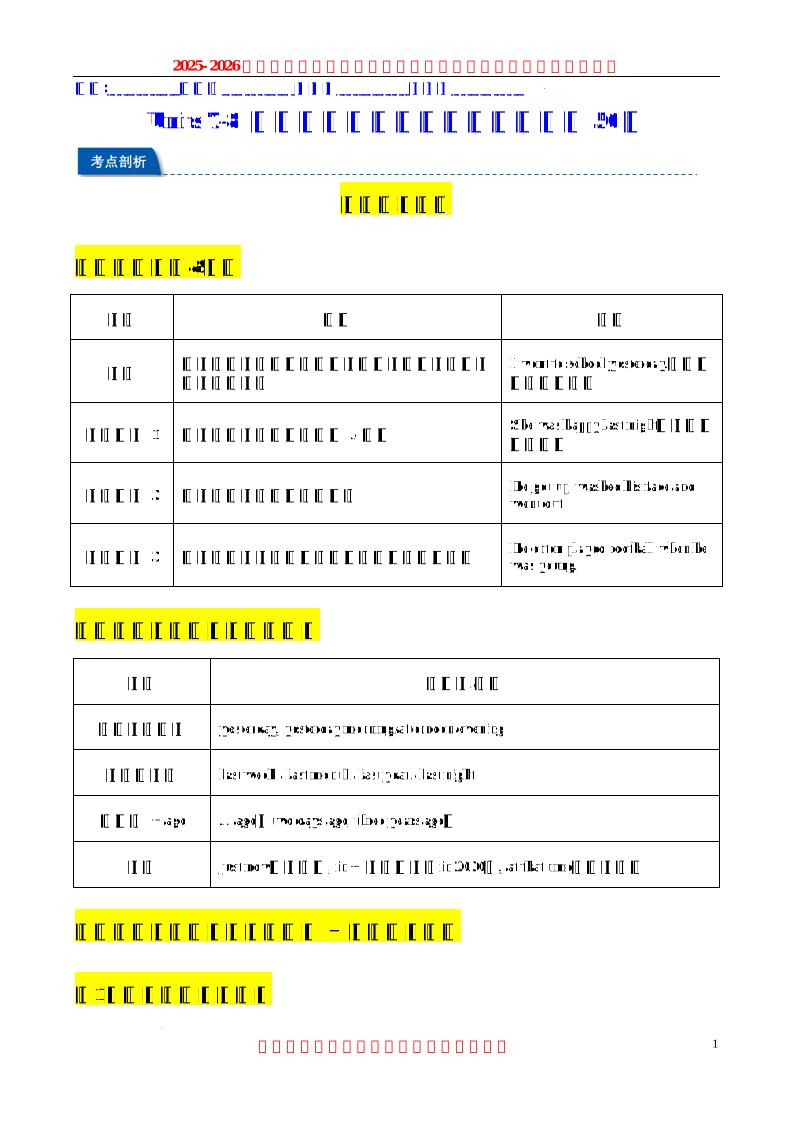
语法知识精讲
一、基本概念&用法
项目
内容
例句
定义
表示过去某个时间发生的动作或存在的状态,动作现在已结束
I went to school yesterday.(我昨天去上学了)
核心用法 1
过去具体时间发生的动作 / 状态
She was happy last night.(她昨晚很开心)
核心用法 2
过去连续发生的一系列动作
He got up, washed his face and went out.
核心用法 3
过去经常、习惯性的动作(常与频度词连用)
He often played football when he was young.
二、常用时间标志词(必背)
分类
标志词/短语
单个过去时间
yesterday, yesterday morning/afternoon/evening
过去时间段
last week / last month / last year / last night
时间段 + ago
... ago(two days ago, three years ago)
其他
just now(刚才), in + 过去年份(in 2020), at that time(在那时)
三、动词变化规则(规则动词 + 不规则动词)
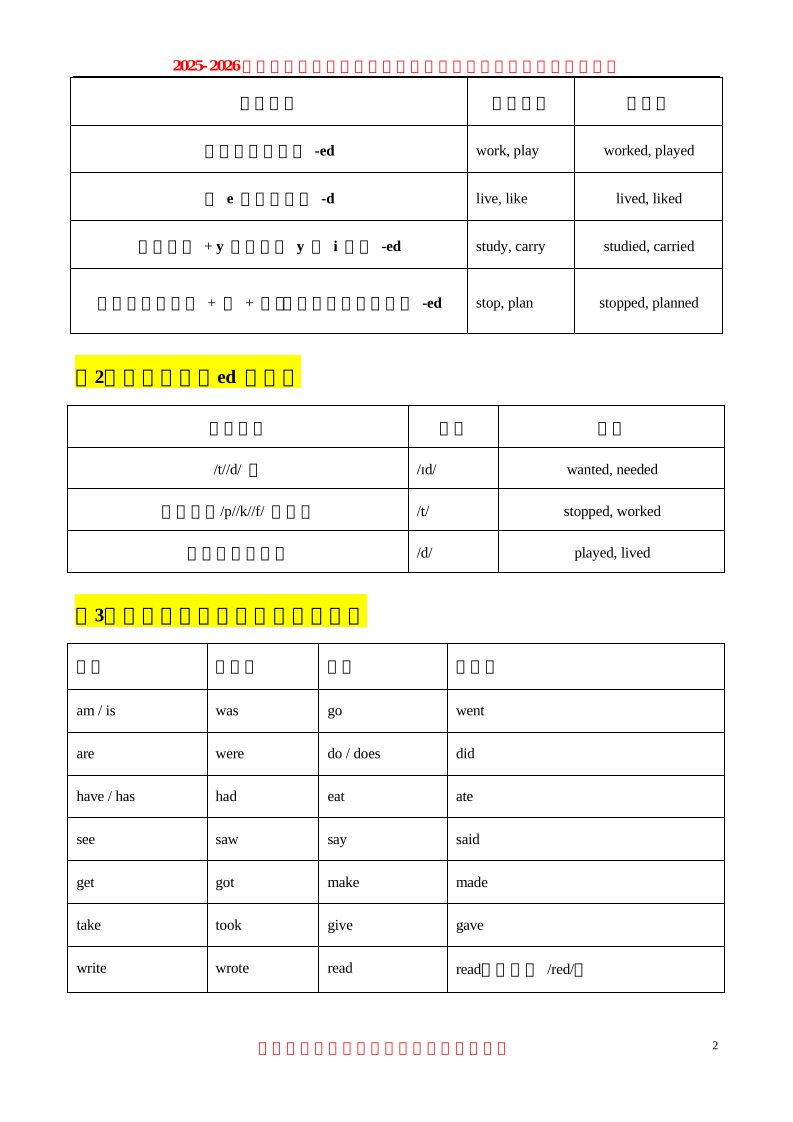
(1)规则动词变过去式
变化规则
动词原形
过去式
一般情况直接加 -ed
work, play
worked, played
以 e 结尾,只加 -d
live, like
lived, liked
辅音字母 + y 结尾,变 y 为 i 再加 -ed
study, carry
studied, carried
重读闭音节(辅 + 元 + 辅),双写末尾辅音再加 -ed
stop, plan
stopped, planned
(2)发音规则(ed 读音)
结尾音标
读音
例词
/t//d/ 后
/ɪd/
wanted, needed
清辅音(/p//k//f/ 等)后
/t/
stopped, worked
浊辅音、元音后
/d/
played, lived
(3)高频不规则动词(中考常考)
原形
过去式
原形
过去式
am / is
was
go
went
are
were
do / does
did
have / has
had
eat
ate
see
saw
say
said
get
got
make
made
take
took
give
gave
write
wrote
read
read(读音变 /red/)
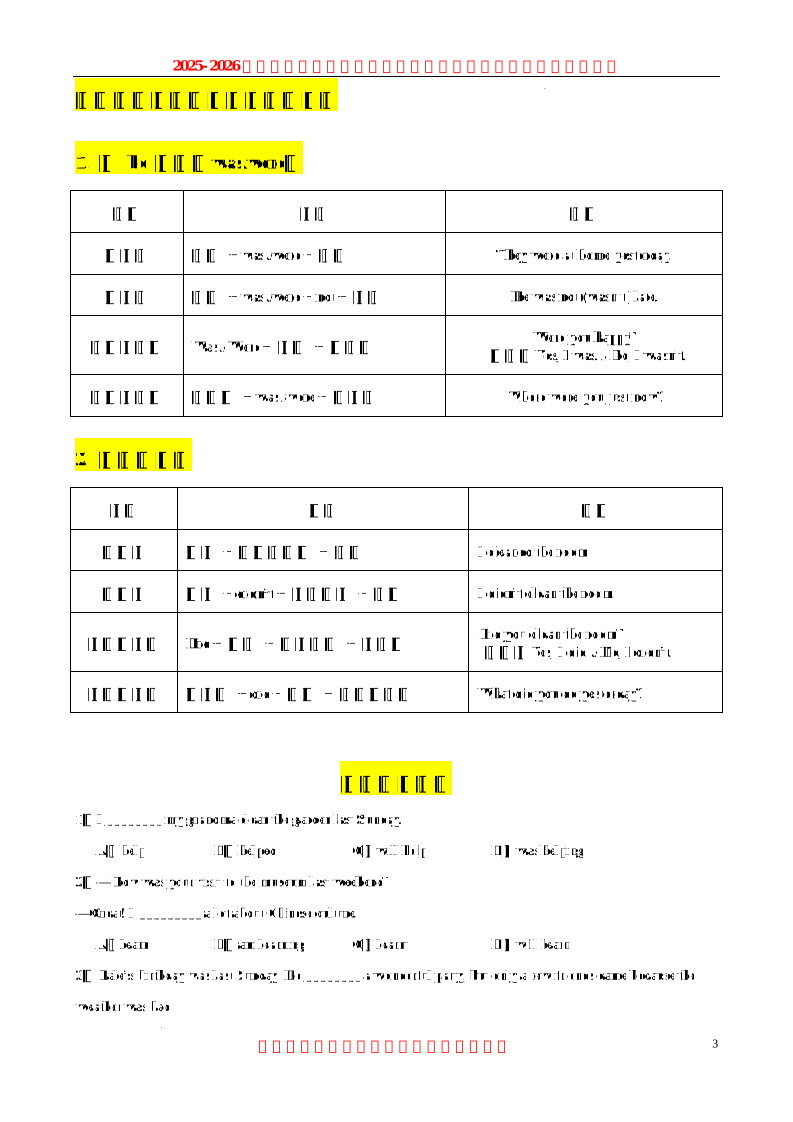
四、四种句型结构(重点考点)
1. 含 be 动词(was/were)
句型
结构
例句
肯定句
主语 + was /were + 其他
They were at home yesterday.
否定句
主语 + was /were + not + 其他
He was not (wasn’t) late.
一般疑问句
Was / Were + 主语 + 其他?
Were you happy?
回答:Yes, I was. / No, I wasn’t.
特殊疑问句
疑问词 + was /were + 主语?
Where were you just now?
2. 含实义动词
句型
结构
例句
肯定句
主语 + 动词过去式 + 其他
I cleaned the room.
否定句
主语 + didn’t + 动词原形 + 其他
I didn’t clean the room.
一般疑问句
Did + 主语 + 动词原形 + 其他?
Did you clean the room?
回答:Yes, I did. / No, I didn’t.
特殊疑问句
疑问词 + did + 主语 + 动词原形?
What did you do yesterday?
语法知识精练
1.I ________ my grandma clean the garden last Sunday.
A.help B.helped C.will help D.was helping
【答案】B
【详解】句意:上周日我帮助我的奶奶打扫了花园。
考查动词时态。根据时间状语“last Sunday”可知,动作发生在过去,应使用一般过去时。使用动词过去式helped。故选B。
2.—How was your visit to the museum last weekend?
—Great! I _________ a lot about Chinese culture.
A.learn B.am learning C.learnt D.will learn
【答案】C
【详解】句意:——你上周末去博物馆的参观怎么样?——太棒了!我学到了很多关于中国文化的知识。
考查动词时态。根据“last weekend”可知,此处描述过去发生的动作,要用一般过去时。故选C。
3.Dale’s birthday was last Sunday. He ________ a wonderful party, but only a few friends came because the weather was bad.
A.expects B.expected C.is expecting D.will expect
【答案】B
【详解】句意:Dale的生日是上个星期天。他期待了一个精彩的派对,但只有几个朋友来了,因为天气不好。
考查动词时态辨析。expects期望,一般现在时;expected期望了,一般过去时; is expecting正在期望,现在进行时;will expect将会期望,一般将来时。根据时间状语“last Sunday”和后半句动词“came” (过去式),可知整个事件发生在过去,为一般过去时,空处需用动词的过去式。故选B。
4.The cheesecake is too sweet. I think you ________ too much sugar.
A.put B.puts C.putted D.putten
【答案】A
【详解】句意:这个芝士蛋糕太甜了。我认为你放了太多糖。
考查动词过去式。put 放,动词原形、过去式或过去分词;puts 放,第三人称单数形式; putted 表达错误;putten 表达错误。根据句意可知,动作“放糖”发生在过去(蛋糕已制成),且主语“you”为第二人称,动词需用过去式;put是不规则动词,过去式仍为put。故选A。
5.—When ________ you ________ this book?
—I bought it yesterday.
A.did; buy B.do; buy C.did; bought D.do; bought
【答案】A
【详解】句意:——你什么时候买的这本书?——我昨天买的。
根据“yesterday”可知,此处用一般过去时。特殊疑问句结构为“特殊疑问词+did+主语+动词原形”,故第一空用助动词did,第二空用动词原形buy。
6.— There ________ a lot of fish in the river ten years ago.
— But now it’s polluted.
A.is B.are C.was D.were
【答案】D
【详解】句意:——十年前河里有很多鱼。——但现在它被污染了。
根据时间状语“ten years ago”可知,句子用一般过去时;主语“a lot of fish”中fish为单复数同形,此处表示复数概念,be动词用were。
7.—I used to ________ up late, but now I’m used to ________ up early.
—That’s a good habit.
A.get; get B.getting; getting C.get; getting D.getting; get
【答案】C
【详解】句意:——我过去常常很晚起床,但现在我习惯早起了。——那是个好习惯。
前后是转折关系,表示之前很晚起床,现在习惯早起,“used to do sth.”是固定短语,表示“过去常常做某事”,所以第一个空应填get;“be used to doing sth.”是固定短语,表示“习惯于做某事”,所以第二个空应填getting。
8.Transport________ very slow and difficult in the past.
A.used to be B.is used to be C.use to be D.is used to being
【答案】A
【详解】句意:在过去,交通非常缓慢且困难。
根据“in the past”可知,句子描述的是过去的情况,应该使用“used to do sth.”结构,表示“过去常常做某事”。在这个结构中,“used”是动词“use”的过去式,后面跟动词原形“be”,构成“used to be”,表示“过去是……”。
9.—What did Emma do during the summer holiday?
—She______ her uncle in Beijing.
A.visited B.visits C.is visiting D.will visit
【答案】A
【详解】句意:——Emma暑假期间做了什么?——她看望了她在北京的叔叔。
根据问句中的助动词“did”以及时间短语“during the summer holiday”可知,此处询问的是过去发生的动作,答句应使用一般过去时与之对应。
10.— Where did you go on vacation?
— I ________ to the mountains with my family.
A.go B.went C.goes D.going
【答案】B
【详解】句意:——你假期去了哪里?——我和我的家人去了山里。
根据问句“Where did you go on vacation?”中的助动词“did”可知,动作发生在过去,答语应用一般过去时,go的过去式为went。
11.I ________ to Beijing last summer vacation and I had a great time there.
A.go B.went C.will go D.have gone
【答案】B
【详解】句意:去年暑假我去了北京,在那里玩得很开心。
根据时间状语“last summer vacation”可知动作发生在过去,应用一般过去时,动词go的过去式为went。故选B。
12.—Harry’s new short videos about school ________ on Bilibili.
—Let’s watch them together.
A.gave up B.came out C.passed by D.moved away
【答案】B
【详解】句意:——哈利关于学校的新短视频在Bilibili上发布了。——让我们一起看吧。
gave up放弃;came out出版、发行或问世;passed by经过;moved away搬走。根据答语“Let’s watch them together.”可知视频已经可以观看,说明视频已经上线发布,came out符合语境。
13.After months of preparation, the community event ________ to be a huge success.
A.turned out B.turned on C.turned into D.turned up
【答案】A
【详解】经过数月的准备, 这场社区活动最终证明使一个巨大的成功。
turned out结果是;证明是;turned on打开;turned into变成;turned up调高。根据此句的语境可知, 这场社区活动最终证明使一个巨大的成功。所以用“turned out”。
14.— You look very nice in your new shoes today.
— Oh, really? I ________ them when they were on sale.
A.buy B.bought C.was buying D.will buy
【答案】B
【详解】句意:——你今天穿这双新鞋看起来很好看。——哦,真的吗?我是在打折的时候买的。
根据答语中时间状语从句“when they were on sale.”可知,买鞋的动作发生在过去,动词需用过去式bought。
15.—Tom, what did you do yesterday?
—I ________ the history museum with my friends.
A.visit B.visited C.will visit D.am visiting
【答案】B
【详解】句意:——汤姆,你昨天做了什么?——我和朋友们参观了历史博物馆。
根据问句时间状语yesterday可知,事情发生在过去,应用一般过去时,应填visited。
16.The hostess ________ me how to make pumpkin pie when I was in the US.
A.taught B.tells C.teach D.is teaching
【答案】A
【详解】句意:当我在美国的时候,女主人教了我如何做南瓜派。
根据时间状语从句when I was in the US中的was可知,句子描述的是过去发生的事情,应用一般过去时。
17.Wang Hui used ________football when he was young.
A.play B.to playing C.playing D.to play
【答案】D
【详解】 句意:王辉年轻时常常踢足球。
“used to do sth.”为固定结构,意为“过去常常做某事”,应填to play。
18.—What ________ your sister ________ in 2008?
—She wrote a book called Hero.
A.did; write B.was; write C.does; write D.do; write
【答案】A
【详解】句意:——你的姐姐在2008年写了什么?——她写了一本叫做《英雄》的书。
根据“in 2008”可知,句子描述的是过去发生的事情,所以应该用一般过去时。在特殊疑问句中,对于实义动词的提问,需要借助助动词did来完成,并且助动词did后要用动词原形,所以第一空用did,第二空用write。
19.The students in Grade 9 ________ the English listening and speaking test for junior high school on April 26th, 2025.
A.finish B.finished C.will finish D.is finishing
【答案】B
【详解】句意:九年级的学生们在2025年4月26日完成了初中英语听说考试。
根据句中的时间状语“on April 26th, 2025”可知,这是一个具体的过去时间点。描述过去发生的动作或存在的状态应用一般过去时。动词finish的过去式为finished。
20.My classmates and I ________ a lot of lovely photos during the trip last month.
A.will take B.takes C.was taken D.took
【答案】D
【详解】句意:上个月的旅行中,我和我的同学们拍了很多可爱的照片。
take photos拍照,选项都是take的各种形式。will take一般将来时;takes一般现在时,第三人称单数;was taken一般过去时被动语态;took一般过去时。根据“last month”可知时态为一般过去时,且主语“My classmates and I”与“take photos”之间是主动关系,应填“took”。
21.—Where did you go last Sunday?
—I ________ to the library with my cousin.
A.go B.went C.will go D.am going
【答案】B
【详解】句意:——上星期天你去哪里了?——我和表弟去了图书馆。
go去(原形);went去(过去式);will go将要去;am going正要去。根据问句中的时间状语“last Sunday”及助动词“did”可知,句子时态为一般过去时,答句谓语动词应用过去式went。应填went。
22.—________ you run very fast now, Grandpa?
—No, I am afraid not. But I ________ when I was young.
A.Could; could B.Can; could C.Could; can D.Can; can
【答案】B
【详解】句意:——爷爷,你现在能跑很快吗?——不,恐怕不能。但我年轻时能。
can能;could能,是can的过去式。第一空根据时间状语“now”可知,询问现在的能力,应用Can;第二空根据“when I was young”可知,描述过去的能力,应用Could。
23.I ________ my travel plan to my parents yesterday.
A.shows B.showed C.is showing D.will show
【答案】B
【详解】句意:我昨天向我的父母展示了我的旅行计划。
根据“yesterday”,动作发生在过去,句子应用一般过去时,谓语动词用过去式,应填showed。
24.—When did you begin to like cars?
—________ I was a child, I ________ love playing with toy cars.
A.When; used to B.Before; use to
C.After; didn’t use to D.As; used to not
【答案】A
【详解】句意:——你什么时候开始喜欢汽车的?——当我还是个孩子的时候,我过去常常喜欢玩玩具汽车。
第一空表示“当……时候”,引导时间状语从句,应用When;第二空表示“过去常常”,应用used to do结构。
25.—Who ________ dinner yesterday evening in your family?
—My mother. She ________ dinner for us every day.
A.cooks; cooks B.cooks; cooked C.cooked; cooked D.cooked; cooks
【答案】D
【详解】句意:——你家昨天晚上谁做晚饭?——我妈妈。她每天为我们做晚饭。
第一空根据时间状语yesterday evening可知句子是一般过去时,动词用过去式cooked;第二空根据时间状语every day可知句子是一般现在时,主语She是第三人称单数,动词用三单形式cooks。
26.—Where is Tom?
—He ________ to the library just now. He’ll be back soon.
A.goes B.went C.will go D.has gone
【答案】B
【详解】句意:——汤姆在哪里?——他刚才去了图书馆。他很快就会回来。
根据时间状语“just now”可知,动作发生在过去,应用一般过去时,谓语动词应用过去式went。
27.His father ________ a bike for him yesterday and now he ________ it with his brother.
A.buys; rides B.buys; is riding C.bought; is riding D.bought; rides
【答案】C
【详解】句意:他的父亲昨天给他买了一辆自行车,现在他正和他的兄弟一起骑它。
buys买(一般现在时);rides骑(一般现在时);bought买(一般过去时);is riding正在骑(现在进行时)。根据时间状语“yesterday”可知第一空应用一般过去时bought;根据“now”可知第二空应用现在进行is riding。应填bought;is riding。
28.My father usually ________ newspapers after dinner, but yesterday he ________ a movie.
A.reads; watches B.read; watched C.reads; watched D.read; watch
【答案】C
【详解】句意:我父亲平时晚饭后读报纸,但昨天他看了一场电影。
根据句中的频度副词“usually”可知,此处描述的是经常性的习惯动作,需用一般现在时。由于主语“My father”为第三人称单数,第一空谓语动词需用单三形式reads;根据时间状语“yesterday”可知,此处描述的是过去发生的具体动作,需用一般过去时,第二空使用watched。
29.—Mum, I can’t find my key to the door.
—Oh, it ________ on the sofa when you came in. Look under the newspaper.
A.lies B.lay C.laid D.lain
【答案】B
【详解】句意:——妈妈,我找不到我的门钥匙了。——哦,当你进来的时候它躺在沙发上。看看报纸下面。
根据时间状语“when you came in”可知句子描述的是过去的状态,应用一般过去时。此处表示钥匙“躺”在沙发上,是不及物动词lie,其过去式为lay。
30.—________ people ________ to make Zhinanzhen in the Song Dynasty?
—Yes, they did.
A.Did; start B.Can; start C.Will; start D.Do; start
【答案】A
【详解】句意:——宋朝的人们开始制作指南针了吗?——是的,他们开始了。
根据答语“Yes, they did.”可知,问句是由助动词Did引导的一般过去时的一般疑问句,谓语动词用原形。时间状语“in the Song Dynasty”也表明时态为一般过去时。
31.—How was your school trip last week?
—________
A.It’s a big city. B.It was great. C.I’m fine. D.I like it very much.
【答案】B
【详解】句意:——上周你的学校旅行怎么样?——它很棒。
问句询问过去旅行的情况,时态为一般过去时,答语需针对旅行进行评价且保持时态一致。A项时态为现在时且指代地点;C项用于回答身体状况问候;D项时态为现在时表达喜好;B项为一般过去时且评价旅行情况,符合语境。
32.The traffic jam was ________ than we ________.
A.worse; expected B.bad; expect C.worst; expected D.worse; expecting
【答案】A
【详解】句意:交通堵塞比我们预想的要更糟糕。
worse更糟的(比较级);bad坏的(原级);worst最糟的(最高级)。第一空根据“than”可知,两者比较应用比较级worse;第二空描述过去对交通堵塞的预期,应用一般过去时expected;应填worse;expected。
33.—What did you do during the May Day holiday?
—I ________ some TV shows and ________ an interesting book.
A.watch; read B.watched; readed
C.watched; read D.watches; reads
【答案】C
【详解】句意:——五一假期期间你做了什么?——我看了一些电视节目并且读了一本有趣的书。
根据问句“What did you do...”中的助动词did可知,对话描述的是过去发生的事情,时态为一般过去时,谓语动词需用过去式。watch 的过去式为watched,read的过去式为read(不规则变化)。
34.My mother ________ some bread and water for our trip yesterday morning.
A.prepare B.prepares C.prepared D.preparing
【答案】C
【详解】句意:昨天早上我的妈妈为我们的旅行准备了一些面包和水。
yesterday morning是一般过去时标志,prepare“准备”需用过去式,为prepared。
35.—________you ever ________to Beijing?
—Yes, I ________there two years ago.
A.Did; went; went B.Did; go; have been
C.Have; been; went D.Have; been; have been
【答案】C
【详解】句意:——你曾经去过北京吗?——是的,我两年前去过那里。
考查现在完成时与一般过去时的用法。第一句询问“曾经去过”的经历,应用现在完成时,现在完成时态的结构为have/has+动词的过去分词,have been to表示“曾经去过”;第二句回答“two years ago”是一个表示过去的时间状语,所以应用一般过去时“went”,故选C。
36.I ________ to be popular in school, but now I get ________ attention everywhere I go.
A.wasn’t used; many B.didn’t use; tons of C.used not; many D.use; much
【答案】B
【详解】句意:我过去在学校不受欢迎,但现在我走到哪里都备受关注。
第一空用didn’t use to do sth.表示“过去不常做某事”;第二空attention是不可数名词,tons of可修饰可数或不可数名词,表示“大量的”,many只能修饰可数名词复数,故用tons of。
37.Airshow China ________ every two years in China, and the 15th one in Zhuhai, Guangdong ________ people China’ s strong power and high technology in November 2024.
A.takes place; shows B.took place; shows C.takes place; showed D.took place; showed
【答案】C
【详解】句意:中国国际航空航天博览会每两年在中国举办一次,第15届于2024年11月在广东珠海向人们展示了中国的强大实力和高新技术。
第一空根据时间状语“every two years”可知表示经常性、习惯性的动作,用一般现在时,主语Airshow China是第三人称单数,谓语动词用takes place;第二空根据时间状语“in November 2024”可知动作发生在过去,用一般过去时,谓语动词用showed。
38.—I ________ think Jack has changed a lot.
—Yes! He used to ________ up late, but now he is used to going to bed early.
A.personally; staying B.personal; stay
C.personal; staying D.personally; stay
【答案】D
【详解】句意:——我个人认为杰克改变了很多。——是的!他过去常常熬夜,但现在他习惯了早睡。
第一空修饰动词think,需用副词personally,意为“就个人而言”;第二空考查used to do sth.结构,意为“过去常常做某事”,后接动词原形stay,而be used to doing sth.意为“习惯做某事”。
39.Lily often ________ at school early, but yesterday she ________ late.
A.arrived; arrives B.arrived; arrived C.arrives; arrives D.arrives; arrived
【答案】D
【详解】句意:莉莉经常很早到学校,但是昨天她迟到了。
第一空根据频度副词often可知应用一般现在时,主语Lily是第三人称单数,谓语动词用arrives;第二空根据时间状语yesterday可知应用一般过去时,谓语动词用arrived。故选D。
40.—Has John ever visited the Great Wall?
—Yes. He ________ it last year.
A.visits B.has visited C.was visiting D.visited
【答案】D
【详解】句意:——约翰曾经参观过长城吗?——是的。他去年参观过那里。
考查动词时态。根据“last year”可知句子为一般过去时,动词应该用过去式visited。故选D。
41.Jack didn’t _________ my birthday party but _________ us for dinner yesterday evening.
A.take part in; joined B.join; took part in
C.join; take part in D.take part in; join
【答案】A
【详解】句意:杰克没有参加我的生日聚会,但昨天晚上和我们一起吃晚餐。
考查动词短语辨析。take part in参加某个活动;join加入某个组织、机构等。第一个空后的my birthday party是生日聚会,因此用take part in,排除B/C;第二个空后是us for dinner,这里是加入我们,此题的时态为一般过去时,因此用joined。故选A。
42.—How long did your English teacher teach at this school?
—Ah, she ________ at this school since she ________ Wuhan.
A.has taught; has come to B.taught; came to
C.has been teaching; came to D.has taught; has been to
【答案】C
【详解】句意:——你的英语老师在这所学校教了多久?——啊,自从她来到武汉后,她就一直在这所学校教书。
考查时态搭配。“since”引导的时间状语从句,主句需用现在完成时或现在完成进行时(强调持续动作),从句用一般过去时。“has been teaching”强调从过去持续到现在的动作,“came to”表示过去一次性动作。故选C。
43.—I ________ in bed and ________ a wet towel on my head all day yesterday because of the headache.
—So you ________ to me about your body condition.
A.lay; laid; lay B.lied; lay; laid
C.laid; lay; lied D.lay; laid; lied
【答案】D
【详解】句意:——因为头痛,我昨天一整天都躺在床上,把湿毛巾放在头上。——所以你在身体状况这件事上对我撒谎了。
考查动词辨析。lay放置,躺,是lie的过去式;laid放置,是lay的过去式;lied撒谎,是lie的过去式。根据“I…in bed”可知,此处指躺在床上,根据“yesterday”可知,句子时态为一般过去时,lie“躺”,过去式为lay;根据“…a wet towel on my head”可知,此处指湿毛巾放在头上,lay“放置”,过去式为laid;根据“So you…to me about your body condition.”可知,此处指对方撒谎了,lie“说谎”,过去式为lied。故选D。
44.By midnight, I ________ the novel for six hours. I finally ________ the novel last night.
A.had read; finished B.was reading; have finished
C.read; have finished D.have read; finished
【答案】A
【详解】句意:到午夜为止,我已经读了这本小说六个小时。我昨晚终于读完了这本小说。
考查动词时态,根据“By midnight, I…the novel for six hours. I finally…the novel last night.”可知,第一空“by midnight”表示过去的时间点,强调在该时间点之前已持续六小时,需用过去完成时had read;第二空“last night”为明确过去时间,需用一般过去时finished。故选A。
45.He keeps on ________ English every day. That’s why he ________ the best in himself in the English speech competition last week.
A.practice to speak; brings out
B.practicing speaking; brought back
C.practicing speaking; brought out
D.practice speaking; brings back
【答案】C
【详解】句意:他每天坚持练习说英语。这就是他在上周的英语演讲比赛中展现出自己最好的一面的原因。
考查非谓语动词和动词短语辨析。“keep on doing sth.”表示“坚持做某事”,所以第一空应该用动名词形式“practicing”,排除A、D两项。“bring out the best in sb.”表示“激发某人的最佳品质”,“bring back”表示“带回,使回忆起”,此处表达的是他在英语演讲比赛中展现出自己最好的一面;根据“last week”可知,谓语动词用过去式,所以第二空应该用“brought out”,排除B项。故选C。
46.—How does Jack usually go to work?
—He ________ drive a car, but now he ________ there to lose weight.
A.used to; is used to walk B.was used to; is used to walking
C.was used to; is used to walk D.used to; is used to walking
【答案】D
【详解】句意:——Jack通常怎么去上班?——他过去常常开车,但现在他习惯于步行去那里减肥。
考查used to和be used to的用法辨析。used to do sth.表示“过去常常做某事”;be used to doing sth.表示“习惯于做某事”。第一个空描述过去的开车习惯,用used to;第二个空表示现在习惯于步行,需用is used to walking。故选D。
47.—You look so comfortable with the new job now. Did you ________ the busy schedule at first?
—Sure. I ________ have a lot of free time before, so it took me nearly a month to adapt.
A.get used to; used to B.used to; didn’t use to
C.get used to; didn’t use to D.used to; got used to
【答案】A
【详解】句意:——你现在对新工作看起来很适应。你一开始习惯繁忙的日程吗?——当然。我过去常常有很多空闲时间,所以我花了将近一个月才适应。
考查短语辨析。get used to习惯于,后接名词或动名词;used to do过去常常做某事,现已不再。第一空,根据“Did you ... the busy schedule ...”可知,此处是询问“是否习惯繁忙日程”,应用get used to;第二空,根据“I ... have a lot of free time before,”可知,此处是指过去常有很多空闲时间,用used to。故选A。
48.He used to ________ up late, but now he gets used to ________ up early.
A.stay; get B.staying; getting C.stay; getting D.staying; get
【答案】C
【详解】句意:他过去常常熬夜,但现在他习惯早起。
考查固定搭配的用法。used to后接动词原形,意为“过去常常做某事”;get used to后接动名词,意为“习惯于做某事”。结合这两个结构,第一空填动词原形stay,第二空填动名词getting。故选C。
49.We ________ in cash, but now we ________ by mobile phone.
A.used to pay; are used to pay
B.used to pay; are used to paying
C.are used to paying; are used to pay
D.were used to pay; are used to paying
【答案】B
【详解】句意:我们过去常常用现金支付,但现在我们习惯用手机支付。
考查动词短语的用法。used to pay过去常常支付;are used to pay被用来支付;are used to paying习惯支付;were used to pay被用来支付。第一空表示“过去常常用现金支付”,应用used to do;第二空表示“现在习惯用手机支付”,应用are used to doing。故选B。
50.— You can’t take photos here. Look at the sign. It says “NO PHOTOS”.
— Sorry, I ________ see it.
A.don’t B.didn’t C.won’t D.am going to
【答案】B
【详解】句意:——你不能在这里拍照。看这个标志。上面写着“禁止拍照”。——对不起,我刚才没看见。
don’t不;didn’t没;won’t将不;am going to打算。根据对话语境可知,说话人是在对方提醒之前没看到标志,表示过去发生的动作或状态,应用一般过去时。故选B。
2
同步新教材,周周有练习,月月有重点!
1
同步新教材,周周有练习,月月有重点!
学科网(北京)股份有限公司
$
2025-2026学年一线教师制作新教材英语同步精品系列资料,名师遴选!
2025-2026学年一线教师制作新教材英语同步精品系列资料,名师遴选!
学校:___________姓名:___________班级:___________考号:___________
Units 7-8 重点语法:一般过去时精讲精练50题
语法知识精讲
一、基本概念&用法
项目
内容
例句
定义
表示过去某个时间发生的动作或存在的状态,动作现在已结束
I went to school yesterday.(我昨天去上学了)
核心用法 1
过去具体时间发生的动作 / 状态
She was happy last night.(她昨晚很开心)
核心用法 2
过去连续发生的一系列动作
He got up, washed his face and went out.
核心用法 3
过去经常、习惯性的动作(常与频度词连用)
He often played football when he was young.
二、常用时间标志词(必背)
分类
标志词/短语
单个过去时间
yesterday, yesterday morning/afternoon/evening
过去时间段
last week / last month / last year / last night
时间段 + ago
... ago(two days ago, three years ago)
其他
just now(刚才), in + 过去年份(in 2020), at that time(在那时)
三、动词变化规则(规则动词 + 不规则动词)
(1)规则动词变过去式
变化规则
动词原形
过去式
一般情况直接加 -ed
work, play
worked, played
以 e 结尾,只加 -d
live, like
lived, liked
辅音字母 + y 结尾,变 y 为 i 再加 -ed
study, carry
studied, carried
重读闭音节(辅 + 元 + 辅),双写末尾辅音再加 -ed
stop, plan
stopped, planned
(2)发音规则(ed 读音)
结尾音标
读音
例词
/t//d/ 后
/ɪd/
wanted, needed
清辅音(/p//k//f/ 等)后
/t/
stopped, worked
浊辅音、元音后
/d/
played, lived
(3)高频不规则动词(中考常考)
原形
过去式
原形
过去式
am / is
was
go
went
are
were
do / does
did
have / has
had
eat
ate
see
saw
say
said
get
got
make
made
take
took
give
gave
write
wrote
read
read(读音变 /red/)
四、四种句型结构(重点考点)
1. 含 be 动词(was/were)
句型
结构
例句
肯定句
主语 + was /were + 其他
They were at home yesterday.
否定句
主语 + was /were + not + 其他
He was not (wasn’t) late.
一般疑问句
Was / Were + 主语 + 其他?
Were you happy?
回答:Yes, I was. / No, I wasn’t.
特殊疑问句
疑问词 + was /were + 主语?
Where were you just now?
2. 含实义动词
句型
结构
例句
肯定句
主语 + 动词过去式 + 其他
I cleaned the room.
否定句
主语 + didn’t + 动词原形 + 其他
I didn’t clean the room.
一般疑问句
Did + 主语 + 动词原形 + 其他?
Did you clean the room?
回答:Yes, I did. / No, I didn’t.
特殊疑问句
疑问词 + did + 主语 + 动词原形?
What did you do yesterday?
语法知识精练
1.I ________ my grandma clean the garden last Sunday.
A.help B.helped C.will help D.was helping
2.—How was your visit to the museum last weekend?
—Great! I _________ a lot about Chinese culture.
A.learn B.am learning C.learnt D.will learn
3.Dale’s birthday was last Sunday. He ________ a wonderful party, but only a few friends came because the weather was bad.
A.expects B.expected C.is expecting D.will expect
4.The cheesecake is too sweet. I think you ________ too much sugar.
A.put B.puts C.putted D.putten
5.—When ________ you ________ this book?
—I bought it yesterday.
A.did; buy B.do; buy C.did; bought D.do; bought
6.— There ________ a lot of fish in the river ten years ago.
— But now it’s polluted.
A.is B.are C.was D.were
7.—I used to ________ up late, but now I’m used to ________ up early.
—That’s a good habit.
A.get; get B.getting; getting C.get; getting D.getting; get
8.Transport________ very slow and difficult in the past.
A.used to be B.is used to be C.use to be D.is used to being
9.—What did Emma do during the summer holiday?
—She______ her uncle in Beijing.
A.visited B.visits C.is visiting D.will visit
10.— Where did you go on vacation?
— I ________ to the mountains with my family.
A.go B.went C.goes D.going
11.I ________ to Beijing last summer vacation and I had a great time there.
A.go B.went C.will go D.have gone
12.—Harry’s new short videos about school ________ on Bilibili.
—Let’s watch them together.
A.gave up B.came out C.passed by D.moved away
13.After months of preparation, the community event ________ to be a huge success.
A.turned out B.turned on C.turned into D.turned up
14.— You look very nice in your new shoes today.
— Oh, really? I ________ them when they were on sale.
A.buy B.bought C.was buying D.will buy
15.—Tom, what did you do yesterday?
—I ________ the history museum with my friends.
A.visit B.visited C.will visit D.am visiting
16.The hostess ________ me how to make pumpkin pie when I was in the US.
A.taught B.tells C.teach D.is teaching
17.Wang Hui used ________football when he was young.
A.play B.to playing C.playing D.to play
18.—What ________ your sister ________ in 2008?
—She wrote a book called Hero.
A.did; write B.was; write C.does; write D.do; write
19.The students in Grade 9 ________ the English listening and speaking test for junior high school on April 26th, 2025.
A.finish B.finished C.will finish D.is finishing
20.My classmates and I ________ a lot of lovely photos during the trip last month.
A.will take B.takes C.was taken D.took
21.—Where did you go last Sunday?
—I ________ to the library with my cousin.
A.go B.went C.will go D.am going
22.—________ you run very fast now, Grandpa?
—No, I am afraid not. But I ________ when I was young.
A.Could; could B.Can; could C.Could; can D.Can; can
23.I ________ my travel plan to my parents yesterday.
A.shows B.showed C.is showing D.will show
24.—When did you begin to like cars?
—________ I was a child, I ________ love playing with toy cars.
A.When; used to B.Before; use to
C.After; didn’t use to D.As; used to not
25.—Who ________ dinner yesterday evening in your family?
—My mother. She ________ dinner for us every day.
A.cooks; cooks B.cooks; cooked C.cooked; cooked D.cooked; cooks
26.—Where is Tom?
—He ________ to the library just now. He’ll be back soon.
A.goes B.went C.will go D.has gone
27.His father ________ a bike for him yesterday and now he ________ it with his brother.
A.buys; rides B.buys; is riding C.bought; is riding D.bought; rides
28.My father usually ________ newspapers after dinner, but yesterday he ________ a movie.
A.reads; watches B.read; watched C.reads; watched D.read; watch
29.—Mum, I can’t find my key to the door.
—Oh, it ________ on the sofa when you came in. Look under the newspaper.
A.lies B.lay C.laid D.lain
30.—________ people ________ to make Zhinanzhen in the Song Dynasty?
—Yes, they did.
A.Did; start B.Can; start C.Will; start D.Do; start
31.—How was your school trip last week?
—________
A.It’s a big city. B.It was great. C.I’m fine. D.I like it very much.
32.The traffic jam was ________ than we ________.
A.worse; expected B.bad; expect C.worst; expected D.worse; expecting
33.—What did you do during the May Day holiday?
—I ________ some TV shows and ________ an interesting book.
A.watch; read B.watched; readed
C.watched; read D.watches; reads
34.My mother ________ some bread and water for our trip yesterday morning.
A.prepare B.prepares C.prepared D.preparing
35.—________you ever ________to Beijing?
—Yes, I ________there two years ago.
A.Did; went; went B.Did; go; have been
C.Have; been; went D.Have; been; have been
36.I ________ to be popular in school, but now I get ________ attention everywhere I go.
A.wasn’t used; many B.didn’t use; tons of C.used not; many D.use; much
37.Airshow China ________ every two years in China, and the 15th one in Zhuhai, Guangdong ________ people China’ s strong power and high technology in November 2024.
A.takes place; shows B.took place; shows C.takes place; showed D.took place; showed
38.—I ________ think Jack has changed a lot.
—Yes! He used to ________ up late, but now he is used to going to bed early.
A.personally; staying B.personal; stay
C.personal; staying D.personally; stay
39.Lily often ________ at school early, but yesterday she ________ late.
A.arrived; arrives B.arrived; arrived C.arrives; arrives D.arrives; arrived
40.—Has John ever visited the Great Wall?
—Yes. He ________ it last year.
A.visits B.has visited C.was visiting D.visited
41.Jack didn’t _________ my birthday party but _________ us for dinner yesterday evening.
A.take part in; joined B.join; took part in
C.join; take part in D.take part in; join
42.—How long did your English teacher teach at this school?
—Ah, she ________ at this school since she ________ Wuhan.
A.has taught; has come to B.taught; came to
C.has been teaching; came to D.has taught; has been to
43.—I ________ in bed and ________ a wet towel on my head all day yesterday because of the headache.
—So you ________ to me about your body condition.
A.lay; laid; lay B.lied; lay; laid
C.laid; lay; lied D.lay; laid; lied
44.By midnight, I ________ the novel for six hours. I finally ________ the novel last night.
A.had read; finished B.was reading; have finished
C.read; have finished D.have read; finished
45.He keeps on ________ English every day. That’s why he ________ the best in himself in the English speech competition last week.
A.practice to speak; brings out
B.practicing speaking; brought back
C.practicing speaking; brought out
D.practice speaking; brings back
46.—How does Jack usually go to work?
—He ________ drive a car, but now he ________ there to lose weight.
A.used to; is used to walk B.was used to; is used to walking
C.was used to; is used to walk D.used to; is used to walking
47.—You look so comfortable with the new job now. Did you ________ the busy schedule at first?
—Sure. I ________ have a lot of free time before, so it took me nearly a month to adapt.
A.get used to; used to B.used to; didn’t use to
C.get used to; didn’t use to D.used to; got used to
48.He used to ________ up late, but now he gets used to ________ up early.
A.stay; get B.staying; getting C.stay; getting D.staying; get
49.We ________ in cash, but now we ________ by mobile phone.
A.used to pay; are used to pay
B.used to pay; are used to paying
C.are used to paying; are used to pay
D.were used to pay; are used to paying
50.— You can’t take photos here. Look at the sign. It says “NO PHOTOS”.
— Sorry, I ________ see it.
A.don’t B.didn’t C.won’t D.am going to
2
同步新教材,周周有练习,月月有重点!
7
同步新教材,周周有练习,月月有重点!
学科网(北京)股份有限公司
$
资源预览图
1
2
3
相关资源
由于学科网是一个信息分享及获取的平台,不确保部分用户上传资料的 来源及知识产权归属。如您发现相关资料侵犯您的合法权益,请联系学科网,我们核实后将及时进行处理。