精品解析:2026年安徽黄山市休宁县渭桥乡渭桥中学等校 中考二模九年级英语试卷
2026-05-28
|
2份
|
34页
|
13人阅读
|
0人下载
资源信息
| 学段 | 初中 |
|---|---|
| 学科 | 英语 |
| 教材版本 | - |
| 年级 | 九年级 |
| 章节 | - |
| 类型 | 试卷 |
| 知识点 | - |
| 使用场景 | 中考复习-二模 |
| 学年 | 2026-2027 |
| 地区(省份) | 安徽省 |
| 地区(市) | 黄山市 |
| 地区(区县) | 休宁县 |
| 文件格式 | ZIP |
| 文件大小 | 587 KB |
| 发布时间 | 2026-05-28 |
| 更新时间 | 2026-05-28 |
| 作者 | 匿名 |
| 品牌系列 | - |
| 审核时间 | 2026-05-28 |
| 下载链接 | https://m.zxxk.com/soft/58089544.html |
| 价格 | 4.00储值(1储值=1元) |
| 来源 | 学科网 |
内容正文:
英 语
注意事项:
1.本试卷共四部分,十大题,满分120分,考试时间为120分钟。
2.全卷包括“试题卷”(8页)和“答题卡”(2页)两部分。
3.请务必在“答题卡”上答题,在“试题卷”上答题无效。
4.考试结束后,请将“试题卷”和“答题卡”一并交回。
第一部分 听力(共四大题,满分20分)
Ⅰ.短对话理解(共5小题;每小题1分,满分5分)
你将听到五段对话。每段对话后有一个小题,请在每小题所给的A、B、C三个选项中选出一个最佳选项。每段对话读两遍。
1. Which food does Jenny like best?
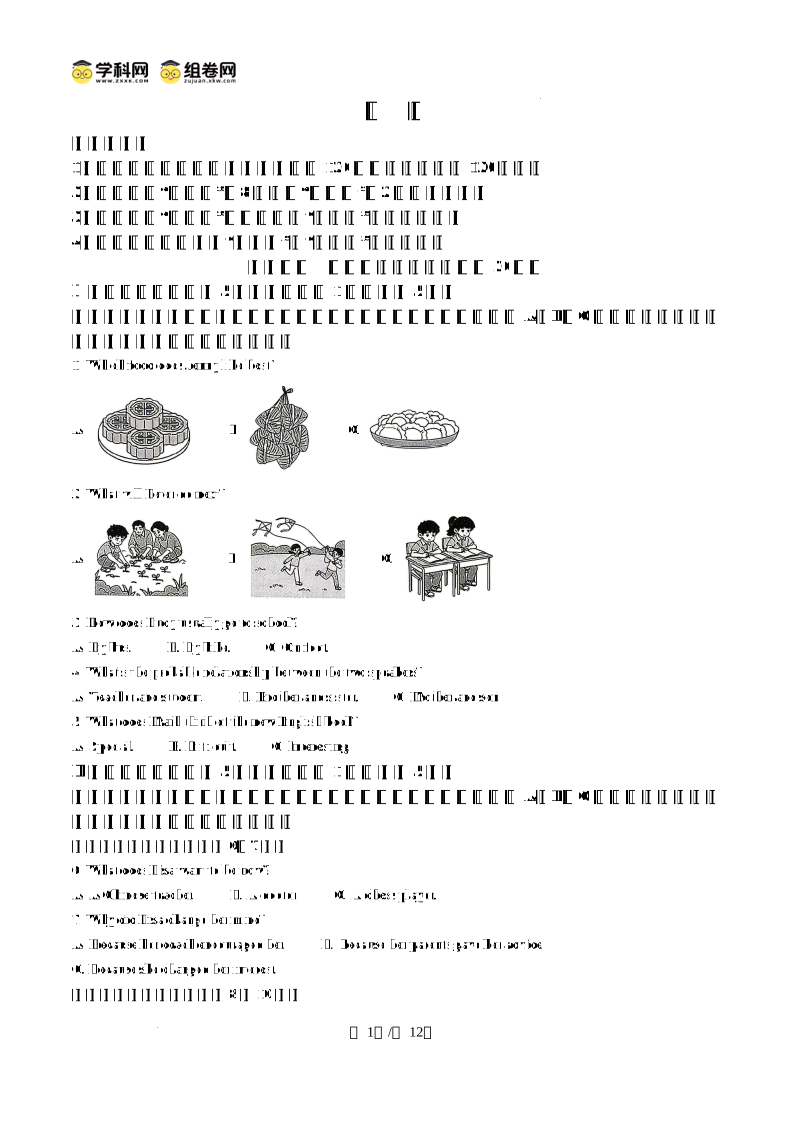
A. B. C.
2. What will Peter do next?
A. B. C.
3. How does Lucy usually go to school?
A. By bus. B. By bike. C. On foot.
4. What’s the probable relationship between the two speakers?
A. Teacher and student. B. Brother and sister. C. Mother and son.
5. What does Mark think of the new English book?
A. Special. B. Difficult. C. Interesting.
Ⅱ.长对话理解(共5小题;每小题1分,满分5分)
你将听到两段对话。每段对话后有几个小题,请在每小题所给的A、B、C三个选项中选出一个最佳选项。每段对话读两遍。
听下面一段对话,回答第6、7题。
6. What does Lisa want to be now?
A. A Chinese teacher. B. A doctor. C. A chess player.
7. Why did Lisa change her mind?
A. Because her coach encouraged her. B. Because her parents gave her advice.
C. Because she changed her interest.
听下面一段对话,回答第8至10题。
8. Where is Rose going this weekend?
A. To the cinema. B. To the Space Museum. C. To the spaceman’s home.
9. Who will go with Rose?
A. Her friends. B. Her cousins. C. Her parents.
10. What do the speakers mainly talk about?
A. Weekend plans. B. Favorite museums. C. School activities.
Ⅲ.短文理解(共5小题;每小题1分,满分5分)
你将听到一篇短文。短文后有五个小题,请根据短文内容,在每个小题所给的A、B、C三个选项中选出一个最佳选 项。短文读两遍。
11. Where did the speaker go for the spring trip?
A. To a farm. B. To a mountain. C. To a village.
12. When did they set off from the school gate?
A. At 7:30 a. m. B. At 8:00 a. m. C. At 8:30 a. m.
13. What did they do during an hour before lunchtime?
A. They played group games. B. They learned to make local food.
C. They picked fresh fruit and vegetables.
14. What did they eat for lunch?
A. Tea cakes. B. Sweet bread. C. Beef noodles.
15. How did the speaker feel on the way back?
A. Tired. B. Bored. C. Excited.
Ⅳ.信息转换(共5小题;每小题1分,满分5分)
你将听到一篇短文。请根据短文内容,写出下面表格中所缺的单词,每空仅填一词。短文读两遍。
Rules for Running
Before running
◆Put on comfortable running shoes.
◆Wear colorful clothes and be aware of ________.
◆Walk slowly for a few minutes.
During running
◆________ your arms.
◆Hold your head up straight.
◆Keep your hands in the shape of a(n) ________
After running
◆Walk slowly for five to ________ minutes.
◆Take a deep breath, rest, and drink some ________ water.
第二部分 语言知识运用(共三大题,满分35分)
V.单项填空(共10小题;每小题1分,满分10分)
从每小题所给的A、B、C、D四个选项中选出一个可以填入空白处的最佳选项。
1. Painting is not just an art form. It’s also an exercise in patience for our ________ and minds.
A. hands B. feet C. teeth D. knees
【答案】A
【解析】
【详解】句意:绘画不仅仅是一种艺术形式。它也是对我们的双手和头脑的耐心训练。
hands手;feet脚;teeth牙齿;knees膝盖。根据常识,绘画需要手脑并用。
2. Our English corner ________ lots of students because it provides a good chance to practice English.
A. draws B. refuses C. requires D. serves
【答案】A
【解析】
【详解】句意:我们的英语角吸引了很多学生,因为它提供了一个练习英语的好机会。
draws吸引;refuses拒绝;requires要求;serves为……服务。英语角提供了练习英语的好机会,因此吸引了学生。此处考查draw的熟词生义,表示“吸引”。
3. —The safety training method is ________ to everyone.
—Yes. It’s a new way to help us learn how to protect ourselves better.
A. boring B. common C. fresh D. simple
【答案】C
【解析】
【详解】句意:——这种安全训练方法对每个人来说都是新的。——是的。这是一种帮助我们学习如何更好地保护自己的新方法。
boring无聊的;common常见的;fresh新的;simple简单的。根据答语中“a new way”可知,这种方法对大家来说是新的。用fresh。
4. —Great changes have taken place in our country these years.
—Quite right. Many new industries have ________ .
A. taken off B. given in C. died down D. stood up
【答案】A
【解析】
【详解】句意:——这些年来我们国家发生了巨大的变化。——确实如此。许多新兴产业已经迅速发展。
taken off起飞,迅速发展;given in屈服,让步;died down逐渐减弱;stood up站起来;经久耐用。根据前一句“Great changes have taken place”以及主语是“Many new industries”可知,此处表示许多新兴产业迅速发展起来。take off有“(产品、事业等)迅速发展,腾飞”的意思,符合句意。
5. —More students take part in sports after school.
—That’s good. I’m sure they ________ much stronger.
A. become B. have become C. became D. will become
【答案】D
【解析】
【详解】句意:——放学后更多的学生参加体育活动。——那很好。我相信他们会变得更强壮。
“变得更强壮”是学生参加运动之后才会出现的结果,属于说话者对未来的预判,是还未发生的动作,因此要用一般将来时,结构为:will + 动词原形,只有D选项符合。
6. When the old man plays the erhu, he always plays ________ and moves many people around him.
A. seriously B. angrily C. surprisingly D. suddenly
【答案】A
【解析】
【详解】句意:当老人拉二胡时,他总是认真地演奏并打动他周围的许多人。
seriously认真地;angrily生气地;surprisingly令人惊奇地;suddenly突然地。根据“moves many people around him”可知,演奏打动人心,应是认真地演奏,应填seriously。
7. —We will have a party tonight. Could you tell me ________ you can come?
—Sure. I will be there, and I believe we will have a wonderful time.
A. why B. where C. how D. whether
【答案】D
【解析】
【详解】句意:今晚我们要举行一个聚会。你能告诉我是否会来?——当然。我会去的,我相信我们会玩得很开心。
why为什么;where在哪里;how怎样;whether是否。根据答语“I will be there”可知,对方询问的是是否来参加聚会。应填whether。
8. —Many families still choose to use the new robots ________ they are a little expensive now.
—That’s true. They can save much of their time.
A. so that B. unless C. even though D. because
【答案】C
【解析】
【详解】句意:——许多家庭仍然选择使用新型机器人,尽管它们现在价格有点贵。——确实如此,它们能节省很多时间。
so that以便;unless除非;even though尽管;because因为。根据前后句意存在转折关系,此处表示让步,应填even though。
9. More parks have appeared in our city. ________, our living environment is becoming better and better.
A. To start with B. For example C. As a result D. In fact
【答案】C
【解析】
【详解】句意:更多公园出现在我们的城市。因此,我们的生活环境正变得越来越好。
To start with首先;For example例如;As a result因此;In fact事实上。前半句“我们城市新增了更多公园”是原因,后半句“居住环境变得越来越好”是前文带来的结果,前后句之间存在逻辑上的因果关系。应选As a result。
10. —Would you like to help clean up the school garden after school?
—________ I’m glad to join you.
A. Bad luck! B. Works for me. C. What a pity! D. It depends.
【答案】B
【解析】
【详解】句意:——放学后你愿意帮忙打扫学校花园吗?——我没问题,我很乐意加入你们。
Bad luck真倒霉;Works for me我没问题/这对我来说很合适;What a pity真可惜;It depends看情况。根据答语后一句“I’m glad to join you.”可知,说话人同意了对方的邀请,因此空处应填入表示同意或接受的用语。应选Works for me。
Ⅵ.完形填空(共20小题;每小题1分,满分20分)
阅读下列短文,从每小题所给的A、B、C、D四个选项中选出可以填入空白处的最佳选项。
A
How can scientists know whether rainforests are healthy or not? One of the ways is to listen to the sounds of their wildlife. A healthy rainforest is full of animal calls and bird songs, while a ____11____ one is much quieter.
However, doing this is not ____12____. Researchers record thousands of hours of sounds, and then someone has to listen to them all and ____13____ the difference between the calls of each animal.
Now AI can help do this ____14____. There is a new website called Forest Listeners, and it encourages people all over the world to ____15____.
The website lets you ____16____ a virtual (虚拟的) forest and listen to the sounds of wildlife. When you find a new kind of animal, you listen to its calls until you can ____17____ them.
The next step is to listen to recordings of the forest. For each recording, you have to decide if you can recognize (辨认出) any animal calls. People’s answers help ____18____ an AI model named Perch to recognize animals by their sounds.
A scientist from the project says this tool is very useful. It can help them study lots of sounds ____19____. Every tagged (标记的) sound helps the AI model learn better. In this way, humans and AI work together to find small ____20____ in animal sounds, which show how healthy the rainforests are.
11. A. fit B. sick C. new D. green
12. A. safe B. useful C. easy D. brave
13. A. count B. hide C. keep D. tell
14. A. work B. exercise C. game D. service
15. A. take B. join C. arrive D. give
16. A. move around B. look for C. talk about D. care for
17. A. believe B. control C. remember D. protect
18. A. know B. find C. save D. train
19. A. patiently B. quickly C. politely D. quietly
20. A. homes B. foods C. changes D. friends
【答案】11. B 12. C 13. D 14. A 15. B 16. A 17. C 18. D 19. B 20. C
【解析】
【导语】本文主要介绍了科学家利用人工智能和人类协作,通过聆听雨林野生动物的声音来判断雨林健康状况的新方法及其优势。
【11题详解】
句意:健康的雨林充满动物叫声和鸟鸣,而生病的雨林则安静得多。
根据“while”表示转折,空处与“healthy”形成对比,sick意为“生病的”,符合语境。
【12题详解】
句意:然而,这样做并不容易。
后文提到 “研究人员要录制数千小时的声音,还要有人全部听完并区分不同动物的叫声”,说明工作量巨大,不容易。easy意为“容易的”,符合语境。
【13题详解】
句意:研究人员录制数千小时的声音,然后必须有人全部听完并区分每种动物叫声之间的差异。
固定搭配“tell the difference”意为“辨别差异”,tell意为“辨别”,符合搭配。
【14题详解】
句意:现在AI可以帮忙做这项工作。
前文提到人工处理声音的工作很困难,此处指 AI 可以帮忙做这项工作,work意为“工作”,符合语境。
【15题详解】
句意:有一个名为“Forest Listeners”的新网站,它鼓励世界各地的人们参与进来。
由前文“a new website”,可知网站鼓励人们加入项目,join意为“加入”,符合成为项目参与者的语境。
【16题详解】
句意:网站让你在虚拟森林中四处移动,听野生动物的声音。
在虚拟环境中应是探索体验。move around“四处移动”符合虚拟体验语境。look for“寻找”、talk about“谈论”、care for“照顾”,均不符合。
【17题详解】
句意:当你发现新的一种动物,你听它的叫声直到你能记住它们。
反复听是为了记忆声音特征以便识别。remember意为“记住”,符合学习识别声音的过程。
【18题详解】
句意:人们的回答帮助训练一个名为 Perch 的 AI 模型,让它通过声音识别动物。
由后文的“recognize animals by their sounds”可知,人们回答的这些数据输入用于训练AI模型使其学习,然后可以识别动物声音。train意为“训练”,符合AI模型的学习过程。
【19题详解】
句意:它可以帮助他们快速研究大量声音。
AI处理数据的优势在于速度快。quickly意为“快速地”,符合AI提高效率的描述。
【20题详解】
句意:用这种方式,人类和AI协同工作,发现动物声音中的微小变化差异,反映出雨林的健康状况。
声音的“变化”反映雨林健康状况的变化。changes意为“变化”,符合监测雨林健康所需要观察的指标。
B
15-year-old Leo Carter has autism (自闭症). For years, words were like a wall for him-he hardly shared his feelings when happy, angry or afraid, and he often stayed ____21____. But one rainy afternoon in his middle school, the wall ____22____ because of a piano (钢琴).
During break time, Leo walked to the music room and found an old piano in the corner. He pressed (按) a key, loved the soft ____23____, and soon played a simple song, “Twinkle, Twinkle, Little Star”, which his mom had sung to him.
The music teacher Ms. Lopez saw him and encouraged him to ____24____ more. She taught Leo music once a week, and music became his way to ____25____ his feelings: He played loud notes when he worried about math tests and happy notes when he celebrated his mom’s birthday. Ms. Lopez said, “Music is Leo’s ____26____ now.”
She invited Leo to join the jazz band. Leo was afraid at first, ____27____ he soon started with small steps. He even made a friend, Jake, the drummer (鼓手). Last month, Leo played the song “Somewhere Over the Rainbow” at the school concert. He wasn’t nervous as he played and finished the show successfully. All the listeners ____28____ for him.
Leo said no one understood him before he learned music, but now people can “____29____” him. His mom said music gave him the ____30____ to face the world. He played his heart out with the piano.
21. A. awake B. busy C. active D. silent
22. A. fell down B. got up C. turned on D. came out
23. A. hair B. wind C. sound D. light
24. A. rest B. read C. learn D. walk
25. A. review B. express C. forget D. change
26. A. voice B. lesson C. wheel D. hand
27. A. or B. so C. for D. but
28. A. cried B. left C. cheered D. sat
29. A. smell B. hear C. miss D. refuse
30. A. courage B. time C. message D. reason
【答案】21. D 22. A 23. C 24. C 25. B 26. A 27. D 28. C 29. B 30. A
【解析】
【导语】本文讲述患有自闭症的Leo通过钢琴音乐打破沟通障碍,表达情感,最终获得勇气面对世界的感人故事。
【21题详解】
句意:无论开心、生气还是害怕,他几乎从不倾诉情绪,常常沉默不语。
结合自闭症、不愿交流的特点,应选silent“沉默的”。awake“醒着的”,busy“忙碌的”,active“积极的”均不符合语境。
【22题详解】
句意:但在中学一个下雨的下午,这道隔阂因为一架钢琴消失了。
此处表示内心的壁垒被打破,应选fell down,引申为“倒塌、不复存在”。got up“起床”,turned on“打开”,came out“出版;出现”均不符合语境。
【23题详解】
句意:他按下琴键,爱上了这柔和的声音。
钢琴发出的是声响,应选sound“声音”。hair“头发”,wind“风”,light“光线”均不符合语境。
【24题详解】
句意:音乐老师洛佩斯女士看到他,鼓励他多学习弹奏。
结合后文老师每周教他音乐,应选learn“学习”。rest“休息”,read“阅读”,walk“散步”均不符合语境。
【25题详解】
句意:音乐成了他表达情绪的方式。
由后文列举不同心情弹不同音符,可知是用音乐表达情感,应选express“表达”。review“复习”,forget“忘记”,change“改变”均不符合语境。
【26题详解】
句意:如今音乐就是利奥的心声。
根据前文他无法用语言交流,音乐代替他说话,故是他的“声音”,应选voice,此处比喻“内心的声音、心声”。wheel“轮子”,hand“手”均不符合语境。B、C、D 项比喻不当。故选 A。
【27题详解】
句意:利奥一开始很害怕,但他很快一步步尝试。
前文"afraid"与后文"started"构成转折关系,应选but“但是”。or“或者”,so“因此”,for“因为”均不符合语境。
【28题详解】
句意:所有听众都为他喝彩。
根据“finished the show successfully”可知,演出成功,观众鼓掌欢呼,应选cheered“欢呼”。cried“哭泣”,left“离开”,sat“坐下”均不符合语境。
【29题详解】
句意:学习音乐前没人懂他,而现在人们能够“读懂/听懂”他了。
前文“no one understood him”,现在通过音乐理解他的内心,即“听见”,应选hear“听见”。smell“闻”,miss“想念;错过”,refuse“拒绝”均不符合语境。
【30题详解】
句意:妈妈说,音乐给了他直面世界的勇气。
结合他从胆怯到登台表演的转变,应选courage“勇气”。time“时间”,message“信息”,reason“理由”均不符合语境。
Ⅶ.补全对话(共5小题;每小题1分,满分5分)
根据对话内容,从选项中选出能填入空白处的最佳选项,其中有两个为多余选项。
A: Hi, Alice. Our school English Art Festival is coming soon. I want to make it special this year.
B: ____31____
A: I’m thinking about having an English speech competition.
B: Good idea. ____32____
A: It could be “Tell My Favorite Chinese Story”
B: Sounds great! Students can talk about traditional festivals, famous people or old stories.
A: Yeah. It’s a good way to practice English and spread Chinese culture. ____33____
B: I think we can also have an English singing show before the competition.
A: ____34____ Music can connect different cultures.
B: Right. Students can sing songs about Chinese virtues and traditions in English. ____35____
A: That’s true. I’m looking forward to it!
A. That’s creative!
B. What’s the subject?
C. What are you planning?
D. Students are good at telling stories.
E. Do you have any other suggestions?
F. It will be educational and meaningful.
G. When will you hold the English competition?
【答案】31. C 32. B 33. E 34. A 35. F
【解析】
【导语】对话围绕学校英语艺术节展开,两人讨论了英语演讲比赛的主题,还提议增加英语歌唱表演,认为这些活动既有趣又有教育意义,能传播中国文化。
【31题详解】
根据空后句子“I’m thinking about having an English speech competition.”可知,此处是询问对方的计划。分析备选项可知,C项“What are you planning?”符合上下文问答逻辑。
【32题详解】
根据空后句子“It could be ‘Tell My Favorite Chinese Story’”可知,此处是询问演讲比赛的主题。分析备选项可知,B项“What’s the subject?”用于询问演讲比赛的主题,引出下文的具体主题内容。
【33题详解】
根据空后句子“I think we can also have an English singing show before the competition.”可知,此处是询问对方是否还有其他建议。分析备选项可知,E项“Do you have any other suggestions?”引出下文的补充活动提议。
【34题详解】
根据空后句子“Music can connect different cultures.”可知,说话者对举办英语歌唱表演这一建议表示认可。分析备选项可知,A项“That’s creative!”符合对话中积极回应的语境。
【35题详解】
根据空前句子“Students can sing songs about Chinese virtues and traditions in English.”及答语中的“That’s true.”可知,此处是在描述举办活动的意义。分析备选项可知,F项“It will be educational and meaningful.”符合语境。
第三部分 阅读(共两节,满分40分)
Ⅷ.阅读理解(共20小题;每小题2分,满分40分)
第一节 阅读下列短文,从每小题所给的A、B、C、D四个选项中选出最佳选项。
A
Dr. Zed’s Science Lab—Cool Coin Wonder!
You’ll need: coins; a small piece of cardstock or thin cardboard; a glass
What to do:
Step 1: Place the glass on a flat surface.
Step 2: Put the cardstock over the top of the glass.
Step 3: Place a coin in the middle of the cardstock, directly over the centre of the glass.
Step 4: With your fingers, flick the cardstock off the glass.
What happens?
Dr. Zed explains:
The coin has inertia. Inertia means an object will remain where it is unless acted upon by an outside force. When you flicked the cardstock off the glass, the movement was quick enough that the coin stayed where it was (in a state of inertia) for a short second! Then gravity took over, and the coin dropped into the glass.
Try yourself: Place a few coins on the cardstock and try again.
*Word bank: cardstock (卡片纸); flat (平坦的); flick (轻弹); gravity (重力)
36. Which of the following pictures may show the correct way to do Step 3?
A. B. C. D.
37. Why did the coin drop into the glass finally?
A. Because inertia took over. B. Because it was too heavy.
C. Because gravity took over. D. Because the cardstock pushed it.
38. In which part of a newspaper can you probably read the text?
A. Culture. B. Health. C. Sports. D. Science.
【答案】36. B 37. C 38. D
【解析】
【导语】本文是一篇说明文,主要介绍了一项名为“Cool Coin Wonder!”的科学小实验,讲解了惯性与重力的原理。
【36题详解】
Step 3(实验步骤部分)指出:“Place a coin in the middle of the cardstock, directly over the centre of the glass.”,这直接说明硬币要放在卡片纸中间、玻璃杯正上方,对应选项B的图示。
【37题详解】
“Dr. Zed explains”部分(解释部分)说明原因:“Then gravity took over, and the coin dropped into the glass.”,因此硬币最终掉进杯子里是因为重力的作用。
【38题详解】
全文标题为“Dr. Zed’s Science Lab—Cool Coin Wonder!”,属于科学实验内容,因此最可能出现在报纸的科学板块。
B
Aadi Chandraya, a 16-year-old student from a small town in Illinois, started a nonprofit organization (非营利组织) called Bright Future Project. This project was set up to help children in developing countries get an education.
Aadi’s idea came from his great-grandfather, who was born in a poor village but later studied at Cambridge University. This story made Aadi realize that education can change lives. When he learned that a large number of children worldwide could not go to school, he decided to take action.
Bright Future Project works closely with local communities. Aadi and his team first find out the children’s real needs. They provide students with textbooks and learning tools. They also bring technology to classrooms. The team says every $10 donation (捐赠) can help one child get an education.
Many local businesses and kind people support Aadi’s project. They raise money and offer help. Although Aadi is busy with his studies, he keeps working hard. He plans to build a digital mentorship platform (数字导师平台) and train more teachers. He says education is more than just books—it gives people the chance to write their own life stories.
Aadi’s story tells us that age is never a problem. Everyone can make a difference. What he does brings hope to many children and helps build a brighter future for children.
39. What gave Aadi the idea to help improve education?
A. His living environment. B. His grandfather’s advice.
C. His own poor childhood. D. His great-grandfather’s story.
40. What can we know about Bright Future Project?
A. It was set up to help poor high school students.
B. It gives away textbooks and learning tools to students.
C. It has built a digital mentorship platform for students.
D. It doesn’t accept any donation from companies.
41. Which of the following best describes Aadi?
A. Kind and creative. B. Humorous and patient.
C. Hard-working and honest. D. Warm-hearted and shy.
【答案】39. D 40. B 41. A
【解析】
【导语】本文主要介绍了16岁学生阿迪创立非营利组织助力发展中国家儿童接受教育的事迹,讲述了他的创立初衷、项目内容、未来规划,告诉我们年龄从来不是行善和改变世界的阻碍。
【39题详解】
第二段指出阿迪的想法来源:“Aadi’s idea came from his great-grandfather, who was born in a poor village but later studied at Cambridge University.”,说明阿迪助力改善教育的想法来自曾祖父的故事。
【40题详解】
第三段介绍光明未来项目的举措:“They provide students with textbooks and learning tools.”,说明该项目会向学生赠送课本和学习工具。
【41题详解】
全文讲述阿迪年少创立公益项目、助力贫困儿童求学,还规划搭建全新教育平台,能体现他心地善良、富有创造力,对应A项人物品质。
C
In a sunny workshop in Tengchong, Yunnan, a root carving (根雕) artist Chen Xing works carefully with tools along the natural lines of special roots. He has worked on this art for more than 30 years. He set a Guinness World Record for the largest root carving show, with 3,666 works. He connects natural beauty with Chinese culture and makes the ancient art of root carving better known.
Chen’s art shows the idea of “peace between man and nature”. Over the past 20 years, he has built a creation center in Yunnan. He and his team have made nearly 20,000 works. The 3,666 pieces for the record were all chosen and shaped by himself.
Many of his works come from traditional Chinese culture, such as Confucius and ancient novels. It took him over ten years to finish 800 arhats (罗汉), each with a different look. What’s more, he created the 108 heroes from Water Margin (《水浒传》).
Root carving is an art of subtraction. Artists follow the natural shape of roots and cut off unnecessary parts to show their beauty. Chen respects (尊重) nature and never changes it too much.
Chen also teaches the young this traditional skill. He says it needs patience and time to learn well. With his Guinness World Record, Chen helps Chinese root carving become famous around the world. His works keep traditional Chinese culture and natural beauty alive.
42. What made Chen Xing set a Guinness World Record?
A. His largest root carving show. B. His nearly 20,000 root carving works.
C. His 30 years of hard work on root carving. D. His special tools for making root carvings.
43. How does the writer show Chen’s achievements in Paragraph 2?
A. By using famous sayings. B. By listing numbers.
C. By making comparisons. D. By giving examples.
44. What does the underlined word “subtraction” in Paragraph 4 mean?
A. Adding something up. B. Getting something back.
C. Taking something away. D. Joining something together.
45. What is the best title (标题) for the text?
A. Root Carving: An Art of Subtraction B. Tengchong: A City for Root Carving
C. Guinness Record: A Prize for Root Carving D. Chen Xing: A Great Root Carving Artist
【答案】42. A 43. B 44. C 45. D
【解析】
【导语】本文是一篇记叙文。主要讲述了根雕艺术家陈兴在云南腾冲从事根雕艺术30多年,他创造了吉尼斯世界纪录,其作品融合自然美与中国文化,他还向年轻人教授这门技艺的故事。文章体现了他对传统文化传承及人与自然和谐理念的践行。
【42题详解】
根据文章第一段中“He set a Guinness World Record for the largest root carving show, with 3,666 works”,说明陈兴是凭借规模最大的根雕展创下了吉尼斯世界纪录。
【43题详解】
根据文章第二段中“20 years”、“nearly 20,000 works”、“3,666 pieces”等数据,通过列数字的方式展现了陈兴的成就。
【44题详解】
根据文章第四段中“an art of subtraction”,并说明艺术家会“cut off unnecessary parts”,即去掉多余的部分,因此“subtraction”意为“减去、去除”。
【45题详解】
全文围绕根雕艺术家陈兴的经历、成就、作品理念和传承贡献展开,因此最佳标题为“Chen Xing: A Great Root Carving Artist”。
D
The sun shines on the fishing-PV project in Zhulu Village, Anhui Province. Blue solar panels (太阳能光伏板) line up on the water. In the water, naturally raised fish swim happily. It shows that the model of “producing electricity above and raising fish below” is successful in both environmental protection and local development.
The story began with a solar power (太阳能) plan. Working with a power company (公司), the village used about 890 mu of land to build a solar project. When the project started to produce electricity, it brought the village 800,000 yuan at once.
But the village wanted to make better use of the land. Village leaders thought the water under the panels should not be wasted. After learning from other successful projects and testing the water, they began to raise fish.
They chose several kinds of fish and let them grow naturally without man-made food. The solar panels stopped strong sunlight. They kept the water temperature good for small plants to grow. These plants became food for the fish.
Later, the project became bigger. The village increased the area to more than 1,000 mu. Catching fish brought the village more money. Every year, the solar panels make lots of clean electricity and help protect the environment. At the same time, fish waste helps plants grow, achieving a healthy cycle (循环).
In the future, Zhulu Village plans to make the fish area even larger. This project is a great example of green development.
46. What does the underlined word “it” in Paragraph 2 refer to (指的是)?
A. The land. B. The test. C. The company. D. The project.
47. Which of the following is the correct order according to the text?
①The project covered an area of over 1,000 mu.
②The village started a solar power project.
③The project brought the village 800,000 yuan.
④The village raised fish to make better use of the land.
A. ①→④→③→② B. ①→③→②→④ C. ②→③→④→① D. ②→③→①→④
48. What does the success of the project show us?
A. Solar power costs little. B. Big projects are always difficult.
C. Green development is a win-win choice. D. Raising fish is a good way to be rich.
【答案】46. D 47. C 48. C
【解析】
【导语】本文主要介绍了安徽珠鲁村“上发电、下养鱼”的光伏养鱼项目,讲述该项目的建设过程、发展历程与生态优势,展现了乡村绿色发展的成功模式。
【46题详解】
第二段介绍光伏项目的收益:“When the project started to produce electricity, it brought the village 800,000 yuan at once.”,此处指代前文出现的solar project,说明划线词it指代这个项目。
【47题详解】
根据文章叙事顺序:村庄先建设太阳能项目,项目投产为村庄带来收入,随后为充分利用土地开始养鱼,最后项目规模扩大至一千多亩,对应顺序为②→③→④→①。
【48题详解】
文章最后一段点明主旨:“This project is a great example of green development.”,该项目兼顾环境保护与乡村经济发展,说明绿色发展是双赢的选择。
E
When you prepare for a long trip, will you take a coat? Will you pick famous international brands (品牌) or cheap local ones? Now more and more young people choose local products. This is called “dupe culture”—buying cheap substitutes (替代品) for expensive products. They are not only cheap but also user-friendly.
Why are cheap substitutes so popular? First, they cost little. Second, people’s ideas about shopping have changed, especially among young people.
In the past, people thought cheap substitutes were of poor quality (质量). But now, many local companies make cheap and good products. Some beauty brands win many fans because their products are cheap and nice.
Gen Z (people born between 1995 and 2009) plays a key role in this. They care less about the name of expensive old brands. A study shows 69% of Gen Z care more about values than famous backgrounds. They think if cheap substitutes look similar and work well, there is no need to spend too much money.
Social media (媒体) also helps make “dupe culture” popular. Many people share their choices online and call it clever shopping.
In fact, dupe culture is more than a way of shopping. It shows young people’s new ideas about spending money. They choose products in a practical and wise way.
49. Why are cheap substitutes popular among young people now?
A. Because they have poor quality but look nice.
B. Because young people no longer care about prices.
C. Because they are all from famous international brands.
D. Because they cost little and people’s shopping ideas change.
50. What is paragraph 3 mainly about?
A. The influence of dupe culture. B. The ways to choose good products.
C. The reasons for buying local products. D. The ideas on cheap substitutes now and in the past.
51. What can we learn about Gen Z from paragraph 4?
A. They spend much money on old brands.
B. Most of them care more about product values.
C. They only buy things they need to save money.
D. Most of them are deeply influenced by social media.
52. Which of the following would the writer most likely agree with?
A. Dupe culture mostly depends on social media.
B. Dupe culture is a practical and wise lifestyle.
C. Dupe culture is bad for international companies.
D. Dupe culture makes people buy poor-quality things.
【答案】49. D 50. D 51. B 52. B
【解析】
【导语】本文是一篇说明文,介绍了当下流行的“平替文化”(dupe culture),分析了其流行的原因,并指出这是年轻人一种务实理性的消费观念。
【49题详解】
第二段提到“Why are cheap substitutes so popular? First, they cost little. Second, people’s ideas about shopping have changed, especially among young people.”,说明平替商品在年轻人中流行的原因是价格低廉,同时人们的购物观念发生了变化。
【50题详解】
第三段对比了过去和现在人们对平替商品的看法:“In the past, people thought cheap substitutes were of poor quality. But now, many local companies make cheap and good products.”,主要讲述了过去和现在对廉价替代品的不同观念。
【51题详解】
第四段提到“A study shows 69% of Gen Z care more about values than famous backgrounds.”,说明Gen Z更看重产品的价值,而非知名品牌背景。
【52题详解】
文章最后提到“They choose products in a practical and wise way.”,说明作者认为“平替文化”是一种务实且明智的生活方式。
第二节 阅读下面短文,并用英语回答问题(请注意每小题的词数要求)。
F
Martha would have a science test next week. She needed to remember the first 20 elements (元素) in the table. However, she couldn’t remember these elements’ right order. It made her very worried. She looked at her notebook unhappily and didn’t know what she should do.
Her younger brother George saw her sitting quietly on the floor, looking sad and worried. He asked what was wrong. Martha explained how difficult it was to remember the elements. George didn’t know much about the periodic table, but he listened patiently.
Just then, George’s toy train played a cheerful song. Suddenly, Martha jumped up with a bright idea. She decided to turn the list of elements into a simple song. George thought it was fun and gladly helped her make up a gentle melody (旋律).
For almost an hour, they practiced singing the song together. Slowly but surely, Martha remembered each element clearly. At dinner, their parents asked her to sing the song. To everyone’s surprise, even George sang along to the song with Martha without a single mistake.
Martha learned an important lesson that day and it would help her learn creatively in the future.
53. Why did Martha feel worried?(不超过10个词)
__________________________________________________________________________________________
54. What idea did Martha come up with?(不超过10个词)
__________________________________________________________________________________________
55. What lesson might Martha learn?(不超过10个词)
__________________________________________________________________________________________
【答案】53. Because she couldn’t remember the first 20 elements’ right order.
54. Turning the list of elements into a simple song.
55. Making learning fun helps study better and more wisely./Proper methods help learning become interesting and easy.
【解析】
【导语】本文是一篇记叙文,文章讲述了Martha因记不住元素周期表的正确顺序发愁,在弟弟George的启发下,她将元素表编成歌曲,最终记住了元素顺序的故事。
【53题详解】
根据第一段第二至四句“She needed to remember the first 20 elements in the table. However, she couldn’t remember these elements’ right order. It made her very worried.”可知,Martha要记住元素表中前20个元素,却记不住它们的正确顺序,所以很担忧。
【54题详解】
根据第三段第三句“She decided to turn the list of elements into a simple song.”可知,Martha想出的主意是把元素表编成一首简单的歌。
【55题详解】
本题答案不唯一,言之有理即可。根据文章内容,Martha把元素表编成歌曲后记住了元素的正确顺序,说明改变学习方式有助于学习。
第四部分 写(共两大题,满分25分)
I.单词拼写(共5小题;每小题1分,满分5分)
根据首字母及汉语提示,完成下列单词的拼写,使句意明确,语言通顺。
56. All of our country’s great successes come from small p________ (进步).
【答案】progress##rogress
【解析】
【详解】句意:我们国家所有的巨大成就都来自小小的进步。根据“All of our country’s great successes come from”及首字母和中文提示可知,此处指进步,“progress”是不可数名词。故填progress。
57. I usually get up e________ (早) to have enough time for breakfast.
【答案】early##arly
【解析】
【详解】句意:我通常早起,以便有足够的时间吃早餐。根据首字母e和中文提示可知,此处用副词“early”修饰动词短语“get up”,表示“早起”。
58. We should use s________ (智能的) tools in a proper way.
【答案】smart##mart
【解析】
【详解】句意:我们应该以恰当的方式使用智能工具。根据“tools”及首字母和中文提示可知,此处应用形容词“smart”作定语,修饰名词“tools”。
59. Good daily plans help us a________ (避免) wasting time on useless things.
【答案】avoid##void
【解析】
【详解】句意:好的日常计划帮助我们避免在无用的事情上浪费时间。“避免”的英文是“avoid”;“help sb.do sth.”是固定用法,意为“帮助某人做某事”,所以此处应用动词原形。
60. We are supposed to keep our own d________ (梦想) and never give them up easily.
【答案】dreams##reams
【解析】
【详解】句意:我们应该坚守自己的梦想,永远不要轻易放弃它们。根据“梦想”和首字母d可知,此处应是表示“梦想”的名词dream。dream是可数名词,句中our own和后文的代词them表明这里需要使用复数形式,dreams在句中作keep的宾语。
X.书面表达(共1小题;满分20分)
61. 假定你是李辉,你的学校每周都会开设校园手工课,此活动深受同学们喜爱。请你结合下面图示信息,用英语写一篇短文,给校英文报投稿,介绍你们的校园手工课。
注意:1.短文须包含上述所有要点,可适当增加细节,以使行文连贯;
2.文中不能出现真实姓名和学校名称;
3.词数80~100(首句已为你写好,不计入总词数)。
参考词汇: handcraft (n.手工); bookmark (n.书签)
Our school offers a handcraft class every week. _
____________________________________________________________________________________________________________________________________________________________________________________________________________________________________________________________________________________________________________________________________________________________________________________________________________________________________________________________________________
【答案】例文:
Our school offers a handcraft class every week. It has become a favorite and won our hearts.
The class begins at 4:30 every Wednesday afternoon. We can learn to make simple but lovely handcrafts, such as paper flowers, bookmarks and paper cuttings. Each piece we make is not only a work of art but also a special memory that we can keep.
This class makes our school life colorful. It allows us to slow down, focus on our hands, and experience the joy of creating something beautiful. No wonder we all look forward to this wonderful time with great excitement.
【解析】
【详解】写作步骤
[第一步:审题立意]
确定文体:投稿类应用文,以一般现在时为主
明确要点:课程时间、课程内容、开设手工课的原因、感受
确定人称:第一人称(we/us)
注意事项:包含所有要点,不得透露真实姓名和学校名称
[第二步:构思布局]
三段式结构:
开头段:开篇点题,说明学校每周开设校园手工课,点明其深受学生喜爱
主体段:具体介绍课程时间、课程内容
结尾段:总结受欢迎的原因,表达对这门课的喜爱与推荐
[第三步:要点展开]
要点一:课程时间
at 4:30 every Wednesday afternoon
要点二:课程内容
paper flowers/bookmarks/paper cuttings/paper planes/rope knots等
要点三:开设手工课的原因
makes our school life colorful/frees us from a busy day of study等
要点四:感受
look forward to this wonderful time with great excitement/love this class very much等
第1页/共1页
学科网(北京)股份有限公司
$
英 语
注意事项:
1.本试卷共四部分,十大题,满分120分,考试时间为120分钟。
2.全卷包括“试题卷”(8页)和“答题卡”(2页)两部分。
3.请务必在“答题卡”上答题,在“试题卷”上答题无效。
4.考试结束后,请将“试题卷”和“答题卡”一并交回。
第一部分 听力(共四大题,满分20分)
Ⅰ.短对话理解(共5小题;每小题1分,满分5分)
你将听到五段对话。每段对话后有一个小题,请在每小题所给的A、B、C三个选项中选出一个最佳选项。每段对话读两遍。
1. Which food does Jenny like best?
A. B. C.
2. What will Peter do next?
A. B. C.
3. How does Lucy usually go to school?
A. By bus. B. By bike. C. On foot.
4. What’s the probable relationship between the two speakers?
A. Teacher and student. B. Brother and sister. C. Mother and son.
5. What does Mark think of the new English book?
A. Special. B. Difficult. C. Interesting.
Ⅱ.长对话理解(共5小题;每小题1分,满分5分)
你将听到两段对话。每段对话后有几个小题,请在每小题所给的A、B、C三个选项中选出一个最佳选项。每段对话读两遍。
听下面一段对话,回答第6、7题。
6. What does Lisa want to be now?
A. A Chinese teacher. B. A doctor. C. A chess player.
7. Why did Lisa change her mind?
A. Because her coach encouraged her. B. Because her parents gave her advice.
C. Because she changed her interest.
听下面一段对话,回答第8至10题。
8. Where is Rose going this weekend?
A. To the cinema. B. To the Space Museum. C. To the spaceman’s home.
9. Who will go with Rose?
A. Her friends. B. Her cousins. C. Her parents.
10. What do the speakers mainly talk about?
A. Weekend plans. B. Favorite museums. C. School activities.
Ⅲ.短文理解(共5小题;每小题1分,满分5分)
你将听到一篇短文。短文后有五个小题,请根据短文内容,在每个小题所给的A、B、C三个选项中选出一个最佳选 项。短文读两遍。
11. Where did the speaker go for the spring trip?
A. To a farm. B. To a mountain. C. To a village.
12. When did they set off from the school gate?
A. At 7:30 a. m. B. At 8:00 a. m. C. At 8:30 a. m.
13. What did they do during an hour before lunchtime?
A. They played group games. B. They learned to make local food.
C. They picked fresh fruit and vegetables.
14. What did they eat for lunch?
A. Tea cakes. B. Sweet bread. C. Beef noodles.
15. How did the speaker feel on the way back?
A. Tired. B. Bored. C. Excited.
Ⅳ.信息转换(共5小题;每小题1分,满分5分)
你将听到一篇短文。请根据短文内容,写出下面表格中所缺的单词,每空仅填一词。短文读两遍。
Rules for Running
Before running
◆Put on comfortable running shoes.
◆Wear colorful clothes and be aware of ________.
◆Walk slowly for a few minutes.
During running
◆________ your arms.
◆Hold your head up straight.
◆Keep your hands in the shape of a(n) ________
After running
◆Walk slowly for five to ________ minutes.
◆Take a deep breath, rest, and drink some ________ water.
第二部分 语言知识运用(共三大题,满分35分)
V.单项填空(共10小题;每小题1分,满分10分)
从每小题所给的A、B、C、D四个选项中选出一个可以填入空白处的最佳选项。
1. Painting is not just an art form. It’s also an exercise in patience for our ________ and minds.
A. hands B. feet C. teeth D. knees
2. Our English corner ________ lots of students because it provides a good chance to practice English.
A. draws B. refuses C. requires D. serves
3. —The safety training method is ________ to everyone.
—Yes. It’s a new way to help us learn how to protect ourselves better.
A. boring B. common C. fresh D. simple
4. —Great changes have taken place in our country these years.
—Quite right. Many new industries have ________ .
A. taken off B. given in C. died down D. stood up
5. —More students take part in sports after school.
—That’s good. I’m sure they ________ much stronger.
A. become B. have become C. became D. will become
6. When the old man plays the erhu, he always plays ________ and moves many people around him.
A. seriously B. angrily C. surprisingly D. suddenly
7. —We will have a party tonight. Could you tell me ________ you can come?
—Sure. I will be there, and I believe we will have a wonderful time.
A. why B. where C. how D. whether
8. —Many families still choose to use the new robots ________ they are a little expensive now.
—That’s true. They can save much of their time.
A. so that B. unless C. even though D. because
9. More parks have appeared in our city. ________, our living environment is becoming better and better.
A. To start with B. For example C. As a result D. In fact
10. —Would you like to help clean up the school garden after school?
—________ I’m glad to join you.
A. Bad luck! B. Works for me. C. What a pity! D. It depends.
Ⅵ.完形填空(共20小题;每小题1分,满分20分)
阅读下列短文,从每小题所给的A、B、C、D四个选项中选出可以填入空白处的最佳选项。
A
How can scientists know whether rainforests are healthy or not? One of the ways is to listen to the sounds of their wildlife. A healthy rainforest is full of animal calls and bird songs, while a ____11____ one is much quieter.
However, doing this is not ____12____. Researchers record thousands of hours of sounds, and then someone has to listen to them all and ____13____ the difference between the calls of each animal.
Now AI can help do this ____14____. There is a new website called Forest Listeners, and it encourages people all over the world to ____15____.
The website lets you ____16____ a virtual (虚拟的) forest and listen to the sounds of wildlife. When you find a new kind of animal, you listen to its calls until you can ____17____ them.
The next step is to listen to recordings of the forest. For each recording, you have to decide if you can recognize (辨认出) any animal calls. People’s answers help ____18____ an AI model named Perch to recognize animals by their sounds.
A scientist from the project says this tool is very useful. It can help them study lots of sounds ____19____. Every tagged (标记的) sound helps the AI model learn better. In this way, humans and AI work together to find small ____20____ in animal sounds, which show how healthy the rainforests are.
11. A. fit B. sick C. new D. green
12. A. safe B. useful C. easy D. brave
13. A. count B. hide C. keep D. tell
14. A. work B. exercise C. game D. service
15. A. take B. join C. arrive D. give
16. A. move around B. look for C. talk about D. care for
17. A. believe B. control C. remember D. protect
18. A. know B. find C. save D. train
19. A. patiently B. quickly C. politely D. quietly
20. A. homes B. foods C. changes D. friends
B
15-year-old Leo Carter has autism (自闭症). For years, words were like a wall for him-he hardly shared his feelings when happy, angry or afraid, and he often stayed ____21____. But one rainy afternoon in his middle school, the wall ____22____ because of a piano (钢琴).
During break time, Leo walked to the music room and found an old piano in the corner. He pressed (按) a key, loved the soft ____23____, and soon played a simple song, “Twinkle, Twinkle, Little Star”, which his mom had sung to him.
The music teacher Ms. Lopez saw him and encouraged him to ____24____ more. She taught Leo music once a week, and music became his way to ____25____ his feelings: He played loud notes when he worried about math tests and happy notes when he celebrated his mom’s birthday. Ms. Lopez said, “Music is Leo’s ____26____ now.”
She invited Leo to join the jazz band. Leo was afraid at first, ____27____ he soon started with small steps. He even made a friend, Jake, the drummer (鼓手). Last month, Leo played the song “Somewhere Over the Rainbow” at the school concert. He wasn’t nervous as he played and finished the show successfully. All the listeners ____28____ for him.
Leo said no one understood him before he learned music, but now people can “____29____” him. His mom said music gave him the ____30____ to face the world. He played his heart out with the piano.
21. A. awake B. busy C. active D. silent
22. A. fell down B. got up C. turned on D. came out
23. A. hair B. wind C. sound D. light
24. A. rest B. read C. learn D. walk
25. A. review B. express C. forget D. change
26. A. voice B. lesson C. wheel D. hand
27. A. or B. so C. for D. but
28. A. cried B. left C. cheered D. sat
29. A. smell B. hear C. miss D. refuse
30. A. courage B. time C. message D. reason
Ⅶ.补全对话(共5小题;每小题1分,满分5分)
根据对话内容,从选项中选出能填入空白处的最佳选项,其中有两个为多余选项。
A: Hi, Alice. Our school English Art Festival is coming soon. I want to make it special this year.
B: ____31____
A: I’m thinking about having an English speech competition.
B: Good idea. ____32____
A: It could be “Tell My Favorite Chinese Story”
B: Sounds great! Students can talk about traditional festivals, famous people or old stories.
A: Yeah. It’s a good way to practice English and spread Chinese culture. ____33____
B: I think we can also have an English singing show before the competition.
A: ____34____ Music can connect different cultures.
B: Right. Students can sing songs about Chinese virtues and traditions in English. ____35____
A: That’s true. I’m looking forward to it!
A. That’s creative!
B. What’s the subject?
C. What are you planning?
D. Students are good at telling stories.
E. Do you have any other suggestions?
F. It will be educational and meaningful.
G. When will you hold the English competition?
第三部分 阅读(共两节,满分40分)
Ⅷ.阅读理解(共20小题;每小题2分,满分40分)
第一节 阅读下列短文,从每小题所给的A、B、C、D四个选项中选出最佳选项。
A
Dr. Zed’s Science Lab—Cool Coin Wonder!
You’ll need: coins; a small piece of cardstock or thin cardboard; a glass
What to do:
Step 1: Place the glass on a flat surface.
Step 2: Put the cardstock over the top of the glass.
Step 3: Place a coin in the middle of the cardstock, directly over the centre of the glass.
Step 4: With your fingers, flick the cardstock off the glass.
What happens?
Dr. Zed explains:
The coin has inertia. Inertia means an object will remain where it is unless acted upon by an outside force. When you flicked the cardstock off the glass, the movement was quick enough that the coin stayed where it was (in a state of inertia) for a short second! Then gravity took over, and the coin dropped into the glass.
Try yourself: Place a few coins on the cardstock and try again.
*Word bank: cardstock (卡片纸); flat (平坦的); flick (轻弹); gravity (重力)
36. Which of the following pictures may show the correct way to do Step 3?
A. B. C. D.
37. Why did the coin drop into the glass finally?
A. Because inertia took over. B. Because it was too heavy.
C. Because gravity took over. D. Because the cardstock pushed it.
38. In which part of a newspaper can you probably read the text?
A. Culture. B. Health. C. Sports. D. Science.
B
Aadi Chandraya, a 16-year-old student from a small town in Illinois, started a nonprofit organization (非营利组织) called Bright Future Project. This project was set up to help children in developing countries get an education.
Aadi’s idea came from his great-grandfather, who was born in a poor village but later studied at Cambridge University. This story made Aadi realize that education can change lives. When he learned that a large number of children worldwide could not go to school, he decided to take action.
Bright Future Project works closely with local communities. Aadi and his team first find out the children’s real needs. They provide students with textbooks and learning tools. They also bring technology to classrooms. The team says every $10 donation (捐赠) can help one child get an education.
Many local businesses and kind people support Aadi’s project. They raise money and offer help. Although Aadi is busy with his studies, he keeps working hard. He plans to build a digital mentorship platform (数字导师平台) and train more teachers. He says education is more than just books—it gives people the chance to write their own life stories.
Aadi’s story tells us that age is never a problem. Everyone can make a difference. What he does brings hope to many children and helps build a brighter future for children.
39. What gave Aadi the idea to help improve education?
A. His living environment. B. His grandfather’s advice.
C. His own poor childhood. D. His great-grandfather’s story.
40. What can we know about Bright Future Project?
A. It was set up to help poor high school students.
B. It gives away textbooks and learning tools to students.
C. It has built a digital mentorship platform for students.
D. It doesn’t accept any donation from companies.
41. Which of the following best describes Aadi?
A. Kind and creative. B. Humorous and patient.
C. Hard-working and honest. D. Warm-hearted and shy.
C
In a sunny workshop in Tengchong, Yunnan, a root carving (根雕) artist Chen Xing works carefully with tools along the natural lines of special roots. He has worked on this art for more than 30 years. He set a Guinness World Record for the largest root carving show, with 3,666 works. He connects natural beauty with Chinese culture and makes the ancient art of root carving better known.
Chen’s art shows the idea of “peace between man and nature”. Over the past 20 years, he has built a creation center in Yunnan. He and his team have made nearly 20,000 works. The 3,666 pieces for the record were all chosen and shaped by himself.
Many of his works come from traditional Chinese culture, such as Confucius and ancient novels. It took him over ten years to finish 800 arhats (罗汉), each with a different look. What’s more, he created the 108 heroes from Water Margin (《水浒传》).
Root carving is an art of subtraction. Artists follow the natural shape of roots and cut off unnecessary parts to show their beauty. Chen respects (尊重) nature and never changes it too much.
Chen also teaches the young this traditional skill. He says it needs patience and time to learn well. With his Guinness World Record, Chen helps Chinese root carving become famous around the world. His works keep traditional Chinese culture and natural beauty alive.
42. What made Chen Xing set a Guinness World Record?
A. His largest root carving show. B. His nearly 20,000 root carving works.
C. His 30 years of hard work on root carving. D. His special tools for making root carvings.
43. How does the writer show Chen’s achievements in Paragraph 2?
A. By using famous sayings. B. By listing numbers.
C. By making comparisons. D. By giving examples.
44. What does the underlined word “subtraction” in Paragraph 4 mean?
A. Adding something up. B. Getting something back.
C. Taking something away. D. Joining something together.
45. What is the best title (标题) for the text?
A. Root Carving: An Art of Subtraction B. Tengchong: A City for Root Carving
C. Guinness Record: A Prize for Root Carving D. Chen Xing: A Great Root Carving Artist
D
The sun shines on the fishing-PV project in Zhulu Village, Anhui Province. Blue solar panels (太阳能光伏板) line up on the water. In the water, naturally raised fish swim happily. It shows that the model of “producing electricity above and raising fish below” is successful in both environmental protection and local development.
The story began with a solar power (太阳能) plan. Working with a power company (公司), the village used about 890 mu of land to build a solar project. When the project started to produce electricity, it brought the village 800,000 yuan at once.
But the village wanted to make better use of the land. Village leaders thought the water under the panels should not be wasted. After learning from other successful projects and testing the water, they began to raise fish.
They chose several kinds of fish and let them grow naturally without man-made food. The solar panels stopped strong sunlight. They kept the water temperature good for small plants to grow. These plants became food for the fish.
Later, the project became bigger. The village increased the area to more than 1,000 mu. Catching fish brought the village more money. Every year, the solar panels make lots of clean electricity and help protect the environment. At the same time, fish waste helps plants grow, achieving a healthy cycle (循环).
In the future, Zhulu Village plans to make the fish area even larger. This project is a great example of green development.
46. What does the underlined word “it” in Paragraph 2 refer to (指的是)?
A. The land. B. The test. C. The company. D. The project.
47. Which of the following is the correct order according to the text?
①The project covered an area of over 1,000 mu.
②The village started a solar power project.
③The project brought the village 800,000 yuan.
④The village raised fish to make better use of the land.
A. ①→④→③→② B. ①→③→②→④ C. ②→③→④→① D. ②→③→①→④
48. What does the success of the project show us?
A. Solar power costs little. B. Big projects are always difficult.
C. Green development is a win-win choice. D. Raising fish is a good way to be rich.
E
When you prepare for a long trip, will you take a coat? Will you pick famous international brands (品牌) or cheap local ones? Now more and more young people choose local products. This is called “dupe culture”—buying cheap substitutes (替代品) for expensive products. They are not only cheap but also user-friendly.
Why are cheap substitutes so popular? First, they cost little. Second, people’s ideas about shopping have changed, especially among young people.
In the past, people thought cheap substitutes were of poor quality (质量). But now, many local companies make cheap and good products. Some beauty brands win many fans because their products are cheap and nice.
Gen Z (people born between 1995 and 2009) plays a key role in this. They care less about the name of expensive old brands. A study shows 69% of Gen Z care more about values than famous backgrounds. They think if cheap substitutes look similar and work well, there is no need to spend too much money.
Social media (媒体) also helps make “dupe culture” popular. Many people share their choices online and call it clever shopping.
In fact, dupe culture is more than a way of shopping. It shows young people’s new ideas about spending money. They choose products in a practical and wise way.
49. Why are cheap substitutes popular among young people now?
A. Because they have poor quality but look nice.
B. Because young people no longer care about prices.
C. Because they are all from famous international brands.
D. Because they cost little and people’s shopping ideas change.
50. What is paragraph 3 mainly about?
A. The influence of dupe culture. B. The ways to choose good products.
C. The reasons for buying local products. D. The ideas on cheap substitutes now and in the past.
51. What can we learn about Gen Z from paragraph 4?
A. They spend much money on old brands.
B. Most of them care more about product values.
C. They only buy things they need to save money.
D. Most of them are deeply influenced by social media.
52. Which of the following would the writer most likely agree with?
A. Dupe culture mostly depends on social media.
B. Dupe culture is a practical and wise lifestyle.
C. Dupe culture is bad for international companies.
D. Dupe culture makes people buy poor-quality things.
第二节 阅读下面短文,并用英语回答问题(请注意每小题的词数要求)。
F
Martha would have a science test next week. She needed to remember the first 20 elements (元素) in the table. However, she couldn’t remember these elements’ right order. It made her very worried. She looked at her notebook unhappily and didn’t know what she should do.
Her younger brother George saw her sitting quietly on the floor, looking sad and worried. He asked what was wrong. Martha explained how difficult it was to remember the elements. George didn’t know much about the periodic table, but he listened patiently.
Just then, George’s toy train played a cheerful song. Suddenly, Martha jumped up with a bright idea. She decided to turn the list of elements into a simple song. George thought it was fun and gladly helped her make up a gentle melody (旋律).
For almost an hour, they practiced singing the song together. Slowly but surely, Martha remembered each element clearly. At dinner, their parents asked her to sing the song. To everyone’s surprise, even George sang along to the song with Martha without a single mistake.
Martha learned an important lesson that day and it would help her learn creatively in the future.
53. Why did Martha feel worried?(不超过10个词)
__________________________________________________________________________________________
54. What idea did Martha come up with?(不超过10个词)
__________________________________________________________________________________________
55. What lesson might Martha learn?(不超过10个词)
__________________________________________________________________________________________
第四部分 写(共两大题,满分25分)
I.单词拼写(共5小题;每小题1分,满分5分)
根据首字母及汉语提示,完成下列单词的拼写,使句意明确,语言通顺。
56. All of our country’s great successes come from small p________ (进步).
57. I usually get up e________ (早) to have enough time for breakfast.
58. We should use s________ (智能的) tools in a proper way.
59. Good daily plans help us a________ (避免) wasting time on useless things.
60. We are supposed to keep our own d________ (梦想) and never give them up easily.
X.书面表达(共1小题;满分20分)
61. 假定你是李辉,你的学校每周都会开设校园手工课,此活动深受同学们喜爱。请你结合下面图示信息,用英语写一篇短文,给校英文报投稿,介绍你们的校园手工课。
注意:1.短文须包含上述所有要点,可适当增加细节,以使行文连贯;
2.文中不能出现真实姓名和学校名称;
3.词数80~100(首句已为你写好,不计入总词数)。
参考词汇: handcraft (n.手工); bookmark (n.书签)
Our school offers a handcraft class every week. _
____________________________________________________________________________________________________________________________________________________________________________________________________________________________________________________________________________________________________________________________________________________________________________________________________________________________________________________________________________
第1页/共1页
学科网(北京)股份有限公司
$
资源预览图
1

2

3
相关资源
由于学科网是一个信息分享及获取的平台,不确保部分用户上传资料的 来源及知识产权归属。如您发现相关资料侵犯您的合法权益,请联系学科网,我们核实后将及时进行处理。