Unit 7 Section A (2a~2e)课件 2025-2026学年人教版英语七年级下册
2026-05-28
|
24页
|
347人阅读
|
1人下载
普通
资源信息
| 学段 | 初中 |
|---|---|
| 学科 | 英语 |
| 教材版本 | 初中英语人教版七年级下册 |
| 年级 | 七年级 |
| 章节 | 2a-2e |
| 类型 | 课件 |
| 知识点 | - |
| 使用场景 | 同步教学-新授课 |
| 学年 | 2026-2027 |
| 地区(省份) | 全国 |
| 地区(市) | - |
| 地区(区县) | - |
| 文件格式 | PPTX |
| 文件大小 | 36.35 MB |
| 发布时间 | 2026-05-28 |
| 更新时间 | 2026-05-28 |
| 作者 | 微信用户 |
| 品牌系列 | - |
| 审核时间 | 2026-05-28 |
| 下载链接 | https://m.zxxk.com/soft/58088421.html |
| 价格 | 1.00储值(1储值=1元) |
| 来源 | 学科网 |
摘要:
该初中英语课件围绕“难忘的一天”主题,聚焦过去时态及描述经历的词汇句型,通过“Think and Talk”回顾Peter和Teng Fei的周末活动,自然过渡到Fuxing的污水处理厂学校旅行,搭建新旧知识衔接的学习支架。
其亮点在于以多模态活动提升语言能力,如2a听力填空、2b句子匹配等训练听说读写;通过分析污水处理过程的提问培养思维品质,引导学生逻辑梳理;提供对话示例和策略支持学习能力,如2d结合实际旅行话题练习表达。学生能在实践中掌握语言运用,教师可高效开展分层教学。
内容正文:
A Day to Remember
Unit 7
Section A ( 2a ~ 2e )
What was your special day like ?
Think and Talk
Last class, we talked about
different activities. Especially we
talked about Peter’s and Teng Fei’s weekend activities. Now let’s go over their
weekend activities.
Think and Talk
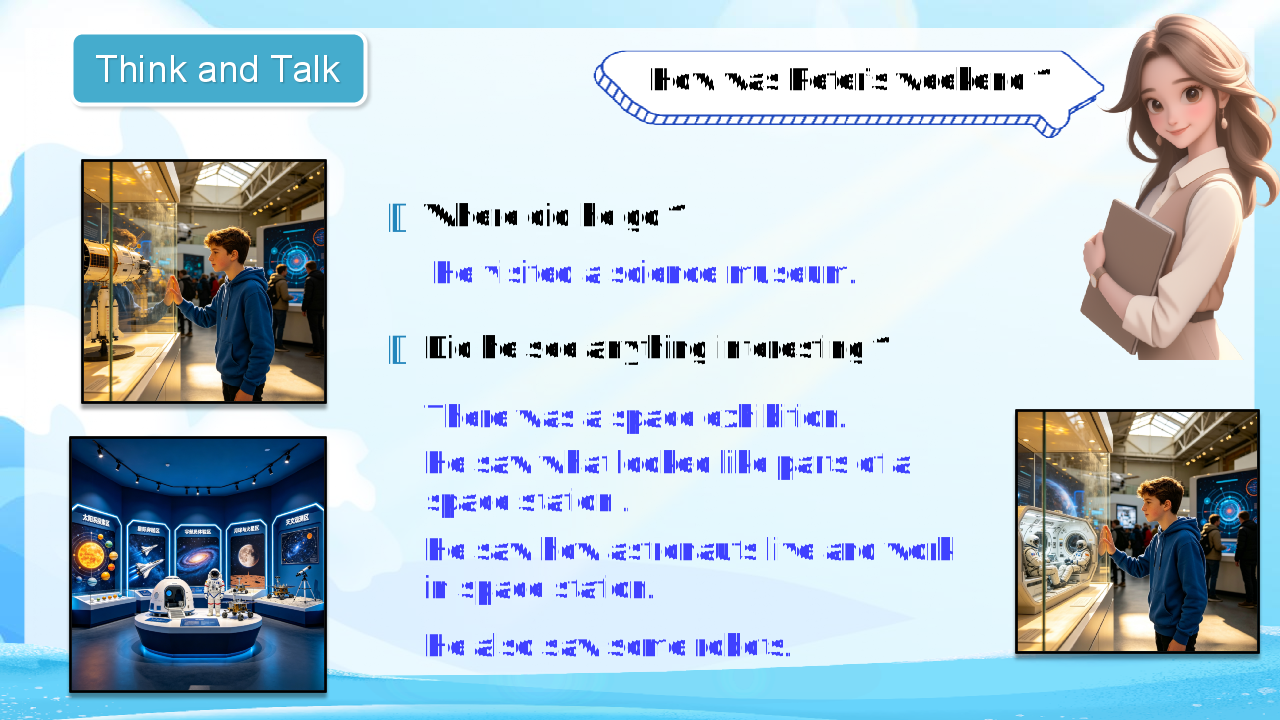
How was Peter’s weekend ?
Where did he go ?
He visited a science museum.
Did he see anything interesting ?
There was a space exhibition.
He saw what looked like parts of a space station .
He also saw some robots.
He saw how astronauts live and work in space station.
Think and Talk
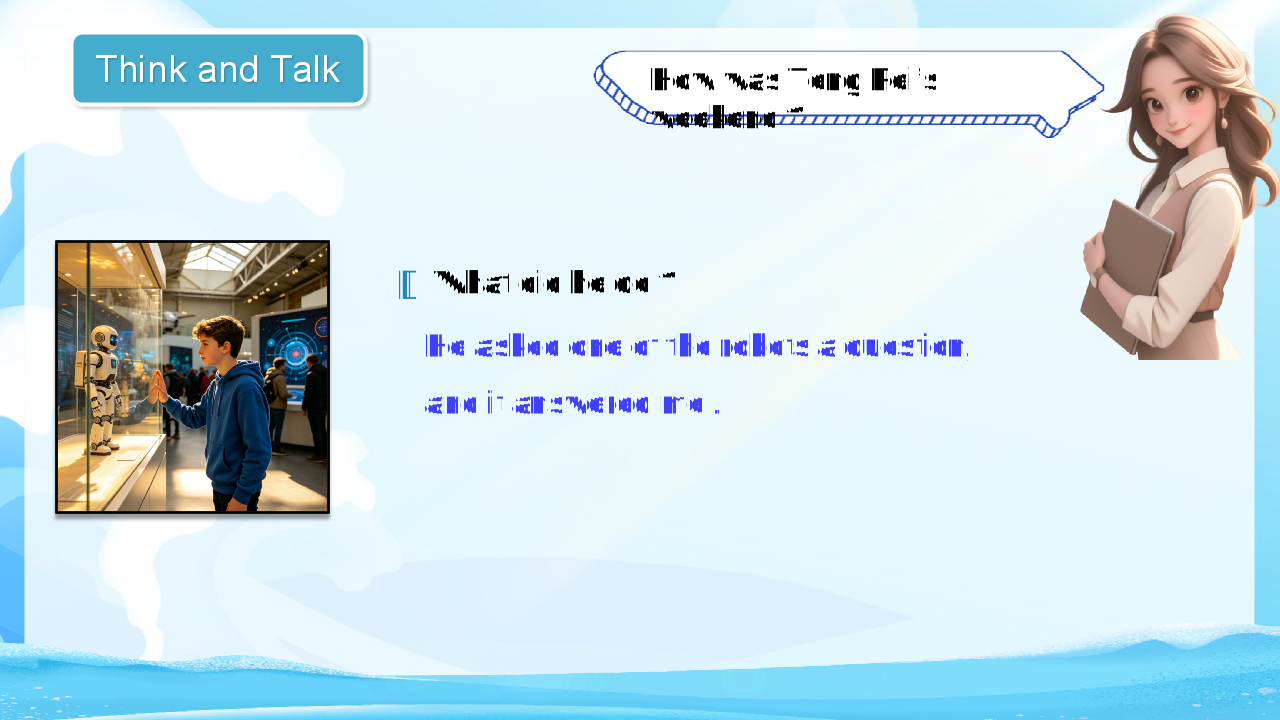
How was Teng Fei’s weekend ?
What did he do ?
He asked one of the robots a question, and it answered me .
Think and Talk
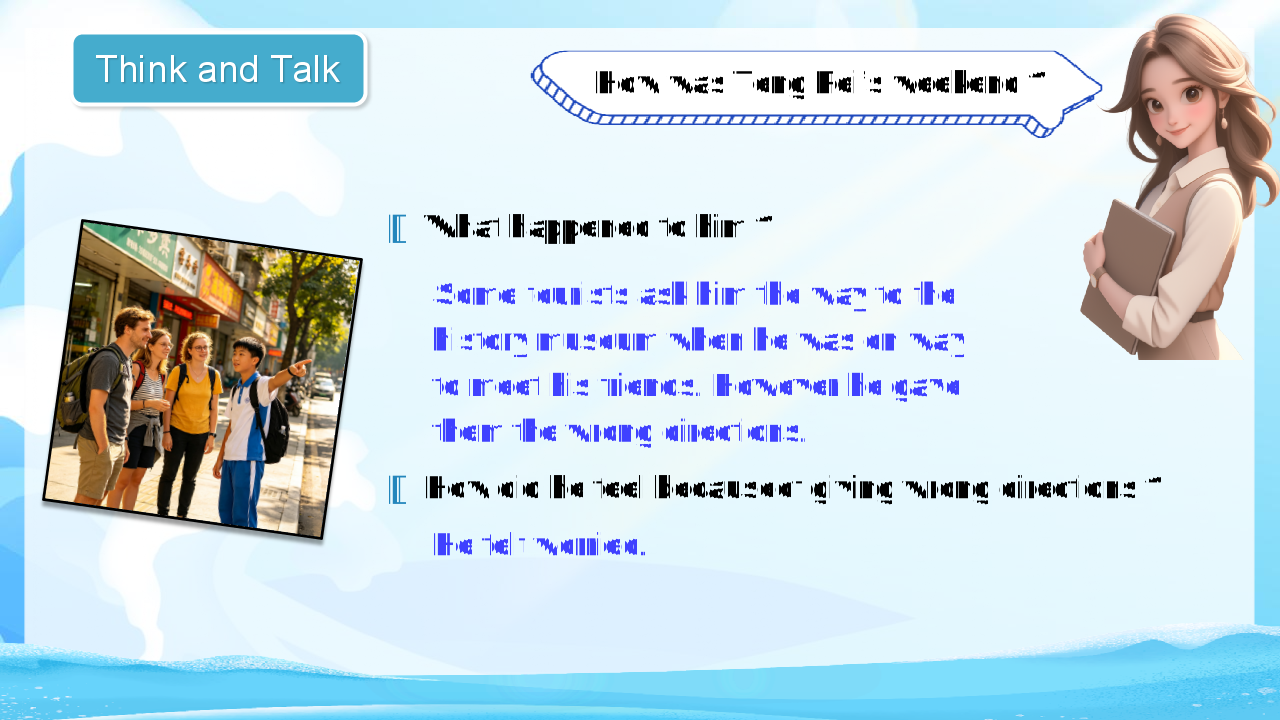
How was Teng Fei’s weekend ?
What happened to him ?
Some tourists ask him the way to the history museum when he was on way to meet his friends. However he gave them the wrong directions.
How did he feel becauseof giving wrong directions ?
He felt worried.
Think and Talk
How was Teng Fei’s weekend ?
What else happened to him ?
He got on the wrong bus.
He left his books on the bus.
He was late to meet his friends.
Think and Talk
Look at the photo and answer questions.
What can you see in the photo ?
Fuxing went there for a school trip . Can you guess what the place is for ?
What do you think what she saw there ?
Listen to the conversation and answer questions
Where did Fuxing go for her school trip ?
How did she feel about her trip ?
What did she see there ?
She went to a wastewater plant.
She thought it was really exciting.
She saw the plant make the dirty water clean again.
2a Listen to the conversation and fill in the blanks with correct adjectives.
Read the conversation and make a prediction.
Helen: Hi, Fu Xing. How was your school trip to the wastewater plant ?
Was it boring ?
Fu Xing: No, it wasn’t at all. It was really interesting.
Helen: Wow ! What did you see ?
Fu Xing: We saw the plant make dirty water _______ again.
Helen: Really? How?
Fu Xing: Well, first, _______ water from our homes goes into the plant. Then,
special screens remove large pieces of waste from the water.
Helen: What happens next?
Fu Xing: Well, _______ machines remove germs and other things from the water.
These things are usually too _______ to see. It takes a few more steps
after that before the water becomes clean again.
Helen: Wow! I used to think it was _______ to get clean water.
Fu Xing: Me too! I didn’t realize it was so _______.
clean
dirty
small
easy
difficult / hard
2a Listen to the conversation and fill in the blanks with correct adjectives.
Helen: Hi, Fu Xing. How was your school trip to the wastewater plant ?
Was it boring ?
Fu Xing: No, it wasn’t at all. It was really interesting.
Helen: Wow ! What did you see ?
Fu Xing: We saw the plant make dirty water _______ again.
Helen: Really? How?
Fu Xing: Well, first, _______ water from our homes goes into the plant. Then,
special screens remove large pieces of waste from the water.
Helen: What happens next?
Fu Xing: Well, _______ machines remove germs and other things from the water.
These things are usually too _______ to see. It takes a few more steps
after that before the water becomes clean again.
Helen: Wow! I used to think it was _______ to get clean water.
Fu Xing: Me too! I didn’t realize it was so _______.
clean
dirty
small
easy
hard
large
2a Read the conversation and answer the question.
Helen: Hi, Fu Xing. How was your school trip to the wastewater plant ?
Was it boring ?
Fu Xing: No, it wasn’t at all. It was really interesting.
Helen: Wow ! What did you see ?
Fu Xing: We saw the plant make dirty water clean again.
Helen: Really? How?
Fu Xing: Well, first, dirty water from our homes goes into the plant. Then,
special screens remove large pieces of waste from the water.
Helen: What happens next?
Fu Xing: Well, large machines remove germs and other things from the water.
These things are usually too small to see. It takes a few more steps
after that before the water becomes clean again.
Helen: Wow! I used to think it was easy to get clean water.
Fu Xing: Me too! I didn’t realize it was so hard.
How does the plant make the dirty water clean again?
2b Read the conversation and match the sentence parts.
1. The plant makes
A. remove small things from the water.
2. Dirty water goes
B. it was easy to get clean water.
3. Machines inside the plant
C. dirty water clean again.
4. Screens inside the plant
D. remove large pieces of waste from the water.
5. Helen used to think
E. into the plant.
2c Complete the summary of the conversation in 2a.
Last week, Fu Xing’s class went on a school trip to a __________ plant. The plant turned dirty water into clean water. Fu Xing learnt about the cleaning process: First, dirty water goes from people’s _______ to the plant. Then the plant uses screens to remove large pieces of _______ from the dirty water. Next, large _________ clean the water. They remove _______ and other small things. It takes a few more _______ before the water becomes clean again.
wastewater
homes
waste
machines
germs
steps
turn ... into...
use sth. to do sth.
2a Let’s learn the conversation.
Helen: Hi, Fu Xing. How was your school trip to the wastewater plant ?
Was it boring ?
Fu Xing: No, it wasn’t at all. It was really interesting.
Helen: Wow ! What did you see ?
Fu Xing: We saw the plant make dirty water clean again.
Helen: Really? How?
Fu Xing: Well, first, dirty water from our homes goes into the plant. Then,
special screens remove large pieces of waste from the water.
Helen: What happens next?
Fu Xing: Well, large machines remove germs and other things from the water.
These things are usually too small to see. It takes a few more steps
after that before the water becomes clean again.
Helen: Wow! I used to think it was easy to get clean water.
Fu Xing: Me too! I didn’t realize it was so hard.
not at all
not ... at all.
see - saw
see sb. / sth do sth
see sb. / sth doing sth
make sth. / sb. adj.
remove sth. from ...
too ... to...
used to do sth.
it is / was adj. to do sth
take steps
2d Listen and pay attention to the pronunciation of the red words.
No, it wasn’t at all. It was really interesting!
Wow! What did you see?
Me too! I didn’t realize it was so hard.
/ˈwɒznt/
/wɒz/
/dɪd/
/ˈdɪd(ə)nt/
2d Talk about a school trip you took to a special place.
theatre factory zoo museum
farm forest market park
How was your school trip?
It was great.
Where did you go?
We went to the theatre to watch a show.
2d Talk about a school trip you took to a special place.
Talk about a school trip
How was your trip ?
Where did you go ?
What did you see and do ?
How did you feel ?
What did you learn ?
Language Points
Hi, Fu Xing. How was your school trip to the wastewater plant ?
plant:
名词 cn
工厂
eg. Mr Zhang has a car plant.
We visited a new power plant.
植物
eg. There are many plants in my house.
We can see different kinds of plants and flowers
when we go hiking in the mountains.
vt 种植
eg. People love to plant trees on 15 March.
I learn how to plant tomatoes.
Language Points
We saw the plant make dirty water clean again.
see :
see - saw
see sb. do sth.
eg. I saw Linda help an old peope on the road yesterday.
Ella saw me win the basketball game.
see sb. doing sth.
eg. I see my mother cooking dinner for me.
Emma saw the bus going.
看见动作全过程
看见动作正在进行
Language Points
We saw the plant make dirty water clean again.
make :
make - made
make sb./ sth adj.
eg. Helping others makes me happy.
The plants make my room beautiful.
make sb. do sth
eg. The wastewater plant makes dirty water become clean again.
Emma always makes me laugh.
Language Points
special screens remove large pieces of waste from the water.
screen :
cn. 筛网
eg. The other method is to pass the powder through the fine screen.
cn: 屏幕
eg. This movie theatre has a big screen.
Teenagers should spend less time on screens.
Language Points
special screens remove large pieces of waste from the water.
remove :
remove ... from ...
eg. We decided to remove our children from the school.
He removed his eyes from the screen.
把...从...去(移)除
Language Points
I used to think it was easy to get clean water.
used to do sth :
eg. I used to be afraid of the dark.
He used to love junk food.
过去常常做某事
否定句
didn’t use to do sth
eg. I didn’t use to be afraid of the daek.
He didn’t use to love making friends.
Thank You !
null
69066.68
null
75571.805
$
资源预览图

1

2
3
4
5

6
相关资源
由于学科网是一个信息分享及获取的平台,不确保部分用户上传资料的 来源及知识产权归属。如您发现相关资料侵犯您的合法权益,请联系学科网,我们核实后将及时进行处理。