湖北武汉市硚口区2025-2026学年下学期考前预测九年级英语试卷
 切换试卷
切换试卷
2026-05-27
|
12页
|
40人阅读
|
1人下载
资源信息
| 学段 | 初中 |
|---|---|
| 学科 | 英语 |
| 教材版本 | - |
| 年级 | 九年级 |
| 章节 | - |
| 类型 | 试卷 |
| 知识点 | - |
| 使用场景 | 中考复习-一模 |
| 学年 | 2026-2027 |
| 地区(省份) | 湖北省 |
| 地区(市) | 武汉市 |
| 地区(区县) | 硚口区 |
| 文件格式 | DOCX |
| 文件大小 | 381 KB |
| 发布时间 | 2026-05-27 |
| 更新时间 | 2026-05-27 |
| 作者 | 匿名 |
| 品牌系列 | - |
| 审核时间 | 2026-05-27 |
| 下载链接 | https://m.zxxk.com/soft/58074680.html |
| 价格 | 1.00储值(1储值=1元) |
| 来源 | 学科网 |
内容正文:
英语供题训练卷
第Ⅰ卷(选择题共80分)
第一部分 听力部分
一、听力测试(共三节)
第一节(共5小题,每小题1分,满分5分)
听下面5个问题。每个问题后有三个答语,从题中所给的A、B、C三个选项中选出最佳选项。听完每个问题后,你都有5秒钟的时间来作答和阅读下一小题。每个问题仅读一遍。
1. A. A pen. B. I see. C. Sure.
2. A. Tea. B. On the sofa. C. Here you are.
3. A. It’s OK. B. Class 2. C. David.
4. A. At 7 o’clock. B. Thanks. C. Delicious.
5. A. White. B. Sunny. C. 85 yuan.
第二节(共7小题,每小题1分,满分7分)
听下面7段对话。每段对话后有一个小题,从题中所给的A、B、C三个选项中选出最佳选项。听完每段对话后,你都有10秒钟的时间来作答有关小题和阅读下一小题。每段对话仅读一遍。
6. What is in Mike’s bag?
A. A volleyball. B. A basketball. C. A football.
7. What will Scott do this weekend?
A. Play sports. B. Listen to music. C. Study for a test.
8. What kind of things does the boy like?
A. Unusual things. B. Common things. C. Cheap things.
9. What could the AI Confucius do at the fair?
A. Dance. B. Sing. C. Answer questions.
10. Where does the woman prefer to eat?
A. At a seafood restaurant. B. Near the ocean. C. At home.
11. What happened to Tom?
A. He lost his library card.
B. He lost his library book.
C. He forgot to return the book.
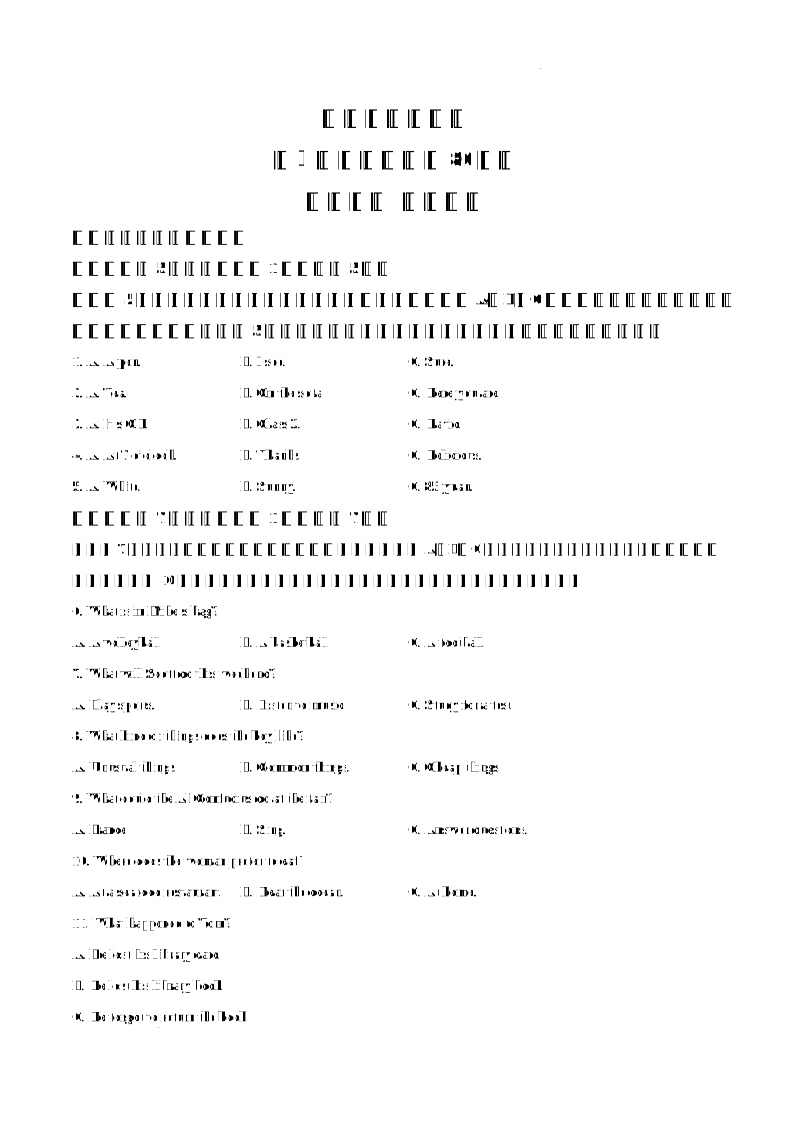
12. What does the man suggest doing to help with science learning?
A. B. C.
第三节(共13小题,每小题1分,满分13分)
听下面4段对话或独白。每段对话或独白后有几个小题,从题中所给的A、B、C三个选项中选出最佳选项。听每段对话或独白前,你将有时间阅读各个小题,每小题5秒钟;听完后,各小题将给出5秒钟的作答时间,每段对话或独白读两遍。
听下面一段对话,回答13至15三个小题。
13. Where is the boy going for his trip?
A. To Xi’an. B. To Xianning. C. To Sanya.
14. How long will the boy stay there?
A. 3 days. B. 5 days. C. A week.
15. What does the girl remind him to take?
A. A camera. B. A pair of sunglasses. C. His comfortable shoes.
听下面一段对话,回答16至18三个小题。
16. What happened to the girl on the way to school?
A. She fell off her bike. B. She lost her bike. C. She was hit by a car.
17. Who carried the girl to the nurse’s office?
A. Lisa. B. Mr. Brown. C. The nurse.
18. How did the girl feel after the nurse treated her?
A. Still scared. B. Worried a lot. C. Much better.
听下面一段对话,回答19至21三个小题。
19. What festival are Alice and the man talking about?
A. Spring Festival. B. Double Ninth Festival. C. Dragon Boat Festival.
20. What will Alice’s family do first on the festival day?
A. Visit grandparents. B. Cook a meal. C. Climb the mountains.
21. Why did ancient people wear the leaves on this festival?
A. To drive away bad luck.
B. To make costumes.
C. To enjoy the smell.
听下面一段独白,回答22至25四个小题。
22. What does Mr. Zeng do?
A. A teacher. B. A cook. C. A bus driver.
23. What does Mr. Zeng bring for the students?
A. Homemade food.
B. Fresh bread and milk.
C. Candies and cookies.
24. When does Mr. Zeng cook the food?
A. During the bus ride to school.
B. During his spare time after work.
C. During spare time when working.
25. What does the story teach us?
A. Delicious snacks are welcomed.
B. Students should help and understand each other.
C. Small acts of kindness can make a big difference.
第二部分 笔试部分
二、选择填空(共10小题,每小题1分,满分10分)
从题中所给的A、B、C、D四个选项中,选出一个最佳答案。将代表该答案的字母在答题卡上相应的位置涂黑。
26. — Many Chinese people enjoy keeping ______ at home, as they can bring fresh air.
— I see. My grandma also grows some green ones.
A. pets B. pictures C. plants D. vegetables
27. — How did you and your friend like the concert last night?
— ______ of us enjoyed it. I wish I could have my money back.
A. Both B. Neither C. All D. None
28. — When we talk with the elderly, we should use ______ and polite words.
— I agree. It shows our respect.
A. simple B. warm C. direct D. loud
29. — Don’t ______ to write down the answers. Read the questions carefully first.
— OK. I won’t make careless mistakes anymore.
A. rush B. start C. forget D. miss
30. — Do you think online classes will ______ traditional classrooms in the future?
— Not completely. They each have their own advantages.
A. refuse B. repeat C. review D. replace
31. — We should stop littering and care for our ______. It’s important for everyone.
— I can’t agree more. Let’s start with small things.
A. physical health B. social life C. public environment D. natural resource
32. — May I go out to play basketball on the playground?
— You should check your test paper again and ______ before you go.
A. hand out B. hand back C. hand in D. hand on
33. — He practices the piano for two hours every day ______ win the competition.
— His hard work will pay off.
A. in order to B. because of C. thanks to D. even if
34. — It’s a good habit to ______ your pocket money for future use.
— You’re right. I’ll start saving from now on.
A. take out B. put away C. give away D. use up
35. — Do you know what “A young idler, an old beggar” means?
— Yes. It tells us ______.
A. why we should learn from others
B. when we should help people in need
C. how we can keep healthy every day
D. that we should work hard when young
三、完形填空(共15小题,每小题1分,满分15分)
阅读下面短文,从短文后各题所给的A、B、C、D四个选项中,选出可以填入空白处的最佳选项。
In 2020, William Cabaniss was only 14 years old. He noticed that some of his classmates often skipped meals because they didn’t have enough food at home. He felt sad and decided to 36 something to help them.
William loved baking as a hobby. One day, while making cakes, he added vanilla extract (香草精) and suddenly thought, “Why not 37 my own vanilla extract instead of buying it?” He then had a bigger idea — he could sell it and give all the money to a food bank.
He quickly started working on his 38 . He made bottles of vanilla using his own recipe during his free time. He also 39 a logo and built a website to promote (推广) his small business.
Soon, William invited others to join him. Many people were moved by his kindness and 40 to help. With their support, his small project grew into a non-profit organization called “Vanilla Feeds Tomorrow”.
Every bottle of vanilla extract is sold for $ 30, and each sale can provide about 42 41 for people in need. So far, the organization has raised over $ 200,000. All the money goes to Second Harvest Food Bank — an organization that 42 many counties and helps thousands of families.
William said, “I 43 them because they have distribution (配送) centers and food storage rooms in so many places. Their reach is truly amazing. I want every dollar to 44 as far as possible.”
He believes no one should go to bed hungry. “No one should have to worry about 45 their next meal is coming from,” he said.
What started as a simple baking idea turned into a meaningful 46 to fight hunger. William’s story teaches us that even young people can make a big 47 if they take action.
Many students now look up to him as a role model. His 48 shows that kindness and creativity can change lives.
If you want to help others but don’t know where to start, think like William: begin with what you 49 — maybe cooking, drawing, or even writing — and turn it into a way to give back.
Remember: small actions, when done with heart, can lead to 50 change.
36. A. avoid B. change C. depend D. discover
37. A. buy B. borrow C. make D. taste
38. A. dream B. problem C. game D. plan
39. A. designed B. managed C. translated D. reflected
40. A. refused B. forgot C. agreed D. pretended
41. A. jobs B. meals C. toys D. books
42. A. serves B. visits C. builds D. leaves
43. A. bought B. afforded C. chose D. connected
44. A. walk B. go C. run D. fly
45. A. why B. how C. when D. where
46. A. trip B. task C. holiday D. competition
47. A. mistake B. decision C. promise D. difference
48. A. story B. grade C. hobby D. family
49. A. hate B. learn C. fear D. enjoy
50. A. small B. slow C. great D. funny
四、阅读理解(共15小题,每小题2分,满分30分)
阅读下面三篇材料,从每题所给的A、B、C、D四个选项中,选出最佳选项。
A
To celebrate the Year of the Horse in China, the Spring Festival Gala introduced its new mascots (吉祥物). Let’s welcome Qiqi, Jiji, Chichi, and Chengcheng! These four horses are cute and full of energy. Their designs mix ancient history with modern art. Let’s meet them one by one.
Qiqi’s design is based on the famous Bronze Colt-shaped Zun of Lord Li (蠡驹尊) from the Western Zhou Dynasty. It has a dark colour and wears a high hair bun. Qiqi looks calm, polite, and full of big dreams.
Jiji takes its design from the Han Dynasty. Its body looks like the famous Bronze Galloping Horse (铜奔马). Look at its wings! They spread wide for the horse to fly high. The design of the wings comes from an ancient bronze umbrella handle. How brave and confident Jiji looks!
Chichi shows the style of the Tang Dynasty. It is a Three-maned Horse. Its mane (鬃毛) is shaped into three bunches. This style was for the highest-ranking horses long ago. Chichi looks brave and strong.
Chengcheng is a Przewalski’s horse (普氏野马) — the only wild horse species alive today! China now has the world’s largest number of them. This is a great achievement in wildlife protection. Chengcheng looks strong and fit, showing the good relationship between humans and the earth.
51. Where are readers most likely to read the passage?
A. Newspapers. B. Novels. C. Tour guides. D. Notices.
52. Which mascot got its design from the Han Dynasty?
A. Qiqi. B. Jiji. C. Chichi. D. Chengcheng.
53. What was the symbol of the horse with the highest rank?
A. A high hair bun. B. A pair of wings.
C. Three bunches. D. Thick mane.
54. Why was Chengcheng chosen as one of the mascots?
A. Because it looks the strongest.
B. Because it has the longest history.
C. Because it is full of big dreams.
D. Because it shows a great achievement.
55. How were these mascots designed?
A. Depending on the imagination of the artists.
B. Combining ancient history with modern art.
C. Mixing historical stories with AI technology.
D. Developing the connection between humans and nature.
B
A school boy in Xi’an, Shaanxi province, has won praise online after bravely standing up to classmates who bullied him. Although he is usually shy, the boy serves as class monitor and is known for being responsible.
The trouble began when someone wrote something meaning “fool,” on the back of his school uniform. Some boys laughed and called him an idiot (傻瓜). He felt hurt and helpless. For two days, he stayed silent because he worried his uniform would not dry properly after washing. When he finally told his mother, she was heartbroken. She thought about contacting the school, but he wanted to handle the situation himself at the next class meeting.
A viral video shows the boy standing calmly at the podium (讲台) and speaking to the bullies. He asked his classmates to imagine how they would feel if someone mocked (嘲弄) them in the same way. He reminded them that, as class monitor, he had always worked to protect everyone’s interests.
The classmates who mocked him were moved to tears and apologized. The teacher praised the boy for his maturity (成熟). His mother later wrote online that she was deeply touched by her son’s courage. She said he had gone from a silent sufferer to a brave fighter. Speaking up for himself at the podium was something she could not have dared to do in her over forty years of life.
The story spread quickly on social media, with the video gaining more than 2 million likes. Many people said the boy’s calm and clear speech could inspire other children facing bullying. Some also said the support of the teacher and the mother was important, giving him the chance to speak out.
56. The boy felt helpless because _______.
A. He was treated unfairly.
B. He served as the class monitor.
C. He stood up to the bullies.
D. He didn’t dry his uniforms properly.
57. Why did he ask his classmates to imagine how they would feel?
A. To train them to think deeply.
B. To remind them to keep calm.
C. To ask them to stand in his shoes.
D. To force them to believe something.
58. Which of the following has the same meaning as the “interests”?
A. Jessica’s main interests are recycling and writing.
B. Polluting the air is against the interests of people.
C. Stonehenge interests people from around the world.
D. Candy encourages teenagers to follow their interests.
59. What would you write on the Internet about the boy?
A. He is an inspiration to us all.
B. He is lucky to be on a winning team.
C. He shouldn’t forget where he came from.
D. He turned his bad luck into good luck.
60. What could be a good title for this passage?
A. A Hero Full of Pride B. A Protector Full of Hope
C. A Pioneer With Great Patience D. A Fighter With Great Courage
C
There is one mysterious painting in the world: The Lute Player by the Italian painter Caravaggio. It has three very similar versions, and most people cannot tell the differences between them.
To art experts, there has been agreement that the paintings held by Russia’s Hermitage Museum and France’s Wildenstein Collection were created by the artist, while the one at Britain’s Badminton House is a copy.
Artificial intelligence (AI) begged to differ. In September 2025, Swiss AI company Art Recognition said there’s an almost 86 percent chance that Badminton House’s painting is real, while Wildenstein’s one is likely a copy.
This case shows the new role that AI plays in authenticating (鉴定) art. In the past, it was up to human experts to decide ★ . They tell real artworks apart from copies using their deep knowledge of artists and modern technologies such as infrared imaging (红外成像).
Now, AI might serve as another cool tool in experts’ toolboxes. The technology can study small details (细节) in artworks. It then compares these details with real works by the same artist to find differences that experts and other scientific methods might miss.
However, many experts don’t fully trust AI for identifying (识别) real art. They pointed out that AI can give results without explaining how it reached them. Also, proper training on AI will require thousands of images, but few artists have produced that many works. Artists may also change their style suddenly, so AI that only looks for fixed patterns can easily make mistakes.
AI should be used together with other methods, not to give final answers. “I strongly believe that the future of art authentication lies in teamwork between AI and experts,” Art Recognition’s CEO Carina Popovici told ART news.
61. According to AI, in which country is the painting considered a copy?
A. B. C. D.
62. Which of the following can be put in the ★ ?
A. if a painting was real B. what to do with artworks
C. how to make use of technology D. that authenticating wasn’t necessary
63. What main question did Paragraph 6 answer?
A. What mistakes may AI make?
B. How is AI used in identifying art?
C. Why do some artists change their styles?
D. How many artworks are needed to train AI?
64. Which Chinese sentence might Popovici believe?
A.以人为本,智能向善 B.智能驱动,创新引领
C.跨界融合,人机协同 D.伦理先行,法治保障
65. What’s the writing purpose of this passage?
A. To explain the ideas behind AI.
B. To discuss the role of AI in art.
C. To argue AI’s influence over humans.
D. To present an AI problem-solving case.
第Ⅱ卷(非选择题 共80分)
五、词与短语填空(共5小题,每小题2分,满分10分)
阅读下面短文,用方框中所给的单词或短语填空,使短文在结构、语意和逻辑上正确。(提示:方框中有二个单词或短语是多余的。)
finished/ proud/similar to/managers/open/surprising/scientists
In the Arizona desert in North America, something 66 happens near the small cone ants’ nests (锥形蚁巢).
Bigger harvester ants (收获蚁) stand with 67 mouths. The small ants then climb on them and start licking and cleaning their bodies. When 68 , the big ants shake the smaller ants off. This process can take from less than 15 seconds to more than 5 minutes.
Why do they do that? The smaller ants can eat the tiny, energy-rich bits they take from the bigger ants, according to the 69 . For the bigger ants, the smaller ants can clean parts of their bodies that are too small for them to reach on their own. This is 70 little fish cleaning sharks under the water.
六、综合填空(共10小题,每小题1分,满分10分)
阅读下面短文,根据上下文或括号内单词等提示,在空白处填入适当的单词或括号内单词的适当形式。
Many people travel to different places in the world by air. Usually it takes a long time, perhaps half a day, for passengers to stay in the plane. So airlines offer passengers food. But it is common that they feel bad about food taste. Do you agree?
To solve this problem, airlines try hard to improve their food. They would like to do so because they don’t want to lose 71 (customer).
However, according to scientific research, part of the reason why plane food tastes bad is that at high altitude we can not taste things as well 72 we do on the ground. Also scientists have found that our noses become very dry even before a plane takes off. As the plane moves up, the change in air pressure reduces one 73 (three) of the sensibility of our taste buds (味蕾). So our taste buds become senseless. 74 sad fact, however, is that our noses don’t know it.
All of these help explain why food on the plane 75 (taste) so bad. They also help explain why airlines choose to offer passengers salty and spicy food. Without doing so, the food would be tasteless.
Now there are many researches on this. According to one 76 them, some volunteers are 77 (ask) to lie with their feet higher than their heads for weeks. And scientists write down 78 (they) feelings about food taste.
Though scientists try their best, it is not as easy as they thought. Because they can’t deal with the special environment 79 (successful), such as the change in air pressure, 80 (make) food taste good is still hard for them.
七、书面表达(共1大题,满分20分)
在成长过程中,与同学争执、和父母意见不合,或是在学习、比赛中遇到挫折,都可能影响我们的积极情绪。然而,只有积极情绪才能促进身心健康、改善人际关系,帮助我们以更好的状态面对挑战。请以“Emotion Management”为主题,结合一次你自己的经历,写一篇英语发言稿,在班级分享会上与同学交流。
内容提示:
What made you feel upset or stressed recently?
How did you deal with it?
What’s your advice for teenagers to deal with bad moods?
Something more about it.
注意:文中不得透露个人真实信息,篇幅100词左右(首尾已给出,不计入总词数)。
Managing emotions is very important for teenagers.________________________________________________________________________________________________________________________________________________________________________________________________________________________________________________________________________________________________________________________________________________________________________________________________________________________________________________________________________________________________________________________________________________________________________________________________________________________________________________________________________________________________________________________________________________________________________________________________________________________________________________________________________________________________________
Let’s promise to understand our feelings, face difficulties bravely, and move forward with a positive heart.
学科网(北京)股份有限公司
$
资源预览图
1
2
3
相关资源
由于学科网是一个信息分享及获取的平台,不确保部分用户上传资料的 来源及知识产权归属。如您发现相关资料侵犯您的合法权益,请联系学科网,我们核实后将及时进行处理。