河南名校2025-2026学年下学期5月阶段检测高一英语试题
 切换试卷
切换试卷
2026-05-27
|
3份
|
18页
|
111人阅读
|
0人下载
资源信息
| 学段 | 高中 |
|---|---|
| 学科 | 英语 |
| 教材版本 | - |
| 年级 | 高一 |
| 章节 | - |
| 类型 | 试卷 |
| 知识点 | - |
| 使用场景 | 同步教学-阶段检测 |
| 学年 | 2026-2027 |
| 地区(省份) | 河南省 |
| 地区(市) | - |
| 地区(区县) | - |
| 文件格式 | ZIP |
| 文件大小 | 21.30 MB |
| 发布时间 | 2026-05-27 |
| 更新时间 | 2026-05-27 |
| 作者 | 匿名 |
| 品牌系列 | - |
| 审核时间 | 2026-05-27 |
| 下载链接 | https://m.zxxk.com/soft/58072779.html |
| 价格 | 2.00储值(1储值=1元) |
| 来源 | 学科网 |
内容正文:
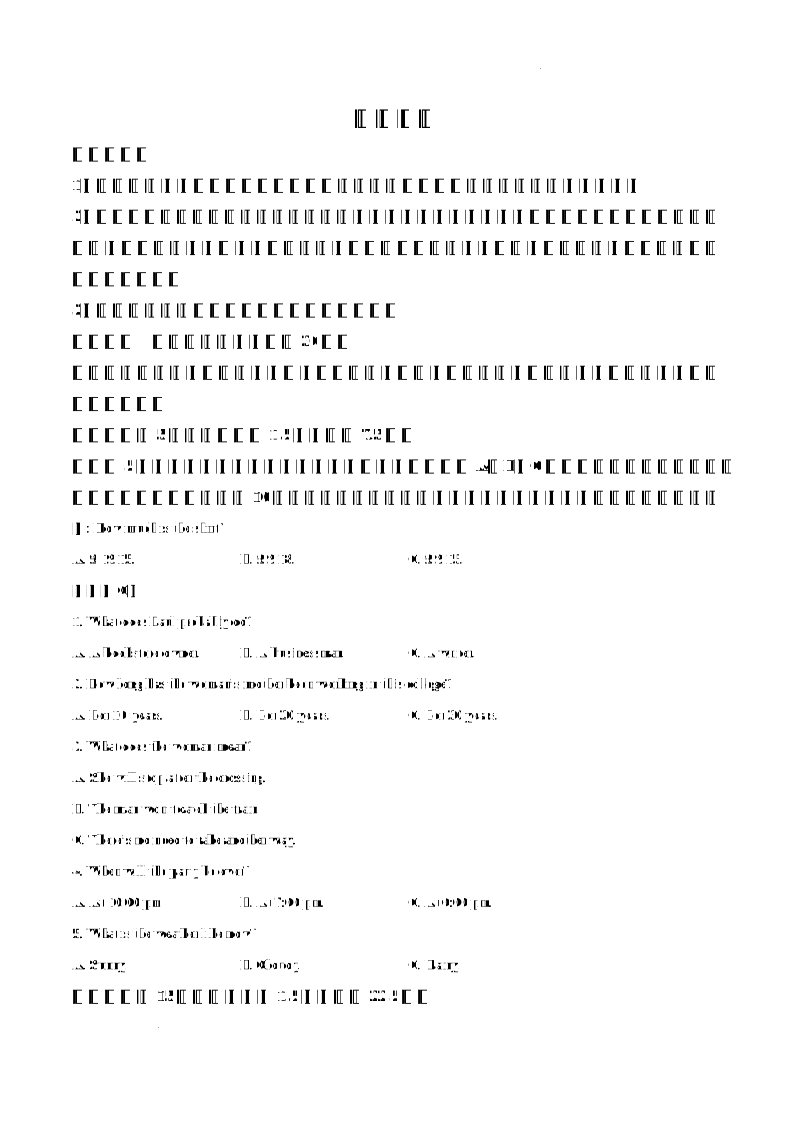
高一英语
注意事项:
1.答题前,考生务必将自己的姓名、考生号、考场号、座位号填写在答题卡上。
2.回答选择题时,选出每小题答案后,用铅笔把答题卡上对应题目的答案标号涂黑。如需改动,用橡皮擦干净后,再选涂其他答案标号。回答非选择题时,将答案写在答题卡上。写在本试卷上无效。
3.考试结束后,将本试卷和答题卡一并交回。
第一部分 听力(共两节,满分30分)
做题时,先将答案标在试卷上。录音内容结束后,你将有两分钟的时间将试卷上的答案转涂到答题卡上。
第一节(共5小题;每小题1.5分,满分7.5分)
听下面5段对话。每段对话后有一个小题,从题中所给的A、B、C三个选项中选出最佳选项。听完每段对话后,你都有10秒钟的时间来回答有关小题和阅读下一小题。每段对话读两遍。
例: How much is the shirt?
A. £ 19.15. B. £ 9.18. C. £ 9.15.
答案是C。
1. What does Paul probably do?
A. A bookstore owner. B. A businessman. C. A writer.
2. How long has the woman’s mother been working in this college?
A. For 10 years. B. For 20 years. C. For 30 years.
3. What does the woman mean?
A. She will stop after the crossing.
B. The man won’t catch the train.
C. There’s no need to take another way.
4. When will the party be over?
A. At 10:00 pm. B. At 7:00 pm. C. At 6:00 pm.
5. What is the weather like now?
A. Sunny. B. Cloudy. C. Rainy.
第二节(共15小题;每小题1.5分,满分22.5分)
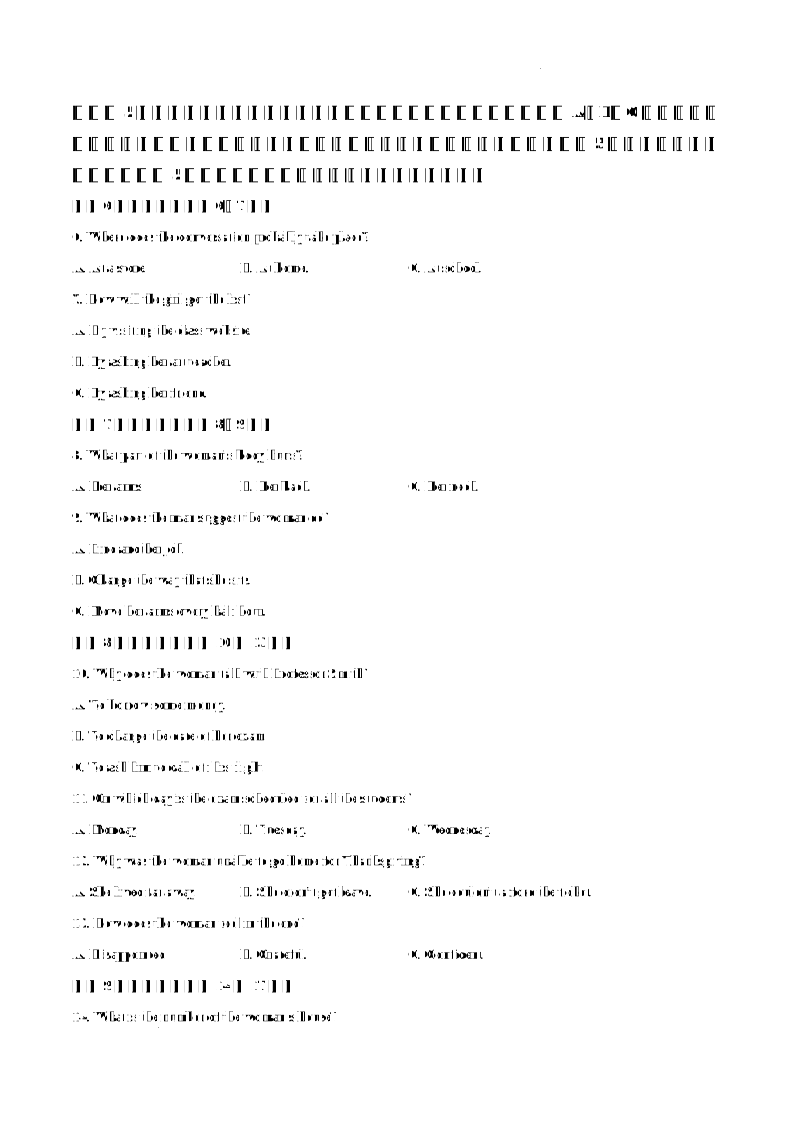
听下面5段对话或独白。每段对话或独白后有几个小题,从题中所给的A、B、C三个选项中选出最佳选项。听每段对话或独白前,你将有时间阅读各个小题,每小题5秒钟;听完后,各小题将给出5秒钟的作答时间。每段对话或独白读两遍。
听第6段材料,回答第6、7题。
6. Where does the conversation probably take place?
A. At a store. B. At home. C. At school.
7. How will the girl get the list?
A. By visiting the class website.
B. By asking her art teacher.
C. By asking her friend.
听第7段材料,回答第8、9题。
8. What part of the woman’s body hurts?
A. Her arms. B. Her back. C. Her neck.
9. What does the man suggest the woman do?
A. Find another job.
B. Change the way that she sits.
C. Move her arms every half hour.
听第8段材料,回答第10至13题。
10. Why does the woman talk with Professor Smith?
A. To borrow some money.
B. To change the date of her exam.
C. To ask him to call off his flight.
11. On which day is the exam scheduled for all the students?
A. Monday. B. Tuesday. C. Wednesday.
12. Why was the woman unable to go home for Thanksgiving?
A. She lived far away. B. She didn’t get leave. C. She couldn’t afford the ticket.
13. How does the woman feel in the end?
A. Disappointed. B. Grateful. C. Confident.
听第9段材料,回答第14至17题。
14. What is the number of the woman’s house?
A. 33. B. 31. C. 30.
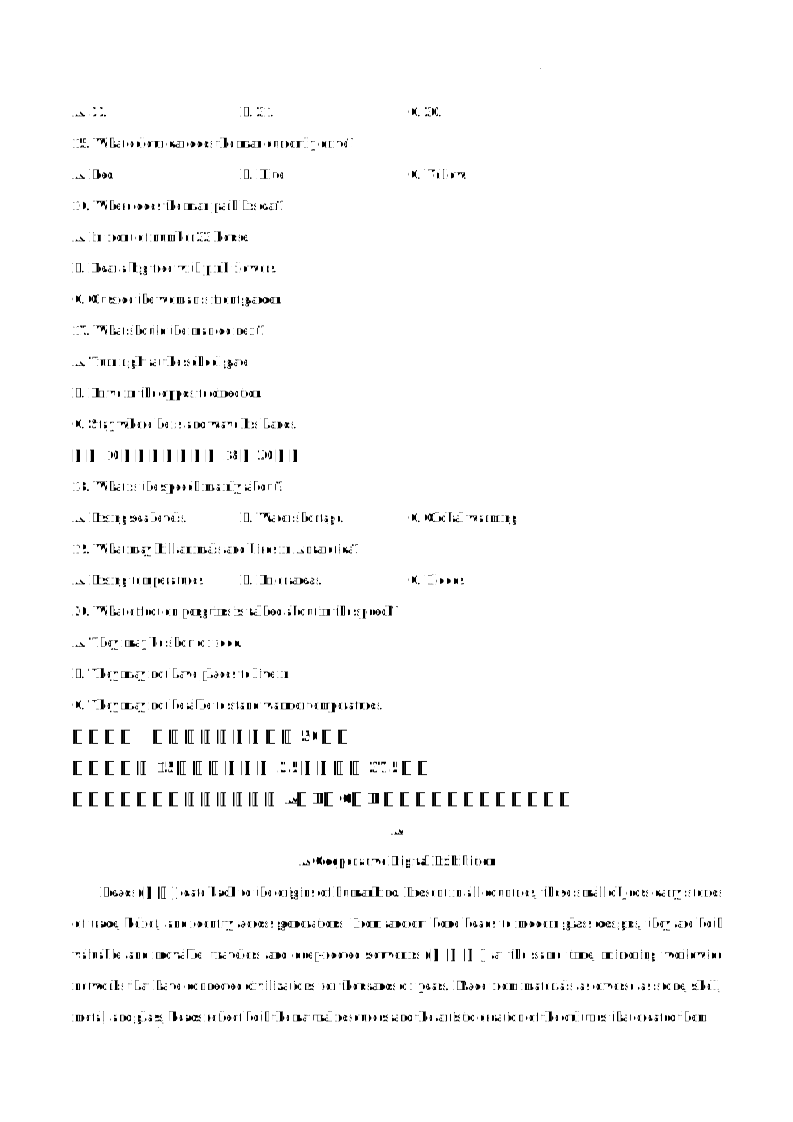
15. What colour car does the man currently drive?
A. Red. B. Blue. C. Yellow.
16. Where does the man park his car?
A. In front of number 33 house.
B. Near a big tree with pink flowers.
C. Outside the woman’s front garden.
17. What should the man do next?
A. Turn right at the school gate.
B. Drive in the opposite direction.
C. Stay where he is and wave his hands.
听第10段材料,回答第18至20题。
18. What is the speech mainly about?
A. Rising sea levels. B. Water shortage. C. Global warming.
19. What may kill animals and birds in Antarctica?
A. Rising temperatures. B. Drier areas. C. Floods.
20. What effect on penguins is talked about in the speech?
A. They may be short of food.
B. They may not have places to live in.
C. They may not be able to stand warmer temperatures.
第二部分 阅读(共两节,满分50分)
第一节(共15小题;每小题2.5分,满分37.5分)
阅读下列短文,从每题所给的A、B、C、D四个选项中选出最佳选项。
A
A Cooperative Digital Exhibition
Beads (珠子) date back to the origins of humankind. Present in all countries, these small objects carry stories of trade, belief, and identity across generations. From ancient bone beads to modern glass designs, they are both valuable and movable: travelers and deep-rooted souvenirs (纪念品) at the same time, mirroring worldwide networks that have connected civilizations for thousands of years. Made from materials as diverse as stone, shell, metal, and glass, beads reflect both the natural resources and the artistic creation of the cultures that created them.
What Beads Have Done
Function
Description
Currency
Used as money across Africa, Asia, and the Americas for centuries
Social Language
Reflect status, identity, and political messages in many cultures
Personal Meaning
Worn as protection, memory, and artistic expression
The “BEADS” project aims to improve variety, inclusion, and fairness by bringing together museums from different countries to create a cooperative digital online exhibition of bead-works in all forms of art, craft, and design from all times and cultures of the world. By uniting collections that cover different countries and centuries, the project offers a rare opportunity to see beads as part of a shared global heritage. Visitors can explore rare collections that have never been displayed together before.
Exhibition Features
Feature
Description
Digital Access
Free online viewing of collections from museums worldwide
Global Reach
Artworks and designs from all times and cultures
Educational Use
Virtual tours and resources available for school groups
Visitor Information
·Admission: Free to all visitors.
·Online Access: Available 24 /7 at www.beadsproject.org.
·School Groups: Special virtual tours and educational materials available, Reservations required: education@ beadsproject.org.
·Dates: January through December 2025.
21. What does the first paragraph say about beads?
A. They have a long global history. B. They are made from one material.
C. They appeared in America first. D. They were mainly used as money.
22. What is the main goal of the “BEADS” project?
A. To sell bead artworks. B. To compare world cultures.
C. To promote certain values. D. To unite museum collections.
23. What should school groups do if they want to get educational materials?
A. Pay a fee. B. Visit in person. C. Wait for summer. D. Book in advance.
B
At 96 years old, Bill Brown has lived through everything from World War II to the Civil Rights Movement to the rise of the Internet. But of all the history he’s seen, Brown says it was the Great Depression that might have had the most profound impact on his life.
“People came to help me and my parents during the Depression, and I always felt I had a debt to pay,” Brown said. It’s a lesson that has stuck with him. For the last 30 years, Brown has devoted his life to helping others through the nonprofit he founded, The Children’s Table. When Bill was in his 60s, he tended a vegetable garden at home. Whenever he had extra produce, he would give it to neighbors in need. “I didn’t plan on starting The Children’s Table,” Brown said. “It just reached the point where we were serving so many people that I thought it had to have an identity and a name.”
The nonprofit holds weekly distributions. Families receive $100-to-$150 worth of groceries for a suggested $10 donation, which keeps the organization running. But no one is ever turned away for inability to pay. What began as a small community food bank has grown into an organization serving thousands of families across approximately 10 counties. These are areas with high poverty rates, little to no public transportation, and limited access to healthy food.
Deborah Gooden discovered The Children’s Table four years ago when her family moved there and desperately needed food. Now she volunteers regularly, bringing her children along. She wants them to share Brown’s lifelong belief that neighbors should help neighbors.
Now nearing 100, Brown doesn’t plan to slow down soon. He believes The Children’s Table is in good hands. There’s a small staff, but the organization relies heavily on volunteers, many of whom once came for help now stay to help others. “Helping is catching,” Brown said. “I’m privileged when I can help someone.”
24. What motivated Brown to start helping others?
A. The rise of the Internet age.
B. His neighbors struggling for healthy food.
C. His own survival experience in World War II.
D. The assistance he received during the Depression.
25. How does The Children’s Table support itself financially?
A. From government funding. B. Through small donations from receivers.
C. By selling fresh produce. D. With volunteers’ contributions.
26. Why is Deborah Gooden mentioned in paragraph 4?
A. To show the cycle of kindness.
B. To stress the power of volunteering.
C. To prove the impact of food deserts.
D. To explain the growth of the organization.
27. What is Brown’s attitude towards the future of The Children’s Table?
A. Uncertain and anxious. B. Confident and optimistic.
C. Content but critical. D. Proud but cautious.
C
No question is too small when Kayla Chege, a high school student in Kansas, is using artificial intelligence (AI). This 15-year-old turns to AI for everything from makeup advice to party planning.
A new study from Common Sense Media reveals just how widespread this phenomenon has become. More than 70 percent of teens have interacted with AI as if it were a companion, with half using it regularly. AI platforms, ranging from dedicated “digital friends” to general purpose tools, are being used for emotional support, personal advice, and conversation.
“AI is always available,” explains Ganesh Nair, an 18-year-old from Arkansas. “It never gets bored with you. It’s never judgmental.” However, as technology rapidly gets more advanced, teenagers and experts worry about AI’s potential to redefine human relationships and worsen the problems of loneliness and youth mental health — not to mention ineffective age restrictions on platforms that can generate harmful content.
The study’s findings shock researchers. Nearly one-third of teens said conversations with AI companions were as satisfying or more satisfying than talking with real friends. Even more strikingly, 33 percent had discussed serious issues with AI instead of real people — despite half admitting they distrust AI’s advice.
Michael Robb, the study’s lead author, warns that adolescence is a critical time for developing identity, social skills and independence. “If teens are developing social skills on AI platforms where they are constantly being validated (认可), not being challenged, not learning to read social cues or understand somebody else’s perspective, they are not going to be adequately prepared in the real world,” he said.
Unlike social media, which complemented our need to be seen, to be known, to meet new people, AI complements something deeper, as Nair puts it — our need for attachment and emotional connection. “It’s the new addiction,” he concludes. “That’s how I see it.”
28. What do the underlined words “this phenomenon” in paragraph 2 refer to?
A. The popularity of AI worldwide.
B. Teenagers turning to AI as companions.
C. The rapid advancement of technology.
D. AI platforms’ harmful impact on the youth.
29. What can be inferred from the figures in paragraph 4?
A. Teens’views on AI vary a lot.
B. Teens seldom connect with each other.
C. AI’s advice is more reliable than friends.
D. AI companions are replacing real contacts.
30. What is Michael Robb’s primary concern about AI companions?
A. They satisfy teenagers’ emotional needs.
B. They cause teenagers to be overconfident.
C. They prevent real-world social development.
D. They replace traditional social media platforms.
31. What can be a suitable title for the text?
A. AI Companions: A New Teen Addiction
B. Social Media vs. AI: A Deep Comparison
C. How AI Redefines Human Relationships
D. The Rapid Advancement of AI Technology
D
There are plenty of articles and social media posts on the plastic waste management crises, including numerous pieces on the negative impacts of plastic pollution on human and animal health. This is why news that recent scientific advancements show the potential for plastics to be engineered with a pre-programmed lifespan has been warmly welcomed.
Inspired by natural polymers (聚合物) like DNA, a research team of chemists at Rutgers University has invented a way to engineer plastic to allow it to break down in days, months, or years, when it is no longer needed. Assistant Professor Yuwei Gu, who led the study, had a lightbulb moment while hiking through Bear Mountain State Park. Seeing plastic bottles littering the trail and a nearby lake made him stop in his tracks. “Nature makes plenty of polymers, including proteins and DNA, that eventually break down, so why can’t plastics do this?” Gu wondered.
The crucial difference, he realized, must lie in their chemical design. Gu and his colleagues turned to biomimicry (仿生学) to try to copy natural processes to create plastics that break down under everyday conditions. This creative invention aims to replace the current “linear” model of plastic production, where materials are designed to last for centuries, but are often used for just a few minutes. The key lies not in introducing’ new chemicals but in how researchers arranged components of the plastic’s chemical structure so they were in the perfect position to start breaking down when triggered, such as being exposed to moisture, sunlight or even small electric pulses.
Despite its promise, significant challenges remain before programmable plastics can be widely used. Currently, the technology is less suited for plastics that need to remain stable for decades before breaking down, like those used in construction materials. Furthermore, the remaining materials after decomposition need strict safety tests to ensure that they are sale to be released into nature. In addition, most of these plastics require light to break down, making them less effective when buried in dark environments.
32. What is the function of paragraph 1?
A. To describe plastic waste crisis.
B. To introduce engineered plastics.
C. To present solutions to pollution.
D. To show the harm of plastic pollution.
33. How do researchers enable plastic breakdown?
A. By adding novel chemicals.
B. By copying DNA structures.
C. By improving recycling methods.
D. By changing structural arrangement.
34. What does the underlined word “triggered” in paragraph 3 mean?
A. Set off. B. Worn out. C. Lighted up. D. Taken apart.
35. What does the technology’s current limitation suggest about its application?
A. It is ready for widespread commercial use.
B. It will replace all traditional plastics within years.
C. It is more effective for single-use consumer goods.
D. It requires more light than what is naturally available.
第二节(共5小题;每小题2.5分,满分12.5分)
阅读下面短文,从短文后的选项中选出可以填入空白处的最佳选项。选项中有两项为多余选项。
Many students say the hardest part of writing is not grammar. It is getting started. They stare at a blank page, erase ideas, and promise themselves they will begin later. When an assignment feels important, some students worry so much about the final result that they cannot write the first sentence. 36
First, think about your past experience with writing. Ask yourself: When did writing go well for me? When did it feel difficult? 37 Maybe you were too focused on page length, or maybe you cared so much about the grade that you became nervous.
Next, move your attention away from the perfect paper. Instead, think about what you want to say. Good writing often becomes easier when you feel that your ideas matter. 38 This shift makes the task feel more like communication than a test.
It also helps to imagine a reader. Who will read your work? What do you most want that person to understand? When you know your audience, your purpose becomes clearer.
Finally, begin small. Write a few lines, not a masterpiece. 39 Once words are on the page, you can improve them.
40 But it becomes much less frightening once you stop waiting for perfect words.
A. Your first draft does not need to sound impressive.
B. Writing is rarely easy, even for experienced writers.
C. In fact, many strong writers rewrite again and again.
D. This can help you see where the real problem begins.
E. But a change in focus can make the task less frightening.
F. That question can pull you closer to your own point of view.
G. So it is wise to give yourself time to think before you speak.
第三部分 语言运用(共两节,满分30分)
第一节(共15小题;每小题1分,满分15分)
阅读下面短文,从每题所给的A、B、C、D四个选项中选出可以填入空白处的最佳选项。
When Olivia Joffrey was in sixth grade, her teacher 41 a Father’s Day softball game. It’s a game 42 to be played by students and their dads. But Joffrey’s dad was unable to 43 . He was battling a rare 44 that had led him to move into a hospital an hour away.
“My mother was a figure of quiet 45 and did so many things to make it feel like a 46 childhood,” Joffrey said. As the day of the softball game 47 , Joffrey was increasingly 48 , fearing she would be the only kid without a dad there. However, her mom came up with an idea: She would ask a 49 of her twenty-something co-worker, Bob, to come in his place.
On the day of the game, Joffrey wasn’t sure if Bob would 50 . But as all the parents arrived on the field, she 51 him behind the backstop. “And all of a sudden everything was okay,” Joffrey recalled. “I remember feeling normal and a sense of 52 —like I was part of the group...”
It’s been forty years since that softball game, yet the memory of Bob—and the way he 53 when her own father could not—has never 54 . “He so beautifully played that part,” Joffrey said. “When you’re 12, you want to fit in. And it was such a generous 55 of Bob to realize that.”
41. A. canceled B. announced C. introduced D. mentioned
42. A. considered B. predicted C. intended D. believed
43. A. rescue B. recover C. succeed D. attend
44. A. disease B. accident C. sight D. challenge
45. A. patience B. fortune C. freedom D. heroism
46. A. colorful B. normal C. peaceful D. smooth
47. A. approached B. returned C. continued D. arrived
48. A. excited B. curious C. anxious D. delighted
49. A. promise B. favor C. suggestion D. chance
50. A. take over B. set off C. check in D. show up
51. A. heard B. ignored C. spotted D. identified
52. A. pride B. belonging C. relief D. joy
53. A. stepped in B. showed off C. gave back D. moved on
54. A. changed B. responded C. faded D. improved
55. A. offer B. duty C. reward D. gesture
第二节(共10小题;每小题1.5分,满分15分)
阅读下面短文,在空白处填入1个适当的单词或括号内单词的正确形式。
At Zhejiang Provincial Museum, a tea culture exhibition called The Forbidden City & Tea World has attracted many visitors. The show, 56 is jointly organized by the Palace Museum and Zhejiang Provincial Museum, brings together 114 cultural relics. It concentrates 57 the Song and Qing dynasties, two key periods in Chinese tea culture.
The exhibition has six areas, each of them 58 (offer) a different way to understand tea. Visitors learn about tribute tea, elegant daily life, famous figures 59 fine tea sets. Ancient calligraphy and paintings are also on display, which makes the show more than a simple history of drinking tea.
What makes it 60 (particular) interesting is how it links the past with the present. Tea 61 (show) not only as a product but as a cultural practice 62 (connect) with art, customs and ways of living. Through the objects, visitors are encouraged 63 (imagine) how people in earlier times prepared tea and shared it with friends.
Some works will remain on display for only a short time because of conservation 64 (require). So people who love tea culture or traditional art may want to visit as soon as possible. In this way, old objects continue to speak to today’s audience in an 65 (energy) and creative atmosphere.
第四部分 写作(共两节,满分40分)
第一节(满分15分)
假定你是李华,你班计划下周末组织“绿道徒步研学”活动。请给交换生Tom写一封邮件,邀请他参加,内容包括:
(1)时间和地点;
(2)活动内容;
(3)邀请原因。
注意:
(1)写作词数应为80个左右;
(2)请按如下格式在答题卡的相应位置作答。
Dear Tom,
Yours,
Li Hua
第二节(满分25分)
阅读下面材料,根据其内容和所给段落开头语续写两段,使之构成一篇完整的短文。
My class had signed up for a Saturday morning visit to a community center for elderly residents. I had imagined cheerful conversations and easy smiles, so the night before I carefully packed handmade cards and a bag of oranges from my grandfather’s tree. I even practiced a few polite opening lines in front of the mirror.
When we arrived, however, I felt much less confident than I had in my bedroom. The hall was bright, but strangely quiet. Some residents were chatting in small groups, while others sat alone by the windows. Our teacher asked each of us to spend time with one person and simply listen.
I was given a chair beside Mr. Chen, a thin man in a dark blue sweater. A chessboard lay unopened on the table in front of him. I greeted him, but he only nodded. I tried again and offered him one of the cards. He thanked me politely and placed it beside the chessboard without opening it.
For the next few minutes, I searched for something to say. Did he like music? Did he enjoy walking? Had he lived in the city long? My questions sounded stiff even to me. His answers were short. Across the room, my classmates were already laughing with the people they had met. I began to wish I could disappear into the wall.
Then I noticed a small photo partly sticking out of the book in Mr. Chen’s hand. It showed a teenage boy in a school basketball uniform. Before I could stop myself, I asked, “Is he your grandson?” Mr. Chen’s fingers rested on the photo. After a long silence, he said softly, “He used to visit every weekend.”
Just then, the bell rang for the break, and my classmates started moving toward the snack table. I stood up, unsure whether to leave or stay.
注意:
(1)续写词数应为150个左右;
(2)请按如下格式在答题卡的相应位置作答。
I hesitated, then slowly sat down again.
When the visit ended, Mr. Chen walked us to the gate.
学科网(北京)股份有限公司
$
高一英语参考答案
听力部分录音材料
听力部分。该部分分为第一、第二两节。
注意:做题时,先将答案标在试卷上。录音内容结束后,你将有两分钟的时间将试卷上的答案转涂到答题卡上。
停顿00’10”
现在是听力试音时间。
M: Hello, International Friends Club. Can I help you?
W: Oh, hello. I read about your club in the paper today and I thought I’d phone to find out a bit more.
M: Yes, certainly. Well, we are a sort of social club for people from different countries. It’s quite a new club — we have about 50 members at the moment, but we are growing all the time.
W: That sounds interesting. I’m British actually, and I came to Washington about three months ago. I’m looking for ways to meet people. Er, what kinds of events do you organize?
M: Well, we have social get-togethers, and sports events, and we also have language evenings.
W: Could you tell me something about the language evenings?
M: Yes. Every day except Thursday we have a language evening. People can come and practice their languages — you know, over a drink or something. We have different languages on different evenings. Monday — Spanish; Tuesday — Italian; Wednesday — German; and Friday — French. On Thursday we usually have a meal in a restaurant for anyone who wants to come.
W: Well, that sounds great. I really need to practice my French.
M: OK. Well, if you can just give me your name and address, I’ll send you the form and some more information. If you join now, you can have the first month free.
试音到此结束。
听力考试正式开始。
停顿00’10”
请看听力部分第一节。
第一节
听下面5段对话。每段对话后有一个小题,从题中所给的A、B、C三个选项中选出最佳选项。听完每段对话后,你都有10秒钟的时间来回答有关小题和阅读下一小题。每段对话读两遍。
停顿00’02”
例如:现在你有5秒钟的时间看试卷上的例题。
停顿00’05”
你将听到以下内容:
M: Excuse me. Can you tell me how much the shirt is?
W: Yes, it’s nine fifteen.
停顿00’02”
你将有5秒钟的时间将正确答案标在试卷上。
停顿00’05”
衬衫的价格为9镑15便士,所以你选择C项,并将其标在试卷上。
现在,你有5秒钟的时间阅读第1小题的有关内容。
停顿00’05”
(Text 1)
W: Paul is so busy lately. I never have a chance to talk to him anymore.
M: He had a novel published last year and now he is starting another.
(Text 2)
M: It has been ten years since I started teaching in this college.
W: Well, my mum has been working here twice as long as you.
(Text 3)
M: Could we take another way? It’s rush hour and I have to be at the railway station by ten.
W: I do this every day, sir. We are better off staying right where we are. The traffic gets lighter after the crossing.
(Text 4)
M: There is a party tonight at 6:00 in the hall.
W: What a pity! I won’t come back until 7:00.
M: It doesn’t matter. The party will last four hours.
(Text 5)
M: It looks like rain.
W: I guess you’re right. It’s getting really cloudy and dark. I’m afraid that we can’t go swimming this afternoon.
第一节到此结束。
第二节
听下面5段对话或独白,每段对话或独白后有几个小题,从题中所给的A、B、C三个选项中选出最佳选项。听每段对话或独白前,你将有时间阅读各个小题,每小题5秒钟;听完后,各小题将给出5秒钟的作答时间。每段对话或独白读两遍。
听下面一段对话,回答第6和第7两个小题。现在,你有10秒钟的时间阅读这两个小题。
(Text 6)
W: Can we go shopping, Dad? I need to get some notebooks and pens.
M: No problem. Do you need to buy anything else for school?
W: I need a new brush for the art class, too.
M: Then let’s go to the art store. You probably need a lot more than that. Did the teacher give you a list?
W: There’s one on the class website.
M: Print it out and bring it with you, honey. We can leave in about 20 minutes.
听下面一段对话,回答第8和第9两个小题。现在,你有10秒钟的时间阅读这两个小题。
(Text 7)
M: Betty, we’ll be off work soon to relax. But what’s the matter with you?
W: Well, at the end of a day at work, my neck really hurts.
M: How does that happen?
W: Well, I spend all day at the computer.
M: Do you get up and move around from time to time? You should take regular breaks. You’ve been sitting in front of the computer for a long time.
W: Oh, maybe that is the problem. I am just too into my job and pay little attention to myself.
M: Well, every half an hour, you should move your arms to help relax your neck.
听下面一段对话,回答第10至第13四个小题。现在,你有20秒钟的时间阅读这四个小题。
(Text 8)
W: Professor Smith, could you let me take my final early?
M: Ur... May I ask why?
W: Yes. It’s because I bought a ticket to go home for Christmas, and my flight leaves on Tuesday. That’s the day before the exam.
M: Yes. Well, but I told all of you the date of the exam a month ago. Why not the day after?
W: Truthfully, I just made a mistake. And now, I can’t change the ticket or afford a new one.
M: Hmm...
W: Professor Smith, I live too far away to get home for Thanksgiving like the other students do. This is my only chance to see my family during the school year. I’m sorry that it happened, but could you help me out this time?
M: OK. Anyone can make a mistake. You can take the exam on Monday.
W: Thank you.
听下面一段对话,回答第14至第17四个小题。现在,你有20秒钟的时间阅读这四个小题。
(Text 9)
M: Hi, I’m here! Well, I can’t seem to find your house number. I can see number 31, number 33, but no number 30.
W: Are you definitely on Buckley Road?
M: Yes. I can see the sign from here.
W: There’s a bright yellow car on the drive. You can’t miss it!
M: Oh, no. This is crazy! I’m exactly where the map app says I should be.
W: Don’t worry. I’ve come outside, standing in my front garden and waving my hand. Can you see me?
M: Hmm... Not yet.
W: Is your car still that same blue one?
M: No, I’ve got a red car.
W: Well, I can’t see you. What can you see now?
M: I parked outside a white house with a round window. There’s a big tree with pink flowers on the corner. Oh, and there’s a school just across the road.
W: That’s the complete other end of the road!
M: I must have driven right past your house.
W: No problem. Just turn around and drive about 200 meters. You should see me on your right-hand side.
听下面一段独白,回答第18至第20三个小题。现在,你有15秒钟的时间阅读这三个小题。
(Text 10)
M: In recent years, the weather has been getting warmer and warmer. This can have many effects on the world. One of them is a higher sea level. If the sea level gets too high, water will flood the cities close to the sea and people will have to move. Another effect will be much more rain in some places and less in others. It could cause many floods in some areas and make some areas much drier. Global warming is also changing Antarctica. Warmer temperatures may be killing animals and birds that live in Antarctica. Animals and birds have been used to the cold and icy temperatures of Antarctica. However, as the temperature around Antarctica gets warmer, they are having trouble surviving. For example, penguins may be slowly dying off because some tiny sea animals which they eat are being killed by the warmer temperatures.
第二节到此结束。
现在,你有两分钟的时间将试卷上的答案转涂到答题卡上。
听力部分到此结束。
试题答案
听力(共20小题;每小题1.5分,满分30分)
1 — 5 CBCAB 6 — 10 BACCB 11 — 15 CABCA 16 — 20 BBCAA
阅读(共20小题;每小题2.5分,满分50分)
21 — 23 ACD
24 — 27 DBAB
28 — 31 BDCA
32 — 35 BDAC
36 — 40 EDFAB
语言运用第一节(共15小题;每小题1分,满分15分)
41 — 45 BCDAD 46 — 50 BACBD 51 — 55 CBACD
第二节(共10小题;每小题1.5分,满分15分)
56. which 57. on 58. offering 59. and 60. particularly
61. is shown 62. connected 63. to imagine 64. requirements 65. energetic
写作:
第一节(满分15分)
参考范文:
Dear Tom,
I’m writing to invite you to join our “Greenway Hiking Study Tour”, which will take place next Saturday. This event combines outdoor hiking with environmental education, offering a perfect opportunity to explore the natural beauty around our city.
The activity will start at 8:00 am from the school gate and last until 12:00 pm. We’ll be hiking along the city’s greenway, covering about 5 kilometers while learning about local plants and ecosystems. Professional guides will accompany us, sharing interesting facts about the environment and organizing team-building games.
I’m sure it’ll not only help you better understand our local environment and culture, but it’s also a great chance to make new friends while enjoying healthy outdoor exercise. Looking forward to your early reply!
Yours,
Li Hua
第二节(满分25分)
参考范文:
I hesitated, then slowly sat down again. Mr. Chen looked up, a hint of surprise in his eyes. I pointed at the chessboard and asked softly, “Would you like to play?” For the first time, a tiny smile appeared on his face. He nodded and opened the box. As we set up the pieces, he began to talk — not to answer my stiff questions, but to share stories. The boy in the photo, his grandson, had taught him chess. They played every Saturday until the family moved to another city. I listened carefully, moving my pieces slowly and letting him lead both the game and the conversation. By the time the break ended, we had finished only one round, but the silence between us felt warm, not heavy.
When the visit ended, Mr. Chen walked us to the gate. He shook my hand firmly and said, “Thank you for staying.” Then he looked at the chessboard under his arm and added, “Next time, we’ll finish the game.” I smiled and promised I would. As our bus pulled away, he was still standing at the gate, waving slowly. The card I had made remained in his other hand — this time, opened and held close to his chest. On the bus ride back, I realized that listening wasn’t about finding the right words — it was about being present. And sometimes, that was more than enough.
学科网(北京)股份有限公司
$听力部分,该部分分为第一第二两节。注意做题时先将答案标在试卷上,录音内容结束后,你将有两分钟的时间将试卷上的答案转涂到答题卡上。现在是听力试音时间。Hello, international friends club, can I help you? Oh. hello. I read about your club in the paper today, and I thought i'd phone to find out a bit more. Yes, certainly. Well, we are a sort of social club for people from different countries. It's quite a new club. We have about fifty members at the moment, but we are growing . all the time. That sounds interesting. I am british actually, and I came to washington about three months ago. I'm looking for ways to meet people ah what kinds of events do organize well. we have social get togethers and sport events, and we also have language evenings. Could you tell me something about the language evenings? Yes, every day except thursday, we have a language, everything. People can come and practice their languages, you know over a drink or something. We have different languages on different evenings. Monday spanish, tuesday italian, wednesday german and friday french. On thursday, we usually have a meal in a restaurant for anyone who wants to come. Well, that sounds great. I really need to practice my french OK. Well, if you can just give me your name and dress will send you the for more information. If you join now, you can have the first . month free试音到此结束,听力考试正式开始。请看听力部分第一节,第一节听下面5段对话,每段对话后有一个小题,从题中所给的ABC3个选项中选出最佳选项。听完每段对话后,你都有10秒钟的时间来回答有关小题和阅读下一小题,每段对话读两遍。例如现在。你有5秒钟的时间看试卷上的例题。你将听到以下内容。excuse me, can you tell me how much the shirt is? Yes, it's nine fifteen. 你将有5秒钟的时间将正确答案标在试卷上。衬衫的价格为九磅15便士,所以你选择C项并将其标在试卷上。现在你有5秒钟的时间阅读第一小题的有关内容。Paul is so busy lately, I never have a chance to talk to him anymore. He a novel published last year, and now he is starting another. Paul is so busy lately, I never have a chance to talk to him anymore. He was published last year, and now he is starting another. IT has been ten years since I started teaching in . this college. Well, my mom has been working here twice as long as you. IT has been ten years since I started teaching in . this college. Well, my mom has been working here twice as long as you. Could we take another way? Its rush hour. And I have to be at the railway station by ten. I do this every day, sir. We are Better off staying right where we are. The traffic gets lighter after the crossing. Could we take another way? Its rush hour, and I have to be at the railway station by ten. I do this every day, sir. We are Better off staying right where we are. The traffic gets lighter after the crossing. There is a party tonight at six o'clock . in the hall. A pity I won't come back until seven . IT doesn't matter. The party will last four hours. There is a party tonight at six o'clock . in the hall. A pity I won't come back until seven . IT doesn't matter. The party will last four hours. IT looks like rain. I guess . you're right. It's getting really cloudy and dark. I am afraid that we can't go swimming this afternoon. IT looks like rain. I guess you're right. It's getting really cloudy and dark. I'm afraid that we can't go swimming this afternoon. 第一节到此结束,第二节听下面5段对话或独白。每段对话或独白后有几个小题,从题中所给的ABC3个选项中选出最佳选项。听每段对话或独白前,你将有时间阅读各个小题,每小题5秒钟。听完后各小题将给出5秒钟的作答时间,每段对话或独白读两遍。听下面一段对话,回答第六和第7两个小题。现在你有10秒钟的时间阅读这。两个小题。Can we go shopping that I need to get some notebooks and pens? No problem. Do you need to buy anything else for school? I need a new brush for the art class too. Then let's go to the art store. You probably need a lot more than that. Did the teacher give you a list? There is one on the class website . printed out and bring IT with you. Honey, we can live in about twenty minutes. Can we go shopping that I need to get some notebook and pens. No problem. Do you need to buy anything else for school? I need a new brush for the art class too. Then let's go to the art store. You probably need a lot more than that. Did the teacher give you a list? There is one on the class . website printed out and bring IT with you. Honey, we can leave in about twenty minutes. 听下面一段对话,回答第八和第9两个小题。现在你有10秒钟的时间阅读这两个小题。Betty will will be off work soon to relax. But what's the matter . with you? Well, at the end of the day, at work, my neck really hurts. How does that happen? Well, I spend all day at the computer. Do you get up and move around from time to time? You should take regular breaks. You've been sitting in front of the computer for a long time. Oh, maybe that is the problem. I am just to into my job and pay little attention to myself. Well, every half an hour, you should move your arms to help relax your leg. Betty will be off work soon to relax. But what's the matter with you? Well, at the end of the day, at work, my neck really hurts. How does that happen? Well, I spend all day at the computer. Do you get up and move around from time to time? You should take regular breaks. You've been sitting in front of the computer for a long time. Oh, maybe that is the problem. I am just too into my job and pay little attention to myself. Well, every half an hour, you should move your arms to help relax your leg. 听下面一段对话,回答第十至第十三四个小题。现在你有20秒钟的时间阅读这四个小题。Professor smith, could you let me take . my final early may? I ask why? Yes, it's because I bought a ticket to go home for Christmas and my flight leaves on tuesday. That's the day before the exam. Yes, well, but I told all of you the da of the exam a month ago. Why not the day after? Truthfully, I just made a mistake, and now I can't change the ticket or afford a new one. Professor smith, I live too far away to get home for thanksgiving like the other students do. This is my only chance to see my family during the school year. I'm sorry that IT happened, but could you help me out this time? okay. Anyone can make a mistake. You can take the exam . on monday. Thank you. Professor smith, could you let me take my . final early may? I ask why? Yes, it's because I bought a ticket to go home for Christmas and my flight leaves on tuesday. That's the day before the exam. Yes, well, but I told all of you the data of the exam a month ago. Why not the day after? Truthfully, I just made a mistake, and now I can't change the ticket or afford a new one. Professor smith, I live too far away to get home for thanksgiving like the other students do. This is my only chance to see my family during the school year. I'm sorry that IT happened, but could you help me out this time? Okay, anyone can make a mistake. You can take the exam . on monday. Thank you. 听下面一段对话,回答第14至第17 4个小题。现在你有20秒钟的时间阅读这四个小题。Hi, i'm here. Well, I can't seem to find your house number. I can see number thirty one, number thirty three, but no. number thirty. Are you definitely on bucky road? Yes, I can see the sign from here. There is a bright yellow car on the drive. You can't miss IT. Oh no, this is crazy. I'm exactly where the map up, says I should be. Don't worry, i'd come outside standing in my front garden and waving my hand. Can you see me not yet. Is your car still that same blue one? No, i've got a red car. Well. I can't see you. What can you see now? I parked outside . the White house with a round window. There's a big tree with pink flowers on the corner. Oh, and there's a school just across the road. That's the complete other end of the road. I must have driven right past your house. No problem. Just turn around and drive about two hundred meters. You should see me on your right hand side. Hi, i'm here. Well, I can't seem to find your house number. I can see number thirty one, number thirty three, but no, number thirty. Are you definitely on buckley road? Yes, I can see the sign from here. There's a bright yellow car on the drive. You can't miss IT. Oh no, this is crazy. I'm exactly where the map APP says I should be. Don't worry. I've come outside standing in my front garden and waving my hand. Can you see me? Not yet. Is your . car still the same blue one? No, i've got a red car. Well, I can't see you. What can you see now? I parked outside the White house with round window. There's a big tree with pink flowers on the corner of, and there's a school just across the . road that's the complete other end . of the road. I must have driven right past your house. No problem. Just turn around and drive about two hundred meters. You should see me on your right hand side. 听下面一段独白,回答第18至第23个小题。现在你有15秒钟的时间阅读这三个小题。In recent years, the weather has been getting warmer and warmer. This can have many effects on the world. One of them is a higher sea level. If the sea level gets too high, water will flood the cities close to the sea, and people will have to move. Another effect will be much more rain in some places and less than others. IT could cause many floods in some areas and make some areas much drier. Global warming is also changing. antica. Warmer temperatures may be killing animals and birds that live in and talk taker. Animals and birds have been used to the cold and icy temperatures of antip taker. However, as the temperature around and totally a gets warmer, they are having trouble surviving. For example, penguins may be slowly dying off because some tiny sea animals, which they eat, are being killed by the warmer temperatures. In recent years, the weather has been getting warmer and warmer. This can have many effects on the world. One of them is a higher sea level. If the sea level gets too high, water will flood the cities close to the sea, and people will have to move. Another effect will be much more rain in some places and less than others. IT could cause many floods in some areas and make some areas much drier. Global warming is also changing. Anti taker warmer temperatures may be killing animals, and but animals and birds have been used to the cold and icy temperatures of anti taker. However, as the temperature around and talk taker gets warmer, they are having trouble. For example, penguins may be slowly dying off because some tiny sea animals, which they eat, i've been killed by the woman. temperatures. 第二节到此结束,现在你有两分钟的时间将试卷上的答案转涂到答题卡上。听力部分到此结束。
资源预览图
1
2
3
相关资源
由于学科网是一个信息分享及获取的平台,不确保部分用户上传资料的 来源及知识产权归属。如您发现相关资料侵犯您的合法权益,请联系学科网,我们核实后将及时进行处理。