四川广元外国语学校高中分校2025-2026学年高一下学期第二次阶段检测英语试题
2026-05-27
|
19页
|
23人阅读
|
0人下载
资源信息
| 学段 | 高中 |
|---|---|
| 学科 | 英语 |
| 教材版本 | - |
| 年级 | 高一 |
| 章节 | - |
| 类型 | 试卷 |
| 知识点 | - |
| 使用场景 | 同步教学-阶段检测 |
| 学年 | 2026-2027 |
| 地区(省份) | 四川省 |
| 地区(市) | 广元市 |
| 地区(区县) | - |
| 文件格式 | DOCX |
| 文件大小 | 292 KB |
| 发布时间 | 2026-05-27 |
| 更新时间 | 2026-05-27 |
| 作者 | 匿名 |
| 品牌系列 | - |
| 审核时间 | 2026-05-27 |
| 下载链接 | https://m.zxxk.com/soft/58067795.html |
| 价格 | 1.00储值(1储值=1元) |
| 来源 | 学科网 |
摘要:
**基本信息**
试卷以真实情境与核心素养融合为特色,听力聚焦日常交流,阅读涵盖青少年文学、古生物学、心理学及鱼类生理等多主题,写作贴近学生生活与跨文化交际,全面考查语言运用与思维能力。
**题型特征**
|题型|题量/分值|知识覆盖|命题特色|
|----|-----------|----------|----------|
|听力|20题/30分|日常活动、计划安排、旅行等|对话贴近生活,独白融入文化场景,考查信息抓取与推理|
|阅读理解|20题/50分|文学书评、科学探索、心理研究、生物知识|A篇通过青少年视角推荐书籍,B篇以Hurum科考故事渗透科学精神,C篇实验设计考查逻辑思维|
|语言运用|25题/30分|完形填空(助人故事)、语法填空(影视行业)|完形填空传递人文关怀,语法填空结合AI技术与文化传承,考查语境运用|
|写作|2题/40分|任务型阅读(环保活动)、书信(留学生建议)|任务型阅读培养信息整合能力,书信写作提升跨文化沟通技巧,体现语言工具性|
内容正文:
广元外国语学校高中分校2025-2026学年(下)第二次阶段性检测
高一年级英语检测题
(检测时间:120分钟 满分:150分)
第一部分 听力(共两节,满分30分)
第一节(共5小题:每小题1.5分,满分7.5分)
听下面5段对话。每段对话后有一个小题,从题中所给的A、B、C三个选项中选出最佳选项。听完每段对话后,你都有时间来回答有关小题和阅读下一小题。每段对话读两遍。
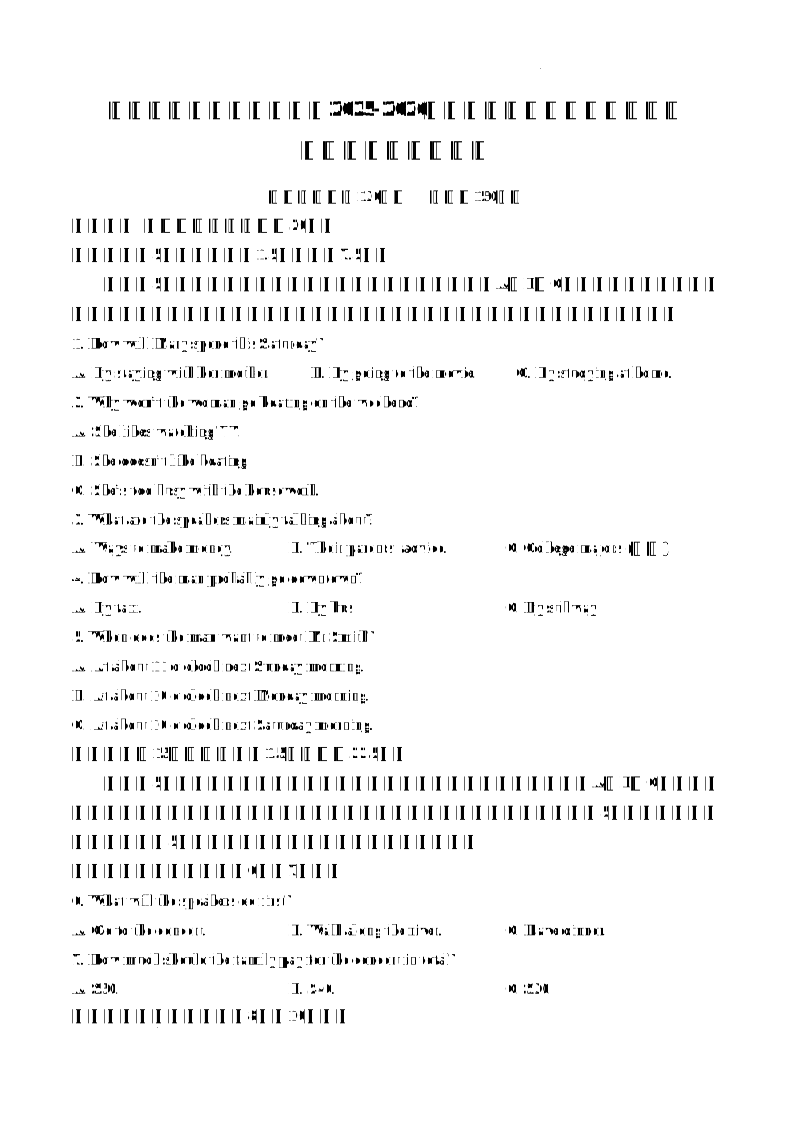
1. How will Mary spend this Saturday?
A. By staying with her mother. B. By going to the movie. C. By studying at home.
2. Why won’t the woman go boating on the weekend?
A. She likes watching TV.
B. She doesn’t like boating.
C. She’s too busy with the housework.
3. What are the speakers mainly talking about?
A. Ways to make money. B. Their parents’ advice. C. College majors (专业).
4. How will the man probably go downtown?
A. By taxi. B. By bus C. By subway
5. When does the man want to meet Mr Smith?
A. At about 11 o’clock next Sunday morning.
B. At about 10 o’clock next Monday morning.
C. At about 10 o’clock next Saturday morning.
第二节(共15小题:每小题1.5分,满分22.5分)
听下面5段对话或独白。每段对话或独白后有几个小题,从题中所给的A、B、C三个选项中选出最佳选项。听每段对话或独白前,你将有时间阅读各个小题,每小题5秒钟:听完后,各小题将给出5秒钟的作答时间。每段对话或独白读两遍。
听下面一段对话,回答第6和第7小题。
6. What will the speakers do first?
A. Go to the concert. B. Walk along the river. C. Have dinner.
7. How much should the family pay for the concert in total?
A. $50. B. $40. C. $20.
听下面一段对话,回答第8至第10小题。
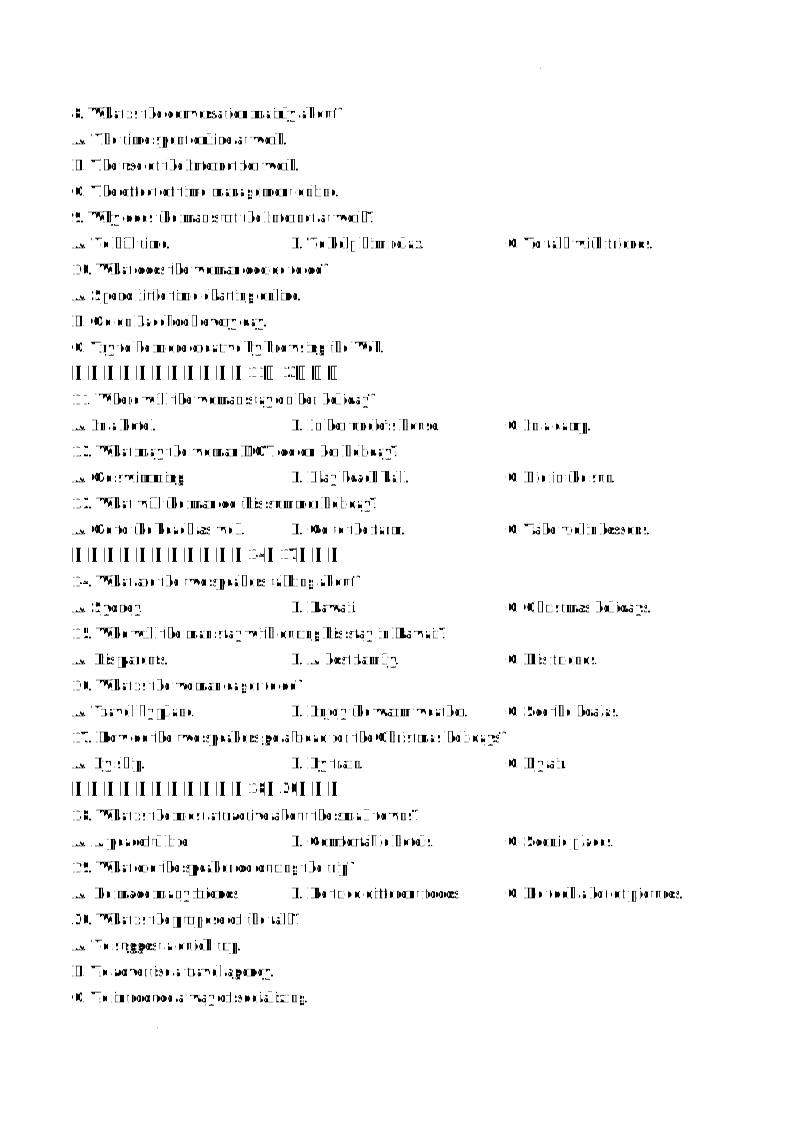
8. What is the conversation mainly about?
A. The time spent online at work.
B. The use of the Internet for work.
C. The effect of time management online.
9. Why does the man surf the Internet at work?
A. To kill time. B. To help him relax. C. To talk with friends.
10. What does the woman decide to do?
A. Spend little time chatting online.
B. Go on Facebook every day.
C. Try to be more creative by browsing the Web.
听下面一段对话,回答第11至13小题。
11. Where will the woman stay on her holiday?
A. In a hotel. B. In her uncle’s house. C. In a camp.
12. What may the woman NOT do on her holiday?
A. Go swimming. B. Play beach ball. C. Lie in the sun.
13. What will the man do this summer holiday?
A. Go to the beach as well. B. Go to the farm. C. Take violin lessons.
听下面一段对话,回答第14至17小题。
14. What are the two speakers talking about?
A. Sydney. B. Hawaii. C. Christmas holidays.
15. Who will the man stay with during his stay in Hawaii?
A. His parents. B. A host family. C. His friends.
16. What is the woman eager to do?
A. Travel by plane. B. Enjoy the warm weather. C. See the koalas.
17. How do the two speakers go abroad for the Christmas holidays?
A. By ship. B. By train. C. By air.
听下面一段独白,回答第18至20小题。
18. What is the most attractive about the small towns?
A. A peaceful life. B. Comfortable hotels. C. Scenic places.
19. What did the speaker do during the trip?
A. He made many friends. B. He tried different foods. C. He took a lot of pictures.
20. What is the purpose of the talk?
A. To suggest a quick trip.
B. To advertise a travel agency.
C. To introduce a way of socializing.
第二部分 阅读理解(共两节,满分50分)
第一节(共15小题;每小题2.5分,共37.5分)
阅读下列短文,从每题所给的四个选项(A、B、C和D)中选出最佳选项,并在答题卡上将该项涂黑。
A
Some stories take us far away, while others lead us back home. Here, three young readers share the books that stayed with them long after the last page was turned. Each offers a glimpse into a different world. Take a look — you might just discover your next great read.
● Fablehaven by Brandon Mull
It is about twins who spend the summer at their grandfather’s nature reserve. Something about it feels a little strange — like there’s more going on than meets the eye. They don’t understand any of the strange rules their grandfather gives them. Little do they know that this is a place for magical creatures. Soon they will learn that the rules are there for a reason. But only once they’re broken...
Beatrice C., age 16
● Five Go Off to Camp by Enid Blyton
Four children set off on a camping trip. As they explore the wild countryside, they come across an old, forgotten railway yard. There, a mysterious man called Wooden Leg Sam warns them to stay away. But curiosity gets the better of the young adventurers, and they decide to explore anyway — only to find themselves trapped in a tunnel, where something incredible awaits them.
Matilda W., age 17
● Where the Red Fern Grows by Wilson Rawls
Billy has been longing for a pair of red hounds (猎犬) — a desire his family cannot afford. So, he spends two years taking on any work he can find. The story follows his journey: earning enough, getting his dogs, training them with care, and finally winning a hunting competition. The book tells the unbreakable bond between a boy and his two best friends. However, have a tissue box nearby for the ending.
Lucie D., age 17
Do you have a favorite book? Email your review to cricket@cricketmagkids.com.
21. What do the first two book reviews have in common?
A. Both are about summer vacations. B. Both take place in nature reserves.
C. Both are recommended by 17-year-olds. D. Both involve ignoring warnings and exploring.
22. What might we infer about the ending of the third book?
A. It is very funny. B. It is boring.
C. It is full of actions. D. It is heart-breaking.
23. Where is this passage most likely taken from?
A. A teenage magazine. B. A travel website.
C. An adventure novel. D. A history textbook.
B
When he was just six years old, Hurum turned his bedroom into a small museum. His shelves became filled with a growing collection of fossils (化石). For Hurum, they were not just rocks, but things that could tell the history of life on this planet. He imagined them saying, “I am not a rock. I am a fossil. I have a story to tell.”
Hurum earned a PhD in paleontology (古生物学) in his native Norway. Since then, he has been seeking fossils all over the world. Much of his work has been carried out in Svalbard, a group of Norwegian islands north of the Arctic Circle. The “dig season” in the area is very short — from July to August. During that time, the temperature is just about warm enough to soften the frozen ground. There is also less wind, and the “midnight sun” makes it easy for the scientists to have long and productive days. In the hills of this cold and distant area, Hurum and his team have found the fossils of many sea creatures, which might seem surprising.
Even a dream job has its challenges, however. The team may find many broken bone pieces spread across a hillside. But it becomes impossible to recreate the entire animal. Also, each expedition (远征) requires a lot of preparation. “We have between 15 and 20 people, tons of equipment — food, jackhammers, water,” he explains. “There’s a lot of work before you start the cool thing.”
The “cool thing”, for Hurum, is the act of discovery. In 2006, his team made its greatest discovery so far. After removing about 60 tons of rock by hand, Hurum and his team eventually dug out a huge fossil. “We knew immediately this was something special,” says Hurum. It was a plesiosaur — a prehistoric sea monster with teeth the size of cucumbers.
For Hurum, the discovery of this 15-meter-long creature was an amazing moment. “It’s like one of those scratch-off lottery (彩票) tickets every time you dig,” he explains. “Sometimes, you start digging and you might just find part of a skull. Sometimes, you find a complete skull and backbone together. Then you know it’s a jackpot — far more than you can expect!”
24. What do we know about Hurum’s work?
A. His team works in Svalbard all year round.
B. His work requires careful preparation and planning.
C. His work focuses on the discovery of ancient land animals.
D. The “midnight sun” provides scientists with warmer weather to work in.
25. Which of the following can best describe Hurum?
A. Patient and responsible. B. Intelligent and generous.
C. Curious and determined. D. Humorous and optimistic.
26. What does the underlined word “jackpot” in the last paragraph mean?
A. A big prize. B. A lucky escape. C. A huge creature. D. A hard job.
27. What message does the passage mainly convey?
A. Practice makes perfect. B. Gold will shine wherever it is.
C. Actions speak louder than words. D. Where there’s devotion, there’s a destination.
C
Curiosity is a familiar feeling among people. Is curiosity a positive feeling or a negative feeling? Is it a painful reminder of what we don’t (yet) know, or an exciting signal to what we might soon discover? In fact, curiosity can be all of these things, and more. It has positive and negative faces: one points towards what we want, and one points towards what we have not yet got and may never get.
Once we recognize that curiosity has two faces, we can consider what can affect the nature of our experience in a given case. A paper published in the journal Cognition and Emotion does just this for the dimension (维度) of time. The researchers ask: Is the experience of curiosity more likely to be positive when we expect that our curiosity will be satisfied sooner rather than later?
To answer this question, the researchers carried out three studies with a total of over 200 participants from a university or online. In each study, the researchers induced (诱导) a state of curiosity by telling participants that they would later watch a video about “something with different shades of brown”. Participants were invited to guess what it might be, but they were not told. Half the participants were told they would watch the video after a short delay (延迟) of only one minute, and half were told that there would first be a 30-minute delay during which they would finish other interesting tasks. At the start of the delays, everyone expressed how curious they felt about the content of the video, as well as how much they felt negative feelings, such as discomfort, against positive feelings, such as happiness.
The key finding was that while both groups reported equal levels of curiosity, the curiosity was accompanied by more negative feelings for those participants facing a long delay. The researchers argue that the finding sheds light on the two faces of curiosity. When our curiosity will not be satisfied anytime soon, we focus on not knowing, which is annoying. But when our curiosity is on the verge (边缘) of being satisfied, we focus on almost knowing, which is a more positive experience.
28. What is the function of the questions in paragraph 1?
A. To introduce the topic. B. To show the author’s attitude.
C. To present supporting evidence. D. To provide background information.
29. What did the research focus on?
A. The two sides of curiosity. B. Delay’s effect on task performance.
C. Curiosity differences between people. D. Factors affecting the experience of curiosity.
30. Why did the researchers divide participants into two groups?
A. To collect more research data. B. To test different levels of curiosity.
C. To compare effects of different delays. D. To discover different types of curiosity.
31. What did the study find about curiosity?
A. The more we focus on not knowing, the more curious we become.
B. Longer waiting time makes people less curious about the unknown.
C. The experience of curiosity depends on how soon it will be satisfied.
D. Curiosity itself determines whether the experience is positive or negative.
D
Humans cannot possibly survive without a handful of things. Water, undoubtedly, is one of the most important. Regarding our total dependence on water for survival, have you ever wondered if other creatures also depend on water so much? Let’s narrow down the kind of “creatures” to fish. This may sound a bit strange, but do fish feel thirsty too?
This question is interesting because it is about “thirst”. Humans show this in different degrees (it can be just a little or I-can-wolf-the-whole-bowl-down). Thirst is an altogether different thing when we’re talking about creatures that live in water for most of their lives. Think of it this way: how would you ever feel hungry if you lived inside a pizza? Similarly, how can fish feel a strong need to drink water when they are practically surrounded by water all the time?
However, it’s not as simple as that. Both freshwater and seawater fish show different behaviors when it comes to actively drinking water. Freshwater fish have blood with a higher concentration (浓度) of salt than the water they are surrounded by. Therefore, they run a high risk of having their blood diluted (稀释) if they drink water. This is why they don’t actively drink water to keep the balance of salt and water inside their bodies. Since the salt concentration in the blood of seawater fish is lower than the water they are surrounded by, they are often threatened by dehydration (脱水), so they actively drink water. Thanks to the impressive design of their gills (鳃), they can drink saltwater, process it and then remove the extra salt from their bodies.
Actually, thirst, in fish, is more of a simple response that happens without requiring a thoughtful decision on their part (unlike humans); it just happens. Fish don’t necessarily have to feel thirsty in order to drink water. They don’t have that need to drink water after a hard round of exercise, or after walking across town on a hot, sunny day. One less thing to worry about!
32. What does the underlined word “this” in the second paragraph refer to?
A. The feeling of thirst. B. The question about fish.
C. The need to live inside water. D. The ability to drink a whole bowl of water.
33. What can be inferred about fish’s behaviors?
A. Seawater fish drink water to increase the salt level in their blood.
B. Seawater fish drink water to avoid losing water from their bodies.
C. Freshwater fish don’t drink water because they are threatened by losing water.
D. Freshwater fish don’t drink water because they take in enough water through their skin.
34. Which of the following can best describe thirst in fish?
A. A mental need. B. An unusual feeling. C. A natural reaction. D. A thoughtful choice.
35. What is the most suitable title for the text?
A. Why Is Water Important? B. Do Fish Get Thirsty?
C. How Are Fish Different? D. How Do Fish Process Saltwater?
第二节(共5小题;每小题2.5分,满分12.5分)
阅读下面短文,从短文后的选项中选出可以填入空白处的最佳选项。选项中有两项为多余选项。
There are a lot of strategies for visiting a museum and avoiding "museum tiredness". Consider what is mentioned below in planning. 36
Regardless of a museum's size, you'll get tired quickly if you try to look closely at every object displayed. Likewise, most museums provide lots of information about the objects on view. So don't try to read everything. 37 "Tombstone" labels are very brief and provide facts about the artist, their country etc. There may be a number, which the museum uses to register the object, usually according to when it became a part of the collection, and a credit line that indicates the donor. Object labels are placed next to many objects. 38 The approach used to write museum labels has been much debated among art historians and museum professionals.
39 Ask for a map, or have museum staff suggest highlights in the collection or special exhibitions. Many museums have special tours, audioguides, or downloadable apps that point you to these objects.
Some people recommend setting a specific amount of time for your visit (1 or 2 hours). 40 In addition to benches in the galleries, most museums have a cafe, shop, sculpture courtyard or gardens where you can hang out and relax for a bit.
A. You'll likely meet with two types of labels.
B. You are sure to make the most of your experience.
C. It's always a good idea to stop by the information desk.
D. It would also be wise to plan frequent breaks in the galleries.
E. Note that these might not be artworks that you find appealing.
F. If you live near, consider frequent visits to the changed exhibitions.
G. These aim to give information not always obvious about the artwork.
第三部分 语言运用(共两节,满分30分)
第一节(共15小题;每小题1分,满分15分)
阅读下面短文,从每题所给的A、B、C、D四个选项中选出可以填入空白处的最佳选项。
When I was a little boy growing up, my parents, two brothers and I all lived with my Nana in her old house. It was 41 by a single coal stove in the living room. And it was only 10 yards away from the railroad tracks. I remember the house would 42 every time the trains would pass. I always worried that one of the trains would 43 and destroy our home.
Well, one day, one train did just that, but 44 it was several hundred yards up the track. Some of the coal the train carried had fallen into the river, but most was over the side of the hill and 45 with dirt. Back then coal was valuable and whatever could be 46 from the spill (溢出物) would make all the difference to a family in winter. 47 , there was no way to get to it.
A few days later, though, I saw something 48 . It was a tiny coal car that had picked up the coal we had no 49 to. Now, it was coming down the tracks towards us. The men 50 our house, talked with my dad, and dumped the coal in our yard. There was more than enough to keep us warm through the coming winter. They didn’t have to 51 us. They could have dumped it anywhere, but they saw our need and through their kindness 52 our home and our hearts.
These days I have electric heat, but I still 53 the day when the railroad men helped us out in time of need. They 54 me again of why we are here — to love each other, help each other, and be kind to each other. We are here to make this world better and help others out of 55 . May we always do so!
41. A. supported B. heated C. controlled D. improved
42. A. break B. separate C. shake D. crack
43. A. tip over B. take over C. trip over D. hand over
44. A. thankfully B. unfortunately C. unexpectedly D. hopefully
45. A. filled B. identified C. compared D. mixed
46. A. removed B. revived C. recovered D. reserved
47. A. Therefore B. However C. Instead D. Furthermore
48. A. annoying B. puzzling C. satisfying D. amazing
49. A. right B. entrance C. access D. solution
50. A. stopped by B. broke into C. passed by D. turned to
51. A. guide B. improve C. impact D. help
52. A. protected B. decorated C. warmed D. influenced
53. A. remember B. recognize C. prefer D. honor
54. A. warned B. reminded C. informed D. assured
55. A. hunger B. danger C. disaster D. trouble
第二节(共10小题;每小题1.5分,满分15分)
阅读下面短文,在空白处填入1个适当的单词或括号内单词的正确形式。
At the 2025 China Movie and TV Night in Shanghai on Sunday, many actors and producers agreed that China’s film and television industry and market 56 (witness) massive changes, and good stories are connecting people 57 time, space and cultural boundaries.
Hosted by China Media Group, the event is part of the ongoing 27th Shanghai International Film Festival running from June 13 to the coming Sunday. 58 this year celebrates the 120th anniversary of Chinese cinema, the event paid tribute (致敬) to a number of seasoned actors 59 acclaimed works while 60 (introduce) new works that continue to tell good stories.
Dingjun Mountain was China’s first movie, released in 1905. After 120 years, a scene was 61 (vivid) reproduced at the event using AI-generated content (AIGC) technology. The 62 (combine) of story ideas, technology and art have brought many old masterpieces back to life. This year’s film festival also features 63 special unit consisting several 4K-restored films from across the globe, including Sunset Boulevard, Hugo the Hippo, The Sting of Death, The Chinese Feast, The Big Lebowski, Hula Girls, and Awara, the first Indian film 64 (release) in China.
“The 4K-restored films are giving audiences a new experience with these classic stories, an important trend at this year’s festival.” says 65 (note) Italian film producer and festival director Marco Muller.
第四部分 写作(满分40分)
第一节 任务型阅读(满分20分)
阅读下面短文,并按要求完成相应任务。
Last summer, I signed up for a park cleanup organized by a local environmental group called Green Earth. The park had been forgotten for years —its grass covered in plastic bottles, food wrappers, and tall, wild weeds. Excited to help, I arrived early with gloves and a trash picker, ready to work. The morning was bright and warm, but the day soon became a lesson in life.
By midday, our team had collected bags of trash, and the park looked slightly better. But dark clouds began to fill the sky. Moments later, heavy rain started pouring down. The dirt paths turned into slippery mud, and my trash bag suddenly broke, spilling all the garbage I had picked up. Cold water soaked through my shoes, and the wind blew so hard that I could barely keep my eyes open. I felt angry and disappointed, thinking all my hard work was ruined.
Seeking shelter under a tree, I watched other volunteers hurry to nearby buildings. My hands hurt from holding the picker, and my wet clothes felt heavy and uncomfortable. The happy energy I felt earlier was gone. “Why did I choose to do this?” I whispered to myself, wiping rainwater off my face. The park now looked worse than before —muddy, flooded, and full of scattered trash. It seemed impossible to fix.
Just then, I noticed an elderly man standing far across the field. He was alone in the rain, carefully tying his broken trash bag with a piece of rope. His movements were slow but steady. Instead of giving up, he kept picking up litter, one piece at a time.Even from a distance, I could see his determination. The wind howled, and rain continued to fall, but the old man didn't move from his spot. He bent down again and again, filling his bag with soggy paper and plastic.
第一节 根据文本内容从万框中选择怡当的词并用具正确形式填人文本图示中,每词限用一次,有两词为多余选项。(共10小题:每小题1分,满分10分)
finish
shelter
steady
excite
disappoint
ruin
sudden
determine
comfortable
happy
sign
tear
第二节 根据文本内容回答下列问题。(共3小题;满分10分)
76. What problems did the author face in the park cleanup?(3分)
77. How did the author feel about the old man’s action and what would he do next?(4分)
78. What would the author learn from this experience?(3分)
第二节 书面表达(20分)
一位名叫David的同学刚来中国读书,因为不适应语言和环境而情绪低落,特写信向学校英语专栏“Just Ask”求助。假定你是该专栏负责人李华,请你用英语给他回信,内容包括:
(1)表达安慰;(2)提出建议。
注意:(1)词80左右(开头已给,不计入总词数);
(2)可适当增加细节,以使行文连贯。
Dear David,
Yours,
Li Hua
高一下第二次月考英语参考答案
听力:1-5 CBCAB 6-10 CAABA 11-15BACCA 16-20 CCABA
阅读理解A篇21-23 DDA
【导语】本文介绍了三位青少年读者分享的三本令自己印象深刻的书籍的主要情节与特色。
21.细节理解题。根据第一本书籍介绍段“They don’t understand any of the strange rules their grandfather gives them. Little do they know that this is a place for magical creatures. Soon they will learn that the rules are there for a reason. But only once they’re broken... (他们不理解祖父给他们的任何奇怪规则。他们一点也不知道这是一个神奇生物的地方。很快他们就会知道这些规则是有原因的。但只有当它们被打破时……)”第二本书籍介绍段“There, a mysterious man called Wooden Leg Sam warns them to stay away. But curiosity gets the better of the young adventurers, and they decide to explore anyway — only to find themselves trapped in a tunnel, where something incredible awaits them.(在那里,一个名叫“木腿山姆”的神秘男子警告他们不要靠近。但年轻探险家们的好奇心占了上风,他们还是决定进去探索——结果却发现自己被困在了一条隧道里,而那里正有着令人难以置信的景象在等待着他们。)”可知,两本书的共同之处是主角都无视警告并主动探索未知事物。
22.推理判断题。根据第三本书籍介绍段“However, have a tissue box nearby for the ending.(不过,阅读结局时请准备好纸巾。)”可推知,这本书的结局令人伤感、催人落泪。
23.推理判断题。全文面向青少年群体,由少年读者分享书评,文末留有投稿邮箱cricket@cricketmagkids.com,内容贴近青少年阅读生活。由此可判断本文最有可能选自青少年杂志。
阅读理解B篇【答案】24-27 . BCAD
【导语】本文讲述古生物学家 Hurum自幼热爱化石,常年在极地艰苦科考,克服诸多困难,坚持探索,最终收获重大史前生物化石发现,诠释了热爱与坚守的价值。
24.细节理解题。根据第三段“Also, each expedition (远征) requires a lot of preparation.(此外,每次远征都需要进行大量的准备工作)”可知,胡鲁姆的工作需要精心的准备和规划。
25.推理判断题。根据第一段“For Hurum, they were not just rocks, but things that could tell the history of life on this planet. He imagined them saying, “I am not a rock. I am a fossil. I have a story to tell.”(对胡鲁姆来说,这些并非只是普通的石头,而是能够讲述这个星球上生命历程的物件。他想象着它们会说:“我不是一块石头。我是化石。我有故事要讲。”)”以及第二段“Since then, he has been seeking fossils all over the world. Much of his work has been carried out in Svalbard, a group of Norwegian islands north of the Arctic Circle. The “dig season” in the area is very short — from July to August. During that time, the temperature is just about warm enough to soften the frozen ground.(从那以后,他一直在世界各地寻找化石。他的大部分工作都在斯瓦尔巴群岛进行,该群岛是位于北极圈以北的一组挪威岛屿。该地区的“挖掘季”非常短暂——从七月持续到八月。在这段时间里,气温刚好足以使冻结的地面变软)”可知,胡鲁姆好奇且坚定。
26.词句猜测题。根据划线词上文“It’s like one of those scratch-off lottery (彩票) tickets every time you dig(每次挖掘的时候,这就像是一张那种刮奖式的彩票)”可知,前文用刮刮乐彩票作比喻,挖到完整骨骼是意外大收获,故划线词意思是“一大笔奖金”。
27.主旨大意题。根据最后一段“For Hurum, the discovery of this 15-meter-long creature was an amazing moment. “It’s like one of those scratch-off lottery (彩票) tickets every time you dig,” he explains. “Sometimes, you start digging and you might just find part of a skull. Sometimes, you find a complete skull and backbone together. Then you know it’s a jackpot — far more than you can expect!”(对于胡鲁姆来说,发现这个15米长的生物是一个令人惊叹的时刻。“每次挖掘的时候,这就像是一张那种刮奖式的彩票,”他解释道,“有时,你开始挖掘,可能会只找到一块头骨的碎片。有时,你会同时发现完整的头骨和脊椎骨。然后你就知道这是一笔巨大的收获——远远超出了你的预期!”)”结合本文讲述古生物学家Hurum自幼热爱化石,常年在极地艰苦科考,克服诸多困难,坚持探索,最终收获重大史前生物化石发现,诠释了热爱与坚守的价值。可知,文章想表达的是有执着追求的地方,就一定有最终的目标。
C篇【答案】28-31 ADCC
【导语】文章主要说明了好奇心有正反两面。研究通过长短等待对照实验发现,好奇心本身强度相近,能否快速解惑,决定其带来的感受是积极愉悦还是烦躁消极。
28.推理判断题。根据第一段“Curiosity is a familiar feeling among people. Is curiosity a positive feeling or a negative feeling? Is it a painful reminder of what we don’t (yet) know, or an exciting signal to what we might soon discover? In fact, curiosity can be all of these things, and more. It has positive and negative faces: one points towards what we want, and one points towards what we have not yet got and may never get.(好奇心在人们当中是一种常见的感受。那么,好奇心到底是积极的情感还是消极的情感呢?它是对我们尚未知晓之事的痛苦提醒,还是对我们即将发现之事的令人兴奋的信号?实际上,好奇心可以是上述所有这些,甚至更多。它既有积极的一面,也有消极的一面:一面指向我们所渴望的事物,另一面指向我们尚未拥有且可能永远无法得到的东西)”可知,第一段中的这些问题用于引入主题。
29.细节理解题。根据第二段“Once we recognize that curiosity has two faces, we can consider what can affect the nature of our experience in a given case.(一旦我们认识到好奇心具有两面性,我们就可以思考在特定情况下哪些因素会影响我们的体验性质)”可知,这项研究的重点是影响好奇心体验的因素。
30.细节理解题。根据第三段“Half the participants were told they would watch the video after a short delay (延迟) of only one minute, and half were told that there would first be a 30-minute delay during which they would finish other interesting tasks. At the start of the delays, everyone expressed how curious they felt about the content of the video, as well as how much they felt negative feelings, such as discomfort, against positive feelings, such as happiness.(一半的参与者被告知他们只需等待短短一分钟就会观看视频,而另一半参与者则被告知在等待期间(即先会有30分钟的延迟)他们需要完成一些有趣的任务。在延迟开始时,每个人都会表达自己对视频内容的浓厚兴趣,以及对负面情绪(如不适)的强烈感受,同时也会表达以及自身感受到的正面情绪(如快乐)的程度)”可知,研究人员将参与者分成两组是为了比较不同延迟所产生的效果。
31.细节理解题。根据最后一段“When our curiosity will not be satisfied anytime soon, we focus on not knowing, which is annoying. But when our curiosity is on the verge (边缘) of being satisfied, we focus on almost knowing, which is a more positive experience.(当我们的好奇心短期内无法得到满足时,我们就会专注于“不知道”的状态,这令人感到烦恼。但当我们的好奇心即将得到满足时,我们就会专注于“几乎知道”的状态,这则是一种更为积极的体验)”可知,这项研究发现好奇心的体验取决于它何时能得到满足。
D篇【答案】32-35 ABCB
【导语】本文围绕鱼是否会口渴展开,对比淡水鱼与海水鱼因体液盐分浓度差异,饮水行为截然不同,说明鱼类饮水是本能生理反应,和人类主动口渴不同。
32.词句猜测题。根据第二段“This question is interesting because it is about “thirst”. Humans show this in different degrees (it can be just a little or I-can-wolf-the-whole-bowl-down).(这个问题很有趣,因为它涉及到“口渴”这一话题。人类在不同程度上会表现出口渴的症状(有的只是轻微口渴,有的则会一口气把整碗水喝光))”可知,此处指人类表现出口渴的感觉,故this指的是“口渴的感觉”。
33.细节理解题。根据第三段“Since the salt concentration in the blood of seawater fish is lower than the water they are surrounded by, they are often threatened by dehydration (脱水), so they actively drink water. Thanks to the impressive design of their gills (鳃), they can drink saltwater, process it and then remove the extra salt from their bodies.(由于海水鱼血液中的盐分浓度低于它们所处的海水浓度,它们往往会面临脱水的威胁,因此它们会主动饮水。得益于它们鳃部的出色设计,它们能够饮用海水,对其进行处理,然后将体内的多余盐分排出体外)”可知,海水鱼类喝水是为了防止体内水分流失。
34.推理判断题。根据第四段“Actually, thirst, in fish, is more of a simple response that happens without requiring a thoughtful decision on their part (unlike humans); it just happens.(实际上,对于鱼类来说,口渴这种生理反应更像是一种简单的本能反应,它不会像人类那样需要它们自己进行深思熟虑的判断;它只是自然而然地就会发生)”可知,鱼类的口渴现象是一种自然反应。
35.主旨大意题。根据第一段“Humans cannot possibly survive without a handful of things. Water, undoubtedly, is one of the most important. Regarding our total dependence on water for survival, have you ever wondered if other creatures also depend on water so much? Let’s narrow down the kind of “creatures” to fish. This may sound a bit strange, but do fish feel thirsty too?(人类若缺少一些基本条件就无法生存。水无疑是最为重要的因素之一。关于人类对水的完全依赖以维持生命这一点,你是否曾思考过其他生物是否也如此依赖水呢?让我们把“生物”的种类限定为鱼类。这听起来可能有点奇怪,但鱼也会感到口渴吗?)”结合本文围绕鱼是否会口渴展开,对比淡水鱼与海水鱼因体液盐分浓度差异,饮水行为截然不同,说明鱼类饮水是本能生理反应,和人类主动口渴不同。可知,B选项“鱼会口渴吗?”最符合文章标题。
七选五 36-40. BAGCD
【解析】【文章大意】这是一篇说明文。主要介绍了如何有效地参观博物馆。
36. 上文“There are a lot of strategies for visiting a museum and avoiding “museum tiredness”. Consider what is mentioned below in planning.”(参观博物馆和避免“博物馆疲劳”有很多策略。在计划时考虑下面提到的内容。)说明下面提到的策略有助于更好地参观博物馆,B项“You are sure to make the most of your experience.”(你一定能充分利用你的游览经历。)衔接上文,说明考虑这些策略所带来的好处,即使自己的游览获得最大的满意,衔接恰当。故选B项。
37. 下文“ “Tombstone” labels are very brief and provide facts about the artist, their country etc. ”(“墓碑”标签非常简短,并提供有关艺术家及其国家等的事实。)及“Object labels are placed next to many objects.”(对象标签被放置在许多对象旁边。)可知,此处列举了博物馆两种标签类型,A项“You’ll likely meet with two types of labels.”(你可能会遇到两种类型的标签。)可概括下文内容。故选A项。
38. 上文“Object labels are placed next to many objects.”(对象标签被放置在许多对象旁边。)说明了对象标签放置的位置,G项“These aim to give information not always obvious about the artwork.”(这些都是为了提供关于艺术品并不总是显而易见的信息。)衔接上文,说明对象标签的作用,即提供关于艺术品的隐含信息,衔接恰当。故选G项。
39. 下文“Ask for a map, or have museum staff suggest highlights in the collection or special exhibitions. Many museums have special tours, audioguides, or downloadable apps that point you to these objects.”(索要一张地图,或者让博物馆工作人员推荐馆藏或特别展览中的亮点。许多博物馆都有专门的导览、语音指南或可下载的应用程序,指引你去看这些文物。)说明在开始参观之前可以做的事情,C项“It’s always a good idea to stop by the information desk.”(在问讯处停下来总是个好主意。)衔接下文,说明在问讯处停下来可以做的事情,衔接恰当。故选C项。
40. 上文“Some people recommend setting a specific amount of time for your visit (1 or 2 hours). ”(有些人建议为你的参观设定一个特定的时间(1或2小时)。)说明设定参观时间是明智的,D项“It would also be wise to plan frequent breaks in the galleries.”(在画廊里经常安排休息也是明智的。)衔接上文,说明另一件明智的事情是留出休息时间,引出下文“In addition to benches in the galleries, most museums have a cafe, shop, sculpture courtyard or gardens where you can hang out and relax for a bit.”(除了画廊里的长椅,大多数博物馆都有咖啡厅、商店、雕塑庭院或花园,你可以在那里闲逛和放松一下。)指出具体的休息方式,衔接恰当。故选D项。
完形填空【答案】41-45. BCAAD 46-50. CBDCA 51-55. DCABD
【解析】【导语】文章讲述了作者儿时家境贫寒,冬日靠煤炉取暖。邻近铁轨的火车意外洒落煤炭,众人难获取,铁路工人却主动送煤相助,这份善意令作者铭记一生。
41.考查动词。句意:客厅里只有一个煤炉为房子供暖。A. supported支撑;B. heated加热、供暖;C. controlled控制;D. improved改善。根据后文“a single coal stove”以及“keep us warm”可知,煤炉的作用是取暖供暖。
42.考查动词。句意:我记得每次火车经过,房子都会晃动。A. break打破;B. separate分离;C. shake摇晃、晃动;D. crack破裂。结合上文“And it was only 10 yards away from the railroad tracks.”可知,房子紧邻铁轨,火车驶过会产生震动让房屋摇晃。
43.考查动词短语。句意:我总是担心火车会翻倒,毁掉我们的家。A. tip over翻倒;B. take over接管;C. trip over绊倒;D. hand over移交。结合上文“And it was only 10 yards away from the railroad tracks.”可知,作者居住的房子离铁轨很近,所以害怕火车翻车损毁房屋。
44.考查副词。句意:有一天,一列火车真的出事了,但幸好事故发生在离我们几百码远的铁轨上。A. thankfully幸好、幸亏;B. unfortunately不幸地;C. unexpectedly意外地;D. hopefully有希望地。根据后文“it was several hundred yards up the track”可知,火车发生事故但远离自家房屋,是一件幸运的事。
45.考查动词。句意:火车运载的一部分煤掉进河里,但大部分落在山坡一侧,混进了泥土里。A. filled填满;B. identified识别;C. compared比较;D. mixed混合。根据上文“Some of the coal the train carried had fallen into the river, but most was over the side of the hill ”以及“with dirt.”可知,煤炭滚落山坡后会和泥土混杂在一起。
46.考查动词。句意:那时候煤炭很珍贵,从洒落的煤炭中能回收的一切物资,对冬天的家庭来说都至关重要。A. removed移除;B. revived复苏;C. recovered回收、找回;D. reserved预留。根据上文“Back then coal was valuable ”可知,因为珍贵,所以收集回收掉落的煤炭。
47.考查副词。句意:然而,我们没有办法拿到这些煤炭。A. Therefore因此;B. However然而;C. Instead反而;D. Furthermore此外。前文讲到煤炭十分珍贵,后文表示无法获取,前后为转折关系用However。
48.考查形容词。句意:然而几天后,我看到了一件令人惊喜的事。A. annoying恼人的;B. puzzling令人困惑的;C. satisfying令人满意的;D. amazing令人惊喜的、不可思议的。下文“The men ____ our house, talked with my dad, and dumped the coal in our yard.”铁路工作人员主动送来煤炭,是一件暖心惊喜的事,因此选D。
49.考查名词。句意:那是一辆小型运煤车,装载着我们无法获取的煤炭。A. right权利;B. entrance入口;C. access途径、使用权;D. solution解决办法。根据上文“It was a tiny coal car that had picked up the coal”指作者家无法获取煤炭,have no access to为固定搭配,意为“无法获得、无法接近”。
50.考查动词短语。句意:这些工作人员顺路来到我家,和父亲交谈后,把煤炭卸在了我们的院子里。A. stopped by顺路拜访、停靠;B. broke into闯入;C. passed by路过;D. turned to求助。根据后文“our house, talked with my dad, and dumped the coal in our yard”可知,工作人员特意来到作者家中,顺路停留拜访。
51.考查动词。句意:他们本不必帮助我们。A. guide引导;B. improve提升;C. impact影响;D. help帮助。根据上文“dumped the coal in our yard”以及后文他们本可以随意倾倒煤炭,可知帮助作者一家并不是他们的义务。
52.考查动词。句意:他们本可以把它随便丢弃在任何地方,但他们却看到了我们的需求,他们的善举温暖了我们的家,也温暖了我们的心。A. protected保护;B. decorated装饰;C. warmed温暖;D. influenced影响。结合前文冬天取暖需要煤炭以及“and our hearts”可知,善意温暖身心。
53.考查动词。句意:如今我用上了电暖,但我依旧记得铁路工人在我家困难时伸出援手的那一天。A. remember记得;B. recognize认出;C. prefer偏爱;D. honor尊敬。根据后文“the day when the railroad men helped us out in time of need”作者一直铭记这段温暖的往事。
54.考查动词。句意:他们再次提醒我人生存在的意义——彼此相爱、互相帮助、待人友善。A. warned警告;B. reminded提醒;C. informed告知;D. assured确保。根据后文“me again of why we are here”可知,这件往事时刻提醒作者心怀善意、互帮互助。
55.考查名词。句意:我们存在于世,是为了让世界变得更好,在他人陷入困境时伸出援手。A. hunger饥饿;B. danger危险;C. disaster灾难;D. trouble困境、麻烦。根据上文“to love each other, help each other, and be kind to each other”可知,指在他人陷入困境时伸出援手,out of trouble为固定搭配,意为“摆脱困境”。
语法填空:【答案】56.are witnessing 57.across/beyond 58.Since/As/Because 59.and 60.introducing 61.vividly 62.combinations 63.a 64.released 65.noted/notable
【导语】本文是一篇新闻报道。文章主要讲述了2025年中国影视之夜活动上,众多演员和制片人对中国影视行业发展的看法及活动亮点。
56.考查时态。句意:周日,在上海举行的2025年中国影视之夜上,许多演员和制片人都认为,中国的影视产业和市场正在见证巨大的变化,好的故事正在跨越时间、空间和文化界限,将人们联系在一起。根据语境可知,此处描述现在正在发生的事情,用现在进行时,主语“China’s film and television industry and market”是复数,be动词用are。故填are witnessing。
57.考查介词。句意同上。结合句意表示“跨越”,用介词across或beyond,“across time, space and cultural boundaries”表示“跨越时间、空间和文化界限”。故填across/beyond。
58.考查连词。句意:由于今年是中国电影120周年,此次活动向多位资深演员致敬,称赞他们的作品,同时介绍了继续讲述好故事的新作品。“this year celebrates the 120th anniversary of Chinese cinema”是原因,用since/as/because引导原因状语从句,句首单词首字母大写。故填Since/As/Because。
59.考查连词。句意:由于今年是中国电影120周年,此次活动向多位资深演员致敬,称赞他们的作品,同时介绍了继续讲述好故事的新作品。“paid tribute (致敬) to a number of seasoned actors”和“applauded works”是并列关系,用and连接。故填and。
60.考查非谓语动词。句意:由于今年是中国电影120周年,此次活动向多位资深演员致敬,称赞他们的作品,同时介绍了继续讲述好故事的新作品。此处introduce与event为主动关系,故用现在分词作状语。故填introducing。
61.考查副词。句意:《定军山》是中国第一部电影,于1905年上映,时隔120年,在此次活动中,借助人工智能生成内容(AIGC)技术生动重现了其中一幕。修饰动词reproduced用副词vividly。故填vividly。
62.考查名词复数。句意:故事创意、技术和艺术的结合让许多旧杰作重焕生机。空处作主语,用名词,combination“结合”是可数名词,由助动词“have”可知,主语用复数形式。故填combinations。
63.考查冠词。句意:今年的电影节还设有一个特别单元,包括几部来自全球的4K修复电影,包括《日落大道》、《小河马雨果》、《死之棘》、《满汉全席》、《谋杀绿脚趾》、《扶桑花女孩》和第一部在中国上映的印度电影《流浪者》。unit“单元”是可数名词,此处表示“一个特别单元”,用不定冠词a修饰。故填a。
64.考查非谓语动词。句意同上。句子谓语动词是features,空格处是非谓语动词,release“发行”与逻辑主语the first Indian film之间是被动关系,用过去分词形式作后置定语。故填released。
65.考查形容词。句意:著名的意大利电影制片人兼电影节导演马可·穆勒说:“4K修复的电影给观众带来了这些经典故事的新体验,这是今年电影节的一个重要趋势。”空处修饰名词“Italian film producer and festival director Marco Muller”,用形容词noted或notable,作定语,表示“著名的”。故填noted/notable。
阅读下面短文,在空白处填入1个适当的单词或括号内单词的正确形式。
任务型阅读
书面表达(参考范文)
Dear David,
①I'm sorry to learn that you're in low spirits after studying here as a foreign student. In fact, it's common to encounter culture shock in different language surroundings, and it's natural to experience difficulty adapting to a new environment.
In this situation, I suggest that you take part in various after-class activities to communicate with more native classmates. ②Besides, it's a good idea to get involved on local cultural activities which will further improve your language skills.
Hope my suggestions will be helpful to you.
Yours,
Li Hua
思路点拨: 本文是应用文,话题为向学校英语专栏“Just Ask”求助的同学回信。用一般现在时态;除要点外,可适当增加细节,;以使行文连贯注意使用亮点词汇和高分句型。
亮点词汇: ①in low spirits情绪低落;②take part in参加;③get involved on参与;
高分句型:①I'm sorry to learn that you're in low spirits after studying here as a foreign student.(that引导宾语从句)
②Besides, it's a good idea to get involved on local cultural activities which will further improve your language skills.(which引导定语从句)
结构布局: 1. 引言:表达安慰中心:2. 提出建议结尾:3. 表达祝愿
拓展词汇: ①practical实用的②as far as sb. be concerned依某人来看③give/offer sb. advice/tips/suggestions on sth.在某方面给某人建议④be of some help to对……有所帮助⑤take action采取行动
拓展句型:①I'm glad to receive your letter asking for my advice on ...很高兴收到你就……征求建议的来信。
②Only in this way will you ...只有用这种方式,你才能……
③I firmly believe, with your effort, you can manage to get over/overcome these difficulties.我坚信,通过您的努力,您会成功克服这些困难的。
听力材料:
1.【原文】M: Hi, Mary. I have an extra movie ticket. Would you like to go with me this Saturday?
W: Oh, I’d love to, but I promised my mother I would go over my lessons at home.
2.【原文】M: How are you spending the weekend?
W: My husband will go boating and I’ll stay at home, watching TV or doing the housework. Boating isn’t my cup of tea, you know.
3.【原文】M: I’ve decided that I’m going to study finance at university. My father told me that one needed to understand money before making money.
W: I’m going to study art. There is more to life than money.
4.【原文】M: What do you think of taking a taxi to go downtown?
W: Very expensive. It will cost you about $50. You’d better take the bus or subway.
M: I know it will cost me only $5. But it’s too crowded.
W: Maybe you are right
5.【原文】M: Hello! Can I speak to Mr Smith?
W: I’m sorry, but he’s out now. May I take a message?
M: Yes. This is John Brown. I’d like to meet him next Monday morning around 10 o’clock.
W: Let me check his schedule... Yes, I think he can see you.
第6段材料
【原文】W: Rick, there will be a rock concert at Riverside Theater tonight. Do you want to go?
M: It sounds interesting. When will it begin?
W: Let me see. It will begin at 7:30 this evening.
M: But I told our daughter that we might go out to dinner tonight. I should have told you earlier.
W: She told me about that. We can take her along. We can eat first and then go to the concert.
M: That sounds perfect. How much are the tickets?
W: $20 per ticket for adults and half that price per ticket for children under 10 years old.
M: Luckily, our daughter is nine. We’d better hurry, though. We don’t have very much time to enjoy our meal.
第7段材料
【原文】W: Mark, do you ever surf the Internet at work?
M: Sure. It helps me relax. I spend some time on Facebook each day at work.
W: I read a recent study that said that as much as 80 percent of the time people spend online at work is wasted.
M: Really? Well, I read a study the other day that said when people spend time casually browsing the Web at work, they actually end up being more productive and creative.
W: Ha… That’s funny. Do you really think that’s true?
M: Yes. I can control myself. I don’t spend too much time browsing the Web at work. I surf the Internet just to help me relax. So what about you?
W: Well, I’m not good at managing my time. I spend too much time talking with my friends online at work.
M: You’d better be careful! That can get you fired.
W: Yeah, I do need to stop. I don’t want to get fired.
第8段材料
【原文】M: Where will you spend your summer holiday with your parents, Vivian?
W: This time we’d like to go to the beach.
M: Have you booked your hotel rooms yet?
W: Oh, we needn’t do that. We’ll be staying in my uncle’s house.
M: You’re so lucky. It’s difficult to find a room to stay at the beach in August.
W: Actually, I want to camp on the beach but my parents think it is not safe.
M: Then are you going to swim?
W: To tell the truth, I can’t swim at all, but I’ll play beach ball, lie in the sun and just take things easy.
M: Sounds so wonderful.
W: What about you, Bob? Where are you planning to take your holiday?
M: My parents will go to the farm but I have to stay at home to take violin lessons.
第9段材料
【原文】M: Are you going on a trip abroad for the Christmas holidays?
W: Yes, I’m going to Sydney, Australia for my holidays. Where are you going?
M: I’m flying to Hawaii.
W: Are you traveling by yourself?
M: Well, yes, but I’m going to meet my parents in Hawaii for the Christmas holidays.
W: I’m flying alone, too. But I’m going to stay with a host family during my stay in Sydney. I’ll meet them at the airport.
M: That sounds very exciting. I’m sure you’ll have a wonderful experience.
W: I think so, too. I can’t wait to see the koalas. I really love animals.
第10段材料
【原文】M: Hello, if you are looking for something fun to do, consider a quick weekend trip to somewhere in your local area. Here in the American Midwest near Chicago, there are a number of scenic places and picturesque towns. And are only a one to three hour drive away. Recently, our social group visited three small towns, Shiwana, Nani, and Elkhart in northern Indiana.
What we enjoyed most was seeing small town with its quiet, slower paced life. It was easy to locate a comfortable, inexpensive hotel there. We wandered the main street shopping areas and tried a variety of treats. The busy Saturday ended with snacks, drinks and conversation. We were then rewarded with a good night’s sleep in the peaceful countryside. After a brief Sunday breakfast, we started our way back home. Each of us felt refreshed after this quick overnight trip.
学科网(北京)股份有限公司
$
资源预览图
1
2

3

相关资源
由于学科网是一个信息分享及获取的平台,不确保部分用户上传资料的 来源及知识产权归属。如您发现相关资料侵犯您的合法权益,请联系学科网,我们核实后将及时进行处理。