Unit7 Section B(2a-3c)教学设计 2025-2026学年人教版八年级英语下册
2026-05-26
|
7页
|
154人阅读
|
1人下载
普通
资源信息
| 学段 | 初中 |
|---|---|
| 学科 | 英语 |
| 教材版本 | 初中英语人教版八年级下册 |
| 年级 | 八年级 |
| 章节 | Section B,Vocabulary in Use,3a-3c |
| 类型 | 教案-教学设计 |
| 知识点 | - |
| 使用场景 | 同步教学-新授课 |
| 学年 | 2026-2027 |
| 地区(省份) | 全国 |
| 地区(市) | - |
| 地区(区县) | - |
| 文件格式 | DOCX |
| 文件大小 | 104 KB |
| 发布时间 | 2026-05-26 |
| 更新时间 | 2026-05-26 |
| 作者 | _sleeepy |
| 品牌系列 | - |
| 审核时间 | 2026-05-26 |
| 下载链接 | https://m.zxxk.com/soft/58055569.html |
| 价格 | 0.50储值(1储值=1元) |
| 来源 | 学科网 |
摘要:
该初中英语教学设计聚焦构词法(名词变形容词后缀)、词性辨析、语篇填空及读书报告写作,通过《西游记》《老人与海》图片和关键词导入,激活学生阅读经验,引导用形容词描述作品,搭建从已知形容词到构词规律学习的支架,衔接语篇填空的语境与语法线索运用。
此资料以读写结合与分层任务为亮点,通过专家小组分析读书报告结构培养思维品质,同伴互评提升批判性思维,接触中外经典渗透文化意识。过程写作法和分层作业助力学生语言能力与学习能力提升,为教师提供清晰教学路径与差异化实施策略。
内容正文:
课题
Unit 7 A Good Read
Section B (2a-3c)
学段
初中
年级
八
课型
词汇&写作课
课时
5
学科
English
单元
主题分析
本单元属于“人与社会”范畴,涉及“中外文学史上有代表性的作家和作品”子主题内容,围绕“为何阅读经典”这一核心问题,引导学生探讨优秀书籍的价值。通过分享阅读体验、学习现在完成时、撰写读书报告等活动,旨在激发学生对经典文学的兴趣,培养阅读习惯与表达能力,最终提升综合人文素养。
文本解读
What:本课时是人教版新版八年级下册第七单元A Good Read的第五课时,本课时分为构词练习、词性辨析、语篇填空、阅读以及读书报告写作。学生需掌握名词变形容词的常见后缀、同一词语在不同语境中的词性区分,并能够根据提示词完成语段;最后通过阅读范例,学习书评的结构与写作方法,完成一篇完整的读书报告。
Why:本课时旨在帮助学生系统理解英语词汇的构词规律,提升词性辨析与语境运用能力,同时通过读书报告的阅读与写作,培养文本分析、归纳与表达的综合语言能力。这些活动既强化语言基础知识,也引导学生从阅读中汲取思想,并进行有条理的书面输出,体现语言学习与思维训练的融合。
How:课时通过“讲解—练习—应用”的路径展开,先引导学生观察并总结名词变形容词的规则,完成词性转换与语篇填空;再通过对比句中划线词的用法,明确同一词语在不同句法中的功能;最后借助读书报告范例,引导学生分析结构、整理笔记,并模仿完成自己的书评写作,实现从语言形式到语篇表达的能力迁移。
学情分析
1.已有知识经验
学生已掌握一定量的基础名词和形容词,对常见构词法(如加后缀)有初步接触,能识别部分简单后缀,已了解名词、动词、形容词的基本区别,能在简单句中判断词语的词性。
2.潜在学习难点
在完成语篇填空时,学生需同时考虑词性、词义、语境和搭配,对语言综合运用能力要求较高。
3.教学支持建议
指导学生先通读全文把握大意,再根据空格前后的语法线索(如冠词、代词、句型)确定词性和词形。
教学目标
语言
能力
1.Students will be able to form adjectives from nouns using the suffixes -al, -ish, -y, -ful, -ous, -ive, and use them correctly.
2.Students will distinguish between noun and verb forms of the same word and use them appropriately in sentences.
文化意识
1.Students will be exposed to classic literary works from different cultures and recognize their enduring value and global influence.
2.Through reading and writing about books, students will reflect on universal themes such as perseverance, courage, and teamwork, fostering cross-cultural understanding and personal connection to literature.
思维品质
1.Students will develop analytical thinking by identifying word formation patterns and deducing word functions from sentence structure.
2.Students will exercise logical and structured thinking when organizing information into a coherent book report.
学习能力
1.Students will develop self-regulated writing skills by using graphic organizers to plan, draft, and refine a book report.
2.Students will cultivate reading-to-writing transfer ability by modeling their writing on a provided example and applying structural and linguistic features independently.
教学
重难点
教学重点
Students will complete a passage with correct word forms based on contextual and grammatical clues.
教学难点
Students will read and analyze a book report, then write their own report using a structured framework.
教学过程设计
教学环节
教师活动
学生活动
设计意图
Step 1
Lead-in
Teacher shows pictures or key words related to Journey to the West and The Old Man and the Sea. Asks questions: "Have you read these stories? What words would you use to describe them?"
Students look at the visuals, answer questions, and brainstorm descriptive words.
通过展示本课将要涉及的经典文学作品图片和关键词,迅速激活学生的背景知识和兴趣。引导学生用形容词进行描述,为后续学习做好铺垫。
Step 2
Vocabulary in use
Work on 2a
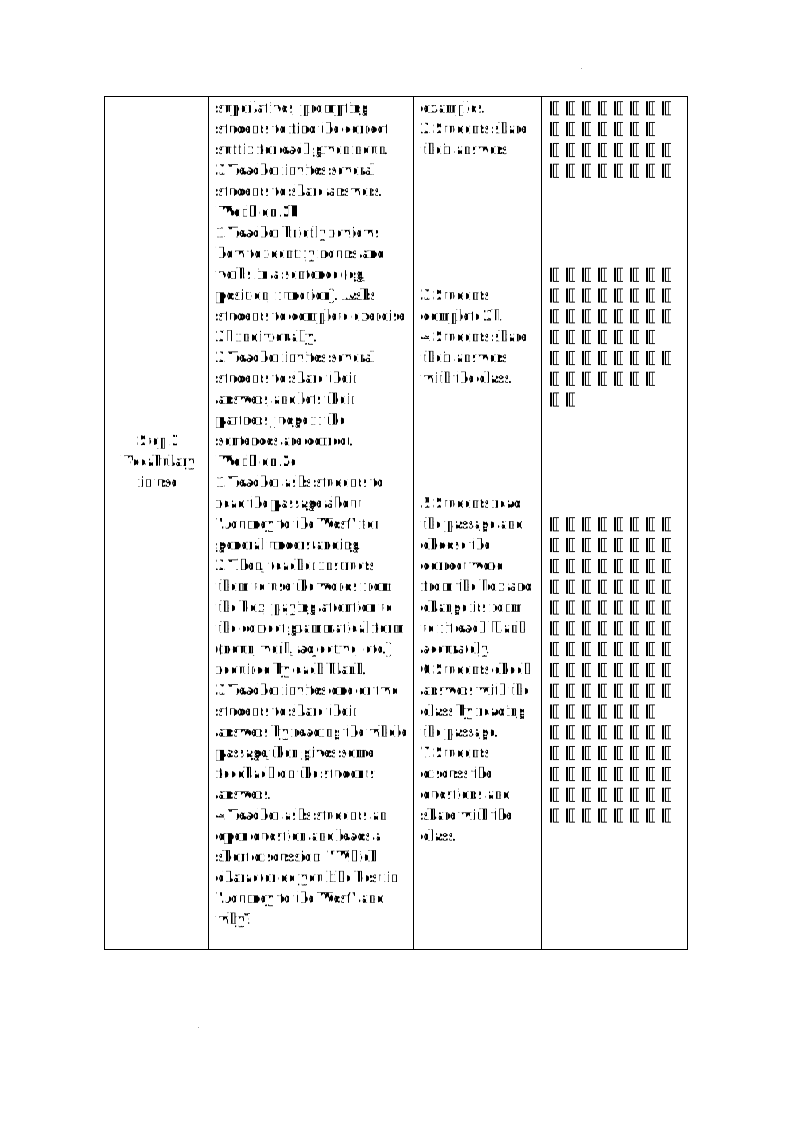
1.Teacher introduces the target suffixes and elicits the adjective for "mystery" (mysterious) as an example. Guides students to complete 2a collaboratively.
2.Teacher clarifies that "-ness" and "-ity" are noun suffixes, and "-est" is for superlatives, prompting students to find the correct suffix for each given noun.
3.Teacher invites several students to share answers.
Work on 2b
1.Teacher briefly reviews how to identify nouns and verbs in a sentence (eg, position, function). Asks students to complete exercise 2b individually.
2.Teacher invites several students to share their answers,and lets their partners judge if the sentences are correct.
Work on 2c
1.Teacher asks students to read the passage about "Journey to the West" for general understanding.
2.Then, teacher instructs them to use the words from the box, paying attention to the correct grammatical form (noun, verb, adjective, etc.) required by each blank.
3.Teacher invites one or two students to share their answers by reading the whole passage,then gives some feedback on the students’ answers.
4.Teacher asks students an open question and leads a short discussion: "Which character do you like best in "Journey to the West" and why?
1.Students work individually or in pairs to complete the table in 2a, changing nouns into adjectives using the correct suffix and providing other examples. 2.Students share their answers.
3.Students complete 2b.
4.Students share their answers with the class.
5.Students read the passage and choose the correct word from the box and change its form to fit each blank accurately.
6.Students check answers with the class by reading the passage.
7.Students discuss the questions and share with the class.
采用归纳法与演绎法相结合的方式教授构词法。先通过范例引导学生观察规律,再放手让学生独立或合作完成表格。特别指出表格中预设的干扰项,帮助学生明确本节课的重点后缀,巩固名词变形容词的核心规则。
此环节重点训练学生的语法分析和语境判断能力。学生需要超越单词本身,分析其在具体句子中的语法功能。
将词汇学习提升到语篇应用的层面。学生必须先理解段落大意和逻辑,再根据上下文线索判断空格所需的词性和词义,最后进行正确的词形转换。这综合考查并锻炼了学生的阅读理解、语法知识和词汇运用能力。询问关于人物特质的开放性问题,锻炼学生的批判性思维。
Step 3
Pre-reading
Teacher projects a famous quote about reading (A reader lives a thousand lives before he dies.) and facilitates a quick "Think-Pair-Share": "Think of one book that truly moved you or taught you something. Share its title and one big idea you got from it with your partner."
Students reflect individually, then discuss with a partner. Several volunteers share their book with the class.
教师以名言营造文学与思考的氛围。“思考-结对-分享”活动能低风险地激活每位学生的个人阅读经验,为理解“读书报告”的分享感悟做好情感和内容上的铺垫。
Step 4
While-reading
Work on 3a
1.Teacher instructs students to read the book report on The Old Man and the Sea quickly and divides the class into 5 expert groups, each assigned one label (A-E). Their task is to find which paragraph(s) contain their assigned information and explain why.
2.After reading, teacher asks each group to share their answers.
3.Teacher confirms the labeling and summarizes the core sections of a book report on the board: Introduction (A&D), Summary (E), and Opinion & Recommendation (B&C).
4.Teacher leads students to highlights the transition phrases used ("The main character is...", "This book has taught me...", "I recommend...").
1.Students read and work in expert groups to analyze the text and prepare their explanation. 2.Students share their answers with the class.
3.Students follow along and take brief notes on the framework and useful phrases identified by the class.
将文本分析任务分解并赋予每个学生“专家”角色。这促使学生阅读和推理,而非被动接受答案。在后续的“教学”环节中,学生必须组织语言解释自己的发现,极大地锻炼了理解力和口头表达能力,同时确保所有学生掌握报告结构。
在核对环节,教师将零散的标签信息(A-E)整合、归纳为清晰的板块,帮助学生从“找信息”上升到“建结构”。强调过渡用语是提供必要的“语言支架”,使学生意识到连贯性在写作中的重要性,为独立写作打下基础。
Step 5
Post-reading
Work on 3b
1.Teacher introduces the planning table (3b) and models the process briefly by thinking about a familiar book (eg, Harry Potter): "For Introduction, writer is J.K. Rowling... people think it's a worldwide phenomenon. For Story, main characters are Harry, Ron, Hermione... For Opinion, I learned about friendship and courage..." Then, gives students time to choose their own book and complete the table.
2.Teacher circulates to provide support, then invites several students to briefly share their books.
1.Students select a novel and use the planning table to brainstorm and organize notes for their own report in English.
2.Students briefly share their books.
规划表格作为强有力的构思工具,引导学生系统性地梳理内容,确保报告要点完整,并鼓励他们在动笔前思考书籍的深层意义与个人关联,使写作内容更充实。
Step 6
Writing
Work on 3c
1.Teacher instructs students to begin writing their first draft based on their notes. 2.Teacher plays soft and instrumental background music. Circulates around the classroom, providing on-the-spot support (e.g., answering vocabulary questions, helping with sentence structure, encouraging students to refer back to the model text for phrasing).
Students work individually to write a draft of their book report. Focus on transferring notes into complete sentences and coherent paragraphs, using the model and board notes as a guide.
提供安静的写作氛围和及时的个性化支持是关键。背景音乐有助于营造专注的写作环境。教师巡视提供的“即时性支架”能有效解决学生个体的写作障碍,确保写作过程顺畅。
Step 7
Checking
1.Teacher introduces a simple peer-review checklist on the board:
-Does it have the three parts? (Intro, Story, Opinion)
-Is the story summary clear but brief?
-Does the opinion include a lesson or reason for recommendation?
2.Teacher asks students to swap drafts with a partner, read, and give feedback based on the checklist.
3.Teacher invites several students to read their revised introduction or opinion paragraph aloud. Praises effective use of structure or language.
1.Students exchange drafts and read their partner's report. They should provide one positive comment and one constructive suggestion based on the checklist.
2.Then, students get their own draft back and have a few minutes to make revisions.
同伴互评将学生置于读者和编辑的双重角色中,培养其批判性思维和读者意识。检查清单引导反馈聚焦于结构和内容要点,避免空洞的评价。修改环节体现了过程写作法的核心,让学生明白写作是包括起草、反馈、修改的循环,从而提升最终作品的质量。课堂分享创造了积极的成果展示机会,增强学生成就感。
Step 8
Summary
Teacher asks a few students to share one interesting adjective they learned or a key point from their book report plan.
Students share brief reflections.
总结回顾本课重点,通过分享强化学习成果。
Step 9
Homework
Level A:Prepare a short dialogue about one person recommends a book from this unit and the other asks at least two questions about it (eg, "Who is the main character?", "Is it a sad story?").
Level B:Write a full book report for a novel you have read recently, following the structure demonstrated in the lesson. Aim to express nuanced opinions and clear reasons for your recommendation.
Level C:Imagine you are the main character from The Old Man and the Sea. Write a diary entry from their perspective, describing one major event from the story and your feelings about it. Use descriptive language and first-person narrative.
本课时分层作业设计基于学生阅读和撰写读书报告的核心技能,旨在让不同英语水平的学生都能在最近发展区内获得有效提升,实现从理解、模仿到独立应用与创新的能力跨越。
板书设计
Unit 7 A Good Read
Section B (2a-3c)
教学反思
1、 成功之处:
1.读写结合紧密:本课成功搭建了从阅读范例到结构分析,再到利用表格进行要点梳理,最终完成独立写作的清晰教学路径。学生能够明确感知并模仿目标语篇的框架,降低了写作焦虑。
2.任务分层清晰:课堂练习与分层作业设计体现了差异化教学理念。从词汇、结构识别的基础任务,到引导性写作的中级任务,再到创造性、批判性的高级任务,为不同水平的学生提供了可及的学习台阶和挑战空间。
二、存在问题:
1.过程指导可更细致:在从“笔记表格”到“成文报告”的关键转化环节,可能缺乏对如何组织语言、衔接段落、运用恰当连接词等微观技能的集中示范和指导。
2.课堂互动深度有待加强:小组讨论局限于书本信息的复述或简单喜好表达,对于为何推荐、主题与当下的关联等需要深入阐释的问题,讨论未能充分展开。
三、改进措施:
1.强化过程写作指导:在分析范例后增加一个“共同建构”环节,以一位学生的笔记表格为例,师生共同口述或板书,将其扩展成连贯的段落,重点演示如何将要点串联成文,并归纳常用的表达句式。
2.提供讨论思维支架与语言支架:在小组分享和问答活动前,预先提供问题清单和功能句卡,例如,推荐理由可提供“It makes you think about...”, “The character’s struggle reflects...”等句型,引导学生进行更有深度的交流。
学科网(北京)股份有限公司
$
资源预览图

1

2
3

相关资源
由于学科网是一个信息分享及获取的平台,不确保部分用户上传资料的 来源及知识产权归属。如您发现相关资料侵犯您的合法权益,请联系学科网,我们核实后将及时进行处理。