Unit7 Grammar Focus(4a-4d)教学设计 2025-2026学年人教版八年级英语下册
2026-05-26
|
5页
|
249人阅读
|
22人下载
普通
资源信息
| 学段 | 初中 |
|---|---|
| 学科 | 英语 |
| 教材版本 | 初中英语人教版八年级下册 |
| 年级 | 八年级 |
| 章节 | Grammar Focus |
| 类型 | 教案-教学设计 |
| 知识点 | - |
| 使用场景 | 同步教学-新授课 |
| 学年 | 2026-2027 |
| 地区(省份) | 全国 |
| 地区(市) | - |
| 地区(区县) | - |
| 文件格式 | DOCX |
| 文件大小 | 132 KB |
| 发布时间 | 2026-05-26 |
| 更新时间 | 2026-05-27 |
| 作者 | _sleeepy |
| 品牌系列 | - |
| 审核时间 | 2026-05-26 |
| 下载链接 | https://m.zxxk.com/soft/58055568.html |
| 价格 | 0.50储值(1储值=1元) |
| 来源 | 学科网 |
摘要:
该初中英语教学设计聚焦现在完成时的结构、时间状语(ever, never, just等)及与一般过去时的区别。通过Free talk对比“I have read...”和“I read...”自然导入,引导学生观察例句归纳规则,结合时间轴图示搭建从形式认知到意义理解的学习支架。
资料以“感知—理解—运用—交际”为主线,融合小组讨论、采访等多样活动,如4d环节用现在完成时采访同学阅读经历,提升语言能力。通过时态对比练习培养思维品质,分层作业满足不同需求,助力学生协作学习,为教师提供梯度化教学方案,提升课堂效率。
内容正文:
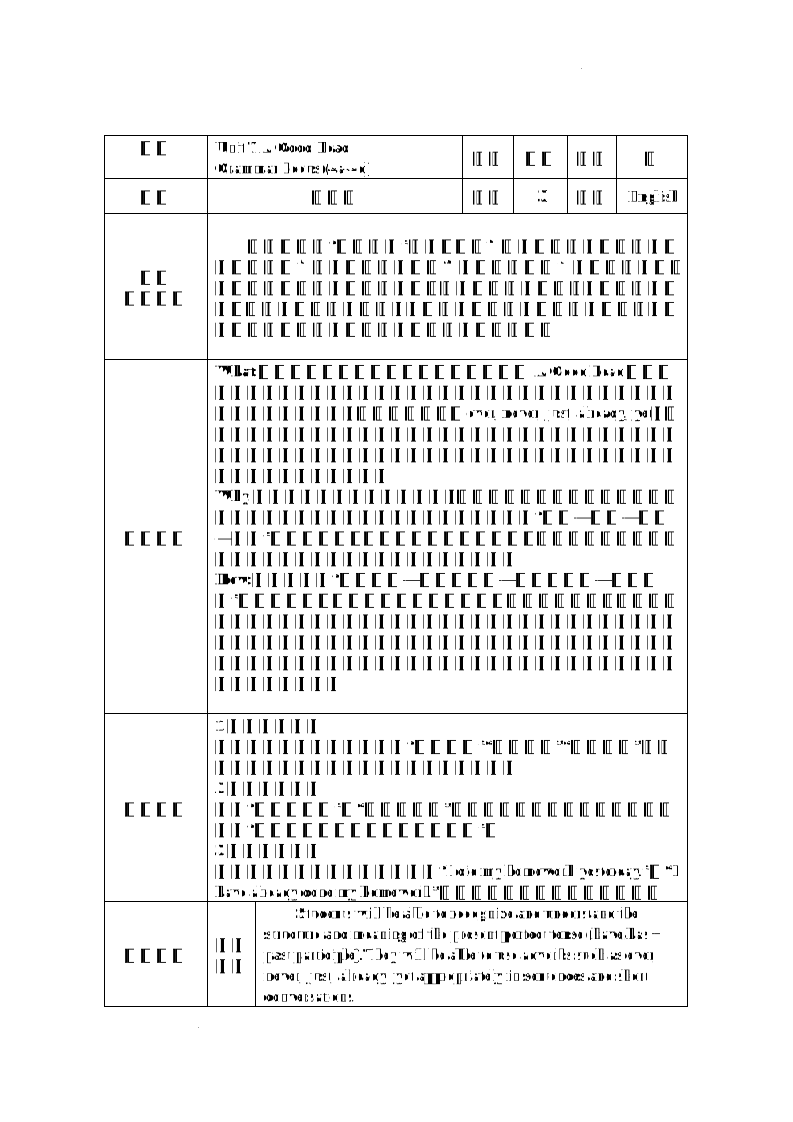
课题
Unit 7 A Good Read
Grammar Focus (4a-4d)
学段
初中
年级
八
课型
语法课
课时
3
学科
English
单元
主题分析
本单元属于“人与社会”范畴,涉及“中外文学史上有代表性的作家和作品”子主题内容,围绕“为何阅读经典”这一核心问题,引导学生探讨优秀书籍的价值。通过分享阅读体验、学习现在完成时、撰写读书报告等活动,旨在激发学生对经典文学的兴趣,培养阅读习惯与表达能力,最终提升综合人文素养。
文本解读
What:本课是人教版新版八年级下册第七单元A Good Read的第三课时语法课,本课时聚焦于现在完成时的语法学习,内容涵盖现在完成时的基本结构、常见时间状语(ever, never, just, already, yet)的用法,以及现在完成时与一般过去时的区别。练习形式多样,包括句子分析、对话填空、语篇动词填空及采访活动,逐步推进从理解到输出的语言内化过程。
Why:语法教学容易陷入机械操练,本课设计旨在将语法学习融入真实语境,突出功能性与交际性。活动编排遵循“感知—理解—运用—交际”的认知规律,帮助学生不仅掌握形式,更理解其在真实交流中的意义,最终实现语言知识的交际转化。
How:教学可通过“示例归纳—控制性练习—半开放运用—自由交际”的路径展开。首先引导学生观察例句、自主归纳规则,再通过选词填空和时态辨析填空巩固形式与意义。最后借助采访任务,创设真实的信息沟活动,让学生在互动中自然运用现在完成时进行提问与回答,完成从语言学习到语言使用的过渡,提升语法知识的交际活力与学习意义。
学情分析
1.已有知识经验
学生在日常生活中已有表达“已经做过”“从未做过”“刚刚完成”等经验,具备理解该时态意义的生活认知基础。
2.潜在学习难点
区分“一般过去时”与“现在完成时”在意义和用法上的差异,特别是理解“过去动作对现在的影响或相关性”。
3.教学支持建议
设计对比性例句和情景对话,如“I did my homework yesterday.”与“I have already done my homework.”,帮助学生直观体会时态差异。
教学目标
语言
能力
Students will be able to recognize and understand the structure and meaning of the present perfect tense (have/has + past participle).They will be able to use adverbs such as ever, never, just, already, yet appropriately in sentences and short conversations.
文化意识
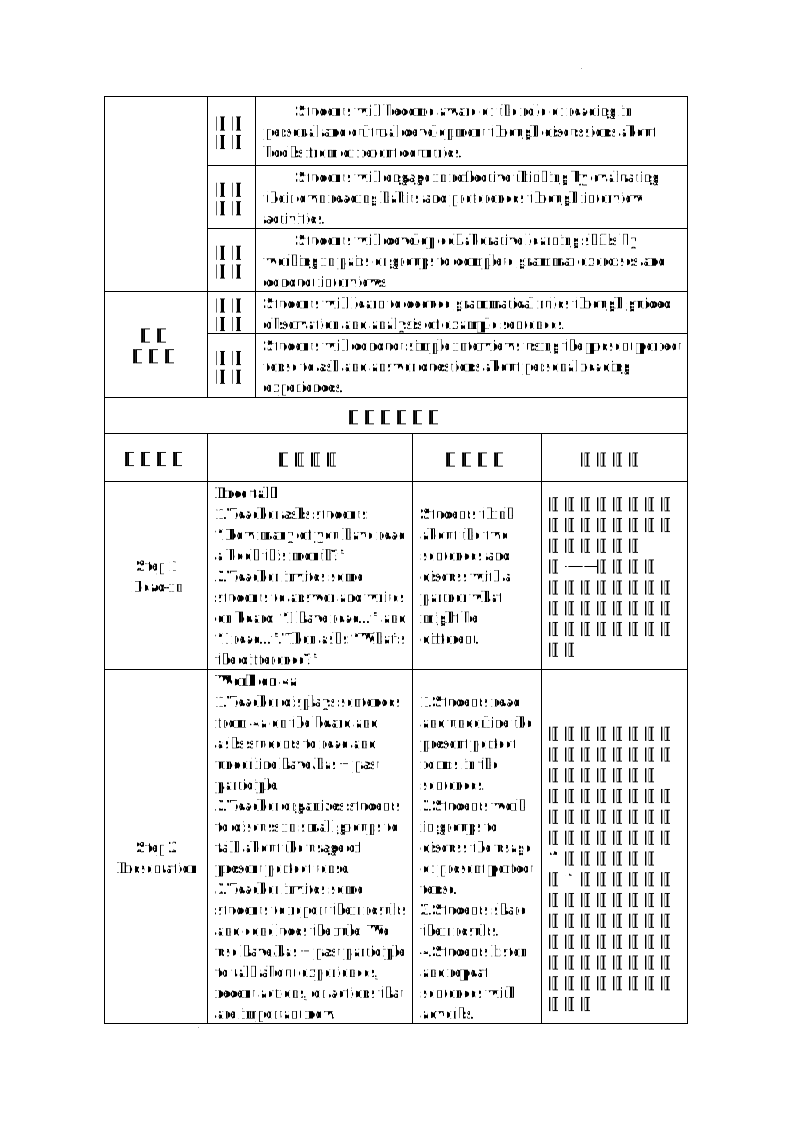
Students will become aware of the role of reading in personal and cultural development through discussions about books from different countries.
思维品质
Students will engage in reflective thinking by evaluating their own reading habits and preferences through interview activities.
学习能力
Students will develop collaborative learning skills by working in pairs or groups to complete grammar exercises and conduct interviews.
教学
重难点
教学重点
Students will learn to deduce grammatical rules through guided observation and analysis of example sentences.
教学难点
Students will conduct simple interviews using the present perfect tense to ask and answer questions about personal reading experiences.
教学过程设计
教学环节
教师活动
学生活动
设计意图
Step 1
Lead-in
Free talk
1.Teacher asks students: “How many of you have read a book this month?”
2.Teacher invites some students to answer and writes on board: “I have read...” and “I read...”.Then asks:“What’s the difference?”
Students think about the two sentences and discuss with a partner what might be different.
通过询问学生近期阅读情况,自然引出本课语法焦点——现在完成时。对比一般过去时与现在完成时的句子,激发学生思考。
Step 2
Presentation
Work on 4a
1.Teacher displays sentences from 4a on the board and asks students to read and underline have/has + past participle.
2.Teacher organizes students to discuss in small groups to talk about the usage of present perfect tense.
3.Teacher invites some students to report their results and concludes the rule: We use have/has + past participle to talk about experiences, recent actions, or actions that are important now.
4.Teacher uses a timeline diagram to show how present perfect links past and present.
5.Teacher introduces adverbs: ever, never, just, already, yet with examples and gestures (eg, “just” with a quick hand clap).
1.Students read and underline the present perfect forms in the sentences.
2.Students work in groups to discuss the usage of present perfect tense.
3.Students share their results.
4.Students listen and repeat sentences with adverbs.
引导学生通过观察例句自主归纳现在完成时的构成形式,培养发现式学习能力。时间轴图示直观呈现该时态“连接过去与现在”的核心意义,帮助学生理解其功能。通过动作和例句多模态输入,帮助学生理解并记忆关键副词的用法和意义。
Step 3
Practice
Exercises
After learning the knowledge points of present perfect tense,teacher shows some exercises through PPT.
单项选择题。
1.She ________ the book, so she can tell you about it.
A.reads B.has read
C.read D.is reading
2.I _______ never _______ to Beijing before.
A.have, been B.has, been
C.did, go D.am, going
3.Tom ______ just _______ his breakfast.
A.have, eaten B.has, eat
C.has, eaten D.did, eat
4.We _______ that film three times this year.
A.have seen B.has seen
C.saw D.see
5. ______ he ______ the email already?
A.Have, sent B.Has, sent
C.Did, send D.Is, sending
Work on 4b
1.Teacher guides students to complete 4b individually, then leads them to check in pairs.
2.Teacher plays audio of the completed conversations for reinforcement.
Work on 4c
1.Teacher explains the difference between simple past (finished time) and present perfect (unfinished time/link to now).
2.Teacher guides students through 4c step by step—first identify time clues, then choose the tense.Teacher shows a “time clue chart” on board: yesterday→past tense /already→present perfect.
3.Teacher invites some students to share their answers and gives some feedback.
1.Students finish the exercises about present perfect tense on PPT.
2.Students complete 4b and compare answers with a partner.
3.Students practice reading the conversations with correct intonation.
4.Students complete 4c individually, circling time expressions before choosing the tense.
5.Students share one sentence and explain the tense choice.
教师通过PPT展示现在完成时的相关练习,趁热打铁,对刚刚讲解的知识点进行学以致用,强化学生的理解和记忆。
个人完成练习后同伴互查,既保证独立思考又促进合作学习。跟读练习强化语音语调,提升口语流利度。
通过时间线索提示引导学生自主判断时态,培养语法分析能力。强调语境理解而非机械选择,帮助学生掌握两种时态的本质区别。
Step 4
Production
Work on 4d
1.Teacher introduces the interview task and models with a student: “Have you ever read all four Chinese literary classics?”
2.Teacher organizes students into groups of four and gives each student an interview card with sentence starters.
Teacher circulates and provides language support.
3.Teacher invites some students to share their interviews with the class.
1.Students interview 3 classmates using the questions in 4d.
2.Students share their interviews with the class.
将语法学习融入真实交际任务,让学生在访谈中自然运用现在完成时进行提问与回答。汇报环节鼓励学生整合信息,提升归纳与表达能力。任务设计贴近学生生活,增强学习动机与参与感。
Step 5
Summary
1.Teacher asks: “What is one thing you have learned today?”
2.Teacher leads students to review the structure and adverbs on the board.
Students share what they have learned today.
通过反思提问引导学生自主总结本课收获,强化学习成效。
Step 6
Homework
Level A:Write 5 sentences about yourself using:just,already,ever,never and yet.
Level B:Ask one family member:"Have you ever...?" (3 questions about experiences) and write their answers.
Level C:Write a paragraph (5-8 sentences) about: "What have you learned this week that has changed how you think?"
本作业设计遵循分层教学理念,所有任务均围绕现在完成时的用法设计,体现“理解—应用—创造”的梯度。
板书设计
Unit 7 A Good Read
Grammar Focus (4a-4d)
教学反思
1、 成功之处:
1.教学层次清晰分明:从形式认知到副词运用,再到时态对比,最后到交际应用,教学环节循序渐进。每个阶段都设置了明确的学习目标和适当的练习支架,符合学生的认知发展规律。
2.互动形式丰富多样:结合个人思考、同伴讨论、小组访谈等多种互动形式,保持课堂活跃度。特别是在4d的采访活动中,学生表现出较强的参与意愿,在真实交流中巩固了语法知识。
二、存在问题:
1.个别难点处理不够细致:学生对"already"和"yet"的用法区别仍存在困惑,特别是在疑问句和否定句中的位置选择。
2.评价反馈不够及时:在小组活动过程中,教师巡视指导时未能及时记录学生的典型错误,错过了最佳纠错时机。
三、改进措施:
1.加强难点突破:设计专项对比练习和可视化提示卡,帮助学生区分易混淆副词;创设记忆口诀或情境对话,让学生在具体语境中掌握用法差异。
2.完善反馈机制:设计"错误收集表",在巡视时记录典型问题,最后进行集中分析和纠正。同时鼓励学生互评,培养他们的语言监控能力。
学科网(北京)股份有限公司
$
资源预览图
1
2

相关资源
由于学科网是一个信息分享及获取的平台,不确保部分用户上传资料的 来源及知识产权归属。如您发现相关资料侵犯您的合法权益,请联系学科网,我们核实后将及时进行处理。