精品解析:北京三帆中学2024~2025学年八年级上学期期末测试英语试题
 切换试卷
切换试卷
2026-05-26
|
2份
|
32页
|
65人阅读
|
1人下载
资源信息
| 学段 | 初中 |
|---|---|
| 学科 | 英语 |
| 教材版本 | - |
| 年级 | 八年级 |
| 章节 | - |
| 类型 | 试卷 |
| 知识点 | - |
| 使用场景 | 同步教学-期末 |
| 学年 | 2025-2026 |
| 地区(省份) | 北京市 |
| 地区(市) | - |
| 地区(区县) | - |
| 文件格式 | ZIP |
| 文件大小 | 845 KB |
| 发布时间 | 2026-05-26 |
| 更新时间 | 2026-05-29 |
| 作者 | 匿名 |
| 品牌系列 | - |
| 审核时间 | 2026-05-26 |
| 下载链接 | https://m.zxxk.com/soft/58048406.html |
| 价格 | 3.00储值(1储值=1元) |
| 来源 | 学科网 |
内容正文:
北京三帆中学2024—2025学年度第一学期期末考试
八年级 英语
班级:________ 分层班级:________ 姓名:________ 学号:________ 成绩:________
注
意
事
项
1. 本试卷共10页,其中一至八大题为必做题,第九、十大题为选做题
满分10分,计入总分。作答时长100分钟,满分100分
2. 在试卷和答题卡上,准确填写班级、姓名、学号。
3. 试题答案一律填涂填写在答题卡上,在试卷上作答无效。
4. 考试结束后,请将考试资料一并交回
听力理解 (共20分)
一、听对话或独白,根据对话或独白的内容,从下面各题所给的A、B、C三个选项中选择最佳选项。每段对话或独白你将听两遍。(共12分,每小题1.5分)
请听一段对话,完成第1至第2小题。
1. Where did the accident happen?
A. At a restaurant.
B. At a coffee shop.
C. At a shopping mall.
2. What did the girl do when she saw the accident?
A. She took a video.
B. She stopped her car.
C. She called the police.
请听一段对话,完成第3至第4小题。
3. How did the woman go to Shanghai from Hangzhou?
A. By train. B. By ship. C. By coach.
4. What problem did the woman have during the journey?
A. She didn’t feel very well.
B. She didn’t like the bed.
C. She didn’t enjoy the food.
请听一段对话,完成第5至第6小题。
5. What will the lowest temperature be in Beijing tomorrow?
A. -7° B. -2° C. 9°
6. What can we learn from their conversation?
A. The weather in London tomorrow will be sunny and hot.
B. The temperature in New York will be between 0°C and 5°
C. The other half of the earth is warm during this time of the year.
请听一段独白,完成第7至第8小题。
7. What can we learn about the speaker’s trip in Hong Kong?
A. The speaker was able to pay for everything by phone.
B. The speaker found it difficult to understand the language.
C. The speaker often forgot to look left when crossing the streets.
8. Why does the speaker give the talk?
A. To introduce the heavy traffic in Hong Kong.
B. To share the travelling experience in Hong Kong.
C. To explain why Hong Kong is different from Beijing.
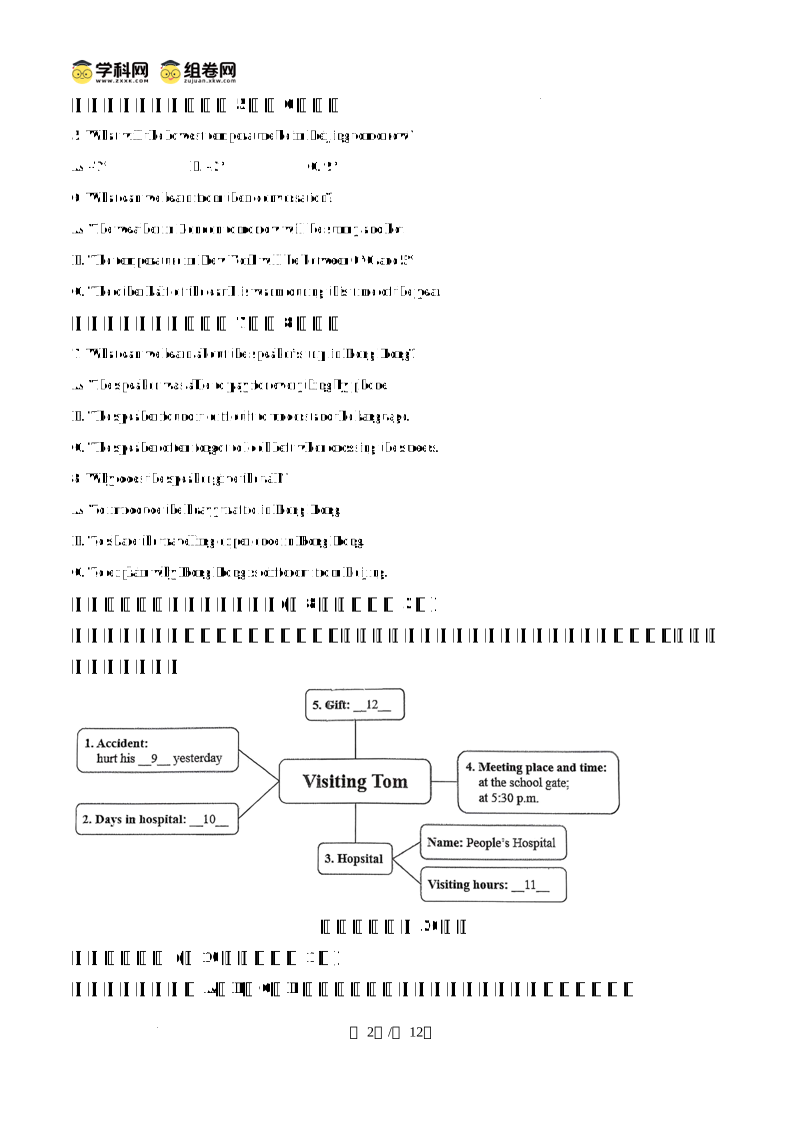
二、听独白,记录关键信息。(共8分,每小题2分)
请根据所听到的独白内容和提示词语,将所缺的关键信息填写在答题卡的相应位置上。本段独白你将听两遍。
知识运用(共20分)
五、单项填空 (共10分,每小题1分)
从下面各题所给的A、B、C、D四个选项中,选择可以填入空白处的最佳选项。
1. Sam and Lucy are in Class Four. ________ teacher is Mr. Li.
A. They B. Them C. Their D. Theirs
2. Tibet (西藏) is ________ the west of China.
A. to B. on C. with D. in
3. The population of London is ________ than that of Beijing.
A. few B. fewer C. more D. smaller
4. Compared to going by bus, I’d like to walk to school in the morning ________ the fresh air makes me feel comfortable.
A. if B. because C. although D. until
5. It takes the government a long time ________ a good plan and help reduce the air pollution in the city.
A. develop B. to develop C. developing D. developed
6. — Where is your father, Tom?
— Oh, he ________ to my mum in the kitchen.
A. is talking B. will talk C. talked D. talks
7. Judy ________ her mother a beautiful sweater on her mother’s next birthday with her own money.
A. gives B. gave C. was giving D. is going to give
8. The students ________ classes in the classroom building when the earthquake happened.
A. are having B. were having C. have D. had
9. — You look very nice in your new shoes today.
— Oh, really? I ________ them when they were on sale.
A. buy B. bought C. was buying D. will buy
10. According to the labor law (劳动法) in China, teenagers under 16 ________ take a job.
A. needn’t B. mustn’t C. will not D. may not
四、完形填空 (共 10 分,每小题 1 分)
阅读下面短文,根据短文内容,从后面各题所给的 A、B、C、D 四个选项中,选择最佳选项。
A Lesson from My Father
We come by business naturally in our family. Each of the seven children in our family worked in our father’s store in Mott, North Dakota, a small town on the prairies. We started working by doing jobs like cleaning, wrapping and serving customers. As we worked and watched, we learned that work was about more than making a ____11____ and making a living.
One ____12____ stands out in my mind. It was shortly before Christmas. I was in the eighth grade and was working evenings. A little boy, five or six years old, came in. He was wearing a brown coat with ____13____ worn cuffs (袖口). His hair was messy and his shoes were old and broken. The little boy looked poor to me—too poor to buy anything. He ____14____ the toy section, picked up this item and that, and carefully put them back in their place. Dad came down the stairs and walked over to the boy. His blue eyes smiled as he asked the boy what he could do for him. The boy said he was looking for a Christmas present to buy his brother. I was impressed that Dad treated him with the same respect as any adult. Dad told him to ____15____ his time and look around.
After about 20 minutes, the little boy ____16____ picked up a toy plane, walked up to my dad and said, “How much for this, Mister?”
“How much have you got?” Dad asked.
The little boy held out his ____17____ and opened it. In his hand ____18____ two dimes and two pennies—22 cents (美分). The price on the toy plane he’d picked out was $ 3.98.
“That’ll just about do it,” Dad said as he closed the sale. Dad’s answer still ____19____ in my ears. I thought about what I’d seen as I wrapped the present. When the little boy walked out of the store, I didn’t ____20____ the dirty, worn coat, or the messy hair. What I saw was a happy child with a treasure.
11. A. choice B. sale C. friend D. face
12. A. lesson B. subject C. note D. show
13. A. warm B. deep C. long D. dirty
14. A. thought of B. looked around C. wrote down D. lifted up
15. A. waste B. make C. take D. miss
16. A. sadly B. immediately C. probably D. finally
17. A. hand B. toy C. coat D. bag
18. A. jumped B. fell C. lay D. landed
19. A. rings B. follows C. cheers D. shows
20. A. like B. hear C. notice D. surprise
阅读理解 (共 32 分)
五、阅读下面短文,选择最佳选项。(共 22 分,每小题 2 分)
(一)信息匹配。请你帮助 Harry, Tony, Alice 找到适合他们的俱乐部,并将 A、B、C、D 填写在相应的位置上。
A
Introductions of Clubs
A.
Beijing Opera is a beloved type of Chinese art with a history of more than 200 years. We start the club for its fans. We’ve asked famous actors to come and teach acting classes, so that you can learn more and get better at it.
B.
Our club has classes for the traditional Chinese painting which is a very important part of Chinese culture. With careful, step-by-step teaching, you can learn how to use brushes and ink to paint beautifully.
C.
In our cooking club, there are teachers who are really good at making traditional Chinese food. They will show you how to cook tasty meals and share lots of different recipes (食谱) that everyone will enjoy.
D.
Chinese Kungfu is famous all over the world and it is also an important part of our culture. The classes in our club not only help you stay healthy and strong, but also teach you how to protect yourself if necessary.
21. ________ Harry: I am very interested in art and I want to learn how to paint bamboo with ink.
22. ________ Tony: My father’s birthday is coming and I want to cook a special meal for him.
23. ________ Alice: I caught a cold last week, so I need to exercise more to be stronger and healthier.
(二)阅读下列短文,根据短文内容,从短文后各题所给的 A、B、C、D 四个选项中选出最佳选项。
B
In New York, a boy named Tim loved robots a lot. His room had many little things he made by himself. Tim wanted to make the best robot ever and join the yearly Robot Competition. But he had a problem; he didn’t have enough money to pay for the parts he needed.
One day, while walking home from school, Tim passed by the local recycling center. He suddenly had an idea. Why not use recycled (回收的) things to build his robot? It was the perfect chance to show his ability and help protect the earth.
Tim began collecting things from the recycling center: a metal box, some old wires and batteries. He worked hard, carefully building the robot in his workshop.
When he arrived at the competition, he was amazed to see the high-tech work of other teams. But Tim didn’t mind. He thought being creative was about making the most of what he had.
As the competition came near, Tim’s robot, which he named “EcoBot”, was ready. It was a wonder of recycled technology, with a shiny metal outside and some LED lights. EcoBot could walk, talk and even put rubbish into different groups.
On the day of the competition, the gym was filled with people. Teams with stylish, expensive robots took their turns showing their projects. Finally, it was Tim’s turn. His hands were cold and his heart raced as he brought EcoBot onto the stage. He felt really nervous. Taking a deep breath, he began to show his robot.
EcoBot moved smoothly, putting different kinds of rubbish into groups, and even performing a small dance. The teachers were impressed not only with the robot’s function (功能) but also with its creative design and the story behind it.
In the end, EcoBot won the competition, beating out robots that cost hundreds of times more than what Tim had spent. The victory was more than a win for Tim; it was a victory for creativity and the power of thinking out of the box.
24. What was Tim’s problem in building his robot?
A. He didn’t have a good guide to teach him.
B. He didn’t have enough time to build the robot.
C. He couldn’t buy the parts he needed for the robot.
D. He couldn’t find any recycled things for the robot.
25. How did Tim feel when he brought EcoBot onto the stage?
A. Proud. B. Nervous. C. Confident. D. Unhappy.
26. What did EcoBot do at the competition?
A. It danced and put rubbish into different groups.
B. It talked with some students at the competition.
C. It gave a light show to the teachers and students.
D. It made some delicious food and cleaned the stage.
27. What lesson does the story mainly want to teach us?
A. Technology helps us change the world we live in.
B. Support from friends can make our dreams come true.
C. It’s important to believe in ourselves and value teamwork.
D. Being creative and thinking differently may bring us surprises.
C
Runners who meet visual and auditory (视觉和听觉的) distractions (分心) may be more likely to have leg injuries (受伤), according to the research by the Association of Academic Psychiatrists in Las Vegas. Runners often look for distractions from the task at hand. Whether it is music, texting, daydreaming or reading a book on the treadmill (跑步机), usually a distraction is welcome. But researchers from the University of Florida have recently found that those distractions may lead to injury.
Daniel Herman, an assistant professor at University of Florida, and his team did research on the effect (效果) of visual and auditory distractions on 14 runners to find out what effect these distractions would have on things such as heart rate, breathing rate, the runners’ speed in applying force (施加力量) to their bodies, and the force that the ground applies to the runners’ bodies.
The runners were all without injury in the study and ran 31 miles each week. Dr Herman’s team asked each runner to run on a treadmill three times. The first time was without any distractions. The second time added a visual distraction. The runners looked at a screen with different letters in different colors and they had to write down different letter - color combinations. The third time added an auditory distraction similar to the visual distraction. The runners had to write down the words spoken by some voices.
When compared to running without distractions, the runners’ speed in applying force to their left and right legs was higher. They also experienced an increased amount of force from the ground on both legs, called ground reaction force (地面反作用力) with auditory distractions. Finally, the runners are likely to breathe much heavier and have higher heart rates with visual and auditory distractions than without any distractions at all.
“Running in environments with different distractions may affect (影响) running performance and increase injury risk,” explains Dr. Herman. “Sometimes these things cannot be avoided, but you may be able to reduce possible effects. For example when running a new path in a disorderly environment such as during a marathon, you may not want to listen to anything that may need more attention.”
Dr. Herman’s team will continue to research the potential relationship between distracted running and leg injuries, and any effect this relationship has on different training skills that use auditory or visual distractions.
28. Dr. Herman’s team studied the effect that the distractions had on ________.
A. growth rate B. running skills C. speed of running D. heart rate
29. According to the research, runners with visual or auditory distractions may ________.
A. breathe much more easily B. have lower heart rates
C. have fewer leg injuries D. get more ground reaction force
30. Which of the following about the study is TRUE?
A. Some of the runners were seriously injured.
B. The runners had to run along a very long road outside.
C. The runners ran only with a visual distraction during the third time.
D. The runners wrote down something during the second and the third time.
31. What is the passage mainly about?
A. The relationship between distracted running and leg injuries.
B. The ways of avoiding any forms of distractions while running.
C. Why visual and auditory distractions help lower the heart rate.
D. How visual and auditory distractions affect the runners differently.
六、阅读短文,根据短文内容回答问题。 (共10分,44-46小题每题2分,47小题4分)
Facial Recognition Technology
As we all know, no two faces are exactly the same. Even twins have different faces. Each human face is truly special, which makes seeing someone’s face a great way to tell who they are. Now there are machines that are able to identify (识别) people and they are doing it every day for many purposes.
Facial recognition (人脸识别) systems can pick out a person out of thousands of people in just a second. and that’s why many institutions (组织) like schools, companies, airports and police services are increasingly using such technology. This allows them to quickly make sure of a person’s identity (身份). Ordinary people, too, are using facial recognition to unlock (解锁) their phones, their computers and other devices (设备). Such systems are generally quite safe. There is only one chance in a million that another person’s face could unlock your phone.
What’s more, facial recognition is quick and convenient. With the help of it, people don’t need to remember passwords. There are only a few times when a device does not recognize the user’s face and asks them to enter the password.
However, there are also a number of worries about the use of facial recognition. First of all, it gives away too much personal information. With more and more cameras in public and private places, people are finding themselves watched and recognized wherever they go and doing whatever they do. The cameras may make public places safer, but keeping law-abiding (守法的) people under watch is not welcoming to many. Another problem appeared when everyone needed to wear masks. Because facial recognition systems were having trouble identifying faces, they were trained to use less facial data, and that made it become less accurate (准确的). If such systems are not accurate anymore, they may not be as safe as they were and unknown risks come along.
32. Why are many institutions increasingly using facial recognition technology?
_________________________________
33. Is it easy or difficult for other people to unlock your phone with their faces?
_________________________________
34. What does the use of facial recognition give away according to the passage?
_________________________________
35. Do you support the use of facial recognition? Why or why not? (Give two reasons.)
_________________________________
书面表达(共 18 分)
七、根据中文意思和英文提示词语写出句子。 (共 8 分,每小题 2 分)
36. 这个公园以其红叶而著名。(famous)
_________________________________
37. 昨天他们正在操场上踢足球时,突然下雨了。(suddenly)
_________________________________
38. 你最好不吃垃圾食品,因为它对你有害。 (junk food, harmful)
_________________________________
39. 这本书太有意思了以至于我想再读一遍。(interesting)
_________________________________
八、文段表达 (共 10 分)
40. 请根据中文和英文提示,完成一篇不少于50词的文段写作。所给提示词语仅供选用。请不要写出你的校名和姓名。
假如你是李华,你的英国笔友 Chris 想来中国旅游,感受中国的魅力。请你给他写一封信,向他推荐一个地方,介绍去那里的最佳时间及当时的天气,并为他推荐一些在那里可以做的事情。
提示词语:winter, snowy, visit, the Forbidden City, drink tea
提示问题:
● Where do you suggest he go?
● When is the best time to go there? And what’s the weather like at that time?
● What can he do there?
Dear Chris,
I’m glad to know that you will come to China. I’d like to give you some advice.
______________________________________________________________________________________________________________________________________________________________________________________________________________
Love,
Li Hua
附加题(共10分)
九、语法填空 (共4分,每小题1分)
用括号里所给单词的适当形式填空。
41. I ________ (draw) a painting when the lights suddenly went out last night.
42. The library has plenty of useful ________ (dictionary) for students.
43. The weather today is ________ (wet) than yesterday. It will probably rain.
44. The teacher advised us ________ (prepare) for the exam well ahead of time.
十、阅读选择 (共6分,每小题2分)
阅读下列短文,根据短文内容,从短文后各题所给的A、B、C、D四个选项中选出最佳选项。
“Practice makes perfect” is a very popular saying. However, is it really true? Many scientific studies have tried to find out the answer.
One popular theory is that if a person practices for more than 10,000 hours, they will reach “perfection”—or, in other words, become an expert (专家) in their field. This theory was made famous by Malcolm Gladwell in his 2008 best-selling book, Outliers: The Story of Success. He said 10,000 hours of practice is “the magic number of greatness”. He gave the examples of the music group The Beatles and Microsoft creator Bill Gates. Although they all had lots of natural talent (天赋), they also clearly put in over 10,000 hours of practice before they became successful.
However, Gladwell’s book has been said by many to be too simple. Gladwell’s work was largely based on research done by Anders Ericsson. Ericsson said Gladwell misinterpreted his research. Firstly, Ericsson said that 10,000 hours was an average number. Some people, for example, needed far fewer than 10,000 hours, and others many more. More importantly, Ericsson said that just practicing a lot was not enough; the type and quality of practice were also important. He went on to explain the importance of “deliberate (刻意的) practice”. It means focusing on a specific part of a skill and practicing it in depth rather than practicing a skill as a whole. Deliberate practice is said to be much more effective, although it is more tiring.
Even with the theories mentioned above, many other studies argue that practice alone is far from enough. In fact, a more recent study from Princeton University found that practice is only helpful up to 26% of reaching an expert level. So, what else helps people become experts?
Many people believe that talent, like physical superiority (身体优势), has a large influence on becoming an expert. For example, many baseball players in America have amazing eyesight that allows them to see the ball much sooner than others do. So no matter how much a “normal” person practices, it is very hard for them to be as good as someone who has physical superiority and who also practices.
And how about other factors that go into creating an expert? Many say IQ, personality, attitude, and starting age are important, too. Also, becoming an expert doesn’t mean immediate success. Success also depends on social factors, environmental factors, and even just being in the right place at the right time!
In conclusion, practice may not make perfect, but deliberate practice can lead to great improvement. Based on Ericsson’s research, here are some tips on how to practice effectively: make clear goals; work outside your comfort zone; keep working; ask for others’ opinions; and, of course, get plenty of rest! If you want to become an expert in something, remember to enjoy what you do and follow what you love.
45. The words “misinterpreted his research” in Paragraph 3 probably means “________”.
A. used his research without letting Ericsson know
B. further developed his research and made it famous
C. found there was something wrong with his research
D. understood and explained his research in a wrong way
46. What can we learn from the passage?
A. Gladwell advised people to practice a skill as a whole to reach perfection.
B. One could become a natural talent by making clear goals and keeping working.
C. It is hard for normal people to do better than those with talent when both work hard.
D. The study from Princeton University showed 26% of tested people can become experts.
47. What would be the best title for the passage?
A. Practice Alone Is Not Enough
B. Practice: The Key to Being Perfect
C. The Ways of Becoming a Successful Expert
D. 10,000 Hours: The Magic Number of Success
第1页/共1页
学科网(北京)股份有限公司
$
北京三帆中学2024—2025学年度第一学期期末考试
八年级 英语
班级:________ 分层班级:________ 姓名:________ 学号:________ 成绩:________
注
意
事
项
1. 本试卷共10页,其中一至八大题为必做题,第九、十大题为选做题
满分10分,计入总分。作答时长100分钟,满分100分
2. 在试卷和答题卡上,准确填写班级、姓名、学号。
3. 试题答案一律填涂填写在答题卡上,在试卷上作答无效。
4. 考试结束后,请将考试资料一并交回
听力理解 (共20分)
一、听对话或独白,根据对话或独白的内容,从下面各题所给的A、B、C三个选项中选择最佳选项。每段对话或独白你将听两遍。(共12分,每小题1.5分)
请听一段对话,完成第1至第2小题。
1. Where did the accident happen?
A. At a restaurant.
B. At a coffee shop.
C. At a shopping mall.
2. What did the girl do when she saw the accident?
A. She took a video.
B. She stopped her car.
C. She called the police.
请听一段对话,完成第3至第4小题。
3. How did the woman go to Shanghai from Hangzhou?
A. By train. B. By ship. C. By coach.
4. What problem did the woman have during the journey?
A. She didn’t feel very well.
B. She didn’t like the bed.
C. She didn’t enjoy the food.
请听一段对话,完成第5至第6小题。
5. What will the lowest temperature be in Beijing tomorrow?
A. -7° B. -2° C. 9°
6. What can we learn from their conversation?
A. The weather in London tomorrow will be sunny and hot.
B. The temperature in New York will be between 0°C and 5°
C. The other half of the earth is warm during this time of the year.
请听一段独白,完成第7至第8小题。
7. What can we learn about the speaker’s trip in Hong Kong?
A. The speaker was able to pay for everything by phone.
B. The speaker found it difficult to understand the language.
C. The speaker often forgot to look left when crossing the streets.
8. Why does the speaker give the talk?
A. To introduce the heavy traffic in Hong Kong.
B. To share the travelling experience in Hong Kong.
C. To explain why Hong Kong is different from Beijing.
二、听独白,记录关键信息。(共8分,每小题2分)
请根据所听到的独白内容和提示词语,将所缺的关键信息填写在答题卡的相应位置上。本段独白你将听两遍。
知识运用(共20分)
五、单项填空 (共10分,每小题1分)
从下面各题所给的A、B、C、D四个选项中,选择可以填入空白处的最佳选项。
1. Sam and Lucy are in Class Four. ________ teacher is Mr. Li.
A. They B. Them C. Their D. Theirs
【答案】C
【解析】
【详解】句意:萨姆和露西在四班。他们的老师是李老师。
They 他们(主格);Them 他们(宾格);Their 他们的(形容词性物主代词);Theirs 他们的(名词性物主代词)。根据空格后名词 teacher 可知,此处需用形容词性物主代词修饰名词,表示“他们的”,应填Their。
2. Tibet (西藏) is ________ the west of China.
A. to B. on C. with D. in
【答案】D
【解析】
【详解】句意:西藏位于中国的西部。
to朝;on在……上面;with和……一起;in在……里面。表示某地在另一地范围内部用in,接壤用on,不接壤且在外用to。根据地理常识可知,西藏是中国领土的一部分,位于内部。应填in。
3. The population of London is ________ than that of Beijing.
A. few B. fewer C. more D. smaller
【答案】D
【解析】
【详解】句意:伦敦的人口比北京的人口少。
few少的;fewer更少的;more更多的;smaller更小的。修饰“population”的多少习惯用“large”或“small”,句中有than需用比较级,表示人口少用smaller。
4. Compared to going by bus, I’d like to walk to school in the morning ________ the fresh air makes me feel comfortable.
A. if B. because C. although D. until
【答案】B
【解析】
【详解】句意:与乘公交车相比,我更喜欢早上步行去学校,因为新鲜空气让我感觉舒适。
if如果;because因为;although虽然;until直到。根据“the fresh air makes me feel comfortable”可知,新鲜空气让人舒适是喜欢步行的原因,前后句构成因果关系,应填because。
5. It takes the government a long time ________ a good plan and help reduce the air pollution in the city.
A. develop B. to develop C. developing D. developed
【答案】B
【解析】
【详解】句意:政府需要很长时间来制定一个好的计划并帮助减少城市的空气污染。
根据题干“It takes the government a long time ________ a good plan”可知,It takes sb. some time to do sth.是固定句型,意为“花费某人多长时间做某事”,动词不定式作真正的主语,应填to develop。
6. — Where is your father, Tom?
— Oh, he ________ to my mum in the kitchen.
A. is talking B. will talk C. talked D. talks
【答案】A
【解析】
【详解】句意:—汤姆,你爸爸在哪里?—哦,他正在厨房和我妈妈说话。
根据问句“Where is your father”可知询问现在的状态,答句表示动作正在进行,应用现在进行时,故选A。
7. Judy ________ her mother a beautiful sweater on her mother’s next birthday with her own money.
A. gives B. gave C. was giving D. is going to give
【答案】D
【解析】
【详解】句意:朱迪打算在她妈妈下个生日的时候,用自己的钱送给妈妈一件漂亮的毛衣。
根据时间状语“on her mother’s next birthday”可知,动作发生在将来,应用一般将来时。D项is going to give是一般将来时的常用结构,符合语境和时态要求。
8. The students ________ classes in the classroom building when the earthquake happened.
A. are having B. were having C. have D. had
【答案】B
【解析】
【详解】句意:当地震发生时,学生们正在教学楼里上课。
根据“when the earthquake happened”可知,此处表示过去某个时刻正在进行的动作,用过去进行时,其结构为“was/were+动词的现在分词”,主语是复数,用were,have的现在分词是having。
9. — You look very nice in your new shoes today.
— Oh, really? I ________ them when they were on sale.
A. buy B. bought C. was buying D. will buy
【答案】B
【解析】
【详解】句意:——你今天穿这双新鞋看起来很好看。——哦,真的吗?我是在打折的时候买的。
根据答语中时间状语从句“when they were on sale.”可知,买鞋的动作发生在过去,动词需用过去式bought。
10. According to the labor law (劳动法) in China, teenagers under 16 ________ take a job.
A. needn’t B. mustn’t C. will not D. may not
【答案】B
【解析】
【详解】句意:根据中国的劳动法,16岁以下的青少年严禁务工。
needn’t不必;mustn’t禁止;will not将不;may not可能不。根据“According to the labor law”可知,法律明确规定禁止雇佣童工,表示严格禁止,应用mustn’t。
四、完形填空 (共 10 分,每小题 1 分)
阅读下面短文,根据短文内容,从后面各题所给的 A、B、C、D 四个选项中,选择最佳选项。
A Lesson from My Father
We come by business naturally in our family. Each of the seven children in our family worked in our father’s store in Mott, North Dakota, a small town on the prairies. We started working by doing jobs like cleaning, wrapping and serving customers. As we worked and watched, we learned that work was about more than making a ____11____ and making a living.
One ____12____ stands out in my mind. It was shortly before Christmas. I was in the eighth grade and was working evenings. A little boy, five or six years old, came in. He was wearing a brown coat with ____13____ worn cuffs (袖口). His hair was messy and his shoes were old and broken. The little boy looked poor to me—too poor to buy anything. He ____14____ the toy section, picked up this item and that, and carefully put them back in their place. Dad came down the stairs and walked over to the boy. His blue eyes smiled as he asked the boy what he could do for him. The boy said he was looking for a Christmas present to buy his brother. I was impressed that Dad treated him with the same respect as any adult. Dad told him to ____15____ his time and look around.
After about 20 minutes, the little boy ____16____ picked up a toy plane, walked up to my dad and said, “How much for this, Mister?”
“How much have you got?” Dad asked.
The little boy held out his ____17____ and opened it. In his hand ____18____ two dimes and two pennies—22 cents (美分). The price on the toy plane he’d picked out was $ 3.98.
“That’ll just about do it,” Dad said as he closed the sale. Dad’s answer still ____19____ in my ears. I thought about what I’d seen as I wrapped the present. When the little boy walked out of the store, I didn’t ____20____ the dirty, worn coat, or the messy hair. What I saw was a happy child with a treasure.
11. A. choice B. sale C. friend D. face
12. A. lesson B. subject C. note D. show
13. A. warm B. deep C. long D. dirty
14. A. thought of B. looked around C. wrote down D. lifted up
15. A. waste B. make C. take D. miss
16. A. sadly B. immediately C. probably D. finally
17. A. hand B. toy C. coat D. bag
18. A. jumped B. fell C. lay D. landed
19. A. rings B. follows C. cheers D. shows
20. A. like B. hear C. notice D. surprise
【答案】11. B 12. A 13. D 14. B 15. C 16. D 17. A 18. C 19. A 20. C
【解析】
【导语】文章讲述作者在父亲商店工作,父亲尊重并帮助贫穷小男孩买礼物的故事,体现了工作不仅是赚钱,更是关爱他人。
【11题详解】
句意:我们了解到工作不仅仅是为了达成销售和谋生。
根据前文所提到的“father’s store”可知空格处所填词语应符合商店语境,而“making a sale”是固定搭配,意思是“卖出某物,做成买卖”。
【12题详解】
句意:一堂课在我的脑海中留下深刻印象。
呼应标题“A Lesson”,指这段经历带来的启示。
【13题详解】
句意:穿着一件袖口脏兮兮磨损的棕色外套。
根据后文提到的“dirty, worn coat”及男孩贫穷形象,可知袖口是脏的。
【14题详解】
句意:他在玩具区四处看了看,拿起这个又放下那个。
根据后文“pick up”和“put back”拿起又放下物品,可知此时的小男孩应该是在反复翻看玩具的状态。故选 B。
【15题详解】
句意:爸爸告诉他慢慢来,四处看看。
“take one’s time”为固定搭配,意为“别着急”。
【16题详解】
句意:大约 20 分钟后,小男孩终于拿起了一架玩具飞机。
经过 20 分钟挑选,最终做出决定。finally更符合语境。
【17题详解】
句意:小男孩伸出他的手并打开它。
根据后句“In his hand”提示可知,钱在手里。
【18题详解】
句意:他手里放着两角硬币和两分硬币。
“lay”表示状态,指钱静静地放在手里。
【19题详解】
句意:爸爸的回答仍萦绕在我耳边。
“ring in one’s ears”为固定搭配,表示“记忆深刻”。
【20题详解】
句意:我没有注意到那件脏兮兮的外套。
通篇下来,作者被父亲的举动打动,关注点从男孩破旧的穿着转到男孩收到礼物的快乐。
阅读理解 (共 32 分)
五、阅读下面短文,选择最佳选项。(共 22 分,每小题 2 分)
(一)信息匹配。请你帮助 Harry, Tony, Alice 找到适合他们的俱乐部,并将 A、B、C、D 填写在相应的位置上。
A
Introductions of Clubs
A.
Beijing Opera is a beloved type of Chinese art with a history of more than 200 years. We start the club for its fans. We’ve asked famous actors to come and teach acting classes, so that you can learn more and get better at it.
B.
Our club has classes for the traditional Chinese painting which is a very important part of Chinese culture. With careful, step-by-step teaching, you can learn how to use brushes and ink to paint beautifully.
C.
In our cooking club, there are teachers who are really good at making traditional Chinese food. They will show you how to cook tasty meals and share lots of different recipes (食谱) that everyone will enjoy.
D.
Chinese Kungfu is famous all over the world and it is also an important part of our culture. The classes in our club not only help you stay healthy and strong, but also teach you how to protect yourself if necessary.
21. ________ Harry: I am very interested in art and I want to learn how to paint bamboo with ink.
22. ________ Tony: My father’s birthday is coming and I want to cook a special meal for him.
23. ________ Alice: I caught a cold last week, so I need to exercise more to be stronger and healthier.
【答案】21. B 22. C
23. D
【解析】
【导语】本文是一篇应用文,主要介绍了四个俱乐部(京剧、国画、烹饪、功夫)的特色课程,以及三位学生的具体需求,要求将学生与合适的俱乐部进行匹配。
【21题详解】
根据选项 B“Our club has classes for the traditional Chinese painting... use brushes and ink”可推知该俱乐部教授水墨画,符合Harry想学用墨水画竹子的需求。
【22题详解】
根据选项C“In our cooking club... show you how to cook tasty meals”可推知该俱乐部教授烹饪,符合Tony想为父亲做一顿特殊饭菜的需求。
【23题详解】
根据选项D“The classes in our club not only help you stay healthy and strong”可推知该俱乐部有助于锻炼身体,符合Alice需要锻炼变得更强壮健康的需求。
(二)阅读下列短文,根据短文内容,从短文后各题所给的 A、B、C、D 四个选项中选出最佳选项。
B
In New York, a boy named Tim loved robots a lot. His room had many little things he made by himself. Tim wanted to make the best robot ever and join the yearly Robot Competition. But he had a problem; he didn’t have enough money to pay for the parts he needed.
One day, while walking home from school, Tim passed by the local recycling center. He suddenly had an idea. Why not use recycled (回收的) things to build his robot? It was the perfect chance to show his ability and help protect the earth.
Tim began collecting things from the recycling center: a metal box, some old wires and batteries. He worked hard, carefully building the robot in his workshop.
When he arrived at the competition, he was amazed to see the high-tech work of other teams. But Tim didn’t mind. He thought being creative was about making the most of what he had.
As the competition came near, Tim’s robot, which he named “EcoBot”, was ready. It was a wonder of recycled technology, with a shiny metal outside and some LED lights. EcoBot could walk, talk and even put rubbish into different groups.
On the day of the competition, the gym was filled with people. Teams with stylish, expensive robots took their turns showing their projects. Finally, it was Tim’s turn. His hands were cold and his heart raced as he brought EcoBot onto the stage. He felt really nervous. Taking a deep breath, he began to show his robot.
EcoBot moved smoothly, putting different kinds of rubbish into groups, and even performing a small dance. The teachers were impressed not only with the robot’s function (功能) but also with its creative design and the story behind it.
In the end, EcoBot won the competition, beating out robots that cost hundreds of times more than what Tim had spent. The victory was more than a win for Tim; it was a victory for creativity and the power of thinking out of the box.
24. What was Tim’s problem in building his robot?
A. He didn’t have a good guide to teach him.
B. He didn’t have enough time to build the robot.
C. He couldn’t buy the parts he needed for the robot.
D. He couldn’t find any recycled things for the robot.
25. How did Tim feel when he brought EcoBot onto the stage?
A. Proud. B. Nervous. C. Confident. D. Unhappy.
26. What did EcoBot do at the competition?
A. It danced and put rubbish into different groups.
B. It talked with some students at the competition.
C. It gave a light show to the teachers and students.
D. It made some delicious food and cleaned the stage.
27. What lesson does the story mainly want to teach us?
A. Technology helps us change the world we live in.
B. Support from friends can make our dreams come true.
C. It’s important to believe in ourselves and value teamwork.
D. Being creative and thinking differently may bring us surprises.
【答案】24. C 25. B 26. A 27. D
【解析】
【导语】男孩Tim因资金不足,用回收材料制作了环保机器人EcoBot参赛,凭借创意设计和实用功能,击败昂贵机器人赢得比赛,证明了创造力和逆向思维的力量。
【24题详解】
第一段“But he had a problem; he didn’t have enough money to pay for the parts he needed.”原文明确说明Tim的问题是没钱购买制作机器人所需的零件。
【25题详解】
第六段“He felt really nervous. Taking a deep breath, he began to show his robot.”直接描述了Tim把EcoBot带上舞台时的感受是“nervous”。
【26题详解】
第七段“EcoBot moved smoothly, putting different kinds of rubbish into groups, and even performing a small dance.”表明EcoBot在比赛中既对垃圾进行分类,又跳了一小段舞。对应选项A“It danced and put rubbish into different groups”。
【27题详解】
最后一段“The victory was more than a win for Tim; it was a victory for creativity and the power of thinking out of the box.”文章主旨是通过Tim的故事,说明创意和跳出常规的思维能带来惊喜与成功,对应选项D“Being creative and thinking differently may bring us surprises”。
C
Runners who meet visual and auditory (视觉和听觉的) distractions (分心) may be more likely to have leg injuries (受伤), according to the research by the Association of Academic Psychiatrists in Las Vegas. Runners often look for distractions from the task at hand. Whether it is music, texting, daydreaming or reading a book on the treadmill (跑步机), usually a distraction is welcome. But researchers from the University of Florida have recently found that those distractions may lead to injury.
Daniel Herman, an assistant professor at University of Florida, and his team did research on the effect (效果) of visual and auditory distractions on 14 runners to find out what effect these distractions would have on things such as heart rate, breathing rate, the runners’ speed in applying force (施加力量) to their bodies, and the force that the ground applies to the runners’ bodies.
The runners were all without injury in the study and ran 31 miles each week. Dr Herman’s team asked each runner to run on a treadmill three times. The first time was without any distractions. The second time added a visual distraction. The runners looked at a screen with different letters in different colors and they had to write down different letter - color combinations. The third time added an auditory distraction similar to the visual distraction. The runners had to write down the words spoken by some voices.
When compared to running without distractions, the runners’ speed in applying force to their left and right legs was higher. They also experienced an increased amount of force from the ground on both legs, called ground reaction force (地面反作用力) with auditory distractions. Finally, the runners are likely to breathe much heavier and have higher heart rates with visual and auditory distractions than without any distractions at all.
“Running in environments with different distractions may affect (影响) running performance and increase injury risk,” explains Dr. Herman. “Sometimes these things cannot be avoided, but you may be able to reduce possible effects. For example when running a new path in a disorderly environment such as during a marathon, you may not want to listen to anything that may need more attention.”
Dr. Herman’s team will continue to research the potential relationship between distracted running and leg injuries, and any effect this relationship has on different training skills that use auditory or visual distractions.
28. Dr. Herman’s team studied the effect that the distractions had on ________.
A. growth rate B. running skills C. speed of running D. heart rate
29. According to the research, runners with visual or auditory distractions may ________.
A. breathe much more easily B. have lower heart rates
C. have fewer leg injuries D. get more ground reaction force
30. Which of the following about the study is TRUE?
A. Some of the runners were seriously injured.
B. The runners had to run along a very long road outside.
C. The runners ran only with a visual distraction during the third time.
D. The runners wrote down something during the second and the third time.
31. What is the passage mainly about?
A. The relationship between distracted running and leg injuries.
B. The ways of avoiding any forms of distractions while running.
C. Why visual and auditory distractions help lower the heart rate.
D. How visual and auditory distractions affect the runners differently.
【答案】28. D 29. D 30. D 31. A
【解析】
【导语】本文是一篇说明文,介绍了一项关于跑步时分心与腿部受伤关系的研究,发现视觉和听觉分心会增加跑步者的受伤风险,并给出了相关建议。
【28题详解】
第二段提到Daniel Herman和他的团队进行研究的目的:“…find out what effect these distractions would have on things such as heart rate, breathing rate…”,可知研究内容包括心率。
【29题详解】
第四段提到“They also experienced an increased amount of force from the ground on both legs, called ground reaction force with auditory distractions.”,可知分心会导致地面反作用力增加。
【30题详解】
第三段实验过程描述:第二次实验(visual distraction)中“they had to write down different letter - color combinations”以及第三次实验(auditory distraction)中“The runners had to write down the words spoken”,因此第二次和第三次实验,跑步者们都需要记录下一些东西。
【31题详解】
文章第一段开篇点题,指出研究发现跑步时的视觉和听觉分心可能导致腿部受伤,随后介绍了研究过程、结果及建议,全文围绕分心跑步与腿部受伤的关系展开。
六、阅读短文,根据短文内容回答问题。 (共10分,44-46小题每题2分,47小题4分)
Facial Recognition Technology
As we all know, no two faces are exactly the same. Even twins have different faces. Each human face is truly special, which makes seeing someone’s face a great way to tell who they are. Now there are machines that are able to identify (识别) people and they are doing it every day for many purposes.
Facial recognition (人脸识别) systems can pick out a person out of thousands of people in just a second. and that’s why many institutions (组织) like schools, companies, airports and police services are increasingly using such technology. This allows them to quickly make sure of a person’s identity (身份). Ordinary people, too, are using facial recognition to unlock (解锁) their phones, their computers and other devices (设备). Such systems are generally quite safe. There is only one chance in a million that another person’s face could unlock your phone.
What’s more, facial recognition is quick and convenient. With the help of it, people don’t need to remember passwords. There are only a few times when a device does not recognize the user’s face and asks them to enter the password.
However, there are also a number of worries about the use of facial recognition. First of all, it gives away too much personal information. With more and more cameras in public and private places, people are finding themselves watched and recognized wherever they go and doing whatever they do. The cameras may make public places safer, but keeping law-abiding (守法的) people under watch is not welcoming to many. Another problem appeared when everyone needed to wear masks. Because facial recognition systems were having trouble identifying faces, they were trained to use less facial data, and that made it become less accurate (准确的). If such systems are not accurate anymore, they may not be as safe as they were and unknown risks come along.
32. Why are many institutions increasingly using facial recognition technology?
_________________________________
33. Is it easy or difficult for other people to unlock your phone with their faces?
_________________________________
34. What does the use of facial recognition give away according to the passage?
_________________________________
35. Do you support the use of facial recognition? Why or why not? (Give two reasons.)
_________________________________
【答案】32. Because it identifies people fast.
33. It’s difficult.
34. Too much personal information.
35. No, It leaks personal information and becomes less accurate.
【解析】
【导语】本文介绍了人脸识别技术的原理、优势(快速、便捷、安全),也讨论了其隐私泄露、识别准确率下降等争议问题。
【32题详解】
根据第二段“Facial recognition systems can pick out a person out of thousands of people in just a second.”可知,众多机构广泛使用人脸识别,是因为它识别人物速度极快。
【33题详解】
根据第二段“There is only one chance in a million that another person’s face could unlock your phone.”可知,他人用自己的脸解锁你的手机概率极低,是一件很困难的事。
【34题详解】
根据第四段“First of all, it gives away too much personal information.”可知,人脸识别会泄露大量个人隐私信息。
【35题详解】
开放性试题,答案不唯一。示例:我不支持使用人脸识别。首先它会泄露个人隐私信息,其次戴口罩会让它识别不准,带来未知安全风险。
书面表达(共 18 分)
七、根据中文意思和英文提示词语写出句子。 (共 8 分,每小题 2 分)
36. 这个公园以其红叶而著名。(famous)
_________________________________
【答案】
This park is famous for its red leaves.
【解析】
【详解】“这个公园以其红叶而著名。”译为“This park is famous for its red leaves.”。句子描述客观事实,使用一般现在时。其中“这个公园”译为“This park”,为名词短语,作主语,“This”为指示代词,表示特指;“以……而著名”译为“is famous for”,为固定搭配,其中“is”为系动词,“famous”为形容词作表语,“for”为介词,表示原因;“其红叶”译为“its red leaves”,为名词短语,作介词“for”的宾语,“its”为人称代词所有格,指代“这个公园的”,“red leaves”表示红叶。
37. 昨天他们正在操场上踢足球时,突然下雨了。(suddenly)
_________________________________
【答案】
They were playing football on the playground when it suddenly rained yesterday.
【解析】
【详解】“昨天他们正在操场上踢足球时,突然下雨了”译为“They were playing football on the playground when it suddenly rained yesterday.”,背景动作“正在操场上踢足球”发生在过去某一时刻且正在进行,需用过去进行时(were playing football on the playground);突发动作“下雨”是短暂动作,需用一般过去时(rained)。固定句型be doing sth. when…,意为“正在做某事,这时突然……”,when引导突发状况的从句。提示词suddenly是副词,修饰动词rained,通常置于动词之前。
38. 你最好不吃垃圾食品,因为它对你有害。 (junk food, harmful)
_________________________________
【答案】
You’d better not eat junk food because it is harmful to you.
【解析】
【详解】“你最好不吃垃圾食品,因为它对你有害。”译为You’d better not eat junk food because it is harmful to you.“你”用you表达,是人称代词主格作句子的主语;“最好不要做某事”用had better not do sth.表达,you had better可以缩写成“you’d better”;“吃”用eat表达;junk food意为“垃圾食品”;“因为”用because表达;“它”用it表达;“对……有害”用be harmful to…表达,句子是一般现在时,主语是it,be动词用is;“你”用you表达,是人称代词宾格作宾语,句首单词的首字母要大写。
39. 这本书太有意思了以至于我想再读一遍。(interesting)
_________________________________
【答案】
This book is so interesting that I want to read it again.
【解析】
【详解】“这本书太有意思了以至于我想再读一遍”译为This book is so interesting that I want to read it again。其中“这本书”用This book,作主语;“太……以至于……”用固定句型so...that...,so后接形容词interesting (题目已给出);“我”用I,作从句主语;“想再读一遍”用want to read it again,作从句谓语和宾语,it指代this book,避免重复。
八、文段表达 (共 10 分)
40. 请根据中文和英文提示,完成一篇不少于50词的文段写作。所给提示词语仅供选用。请不要写出你的校名和姓名。
假如你是李华,你的英国笔友 Chris 想来中国旅游,感受中国的魅力。请你给他写一封信,向他推荐一个地方,介绍去那里的最佳时间及当时的天气,并为他推荐一些在那里可以做的事情。
提示词语:winter, snowy, visit, the Forbidden City, drink tea
提示问题:
● Where do you suggest he go?
● When is the best time to go there? And what’s the weather like at that time?
● What can he do there?
Dear Chris,
I’m glad to know that you will come to China. I’d like to give you some advice.
______________________________________________________________________________________________________________________________________________________________________________________________________________
Love,
Li Hua
【答案】
Dear Chris,
I’m glad to know that you will come to China. I’d like to give you some advice.
I suggest you visit Beijing. The best time to go is in winter because it is snowy and the scenery is beautiful. You can visit the Forbidden City to learn about Chinese history. Also, you can drink tea in a traditional teahouse to experience local culture.
I believe you will have a wonderful trip.
Love,
Li Hua
【解析】
【详解】写作步骤
[第一步:审题立意]
确定文体:这是一封书信,用一般现在时
明确要点:推荐地点、推荐时间、特色活动、美好祝愿
确定人称:第一人称(I)、第二人称(you)
注意事项:请不要写出你的校名和姓名
[第二步:构思布局]
三段式结构:
开头段:借用文章已给开头,引出主题
主体段:根据题干的要点,向Chris推荐来中国旅行的旅行地点、最佳时间以及特色活动
结尾段:书写结语,表达祝愿
[第三步:要点展开]
要点一:推荐地点
具体城市:visit Beijing/go to Hangzhou等
具体景点:visit the Forbidden City/visit the West Lake等
推荐原因:to learn about Chinese history/to enjoy the beautiful views等
要点二:推荐时间
最佳时间:in winter/in spring等
气候情况:it is snowy and the scenery is beautiful/the weather is warm and sunny等
要点三:特色活动
具体活动:drink tea in a traditional teahouse/drink Longjing tea in a teahouse near the lake等
活动收获:experience local culture/it’s really relaxing and you can experience the charm of Jiangnan culture等
要点四:美好祝愿
祝愿表达:I believe you will have a wonderful trip/I hope you will have a great time in China等
附加题(共10分)
九、语法填空 (共4分,每小题1分)
用括号里所给单词的适当形式填空。
41. I ________ (draw) a painting when the lights suddenly went out last night.
【答案】was drawing
【解析】
【详解】句意:昨晚当灯突然熄灭时,我正在画画。句中“when the lights suddenly went out last night”为过去的时间状语从句,提示主句动作在过去某一时刻正在发生,应用过去进行时,主语“I”为第一人称单数,故填was drawing。
42. The library has plenty of useful ________ (dictionary) for students.
【答案】dictionaries
【解析】
【详解】句意:图书馆有大量有用的词典供学生使用。句中“plenty of”修饰可数名词复数,意为“大量的”,且“dictionary”为可数名词,故应用复数形式dictionaries。
43. The weather today is ________ (wet) than yesterday. It will probably rain.
【答案】wetter
【解析】
【详解】句意:今天的天气比昨天更潮湿。很可能要下雨。句中出现了比较级标志词than,所以此处需要使用形容词的比较级形式;wet是以重读闭音节结尾的形容词,变比较级时需双写末尾辅音字母再加-er,故填wetter。
44. The teacher advised us ________ (prepare) for the exam well ahead of time.
【答案】to prepare
【解析】
【详解】句意:老师建议我们提前好好准备考试。句中已有谓语动词advised,因此prepare需要用非谓语形式;advise sb. to do sth.“建议某人做某事”,所以此处填动词不定式to prepare。
十、阅读选择 (共6分,每小题2分)
阅读下列短文,根据短文内容,从短文后各题所给的A、B、C、D四个选项中选出最佳选项。
“Practice makes perfect” is a very popular saying. However, is it really true? Many scientific studies have tried to find out the answer.
One popular theory is that if a person practices for more than 10,000 hours, they will reach “perfection”—or, in other words, become an expert (专家) in their field. This theory was made famous by Malcolm Gladwell in his 2008 best-selling book, Outliers: The Story of Success. He said 10,000 hours of practice is “the magic number of greatness”. He gave the examples of the music group The Beatles and Microsoft creator Bill Gates. Although they all had lots of natural talent (天赋), they also clearly put in over 10,000 hours of practice before they became successful.
However, Gladwell’s book has been said by many to be too simple. Gladwell’s work was largely based on research done by Anders Ericsson. Ericsson said Gladwell misinterpreted his research. Firstly, Ericsson said that 10,000 hours was an average number. Some people, for example, needed far fewer than 10,000 hours, and others many more. More importantly, Ericsson said that just practicing a lot was not enough; the type and quality of practice were also important. He went on to explain the importance of “deliberate (刻意的) practice”. It means focusing on a specific part of a skill and practicing it in depth rather than practicing a skill as a whole. Deliberate practice is said to be much more effective, although it is more tiring.
Even with the theories mentioned above, many other studies argue that practice alone is far from enough. In fact, a more recent study from Princeton University found that practice is only helpful up to 26% of reaching an expert level. So, what else helps people become experts?
Many people believe that talent, like physical superiority (身体优势), has a large influence on becoming an expert. For example, many baseball players in America have amazing eyesight that allows them to see the ball much sooner than others do. So no matter how much a “normal” person practices, it is very hard for them to be as good as someone who has physical superiority and who also practices.
And how about other factors that go into creating an expert? Many say IQ, personality, attitude, and starting age are important, too. Also, becoming an expert doesn’t mean immediate success. Success also depends on social factors, environmental factors, and even just being in the right place at the right time!
In conclusion, practice may not make perfect, but deliberate practice can lead to great improvement. Based on Ericsson’s research, here are some tips on how to practice effectively: make clear goals; work outside your comfort zone; keep working; ask for others’ opinions; and, of course, get plenty of rest! If you want to become an expert in something, remember to enjoy what you do and follow what you love.
45. The words “misinterpreted his research” in Paragraph 3 probably means “________”.
A. used his research without letting Ericsson know
B. further developed his research and made it famous
C. found there was something wrong with his research
D. understood and explained his research in a wrong way
46. What can we learn from the passage?
A. Gladwell advised people to practice a skill as a whole to reach perfection.
B. One could become a natural talent by making clear goals and keeping working.
C. It is hard for normal people to do better than those with talent when both work hard.
D. The study from Princeton University showed 26% of tested people can become experts.
47. What would be the best title for the passage?
A. Practice Alone Is Not Enough
B. Practice: The Key to Being Perfect
C. The Ways of Becoming a Successful Expert
D. 10,000 Hours: The Magic Number of Success
【答案】45. D 46. C 47. A
【解析】
【导语】本文主要探讨熟能生巧是否成立,剖析一万小时定律的局限,指出刻意练习、天赋、性格等多重因素影响成才,并给出高效练习的方法。
【45题详解】
根据第三段“...Gladwell’s book...too simple. Gladwell’s work was largely based on research done by Anders Ericsson. Ericsson said Gladwell misinterpreted his research. Ericsson said that 10,000 hours was an average number...practicing a lot was not enough; the type and quality of practice were also important...”,前文说Gladwell的书被认为太简单,他的工作很大程度上基于Ericsson的研究。然后 Ericsson说Gladwell “misinterpreted” 他的研究,后面Ericsson解释自己研究的真正含义(10,000小时是平均数,练习类型和质量也很重要)。这说明Gladwell没有正确理解Ericsson的研究。misinterpret在这里意为“误解、错误理解”。
【46题详解】
根据第五段最后一句“So no matter how much a ‘normal’ person practices, it is very hard for them to be as good as someone who has physical superiority and who also practices.”,当普通人和有天赋的人都努力练习时,普通人很难做得比有天赋的人更好。
【47题详解】
通读全文,本文开篇质疑“熟能生巧”,接着通过科学研究指出只练习是远远不够的,还需要天赋、环境、运气等因素。最后结论也强调练习虽不能保证完美,但刻意练习能带来进步。选项 A“仅有练习是不够的”最能概括文章核心观点。
第1页/共1页
学科网(北京)股份有限公司
$
资源预览图
1
2
3
相关资源
由于学科网是一个信息分享及获取的平台,不确保部分用户上传资料的 来源及知识产权归属。如您发现相关资料侵犯您的合法权益,请联系学科网,我们核实后将及时进行处理。