辽宁省沈阳市八年级英语下学期阶段测试 沪教版Unit 4
2026-05-26
|
3份
|
13页
|
82人阅读
|
0人下载
摘要:
**基本信息**
沪教版八年级下册Unit 4英语单元复习卷,以中国传统工艺与文化遗产为主题,融合语言能力与文化意识,适配单元复习需求。
**题型特征**
|题型|题量/分值|知识覆盖|命题特色|
|----|-----------|----------|----------|
|阅读理解|20题/40分|传统工艺(孔明灯、剪纸等)、文化遗产保护|情境贴近文化传承,设细节理解与推理题,提升思维品质|
|完形填空|10题/10分|糖画制作过程与现状|考查词汇运用,体现传统技艺描述,强化语言能力|
|语篇填空|10题/20分|《富春山居图》背景与价值|语法与文化结合,培养信息整合能力,渗透文化意识|
|阅读与表达|4题/10分|西夏陵申遗意义|结合社会热点,设问层次分明,提升学习能力|
|书面表达|1题/20分|文化遗产博览会志愿者申请|综合语言输出,需阐述文化认知与服务计划,发展跨文化沟通能力|
内容正文:
Sheet1
沈阳市八年级英语下学期阶段测试(沪教版八年级下册Unit4)(细目表)
题号 题型 考查内容 对应考点 能力层级 分值 预估难度
1 阅读A篇(传统手工艺社团) 细节理解:传统手工艺的制作材料 被动语态、传统工艺相关词汇 信息提取 2 0.95
2 阅读A篇(传统手工艺社团) 细节理解:活动地点信息定位 场景类信息阅读 信息定位 2 0.95
3 阅读A篇(传统手工艺社团) 细节理解:时间信息筛选与匹配 时间类信息阅读 信息筛选 2 0.85
4 阅读A篇(传统手工艺社团) 推理判断:传统手工艺的共同特征 主旨与细节关联理解 推理归纳 2 0.75
5 阅读B篇(扎染) 篇章结构:开篇引入方式 写作手法分析 篇章分析 2 0.90
6 阅读B篇(扎染) 段落主旨:指定段落核心大意 段落主旨提炼 主旨概括 2 0.75
7 阅读B篇(扎染) 细节理解:人物事迹信息判断 人物类信息阅读 信息提取 2 0.75
8 阅读B篇(扎染) 推理判断:基于原文的合理推断 逻辑推理 推理判断 2 0.65
9 阅读C篇(漆扇) 细节理解:历史时间信息定位 历史类信息阅读 信息定位 2 0.90
10 阅读C篇(漆扇) 细节理解:工艺流程顺序排列 步骤类信息梳理 逻辑排序 2 0.75
11 阅读C篇(漆扇) 文章出处:文章所属栏目判断 语篇话题认知 篇章应用 2 0.85
12 阅读C篇(漆扇) 篇章结构:全文结构逻辑判断 说明文结构梳理 篇章分析 2 0.80
13 阅读D篇(传统手工艺的传承) 细节理解:传统手工艺的文化意义 文化类文本阅读 信息提取 2 0.70
14 阅读D篇(传统手工艺的传承) 细节理解:传统手工艺衰落的原因 原因类信息阅读 信息定位 2 0.80
15 阅读D篇(传统手工艺的传承) 细节理解:保护传统手工艺的措施 措施类信息阅读 信息筛选 2 0.75
16 阅读D篇(传统手工艺的传承) 观点态度:作者对传统手工艺未来的态度 作者观点理解 态度推断 2 0.75
17 阅读还原(凤冠冰箱贴) 句间逻辑:上下文内容匹配 语篇逻辑与上下文关联 逻辑衔接 2 0.75
18 阅读还原(凤冠冰箱贴) 句间逻辑:人物与物品的意义关联 叙事类文本逻辑梳理 逻辑衔接 2 0.75
19 阅读还原(凤冠冰箱贴) 句间逻辑:人物事迹的转折与补充 转折关系文本理解 逻辑衔接 2 0.65
20 阅读还原(凤冠冰箱贴) 句间逻辑:举例论证的上下文匹配 举例说明文本逻辑 逻辑衔接 2 0.65
21 完形填空(糖画) 形容词词义辨析:传统技艺的发展状态 特征类形容词理解 词汇运用 1 0.85
22 完形填空(糖画) 形容词词义辨析:商业场景特征 场景类形容词理解 词汇运用 1 0.80
23 完形填空(糖画) 名词词义辨析:绘画的图案类型 艺术类名词理解 词汇运用 1 0.70
24 完形填空(糖画) 动词词义辨析:转盘的动作逻辑 动词词义与语境匹配 词汇运用 1 0.65
25 完形填空(糖画) 形容词词义辨析:糖画与普通绘画的区别 形容词短语辨析 词汇运用 1 0.70
26 完形填空(糖画) 名词词义辨析:绘画工具的对应关系 工具类名词理解 词汇运用 1 0.60
27 完形填空(糖画) 动词词义辨析:糖画的创作过程 动作类词汇理解 词汇运用 1 0.75
28 完形填空(糖画) 副词词义辨析:创作时的速度要求 副词词义与语境匹配 词汇运用 1 0.70
29 完形填空(糖画) 动词/形容词辨析:作品的完成状态 状态类词汇理解 词汇运用 1 0.80
30 完形填空(糖画) 形容词比较级:传承人的数量变化 比较级与语境理解 词汇运用 1 0.75
31 语篇填空(富春山居图) 介词用法:“关于”主题的介词 介词用法 语法运用 2 0.85
32 语篇填空(富春山居图) 词形转换:名词→形容词的词性变化 名词变形容词规则 词形变换 2 0.75
33 语篇填空(富春山居图) 冠词用法:特指“这位画家”的定冠词 定冠词the的用法 语法运用 2 0.75
34 语篇填空(富春山居图) 非谓语动词:too…to…结构的不定式 不定式结构 语法运用 2 0.65
35 语篇填空(富春山居图) 代词用法:人称代词与物主代词的转换 代词用法 语法运用 2 0.70
36 语篇填空(富春山居图) 名词复数:可数名词的复数变化 名词变复数规则 语法运用 2 0.80
37 语篇填空(富春山居图) 形容词比较级:更接近 closer to 固定搭配与语境理解 语境理解 2 0.65
38 语篇填空(富春山居图) 被动语态:一般过去时的被动语态 本单元核心语法:被动语态 语法运用 2 0.60
39 语篇填空(富春山居图) 词形转换:形容词→副词的词性变化 形容词变副词规则 词形变换 2 0.80
40 语篇填空(富春山居图) 连词用法:结果状语从句的连词 状语从句的连词 语法运用 2 0.70
41 阅读与表达(西夏陵) 细节问答:数字信息提取与作答 信息定位、序数词与基数词的转换 信息提取与表达 2 0.80
42 阅读与表达(西夏陵) 细节问答:考古发现的文化意义 文本信息整合 信息归纳与表达 2 0.75
43 阅读与表达(西夏陵) 细节问答:民族信息的定位与提取 细节信息梳理 信息提取与表达 2 0.65
44 阅读与表达(西夏陵) 开放性表达:保护文化遗产的意义 观点提炼与合理表达 观点表达与写作 4 0.65
45 书面表达(申请信) 申请信写作:包含申请意愿、个人优势、服务计划等。 应用文写作、文化类话题表达 综合写作 20 0.55
$
应用场景:单元复习
沈阳八年级英语下学期阶段测试(沪教版八年级下册Unit 4)(原卷)
(本试卷共45小题 满分100分 时间90分钟)
第一部分 选择题 (共50分)
一、阅读理解(共20小题,每小题2分;满分40分)
第一节 阅读下面的材料,从每题所给的A、B、C、D四个选项中选出最佳选项。
A
Are you interested in traditional Chinese art forms? Do you want to learn how to make them by hand? If so, come and join our school clubs this weekend.
Sky Lantern Club Introduction
Sky lanterns are made of bamboo and covered with paper. They were first used to ask for help when people were in trouble. Today, they are used to show happiness and good wishes.
Time: 8:30 a.m.-10:30 a. m., Saturday
Place: Room 501, Building 3
Paper-cutting Club Introduction
Paper-cutting turns a simple thing like a piece of paper into a beautiful piece of art. Pictures about flowers, animals and so on are put on windows, doors and walls as symbols of good wishes and good luck.
Time: 9:00 a. m.--11:00 a. m., Saturday
Place: Room 502, Building 3
Chinese Knot Club Introduction
Chinese knots are usually made of red and yellow ropes. People use them to show good wishes, including happiness, love, peace and so on.
Time: 2:30 p. m.-4:30 p.m., Sunday
Place: Room 603, Building 3
We are waiting for you and hope you learn more skills!
( ) 1. What are sky lanterns made of?
A. Clay and paper. B. Bamboo and paper.
C. Red and yellow ropes. D. Wood and paper.
( ) 2. Where can you go if you want to learn paper-cutting?
A. Room 501, Building 3. B. Room 502, Building 3.
C. Room 603, Building 3. D. Room 501, Building 4.
( ) 3. If you are free only in the afternoon, which club(s) can you join?
A. Sky Lantern Club. B. Paper-cutting Club.
C. Chinese Knot Club D. Paper-cutting Club and Sky Lantern Club.
( ) 4. What do these traditional Chinese arts have in common?
A. They are all put on windows. B. They are all made by machine.
C. They are all used to ask for help. D. They are all symbols of good wishes.
B
Do you like wearing colourful clothes? Today, we can get colourful clothes easily. But how about people in old times?
Tie-dye (扎染) is a very old way of dyeing clothes in China. It’s more than 1,000 years old. People in the past made it by hand.
To tie-dye, you first need to use thread (麻绳) to tie your cloth together. Then you put the cloth into the dye. Some parts of the cloth will become dark blue, while other parts will be lighter in colour. When you open out the cloth, you’ll see beautiful patterns.
In 2006, the tie-dye skill became China’s national intangible cultural heritage. Anning in Yunnan is famous for tie-dye.
Yang Cheng, 52, learned to tie-dye from his mother in the 1980s. Now he is still doing the job and has taught his daughter this skill. Yang continues the old skill of tie-dye. At the same time, he goes to learn new tie-dye skills in other countries.
Yang once made two sets of tie-dyed special dresses. It took him about two years. He used many skills of Anning tie-dye to finish them. Some patterns on the dresses are traditional, while some are modern. “ I want to put all the beautiful things into tie-dye works,” he said.
Yang now teaches tie-dye in many places. More than 100,000 people have learned from him. Some people worry that there won’t be tie-dye any more because using machines is fast and cheap. But Yang said, “ machines can’t take the place of our creative hands.”
( ) 5. How does the writer lead into the subject of the text?
A. By asking questions. B. By telling a story.
C. By giving examples. D. By introducing tie-dye.
( ) 6. What does Paragraph 3 mainly talk about?
A. How to make tie-dye. B. Where to find tie-dye.
C. Why to keep tie-dye alive. D. What to lean about tie-dye.
( ) 7. What can we know about Yang Cheng?
A. He makes tie-dye an easy job. B. He taught his son the skill of tie-dye.
C. He has never been to other countries. D. He works hard to improve his tie-dye skills.
( ) 8. What can we infer from tie-dye?
A. People can only see tie-dye in China.
B. Yang Cheng plans to teach others tie-dye skills.
C. We can buy beautiful tie-dyed dresses in Anning.
D. Machines will take the place of the old skill of tie-dye.
C
For centuries, lacquer fans (漆扇) have been loved for their beauty. Today, we’ll take a look at the story behind lacquer fans.
Lacquer fans are special fans from China, and their history dates back to the Han Dynasty. Later, lacquer fans became one of the top collections in the art world during the Tang Dynasty. Lacquer is a natural varnish (清漆) from the lacquer tree. It was first used for wooden objects to protect them from water and insects. Over time, workers began to use lacquer to make and decorate (装饰) fans.
Lacquer fans are made with bamboo or wooden frames (框架). Traditionally, they are painted with different themes and patterns, such as flowers and birds, and people, to make them traditional techniques to create lacquer fans, keeping this ancient art alive.
Nowadays, lacquer fan painting is one of the most popular activities among young people. The process is quite simple. People first choose the colours they want to use, drop the coloured lacquer into the water, stir (搅拌) it, put the fans in the water for a while, and then take them out. And that’s it.
Many people like lacquer fans. Every fan is unique (独一无二的), like each of us.
( ) 9. When did lacquer fans become one of the top collections in the art world?
A. During the Han Dynasty. B. During the Tang Dynasty.
C. During the Ming Dynasty. D. During the Qing Dynasty.
( ) 10. What’s the correct order of painting lacquer fans?
a. Take them out.
b. Choose the colours they want to use.
c. Drop the coloured lacquer into the water, stir it.
d. Put the fans in the water for a while.
A. b-c-d-a B. c-d-a-b C. c-b-a-d D. b-a-c-d
( ) 11. In which column (栏目) of the magazine can we find the text?
A. Health. B. Sports. C. Art. D. Space.
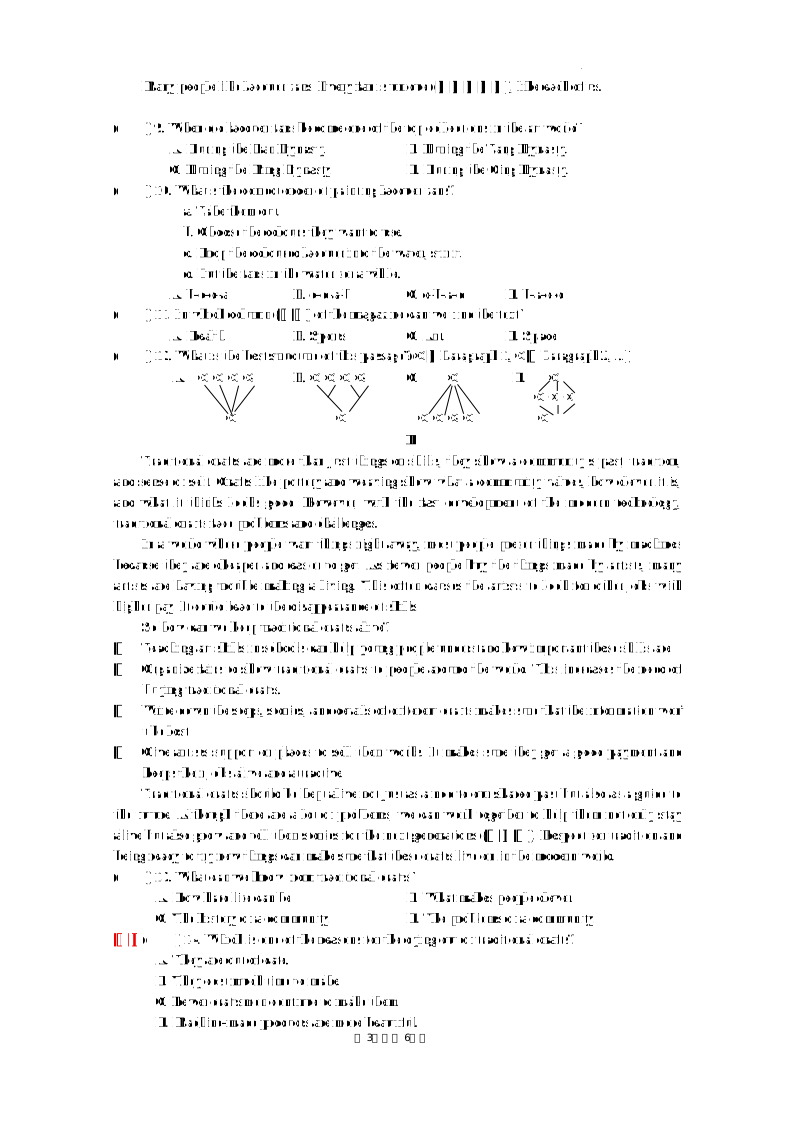
( ) 12. What is the best structure of this passage?(①=Paragraph 1, ②=Paragraph 2, ...)
A. ① ② ③ ④ B. ① ② ③ ④ C. ① D. ①
② ③ ④
⑤ ⑤ ② ③ ④ ⑤ ⑤
D
Traditional crafts are more than just things or skills, they show a community’s past, tradition, and sense of self. Crafts like pottery and weaving show what a community values, how clever it is, and what it thinks looks good. However, with the fast development of the modern technology, traditional crafts face problems and challenges.
In a world where people want things right away, most people prefer things made by machines because they are cheaper and easier to get. As fewer people buy the things made by artists, many artists are having trouble making a living. This often causes the artists to look for other jobs with higher pay. It could lead to the disappearance of skills.
So how can we keep traditional crafts alive?
· Teaching art skills in schools can help young people understand how important these skills are.
· Organize fairs to show traditional crafts to people around the world. This increases the need of buying traditional crafts.
· Write down the steps, stories, and details of different crafts makes sure that the information won’t be lost.
· Give artists support or places to sell their works. It makes sure they get a good payment and keeps their jobs alive and attractive.
Traditional crafts should be kept alive not just as a nod to our shared past but also as a guide to the future. Although there are a lot of problems, we can work together to help them not only stay alive but also grow and tell their stories for the next generations (一代人). Respect for tradition and being ready to try new things can make sure that these crafts live on in the modern world.
( ) 13. What can we know from traditional crafts?
A. How hard life can be. B. What makes people clever.
C. The history of a community. D. The problems of a community.
原创( ) 14. Which is one of the reasons for the dying out of traditional crafts?
A. They are out of date.
B. They cost much time to make.
C. Fewer craftsmen continue to make them.
D. Machine-made products are more beautiful.
( )15. How can we offer help to traditional artists?
A. Send them to foreign countries. B. Help them sell their crafts.
C. Teach them skills at school. D. Ask them to make something new.
原创( ) 16. What is the writer’s attitude towards the future of traditional crafts?
A. Hopeful and positive. B. Doubtful and worried.
C. Uncaring and cold. D. Disappointed and sad.
第二节 阅读短文,从方框内的五个选项中选出可以填入空白处的最佳选项,其中有一个多余的选项。
If you visit the National Museum of China these days, you might see a long line of people. Many of them come very early in the morning, not for a famous painting or an ancient sword, but to buy a set of beautiful fridge magnets (冰箱贴).
17 . The real crown is fancy with a lot of shining pearls (珍珠) and colourful gems (宝石). There are nine phoenixes and nine dragons on it. They hold pearls in their mouths. The crown’s owner is Empress (皇后) Xiaoduan of the Ming dynasty. When the empress was walking, the pearls on the crown moved with her. 18_ .
However, the empress’s real life was not as bright as her crown. She often felt sick and couldn’t have a son. 19 . She was the empress for 42 years.
Today, the phoenix crown is one of the museum’s most famous treasures. To better protect it, Chinese museums have strict rules—it can’t be shown outside China. 20 . For example, you can only see the real Mona Lisa in France.
A. This not only showed her high status (地位) but also made her look beautiful and graceful (优雅的).
B. The magnets got ideas from a phoenix crown (凤冠).
C. But many people liked her because she was kind and polite.
D. Other countries also have similar rules to protect their own treasures like this.
E. The fridge magnets are very cheap and popular with students.
二、完形填空(共10小题,每小题1分;满分 10分)
阅读短文,理解其大意,从A、B、C、D四个选项中选出可以填入空白处的最佳选项。
Do you know sugar painting? It is not just a sweet snack but also a precious form of cultural heritage and traditional Chinese art. Sugar painting started in the Ming dynasty and became 21 during the Qing dynasty. At that time, many crafts people made a living by selling their artworks in 22 streets or markets.
A sugar painter is a master of this sweet skill. He or she usually sits at a wooden table with a plate. The plate has a revolving arrow (可旋转箭头) and is painted with different 23 such as animals and flowers. After a buyer turns the arrow and waits until it 24 , the painter will create the chosen picture.
Sugar painting is quite 25 from usual painting. The painter uses hot syrup (糖浆) as the “ 26 ” and a spoon as the“paintbrush”. After heating the sugar, the artist starts 27 . Because the syrup hardens (变硬) quickly as it cools, the painter must work very 28 with skilled hands. Soon, a lively sugar painting is 29 .
Today, the number of sugar painters is getting 30 . This means the skill is at risk of being forgotten. However, some of them still keep doing this art. They try their best to hold different activities such as offering classes and giving speeches to spread the traditional Chinese culture.
( ) 21. A. healthy B. wise C. popular D. expensive
( ) 22. A. quiet B. busy C. empty D. clean
( ) 23. A. colours B. tools C. words D. pictures
( ) 24. A. stops B. runs C. falls D. breaks
( ) 25. A. common B. similar C. different D. famous
( ) 26. A. paper B. ink C. brush D. paint
( ) 27. A. eating B. creating C. selling D. learning
( ) 28. A. carefully B. slowly C. quickly D. loudly
( ) 29. A. finished B. broken C. copied D. lost
( ) 30. A. usual B. fewer C. more D. easier
第二部分 非选择题 (共50分)
原创三、语篇填空(共10小题,每小题2分;满分20分)
阅读短文,在空白处填入一个适当的单词或用括号内所给词的正确形式填空,使短文通顺、连贯。
Last Friday, our class had a special lesson 31.______a famous painting Dwelling in the Fuchun Mountains. It was painted by Huang Gongwang. Our teacher shared interesting stories behind it, and I learned a lot of 32. ______ (value) knowledge that I had never known before.
What surprised me most was 33. ______ painter himself. Huang Gongwang started this long painting when he was very old. This taught me that it’s never too late 34. ______ (do) something great and this painting is the perfect proof (证明). I was amazed by 35. ______ (it) long length—about seven metres—and the beautiful scenes of Jiangnan countryside. The painter used simple brushstrokes to show narrow 36. ______ (path), wooden bridges and people living in peace, making viewers feel 37. ______ (close) to nature.
I also knew that the original painting 38. ______ (damage) by fire centuries ago and split into two pieces. 39. ______ (lucky), the two parts were shown together in 2011 after years of separation. This lesson made me realize how important it is to protect our cultural heritage. Every traditional artwork tells a story of the past, and we should cherish (珍惜) them.
The lesson was so meaningful 40. ______ it helped me understand the beauty and value of traditional Chinese art deeply.
31. ____________ 32. ____________ 33. ____________ 34. ____________ 35. ____________
36. ____________ 37. ____________ 38. ____________ 39. ____________ 40. ____________
原创四、阅读与表达(共4小题,41-43小题每题2分,44小题4分;满分10分)
阅读下面的材料,根据内容回答问题。
Great news! China’s Xixia Imperial Tombs (西夏陵) just became a World Heritage Site on July 11th, 2025. This is China’s 60th World Heritage Site.
These tombs are over 1,000 years old. They belonged to the Xixia Kingdom that ruled northwest China from 1038 to 1227. The site has 9 big tombs for kings and 271 smaller ones. The experts have found more than 7,100 cultural relics (文物) at this site. These discoveries can help us understand the engineering skills, art, and culture of the Xixia Dynasty.
The experts said that the site shows how different ethnic groups (民族) and cultures mixed in northwestern China between the 11th and 13th centuries. Xixia Dynasty was home to several ethnic groups, including the Tangut, Han, Uygur, and Tibetan people. Their different ways of life and customs helped create a rich culture.
Protection work of these tombs started in the1970s. Since 2012, China has been working to make them a World Heritage Site. The local government also made strict rules to help protect them. UNESCO praised China’s efforts on the protection of the tombs.
This year is also the 40th year since China joined the World Heritage Convention (公约). “China would like to share its experience in this area and offer support to other countries, working together to protect cultural treasures all over the world,” said Rao Quan, director of the National Cultural Heritage Administration
41. How many World Heritage Sites did China have by July 11th, 2025?
________________________________________________________________________
42. What can we learn about the Xixia Dynasty from the findings at the site?
________________________________________________________________________
43. Which ethnic groups are mentioned as part of the Xixia Dynasty in the passage?
________________________________________________________________________
44. Do you think it is important to protect ancient heritage sites ? Why? Write 30 words or more.
________________________________________________________________________
________________________________________________________________________
________________________________________________________________________
五、书面表达(满分20分)
原创45. 假设你是李华,你所在的城市即将举办中国文化艺术遗产博览会(Cultural and Art Heritage Expo),现面向学生招募传统艺术展区(Traditional Art Pavilion)的志愿者。请你给组委会写一封申请信,内容包括:
(1) 表明自己申请成为展区志愿者的想法;
(2) 介绍个人优势,阐述自身对传统艺术、文化遗产的认知;
(3) 讲述入职后计划开展的服务工作。
注意:
(1) 词数80~100,开头和结尾已给出,不计入总词数;
(2) 可适当增加细节,以使行文连贯;
(3) 信中不能出现真实姓名及学校名称。
Dear Organizing Committee,
I’m Li Hua, a middle school student. I am writing to _________________________________
________________________________________________________________________________________________________________________________________________________________________________________________________________________________________________________________________________________________________________________________________________________________________________________________________________________________________________________________________________________________________________________________________________________________________________________________________________________________________________________________
________________________________________________________________________________
________________________________________________________________________________
I am looking forward to hearing from you soon.
Yours sincerely,
Li Hua
第1页(共7页)
学科网(北京)股份有限公司
$
沈阳八年级英语下学期阶段测试(沪教版八年级下册Unit 4)
(答案及解析)
第一部分 选择题
一.阅读理解(第一节)
阅读理解A
语篇解读:
这份海报介绍了学校周末开设的3个中国传统艺术手工俱乐部——孔明灯、剪纸、中国结,分别说明了每个项目的材料、文化寓意、活动时间和地点,核心目的是吸引学生报名参与,既传递了传统文化知识,也给出了清晰的活动信息。
答案解析:
1. B 细节理解题。原文Sky Lantern Club Introduction部分的第一句: “ Sky lanterns are made of bamboo and covered with paper.” 明确说明了孔明灯的制作材料是竹子(bamboo)和纸(paper)。
2. B 细节理解题。原文 Paper-cutting Club Introduction 部分的最后一行: “ Place: Room 502, Building 3” ,学习剪纸对应的地点是3号楼502室。
3. C 推理判断题。题目说“只有下午有空可以参加”,根据每个社团开设的时段,只有中国结俱乐部在下午。
4. D 推理判断题。分别提取三个传统艺术形式的文化内涵,可以发现三者的共同点都是美好祝愿的象征。
阅读理解B
语篇解读:
本文系统介绍了中国传统的扎染技艺,并依托非遗传承人杨成的故事,讲述了扎染的传承、创新与发展,传递了传统手工技艺的文化价值与不可替代的特性。
答案解析:
5. A写作手法题。文章开篇以两个问句 “Do you like wearing colourful clothes? ” 和 “But how about people in old times? ” 引出扎染这一核心主题,通过提问的方式吸引读者兴趣、自然引入话题。其余选项错误:B(讲故事)、C(举例子)、D(直接介绍扎染)均不符合原文开篇的写作方式。
6. A主旨大意题。第3段详细讲解了扎染的完整制作流程:用麻绳捆扎布料→将布料放入染料中→布料会出现深浅不一的颜色→展开布料即可看到精美花纹,整段内容围绕扎染的制作方法展开。
7. D 细节理解题。原文关于杨成的描述:“ At the same time, he goes to learn new tie-dye skills in other countries ”,说明他在坚守传统技艺的同时,还出国学习新技法,一直在努力提升自己的扎染水平。其余选项错误:A(让扎染变简单)原文未提及;B(教儿子技艺)与原文“教女儿”不符;C(从未出国)与原文“去其他国家学习”相矛盾。
8. C推理判断题。推理判断题(基于原文的合理推断)根据 “ In 2006, the tie-dye skill became China’s national intangible cultural heritage. Anning in Yunnan is famous for tie-dye. ”可以合理推断:作为扎染的知名产地,云南安宁有成熟的扎染产业,因此我们可以在安宁买到精美的扎染连衣裙。其余选项错误:A(人们只能在中国看到扎染)过于绝对,原文提到杨成会去国外学习扎染技法,说明扎染文化已经走出国门; B(杨成计划教他人扎染技艺)与原文 “Yang now teaches tie-dye in many places. More than 100,000 people have learned from him” 不符,他不是“计划”教学,而是已经开展教学;D(机器会取代扎染这项古老技艺)与原文所说 “machines can’t take the place of our creative hands” 完全相反,原文明确否定了机器取代传统技艺的可能性。
阅读理解C
语篇解读:
这篇说明文介绍了漆扇的悠久历史、制作材料与工艺、传统与现代的创作形式。既科普了中国传统漆扇技艺,也展现了这项古老技艺在当代的传承与新活力。
答案解析:
9. B 细节理解题。原文第2段 “ Later, lacquer fans became one of the top collections in the art world during the Tang Dynasty”,明确说明漆扇在唐朝成为艺术界的顶级藏品之一B。
10. A 流程顺序题。原文第4段的现代漆扇绘制流程依次对应步骤为 b-c-d-a。
11. C选文出处题。全文围绕中国传统艺术形式—漆扇展开,介绍了它的历史、工艺、艺术价值与文化传承,属于艺术领域的内容,因此最可能出现在杂志的艺术栏目,其余选项A(健康)、B(运动)、D(太空)均与文章话题无关。
12. D 篇章结构题。第1段总领全文,引出漆扇的话题;第2段介绍漆扇的历史起源与漆的用途; 第3段介绍漆扇的传统制作工艺与装饰特点;第4段介绍现代漆扇的创作流程与流行情况。 第5段总结升华,点明漆扇独一无二的特质。整体结构为总分总,对应选项A的结构示意图。
阅读理解D
语篇解读:
这篇议论文围绕传统手工艺展开,分析了其文化价值与社会意义,在现代社会面临的生存危机,接着给出了让传统手工艺延续的具体可行方案,最后以积极的态度展望传统手工艺的未来,呼吁大家共同守护这份文化遗产。
答案解析:
13. C 细节理解题。原文开篇第一句 “ Traditional crafts are more than just things or skills, they show a community’s past, tradition, and sense of self ”明确说明传统手工艺能展现一个社群的历史、传统与自我认知,对应选项C(一个社群的历史)。
14. C推理判断题。原文第二段内容解释了随着机器量产的普及,手工制品的买家越来越少,许多手艺人难以维持生计,不得不转行,这会导致技艺的消失。这一逻辑链的核心原因是越来越少的手艺人坚持制作传统手工艺品,对应选项C。其余选项错误:A(它们过时了)原文未提及;B(制作耗时久)不是原文给出的原因;D(机器制品更美观)与原文“机器制品更便宜、更容易获得”的表述不符。
15. B 细节理解题。原文第三段给出的传承方案,其中明确提到 “Give artists support or places to sell their works. It makes sure they get a good payment and keeps their jobs alive and attractive.”说明帮助手艺人销售作品是支持他们的方式之一,对应选项B。其余选项错误:A(送他们去国外)、D(让他们做新东西)原文未提及;C(在学校教他们技能)与原文“在学校教学生艺术技能”的对象不符。
16. A 观点态度题。原文结尾段“Although there are a lot of problems, we can work together to help them not only stay alive but also grow and tell their stories for the next generations.”作者承认传统手工艺面临挑战,但更强调只要大家共同努力,它不仅能存活,还能发展壮大、代代相传,整体态度是充满希望、积极乐观的,故选A。其余选项错误:B(怀疑担忧)、C(漠不关心)、D(失望悲伤)均与原文积极的基调完全相反。
一.阅读理解(第二节)
语篇解读:
这篇文化科普类说明文以中国国家博物馆火爆的凤冠主题冰箱贴为切入点,介绍了明代孝端皇后九龙九凤冠的工艺特点、历史背景,延伸讲述了文物保护的国际通用规则,既科普了文物知识,也传递了文化遗产的保护理念。
答案解析:
17. B 逻辑衔接(上下文话题承接)。前文提到人们排队购买博物馆的冰箱贴,后文立刻开始介绍“这顶真正的凤冠”的细节。B选项“The magnets got ideas from a phoenix crown”既回应了前文的冰箱贴,又引出了后文的凤冠介绍,是唯一能串联起前后文的过渡句。
18. A 逻辑衔接(细节补充+语义顺承)。前文描述了凤冠的华丽细节,A选项 “This not only showed her high status but also made her look beautiful and graceful” 是对前文凤冠细节的意义补充,解释了凤冠的作用——既彰显皇后的尊贵地位,又让她更显端庄优雅,语义完全顺承。
19. C 逻辑衔接(转折关系匹配)。前文用 However 转折,讲述皇后的真实生活并不像凤冠那样光鲜:常年生病、没有子嗣。后文则说她当了42年皇后。C选项“But many people liked her because she was kind and polite”用转折逻辑,补充了皇后的个人品格——虽然命运坎坷,但她善良有礼,因此受人爱戴,完美衔接了前后的转折关系,让人物形象更完整。
20. D 逻辑衔接(举例逻辑匹配)。前文提到中国博物馆为保护凤冠,规定其不得出境展览;后文用 For example 举例“只有在法国才能看到真的《蒙娜丽莎》”。D选项 Other countries also have similar rules to protect their own treasures like this 是前后文的过渡句:既承接了中国的文物保护规则,又引出了后文其他国家的同类案例,逻辑完全匹配。
二、完形填空
语篇解读:
本篇以中国传统民间技艺糖画为核心,依次介绍了糖画的历史起源、制作流程、艺术特点,最后点明这项技艺的传承现状与手艺人的坚守。
答案解析:
21. C 语境词义辨析题。前文提到糖画起源于明朝,本句讲述它在清朝的发展状态。结合后文“许多手艺人靠卖糖画为生”的语境,说明这项技艺在清朝变得流行、受欢迎。
22. B 语境词义辨析题。本句描述手艺人售卖作品的场景:在繁忙的街道或集市上摆摊。busy streets符合集市、街头售卖的场景。
23. D语境词义复现题。后文举例“动物、花朵”,且提到“the painter will create the chosen picture”,说明转盘上画着不同的图案、图画,是全文多次复现的核心词汇。
24. A 语境词义辨析题。前文提到买家转动箭头,本句描述等待箭头停下后,手艺人就会制作对应的图案。stops符合转盘游戏的流程。
25. C 固定搭配题。本句为固定搭配 be different from,意为“与……不同”,后文介绍糖画是用糖浆作画的特殊方式,说明它和普通绘画有很大区别。
26. D语境逻辑匹配题。后文提到“用勺子当画笔”,对应本句“用热糖浆当颜料”,paint(颜料)与后文的paintbrush(画笔)完美对应,符合绘画的工具定位。
27. B语境词义辨析题。前文提到将糖加热,本句描述手艺人开始创作糖画,creating符合艺术创作的语境。
28. C 语境逻辑推理题。前文提到“糖浆冷却后会快速变硬”,因此手艺人必须快速、熟练地操作,quickly完全符合因果逻辑。
29. A语境词义辨析题。前文描述了糖画的制作过程,本句表示“很快,一幅栩栩如生的糖画就完成了”,finished对应制作流程的收尾。
30. B语境逻辑推理题。后文提到“这项技艺面临被遗忘的风险”,说明如今糖画手艺人的数量正在变得更少,fewer符合传承危机的语境。
第二部分 非选择题
三、语篇填空
语篇解读:
这篇记叙文改编自教材主阅读文章,以一节关于《富春山居图》的特色美术课为切入点,讲述了作者在课堂上了解到的画作历史、艺术特点与传承故事,表达了对中国传统艺术之美的赞叹,以及对文化遗产保护与传承的深刻感悟。
答案解析:
31. about考察类型:介词。本句意为“上周五,我们班上了一节关于名画《富春山居图》的特色课”,介词 about 表示“关于”,符合语境。
32. valuable考察类型:词性转换(名词→形容词)。空格后是名词knowledge,需要用形容词修饰名词。名词 value 的形容词形式是 valuable ,意为“有价值的”, valuable knowledge 即“宝贵的知识”。
33. the考察类型:冠词。本句特指前文已经提到的画家黄公望本人,当名词被特指时,需要用定冠词 the 修饰, the painter himself 即“这位画家本人”。
34. to do考察类型:包含不定式的固定句型。本句用到too...to...句型 It's never too late to do sth.,意为“做某事永远不晚”,因此填动词不定式 to do 。
35. paths考察类型:名词变复数。空格前没有表示单数的限定词,且后文并列的 wooden bridges 和 people 均为复数形式,因此 path 需要变为复数形式 paths ,表示“狭窄的小径”。
36. closer考察类型:形容词比较级。结合语境,画作让观众感觉更亲近自然,用比较级 closer 更贴合语义,意为“感觉更靠近、贴近”。
37. was damaged考察类型:被动语态+时态。主语the original painting 和动词 damage 是被动关系,即“原作被火灾损坏”;时间状语 centuries ago 表示过去,因此用一般过去时的被动语态 was damaged 。
38. Luckily考察类型:词性转换(形容词→副词)。空格位于句首,修饰整个句子,需要用副词作状语。形容词 lucky 的副词形式是 Luckily ,意为“幸运的是”,句首首字母大写。
39. its考察类型:物主代词。空格后是名词 long length (长度),需要用形容词性物主代词修饰,人称代词 it 的形容词性物主代词是 its ,意为“它的”,指代这幅画的长度。
40. that考察类型:连词。本句用到固定句型 so…that…,意为“如此……以至于……”,因此填 that ,句意为“这节课太有意义了,以至于它帮助我深刻理解了中国传统艺术的美与价值。
4、 阅读与表达
语篇解读:
这是一篇文化新闻类说明文,以西夏陵成功列入世界文化遗产为核心新闻点,介绍了西夏陵的历史背景、考古价值、民族文化意义,以及中国在文化遗产保护上的努力与国际贡献,传递了文化遗产传承与保护的重要性。
考察点与答案依据:
41. 细节理解题(数字信息精准定位)
定位原文第一段关键句 This is China’s 60th World Heritage Site,明确截至2025年7月11日,中国的世界遗产总数为60处。
42. 细节理解题(信息提取与整合)
定位原文第二段结尾句 These discoveries can help us understand the engineering skills, art, and culture of the Xixia Dynasty,直接提取信息作答即可。
43. 细节理解题(信息精准定位)
定位原文第三段关键句 Xixia Dynasty was home to several ethnic groups, including the Tangut, Han, Uygur, and Tibetan people,完整提取文中提到的4个民族名称即可。
44. 开放性表达题(观点阐述)
题号
参考答案
评分细则
41-43题:共分为3档(2分,1分,0分)
不考虑大小写,弱化语法和拼写错误,忽略单复数。
41
60.
采分点:60。 2分;抄原句或只写60th 不得分。
42
The engineering skills, art and culture of the Xixia Dynasty.
采分点:engineering skills、art、culture,3个要点全覆盖,2分。不足3个,1分。
43
The Tangut, Han, Uygur and Tibetan people.
采分点:The Tangut, Han, Uygur and Tibetan people,3个要点全覆盖,2分。不足3个,1分。
44题共分为4档(4分,3分,2分,0分)
不考虑大小写,弱化语法和拼写错误。
44
Yes,I think it is important to protect ancient heritage sites. Because they carry the history, art and wisdom of our nation, they help us learn about our history, understand our past, pass down our traditional culture, and build our cultural confidence.
4分:观点明确,理由合理,理由字数在24词以上。可以有少量语法错误。
3分:观点明确,理由合理,但理由字数少于24词;或观点明确但理由表述不清晰;或观点明确但理由语法错误较多。
2分:只回答观点或理由;理由摘抄本片文章相关内容。
0分:没有观点没有理由,直接摘抄相关原文;或只回答Yes或No;或完全用汉语表述。
五、书面表达
档位
分数区间
评分标准
第五档(优秀)
18-20分
3个核心要点全部覆盖,结构清晰完整(申请意愿→个人优势→服务计划,逻辑连贯);语法、拼写错误仅1-2处,不影响理解;字数完全达标,符合书信格式,语言得体、贴合志愿者申请的语境。
第四档(良好)
15-17分
3个核心要点全部覆盖,语言错误在5个以内;或要点齐全但有1-2处语法错误,结构相对完整;字数达标,整体表达流畅,符合书信要求。
第三档(合格)
11-14分
内容与作文主题相关,涵盖大部分核心要点(2个及以上);语言错误在6处以上,部分表达有瑕疵但不影响整体理解;字数达标。
第二档(待提升)
6-10分
遗漏或表述不清部分核心要点;词汇和语法结构使用有限,错误较多,部分内容影响理解;字数不足但有基本的书信框架。
第一档(不合格)
1-5分
跑题严重,错误极多,几乎无有效内容;或仅能写出零星与主题相关的单词/句子,无法构成完整书信。
参考范文:
Dear Organizing Committee,
I’m Li Hua, a middle school student. I am writing to apply to be a volunteer for the Traditional Art Pavilion of the Cultural and Art Heritage Expo.
I have a deep love for traditional Chinese art. I have learned paper-cutting for 3 years and know many stories behind our cultural heritage. I am also good at communicating with people and can introduce the artworks clearly to visitors.
If I get the chance, I will help guide visitors, introduce the history of the artworks, and keep the pavilion in good order. I really hope to spread the beauty of our traditional art to more people.
I am looking forward to your reply.
Yours sincerely,
Li Hua
(
5
)
学科网(北京)股份有限公司
$
资源预览图

1

2
3
相关资源
示范课
由于学科网是一个信息分享及获取的平台,不确保部分用户上传资料的 来源及知识产权归属。如您发现相关资料侵犯您的合法权益,请联系学科网,我们核实后将及时进行处理。