精品解析:浙江省金华市兰溪市聚仁中学2025-2026学年八年级上学期12月期中英语试题
 切换试卷
切换试卷
2026-05-25
|
2份
|
32页
|
28人阅读
|
0人下载
资源信息
| 学段 | 初中 |
|---|---|
| 学科 | 英语 |
| 教材版本 | - |
| 年级 | 八年级 |
| 章节 | - |
| 类型 | 试卷 |
| 知识点 | - |
| 使用场景 | 同步教学-期中 |
| 学年 | 2025-2026 |
| 地区(省份) | 浙江省 |
| 地区(市) | 金华市 |
| 地区(区县) | 兰溪市 |
| 文件格式 | ZIP |
| 文件大小 | 2.46 MB |
| 发布时间 | 2026-05-25 |
| 更新时间 | 2026-05-25 |
| 作者 | 匿名 |
| 品牌系列 | - |
| 审核时间 | 2026-05-25 |
| 下载链接 | https://m.zxxk.com/soft/58039966.html |
| 价格 | 3.00储值(1储值=1元) |
| 来源 | 学科网 |
内容正文:
聚仁中学2025学年第一学期期中测试(二)
八年级英语试题卷2025. 12
亲爱的同学:
欢迎参加考试!请你认真审题,积极思考,细心答题,发挥最佳水平。
答题时,请注意以下几点:
1. 全卷共8页,有七大题,76小题。
2. 答案必须写在答题纸相应的位置上。写在试卷或草稿纸上无效。 祝你成功!
第一部分 听力理解(共三节,满分20分)
第一节(共5小题,每小题1分,满分5分)
听下面5段对话。每段对话后有一个小题,从题中所给的A、B、C三个选项中选出最佳
选项,并标在试卷的相应位置。每段对话仅读一遍。
1. What does the boy like doing?
A. Running. B. Reading. C. Swimming.
2. When did Jane win the gold medal?
A. In 2004. B. In 2014. C. In 2024.
3. Which invention does the man think is the most important?
A. The phone. B. The printer. C. The computer.
4. Where could the coversation take place?
A. At home B. At the airport C. In the classroom
5. What’s the relationship between the two speakers?
A. Sister and brother B. Mother and son C. Teacher and student
第二节 听较长对话,从A 、B 、C三个选项中选择正确的选项。每段对话读两遍。(共5
小题, 每小题1. 5分,满分7. 5分)
听下面一段较长的对话,完成小题。
6. What are they talking about?
A. A TV show B. A book C. A weekend plan
7. What does the woman think of Dog Man?
A. Boring. B. Funny. C. Exciting.
听下面一段较长对话,回答三个小题。
8. Why is the boy scared?
A. He must give an English speech.
B. He doesn't practise his English speech.
C. He hasn't finished his English speech.
9. How many suggestions does Mrs. Smith give?
A. Two B. Three C. Four
10. How might the boy solve his problem?
A. Watch videos about speeches.
B. Ask friends to listen to him.
C. Practise the speech at home.
第三节 听下面一段独白,独白后有5个小题,从题中所给的A 、B 、C三个选项中选出
最佳选项,并标在试卷的相应位置。独白读两遍。(共5小题,每小题1. 5分,满分7. 5分)
11. Where is Tony going to spend the summer holiday?
A. In Germany. B. In Australia. C. In New Zealand.
12. How long will the summer camp last?
A. For 7 days. B. For 15 days. C. For 22 days.
13. How will they go there?
A. By air. B. By sea. C. By train.
14 What classes will Tony have?
A. English and maths. B. English and art. C. Science and German.
15. What will Tony do as a volunteer?
A. He will teach young children English.
B. He will help farmers grow vegetables.
C. He will take care of animals in the zoo.
第二部分 阅读理解(共两节,满分40分)
第一节 阅读理解(共15小题,每小题2分,满分30分)
阅读下面短文,从每题所给的A、B、C、D 四个选项中选出最佳选项。
A
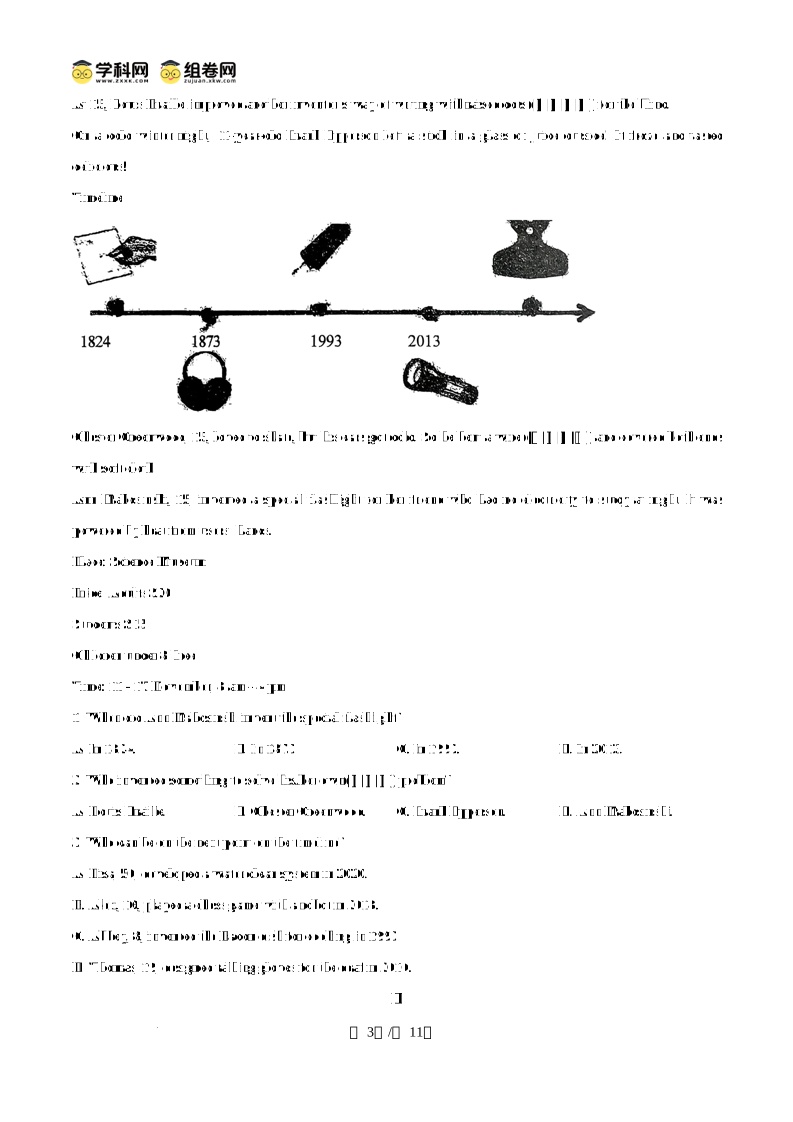
Young Inventors over Time
Special Exhibition for a Week
At 15, Louis Braille improved another inventor’s way of writing with raised dots (凸起的点) for the blind.
On a cold winter night, 11-year-old Frank Epperson left a stick in a glass of juice outside! It froze and tasted delicious!
Timeline
Chester Greenwood, 15, loved to skate, but his ears got cold. So he bent a wire (弯曲铁丝) and covered both ends with soft cloth.
Ann Makosinski, 15, invented a special flashlight for her friend who had no electricity to study at night. It was powered by heat from users’ hands.
Place: Science Museum
Price: Adults $20
Students $15
Children under 8 Free
Time: 11 - 17 November, 8 am - 4 pm
1. When did Ann Makosinski invent the special flashlight?
A. In 1824. B. In 1873. C. In 1993. D. In 2013.
2. Who invented something to solve his/her own(自己的) problem?
A. Louis Braille. B. Chester Greenwood. C. Frank Epperson. D. Ann Makosinski.
3. Who can be on the next point on the timeline?
A. Lisa, 50, developed a water clean system in 2020.
B. Alex, 16, played a chess game with a robot in 2018.
C. Abbey, 8, invented the Bacon dish for cooking in 1993.
D. Thomas, 19, designed talking gloves for the deaf in 2016.
B
Chen Yufei is a famous Chinese badminton player. Born on March 1st, 1997, in Hangzhou, she started playing badminton at the age of six. She loved the sport very much and practised hard every day, often staying on the court (球场) longer than other players. Her dream was to become a world champion, and she always put in every effort to achieve it.
Her hard work finally paid off. In 2017, she won her first important international prize, which made her more confident. But her biggest success came in 2021 at the Tokyo Olympic Games. She won the gold medal in women's singles! It was a very exciting and close match that lasted a long time. This important victory made her a national hero and encouraged many young people to start playing badminton. On May 4th, 2023 she helped the Chinese team win the 2025 Sudirman Cup.
Chen Yufei is known for her smart playing style. She is not the most powerful player, but she is very fast, clever, and has excellent footwork on the court. She uses her excellent skills and smart tactics (策略) to control the game. She never gives up easily, even when she is behind, which makes her matches fun and exciting to watch. Off the court, she enjoys listening to music and spending time with her family and friends.
Chen Yufei is a great role model for everyone. She shows us that with true persistence, we can overcome (克服) challenges and achieve our biggest dreams.
4. What can we know about Chen Yufei’s early life from the passage?
A. She was born in Tokyo in 1997. B. She became a world champion.
C. She started playing badminton at six. D. She enjoyed playing with other players.
5. Which was Chen Yufei’s biggest success?
A. Becoming a famous badminton player in 2003.
B. Winning her first important international prize in 2017.
C. Getting the gold medal at the 2021 Tokyo Olympics.
D. Helping China win the 2023 Sudirman Cup on May 4th.
6. What does “persistence” mean in the last paragraph?
A. The skill of using smart tactics in badminton matches.
B. The habit of giving up easily when meeting trouble.
C. The interest of listening to music and staying with family.
D. The quality of working hard and keeping going.
7. What is the main idea of the passage?
A. Chen Yufei’s life, achievements and good qualities.
B. Why badminton is a popular sport in China.
C. How to become a successful badminton player.
D. The exciting matches Chen Yufei has played.
C
When Amir arrived from Turkey (土耳其) at Maplewood Primary School, he felt nervous. At lunchtime, Jack looked curiously at his Turkish gözleme (a traditional pancake in Turkey) and asked “Why don’t you eat normal food like everyone else? Your dish doesn’t look delicious at all.” It made Amir sad and lonely.
But two classmates Leo and Mia showed their kindness and welcomed him. When they noticed Amir often sat alone, Mia came up with a wonderful idea: we can hold a school food festival! This way, everyone could share dishes from their cultures and learn about each other’s traditions! She explained excitedly.
Amir was moved. Leo and Mia visited Amir’s house to learn how to make gözleme. The kitchen was filled with laughter when Amir’s mother taught them to make the thin dough (面团) and fill it with vegetables and cheese. Amir shared Turkish stories, his confidence growing with each moment of acceptance (接纳).
The festival day finally arrived. Colorful tables were full of different foods from different countries and Amir’s perfectly cooked gözleme. Amir bravely offered Jack a piece. “This is actually really good!” Jake nodded with surprise after tasting a piece of it, immediately taking another bite.
Soon, students stood around Amir’s table, asking about Turkish food and traditions.
Because of their success, the friends started a Bite and Culture Club. Through sharing meals and stories, they find that the sweetest part is the friendship that forms when people open their hearts to different cultures.
8. Why did Amir feel sad and lonely at lunchtime?
A. He didn’t like the food in the school.
B. He forgot to bring his lunch to school.
C. His classmates didn’t like gözleme.
D. Nobody played with him at school.
9. What did Amir and his two classmates do to prepare for the food festival?
A. They went to a restaurant to learn to cook different dishes.
B. They visited Amir’s house and learned to make gözleme.
C. They asked their parents to cook the dishes for the festival.
D. They bought different kinds of foods from the supermarket.
10. How did Amir’s feelings change?
A. nervous—sad—moved—confident B. nervous—confident—moved—happy
C. sad—moved—confident—nervous D. sad—happy—moved—confident
11. Which is the best title of the passage?
A. Sharing Brings Friendship. B. Learn to Make Gözleme.
C. The Life Story of Amir D. Hold A School Festival.
D
①When we think about inventions, we often remember great successes like the light bulb or the airplane. But we sometimes forget that failure is a very important part of
inventing. Without failure, people cannot learn what doesn’t work and cannot make real progress.
②Failure can help inventors to find a way out. Thomas Edison, who helped invent the light bulb, once said, ‘I have not failed. I’ve just found 10, 000 ways that won’t work.’ This quotation (名言) shows his idea: every mistake taught him something. Each time he changed his experiment, he learned a new fact. He wrote down results, tried small changes, and kept trying with patience. Over time, these small lessons helped him find a way that did work.
③Failure can also help inventors to discover unexpected results. For example, a scientist named Percy Spencer was working on a radar (雷达) experiment. However, he failed many times. One day, he did the experiment again. Suddenly, he noticed that a chocolate bar in his pocket melted (融化) because of the radar. This unexpected event led to a useful kitchen invention--the microwave oven.
④It is important for students to remember this lesson. If you fail in an exam or a project, you should try to find what you can learn from the mistake. Failure is not the end of the road. It is a step in a long path of learning. The most successful inventors are not those who never fail, but those who never stop trying.
12. What can we learn from Thomas Edison’s quotation?
A. He failed 10, 000 times and gave up inventing the light bulb.
B. He thought every mistake could teach him something useful.
C. He spent 10, 000 days inventing the light bulb successfully.
D. It was impossible for him to find the way to invent the light bulb.
13. How did the scientist get the idea about the microwave oven?
A. He wanted to invent a new kitchen tool.
B. He found a chocolate bar melted by accident.
C. He did experiments about kitchen inventions.
D. He learned from Edison's experiments.
14. What is the structure of this passage?
A. B. C. D.
15. What is the main purpose of the passage?
A. To explain the power of failure. B. To tell us how to avoid failure.
C. To show the importance of inventing. D. To introduce the steps of inventing.
第二节 任务型阅读(共5小题,每题2分,满分10分)
阅读下面材料,从方框中所给的 A~E 五个选项中选出正确选项(其中一项是多余选项), 将其序 号填入第1-4小题,并回答第5小题。注意:请将第5小题的答案写在非选择题部分的相应位置。
A Guide to Getting Along with Others
Getting along with others is a key life skill that makes daily life happier. If you want to build better relationships with people around you, here are some useful tips.
Try active listening. Many people can’t get along because they don’t truly listen. So what can people do? ____16____ It not only shows respect but also helps you understand others’ thoughts better.
____17____ Everyone is different. Instead of trying to change others, try to see the value in their differences. For example, your friend likes reading quietly while you like doing sports—you can talk about your hobbies together. Maybe you will get double joy.
Offer a helping hand. Small acts of kindness go a long way. ____18____ You can also help a classmate with homework or listen when someone is upset. These actions build trust.
Stay polite in disagreements. ____19____ when you don’t agree with someone. For example, saying “I understand your point, but I think…” helps keep the conversation friendly.
Getting along with others isn’t hard. It just takes practice. By following these tips, you’ll find your relationships become more enjoyable and meaningful.
A. Respect others’ differences.
B. When someone speaks, listen to their words.
C. It is great for you to share your snacks.
D. Be polite and express your ideas calmly.
E. Make them accept your thoughts.
16. ________
17. ________
18. ________
19. ________
20. What else can you do to get along with others? (不超过15个字)
____________________________________________
第三部分 语言运用(共三节,满分40分)
第一节完形填空(共15小题,每小题1分,满分15分)
认真阅读下面短文,从短文后各题所给的 A、B、C、D 四个选项中,选出最佳选项。
What would the world be like if cars could drive themselves? Imagine seeing an empty car passing by on its way to ____21____ its owner (主人), or a car full of passengers who are reading, listening to music or even sleeping, but none of them is worried about the ____22____ ahead.
Well, all of these could be the future of driving. There are several ____23____, which are working on driverless cars. So far, one kind of self - driven cars has never got a traffic ____24____, but some of them have been in an accident ____25____ other cars hit them.
These cars are now still in testing. If the tests are ____26____, these electric, self - driven cars could be usable very soon. But____27____ is it possible for a car to drive itself? Cars already have many features (特征) ____28____ them to replace (代替) drivers during certain situations. That means cars are able to ____29____ themselves, or stop when they notice other cars close by. They can also ____30____ the speed if there are dangerous conditions. Scientists believe that ____31____ the help of wireless signals (无线信号), cameras and GPS, it is possible to ____32____ a safe self - driven car very soon.
The cause of deadly road accidents is usually ____33____ drivers or dangerous conditions. The self - driven car may be able to avoid these. ____34____, some people do not like the idea. An American doctor White Drake, for example, doesn’t ____35____ these cars are safe. He thinks that technologies can also make mistakes.
21. A. pick up B. ask for C. worry about D. catch up with
22. A. hill B. road C. river D. building
23. A. clubs B. shops C. countries D. museums
24. A. sign B. ticket C. list D. circle
25. A. if B. so C. when D. although
26. A. dangerous B. interesting C. important D. successful
27. A. what B. where C. how D. why
28. A. allowing B. inviting C. advising D. encouraging
29. A. park B. show C. choose D. improve
30. A. keep B. reduce C. match D. reach
31. A. on B. for C. with D. without
32. A. find B. create C. build D. discover
33. A. serious B. helpless C. hopeless D. careless
34. A. Gladly B. Urgently C. Luckily D. Surprisingly
35. A. believe B. hope C. say D. know
第二节词汇运用(共15小题,每小题1分,满分15分)
A.
用方框中所给单词的适当形式填空,每词仅用一次。
stress nothing spread instead of although
Have you ever heard of the expression appearance anxiety (容貌焦虑)? This expression ____36____ widely on the Internet. It means that some people are ____37____ because they think they are not beautiful enough. For example, some girls believe that the thinner, the prettier. So they do all they can to lose weight, ____38____ it may be bad for their health. In my opinion, there is ____39____ wrong with trying to be more beautiful, but we young people must know what truly makes us beautiful. ____40____ good looks, a clever mind makes one beautiful. In this sense, we should be thirsty for knowledge.
B.
阅读下面短文,根据括号内所给汉语注释写出单词的正确形式(每空一词)。
Do you know the World Wide Web? In 1989, a British scientist named Tim Berners-Lee ____41____ (发明) it. It is a group of pages of information that are connected to each other around the world. ____42____ (自从……之后) then, the World Wide Web has changed the way people live. Now it has become a very important part in our ____43____ (日常) life. With a ____44____ (点击) of a mouse, we can read news, buy things, make friends and learn anything we’re interested in.
Now many years have ____45____ (流逝). How will the World Wide Web influence (影响) life in the future? We can share plenty of information to make our lives more ____46____ (便利). So one day in the future, your ____47____ (大门) can send you a message. But scientists ____48____ (告诫) us not to share too much information on the Internet. Our ____49____ (个人) information can get into the wrong hands. It’s not ____50____ (明智) to spend a whole day watching something on the computer. People need to get close to nature and enjoy the sun.
第三节语法填空(共10小题,每小题1分,满分10分)
阅读日记,根据上下文或括号内所给单词,写出空白处英文单词以及它们的正确形式,补全文本。
October 11th, 2025 Sunny
Today was one of the best days ever! I was so excited because my dad got two ____51____ (ticket) for the ZheBA Game. I planned ____52____ (see) how our Wenzhou team beat Hangzhou team!
To my surprise, the Hangzhou team was ____53____ (strong) than I thought. I began to feel stressed soon after the game began. Our players played hard but couldn’t score easily. What’s worse, one of our main players, Dai Zite even got hurt. Everyone looked at him lying on the floor ____54____ a worried face. I thought, “Can we still win this game?”
____55____ nobody gave up. Another main player, Yan Mouzhi, stood up and scored 8 points ____56____ (quick)! He was amazing! After that, ____57____ whole team started playing much better than before. In the end, our Wenzhou team won the game! I almost cried out!
Players on Wenzhou team believed in themselves and fought for every point. I was so proud of ____58____ (they)! They have taught me a great lesson: never stop ____59____ (try), even when things are difficult. The players have trained hard and they ____60____ (win) seven games so far! I really hope they can be the first team to get ten wins!
七、书面表达(本题有1小题,共20分)
61. 作为一名初二学生,在学习生活中,你一定遇到过很多挑战,而克服挑战的过程就是收获和成长的过程,请以“The Challenges Helped Me Grow Up”为题写一篇演讲稿,谈一谈你的某一次经历,短文需包含以下内容:
(1) What challenges did you meet?
(2) How did you overcome (克服) the challenges?
(3) What have you learned from the experience?
注意:
(1)文中不得出现真实姓名、学校等信息;
(2)词数80词左右。
Dear friends,
It’s natural to meet challenges in our lives. _____________________________________________________________________________________________________________________________________________________________________________________________________________________________________________________________________________________________________________________________________________________________________________________________________________________________________________________________________________________________________________________________________________________________________________________________________________________________
第1页/共1页
学科网(北京)股份有限公司
$
聚仁中学2025学年第一学期期中测试(二)
八年级英语试题卷2025. 12
亲爱的同学:
欢迎参加考试!请你认真审题,积极思考,细心答题,发挥最佳水平。
答题时,请注意以下几点:
1. 全卷共8页,有七大题,76小题。
2. 答案必须写在答题纸相应的位置上。写在试卷或草稿纸上无效。 祝你成功!
第一部分 听力理解(共三节,满分20分)
第一节(共5小题,每小题1分,满分5分)
听下面5段对话。每段对话后有一个小题,从题中所给的A、B、C三个选项中选出最佳
选项,并标在试卷的相应位置。每段对话仅读一遍。
1. What does the boy like doing?
A. Running. B. Reading. C. Swimming.
2. When did Jane win the gold medal?
A. In 2004. B. In 2014. C. In 2024.
3. Which invention does the man think is the most important?
A. The phone. B. The printer. C. The computer.
4. Where could the coversation take place?
A. At home B. At the airport C. In the classroom
5. What’s the relationship between the two speakers?
A. Sister and brother B. Mother and son C. Teacher and student
第二节 听较长对话,从A 、B 、C三个选项中选择正确的选项。每段对话读两遍。(共5
小题, 每小题1. 5分,满分7. 5分)
听下面一段较长的对话,完成小题。
6. What are they talking about?
A. A TV show B. A book C. A weekend plan
7. What does the woman think of Dog Man?
A. Boring. B. Funny. C. Exciting.
听下面一段较长对话,回答三个小题。
8. Why is the boy scared?
A. He must give an English speech.
B. He doesn't practise his English speech.
C. He hasn't finished his English speech.
9. How many suggestions does Mrs. Smith give?
A. Two B. Three C. Four
10. How might the boy solve his problem?
A. Watch videos about speeches.
B. Ask friends to listen to him.
C. Practise the speech at home.
第三节 听下面一段独白,独白后有5个小题,从题中所给的A 、B 、C三个选项中选出
最佳选项,并标在试卷的相应位置。独白读两遍。(共5小题,每小题1. 5分,满分7. 5分)
11. Where is Tony going to spend the summer holiday?
A. In Germany. B. In Australia. C. In New Zealand.
12. How long will the summer camp last?
A. For 7 days. B. For 15 days. C. For 22 days.
13. How will they go there?
A. By air. B. By sea. C. By train.
14 What classes will Tony have?
A. English and maths. B. English and art. C. Science and German.
15. What will Tony do as a volunteer?
A. He will teach young children English.
B. He will help farmers grow vegetables.
C. He will take care of animals in the zoo.
第二部分 阅读理解(共两节,满分40分)
第一节 阅读理解(共15小题,每小题2分,满分30分)
阅读下面短文,从每题所给的A、B、C、D 四个选项中选出最佳选项。
A
Young Inventors over Time
Special Exhibition for a Week
At 15, Louis Braille improved another inventor’s way of writing with raised dots (凸起的点) for the blind.
On a cold winter night, 11-year-old Frank Epperson left a stick in a glass of juice outside! It froze and tasted delicious!
Timeline
Chester Greenwood, 15, loved to skate, but his ears got cold. So he bent a wire (弯曲铁丝) and covered both ends with soft cloth.
Ann Makosinski, 15, invented a special flashlight for her friend who had no electricity to study at night. It was powered by heat from users’ hands.
Place: Science Museum
Price: Adults $20
Students $15
Children under 8 Free
Time: 11 - 17 November, 8 am - 4 pm
1. When did Ann Makosinski invent the special flashlight?
A. In 1824. B. In 1873. C. In 1993. D. In 2013.
2. Who invented something to solve his/her own(自己的) problem?
A. Louis Braille. B. Chester Greenwood. C. Frank Epperson. D. Ann Makosinski.
3. Who can be on the next point on the timeline?
A. Lisa, 50, developed a water clean system in 2020.
B. Alex, 16, played a chess game with a robot in 2018.
C. Abbey, 8, invented the Bacon dish for cooking in 1993.
D. Thomas, 19, designed talking gloves for the deaf in 2016.
【答案】1. D 2. B 3. D
【解析】
【导语】本文是一则科学博物馆的展览海报,介绍了“Young Inventors over Time”主题展,展示了几位年轻发明家及其作品,并提供了展览的时间、地点和票价信息。
【1题详解】
根据时间线和第四段文本信息“Ann Makosinski, 15, invented a special flashlight”可知,Ann Makosinski发明特殊手电筒的年份是2013年。
【2题详解】
根据文中第三段“Chester Greenwood, 15, loved to skate, but his ears got cold. So he bent a wire and covered both ends with soft cloth.”,可知他发明耳罩是为了解决自己耳朵冻僵的问题。
【3题详解】
时间线的下一个点在2013年之后,且主题是“年轻发明家”。D选项Thomas 19岁,2016年设计会说话的手套,符合“年轻发明家”且时间在2013年之后。
B
Chen Yufei is a famous Chinese badminton player. Born on March 1st, 1997, in Hangzhou, she started playing badminton at the age of six. She loved the sport very much and practised hard every day, often staying on the court (球场) longer than other players. Her dream was to become a world champion, and she always put in every effort to achieve it.
Her hard work finally paid off. In 2017, she won her first important international prize, which made her more confident. But her biggest success came in 2021 at the Tokyo Olympic Games. She won the gold medal in women's singles! It was a very exciting and close match that lasted a long time. This important victory made her a national hero and encouraged many young people to start playing badminton. On May 4th, 2023 she helped the Chinese team win the 2025 Sudirman Cup.
Chen Yufei is known for her smart playing style. She is not the most powerful player, but she is very fast, clever, and has excellent footwork on the court. She uses her excellent skills and smart tactics (策略) to control the game. She never gives up easily, even when she is behind, which makes her matches fun and exciting to watch. Off the court, she enjoys listening to music and spending time with her family and friends.
Chen Yufei is a great role model for everyone. She shows us that with true persistence, we can overcome (克服) challenges and achieve our biggest dreams.
4. What can we know about Chen Yufei’s early life from the passage?
A. She was born in Tokyo in 1997. B. She became a world champion.
C. She started playing badminton at six. D. She enjoyed playing with other players.
5. Which was Chen Yufei’s biggest success?
A. Becoming a famous badminton player in 2003.
B. Winning her first important international prize in 2017.
C. Getting the gold medal at the 2021 Tokyo Olympics.
D. Helping China win the 2023 Sudirman Cup on May 4th.
6. What does “persistence” mean in the last paragraph?
A. The skill of using smart tactics in badminton matches.
B. The habit of giving up easily when meeting trouble.
C. The interest of listening to music and staying with family.
D. The quality of working hard and keeping going.
7. What is the main idea of the passage?
A. Chen Yufei’s life, achievements and good qualities.
B. Why badminton is a popular sport in China.
C. How to become a successful badminton player.
D. The exciting matches Chen Yufei has played.
【答案】4. C 5. C 6. D 7. A
【解析】
【导语】本文是一篇人物介绍,讲述了中国著名羽毛球运动员陈雨菲的早年经历、职业生涯成就、比赛风格和个人品质,展现了她通过坚持与努力实现梦想的故事。
【4题详解】
根据文章第一段“Born on March 1st, 1997, in Hangzhou, she started playing badminton at the age of six.”,可知陈雨菲6岁开始打羽毛球。
【5题详解】
根据文章第二段“But her biggest success came in 2021 at the Tokyo Olympic Games. She won the gold medal in women’s singles!”,可知她最大的成就是在2021年东京奥运会上获得女单金牌。
【6题详解】
根据上下文,陈雨菲通过多年的努力和坚持实现了梦想,“persistence”意为“坚持、毅力”,对应“努力工作并坚持下去的品质”。
【7题详解】
全文介绍了陈雨菲的生平、职业生涯成就、比赛风格和优秀品质,因此主旨是介绍她的生活、成就和良好品质。
C
When Amir arrived from Turkey (土耳其) at Maplewood Primary School, he felt nervous. At lunchtime, Jack looked curiously at his Turkish gözleme (a traditional pancake in Turkey) and asked “Why don’t you eat normal food like everyone else? Your dish doesn’t look delicious at all.” It made Amir sad and lonely.
But two classmates Leo and Mia showed their kindness and welcomed him. When they noticed Amir often sat alone, Mia came up with a wonderful idea: we can hold a school food festival! This way, everyone could share dishes from their cultures and learn about each other’s traditions! She explained excitedly.
Amir was moved. Leo and Mia visited Amir’s house to learn how to make gözleme. The kitchen was filled with laughter when Amir’s mother taught them to make the thin dough (面团) and fill it with vegetables and cheese. Amir shared Turkish stories, his confidence growing with each moment of acceptance (接纳).
The festival day finally arrived. Colorful tables were full of different foods from different countries and Amir’s perfectly cooked gözleme. Amir bravely offered Jack a piece. “This is actually really good!” Jake nodded with surprise after tasting a piece of it, immediately taking another bite.
Soon, students stood around Amir’s table, asking about Turkish food and traditions.
Because of their success, the friends started a Bite and Culture Club. Through sharing meals and stories, they find that the sweetest part is the friendship that forms when people open their hearts to different cultures.
8. Why did Amir feel sad and lonely at lunchtime?
A. He didn’t like the food in the school.
B. He forgot to bring his lunch to school.
C. His classmates didn’t like gözleme.
D. Nobody played with him at school.
9. What did Amir and his two classmates do to prepare for the food festival?
A. They went to a restaurant to learn to cook different dishes.
B. They visited Amir’s house and learned to make gözleme.
C. They asked their parents to cook the dishes for the festival.
D. They bought different kinds of foods from the supermarket.
10. How did Amir’s feelings change?
A. nervous—sad—moved—confident B. nervous—confident—moved—happy
C. sad—moved—confident—nervous D. sad—happy—moved—confident
11. Which is the best title of the passage?
A. Sharing Brings Friendship. B. Learn to Make Gözleme.
C. The Life Story of Amir D. Hold A School Festival.
【答案】8. C 9. B 10. A 11. A
【解析】
【导语】本文讲述了土耳其男孩Amir转学后,因家乡食物被同学嘲笑而感到孤独,后来在Leo和Mia的帮助下,通过举办校园美食节分享文化、收获友谊的故事。
【8题详解】
根据第一段“Jack looked curiously at his Turkish gözleme... and asked ‘Why don’t you eat normal food like everyone else? Your dish doesn't look delicious at all.’ It made Amir sad and lonely.”,可知Amir感到难过和孤独,是因为同学不喜欢他的土耳其食物gözleme。
【9题详解】
根据第三段“Leo and Mia visited Amir’s house to learn how to make gözleme.”,可知他们为美食节做的准备是去Amir家学习制作gözleme。
【10题详解】
Amir的情绪变化过程:刚到学校时感到nervous→被同学嘲笑后感到sad→被Leo和Mia的善意打动而moved→随着被接纳,变得越来越confident,对应选项A。
【11题详解】
全文围绕Amir通过分享食物和文化,收获友谊的故事展开,因此最佳标题是“Sharing Brings Friendship(分享带来友谊)”。
D
①When we think about inventions, we often remember great successes like the light bulb or the airplane. But we sometimes forget that failure is a very important part of
inventing. Without failure, people cannot learn what doesn’t work and cannot make real progress.
②Failure can help inventors to find a way out. Thomas Edison, who helped invent the light bulb, once said, ‘I have not failed. I’ve just found 10, 000 ways that won’t work.’ This quotation (名言) shows his idea: every mistake taught him something. Each time he changed his experiment, he learned a new fact. He wrote down results, tried small changes, and kept trying with patience. Over time, these small lessons helped him find a way that did work.
③Failure can also help inventors to discover unexpected results. For example, a scientist named Percy Spencer was working on a radar (雷达) experiment. However, he failed many times. One day, he did the experiment again. Suddenly, he noticed that a chocolate bar in his pocket melted (融化) because of the radar. This unexpected event led to a useful kitchen invention--the microwave oven.
④It is important for students to remember this lesson. If you fail in an exam or a project, you should try to find what you can learn from the mistake. Failure is not the end of the road. It is a step in a long path of learning. The most successful inventors are not those who never fail, but those who never stop trying.
12. What can we learn from Thomas Edison’s quotation?
A. He failed 10, 000 times and gave up inventing the light bulb.
B. He thought every mistake could teach him something useful.
C. He spent 10, 000 days inventing the light bulb successfully.
D. It was impossible for him to find the way to invent the light bulb.
13. How did the scientist get the idea about the microwave oven?
A. He wanted to invent a new kitchen tool.
B. He found a chocolate bar melted by accident.
C. He did experiments about kitchen inventions.
D. He learned from Edison's experiments.
14. What is the structure of this passage?
A. B. C. D.
15. What is the main purpose of the passage?
A. To explain the power of failure. B. To tell us how to avoid failure.
C. To show the importance of inventing. D. To introduce the steps of inventing.
【答案】12. B 13. B 14. D 15. A
【解析】
【导语】本文是一篇议论文,以发明创造为切入点,阐述了失败在发明过程中的重要作用,并通过爱迪生、珀西·斯宾塞的例子,说明失败既能指引方向,也能带来意外发现,最终点明失败是学习路上的阶梯。
【12题详解】
根据文中第二段“This quotation shows his idea: every mistake taught him something.”,可知爱迪生认为每一次错误都能教给他有用的东西。
【13题详解】
根据文中第三段“Suddenly, he noticed that a chocolate bar in his pocket melted because of the radar. This unexpected event led to a useful kitchen invention--the microwave oven.”,可知科学家是意外发现巧克力融化,从而得到了微波炉的发明灵感。
【14题详解】
文章结构为:①段提出“失败是发明的重要部分”的总论点;②③段分别用两个例子分述失败的作用;④段总结并延伸观点。因此是“总-分-总”结构,对应选项D。
【15题详解】
全文围绕“失败在发明创造中的作用”展开,通过例子说明失败的价值,核心目的是解释失败的力量。
第二节 任务型阅读(共5小题,每题2分,满分10分)
阅读下面材料,从方框中所给的 A~E 五个选项中选出正确选项(其中一项是多余选项), 将其序 号填入第1-4小题,并回答第5小题。注意:请将第5小题的答案写在非选择题部分的相应位置。
A Guide to Getting Along with Others
Getting along with others is a key life skill that makes daily life happier. If you want to build better relationships with people around you, here are some useful tips.
Try active listening. Many people can’t get along because they don’t truly listen. So what can people do? ____16____ It not only shows respect but also helps you understand others’ thoughts better.
____17____ Everyone is different. Instead of trying to change others, try to see the value in their differences. For example, your friend likes reading quietly while you like doing sports—you can talk about your hobbies together. Maybe you will get double joy.
Offer a helping hand. Small acts of kindness go a long way. ____18____ You can also help a classmate with homework or listen when someone is upset. These actions build trust.
Stay polite in disagreements. ____19____ when you don’t agree with someone. For example, saying “I understand your point, but I think…” helps keep the conversation friendly.
Getting along with others isn’t hard. It just takes practice. By following these tips, you’ll find your relationships become more enjoyable and meaningful.
A. Respect others’ differences.
B. When someone speaks, listen to their words.
C. It is great for you to share your snacks.
D. Be polite and express your ideas calmly.
E. Make them accept your thoughts.
16. ________
17. ________
18. ________
19. ________
20. What else can you do to get along with others? (不超过15个字)
____________________________________________
【答案】16. B 17. A 18. C 19. D
20.
Smile at others and be honest.
【解析】
【导语】本文是一篇说明文,主要介绍了与他人相处的几个实用建议,包括积极倾听、尊重差异、提供帮助以及在分歧中保持礼貌等。
【16题详解】
根据前文“Try active listening. Many people can’t get along because they don’t truly listen. So what can people do?”及后文“It not only shows respect but also helps you understand others’ thoughts better.”可推知,此处应填入关于倾听的具体做法。选项B“When someone speaks, listen to their words.”符合语境,承接前文“积极倾听”的主题。
【17题详解】
根据后文“Everyone is different. Instead of trying to change others, try to see the value in their differences.”可推知,此处应填入本段的主题句,引出尊重他人差异的内容。选项A“Respect others’ differences.”符合本段主题逻辑。
【18题详解】
根据前文“Offer a helping hand. Small acts of kindness go a long way.”及后文“You can also help a classmate with homework or listen when someone is upset.”可推知,此处应填入具体的善意行为。选项C“It is great for you to share your snacks.”与后文的帮助行为并列,符合语境。
【19题详解】
根据前文“Stay polite in disagreements.”及后文“when you don’t agree with someone. For example, saying ‘I understand your point, but I think…’ helps keep the conversation friendly.” 可推知,此处应填入关于分歧时如何礼貌表达的内容。选项D“Be polite and express your ideas calmly.”符合语境,引出后文的例子。
【20题详解】
开放性试题,答案合理且不超过15个字即可。例如:Smile at others and be honest.(对他人微笑并保持诚实。)
第三部分 语言运用(共三节,满分40分)
第一节完形填空(共15小题,每小题1分,满分15分)
认真阅读下面短文,从短文后各题所给的 A、B、C、D 四个选项中,选出最佳选项。
What would the world be like if cars could drive themselves? Imagine seeing an empty car passing by on its way to ____21____ its owner (主人), or a car full of passengers who are reading, listening to music or even sleeping, but none of them is worried about the ____22____ ahead.
Well, all of these could be the future of driving. There are several ____23____, which are working on driverless cars. So far, one kind of self - driven cars has never got a traffic ____24____, but some of them have been in an accident ____25____ other cars hit them.
These cars are now still in testing. If the tests are ____26____, these electric, self - driven cars could be usable very soon. But____27____ is it possible for a car to drive itself? Cars already have many features (特征) ____28____ them to replace (代替) drivers during certain situations. That means cars are able to ____29____ themselves, or stop when they notice other cars close by. They can also ____30____ the speed if there are dangerous conditions. Scientists believe that ____31____ the help of wireless signals (无线信号), cameras and GPS, it is possible to ____32____ a safe self - driven car very soon.
The cause of deadly road accidents is usually ____33____ drivers or dangerous conditions. The self - driven car may be able to avoid these. ____34____, some people do not like the idea. An American doctor White Drake, for example, doesn’t ____35____ these cars are safe. He thinks that technologies can also make mistakes.
21. A. pick up B. ask for C. worry about D. catch up with
22. A. hill B. road C. river D. building
23. A. clubs B. shops C. countries D. museums
24. A. sign B. ticket C. list D. circle
25. A. if B. so C. when D. although
26. A. dangerous B. interesting C. important D. successful
27. A. what B. where C. how D. why
28. A. allowing B. inviting C. advising D. encouraging
29. A. park B. show C. choose D. improve
30. A. keep B. reduce C. match D. reach
31. A. on B. for C. with D. without
32. A. find B. create C. build D. discover
33. A. serious B. helpless C. hopeless D. careless
34. A. Gladly B. Urgently C. Luckily D. Surprisingly
35. A. believe B. hope C. say D. know
【答案】21. A 22. B 23. C 24. B 25. C 26. D 27. C 28. A 29. A 30. B 31. C 32. B 33. D 34. D 35. A
【解析】
【导语】本文主要介绍了无人驾驶汽车的未来前景、当前测试状况、工作原理及潜在优势,同时也提到了部分人士对其安全性的担忧。
【21题详解】
句意:想象一下,一辆空车正开着去接它的主人。
无人驾驶汽车可以去接主人,pick up“接(人)”符合语境;ask for“请求”、worry about“担心”、catch up with“赶上”均不符合语境。
【22题详解】
句意:或者一辆载满乘客的车,他们正在阅读、听音乐甚至睡觉,但没有人担心前方的道路。
乘客在车内,无需担心前方的road“道路”;hill“小山”、river“河流”、building“建筑”均不符合语境。
【23题详解】
句意:有几个国家正在研发无人驾驶汽车。
后文提到不同国家的相关测试,countries“国家”符合语境;clubs“俱乐部”、shops“商店”、museums“博物馆”均不符合语境。
【24题详解】
句意:到目前为止,有一种无人驾驶汽车从未收到过交通罚单。
固定搭配traffic ticket表示“交通罚单”,符合语境;sign“标志”、list“清单”、circle“圆圈”均不符合语境。
【25题详解】
句意:但其中一些在被其他车辆撞击时发生了事故。
此处表示“当……的时候”,when符合语境;if“如果”、so“所以”、although“虽然”均不符合语境。
【26题详解】
句意:如果测试成功,这些电动无人驾驶汽车很快就能投入使用。
测试成功后,汽车才能投入使用,successful“成功的”符合语境;dangerous“危险的”、interesting“有趣的”、important“重要的”均不符合语境。
【27题详解】
句意:但是汽车是如何实现自动驾驶的呢?
后文解释了汽车实现自动驾驶的方式,how“如何”符合语境;what“什么”、where“哪里”、why“为什么”均不符合语境。
【28题详解】
句意:汽车已经有许多特征,允许它们在某些情况下代替司机。
这些特征允许汽车在特定情况下替代司机,allowing“允许”符合语境;inviting“邀请”、advising“建议”、encouraging“鼓励”均不符合语境。
【29题详解】
句意:这意味着汽车能够自动停车,或者在注意到附近有其他车辆时停车。
结合车辆功能,此处指车辆可自主完成停车操作,park“停车”符合语境;show“展示”、choose“选择”、improve“提高”均不符合语境。
【30题详解】
句意:如果有危险情况,它们也可以降低速度。
危险场景下车辆需调整车速保障安全,reduce“降低”符合语境;keep“保持”、match“匹配”、reach“达到”均不符合语境。
【31题详解】
句意:科学家认为,借助无线信号、摄像头和 GPS 的帮助。
此处表示借助技术手段实现目标,with the help of“在……的帮助下”为固定搭配,符合语境;on“在……上”、for“为了”、without“没有”均不符合语境。
【32题详解】
句意:很快就有可能制造出安全的无人驾驶汽车。
此处指开发、制造安全的无人驾驶车辆,create“创造/制造”符合语境;find“找到”、build“建造”、discover “发现”均不符合语境。
【33题详解】
句意:致命道路事故的原因通常是粗心的司机或危险情况。
结合事故成因,此处指司机的不良驾驶行为,careless“粗心的”符合语境;serious“严重的”、helpless“无助的”、hopeless“无望的”均不符合语境。
【34题详解】
句意:令人惊讶的是,有些人不喜欢这个想法。
前文提及无人驾驶汽车可减少事故,此处转折表示部分人不认可该技术,Surprisingly“令人惊讶的是”符合语境;Gladly“高兴地”、Urgently“紧急地”、Luckily“幸运地”均不符合语境。
【35题详解】
句意:例如,一位名叫White Drake的美国医生不相信这些汽车是安全的。
后文提及他认为技术也可能出错,说明他对车辆安全性持怀疑态度,believe“相信”符合语境;hope“希望”、say“说”、know“知道”均不符合语境。
第二节词汇运用(共15小题,每小题1分,满分15分)
A.
用方框中所给单词的适当形式填空,每词仅用一次。
stress nothing spread instead of although
Have you ever heard of the expression appearance anxiety (容貌焦虑)? This expression ____36____ widely on the Internet. It means that some people are ____37____ because they think they are not beautiful enough. For example, some girls believe that the thinner, the prettier. So they do all they can to lose weight, ____38____ it may be bad for their health. In my opinion, there is ____39____ wrong with trying to be more beautiful, but we young people must know what truly makes us beautiful. ____40____ good looks, a clever mind makes one beautiful. In this sense, we should be thirsty for knowledge.
【答案】36.
has spread 37.
stressed 38.
although 39.
nothing 40.
Instead of
【解析】
【导语】本文围绕“容貌焦虑”展开,介绍了这一网络热词的含义与影响,并提出真正的美源于智慧而非外表,呼吁年轻人重视内在修养。
【36题详解】
句意:你听说过“容貌焦虑”这个说法吗?这个表达在互联网上广泛传播。此处需用动词的现在完成时作谓语,强调动作对现在的影响。spread的基本用法为表示“传播、扩散”,现在完成时结构为“have/has+过去分词”,主语this expression为单数,因此用has spread。
【37题详解】
句意:它指的是一些人因为觉得自己不够漂亮而感到焦虑。此处需用形容词作表语。stress的基本用法为动词/名词,意为“压力、使焦虑”,其形容词形式stressed表示“焦虑的、紧张的”,符合语境,因此用stressed。
【38题详解】
句意:例如,一些女孩认为越瘦越美,所以她们想尽一切办法减肥,尽管这可能对她们的健康有害。此处需用连词引导让步状语从句。although的基本用法为表示“虽然、尽管”,引导让步状语从句,因此用although。
【39题详解】
句意:在我看来,想要变得更漂亮本身没有错,但我们年轻人必须知道什么才是真正让我们美丽的东西。 此处需用代词构成固定搭配。nothing wrong with…是固定用法,表示 “……没有错”,因此用nothing。
【40题详解】
句意:与外表相比,聪明的头脑使人美丽。此处需用短语表示“而不是、代替”。instead of的基本用法为表示“而不是、代替”,后接名词或动名词,符合语境,因此用Instead of。
B.
阅读下面短文,根据括号内所给汉语注释写出单词的正确形式(每空一词)。
Do you know the World Wide Web? In 1989, a British scientist named Tim Berners-Lee ____41____ (发明) it. It is a group of pages of information that are connected to each other around the world. ____42____ (自从……之后) then, the World Wide Web has changed the way people live. Now it has become a very important part in our ____43____ (日常) life. With a ____44____ (点击) of a mouse, we can read news, buy things, make friends and learn anything we’re interested in.
Now many years have ____45____ (流逝). How will the World Wide Web influence (影响) life in the future? We can share plenty of information to make our lives more ____46____ (便利). So one day in the future, your ____47____ (大门) can send you a message. But scientists ____48____ (告诫) us not to share too much information on the Internet. Our ____49____ (个人) information can get into the wrong hands. It’s not ____50____ (明智) to spend a whole day watching something on the computer. People need to get close to nature and enjoy the sun.
【答案】41. invented
42. Since 43. daily##everyday
44. click 45. passed
46. convenient
47. door 48. warn
49. personal
50. wise
【解析】
【导语】本文主要介绍了万维网的发明及其对人们生活的影响,同时提醒人们注意信息安全和合理上网。
【41题详解】
句意:在1989年,一位名叫蒂姆·伯纳斯-李的英国科学家发明了它。“发明”的英文表达为invent,1989为过去时间,动词用过去式invented。
【42题详解】
句意:从那时起,万维网改变了人们的生活方式。“Since then”是固定搭配,表示“自从那以后”,首字母需大写。
【43题详解】
句意:如今它成为我们日常生活中至关重要的一部分。根据“life”可知。此处应填形容词作定语修饰名词,“日常的”可译为“daily”或“everyday”。
【44题详解】
句意:点一下鼠标,我们就能看新闻、购物、交友、学习感兴趣的内容。a后接单数名词,click点击,“a click of a mouse”为常见表达。
【45题详解】
句意:如今许多年已经过去了。根据句意和空前的have可知,此处为现在完成时“have+过去分词”,表示“时间流逝”用动词“pass”,过去分词为“passed”。
【46题详解】
句意:我们可以海量共享信息,让生活更加便捷。固定结构“make sth+形容词”,此处形容词作宾语补足语;convenient为形容词,意思为“便利的”。
【47题详解】
句意:所以未来某天,你家的大门还能向你发送消息。形容词性物主代词your后接名词,根据上下文举例,“大门”用单数“door”表示一类事物。
【48题详解】
句意:但科学家告诫我们,不要在网络上透露过多个人信息。陈述客观常理,用一般现在时;主语 scientists是复数,谓语动词用原形。“警告,告诫”的英文表达为warn。
【49题详解】
句意:我们的个人信息有可能落入不法分子手中。空格修饰名词information,用形容词;personal表示“个人的”。
【50题详解】
句意:整日对着电脑消磨时光是不明智的行为。be动词后接形容词作表语,wise意为“明智的”。“It is+adj.+to do sth.”是常用句型。
第三节语法填空(共10小题,每小题1分,满分10分)
阅读日记,根据上下文或括号内所给单词,写出空白处英文单词以及它们的正确形式,补全文本。
October 11th, 2025 Sunny
Today was one of the best days ever! I was so excited because my dad got two ____51____ (ticket) for the ZheBA Game. I planned ____52____ (see) how our Wenzhou team beat Hangzhou team!
To my surprise, the Hangzhou team was ____53____ (strong) than I thought. I began to feel stressed soon after the game began. Our players played hard but couldn’t score easily. What’s worse, one of our main players, Dai Zite even got hurt. Everyone looked at him lying on the floor ____54____ a worried face. I thought, “Can we still win this game?”
____55____ nobody gave up. Another main player, Yan Mouzhi, stood up and scored 8 points ____56____ (quick)! He was amazing! After that, ____57____ whole team started playing much better than before. In the end, our Wenzhou team won the game! I almost cried out!
Players on Wenzhou team believed in themselves and fought for every point. I was so proud of ____58____ (they)! They have taught me a great lesson: never stop ____59____ (try), even when things are difficult. The players have trained hard and they ____60____ (win) seven games so far! I really hope they can be the first team to get ten wins!
【答案】51.
tickets 52.
to see 53.
stronger 54.
with 55.
But 56.
quickly 57.
the 58.
them 59.
trying 60.
have won
【解析】
【导语】本文是一篇日记(记叙文)。文章主要讲述了作者观看温州队和杭州队篮球比赛的经历,温州队在主力受伤落后的情况下逆转获胜,作者从中学会了面对困难永不放弃的精神。
【51题详解】
句意:我很兴奋,因为爸爸拿到了两张浙超篮球赛的门票。空前“two”后接名词复数,ticket的复数形式为tickets(票)。
【52题详解】
句意:我计划去看我们温州队如何击败杭州队!固定搭配plan to do sth.表示“计划做某事”,填不定式to see。
【53题详解】
句意:令我惊讶的是,杭州队比我想象的要强。空后有连词than,提示设空处需用形容词strong的比较级形式。故填stronger。
【54题详解】
句意:每个人都带着担忧的表情看着躺在地上的他。表示“带着……表情”用介词with,填with。
【55题详解】
句意:但是没有人放弃。上下文为转折关系,填连词But(但是),句首首字母大写。
【56题详解】
句意:另一位主力球员闫谋志站了起来,迅速拿下8分!修饰动词 scored需用副词,quick的副词形式为quickly(迅速地)。
【57题详解】
句意:在那之后,整个团队开始打得比以前好得多。固定搭配the whole team表示“整个团队”,填定冠词the。
【58题详解】
句意:我为他们感到骄傲!介词of后接人称代词宾格,they的宾格形式为them(他们)。
【59题详解】
句意:他们给了我一个很好的教训:即使事情很困难,也永远不要停止尝试。固定搭配stop doing sth.表示“停止做某事”,try需变为动名词trying(尝试)。
【60题详解】
句意:球员们训练刻苦,到目前为止他们已经赢了七场比赛!时间状语so far表示现在完成时,主语they为复数,填have won(已经赢了)。
七、书面表达(本题有1小题,共20分)
61. 作为一名初二学生,在学习生活中,你一定遇到过很多挑战,而克服挑战的过程就是收获和成长的过程,请以“The Challenges Helped Me Grow Up”为题写一篇演讲稿,谈一谈你的某一次经历,短文需包含以下内容:
(1) What challenges did you meet?
(2) How did you overcome (克服) the challenges?
(3) What have you learned from the experience?
注意:
(1)文中不得出现真实姓名、学校等信息;
(2)词数80词左右。
Dear friends,
It’s natural to meet challenges in our lives. _____________________________________________________________________________________________________________________________________________________________________________________________________________________________________________________________________________________________________________________________________________________________________________________________________________________________________________________________________________________________________________________________________________________________________________________________________________________________
【答案】例文
Dear friends,
It’s natural to meet challenges in our lives. Today I’d like to share my experience with you.
I used to be weak in English and I was afraid of speaking in public. It was a huge challenge for me. To overcome it, I decided to make a plan. I kept practicing speaking every day and asked my teacher for help. Gradually, I became more confident and made great progress.
From this experience, I have learned that challenges help me grow up. As long as we don’t give up, we will succeed in the end.
【解析】
【详解】[总体分析]
①题材:本文是一篇应用文,为讲稿;
②时态:时态为“一般过去时”;
③提示:写作要点已给出,考生应注意不得遗漏,可适当添加细节,以使行文连贯。
[写作步骤]
第一步:开篇点题,承接开头语,引出自己要分享的经历;
第二步:详细描述遇到的具体挑战和克服挑战的具体措施;
第三步:总结全文,升华主题,表达从经历中获得的感悟和成长。
[亮点词汇]
①weak in在……方面薄弱
②be afraid of害怕
③make a plan制定计划
④confident自信的
⑤give up放弃
[高分句型]
①From this experience, I have learned that challenges help me grow up. (that引导宾语从句)
②As long as we don’t give up, we will succeed in the end. (as long as引导条件状语从句)
第1页/共1页
学科网(北京)股份有限公司
$
资源预览图
1
2
3

相关资源
由于学科网是一个信息分享及获取的平台,不确保部分用户上传资料的 来源及知识产权归属。如您发现相关资料侵犯您的合法权益,请联系学科网,我们核实后将及时进行处理。