江西省八年级英语下册单元练习题人教版Unit 6 Crossing Cultures
2026-05-23
|
3份
|
17页
|
116人阅读
|
7人下载
资源信息
| 学段 | 初中 |
|---|---|
| 学科 | 英语 |
| 教材版本 | 初中英语人教版八年级下册 |
| 年级 | 八年级 |
| 章节 | Unit 6 Crossing Cultures |
| 类型 | 作业-单元卷 |
| 知识点 | - |
| 使用场景 | 同步教学-单元练习 |
| 学年 | 2026-2027 |
| 地区(省份) | 江西省 |
| 地区(市) | - |
| 地区(区县) | - |
| 文件格式 | ZIP |
| 文件大小 | 97 KB |
| 发布时间 | 2026-05-23 |
| 更新时间 | 2026-05-23 |
| 作者 | 钟云J |
| 品牌系列 | - |
| 审核时间 | 2026-05-23 |
| 下载链接 | https://m.zxxk.com/soft/58010994.html |
| 价格 | 2.00储值(1储值=1元) |
| 来源 | 学科网 |
摘要:
**基本信息**
本单元卷聚焦跨文化交际主题,融入江西地域文化(如景德镇陶瓷、婺源茶文化),题型贴合中考,适合八年级Unit 6复习,助力提升语言能力与文化意识。
**题型特征**
|题型|题量/分值|知识覆盖|命题特色|
|----|-----------|----------|----------|
|听力理解|20题/20分|江西地名(景德镇、婺源)、文化活动(汉服秀、剪纸)|创设真实情境,如“茶礼仪感受”“剪纸体验”对话,考查跨文化理解|
|完形填空|26题/26分|文化差异(手势含义、饮食习俗)、词汇(share, respect)|以交换生故事串联,如“竖大拇指文化差异”“赣南脐橙作为礼物”,渗透思维品质|
|阅读理解|23题/46分|江西文化工作坊(茶艺、剪纸)、中外文化对比(瑞典Fika、沉默的文化意义)|选用“马可景德镇陶瓷体验”“婺源茶师沉默交流”等文本,培养文化意识|
|书面表达|1题/15分|建议信写作、江西待客礼仪(如带小礼物、餐桌礼仪)|结合真实需求(David来赣旅游),考查语言运用与文化传承能力|
内容正文:
Unit6 双向细目表
人教版八年级英语下册Unit 6 Crossing Cultures 单元练习题双向细目表
题号 题型 分值 考查知识点 能力层级 难度
1 听力理解 1 地点场景听力理解、江西地域文化词汇 理解 易
2 听力理解 1 礼物相关词汇、跨文化交际场景 理解 易
3 听力理解 1 文化习俗相关形容词、情感态度理解 理解 易
4 听力理解 1 时间信息抓取、传统文化活动场景 理解 易
5 听力理解 1 跨文化礼仪、句子含义理解 理解 中
6 听力理解 1 人物关系、地点场景听力理解 理解 易
7 听力理解 1 跨文化餐桌礼仪、主旨理解 理解 中
8 听力理解 1 传统文化活动、动作信息抓取 理解 易
9 听力理解 1 未来计划、传统文化场景 理解 易
10 听力理解 1 对话主旨、跨文化饮食差异 理解 中
11 听力理解 1 饮食文化、形容词词义理解 理解 易
12 听力理解 1 未来计划、跨文化交流 理解 易
13 听力理解 1 时间信息、跨文化交流经历 理解 易
14 听力理解 1 情感态度、跨文化体验理解 理解 中
15 听力理解 1 对话主旨、跨文化交际核心观点 理解 中
16 听力理解 1 独白细节抓取、跨文化礼仪词汇 理解 易
17 听力理解 1 独白细节抓取、形容词词义 理解 易
18 听力理解 1 独白细节抓取、餐桌礼仪动作 理解 易
19 听力理解 1 独白细节抓取、传统文化词汇 理解 易
20 听力理解 1 独白主旨、跨文化交际核心观点 理解 中
21 单项填空 1 名词词义辨析、跨文化主题词汇 应用 易
22 单项填空 1 副词比较级、选择疑问句用法 应用 易
23 单项填空 1 形容词词义辨析、出行场景词汇 应用 易
24 单项填空 1 动词词义辨析、跨文化交际礼仪 应用 易
25 单项填空 1 过去进行时、时态辨析 应用 中
26 单项填空 1 连词用法、对比转折关系 应用 中
27 单项填空 1 情态动词用法、禁止含义表达 应用 中
28 单项填空 1 不定代词用法、一般疑问句 应用 易
29 完形填空 1 介词词义辨析、固定搭配 应用 易
30 完形填空 1 副词词义辨析、情感态度 应用 易
31 完形填空 1 连词词义辨析、逻辑关系 应用 中
32 完形填空 1 名词词义辨析、固定短语 应用 易
33 完形填空 1 动词词义辨析、语境理解 应用 中
34 完形填空 1 名词词义辨析、核心主题 应用 中
35 完形填空 1 动词词义辨析、语境理解 应用 易
36 完形填空 1 动词词义辨析、语境理解 应用 易
37 完形填空 1 动词词义辨析、烹饪场景 应用 易
38 完形填空 1 副词词义辨析、情感态度 应用 易
39 完形填空 1 形容词词义辨析、情感态度 应用 易
40 完形填空 1 代词词义辨析、语境理解 应用 易
41 完形填空 1 动词词义辨析、核心主题 应用 中
42 完形填空 1 动词词义辨析、语境理解 应用 中
43 完形填空 1 形容词词义辨析、情感态度 应用 易
44 完形填空 1 动词词义辨析、疑问词+不定式 应用 易
45 完形填空 1 形容词词义辨析、固定搭配 应用 易
46 完形填空 1 形容词词义辨析、情感态度 应用 中
47 完形填空 1 动词词义辨析、语境理解 应用 易
48 完形填空 1 介词用法、固定搭配 应用 易
49 完形填空 1 疑问词用法、疑问词+不定式 应用 中
50 完形填空 1 动词词义辨析、固定搭配 应用 易
51 完形填空 1 代词词义辨析、语境理解 应用 易
52 完形填空 1 名词词义辨析、核心主题 应用 中
53 完形填空 1 名词词义辨析、语境理解 应用 中
54 完形填空 1 动词词义辨析、时态 应用 易
55 阅读理解 2 数字计算、细节信息抓取 分析 易
56 阅读理解 2 细节判断题、文本信息匹配 分析 中
57 阅读理解 2 推理判断题、文本体裁判断 分析 中
58 阅读理解 2 细节理解题、原因信息抓取 分析 中
59 阅读理解 2 词义猜测题、代词指代 分析 中
60 阅读理解 2 细节排序题、事件顺序梳理 分析 中
61 阅读理解 2 段落主旨题、段落大意概括 分析 中
62 阅读理解 2 主旨大意题、文章核心观点 综合 中
63 阅读理解 2 细节理解题、频率信息抓取 分析 易
64 阅读理解 2 段落主旨题、段落大意概括 分析 中
65 阅读理解 2 推理判断题、文本信息推断 分析 中
66 阅读理解 2 文章结构题、行文逻辑梳理 分析 难
67 阅读理解 2 推理判断题、文本信息推断 分析 中
68 阅读理解 2 细节理解题、细节信息抓取 分析 中
69 阅读理解 2 细节推断题、原因信息推断 分析 中
70 阅读理解 2 词义猜测题、短语含义理解 分析 中
71 阅读理解 2 细节理解题、作者观点抓取 分析 中
72 阅读理解 2 主旨大意题、最佳标题选择 综合 中
73 阅读理解 2 句子还原题、逻辑衔接 分析 中
74 阅读理解 2 句子还原题、逻辑衔接 分析 中
75 阅读理解 2 句子还原题、逻辑衔接 分析 中
76 阅读理解 2 句子还原题、逻辑衔接 分析 中
77 阅读理解 2 句子还原题、逻辑衔接 分析 中
78 补全对话 1 情景交际、上下文逻辑衔接 应用 易
79 补全对话 1 情景交际、上下文逻辑衔接 应用 易
80 补全对话 1 情景交际、上下文逻辑衔接 应用 易
81 补全对话 1 情景交际、上下文逻辑衔接 应用 中
82 补全对话 1 情景交际、上下文逻辑衔接 应用 中
83 书面表达 15 跨文化交际主题写作、应用文写作、语言综合运用 综合 中
$
江西省人教版八年级英语下册Unit 6 Crossing Cultures 单元练习题
英语听力材料答案解析
现在是试听时间。请听一段对话, 然后回答问题。
M: I'm going shopping, Mum. Do you need anything?
W: Yes, get some apples and some oranges to make juice with.
M: Well, we already have lots of oranges.
W: OK, just some apples then.
答案是C。
A)请听下面5 段对话。每段对话后有一小题,从题中所给的A、B、C 三个选项中选出最佳选项,并在答题卡上将该项涂黑。听完每段对话后,你都将有10 秒钟的时间回答有关小题和阅读下一小题。每段对话读两遍。
1. M: Where did you go during the summer vacation?
W: I went to Jingdezhen with my family. We tried porcelain-making and it was fantastic!
2. W: Mike, did you bring any gift for your Chinese host family?
M: Yes, I brought a box of fine tea from my hometown. They seemed to love it.
3. W: What do you think of the local custom of serving tea with both hands?
M: I find it really interesting. It shows so much respect to the guest.
4. M: Do you know what time the Hanfu show starts tomorrow?
W: I'm not sure. Let me check... Oh, it's at 2:30 p.m. in Bayi Square.
5. M: In my country, people open gifts right away when they receive them.
W: Well, in China, some people may open them later. It's just a different custom. Don't worry!
B)请听下面4 段对话。每段对话后有几个小题,从题中所给的A、B、C 三个选项中选出最佳选项,并在答题卡上将该项涂黑。听每段对话前,你将有时间阅读各个小题,每小题5 秒钟; 听完后,各小题给出5 秒钟的作答时间。每段对话读两遍。
请听第1 段对话,回答第6、7 小题。
W: Mr. Smith, I heard you're going to visit Jiangxi soon.
M: Yes, I'm going to visit a friend in Nanchang. I'm really excited.
W: That's great! Do you know much about Chinese table manners?
M: Not really. I want to know how to behave at a Chinese dinner. Could you give me some advice?
W: Sure. For example, it is polite to let the elders start eating first. And don't be surprised if the host keeps putting food in your bowl to show kindness.
M: Thanks a lot! I'll keep that in mind.
请听第2段对话,回答第8、9小题。
M: Did you enjoy the paper-cutting workshop last weekend?
W: Yes, very much! I learned to cut the shape of Tengwang Pavilion. It was hard but really fun.
M: That sounds cool. I'd love to try it with you next time.
W: Why don't we go to the Hanfu Club next weekend? I heard they have a great new exhibition about traditional clothes.
M: Good idea! Let's go together.
请听第3段对话,回答第10至第12小题。
W: Tom, you've been in Jiangxi for a month. How do you like the food here?
M: It's really different from American food. At first, I found the spicy taste hard to get used to, but now I'm starting to enjoy it.
W: I'm glad to hear that. In Jiangxi, we love spicy flavours very much.
M: By the way, I'm thinking of cooking an American meal for my host family this weekend to share my culture.
W: That's a wonderful idea! They'll love the cultural exchange.
请听第4段对话,回答第13至第15小题。
M: Lin Yue, I heard you just came back from the UK. How was your trip?
W: Yes, I came back last Sunday. It was a great experience.
M: Did you notice any cultural differences during your stay?
W: Of course. For example, people there often greet with a kiss on the cheek. I wasn't used to it at first, but later I found it a warm way to say hello.
M: How do you feel about the whole experience now?
W: It was really valuable. I learned that respecting different cultures helps us understand each other better.
M: I totally agree with you.
C) 请听下面一段独白,根据独白内容完成下列句子,每个空格不超过3个单词。将答案填写到答题卡的相应位置。听独白前你将有50秒钟的时间阅读句子内容。独白读两遍。
Attention, please! Here are some tips on how to be a polite guest in Jiangxi.
Hello, everyone. Welcome to Jiangxi! Today, I'd like to share some tips on how to be a polite guest in our province. First, when you are invited to a local home, it is good to bring a small gift, such as a box of tea or some fresh fruit. It's a nice way to show your thanks. Second, during the meal, the host may put food into your bowl with serving chopsticks. This is a sign of warmth and friendliness. Don't refuse it; just smile and say “thank you.” It shows that you accept their kindness. Third, if you want to experience Jiangxi culture deeply, you can try the tea ceremony in Wuyuan. It's a beautiful tradition that lets you enjoy the peaceful side of our culture. Finally, I want to say that the most important thing is to keep an open mind when crossing cultures. With an open mind, you will find joy in every difference. I hope you all have a wonderful time here!
江西省人教版八年级英语下册Unit 6 Crossing Cultures 单元练习题
答案与解析
一、听力测试(共20 小题,每小题1 分,共20分)
1-5: A A C B B 6-10: ACBCA 11-15: BCACB
16. guest 17. good 18. put food 19. tea 20.an open mind
二、单项填空(共8 小题,每小题1 分,共8 分)
21. B解析:考查名词词义辨析。句意:分享江西特色美食展示当地“文化”,culture最贴合。
22. B解析:考查副词的比较级。两者之间比较,用比较级better。
23. A解析:考查形容词辨析。石板路走久了“不舒服”,选uncomfortable。
24. A解析:考查动词词义辨析。根据“saying ‘Hello'”可知是“问候,打招呼”,选greet。
25. C解析:考查过去进行时。由“at that time”(昨晚七点)可知是过去某个时间点正在进行的动作,用was enjoying。
26. C解析:考查连词。表示中国与别国的对比转折,用while。
27. A解析:考查情态动词。博物馆告示牌“No touching”,表示禁止触摸,用mustn't(禁止,不允许)。初二学生已学过must表“必须”,其否定形式mustn't表“禁止”是课标要求的常见用法。
28. B解析:考查不定代词。一般疑问句中询问“特别的东西”,用anything。
三、完形填空(共26 小题,每小题1 分,共26 分)
A)
29. B(as)考点: 介词辨析。解析:爷爷给他一盒赣南脐橙______礼物。as 意为“作为”,表示“作为礼物”的功能或身份。A. for 为了(表目的);C. by 通过;D. with 带有,均不符合。
30. C(happily)考点: 副词辨析。解析:小女孩看到新鲜水果,______地喊出来。happily 意为“开心地”,符合孩子兴奋的情绪。
31. B(However)考点:连词辨析。解析:前文讲开心场面,后文转向文化差异,为转折关系。However 意为“然而”,承上启下。
32. D(thumbs)考点:名词辨析。解析:李伟在精彩时刻竖起“大拇指”。put up one's thumbs 为固定短语,意为“竖起大拇指”。
33. B(learned)考点:动词辨析。解析: 后来他______在英国大拇指只是“OK”的意思。learned 意为“得知,了解到”,指通过别人告知而获知。
34. B(gesture)考点:名词辨析。解析:同一个“手势”在不同文化中含义不同。gesture 指“竖大拇指”这一动作,是全文核心话题。
35. A(noticed)考点:动词辨析。解析:史密斯太太______了李伟的不适应。noticed 意为“注意到”,体现她的细心观察。
36. B(agreed)考点:动词辨析。解析:当被邀请做中餐时,李伟______了。agreed 意为“同意”,与下文“This was a good chance”呼应。
37. C(prepared)考点:动词辨析。解析:李伟______了炒饭和辣椒炒肉。prepared 意为“准备,制作”,指亲手烹饪,体现分享文化。
38. B(carefully)考点:副词辨析。解析:史密斯一家______地听李伟讲解。carefully 意为“认真地”,体现对文化的尊重与兴趣。
39. C(wonderful)考点:形容词辨析。解析:他们说这是一次______的文化交流。wonderful 意为“精彩的”,表达史密斯一家对这次跨文化体验的高度评价。A. boring 无聊的;B. simple 简单的;D. terrible 糟糕的,均不符合积极语境。
40. D(us)考点:代词辨析。解析:史密斯先生代表全家说“你教了______很多”。us 指代史密斯一家人,为宾格代词。
41. B(sharing)考点:动词辨析。解析:跨文化也是______自己的文化。sharing 意为“分享”,与全文“分享文化”的主题一致。
42. A(begun)
考点:动词辨析。解析:他作为文化使者的旅程才刚刚______。had just begun 意为“刚刚开始”,与全文积极向上的基调吻合。
43. C(thankful)考点:形容词辨析。解析:他对与史密斯一家度过的每一刻都感到______。thankful 意为“感激的”,表达李伟对这段跨文化经历的感恩之情。A. sorry 抱歉的;B. nervous 紧张的;D. worried 担心的,均不符合。
B)
44. behave
解析:how to behave 意为“如何举止/表现”。behave 为动词,用于“疑问词 + 不定式”结构。
45. different
解析:something different from... 意为“与……不同的东西”。形容词修饰不定代词 something 需后置。
46. embarrassed
解析:felt embarrassed 意为“感到尴尬”。embarrassed 为形容词,描述人的感受。
47. explain
解析:began to explain the table manners 意为“开始解释餐桌礼仪”。explain 为动词原形,用于 begin to do 结构。
48. On
解析:On the other hand 为固定搭配,意为“另一方面”,表示补充说明。句首首字母大写。
49. what
解析:I know what to do 意为“我知道该做什么”。“疑问词 + 不定式”结构作宾语,what 在不定式中作 do 的宾语。
50. talk
解析:began to talk about their daily lives 意为“开始谈论他们的日常生活”。talk about 为固定短语,意为“谈论”。
51. their
解析:the warmth in their voices 意为“他们声音中的温暖”。修饰名词 voices 需用形容词性物主代词,将方框中的 they 变为 their。
52. shocks
解析:cultural shocks 意为“文化差异”。将shock 变为名词复数形式 shocks。
53. situations
解析:these situations can bring people closer 意为“这些情境能拉近人们的距离”。situation 用复数形式 situations,指代前文提到的各种跨文化情境。
54. received
解析:when she finally received a small gift 意为“当她最终收到一份小礼物时”。全文为过去时态,receive 变为过去式 received。
四、阅读理解(共23 小题,每小题2 分,共46 分)
A)
A篇
55. B 解析:计算题。Tea Art 50元 + Paper Cutting 30元 = 80元。
56. C 解析:细节判断题。在Workshop 2中提到“All tools are provided.” C正确。A错误,茶艺在上午;B错误,品茶在茶艺工坊;D错误,需提前两天预订。
57. A解析:这是南昌江西文化体验活动介绍,偏向文旅活动,最可能出现在旅游指南里。
B篇
58. C解析:根据第一段最后两句“…he found it hard to talk to local people. He was also worried about making mistakes in a culture so different from his own.”可知,他担心语言交流困难并害怕犯文化错误。
59. B解析:第四段前一句“…culture is not just about big museums or long history. It lives in the daily lives of people.” 这里 it 指代前面的 culture。
60. A解析:事件顺序:② 随父母搬到景德镇 → ③ 李明邀请参观古窑博物馆 → ① 在工匠帮助下做小碗 → ④ 品尝仙草冻。
61. B解析:第三段主要讲Marco尝试江西当地小吃仙草冻的经历,故选B。
62. B解析:根据最后一段“…it's more about embracing the new things with an open heart.”可知,文章告诉我们应以开放心态接纳新文化。
C篇
63. B解析:细节理解题。根据第一段最后一句“Many Swedish people do Fika at least twice a day — once in the morning and once in the afternoon.”可知,许多瑞典人每天进行两次Fika。故选B。
64. A解析:段落主旨题。第二段主要描述了Fika期间人们的行为(放下手机、坐在一起)以及吃喝的内容(咖啡、茶、肉桂卷等)。A选项准确概括。B、C、D均未在第二段提及。故选A。
65. B解析:推理判断题。根据第三段“Coworkers use this time to talk...This helps create a friendly and happy workplace.”可知,Fika有助于创造友好快乐的工作氛围。B选项正确。A、C、D均与原文信息不符。故选B。
66. C解析:文章结构题。第一段引出Fika的定义和频率;第二段描述Fika期间的具体活动;第三段讲述Fika在工作场所的作用;第四段解释Fika带来的好处(减压、提升创造力);第五段总结并鼓励读者借鉴。五段内容按“定义—活动—作用—好处—总结”逐层递进,结构为①/②/③/④/⑤。故选C。
67. C解析:推理判断题。根据第四段“Studies show that short breaks during the day can reduce stress and improve mood.”可知,短暂休息有助于减压。C选项正确。A、B、D均与原文意思相反。故选C。
D篇
68. C 解析:细节题。文中“In many Western countries, silence...can be uncomfortable.”
69. B 解析:细节推断题。作者不安是因为老茶人一言不发。
70. B 解析:词义猜测题。“language barriers”意为“语言障碍”,与problems意思最接近。
71. D 解析:原文说不要急着打破沉默,沉默有助于更好地相互理解。所以D正确。
72. B 解析:最佳标题题。全文论述沉默在跨文化理解中的关键作用,B选项最全面。
B)
73. A 解析:前文说“要准时”,后文说“迟到超过10分钟要告知”。A“太早到会让彼此尴尬”补充了另一时间要点,逻辑连贯。
· 74. E 解析:前文说“带小礼物受欢迎”,后文列举酒、巧克力、花。E“花也是安全受欢迎的礼物”用also自然引出“花”,与后文衔接。
· 75. F 解析:本段讲用餐礼仪,前后文都是具体建议(等主人、吃光)。F“避免喝汤出声等噪音”是同类建议,放在中间流畅。B讲分餐制,与建议句式不搭。
· 76. D 解析:后文“客人通常立刻当面打开礼物并道谢”,D“礼物通常立即被打开”是主题句,与后文呼应。
· 77. G 解析:前文“离开时再次道谢”,后文“次日发感谢短信也很好”。G“门口道谢就够,但事后发信息更好”恰好连接两者。
五、补全对话(共5 小题,每小题1 分,共5 分)
78. A解析:上句提到“发现文化差异”,下句开始讲具体差异,所以这里是问“你发现了什么差异?”。
79. B解析:前句讲加拿大时间观念,后句说“我们对时间更放松”,所以用“在中国,我们不一样”衔接。
80. C解析:上句提到微笑、点头打招呼,后句说不亲吻不拥抱,对应“我们通常用简单的问候方式”。
81. D解析:后句说“每种文化都有自己的规则”,前面用“了解不同文化很棒”承接,表达观点。
82. F解析:下句说“我可以告诉你更多”,对应“我很乐意帮你了解更多”。
六、书面表达(15 分)
A Possible Version :
Dear David,
I'm so excited to hear that you're coming to Jiangxi this summer vacation! Here are some tips based on your questions.
First, the local culture of welcoming guests in Jiangxi is very warm. People here are known for their friendliness. When you visit a local family, they will usually serve you with delicious tea and snacks. Second, as for polite manners, it's proper to arrive on time and bring a small gift like fruit or tea. During the meal, if the host puts food into your bowl, just smile and accept it—it's a warm gesture. Third, I highly recommend the pottery-making experience in Jingdezhen, the “Porcelain Capital.” You can make your own porcelain piece, which is a wonderful way to experience local culture.
I hope these answers help. Looking forward to seeing you soon!
Yours,
Li Hua
【评分标准】
总分 15 分,按 5 个档次给分
第一档(13—15 分):写出全部内容要点,语言流畅;基本无语法和词汇错误,词数达标,无拼写及标点错误。
第二档(10—12 分):写出大部分要点,语句较流畅;少量语法错误,不影响理解,少量拼写及标点错误。
第三档(7—9 分):写出部分要点,语句基本通顺;有一些语法、词汇错误,少量拼写及标点错误。
第四档(4—6 分):写出少量要点,语句不通顺;语法、词汇、拼写、标点错误较多,少量句子正确。
第五档(0—3 分):基本未写出要点,错误较多,无通顺句子,只写零散单词,不知所云。
学科网(北京)股份有限公司
$
江西省人教版八年级英语下册Unit 6 Crossing Cultures 单元练习题
(命题说明:本试卷结合江西中考题型特点,融入江西地域文化元素)
说明:1. 全卷满分120分,考试时间120分钟。
2. 请按试题序号在答题卡相应位置作答,答在试题卷或其它位置无效。
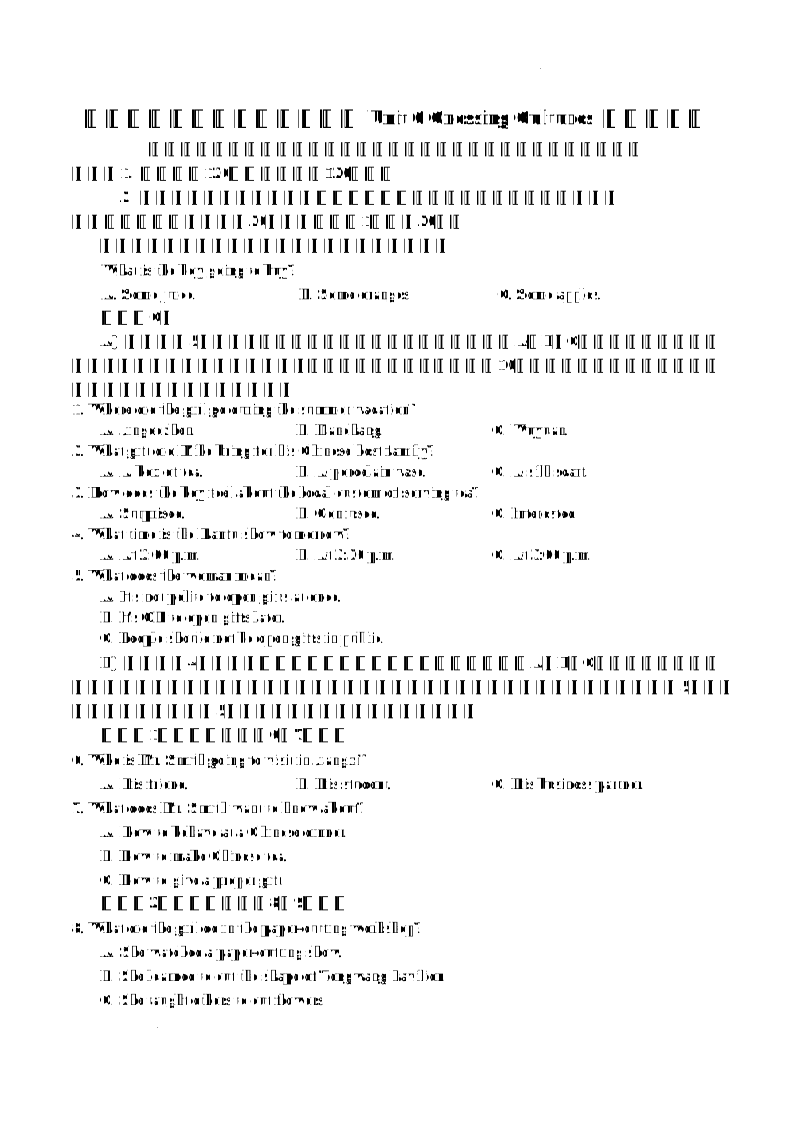
一、听力理解(本大题共20小题,每小题1分,共20分)
现在是试听时间。请听一段对话,然后回答问题。
What is the boy going to buy?
A. Some juice. B. Some oranges. C. Some apples.
答案是C。
A) 请听下面5段对话。每段对话后有一小题,从题中所给的A、B、C三个选项中选出最佳选项,并在答题卡上将该项涂黑。听完每段对话后,你都将有10秒钟的时间回答有关小题和阅读下一小题。每段对话读两遍。
1. Where did the girl go during the summer vacation?
A. Jingdezhen. B. Nanchang. C. Wuyuan.
2. What gift did Mike bring for his Chinese host family?
A. A box of tea. B. A porcelain vase. C. A silk scarf.
3. How does the boy feel about the local custom of serving tea?
A. Surprised. B. Confused. C. Interested.
4. What time is the Hanfu show tomorrow?
A. At 2:00 p.m. B. At 2:30 p.m. C. At 3:00 p.m.
5. What does the woman mean?
A. It's not polite to open gifts at once.
B. It's OK to open gifts later.
C. People should not be open gifts in public.
B) 请听下面4段对话。每段对话后有几个小题,从题中所给的A、B、C三个选项中选出最佳选项,并在答题卡上将该项涂黑。听每段对话前,你将有时间阅读各个小题,每小题5秒钟;听完后,各小题给出5秒钟的作答时间。每段对话读两遍。
请听第1段对话,回答第6、7小题。
6. Who is Mr. Smith going to visit in Jiangxi?
A. His friend. B. His student. C. His business partner.
7. What does Mr. Smith want to know about?
A. How to behave at a Chinese dinner.
B. How to make Chinese tea.
C. How to give a proper gift.
请听第2段对话,回答第8、9小题。
8. What did the girl do in the paper-cutting workshop?
A. She watched a paper-cutting show.
B. She learned to cut the shape of Tengwang Pavilion.
C. She taught others to cut flowers.
9. Where will the two speakers go next weekend?
A. To the Hanfu Club. B. To the Tea House. C. To Tengwang Pavilion.
请听第3段对话,回答第10至12小题。
10. What are they mainly talking about?
A. Food differences between Jiangxi and America.
B. The history of Jiangxi cuisine.
C. A cooking competition.
11. What did Tom find hard to get used to?
A. The spicy taste. B. The sweet taste. C. The salty taste.
12. What will they probably do this weekend?
A. Cook an American meal.
B. Eat at a local restaurant.
C. Cook a Chinese meal together.
请听第4段对话,回答第13至15小题。
13. When did Lin Yue come back from the UK?
A. Last Sunday. B. Last Saturday. C. Last Friday.
14. How did Lin Yue feel about the cultural exchange experience?
A. It was boring. B. It was valuable. C. It was difficult.
15. What can we learn from the conversation?
A. Cultural differences only cause problems.
B. It's important to respect different cultures.
C. British culture is better than Chinese culture.
C) 请听下面一段独白,根据独白内容完成下列句子,每个空格不超过3个单词。将答案填写到答题卡的相应位置。听独白前你将有50秒钟的时间阅读句子内容。独白读两遍。
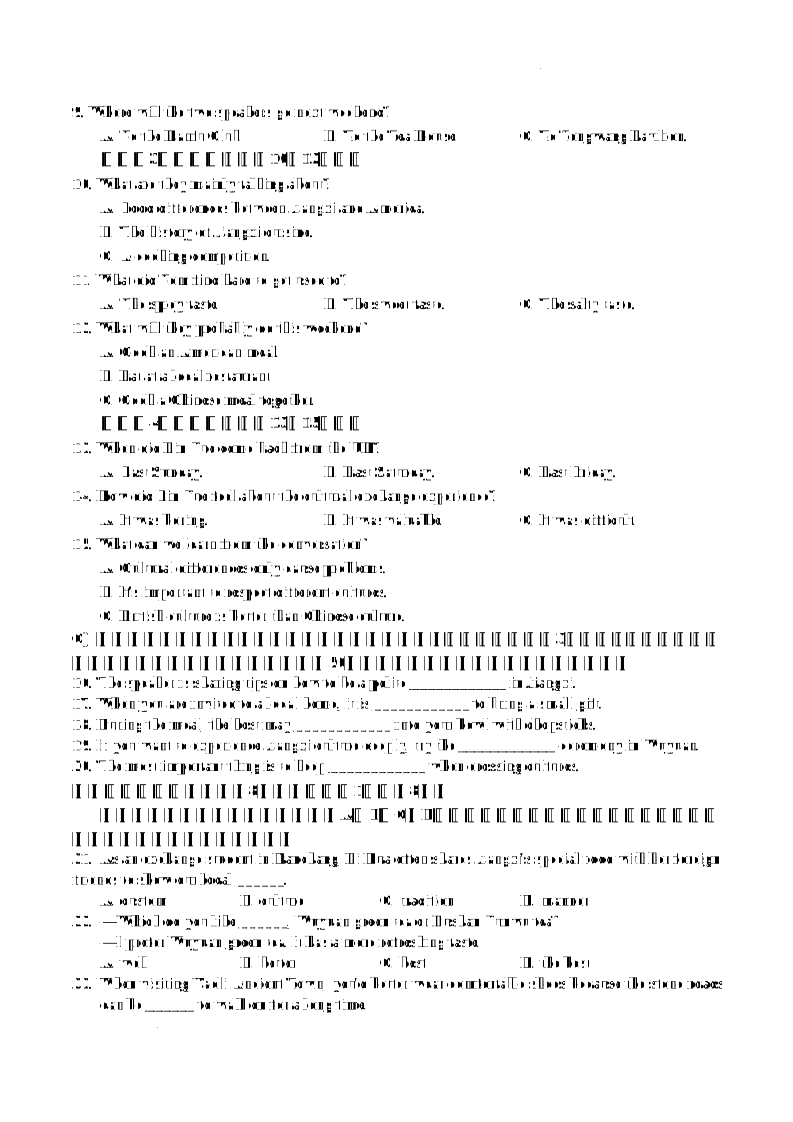
16. The speaker is sharing tips on how to be a polite ____________ in Jiangxi.
17. When you are invited to a local home, it is ____________ to bring a small gift.
18. During the meal, the host may ____________ into your bowl with chopsticks.
19. If you want to experience Jiangxi culture deeply, try the ____________ ceremony in Wuyuan.
20. The most important thing is to keep ____________ when crossing cultures.
二、单项填空(本大题共8小题,每小题1分,共8分)
请阅读下面各小题,从题中所给的A、B、C、D四个选项中选出可以填入空白处的最佳选项,并在答题卡上将该项涂黑。
21. As an exchange student in Nanchang, Li Hua often shares Jiangxi's special food with her foreign friends to show our local ______.
A. custom B. culture C. tradition D. manner
22. —Which do you like ______, Wuyuan green tea or Lushan Yunwu tea?
—I prefer Wuyuan green tea. It has a more refreshing taste.
A. well B. better C. best D. the best
23. When visiting Yaoli Ancient Town, you'd better wear comfortable shoes because the stone roads can be ______ to walk on for a long time.
A. uncomfortable B. impolite C. impossible D. unusual
24. It's important to learn how to ______ local people properly when you travel to different places in Jiangxi, like saying “Hello” in a friendly way.
A. greet B. explain C. receive D. understand
25. —I called you at seven yesterday evening, but you didn't answer.
—Oh, sorry. I ______ a traditional tea ceremony performance at that time.
A. enjoy B. enjoyed C. was enjoying D. will enjoy
26. —What do you think of the ancient village of Liukeng in Fuzhou?
—It's amazing. In China, we often keep the old buildings, ______ in some countries people may prefer modern structures.
A. so B. or C. while D. because
27. —Look at the sign “No touching” in the Porcelain Museum.
—I see. We ______ touch the exhibits because they are easy to break.
A. mustn't B. needn't C. can't D. shouldn't
28. —Did you try ______ special at the cultural festival in Nanchang?
—Yes, I tasted some local snacks. They were really delicious!
A. something B. anything C. nothing D. everything
三、完形填空(本大题共26小题,每小题1分,共26分)
A) 请先阅读下面短文,掌握其大意,然后从各小题所给的A、B、C、D四个选项中选出可以填入相应空白处的最佳选项,并在答题卡上将该项涂黑。
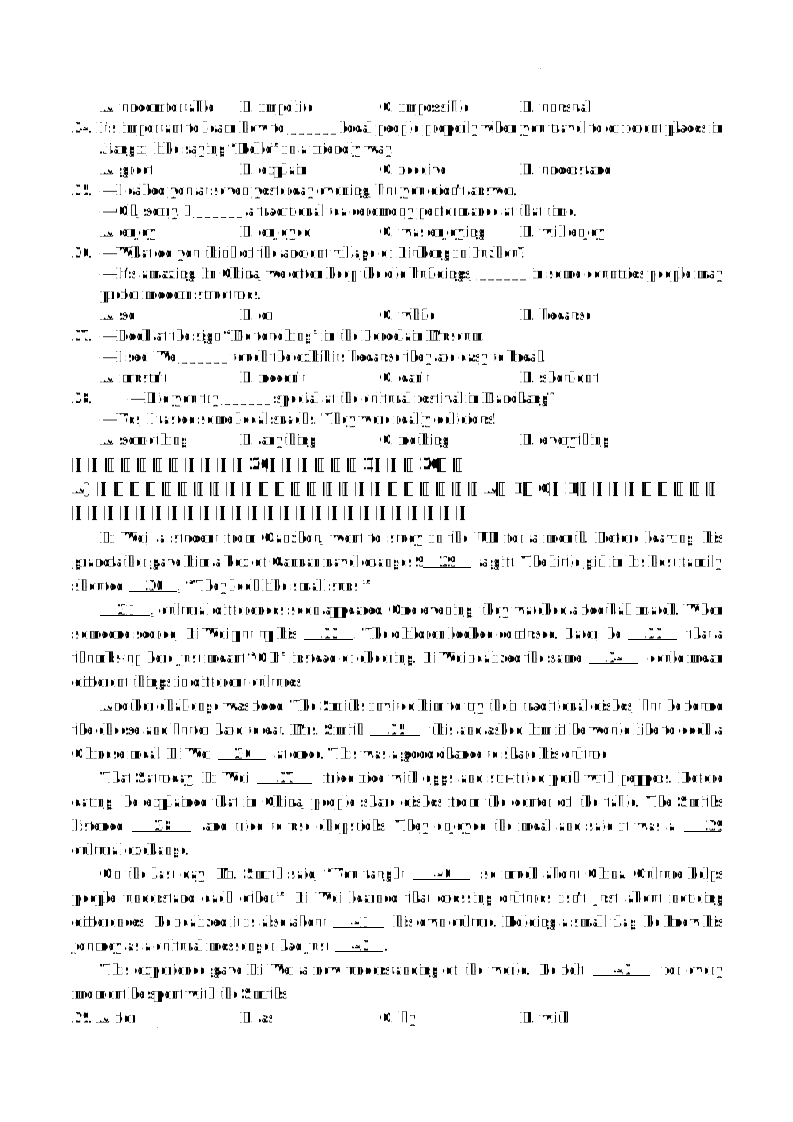
Li Wei, a student from Ganzhou, went to study in the UK for a month. Before leaving, his grandfather gave him a box of Gannan navel oranges 9 29 a gift. The little girl in his host family shouted 30 , “They look like small suns!”
31 , cultural differences soon appeared. One evening, they watched a football match. When someone scored, Li Wei put up his 32 . The children looked confused. Later, he 33 that a thumbs-up here just meant “OK” instead of cheering. Li Wei realized the same 34 could mean different things in different cultures.
Another challenge was food. The Smiths invited him to try their traditional dishes, but he found the cheese and butter hard to eat. Mrs. Smith 35 this and asked him if he would like to cook a Chinese meal. Li Wei 36 at once. This was a good chance to share his culture!
That Saturday, Li Wei 37 fried rice with eggs and stir-fried pork with peppers. Before eating, he explained that in China, people share dishes from the center of the table. The Smiths listened 38 and tried to use chopsticks. They enjoyed the meal and said it was a 39 cultural exchange.
On the last day, Mr. Smith said, “You taught 40 so much about China. Culture helps people understand each other.” Li Wei learned that crossing cultures isn't just about noticing differences. He realized it is also about 41 his own culture. Holding a small flag, he knew his journey as a cultural messenger had just 42 .
This experience gave Li Wei a new understanding of the world. He felt 43 for every moment he spent with the Smiths.
29. A. for B. as C. by D. with
30. A. politely B. quietly C. happily D. angrily
31. A. Besides B. However C. Instead D. Therefore
32. A. hands B. arms C. fingers D. thumbs
33. A. hoped B. learned C. promised D. doubted
34. A. word B. gesture C. game D. match
35. A. noticed B. ignored C. forgot D. doubted
36. A. refused B. agreed C. left D. complained
37. A. ordered B. borrowed C. prepared D. bought
38. A. carelessly B. carefully C. impatiently D. easily
39. A. boring B. simple C. wonderful D. terrible
40. A. me B. her C. him D. us
41. A. hiding B. sharing C. changing D. forgetting
42. A. begun B. ended C. failed D. returned
43. A. sorry B. nervous C. thankful D. worried
B) 请先阅读下面短文,掌握其大意,然后用方框中所给词的适当形式填空,并将答案填写到答题卡的相应位置。每个词限用一次。
situation explain they shock on behave what receive different embarrassed talk
Lucy, an exchange student from England, spent a month studying in Ganzhou, Jiangxi. At first, she didn't know how to 44 in some social situations. One day, her classmate Wang Lin invited her to a local restaurant. When the dishes arrived, Lucy noticed something 45 from her home country—everyone used their own chopsticks to take food from shared plates. She felt a little 46 .
Seeing her hesitation(犹豫), Wang Lin smiled and began to 47 the table manners to her. "Don't worry," he said. " 47 the other hand, this is just our way of showing closeness. Here, let me show you." With his help, Lucy slowly got used to it and even started to enjoy the lively atmosphere(气氛). She thought to herself, "Now I know 49 to do in such a situation!"
After dinner, Wang Lin's family members began to 50 about their daily lives. Though Lucy couldn't understand every word, she could feel the warmth in 51 voices. She realized that cultural 52 don't have to create distance. Sometimes, these 53 can bring people closer if you are willing to learn. When she finally 54 a small gift from the family—a handmade Gannan tea cup—she knew this experience would stay with her forever.
四、阅读理解(本大题共23小题,每小题2分,共46分)
A) 请阅读下面短文,根据短文内容从每小题所给的A、B、C、D四个选项中选出最佳选项,并在答题卡上将该项涂黑。
A
A Cultural Day in Nanchang
Are you interested in Chinese culture? Join our “Jiangxi Culture Day” activities in Nanchang! We have three interesting workshops for you. No matter whether you are a local student or a foreign visitor, you are welcome to cross the bridge of different cultures.
★ Workshop 1: Jiangxi Tea Art
Time: 9:00 a.m.—10:30 a.m.
Place: Autumn Water Square Tea House
Learn how to make traditional Jiangxi green tea. You can also taste different kinds of tea, such as
Lushan Yunwu. Our teacher will tell you the history of the Tea Horse Road in Jiangxi.
Price: 50 yuan (Tea and snacks included)
Tel: 0791-8833-1234
★ Workshop 2: Traditional Paper Cutting
Time: 10:00 a.m.—11:30 a.m.
Place: Tengwang Pavilion Folk Art Hall
Paper cutting is a traditional skill in Jiangxi. In this class, you can learn to cut patterns like flowers, animals, and the famous Tengwang Pavilion itself. All tools are provided.
Price: 30 yuan
Tel: 0791-8399-5678
★ Workshop 3: Hanfu Experience
Time: 2:00 p.m.—5:00 p.m.
Place: Bayi Square Hanfu Club
Do you want to travel back to ancient times? Put on beautiful Hanfu and walk along the streets of the old city. You can take photos and learn about traditional clothing culture.
Price: 80 yuan (Hanfu rental included)
Tel: 0791-8622-9090
Notice: All the workshops need booking two days before. You can call or book online. Welcome to have a taste of Jiangxi culture!
55. How much should a student pay if he wants to join the Tea Art and Paper Cutting workshops?
A. 50 yuan. B. 80 yuan. C. 90 yuan. D. 130 yuan.
56. Which of the following is TRUE according to the text?
A. The Tea Art workshop is held in the afternoon.
B. You can taste Lushan Yunwu tea in the Paper Cutting workshop.
C. The Paper Cutting workshop offers all tools to the visitors.
D. You can book the workshops one day before.
57. Where can you most probably read this text?
A. In a travel guidebook. B. On a school poster.
C. In a history report. D. In a science magazine.
B
Last summer, Marco, a 15-year-old boy from Italy, followed his parents to live in Jingdezhen, China's famous “Porcelain Capital”. Marco felt everything was strange at first. He was amazed by the thousands of ceramic studios(陶瓷工作室) in the city, but he found it hard to talk to local people. He was also worried about making mistakes in a culture so different from his own.
Marco's new classmates were friendly. One weekend, his friend Li Ming invited him to visit the Ancient Kiln Museum. When entering, Marco saw a group of artisans(技工) shaping clay into cups and vases. “Would you like to try?” asked a kind old artisan. Marco was nervous about making something ugly, but he decided to try. The cold, wet clay felt different, but slowly, with the artisan's help, a small bowl appeared in his hands. “Not bad for a beginner! Keep it as a gift,” the artisan smiled. Marco felt a sense of pride at that moment.
Later, Li Ming took him to a local snack shop. Marco saw people eating something strange—a black, jelly-like food served with spicy sauce. “This is called ‘仙草冻' (grass jelly),” Li Ming explained. “It's a traditional summer snack.” Marco hesitated (犹豫) but took a bite. The taste was unexpected, but he found it quite interesting. “In Italy, we also have many traditional snacks, but none of them tastes like this,” he said with excitement.
Gradually, Marco began to understand that culture is not just about big museums or long history. It lives in the daily lives of people. By the time his stay was over, Marco had decided to be a “bridge” between Italy and China. “I used to think crossing cultures was just about being polite and not doing wrong things,” Marco said. “But now I know it's more about embracing the new things with an open heart. Jiangxi feels like my second home.”
58. Why did Marco feel worried at the beginning of his stay in Jingdezhen?
A. Because he missed his Italian friends.
B. Because the ceramic classes were too hard.
C. Because he couldn't speak any Chinese and was afraid of cultural mistakes.
D. Because he didn't like the food in Jiangxi.
59. What does the underlined word “it” in Paragraph 4 refer to?
A. History B. Culture C. Museum D. Life
60. Which is the right order of Marco's experience according to the text?
① Marco made a small bowl with the artisan's help.
② Marco moved to Jingdezhen with his parents.
③ Li Ming invited Marco to visit the Ancient Kiln Museum.
④ Marco tasted the local grass jelly snack.
A. ②③①④ B. ①②④③ C. ②①③④ D. ③②①④
61. What is Paragraph 3 mainly about?
A. How Li Ming introduced the snack to Marco.
B. Marco's experience of trying a local Jiangxi snack.
C. The differences between Italian and Chinese snacks.
D. Why grass jelly is a traditional summer snack in Jiangxi.
62. What can we learn from the passage?
A. Italian food is better than Chinese food.
B. We should embrace new cultures with an open heart.
C. It’s easy to make clay bowls without help.
D. Grass jelly is popular in Italy.
C
In Sweden, there is a wonderful tradition called “Fika” (pronounced fee-ka). Fika means taking a break for coffee and a small snack, but it is much more than that. It is about slowing down, relaxing, and enjoying time with others. Many Swedish people do Fika at least twice a day — once in the morning and once in the afternoon.
During Fika, people stop working completely. They put away their phones and computers. Then they sit together with friends, family, or coworkers. They drink coffee or tea and eat something sweet, like a cinnamon bun(肉桂面包) or a cookie. What makes Fika special is that no one is in a hurry. The break usually lasts 15 to 30 minutes, but people can stay longer if they want.
Fika is not just about food and drink. It is about connection. In many offices in Sweden, Fika is a part of the workday. Coworkers use this time to talk, share ideas, and get to know each other better. This helps create a friendly and happy workplace. Some companies even have a “Fika room” where people can relax together.
Swedish people believe that taking regular breaks makes people more productive and creative. Studies show that short breaks during the day can reduce stress and improve mood. Fika teaches us that it is okay to pause and enjoy the moment instead of always rushing to the next task.
Learning about Fika can inspire us to bring more balance into our own lives. No matter where you live, you can try your own version of Fika — just take a break, share a drink with someone, and be present in the moment. That small act of slowing down can make a big difference in happiness.
63.How often do many Swedish people have Fika every day?
A. Once a day. B. Twice a day. C. Three times a day. D. Once a week.
64.What is the second paragraph mainly about?
A. What people do and eat during Fika. B. Why Swedish people invented Fika.
C. The history of cinnamon buns in Sweden. D. The best time to have Fika at work.
65.According to the passage, how does Fika help in Swedish workplaces?
A. It makes people work longer hours.
B. It creates a friendly and happy work environment.
C. It replaces the need for lunch breaks.
D. It teaches people to work faster.
66.Which of the following is the best structure of this passage?
(P1=Paragraph 1, P2=Paragraph 2, P3=Paragraph 3, P4=Paragraph 4, P5=Paragraph 5)
A. ①/②③/④/⑤ B. ①/②/③④/⑤ C. ①/②/③/④/⑤ D. ①②/③/④⑤
67.What can we infer from the passage?
A. Swedish people never take breaks at work.
B. Fika is only for family members, not coworkers.
C. Taking short breaks can help reduce stress.
D. People should always rush to finish their tasks.
D
When we talk about crossing cultures, we often think of big things like language barriers, food differences, or greeting customs. But sometimes, the deeper cultural difference lies in how people deal with silence.
In many Western countries, silence during a conversation can be uncomfortable. People feel the need to fill every empty moment with words. They might think, “Is something wrong?” or “Why did he stop talking?” But in many Asian cultures, including China, silence is an important part of communication. It shows respect, deep thinking, or simply comfort between two people.
I experienced this difference when I first visited a small village in Wuyuan, Jiangxi. An old tea master invited me to sit and drink tea. He poured the tea without saying a word. I felt a bit uneasy and started talking about the weather and the beautiful mountains. The old man just smiled and looked at the tea. After a while, I stopped talking and just sat there quietly. Then, I started to notice things—the golden color of the tea, the quiet sound of the wind, and the peaceful feeling in the room. That silent communication became a powerful memory.
Psychologists (心理学家) say that being comfortable with silence is actually a sign of confidence and emotional maturity (情感成熟). It gives people time to listen and think. In cross-cultural communication, being able to handle silence properly is like having a secret key. It can open doors to deeper understanding that words sometimes close.
So, the next time you meet someone from a different culture and a moment of silence falls between you, don't rush to break it. Try to understand what it might mean. It could be the beginning of a more meaningful exchange.
68. How do people in many Western countries usually feel about silence during a conversation?
A. Comfortable. B. Respectful. C. Uncomfortable. D. Calm.
69. Why did the writer feel uneasy during the tea experience in Wuyuan at first?
A. Because the tea was too hot.
B. Because the old master didn't speak.
C. Because the mountains were not beautiful.
D. Because there were too many people.
70. What does the underlined word “barriers” in Paragraph 1 most probably mean?
A. Ways. B. Problems. C. Differences. D. Interests.
71. What does the last paragraph tell us?
A. We should break silence quickly in cross-cultural talks.
B. Western people never stay silent when talking.
C. Silence has the same meaning in different cultures.
D. Silence can help us understand each other better.
72. Which of the following is the best title for the passage?
A. The Importance of Tea Culture in Jiangxi
B. Silence: A Key to Deeper Cross-Cultural Understanding
C. How to Avoid Silence in Conversations
D. Why Western People Dislike Silence
B) 请先阅读下面短文,掌握其大意,然后根据短文内容从下面方框内的七个选项中选择五个还原到文中,使短文意思通顺、结构完整,并在答题卡上将其序号涂黑。一空一句。
How to Be a Polite Guest in the United States
Being invited to an American family’s home is a wonderful experience. If you want to be a polite guest, here are some helpful tips.
First, it is important to arrive on time. 73 If you will be more than 10 minutes late, it is polite to send a text message to let the host know.
Second, bringing a small gift is always appreciated. 74 A bottle of wine, a box of chocolates, or flowers are all good choices. Expensive gifts are not necessary and may even make the host feel awkward.
During the meal, table manners are different from those in some other cultures. You should wait for the host to say “Enjoy your meal” before you start eating. 75 Also, it is polite to finish everything on your plate, because leaving food may suggest you didn’t like it.
76 In the US, guests usually open gifts right away in front of the giver and say “Thank you.” Don’t be surprised — it is a way to show excitement and appreciation.
When leaving, thank the host again for the lovely time. 77 A short thank-you message the next day is also a nice touch and shows good manners.
A. Arriving too early may make both the hosts and the guests embarrassed.
B. In America, people often use individual plates, not shared dishes.
C. However, in some countries, it’s polite to refuse a gift once or twice before accepting.
D. Gifts are usually opened immediately.
E. Flowers are also a safe and welcome gift.
F. It is considered rude to make loud noises while eating, like slurping soup.
G. A sincere “thank you” at the door is enough, but a follow-up message is even better.
五、补全对话(共5分)
请阅读下面对话,根据对话内容从下面方框内的七个选项中选择五个填入空白处,使对话通顺、合理,意思完整,并在答题卡上将其序号涂黑。一空一句。
(Linda, a Canadian student, is talking with Zhang Na about cultural differences.)
A: Hi, Zhang Na. I'm enjoying my life here but I found some cultural differences.
B: Really? 78
A: In my country, we usually arrive on time or even a little early for meetings.
B: That's true. 79 Sometimes we are a little more relaxed about time.
A: I also see that people here often greet with a smile or a nod.
B: Right. 80 We don't usually kiss or hug when we meet.
A: I see. It's polite but different from ours.
B: Yes. 81 Every culture has its own rules.
A: I agree. It's so interesting to learn these.
B: Sure. 82 I can tell you more if you want.
A. What differences did you find?
B. In China, we are not the same.
C. We usually use simple greetings.
D. It’s great to learn about different cultures.
E. How was your trip?
F. I’d love to help you learn more.
G. Did you eat anything delicious?
六、书面表达(共1题,满分15分)
假设你是李华,你的笔友David计划暑假来江西旅游。请你根据以下问题提示,用英语给他写一封建议信。
提示问题:
1. What is the local culture of welcoming guests like in Jiangxi?
2. What polite manners should I follow when visiting a local family?
3. What cultural activity do you recommend me to try in Jiangxi?
要求:
1. 短文应涵盖所有问题提示的内容,条理清楚,行文连贯,可适当发挥;
2. 短文中不能出现真实的人名和地名;
3. 词数80—120,短文开头已给出,不计入总词数。
Dear David,
I'm so excited to hear that you're coming to Jiangxi this summer vacation! ____________________________________________________________________________________________________________________________________________________________________________________________________________________________________________________________________________________________________________________________________
Yours,
Li Hua
学科网(北京)股份有限公司
$
资源预览图
1
2
3
相关资源
由于学科网是一个信息分享及获取的平台,不确保部分用户上传资料的 来源及知识产权归属。如您发现相关资料侵犯您的合法权益,请联系学科网,我们核实后将及时进行处理。