精品解析:北京市育英学校2025-2026学年度第二学期期中考试试卷 初二英语
 切换试卷
切换试卷
2026-05-21
|
2份
|
36页
|
20人阅读
|
2人下载
资源信息
| 学段 | 初中 |
|---|---|
| 学科 | 英语 |
| 教材版本 | - |
| 年级 | 八年级 |
| 章节 | - |
| 类型 | 试卷 |
| 知识点 | - |
| 使用场景 | 同步教学-期中 |
| 学年 | 2026-2027 |
| 地区(省份) | 北京市 |
| 地区(市) | - |
| 地区(区县) | - |
| 文件格式 | ZIP |
| 文件大小 | 2.62 MB |
| 发布时间 | 2026-05-21 |
| 更新时间 | 2026-05-21 |
| 作者 | 学科网试题平台 |
| 品牌系列 | - |
| 审核时间 | 2026-05-21 |
| 下载链接 | https://m.zxxk.com/soft/57966422.html |
| 价格 | 3.00储值(1储值=1元) |
| 来源 | 学科网 |
内容正文:
2025-2026学年度第二学期期中考试试卷
初二英语
2026. 04
注意事项
1. 本试卷共10页,共三部分,55道题,满分100分。考试时间90分钟。
2. 在答题纸上指定区域准确填写班级、姓名、准考证号等信息。
3. 答案一律填涂或书写在答题纸上,在试卷上作答无效。
4. 在答题纸上,选择题用2B铅笔作答,其他题目用黑色字迹签字笔作答。
5. 考试结束,请将答题纸交回。
第一部分 (25分)
一、听后选择 (共9分,每小题1.5分)
听下面两段对话和一段独白。每段对话或独白后有两个小题,从每题所给的 A 、B、C三个选项中选出最佳选项。每段对话或独白你将听两遍。
请听一段对话,完成第1至第2小题。
1. What’s the matter with the young man?
A. He has got a fever. B. He has got a cough. C. He has got a flu.
2. How often should the young man take the medicine?
A. Once a day. B. Twice a day. C. Three times a day.
请听一段对话,完成第3至第4小题。
3. Why does the boy love painting?
A. Because it makes him relaxed.
B. Because it keeps him active.
C. Because it’s a great way to make friends.
4. What is the girl going to do this Sunday?
A. Learn painting. B. Teach the boy some soccer skills. C. Play in the school team.
请听一段独白,完成第5至第6小题。
5. What can we learn from the talk?
A. The Space Club meets at 7: 00 on Tuesday evenings.
B. Mr. Bailey is a teacher from the local middle school.
C. Members watch DVDs if it’s cloudy at night.
6. Why does the speaker give the talk?
A. To introduce a school club and invite students to join.
B. To talk about how to watch stars safely.
C. To recommend some books about space.
二、听后回答 (共10分,每小题2分)
听对话,根据对话内容笔头回答问题。每段对话你将听两遍。
请听一段对话,完成第7小题。
7. What’s wrong with the man?
____________________________________________________________________________________________
请听一段对话,完成第8小题。
8. How does Kate feel?
____________________________________________________________________________________________
请听一段对话,完成第9小题。
9. When is the boy’s math test?
____________________________________________________________________________________________
请听一段对话,完成第10至第11小题。
10. What did the boy lose?
____________________________________________________________________________________________
11. What does the girl advise the boy to do?
____________________________________________________________________________________________
三、听后转写 (共6分)
听短文,根据所听内容和提示信息转写短文内容,请将文段写在答题纸上。短文你将连续听三遍。
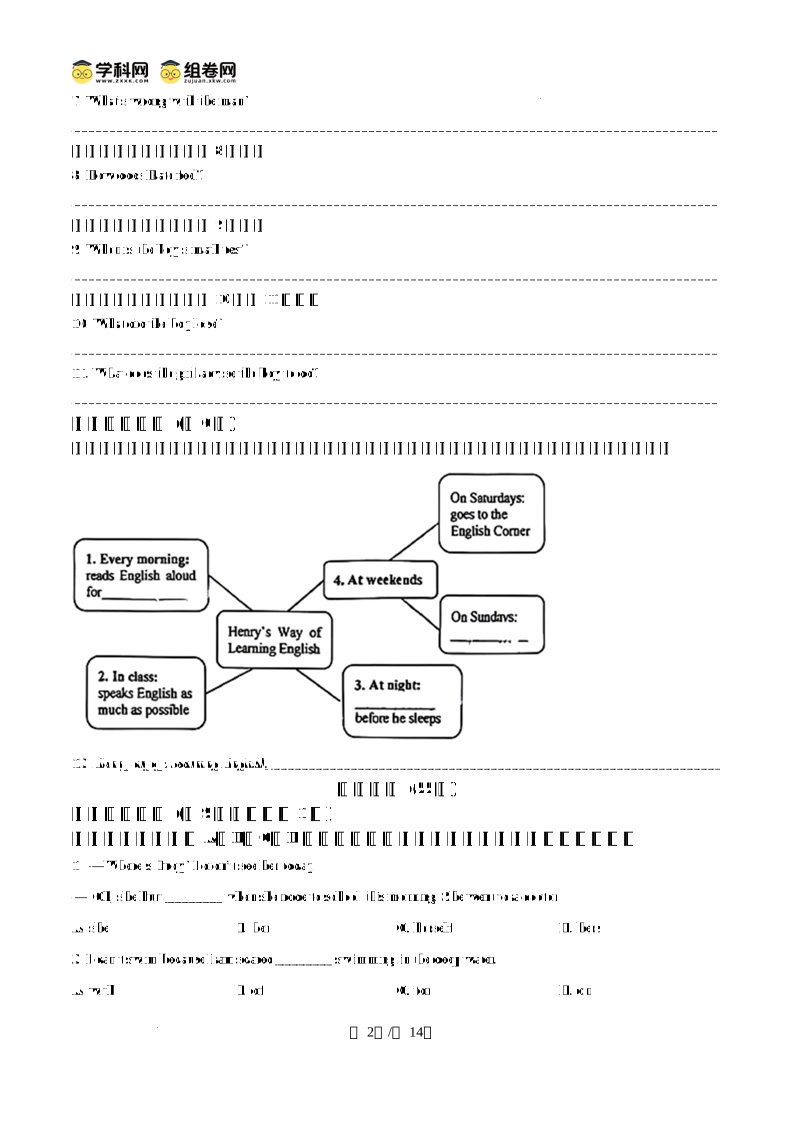
12. Henry enjoys learning English, ________________________________________________________________
第二部分 (55分)
四、单项填空 (共9分,每小题1分)
从下面各题所给的A、B、C、D四个选项中,选择可以填入空白处的最佳选项。
1. —Where’s Lucy? I didn’t see her today.
— Oh, she hurt ________ when she rode to school this morning. She went to a doctor.
A. she B. her C. herself D. hers
2. I can’t swim because I am scared ________ swimming in the deep water.
A. with B. of C. for D. on
3. We ________ avoid eating too much sweet food every day, as it’s not good for teeth.
A. should B. could C. would D. might
4. The teacher is glad to see that Tony is ________ than before.
A. careful B. more careful C. most careful D. the most careful
5. —________ do you go to see a dentist?
—Twice a year.
A. How many B. How long C. How soon D. How often
6. He didn’t go to school yesterday ________ he had a fever.
A. so B. but C. because D. or
7. Remember ________ off the lights before you leave the classroom.
A. turn B. to turn C. turning D. turned
8. The little boy accidentally ________ his sister with a ball while he played in the yard.
A. hits B. is hitting C. will hit D. hit
9. He usually ________ up at six o’clock, but yesterday he ________ up late.
A. gets; got B. got; gets C. gets; gets D. got; got
五、短文填空 (共8分,每小题1分)
第一节
阅读下面短文,在方框内选择最佳选项将短文补充完整。其中有2个多余选项。
A. relax B. practicing C. in return D. give up E. to manage F. stress
Peter thought calligraphy looked difficult. Yaming agreed that the first step is always the hardest—when he started, he spent hours ____10____ single strokes. Peter shared that his dad is teaching him to play the guitar, which is also hard, but his dad encourages him not to ____11____.
Yaming said he now does calligraphy to ____12____ and even likes the smell of ink. Peter said he chose the guitar because it’s cool, then asked Yaming to teach him to write a poem, offering to teach Yaming a song ____13____. Yaming happily replied, “It’s a deal!”
第二节
阅读下面短文,在未给提示词的空白处填写1个恰当的英文单词,在给出提示词的空白处填写该词的正确形式。
One Saturday, Julie invited Mark and Lucy ____14____ her house for lunch. Since her parents weren’t at home, the three of them had the place all to themselves. They ordered pizza, salad, and juice for the meal.
However, in the middle of the lunch, Mark started to feel strange. His face felt warm, and his throat felt tight. He ____15____ (realize) there might be peanuts in the food, as Julie had tasted peanuts in the salad earlier. Mark was allergic to peanuts, so his friends jumped into action and took him to the hospital at once.
At the hospital, Mark’s friends explained what had happened to Dr Cooper, and she gave Mark some medicine right away. After Mark felt better, the doctor asked him some ____16____ (question) and offered some advice. Mark promised that he would take better care of ____17____ (he) from now on. It was a day he would never forget.
六、完形填空 (共12分,每小题1.5分)
阅读下面的短文,掌握其大意,然后从短文后各题所给的 A、B、C、D四个选项中,选择最佳选项。
Good Neighibors (邻居)
Jack was building a snowman in his front yard (院子). He needed to finish it before his father came home. His new neighbor, Tracy, was _____18_____ Jack play at her window. She ran to Jack’s yard and asked if she could help him.
“Yes, please,” Jack said. “My father will be home very soon.”
“Okay. What can I do?” Tracy asked.
“I’ve built my snowman’s body with two snowballs. I need another one for its head.”
“But snowmen only need one snowball for the body and one for the head,” Tracy explained.
“No, snowmen always have three snowballs. I don’t need your _____19_____ now.” Jack said.
Jack _____20_____ up some snow and made it into a snowball. He rolled the snowball away from Tracy to make it big enough for the head of his snowman. Tracy went back to her yard and began to build her own snowman.
“I don’t want to _____21_____ Jack anyway,” she thought to herself. Tracy made the snowman with two big snowballs. She found some sticks and pine cones (松果) for her snowman’s eyes and mouth and arms.
Jack used buttons for his snowman’s eyes and mouth. Then, he used a carrot for the _____22_____ . At that time, Jack’s father was driving up the street. Suddenly, the head fell off and crashed (坠落) to the ground!
“No!” Jack said _____23_____, “ My father is almost home!”
Tracy heard Jack’s cry and ran over to see what the problem was.
“I’ll help you,” Tracy said.
Together, they made a new snowball for the head and put the carrot and buttons on it.
“We made it!” Jack said. “Thank you.”
“You’re welcome. I think your snowman is _____24_____,” Tracy said. “Mine doesn’t have a nose.”
Jack walked over to see Tracy’s snowman. He loved it, but he knew it wasn’t finished. Jack ran back to his snowman and _____25_____ the carrot out. He broke it into two pieces and gave half to Tracy. She put it on her snowman and said, “I think our snowmen make good neighbors.”
18. A. hearing B. making C. watching D. having
19. A. help B. condition C. movement D. encouragement
20. A. handed B. picked C. checked D. cheered
21. A. look after B. talk about C. play with D. depend on
22. A. arms B. nose C. head D. hands
23. A. sadly B. excitedly C. peacefully D. patiently
24. A. bigger B. stronger C. heavier D. better
25. A. turned B. worked C. pulled D. pointed
七、阅读理解 (共26分,每小题2分)
第一节 阅读下列景点介绍,请根据人物喜好和需求匹配最适合的活动,并将活动对应的A、B、C、D选项填在相应位置上。选项中有一项为多余选项。
A
Here are four amazing outdoor activities in the coming vacation.
A
Lamar Valley Sightseeing (观光) Tour
Visit the wild to see bears and wolves. Guided tours take you away from tourist spots to natural areas where these beautiful animals live freely.
B
Great Rock Canyon Bike Tour
A 10-kilometer bike tour of Great Rock Canyon is a fun way to explore the desert view. The tour includes a high-quality mountain bike, helmet, and additional supplies and first-aid equipment.
C
Snorkeling (浮潜) in Sipadan
This tour makes snorkeling easy. You will explore crystal-clear water full of colorful coral reefs and an incredible variety of marine life.
D
Arenal Volcano (火山) Hike
Explore the rainforest and enjoy a natural hot spring waterfall. This special hiking mix of adventure and relaxation gives you an unforgettable experience.
____26____ Mike
I like hiking and I want to explore the rainforest.
____27____ Laura
I love swimming and snorkeling is my favorite.
____28____ Bob
I am an animal lover and would like to see animals in the wild nature.
第二节 阅读下列短文,根据短文内容,从短文后各题所给的A、B、C、D四个选项中,选择最佳选项。
B
Jenny knew she had a problem when she looked in her money box. It was only three days until the school trip to the beach, and Jenny didn't have any money. To make things worse, her next pocket money was still six days away.
"What's the matter, Jenny?" asked her sister, Mary.
"Mary," said Jenny, "I'm in double trouble. I can't go to the beach with my classmates, and I've broken my promise to Mom. I promised I'd stay within my budget (预算) this month."
For a few minutes, the two girls just sat and thought. Then Mary grabbed Jenny's arm.
"Jenny, I won't give you the money, but I will help you. Just listen for a minute."
At first, Jenny wasn't interested since Mary wasn't willing to give her the money she needed. However, after Mary explained her plan, Jenny began to like it.
Mary would lend Jenny the money for the beach trip, but Jenny would have to create a real budget for herself and follow it. In addition, if Jenny successfully followed the budget, Mary wouldn't tell their mother about Jenny's recent money disaster.
"Mary, you are a lifesaver," Jenny hugged Mary's neck.
The two sisters began to work together. After several hours, they agreed on how Jenny should use her money. Mary took their figures and made a graph(表格) for Jenny.
Holding up the graph, Mary said, " Now you can see where your money should go each month."
"Thanks, Mary, " Jenny said. "But I know one thing that my money can't buy. It couldn't buy another great sister like you, " said Jenny. Then she hung her new budget on her bedroom wall.
29. What was Jenny's problem?
A. She had no friends. B. She had no money.
C. She had nothing to do. D. She had no free time.
30. How did Mary help Jenny?
A. By going to the beach with her.
B. By telling Mom about her problem.
C. By planning on how to use money with her.
D. By buying things for the school trip for her.
31. What can we learn from the passage?
A. A useful way is better than direct help.
B. Hope for the best, but prepare for the worst.
C. Imagination is more important than knowledge.
D. Nothing is impossible if you put your heart into it.
C
Beware of Information Obesity
Just as our bodies can become fat if we eat too much and move too little, our minds are now facing a similar challenge. In today’s information age, our brains can also suffer from a state of being “overweight”: this is information obesity.
Information obesity means we take in too much fragmented (碎片化的) and low-quality information every day. This makes our brains feel tired and makes it harder for us to think clearly. Just like physical obesity, it is a kind of “nutritional imbalance”.
Nowadays, smartphones, short videos, and social media fill our free time. It only takes ten seconds to browse a short video and a single tap to open a news article. Every day, we take in a stream of information without much thought. However, most of the content lacks substance (内容) and does not encourage in-depth thinking. It is like high-calorie snacks— fun to enjoy, but not good for our brains.
People who have information obesity often show these signs:
-They cannot focus for long and always want to check their phones.
-They know many hot topics but cannot explain their ideas clearly.
-Their memory becomes poor and they forget things easily.
-They slowly lose the ability to think independently and to read in depth.
Being surrounded by excessive information for a long time can cause a lot of harm. First, it will take up time for in-depth reading and learning, making us unable to focus on learning. Second, fragmented information will affect our ability to think and make us get used to passive acceptance. Finally, it also influences our sleep and eyesight. endangering physical and mental health.
To stay away from information obesity, we can do these simple things:
-Choose useful information and refuse meaningless content.
-Set time limits for using phones and other electronic tools.
-Do more in-depth reading and thinking, not just collect information.
In the information age, it is more important to manage information than to collect it. May we all say goodbye to information obesity, be the masters of information, and keep our brains clear and sharp.
32. What does “information obesity” mean according to the passage?
A. Our brains take in too much high-quality and complete information every day.
B. Our brains get tired because of thinking about too many hot topics.
C. We take in excessive fragmented and low-quality information daily.
D. We lose the ability to read deeply and forget things easily.
33. Which of the following is NOT a sign of people with information obesity?
A. They can focus on one thing for a long time and seldom check phones.
B. They know many hot topics but can’t explain their ideas clearly.
C. Their memory becomes poor and they forget things easily.
D. They gradually lose the ability to think independently.
34. What is the writer’s main purpose in writing this passage?
A. To introduce the signs of physical obesity and its harmful effects.
B. To warn people of information obesity and tell them how to avoid it.
C. To advise people to spend more time browsing short videos and news.
D. To explain why smartphones and social media are bad for our life.
D
Many strong and out-of-control feelings are seen as illnesses. People who feel sad all the time have depression (抑郁症). People who worry too much have anxiety. But what about anger problems? For a long time, people thought anger was just a secondary emotion-it comes from sadness, worry or stress.
In the past, many doctors didn’t accept the idea that anger could be a problem by itself. Today, though, a growing number of mental health experts think that anger is a serious problem that needs its own treatment. How to tell the difference between “normal” anger and “anger problem” is difficult. After all, everyone gets really mad from time to time. But experts point out some clear signs.
Disordered anger, as it is sometimes called, is much stronger in intensity (强度). Very small things can make these people angry, and their responses (反应) are very strong. For example, while most people would get upset if a driver cut them off, someone with disordered anger might try to chase down the car and force it off the road.
And people with anger problems get angry more frequently, and their anger lasts much longer. For most people, angry feelings disappear quickly. But people with anger problems often stay angry for days, weeks or even years; their feelings of anger don’t fade over time.
Consequences are also important to consider. Disordered anger often damages people’s lives. “It interferes (干扰) with people’s relationships and their jobs,” says Raymond Chip Tafrate, a US psychologist. “Even their health is affected.”
Anger clearly increases the risk of certain health problems, as many studies have shown. “When a person is angry, their heart beats faster and their blood pressure goes up,” says Howard Kassinove, a professor at Hofstra University in New York. Over time, these changes take their toll on the body, he adds.
Experts suggest that people with an anger problem take anger-management programs. The programs teach people to control their responses to stressful situations through the use of relaxation techniques. The programs sometimes include life-skills training as well: increasing someone’s level of competence (能力)—whether on the job or as a parent or partner—helps bring down stress and cut angry feelings.
35. A person who ________ is most likely to have disordered anger in the experts’ opinion?
A. is worried about his job B. is dissatisfied with relationships
C. has high blood pressure D. can’t get out of anger quickly
36. What is the main idea of Paragraph 3?
A. To explain what disordered anger is and how strong it can be
B. To tell us why people have disordered anger
C. To show how to deal with a driver who cuts you off
D. To introduce the harm of disordered anger
37. What can we learn from the passage?
A. Disordered anger has no influence on people’s health at all.
B. Anger-management programs only teach relaxation techniques.
C. People’s understanding of anger as a mental problem has changed over time.
D. Normal anger usually lasts for days or even weeks.
38. What is the best title of the passage?
A. Can anger be an illness? B. Is it disordered anger?
C. Can anger influence our life? D. Is anger management important?
第三部分 (20分)
八、阅读与表达 (共10分,第51-53 题各2分,第54题4分)
阅读短文,根据短文内容回答问题。请在答题纸指定区域作答。
Gardening as part of the school curriculum (课程) began in the United States in the early 1900s and school gardening has become very popular over the years. Parents and teachers say these hands-on lessons can be used to teach many subjects.
Susan Hobart is a school teacher at Lake View Elementary School in Madison. She and her students look after the school’s large garden with 12 raised beds.
“Gardens are a great way to get kids outside with a purpose. With the school gardens, kids can get to see a beginning, a middle and an end to their project. If they just sat at their desks, they wouldn’t have this experience.” Hobart said. She added that the gardens helped calm the kids and gave them a different viewpoint about soil and food.
“If we had to buy the seedlings (幼苗) , they’d cost $3 each and we could never afford that,” Hobart says. “But there are plenty of creative ways to find help. We got seeds (种子) and seedlings from local botanical gardens (植物园) and our communities.” Each spring, the school’s children plant seeds and seedlings in the garden. Over the summer, teachers and young children take care of the garden together.
Hobart says that gardens do not have to take up a large area outdoors. For schools without space for even a small garden, turning to local botanical gardens and parks can sometimes be the answer.
In the school garden, teachers can teach students how to grow food and flowers. They can also teach science, social studies and even art there. “Giving kids the opportunity to go outside, get their hands dirty, and find worms, especially if their teachers are excited about it—that’s important,” Hobart said.
Finley, their headmaster, supports teaching city kids about seeds and growing. He aims to “change the culture around food”. He remembered how amazing it was for his students to see “a seed becomes food”.
“Having a garden in a school is just as important as any other form of education,” Finley says. “The act of gardening teaches you where our food sources come from and teaches you to have a feeling of great respect for soil. If kids have a reverence (尊敬) for soil, they have a reverence for themselves and respect for the planet. Gardening is not a hobby, it’s a life skill. I see this as one of the most valuable lessons of humanity.”
39. When did gardening begin as part of school curriculum in the United States?
_____________________________________________________________
40. Where did the students at Lake View Elementary School find seeds and seedlings?
_____________________________________________________________
41. What can teachers teach in the school garden?
_____________________________________________________________
42. Do you think doing gardening is important in your school? Why? (At least two reasons)
_____________________________________________________________
九、文段表达 (10分)
55. 从下面两个题目中任选一题,根据所给中文和英文提示,完成一篇不少于50词的英语文段写作。文中已给出内容不计入总词数。所给提示词语仅供选用,请不要写出你的真实校名和姓名。
题目①
43. 假设你是李华,你所在班级的英语课正开展研究性学习活动。你选取“同学们的课余活动情况”作为研究主题,为此面向班内50名同学开展问卷调查,下图呈现了部分统计结果。请根据要求完成一篇英语短文,需简要说明图表核心内容,并就班级同学参与课余活动提出合理建议。
提示词语:show, popular, spend, balance, helpful
内容提示:
●What can you learn from the results?
●Offer some advice to your classmates on choosing free-time activities.
I did a survey on my classmates’ free-time activities.
____________________________________________________________________________________________________________________________________________________________________________________________________________________________________________________________________________________________________________________________________________________________________________________________________________________________________________________________________________
题目②
44. 每个人的成长历程中,总会遇到一位让自己“变得更好”的人。他/她以最真挚的力量,在你遭遇困境时伸出援手。假设你是李华,请你写一封感谢信,向那位助你成为更好自己的人表达谢意,并讲述他/她是如何帮你摆脱困扰的。
提示词语:encourage. challenge, believe, grow, thankful
内容提示:
·Who do you say thanks to?
·How did he/she help you out?
Dear XXX,
________________________________________________________________________________________________________________________________________________________________________________________________________________________________________________________________________________________________________________________________________________________________________________
Yours Sincerely,
Li Hua
第1页/共1页
学科网(北京)股份有限公司
$
2025-2026学年度第二学期期中考试试卷
初二英语
2026. 04
注意事项
1. 本试卷共10页,共三部分,55道题,满分100分。考试时间90分钟。
2. 在答题纸上指定区域准确填写班级、姓名、准考证号等信息。
3. 答案一律填涂或书写在答题纸上,在试卷上作答无效。
4. 在答题纸上,选择题用2B铅笔作答,其他题目用黑色字迹签字笔作答。
5. 考试结束,请将答题纸交回。
第一部分 (25分)
一、听后选择 (共9分,每小题1.5分)
听下面两段对话和一段独白。每段对话或独白后有两个小题,从每题所给的 A 、B、C三个选项中选出最佳选项。每段对话或独白你将听两遍。
请听一段对话,完成第1至第2小题。
1. What’s the matter with the young man?
A. He has got a fever. B. He has got a cough. C. He has got a flu.
2. How often should the young man take the medicine?
A. Once a day. B. Twice a day. C. Three times a day.
请听一段对话,完成第3至第4小题。
3. Why does the boy love painting?
A. Because it makes him relaxed.
B. Because it keeps him active.
C. Because it’s a great way to make friends.
4. What is the girl going to do this Sunday?
A. Learn painting. B. Teach the boy some soccer skills. C. Play in the school team.
请听一段独白,完成第5至第6小题。
5. What can we learn from the talk?
A. The Space Club meets at 7: 00 on Tuesday evenings.
B. Mr. Bailey is a teacher from the local middle school.
C. Members watch DVDs if it’s cloudy at night.
6. Why does the speaker give the talk?
A. To introduce a school club and invite students to join.
B. To talk about how to watch stars safely.
C. To recommend some books about space.
二、听后回答 (共10分,每小题2分)
听对话,根据对话内容笔头回答问题。每段对话你将听两遍。
请听一段对话,完成第7小题。
7. What’s wrong with the man?
____________________________________________________________________________________________
请听一段对话,完成第8小题。
8. How does Kate feel?
____________________________________________________________________________________________
请听一段对话,完成第9小题。
9. When is the boy’s math test?
____________________________________________________________________________________________
请听一段对话,完成第10至第11小题。
10. What did the boy lose?
____________________________________________________________________________________________
11. What does the girl advise the boy to do?
____________________________________________________________________________________________
三、听后转写 (共6分)
听短文,根据所听内容和提示信息转写短文内容,请将文段写在答题纸上。短文你将连续听三遍。
12. Henry enjoys learning English, ________________________________________________________________
第二部分 (55分)
四、单项填空 (共9分,每小题1分)
从下面各题所给的A、B、C、D四个选项中,选择可以填入空白处的最佳选项。
1. —Where’s Lucy? I didn’t see her today.
— Oh, she hurt ________ when she rode to school this morning. She went to a doctor.
A. she B. her C. herself D. hers
【答案】C
【解析】
【详解】句意:——露西在哪儿?我今天没见到她。——哦,她今天早上骑车去上学的时候弄伤了自己。她去看过医生了。
根据“She went to a doctor.”,此处是说她伤了自己,hurt oneself“伤到某人自己”,应用反身代词herself。
2. I can’t swim because I am scared ________ swimming in the deep water.
A. with B. of C. for D. on
【答案】B
【解析】
【详解】句意:我不会游泳,因为我害怕在深水里游泳。
with和……一起;of……的;for为了;on在……上面。根据“I am scared...swimming in the deep water.”可知,固定搭配be scared of doing sth.意为“害怕做某事”,符合语境。
3. We ________ avoid eating too much sweet food every day, as it’s not good for teeth.
A. should B. could C. would D. might
【答案】A
【解析】
【详解】句意:我们应该避免每天吃太多甜品,因为这对牙齿不好。
should应该;could能够;would将要;might可能。根据“as it’s not good for teeth”可知后半句是提出建议的原因,should表示“应该”,用于提出建议或劝告,符合语境。
4. The teacher is glad to see that Tony is ________ than before.
A. careful B. more careful C. most careful D. the most careful
【答案】B
【解析】
【详解】句意:老师很高兴看到托尼比以前细心了。
考查形容词比较级。根据“than before”可知,此处需用比较级,故选B。
5. —________ do you go to see a dentist?
—Twice a year.
A. How many B. How long C. How soon D. How often
【答案】D
【解析】
【详解】句意:——你多久去看一次牙医?——一年两次。
How many多少;How long多久;How soon多久以后;How often多久一次。根据答语“Twice a year”可知,此处询问的是频率。所以用“How often”。
6. He didn’t go to school yesterday ________ he had a fever.
A. so B. but C. because D. or
【答案】C
【解析】
【详解】句意:他昨天没去上学,因为他发烧了。
so所以;but但是;because因为;or或者。根据“he had a fever”可知,发烧是没去上学的原因,用because引导原因状语从句。
7. Remember ________ off the lights before you leave the classroom.
A. turn B. to turn C. turning D. turned
【答案】B
【解析】
【详解】句意:在你离开教室之前,记得关掉灯。
remember to do sth.“记得去做某事”,动作尚未发生;remember doing sth.“记得做过某事”,动作已经发生。根据“before you leave the classroom”可知,关灯动作还未发生,应用不定式。故选B。
8. The little boy accidentally ________ his sister with a ball while he played in the yard.
A. hits B. is hitting C. will hit D. hit
【答案】D
【解析】
【详解】句意:这个小男孩在院子里玩的时候,不小心用球打中他的妹妹。
hits打(第三人称单数);is hitting正在打(现在进行时);will hit将要打(一般将来时);hit打(过去式)。根据“while he played in the yard”中的谓语动词played可知,句子描述的是过去发生的事情,应用一般过去时,hit的过去式仍是hit。
9. He usually ________ up at six o’clock, but yesterday he ________ up late.
A. gets; got B. got; gets C. gets; gets D. got; got
【答案】A
【解析】
【详解】句意:他通常六点起床,但昨天他起晚了。
usually表示经常性动作,用一般现在时,主语he是第三人称单数,所以用gets;yesterday表示过去时间,用一般过去时,所以用got。
五、短文填空 (共8分,每小题1分)
第一节
阅读下面短文,在方框内选择最佳选项将短文补充完整。其中有2个多余选项。
A. relax B. practicing C. in return D. give up E. to manage F. stress
Peter thought calligraphy looked difficult. Yaming agreed that the first step is always the hardest—when he started, he spent hours ____10____ single strokes. Peter shared that his dad is teaching him to play the guitar, which is also hard, but his dad encourages him not to ____11____.
Yaming said he now does calligraphy to ____12____ and even likes the smell of ink. Peter said he chose the guitar because it’s cool, then asked Yaming to teach him to write a poem, offering to teach Yaming a song ____13____. Yaming happily replied, “It’s a deal!”
【答案】10. B 11. D
12. A 13. C
【解析】
【导语】本文讲述了Peter和Yaming交流学习经历的故事,Yaming分享了练习书法的过程,Peter分享了学习吉他的经历,两人还约定互相教学,体现了坚持与互助的意义。
【10题详解】
句意:当他开始学习时,他花了数小时练习单个笔画。可知,spend time doing sth. 为固定搭配,practicing符合“练习笔画”的动作。
【11题详解】
句意:Peter分享他爸爸正在教他弹吉他,学吉他也很难,但爸爸一直鼓励他不要放弃。not to后接动词原形,give up意为“放弃”,符合“尽管困难但不放弃”的语境。
【12题详解】
句意:Yaming说他现在练习书法是为了放松,甚至喜欢上了墨水的味道。to后接动词原形,relax意为“放松”,符合“通过书法减压”的语境。
【13题详解】
句意:Peter说自己选择吉他是因为它很酷,随后他请Yaming教自己写诗,他提出教Yaming一首歌作为回报。in return是固定短语,意为“作为交换”,符合对话中互相教学的语境。
第二节
阅读下面短文,在未给提示词的空白处填写1个恰当的英文单词,在给出提示词的空白处填写该词的正确形式。
One Saturday, Julie invited Mark and Lucy ____14____ her house for lunch. Since her parents weren’t at home, the three of them had the place all to themselves. They ordered pizza, salad, and juice for the meal.
However, in the middle of the lunch, Mark started to feel strange. His face felt warm, and his throat felt tight. He ____15____ (realize) there might be peanuts in the food, as Julie had tasted peanuts in the salad earlier. Mark was allergic to peanuts, so his friends jumped into action and took him to the hospital at once.
At the hospital, Mark’s friends explained what had happened to Dr Cooper, and she gave Mark some medicine right away. After Mark felt better, the doctor asked him some ____16____ (question) and offered some advice. Mark promised that he would take better care of ____17____ (he) from now on. It was a day he would never forget.
【答案】14. to 15. realized
16. questions
17. himself
【解析】
【导语】本文讲述了一个周六Julie邀请Mark和Lucy来家里吃午饭,Mark因食物中可能含有花生而过敏,朋友们及时送他去医院的故事。
【14题详解】
句意:一个周六,Julie邀请Mark和Lucy来她家吃午饭。“invite sb. to+地点”是固定搭配,意为“邀请某人去某地”。
【15题详解】
句意:他意识到食物里可能有花生,因为Julie早些时候在沙拉里尝过花生。根据上下文时态,此处需用“realize”的过去式。
【16题详解】
句意:Mark感觉好些后,医生问了他一些问题并给出了一些建议。“some”后接可数名词复数或不可数名词,“question”是可数名词,需用复数形式。
【17题详解】
句意:Mark承诺从现在起他会更好地照顾自己。此处表示“照顾自己”,需用反身代词“himself”。
六、完形填空 (共12分,每小题1.5分)
阅读下面的短文,掌握其大意,然后从短文后各题所给的 A、B、C、D四个选项中,选择最佳选项。
Good Neighibors (邻居)
Jack was building a snowman in his front yard (院子). He needed to finish it before his father came home. His new neighbor, Tracy, was _____18_____ Jack play at her window. She ran to Jack’s yard and asked if she could help him.
“Yes, please,” Jack said. “My father will be home very soon.”
“Okay. What can I do?” Tracy asked.
“I’ve built my snowman’s body with two snowballs. I need another one for its head.”
“But snowmen only need one snowball for the body and one for the head,” Tracy explained.
“No, snowmen always have three snowballs. I don’t need your _____19_____ now.” Jack said.
Jack _____20_____ up some snow and made it into a snowball. He rolled the snowball away from Tracy to make it big enough for the head of his snowman. Tracy went back to her yard and began to build her own snowman.
“I don’t want to _____21_____ Jack anyway,” she thought to herself. Tracy made the snowman with two big snowballs. She found some sticks and pine cones (松果) for her snowman’s eyes and mouth and arms.
Jack used buttons for his snowman’s eyes and mouth. Then, he used a carrot for the _____22_____ . At that time, Jack’s father was driving up the street. Suddenly, the head fell off and crashed (坠落) to the ground!
“No!” Jack said _____23_____, “ My father is almost home!”
Tracy heard Jack’s cry and ran over to see what the problem was.
“I’ll help you,” Tracy said.
Together, they made a new snowball for the head and put the carrot and buttons on it.
“We made it!” Jack said. “Thank you.”
“You’re welcome. I think your snowman is _____24_____,” Tracy said. “Mine doesn’t have a nose.”
Jack walked over to see Tracy’s snowman. He loved it, but he knew it wasn’t finished. Jack ran back to his snowman and _____25_____ the carrot out. He broke it into two pieces and gave half to Tracy. She put it on her snowman and said, “I think our snowmen make good neighbors.”
18. A. hearing B. making C. watching D. having
19. A. help B. condition C. movement D. encouragement
20. A. handed B. picked C. checked D. cheered
21. A. look after B. talk about C. play with D. depend on
22. A. arms B. nose C. head D. hands
23. A. sadly B. excitedly C. peacefully D. patiently
24. A. bigger B. stronger C. heavier D. better
25. A. turned B. worked C. pulled D. pointed
【答案】18. C 19. A 20. B 21. C 22. B 23. A 24. D 25. C
【解析】
【导语】本文主要讲述了杰克要在爸爸回来之前堆好雪人,用胡萝卜做雪人鼻子后,雪人脑袋掉下来,之后特蕾西帮他一起堆一个雪球作脑袋,最后杰克把自己雪人的胡萝卜掰成两半,另一半给特蕾西的雪人的故事。
【18题详解】
句意:他的新邻居特蕾西看着杰克在她的窗前玩耍。
hearing听见;making制作;watching观看;having有。根据“at her window”可知她在窗户那观看杰克,故选C。
【19题详解】
句意:我现在不需要你的帮助。
help帮助;condition状态;movement移动;encouragement鼓励。根据上文“She ran to Jack’s yard and asked if she could help him.”可知是去帮助杰克,但是杰克现在不需要帮助,故选A。
【20题详解】
句意:杰克捡起一些雪,把它做成一个雪球。
handed上交;picked捡起;checked检查;cheered欢呼。根据“some snow and made it into a snowball”结合语境可知,应该是捡起雪来做雪球,故选B。
【21题详解】
句意:反正我也不想和杰克玩了。
look after照顾;talk about谈论;play with和……玩;depend on依靠。根据上文“No, snowmen always have three snowballs. I don’t need your...now.”可知两人产生了分歧,杰克不需要特蕾西的帮助,所以此处是指特蕾西不想和杰克玩了,故选C。
【22题详解】
句意:然后,他用胡萝卜做鼻子。
arms胳膊;nose鼻子;head头;hands手。根据“Jack used buttons for his snowman’s eyes and mouth. Then, he used a carrot for the...”结合常识可知是指用胡萝卜作雪人的鼻子,故选B。
【23题详解】
句意:杰克伤心地说。
sadly伤心地;excitedly激动地;peacefully平静地;patiently耐心地。根据“Suddenly, the head fell off and crashed to the ground!”可知雪人的脑袋掉了下来,摔在地上,所以杰克很伤心,故选A。
【24题详解】
句意:我觉得你的雪人更好。
bigger更大;stronger更强壮;heavier更重;better更好。根据“You’re welcome.”以及“Mine doesn’t have a nose”可知此处是指特蕾西说杰克的雪人比她的要好,故选D。
【25题详解】
句意:杰克跑回雪人身边,把胡萝卜拔了出来。他把它掰成两半,给了特蕾西一半。
turned转;worked工作;pulled拉;pointed指。根据“the carrot out”可知是指把胡萝卜从雪人上拔出来,故选C。
七、阅读理解 (共26分,每小题2分)
第一节 阅读下列景点介绍,请根据人物喜好和需求匹配最适合的活动,并将活动对应的A、B、C、D选项填在相应位置上。选项中有一项为多余选项。
A
Here are four amazing outdoor activities in the coming vacation.
A
Lamar Valley Sightseeing (观光) Tour
Visit the wild to see bears and wolves. Guided tours take you away from tourist spots to natural areas where these beautiful animals live freely.
B
Great Rock Canyon Bike Tour
A 10-kilometer bike tour of Great Rock Canyon is a fun way to explore the desert view. The tour includes a high-quality mountain bike, helmet, and additional supplies and first-aid equipment.
C
Snorkeling (浮潜) in Sipadan
This tour makes snorkeling easy. You will explore crystal-clear water full of colorful coral reefs and an incredible variety of marine life.
D
Arenal Volcano (火山) Hike
Explore the rainforest and enjoy a natural hot spring waterfall. This special hiking mix of adventure and relaxation gives you an unforgettable experience.
____26____ Mike
I like hiking and I want to explore the rainforest.
____27____ Laura
I love swimming and snorkeling is my favorite.
____28____ Bob
I am an animal lover and would like to see animals in the wild nature.
【答案】26. D 27. C
28. A
【解析】
【导语】本题是配对阅读题,需根据三位同学的户外活动需求,匹配合适的旅行项目。
【26题详解】
Mike的需求是“I like hiking and I want to explore the rainforest”。选项D“Arenal Volcano Hike”的介绍提到“Explore the rainforest and enjoy a natural hot spring waterfall”,包含雨林徒步探险的内容,完全匹配Mike的需求。
【27题详解】
Laura的需求是“I love swimming and snorkeling is my favorite”。选项C“Snorkeling in Sipadan”的介绍提到“explore crystal-clear water full of colorful coral reefs and an incredible variety of marine life”,是专门的浮潜活动,符合Laura的爱好。
【28题详解】
Bob的需求是“I am an animal lover and would like to see animals in the wild nature”。选项A“Lamar Valley Sightseeing Tour”的介绍提到“Visit the wild to see bears and wolves. Guided tours take you away from tourist spots to natural areas where these beautiful animals live freely”,可以近距离观察野生动物,匹配Bob的需求。
第二节 阅读下列短文,根据短文内容,从短文后各题所给的A、B、C、D四个选项中,选择最佳选项。
B
Jenny knew she had a problem when she looked in her money box. It was only three days until the school trip to the beach, and Jenny didn't have any money. To make things worse, her next pocket money was still six days away.
"What's the matter, Jenny?" asked her sister, Mary.
"Mary," said Jenny, "I'm in double trouble. I can't go to the beach with my classmates, and I've broken my promise to Mom. I promised I'd stay within my budget (预算) this month."
For a few minutes, the two girls just sat and thought. Then Mary grabbed Jenny's arm.
"Jenny, I won't give you the money, but I will help you. Just listen for a minute."
At first, Jenny wasn't interested since Mary wasn't willing to give her the money she needed. However, after Mary explained her plan, Jenny began to like it.
Mary would lend Jenny the money for the beach trip, but Jenny would have to create a real budget for herself and follow it. In addition, if Jenny successfully followed the budget, Mary wouldn't tell their mother about Jenny's recent money disaster.
"Mary, you are a lifesaver," Jenny hugged Mary's neck.
The two sisters began to work together. After several hours, they agreed on how Jenny should use her money. Mary took their figures and made a graph(表格) for Jenny.
Holding up the graph, Mary said, " Now you can see where your money should go each month."
"Thanks, Mary, " Jenny said. "But I know one thing that my money can't buy. It couldn't buy another great sister like you, " said Jenny. Then she hung her new budget on her bedroom wall.
29. What was Jenny's problem?
A. She had no friends. B. She had no money.
C. She had nothing to do. D. She had no free time.
30. How did Mary help Jenny?
A. By going to the beach with her.
B. By telling Mom about her problem.
C. By planning on how to use money with her.
D. By buying things for the school trip for her.
31. What can we learn from the passage?
A. A useful way is better than direct help.
B. Hope for the best, but prepare for the worst.
C. Imagination is more important than knowledge.
D. Nothing is impossible if you put your heart into it.
【答案】29. B 30. C 31. A
【解析】
【分析】这篇文章主要讲了离学校郊游还有三天的时间,但是珍妮没有钱,姐姐想了一个办法,帮她计划钱怎么使用,告诉我们一个有用的方法比直接帮助更有用。
【29题详解】
细节理解题。根据Jenny didn't have any money珍妮没有钱。可知选B。
【30题详解】
细节理解题。根据"Jenny, I won't give you the money, but I will help you. Just listen for a minute."
At first, Jenny wasn't interested since Mary wasn't willing to give her the money she needed. However, after Mary explained her plan, Jenny began to like it“珍妮,我不会给你钱,但我会帮助你。仅听一分钟。”起初,珍妮不感兴趣,因为玛丽不愿意给她她所需要的钱。然而,玛丽说她的计划后,珍妮开始喜欢它。可知应选C。
【31题详解】
细节理解题。根据But I know one thing that my money can't buy. It couldn't buy another great sister like you,但我知道一件不能用金钱买到的东西。不能买到像你这么伟大的姐姐。故选A。
C
Beware of Information Obesity
Just as our bodies can become fat if we eat too much and move too little, our minds are now facing a similar challenge. In today’s information age, our brains can also suffer from a state of being “overweight”: this is information obesity.
Information obesity means we take in too much fragmented (碎片化的) and low-quality information every day. This makes our brains feel tired and makes it harder for us to think clearly. Just like physical obesity, it is a kind of “nutritional imbalance”.
Nowadays, smartphones, short videos, and social media fill our free time. It only takes ten seconds to browse a short video and a single tap to open a news article. Every day, we take in a stream of information without much thought. However, most of the content lacks substance (内容) and does not encourage in-depth thinking. It is like high-calorie snacks— fun to enjoy, but not good for our brains.
People who have information obesity often show these signs:
-They cannot focus for long and always want to check their phones.
-They know many hot topics but cannot explain their ideas clearly.
-Their memory becomes poor and they forget things easily.
-They slowly lose the ability to think independently and to read in depth.
Being surrounded by excessive information for a long time can cause a lot of harm. First, it will take up time for in-depth reading and learning, making us unable to focus on learning. Second, fragmented information will affect our ability to think and make us get used to passive acceptance. Finally, it also influences our sleep and eyesight. endangering physical and mental health.
To stay away from information obesity, we can do these simple things:
-Choose useful information and refuse meaningless content.
-Set time limits for using phones and other electronic tools.
-Do more in-depth reading and thinking, not just collect information.
In the information age, it is more important to manage information than to collect it. May we all say goodbye to information obesity, be the masters of information, and keep our brains clear and sharp.
32. What does “information obesity” mean according to the passage?
A. Our brains take in too much high-quality and complete information every day.
B. Our brains get tired because of thinking about too many hot topics.
C. We take in excessive fragmented and low-quality information daily.
D. We lose the ability to read deeply and forget things easily.
33. Which of the following is NOT a sign of people with information obesity?
A. They can focus on one thing for a long time and seldom check phones.
B. They know many hot topics but can’t explain their ideas clearly.
C. Their memory becomes poor and they forget things easily.
D. They gradually lose the ability to think independently.
34. What is the writer’s main purpose in writing this passage?
A. To introduce the signs of physical obesity and its harmful effects.
B. To warn people of information obesity and tell them how to avoid it.
C. To advise people to spend more time browsing short videos and news.
D. To explain why smartphones and social media are bad for our life.
【答案】32. C 33. A 34. B
【解析】
【导语】本文介绍了信息肥胖的概念,即每天摄入过多碎片化和低质量信息,就像身体肥胖一样是一种“营养失衡”;说明了其产生的原因是智能手机、短视频、社交媒体等带来大量缺乏实质内容、不鼓励深度思考的信息;阐述了信息肥胖人群的表现,如难以长时间集中注意力、无法清晰解释想法、记忆力变差、丧失独立思考和深度阅读能力等;指出了信息肥胖的危害,包括占用深度阅读和学习时间、影响思考能力、危害身心健康等;最后给出了避免信息肥胖的方法,如选择有用信息、限制使用电子工具时间、进行更多深度阅读和思考等。
【32题详解】
文中第二段提到“Information obesity means we take in too much fragmented(碎片化的) and low - quality information every day.”。选项D说失去深度阅读和频繁遗忘的能力,这是信息肥胖的表现而非含义。所以选C。
【33题详解】
文中提到信息肥胖人群的迹象有“They cannot focus for long and always want to check their phones.”“They know many hot topics but cannot explain their ideas clearly.”“Their memory becomes poor and they forget things easily.”“They slowly lose the ability to think independently and to read in depth.” 。 选项A说他们能长时间专注一件事且很少检查手机,这与文中信息肥胖人群不能长时间专注且总想检查手机的描述相悖。
【34题详解】
文章开篇介绍信息肥胖的概念,接着阐述其表现和危害,最后提出远离信息肥胖的方法。选项B说警告人们信息肥胖并告诉他们如何避免,符合文章主旨。
D
Many strong and out-of-control feelings are seen as illnesses. People who feel sad all the time have depression (抑郁症). People who worry too much have anxiety. But what about anger problems? For a long time, people thought anger was just a secondary emotion-it comes from sadness, worry or stress.
In the past, many doctors didn’t accept the idea that anger could be a problem by itself. Today, though, a growing number of mental health experts think that anger is a serious problem that needs its own treatment. How to tell the difference between “normal” anger and “anger problem” is difficult. After all, everyone gets really mad from time to time. But experts point out some clear signs.
Disordered anger, as it is sometimes called, is much stronger in intensity (强度). Very small things can make these people angry, and their responses (反应) are very strong. For example, while most people would get upset if a driver cut them off, someone with disordered anger might try to chase down the car and force it off the road.
And people with anger problems get angry more frequently, and their anger lasts much longer. For most people, angry feelings disappear quickly. But people with anger problems often stay angry for days, weeks or even years; their feelings of anger don’t fade over time.
Consequences are also important to consider. Disordered anger often damages people’s lives. “It interferes (干扰) with people’s relationships and their jobs,” says Raymond Chip Tafrate, a US psychologist. “Even their health is affected.”
Anger clearly increases the risk of certain health problems, as many studies have shown. “When a person is angry, their heart beats faster and their blood pressure goes up,” says Howard Kassinove, a professor at Hofstra University in New York. Over time, these changes take their toll on the body, he adds.
Experts suggest that people with an anger problem take anger-management programs. The programs teach people to control their responses to stressful situations through the use of relaxation techniques. The programs sometimes include life-skills training as well: increasing someone’s level of competence (能力)—whether on the job or as a parent or partner—helps bring down stress and cut angry feelings.
35. A person who ________ is most likely to have disordered anger in the experts’ opinion?
A. is worried about his job B. is dissatisfied with relationships
C. has high blood pressure D. can’t get out of anger quickly
36. What is the main idea of Paragraph 3?
A. To explain what disordered anger is and how strong it can be
B. To tell us why people have disordered anger
C. To show how to deal with a driver who cuts you off
D. To introduce the harm of disordered anger
37. What can we learn from the passage?
A. Disordered anger has no influence on people’s health at all.
B. Anger-management programs only teach relaxation techniques.
C. People’s understanding of anger as a mental problem has changed over time.
D. Normal anger usually lasts for days or even weeks.
38. What is the best title of the passage?
A. Can anger be an illness? B. Is it disordered anger?
C. Can anger influence our life? D. Is anger management important?
【答案】35. D 36. A 37. C 38. A
【解析】
【导语】本文主要探讨了愤怒是否可以被视为一种独立的心理疾病。。
【35题详解】
第四段指出,病理性愤怒的人愤怒持续时间长,几天、几周甚至几年,而正常人的愤怒很快消失。因此“无法快速摆脱愤怒”是典型特征。
【36题详解】
第三段通过举例说明病理性愤怒的强度很强,小事引发强烈反应,旨在解释其定义和强度。
【37题详解】
第二段指出过去医生不认为愤怒是独立问题,现在越来越多专家认为需要单独治疗,说明认识已改变。
【38题详解】
文章通篇围绕愤怒是否可以被视为疾病展开,开头提出疑问,中间分析其特征和后果,结尾建议治疗,因此A最贴切。
第三部分 (20分)
八、阅读与表达 (共10分,第51-53 题各2分,第54题4分)
阅读短文,根据短文内容回答问题。请在答题纸指定区域作答。
Gardening as part of the school curriculum (课程) began in the United States in the early 1900s and school gardening has become very popular over the years. Parents and teachers say these hands-on lessons can be used to teach many subjects.
Susan Hobart is a school teacher at Lake View Elementary School in Madison. She and her students look after the school’s large garden with 12 raised beds.
“Gardens are a great way to get kids outside with a purpose. With the school gardens, kids can get to see a beginning, a middle and an end to their project. If they just sat at their desks, they wouldn’t have this experience.” Hobart said. She added that the gardens helped calm the kids and gave them a different viewpoint about soil and food.
“If we had to buy the seedlings (幼苗) , they’d cost $3 each and we could never afford that,” Hobart says. “But there are plenty of creative ways to find help. We got seeds (种子) and seedlings from local botanical gardens (植物园) and our communities.” Each spring, the school’s children plant seeds and seedlings in the garden. Over the summer, teachers and young children take care of the garden together.
Hobart says that gardens do not have to take up a large area outdoors. For schools without space for even a small garden, turning to local botanical gardens and parks can sometimes be the answer.
In the school garden, teachers can teach students how to grow food and flowers. They can also teach science, social studies and even art there. “Giving kids the opportunity to go outside, get their hands dirty, and find worms, especially if their teachers are excited about it—that’s important,” Hobart said.
Finley, their headmaster, supports teaching city kids about seeds and growing. He aims to “change the culture around food”. He remembered how amazing it was for his students to see “a seed becomes food”.
“Having a garden in a school is just as important as any other form of education,” Finley says. “The act of gardening teaches you where our food sources come from and teaches you to have a feeling of great respect for soil. If kids have a reverence (尊敬) for soil, they have a reverence for themselves and respect for the planet. Gardening is not a hobby, it’s a life skill. I see this as one of the most valuable lessons of humanity.”
39. When did gardening begin as part of school curriculum in the United States?
_____________________________________________________________
40. Where did the students at Lake View Elementary School find seeds and seedlings?
_____________________________________________________________
41. What can teachers teach in the school garden?
_____________________________________________________________
42. Do you think doing gardening is important in your school? Why? (At least two reasons)
_____________________________________________________________
【答案】39.
In the early 1900s.
40.
From local botanical gardens and their communities.
41.
How to grow food and flowers, science, social studies and even art.
42.
Yes, I do. Because it teaches us where our food sources come from and helps us have a feeling of great respect for soil.
【解析】
【导语】本文是一篇说明文,主要讲述了美国的学校园艺课程以及老师和校长对它的看法。
【39题详解】
第1段“Gardening as part of the school curriculum (课程) began in the United States in the early 1900s”可推知,在20世纪初,美国就开始了园艺课程。
【40题详解】
第4段“We got seeds (种子) and seedlings from local botanical gardens (植物园) and our communities.”可推知,他们的种子和幼苗来自当地的植物园和社区。
【41题详解】
第6段“In the school garden, teachers can teach students how to grow food and flowers. They can also teach science, social studies and even art there.”可推知,老师可以教学生如何种植食物和花卉,以及科学、社会研究甚至艺术。
【42题详解】
本题为开放性问题,结合文章内容和自身实际作答,言之有理即可,注意需要提供至少两个理由。
九、文段表达 (10分)
55. 从下面两个题目中任选一题,根据所给中文和英文提示,完成一篇不少于50词的英语文段写作。文中已给出内容不计入总词数。所给提示词语仅供选用,请不要写出你的真实校名和姓名。
题目①
43. 假设你是李华,你所在班级的英语课正开展研究性学习活动。你选取“同学们的课余活动情况”作为研究主题,为此面向班内50名同学开展问卷调查,下图呈现了部分统计结果。请根据要求完成一篇英语短文,需简要说明图表核心内容,并就班级同学参与课余活动提出合理建议。
提示词语:show, popular, spend, balance, helpful
内容提示:
●What can you learn from the results?
●Offer some advice to your classmates on choosing free-time activities.
I did a survey on my classmates’ free-time activities.
____________________________________________________________________________________________________________________________________________________________________________________________________________________________________________________________________________________________________________________________________________________________________________________________________________________________________________________________________________
【答案】
范文:
I did a survey on my classmates’ free-time activities. Here are the results. The chart shows that reading is the most popular activity, with 18 students choosing it. 15 students spend their time taking after-school classes. Besides, 9 students like listening to music, while only 8 students choose playing a sport.
In my opinion, we should learn to balance our study and life. It is helpful to do more sports in our free time because it can make us strong and healthy. Also, we can develop some relaxing hobbies to reduce stress. I hope everyone can have a colorful school life.
【解析】
【详解】写作步骤
[第一步:审题立意]
确定文体:说明文(调查分析类短文),时态以一般现在时为主。
明确要点:说明图表中同学们课余活动的统计结果,并就合理参与课余活动提出建议。
确定人称:以第一人称(I)叙述调查结果并给出建议。
注意事项:包含图表所有数据,运用提示词语,内容分为“结果解读”和“提出建议”两部分,逻辑清晰。
[第二步:构思布局]
两段式结构:
开头段:承接题目给出的句子,说明调查的核心结果,解读图表数据。
主体段:结合调查结果,就课余活动的选择提出合理建议,呼应提示词。
[第三步:要点展开]
要点一:调查数据
活动选择:reading/taking after-school classes/listening to music/ playing a sport
数据表达:18 students/15 students/9 students/8 students
对比方式:the most popular/while/besides/only
结构句式:The chart shows that…/…choose…, while…/Besides…
要点二:个人建议
观点表达:In my opinion, we should…
理由说明:It is helpful to…because it can…
建议内容:do more sports/develop relaxing hobbies
总结升华:I hope everyone can have a colorful school life
题目②
44. 每个人的成长历程中,总会遇到一位让自己“变得更好”的人。他/她以最真挚的力量,在你遭遇困境时伸出援手。假设你是李华,请你写一封感谢信,向那位助你成为更好自己的人表达谢意,并讲述他/她是如何帮你摆脱困扰的。
提示词语:encourage. challenge, believe, grow, thankful
内容提示:
·Who do you say thanks to?
·How did he/she help you out?
Dear XXX,
________________________________________________________________________________________________________________________________________________________________________________________________________________________________________________________________________________________________________________________________________________________________________________
Yours Sincerely,
Li Hua
【答案】
例文:
Dear Teacher Zhang,
I am writing to express my heartfelt thanks to you. You are the person who has helped me become a better person.
I still remember when I faced great challenges in my English study and wanted to give up. It was you who encouraged me and said, “Believe in yourself.” You patiently helped me with my pronunciation and grammar after class. Little by little, I regained my confidence and made progress. More importantly, I learned to grow from failures instead of fearing them.
Thank you for your kindness and patience. I will always be thankful for what you have done for me.
Yours sincerely,
Li Hua
【解析】
【详解】写作步骤
[第一步:审题立意]
确定文体:感谢信(书信体),以一般过去时叙述经历、一般现在时表达感谢为主
明确要点:感谢对象(Who)、帮助方式(How did he/she help you out)
确定人称:第一人称(I/my)和第二人称(you/your)交替使用
注意事项:必须使用提示词语(encourage, challenge, believe, grow, thankful);书信格式完整,署名Li Hua
[第二步:构思布局]
三段式结构:
开头段:表明写信目的,直接表达感谢
主体段:回忆具体事件——遇到的困难、对方如何帮助、自己的改变
结尾段:再次表达感谢与感激之情,升华主题
[第三步:要点展开]
要点一:感谢对象
人物选择:Teacher Zhang/my mother/my friend/my classmate等
身份说明:the person who has helped me become a better person/the one who believed in me when no one else did等
要点二:遇到的困境
困难描述:faced great challenges in my English study and wanted to give up/had difficulty with.../struggled with.../fell behind in...等
情绪状态:wanted to give up/felt hopeless/lost confidence/was in a dark place等
要点三:对方如何帮助
鼓励话语:encouraged me and said, “Believe in yourself.”/gave me words of encouragement/told me not to give up等
具体行动:helped me with my pronunciation and grammar after class/spent extra time with me/shared learning methods with me/stayed with me等
品质特征:patiently/kind/warm-hearted/always there for me等
要点四:自己的成长与改变
进步结果:regained my confidence and made progress/improved a lot/caught up with others/got better grades等
成长感悟:learned to grow from failures instead of fearing them/became braver/learned that challenges make us stronger等
要点五:表达感谢
感谢用语:Thank you for your kindness and patience./I am so thankful for.../I can never repay your kindness/Words cannot express my thanks等
第1页/共1页
学科网(北京)股份有限公司
$
资源预览图
1
2
3
相关资源
由于学科网是一个信息分享及获取的平台,不确保部分用户上传资料的 来源及知识产权归属。如您发现相关资料侵犯您的合法权益,请联系学科网,我们核实后将及时进行处理。