Unit 6 Section B(1a-1e)(同步教学课件) 2025-2026学年八年级英语下册同步教学精品课件(新教材人教版)
2026-05-20
|
37页
|
25人阅读
|
0人下载
精品
资源信息
| 学段 | 初中 |
|---|---|
| 学科 | 英语 |
| 教材版本 | 初中英语人教版八年级下册 |
| 年级 | 八年级 |
| 章节 | 1a-1e |
| 类型 | 课件 |
| 知识点 | - |
| 使用场景 | 同步教学-新授课 |
| 学年 | 2026-2027 |
| 地区(省份) | 全国 |
| 地区(市) | - |
| 地区(区县) | - |
| 文件格式 | PPTX |
| 文件大小 | 57.06 MB |
| 发布时间 | 2026-05-20 |
| 更新时间 | 2026-05-20 |
| 作者 | 思各特 |
| 品牌系列 | - |
| 审核时间 | 2026-05-20 |
| 下载链接 | https://m.zxxk.com/soft/57958665.html |
| 价格 | 3.00储值(1储值=1元) |
| 来源 | 学科网 |
摘要:
该初中英语课件围绕“跨文化交际中的派对礼仪”展开,通过派对类型提问、法国地图信息挖掘导入,以Nancy的邮件阅读为核心支架,结合思维导图梳理法国派对礼仪要点,衔接中国派对礼仪对比,构建“认知-分析-应用”的跨文化理解脉络。
其亮点在于以文化意识为导向,通过法国与中国派对礼仪(如到达时间、礼物选择)的对比,培养学生尊重包容的态度;融入思维品质训练,设计主题句分析、问题解决任务(如Nancy的错误及原因);采用思维导图和小组对话练习提升学习能力。教师可借助结构化材料高效教学,学生在实践中提升语言运用与跨文化沟通能力。
内容正文:
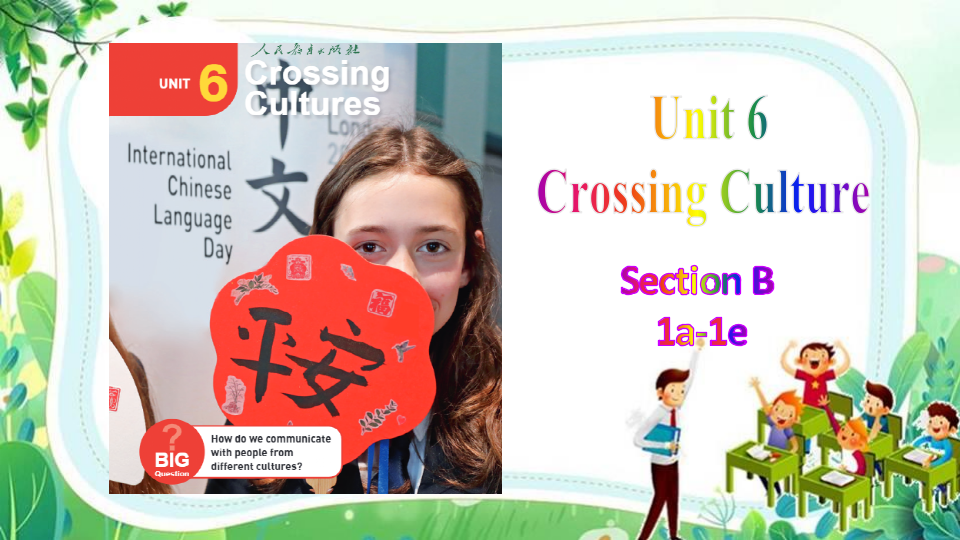
Section B
1a-1e
Unit 6
Crossing Culture
Learning Aims
语言能力
文化意识
思维品质
学习能力
1.掌握核心词汇豆 语并 理解并能运用描述文化误解 的句型。
2.能读懂跨文化交际案例,梳理故事中的人物、冲突原因和解决方式。
3.能运用所学语言讨论文化差异,提出解决建议。
1.掌握略读、寻读等阅读策略,快速定位关键信息。
2.学会用思维导图梳理故事要素,提高信息处理能力。
3.通过小组讨论和角色扮演,提升合作学习和口语表达能力。
1.通过分析故事中误解产生的原因,理解文化差异的根源,培养逻辑思维。
2.通过讨论解决文化冲突的方法,培养批判性思维和问题解决能力。
3.通过反思自身经历,培养跨文化同理心和换位思考能力。
1.理解文化差异可能导致的误解,增强跨文化敏感性。
2.树立“入乡随俗”的意识,学会尊重和适应不同文化。
3.培养开放、包容的跨文化交际态度。
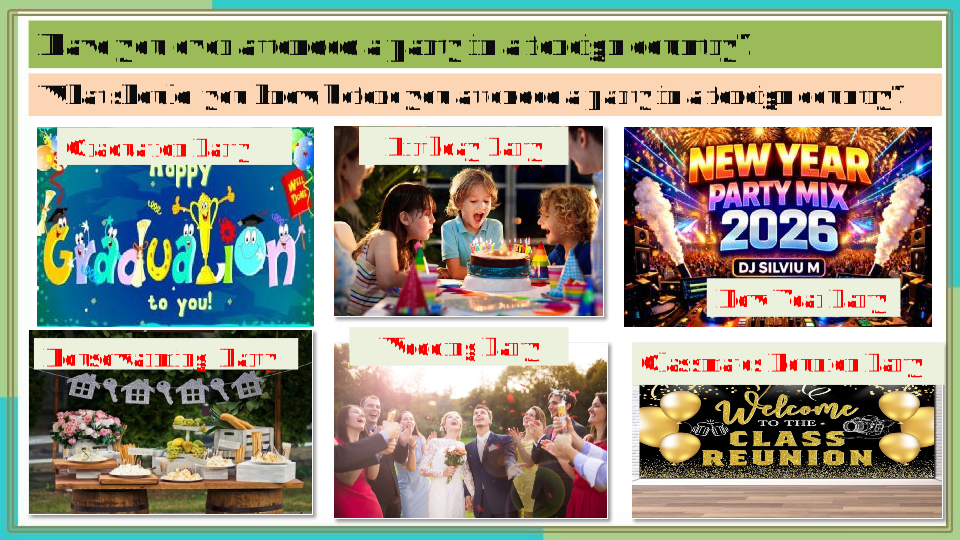
Graduation Party
New Year Party
Housewarming Party
Classmates Reunion Party
Birthday Party
Wedding Party
Have you ever attended a party in a foreign country?
What should you know before you attended a party in a foreign country?
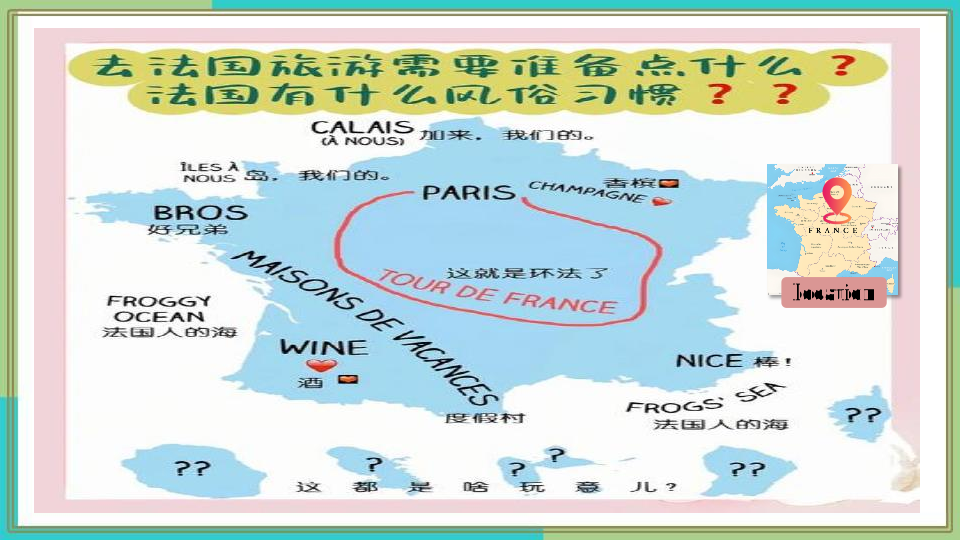
location
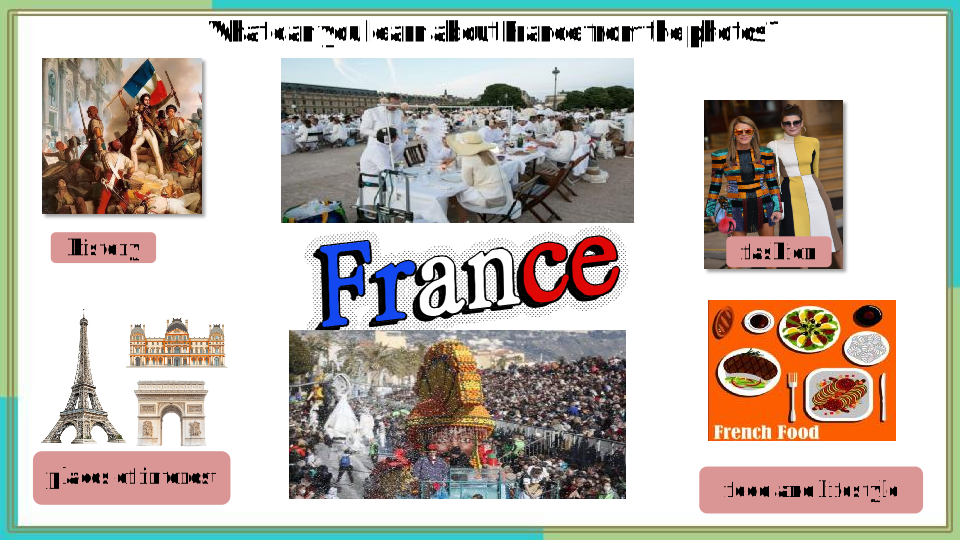
What can you learn about France from the photos?
places of interest
history
fashion
food and lifestyle
Shake hands for first meetings and business occasions.
Bring a small gift when invited to a home dinner.
Arrive on time but never early.
1a
What should you know before you attend a party in a foreign country? Tick the topics that you think are important.
□arrival time □table manners
□how to dress □how to thank others
□safe conversation topics □topics to avoid
□how to greet the host □what gifts to bring
□when to say goodbye
1b
Read Nancy’s email about party manners in France. Underline the topic sentences.
Hi Diana,
It’s so great to hear from you. Life in Paris is pretty good! I was a little lonely at first, but I’m starting to make some friends. They helped me to learn more about the customs here after I had some embarrassing experiences at a party last month. I’d like to share some tips with you. First, you shouldn’t arrive early to a party. It’s normal to be on time or a few minutes late, but arriving early can cause problems. Once, I arrived 10 minutes early to a party. Usually that’s the polite thing to do, right? But my friend looked so surprised to see me! He was still getting everything ready.
Second, it’s important to bring a gift when you visit someone. When I attended my friend’s party, l didn’t bring anything. It wasn’t his birthday, but everyone else brought gifts like chocolates or flowers to thank him for the party. I was so embarrassed!
Third, you should always try to dress for the occasion. At that party it was surprising to see how nicely everyone was dressed. It was summer, so I was just wearing a simple blouse and shorts. But everyone else was dressed so well that I felt silly.
Fourth, it’s best not to ask personal questions unless you know the person well. Many French people are quite private. They don’t like it when others ask them about their age, their family, whether they are married, or how much money they make. Food and culture, however, are safe conversation topics.
Last but not least, make sure you use French whenever you can. Lots of people speak English here, but you can develop closer relationships with them if you use French. It’s very important in their culture. I found that even a simple “merci” goes a long way! You’ll see what I mean as soon as you get here!
Au revoir!
Nancy
Identifying topic sentences
A topic sentence gives the main idea of a paragraph. It usually appears at the start of a paragraph, but it can also appear later on. Identifying the topic sentences can help you quickly understand a text.
What is the text type of the reading material?
Who wrote this email?
Who is the email to?
What’s the subject of the email?
Scan the text and answer the following questions.
Re: How’s life in France?
Nancy.
Diana.
Email.
Hi Diana,
It’s so great to hear from you. Life in Paris is pretty good! I was a little lonely at first, but I’m starting to make some friends. They helped me to learn more about the customs here after I had some embarrassing experiences at a party last month. I’d like to share some tips with you.
First, you shouldn’t arrive early to a party. It’s normal to be on time or a few minutes late, but arriving early can cause problems. Once, I arrived 10 minutes early to a party. Usually that’s the polite thing to do, right? But my friend looked so surprised to see me! He was still getting everything ready.
Second, it’s important to bring a gift when you visit someone. When I attended my friend’s party, l didn’t bring anything. It wasn’t his birthday, but everyone else brought gifts like chocolates or flowers to thank him for the party. I was so embarrassed!
Third, you should always try to dress for the occasion. At that party it was surprising to see how nicely everyone was dressed. It was summer, so I was just wearing a simple blouse and shorts. But everyone else was dressed so well that I felt silly.
Fourth, it’s best not to ask personal questions unless you know the person well. Many French people are quite private. They don’t like it when others ask them about their age, their family, whether they are married, or how much money they make. Food and culture, however, are safe conversation topics.
Last but not least, make sure you use French whenever you can. Lots of people speak English here, but you can develop closer relationships with them if you use French. It’s very important in their culture. I found that even a simple “merci” goes a long way! You’ll see what I mean as soon as you get here!
Au revoir!
Nancy
1c
Read the email again and answer the questions.
1. How did Nancy feel at the beginning of her stay in France?
2.What were the three mistakes that Nancy made at the party?
3. What should you not ask about when talking to someone in France?
4.Why does Nancy ask Diana to speak in French
whenever possible?
5. What can you learn from Nancy’s experiences?
The topic sentence can tell us which paragraph has the answer we need!
It's so great to hear from you. Life in Paris is pretty good! I was a little lonely at first, but I'm starting to make some friends. They helped me to learn more about the customs here after I had some embarrassing experiences at a party last month. I'd like to share some tips with you.
1. How did Nancy feel at the beginning of her stay in France?
A little lonely.
2.How does she feel now? What caused the changes?
She feels much better now.She is starting to make some friends and they helped her learn more about the customs.
2. What were the three mistakes that Nancy made at the party?
① arrived 10 minutes early;
② didn't bring a gift;
③ didn't dress for the occasion.
First, you shouldn't arrive early to a party. It's normal to be on time or a few minutes late, but arriving early can cause problems. Once, I arrived 10 minutes early to a party. Usually that's the polite thing to do, right? But my friend looked so surprised to see me! He was still getting everything ready.
Second, it's important to bring a gift when you visit someone. When I attended my friend's party, I didn't bring anything. It wasn't his birthday, but everyone else brought gifts like chocolates or flowers to thank him for the party. I was so embarrassed!
Third, you should always try to dress for the occasion. At that party it was surprising to see how nicely everyone was dressed. It was summer, so I was just wearing a simple blouse and shorts. But everyone else was dressed so well that I felt silly.
1
2
3
Fourth, it's best not to ask personal questions unless you know the person quite well. Many French people are quite private. They don't
like it when others ask them about their age, their family, whether
they are married, or how much money they make. Food and culture,
however, are safe conversation topics.
3. What should you not ask about when talking to someone in France?
You should not ask about someone's age, family, whether they are married, or how much money they make when talking to someone in France.
4. Why does Nancy ask Diana to speak in French whenever possible?
Because using French helps develop closer relationships with people in France, and it is very important in their culture. Even a simple “merci” can go a long way.
Last but not least, make sure you use French whenever you can. Lots of people speak English here, but you can develop closer relationships with them if you use French. It's very important in their culture. I found that even a simple “merci” goes a long way! You'll see what I mean as soon as you get here!
We can learn from our own mistakes and get to know other cultures better.
It's important to be open-minded and willing to learn.
We should respect and follow local customs and traditions.
5. What can you learn from Nancy's experiences of being in a new country?
Follow what others do (like arriving on time or dressing nicely).
Use their language even a little bit to be friendly.
Read for structure
Read the tips again and match them with the five parts.
First, you shouldn't arrive early to a party. It's normal to be on time or a few minutes late, but arriving early can cause problems. Once, I arrived 10 minutes early to a party. Usually that's the polite thing to do, right? But my friend looked so surprised to see me! He was still getting everything ready.
Second, it's important to bring a gift when you visit someone. When I attended my friend's party, I didn't bring anything. It wasn't his birthday, but everyone else brought gifts like chocolates or flowers to thank him for the party. I was so embarrassed!
Third, you should always try to dress for the occasion. At that party it was surprising to see how nicely everyone was dressed. It was summer, so I was just wearing a simple blouse and shorts. But everyone else was dressed so well that I felt silly.
Fourth, it's best not to ask personal questions unless you know the person quite well. Many French people are quite private. They don't like it when others ask them about their age, their family, whether they are married, or how much money they make. Food and culture, however, are safe conversation topics.
Last but not least, make sure you use French whenever you can. Lots of people speak English here, but you can develop closer relationships with them if you use French. It's very important in their culture. I found that even a simple "merci" goes a long way! You'll see what I mean as soon as you get here!
Arrival time
Gifts
How to dress
Conversation topics
Getting along with others
1d
Read again and complete the mind map with the tips from the email.
bring a gift when you visit someone, like chocolate or flowers
speak their language whenever possible
Always try to dress for the occasion.
Food and culture are safe conversation topics.;shouldn’t ask personal questions
You shouldn’t arrive
early. Be on time or
a few minutes late.
1e
In pairs, use the mind map in 1d to brainstorm tips for Chinese parties. Give each other advice on what to do.
A: What should I take with me to the party?
B: You could take some fruit or flowers.
Attending
Chinese Parties
Bring a gift (fruit, tea, snacks or red envelopes).
Avoid clocks,, pears, or umbrellas or white flowers.
Arrive on time or a little earlier;
It’s impolite to arrive too late.
Dress neatly;
Avoid overly casual outfits.
Topics to avoid: politics, age, income; weight, marriage.
Safe topics: food, work, hobbies.
Greet the host warmly.
Help with chores if possible.
Thank the host sincerely when leaving.
Table manners:
Wait for the elders to start eating first;
Never stick chopsticks into rice.
A: Hello, Li Ming. I’m going to study in china nest month. But I’m not familiar with Chinese party manners. Can you help me?
B: Yes! I’m glad to help you.
A: What should I take with me to the party?
B: You could take some fruit or flowers.
A: Do you know when to get there?
B:Arrive a few minutes early or on time.
A:Got it! How should I dress?
B: For a home party, jeans and a T-shirt are okay. For a formal one, wear a dress or a shirt. What do you think are safe conversation topics?
A: Don't talk about politics or religion, or ask anything too personal. You could talk about food , travel or our daily life.
B: Besides, do you know how to get along with others
at the party?
A: Smile and say hello first.
B:Thanks a lot! Your advice helps.
Language points
Point 1
It's so great to hear from you.
(1) My mom will be glad to hear from you. Please give her
a call when you are free.
非常高兴收到你的来信。
hear from
我妈妈会很高兴接到你的电话。你有空时请给她打个电话。
收到某人的来信、电话或消息
(2) Have you heard from your grandma? She sent you a
letter with old photos.
你收到奶奶的来信了吗?她寄了一封带旧照片的信给你。
(3) She often hears from her sister who lives abroad.
她经常收到住在国外的姐姐的来信。
Point 2
Many French people are quite private.
private /ˈpraɪvət/ 〔形容词〕不喜欢谈论私事的;私人的.常用在名词前作定语。
We can talk about this matter in private.
我们可以私下谈论这件事。
e.g. private life私人生活private conversation私下谈话private school私立学校private company私营公司in private 私下地,单独地
He’s a very private person. 他是个闷葫芦。
When making small talk, you should avoid asking private questions. 闲聊时,你应该避免询问私人问题。
【拓展】privacy 是名词,核心含义是 “隐私;私密空间;独处权”
e.g. You should read the privacy policy before signing up.
注册前你应该阅读隐私政策。
Point 3
They don't like it when others ask them about their age, their family, whether they are married, or how much money they make.
whether /ˈweðə(r)/ 〔连词〕
①是否 常用于ask, see, say, know, wonder 等词后,引导宾语从句。
结构:及物动词 / 介词 + whether + 从句(从句用陈述句语序)
I don’t know whether she will come. 我不知道她是否会来。
I wonder whether he can deal with the problem by himself. 我想知道他是否能够独自解决这个问题。
=if
【拓展】whether 还可以表示 “不管…… 还是……”,引导让步状语从句。
结构:whether + 从句(常与 or not连用),主句。
e.g. Whether it rains or not, we will go hiking.
不管下雨与否,我们都要去徒步。
② married 形容词,意为“已婚的;婚姻的”反义词是 “single(单身的)”。
常见搭配:
be married to sb.:与某人结婚 get married (to sb.):结婚
a married couple:一对已婚夫妇 married life:婚姻生活
【拓展】marry 是动词,意为:“结婚;嫁;娶”(强调动作)。
可以作及物动词, marry sb 嫁/娶某人
e.g. She married a teacher last year. 她去年嫁给了一位老师。
He wants to marry his girlfriend next summer.他想明年夏天和女友结婚。
还可以作不及物动词(表 “结婚” 的动作,不接宾语)
e.g. When are you going to marry? 你们打算什么时候结婚?
1.I ________ my foreign pen pal in Germany last week, and he told me a lot about his country’s Christmas customs.
A.heard from B.heard of C.listened to D.talked with
Exercises
A
C
C
3.— Wow, Li Ming, your notebook looks special. Can I have a look?
— No, I’m sorry. I wrote something ________ in it.
A.perfect B.proper C.pleasant D.private
2.When you travel to a foreign country, learning some local ________ can help you avoid misunderstanding.
A.traditions B.rules C.customs D.habits
4.We should learn to ________ people from different cultures to build good relationships.
A.communicate with B.shout at C.laugh at
5.My teacher advised me ________ more about table manners in Japan.
A.learn B.to learn C.learning
6.— I wonder ________ you know Black Myth: Wukong.
— Of course. It’s a video game based on Journey to the West.
A.what B.that C.whether
A
B
C
7.The girl dressed _____ for the party, and everyone praised her look.
A.friendly B.neatly C.nicely
8.My aunt ________ a Canadian artist three years ago, and they now live in Toronto.
A.got married with B.got married to C.has married with
9.It’s _____ to point at others with your finger in many cultures, so we should _____ doing that.
A.impolite; avoid B.polite; avoid C.impolite; enjoy
C
B
A
1. It’s normal ______ (be) on time or a few minutes late to a French party.
2. Next month, my cousin will get ________ (marry) to a girl who comes from Zhengzhou.
3. __________ (bring) a small gift is a good way to show respect when attending a party in many countries.
4. She sings ________(nice) and often takes part in local concerts.
5. Last but not least, ______ (make) sure you use the local language to show respect.
to be
married
Bringing
nicely
make
二、用括号内所给词的适当形式填空。
6. Hey, what’s your ________ (arrive) time? I’ll pick you up at the station.
7. Many French people are quite ________ (privacy).
8. They helped me to learn more about the ________ (custom) here.
9. It’s normal _______ (feel) nervous before a big exam. Try to relax!
10. You’ d better not ask others ________ (person) questions.
arrival
private
customs
to feel
personal
1. 在这里许多人都说英语,但是如果你用法语,就可以与他们培养更加亲密的关系。
Lots of people speak English here, but you can _______ ________ _____ with them if you use French.
2. 准时或迟到几分钟都是正常的,但是早到可能产生问题。
____ ________ to be on time or a few minutes late, but ________ _____ can cause problems.
develop closer relationship
三、根据汉语提示完成句子。
It’s normal
arriving early
3. 你应该总是试着为这个场合着装。
You should always try to ________ ______ the occasion.
4. 我们应该学习良好的餐桌礼仪,因为它们体现了我们对他人的尊重。
We should learn good ______ _________ because they show our respect for others.
dress for
table manners
本课句型
Summary
我都 学会了!
Key words
Expression
custom、occasion、nicely、blouse、private、whether、married、merci、
hear from、go a long way、at first、make some friends
learn more about、arrive early 、on time、make sure
(1)You shouldn’t arrive early to a party. It’s normal to be on time or a few minutes late.
(2)It’s important to bring a gift when you visit someone.
(3)You should always try to dress for the occasion.
(4)It’s best not to ask personal questions unless you know the person quite well.
(5)Make sure you use French whenever you can. Even a simple “merci” goes a long way.
Sentences
Basic (必做)
复习并牢记本堂课的重点单词、短语和句型。
Improving(选做)
2.回顾提建议的句型,复述法国及中国派对礼仪。
Extend (选做)
3.选择一个你感兴趣的国家,查阅资料,了解其独特的聚会社交礼仪,用英语制作简单的手抄报,在下一节课上和同学们分享。
Homework
Thank you !
$
资源预览图
1
2
3
4
5
6

相关资源
由于学科网是一个信息分享及获取的平台,不确保部分用户上传资料的 来源及知识产权归属。如您发现相关资料侵犯您的合法权益,请联系学科网,我们核实后将及时进行处理。