精品解析:江苏省南菁实验教育集团2025-2026学年第二学期期中考试初一英语试卷
 切换试卷
切换试卷
2026-05-20
|
2份
|
30页
|
73人阅读
|
2人下载
资源信息
| 学段 | 初中 |
|---|---|
| 学科 | 英语 |
| 教材版本 | 初中英语译林版七年级下册 |
| 年级 | 七年级 |
| 章节 | - |
| 类型 | 试卷 |
| 知识点 | - |
| 使用场景 | 同步教学-期中 |
| 学年 | 2026-2027 |
| 地区(省份) | 江苏省 |
| 地区(市) | 无锡市 |
| 地区(区县) | - |
| 文件格式 | ZIP |
| 文件大小 | 109 KB |
| 发布时间 | 2026-05-20 |
| 更新时间 | 2026-05-20 |
| 作者 | 学科网试题平台 |
| 品牌系列 | - |
| 审核时间 | 2026-05-20 |
| 下载链接 | https://m.zxxk.com/soft/57946568.html |
| 价格 | 3.00储值(1储值=1元) |
| 来源 | 学科网 |
内容正文:
南菁实验教育集团 2025-2026学年第二学期期中考试
初一英语试卷
(满分120分,考试时间120分钟,命题人:徐君,复核人:谢建民)
第Ⅰ卷(客观题 共66分)
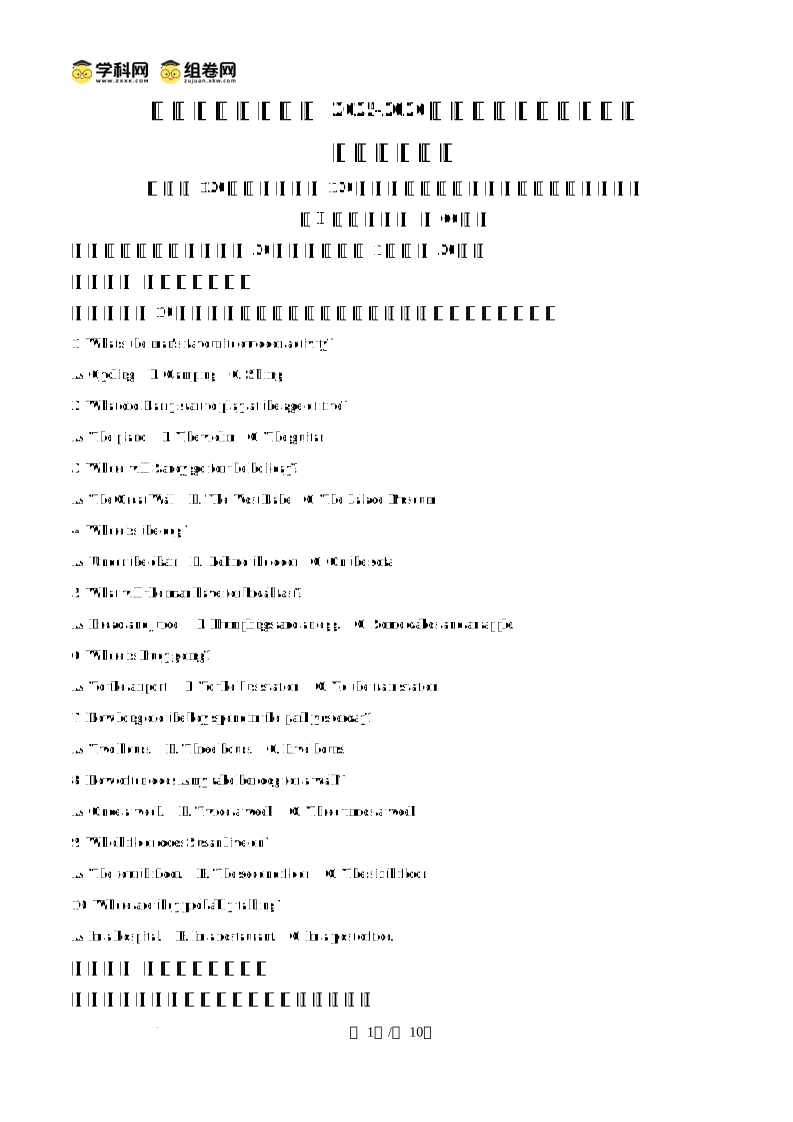
一、听力部分(本大题共20小题,每小题1分,共20分)
第一部分 听对话回答问题
本部分共有10道小题,每小题你将听到一段对话,每段对话听两遍。
1. What's the man's favourite outdoor activity?
A. Cycling B. Camping C. Skiing
2. What did Harry start to play at the age of five?
A. The piano B. The violin C. The guitar
3. Where will Sandy go for the holiday?
A. The Great Wall B. The West Lake C. The Palace Museum
4. Where is the dog?
A. Under the chair B. Behind the door C. On the sofa
5. What will the man have for breakfast?
A. Bread and juice. B. Dumplings and an egg. C. Some cakes and an apple.
6. Where is Lucy going?
A. To the airport. B. To the bus station. C. To the train station.
7. How long did the boy spend in the park yesterday?
A. Two hours. B. Three hours. C. Five hours.
8. How often does Amy take her dog for a walk?
A. Once a week. B. Twice a week. C. Three times a week.
9. Which floor does Susan live on?
A. The fourth floor. B. The second floor. C. The sixth floor.
10. Where are they probably talking?
A. In a hospital. B. In a restaurant. C. In a post office.
第二部分 听对话和短文答题
你将听到一段对话和两篇短文,各听两遍。
听一段对话,回答第11-12小题
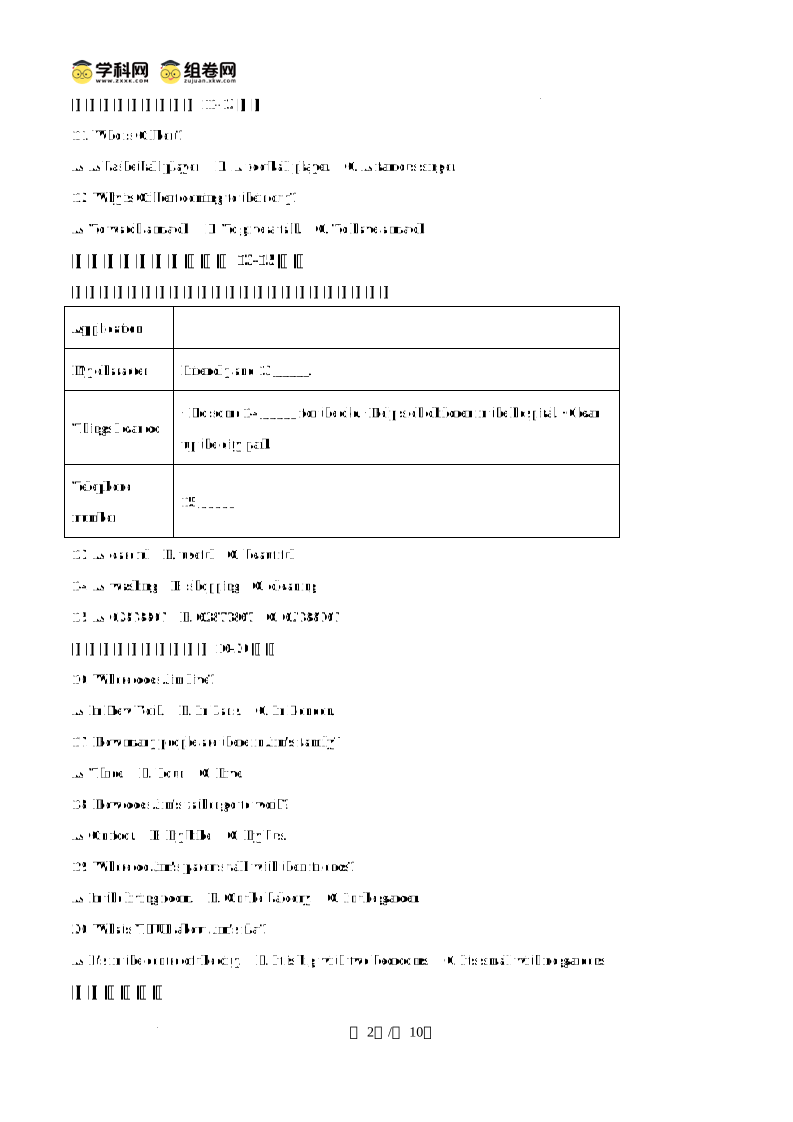
11. Who is Gilbert?
A. A basketball player. B. A football player. C. A famous singer.
12. Why is Gilbert coming to their city?
A. To watch a match. B. To give a talk. C. To have a match.
听第一篇短文,回答第13-15小题
请根据短文内容,选择正确答案,完成信息记录表。
Application
My character
Friendly and 13 _____.
Things I can do
· Do some 14 _____ for the old. ·Help sick children in the hospital. ·Clean up the city park.
Telephone number
15 _____
13. A. careful B. useful C. beautiful
14. A. washing B. shopping C. cleaning
15. A. 62878867 B. 62877867 C. 62788767
听第二篇短文,回答第16-20小题
16. Where does Jim live?
A. In New York. B. In Paris. C. In London.
17. How many people are there in Jim's family?
A. Three. B. Four. C. Five.
18. How does Jim's father go to work?
A. On foot. B. By bike. C. By bus.
19. Where do Jim's parents talk with their friends?
A. In the living room. B. On the balcony. C. In the garden.
20. What's TRUE about Jim's flat?
A. It's in the centre of the city. B. It is big with two bedrooms. C. It's small with no gardens.
二、完形填空
先通读下面的短文,掌握其大意,然后在每小题所给的四个选项中,选出可以填入空白处的最佳选项。(本大题共10小题,每小题1分,共10分)
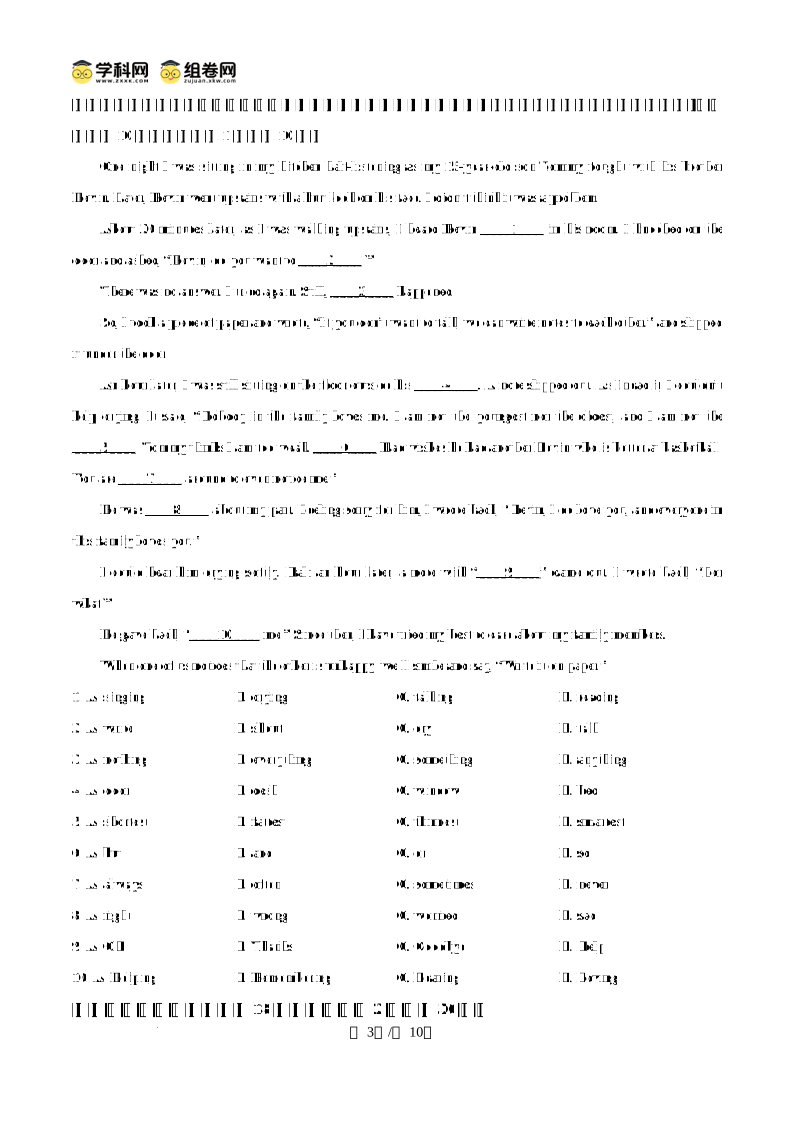
One night I was sitting in my kitchen half-listening as my 15-year-old son Tommy fought with his brother Kevin. Later, Kevin went upstairs with a hurt look on his face. I didn’t think it was a problem.
About 20 minutes later, as I was walking upstairs, I heard Kevin ____1____ in his room. I knocked on the door and asked, “Kevin, do you want to ____2____?”
There was no answer. I tried again. Still, ____3____ happened.
So, I took a piece of paper and wrote, “If you don’t want to talk, we can write notes to each other.” and slipped it under the door.
An hour later, I was still sitting on the floor outside his ____4____. A note slipped out. As I read it, I couldn’t help crying. It said, “Nobody in the family loves me. I am not the youngest nor the oldest, and I am not the ____5____. Tommy thinks I am too weak. ____6____ Dad wishes he had another Kevin who is better at basketball. You are ____7____ around to even notice me.”
He was ____8____ about my part. Feeling sorry for him, I wrote back, “Kevin, I do love you, and everyone in this family loves you.”
I could hear him crying softly. Half an hour later, a note with “____9____” came out. I wrote back, “For what?”
He gave back, “____10____ me.” Since then, I have tried my best to care about my family members.
When one of us notices that the other is unhappy, we’ll smile and say, “Write it on paper.”
1. A. singing B. crying C. talking D. reading
2. A. write B. shout C. cry D. talk
3. A. nothing B. everything C. something D. anything
4. A. door B. desk C. window D. bed
5. A. shortest B. fattest C. thinnest D. smartest
6. A. but B. and C. or D. so
7. A. always B. often C. sometimes D. never
8. A. right B. wrong C. worried D. sad
9. A. OK B. Thanks C. Goodbye D. Help
10. A. Helping B. Remembering C. Hearing D. Loving
三、阅读理解(本大题共18小题,每小题2分,共36分)
第一节
A
Summer Day Camp
Day Camp is an all-day program (项目). Youth (aged 8—16) can take part when the summer holiday starts. This fun-filled program is about sports, games and other fun activities.
Program Information
Registration (登记) information
July 2—July 8, 2025; 7 a.m.—6 p.m.
Online: June 20—June 30, 2025
¥30 each day each child.
· For children aged 8—12: Paint, dance and play games.· For children aged 13—16: Play sports, make special projects and take field trips.
For more information, click www.summerdaycamp.gov.
If you want to apply (申请) for the camp, you have to:・Pay in full. First come, first served.
11. Where can you most probably read this passage?
A. In a storybook. B. On a poster. C. In a science book. D. In a notice.
12. When will the Day Camp begin?
A. On June 20, 2025. B. On June 30, 2025. C. On July 2, 2025. D. On July 8, 2025.
13. How much does it cost each child for the whole Summer Day Camp?
A. ¥30. B. ¥180. C. ¥210. D. ¥300.
B
How do you deal with your rubbish when you are outside? Do you sort (分类) rubbish before throwing it away?
When my children were younger, we used to walk a graveled trail (碎石小道) around the lake near our home. ①
One spring day my daughter and I noticed just how much rubbish was lying along the trail. So the next day we brought a big rubbish bag with us and started to pick up the rubbish along our way slowly, step by step. ② There were pop cans (易拉罐), wrappers for candy bars, plastic (塑料的) water bottles, empty chip bags, pieces of broken fishing line and even an old worn-out shoe. We stopped and picked up each one and even fished a few pieces of rubbish out of the edge (边) of the water. By the time we had circled the lake, the bag was nearly full.
③ We stopped before we headed home and took one last look at the lake as the sun set. It looked more beautiful than ever.
I know that at times this world's problems can seem overwhelming and you wonder what you can do to make a difference. But the truth is everything you do makes a difference! Every time you stop to pick up a single piece of rubbish, you make a difference in the world. Every smile you share makes a difference. Every kind word you say makes a difference. Every loving thought you think, every hug you share, every flower you plant, every animal you save, everything you do, no matter how small, makes a difference in this world.
Therefore, make your difference today by doing things like picking up a piece of rubbish.
14. What did the writer and her daughter do around the lake that day?
A. They just went for a walk. B. They picked up the rubbish.
C. They sorted different kinds of rubbish. D. They looked for an old worn-out shoe.
15. What can we learn from the underlined sentence “It looked more beautiful than ever”?
A. The lake was always clean before. B. Their small act made the lake nicer.
C. The sunset made the lake beautiful. D. No one littered in the lake any more.
16. What does the underlined word “overwhelming” mean?
A. different. B. difficult. C. dangerous. D. dark.
17. Where can we put the sentence “Tired but happy, we put the bag in an empty rubbish bin.”?
A. ① B. ② C. ③ D. ④
18. What may be the best title for the passage?
A. Sorting rubbish. B. World's bad problems.
C. Protecting the environment. D. Starting doing small good things.
C
On Saturday morning, everything in summer was nice and fresh. Everyone looked happy and walked with a light step—but not Tom Sawyer.
Aunt Polly told him to paint their fence (栅栏) as a punishment (惩罚). The fence was 90 feet long and 9 feet high. Tom looked at the fence, and all his happiness went away. He painted one small piece and stopped. “This will take such a long time,” he said sadly.
He knew other boys with many toys would come soon and laugh at him. Just when he felt very unhappy, a good idea came to him! He went back to painting quietly.
Ben Rogers came down the road. He was singing happily and had a big apple in his hand.
Tom kept painting and did not look at Ben. Ben watched for a minute and called Tom’s name.
Tom did not answer. He looked at his painting like an artist, then brushed the fence softly again. Ben called him once more.
“Oh, it’s you, Ben! I didn’t see you,” Tom said quickly.
“I’m going swimming,” said Ben. “Do you want to come? Oh, you have to work, don’t you? That’s too bad!”
“I’m not really working.” Tom said easily. “Well, it may be work, but I enjoy it.”
“What?” cried Ben. “You enjoy painting the fence?”
“Well, why not?” Tom kept painting and said “Boys don’t get to paint a fence like this every day.”
This made Ben think in a new way. He stopped eating his apple and watched Tom. Tom brushed the fence gently back and forth. The fence became clean and white. Soon, Ben really wanted to paint too! “Let me paint just a little,” he asked Tom.
Tom thought for a moment “No, Ben, I can’t let you. Aunt Polly said I must do this very well. Only one boy in a thousand can paint this well.”
“Oh, please, Tom,” said Ben. “I can do it. I’ll be very careful. I’ll give you half my apple. Wait—I’ll give you all of it.”
Tom gave Ben the brush. He looked worried on his face, but he was very happy inside. Tom sat under the tree, ate the apple, and smiled.
More boys came later. By early afternoon, Tom had many new toys, ▲ . Aunt Polly was so happy that she gave Tom a bright red apple.
19. Why did Tom look at his painting like an artist?
A. Because he loved painting the fence very much.
B. Because he didn’t want to talk to Ben.
C. Because he wanted to be an artist in the future.
D. Because he wanted Ben to be interested in the work.
20. What would Ben probably think after painting?
A. Painting the fence was boring. B. Tom was very lazy.
C. He was lucky to paint the fence. D. He didn’t want to see Tom again.
21. Which sentence can be put in the ▲?
A. and he gave the apple back to Ben. B. and the fence was painted well.
C. but other boys laughed at him. D. but he finished the work alone.
22. Which of the following best shows the changes in Tom's feelings in the story above?
A. sad → unhappy → excited → happy B. sad → worried → happy → excited
C. happy → sad → worried → happy D. unhappy → angry → excited → happy
23. What do you think of Tom?
A. He was helpful. B. He was hard-working. C. He was smart. D. He was shy.
第二节 信息还原
阅读下面短文,从短文后所给的选项中选出能填入短文空白处的最佳选项,使短文通顺连贯,其中有两项是多余选项。
Most of us know that our brains get smaller as we grow older. But do you know that diet and lifestyle can change how well our brains work?
Studies show that eating fruit, vegetables and protein (蛋白质) is good for your memory (记忆力). ____24____ Eating oily fish or dark chocolate and taking Vitamin D3 can also make your memory better.
____25____ A 2011 study shows that exercise can make our brains bigger. Another study finds exercise helps old people remember things well. Surprisingly, even one short exercise is almost as good as long-time exercise!
One study finds eight weeks of daily meditation (冥想) can improve memory. Other easy ways to relax also help your short-term memory. Try to spend 5-10 minutes every day relaxing or listening to music. ____26____
Experts say it is harder to learn new things as you get older, but sleep can help a lot. ____27____ A 2019 study finds students learn better before and after a short sleep!
____28____ Try to remember phone numbers and addresses (地址) by heart, not just save them in your phone. You can also learn a new language or play crosswords to train your brain.
A. Or even just take a shower to relax!
B. It's important to keep your body healthy.
C. Doing exercise is also very important for your brain.
D. Use your phone often to remember everything.
E. If you want a good brain, you need to use it more.
F. Try not to eat sweet food, like cakes and sweet chocolate.
G. Our brain needs 7 to 9 hours of sleep to work well.
第Ⅱ卷(主观题 共54分)
四、词汇运用(本大题共10小题,每小题1分,共10分)
(A) 根据句意和汉语注释,写出单词的正确形式
29. Our hometown has many old ________ (文化的) stories that we should remember and share.
30. If you need good books, I will ________ (推荐) my favorite storybook to you this afternoon.
31. There are many ________ (社区) centres in our city, and they always help people with different problems.
32. When autumn comes, many kids ________ (收集) colorful leaves and use them to make handcrafts.
33. In our warm class, everyone always ________ (表达) thanks to others when they get help.
(B) 根据句意,写出括号内所给单词的适当形式
34. A great ________ (law) always tries his best to help poor and helpless people in need.
35. On her ________(ninety) birthday, the kind old woman gets lots of love from neighbors.
36. Our country has a long and wonderful past. We should learn to love our great ________(nation) history.
37. A warm smile can bring much ________ (happy) to the people around us every day.
38. When the wind blows gently, all the ________ (leaf) dance happily in front of our classroom.
五、动词填空
用括号内所给动词的适当形式填空。(本大题共7小题,每小题1分,共7分)
39. The weekend is coming soon. The family ________ (plan) a relaxing picnic near the beautiful lake.
40. The weather is fine. Children have great fun ________(lie) on the grass to enjoy the warm sunshine.
41. The famous writer ________ (come) to our school and give us a talk on how to write wonderful stories in half a month.
42. We will walk around the city and visit some old streets if it ________ (not be) rainy tomorrow.
43. Andy with his mother opens the big box carefully ________ (check) the nice birthday gifts inside.
44. Our classmates ________ (hold) a special charity sale to help poor students next week, aren’t they?
45. I have little time for fun because I ________ (prepare) for my important mid-term exam these days.
六、句子转换
根据要求改写句子。每格限填一词。(本大题共7分,每格0.5分)
46. Why don’t you watch the interesting cartoon with me? (同义句转换)
________ ________ watch the interesting cartoon with me?
47. We use bamboo to make those light and beautiful kites. (同义句转换)
Those light and beautiful kites are ________ ________ bamboo.
48. I can learn more about the city by visiting some famous museums and parks. (对划线部分提问)
________ ________ you learn more about the city?
49. How much do these two pairs of new sports shoes cost? (同义句转换)
How much ________ these two pairs of new sports shoes ________?
50. It takes the workers three days to build a small garden in our school. (同义句转换)
The workers ________ three days ________ a small garden in our school.
51. My mother hurried to the supermarket to buy some food for dinner yesterday. (同义句转换)
My mother went to the supermarket ________ ________ ________ to buy some food for dinner yesterday.
七、阅读表达(本大题共5小题,每小题2分,共10分)
阅读下面的短文,然后根据短文内容回答问题,每小题答案不超过6个单词。
Have you ever tasted a kind of snack, which is also one of the traditional Chinese forms of art-sugar painting?
Sugar painting started from the Ming Dynasty and became popular in the Qing Dynasty. At that time, many people made a living through sugar painting. They put stalls (货摊) on busy streets, in front of theatres and other crowded places. Today we can still see it in many parts of China.
The sugar painters usually sit before a wooden table. There is a wooden plate (盘子) on one side. It has a rotatable arrow (可旋转箭头). The plate has pictures like dragons, birds and flowers on it. After paying, buyers turn the arrow and wait for it to stop. The painter makes the picture the arrow points to (指向).
Sugar painting is very different from ordinary painting. The sugar painters use syrup (糖浆) as the material, a spoon as the “paintbrush”, and a smooth slab (台面) as the “paper”. To make the syrup, they have to make sugar hot before painting. Syrup gets hard when it cools, so painters must work very fast. They move the spoon up and down, left and right. Soon an animal, flower or other sugar painting is finished.
Now there are fewer sugar painters. But some of them still keep this art. They work hard to hold different activities such as offering classes and giving speeches. Today sugar painting is a National Intangible Cultural Heritage (国家级非物质文化遗产).
52. Where do the sugar painters usually sit?
___________________________________________________________________________
53. When do the buyers turn the arrow?
___________________________________________________________________________
54. How do sugar painters make the syrup before painting?
___________________________________________________________________________
55. Why do some of the sugar painters hold different activities?
___________________________________________________________________________
56. What do you think of sugar painting?
___________________________________________________________________________
八、书面表达(本大题共20分)
57. 《21世纪英文报》正在举办以“My Hometown”为主题的征文比赛。作为一名中学生,你想参加本次比赛。请写一篇短文介绍你的家乡无锡,展现它的美丽与特色,并邀请更多国内外朋友前来参观游览,请根据以下提示写一篇短文介绍无锡。
1. Where is Wuxi?
2. What places of interest can visitors enjoy? What can they do and see there?
3. What delicious local food can people try?
4. What traditional folk art is famous here? What’s special about it?
5. Why do you recommend Wuxi?
Mini dictionary: Turtle Head Park 鼋头渚公园; Nanchan Temple 南禅寺; Liyuan Garden 蠡园; Huishan Ancient Town 惠山古镇; soup dumplings 小笼包 ;Wuxi spare ribs 无锡酱排骨; Huishan Clay Figures 惠山泥人
注意事项:
1. 短文须包含所有提示内容,要求语句通顺,意思连贯;
2. 字数80词左右。文章开头与结尾已给出,不计入总词数;
3. 短文中不得使用真实的个人姓名或学校名称。
I’d like to tell you something about my hometown, Wuxi.
_______________________________________________________________________________________________________________________________________________________________________________________________________________________________________________________________________________________________________________________________________________________________________________________________________________________________________________________________________________________________________
Welcome to my hometown!
第1页/共1页
学科网(北京)股份有限公司
$
南菁实验教育集团 2025-2026学年第二学期期中考试
初一英语试卷
(满分120分,考试时间120分钟,命题人:徐君,复核人:谢建民)
第Ⅰ卷(客观题 共66分)
一、听力部分(本大题共20小题,每小题1分,共20分)
第一部分 听对话回答问题
本部分共有10道小题,每小题你将听到一段对话,每段对话听两遍。
1. What's the man's favourite outdoor activity?
A. Cycling B. Camping C. Skiing
2. What did Harry start to play at the age of five?
A. The piano B. The violin C. The guitar
3. Where will Sandy go for the holiday?
A. The Great Wall B. The West Lake C. The Palace Museum
4. Where is the dog?
A. Under the chair B. Behind the door C. On the sofa
5. What will the man have for breakfast?
A. Bread and juice. B. Dumplings and an egg. C. Some cakes and an apple.
6. Where is Lucy going?
A. To the airport. B. To the bus station. C. To the train station.
7. How long did the boy spend in the park yesterday?
A. Two hours. B. Three hours. C. Five hours.
8. How often does Amy take her dog for a walk?
A. Once a week. B. Twice a week. C. Three times a week.
9. Which floor does Susan live on?
A. The fourth floor. B. The second floor. C. The sixth floor.
10. Where are they probably talking?
A. In a hospital. B. In a restaurant. C. In a post office.
第二部分 听对话和短文答题
你将听到一段对话和两篇短文,各听两遍。
听一段对话,回答第11-12小题
11. Who is Gilbert?
A. A basketball player. B. A football player. C. A famous singer.
12. Why is Gilbert coming to their city?
A. To watch a match. B. To give a talk. C. To have a match.
听第一篇短文,回答第13-15小题
请根据短文内容,选择正确答案,完成信息记录表。
Application
My character
Friendly and 13 _____.
Things I can do
· Do some 14 _____ for the old. ·Help sick children in the hospital. ·Clean up the city park.
Telephone number
15 _____
13. A. careful B. useful C. beautiful
14. A. washing B. shopping C. cleaning
15. A. 62878867 B. 62877867 C. 62788767
听第二篇短文,回答第16-20小题
16. Where does Jim live?
A. In New York. B. In Paris. C. In London.
17. How many people are there in Jim's family?
A. Three. B. Four. C. Five.
18. How does Jim's father go to work?
A. On foot. B. By bike. C. By bus.
19. Where do Jim's parents talk with their friends?
A. In the living room. B. On the balcony. C. In the garden.
20. What's TRUE about Jim's flat?
A. It's in the centre of the city. B. It is big with two bedrooms. C. It's small with no gardens.
二、完形填空
先通读下面的短文,掌握其大意,然后在每小题所给的四个选项中,选出可以填入空白处的最佳选项。(本大题共10小题,每小题1分,共10分)
One night I was sitting in my kitchen half-listening as my 15-year-old son Tommy fought with his brother Kevin. Later, Kevin went upstairs with a hurt look on his face. I didn’t think it was a problem.
About 20 minutes later, as I was walking upstairs, I heard Kevin ____1____ in his room. I knocked on the door and asked, “Kevin, do you want to ____2____?”
There was no answer. I tried again. Still, ____3____ happened.
So, I took a piece of paper and wrote, “If you don’t want to talk, we can write notes to each other.” and slipped it under the door.
An hour later, I was still sitting on the floor outside his ____4____. A note slipped out. As I read it, I couldn’t help crying. It said, “Nobody in the family loves me. I am not the youngest nor the oldest, and I am not the ____5____. Tommy thinks I am too weak. ____6____ Dad wishes he had another Kevin who is better at basketball. You are ____7____ around to even notice me.”
He was ____8____ about my part. Feeling sorry for him, I wrote back, “Kevin, I do love you, and everyone in this family loves you.”
I could hear him crying softly. Half an hour later, a note with “____9____” came out. I wrote back, “For what?”
He gave back, “____10____ me.” Since then, I have tried my best to care about my family members.
When one of us notices that the other is unhappy, we’ll smile and say, “Write it on paper.”
1. A. singing B. crying C. talking D. reading
2. A. write B. shout C. cry D. talk
3. A. nothing B. everything C. something D. anything
4. A. door B. desk C. window D. bed
5. A. shortest B. fattest C. thinnest D. smartest
6. A. but B. and C. or D. so
7. A. always B. often C. sometimes D. never
8. A. right B. wrong C. worried D. sad
9. A. OK B. Thanks C. Goodbye D. Help
10. A. Helping B. Remembering C. Hearing D. Loving
【答案】1. B 2. D 3. A 4. A 5. D 6. B 7. D 8. A 9. B 10. D
【解析】
【导语】本文讲述一位母亲通过纸条沟通,安抚了在家中感到被忽视、内心难过的儿子凯文,此后一家人学会用心关爱彼此的故事。
【1题详解】
句意:大约20分钟后,当我走上楼时,我听到凯文正在他房间里哭。
前文提到凯文脸上带着受伤的神情上楼,情绪低落,应是在哭泣,crying“哭”符合语境;singing“唱歌”、talking“交谈”、reading“阅读”均不符合难过的情绪。
【2题详解】
句意:我敲了敲门问道:“凯文,你想谈谈吗?”
作者看到孩子难过,主动询问是否要交谈谈心,talk“交谈”符合;write“写”此时还未提议,shout“大喊”、cry“哭”不符合家长关心的语境。
【3题详解】
句意:我又试了一次,依旧什么都没发生。
前文说没有回应,再次敲门还是无动静,nothing“没有事物”符合;everything“一切”、something“某事”、anything“任何事”均与无人回应的语境矛盾。
【4题详解】
句意:一小时后,我仍然坐在他的门外地板上。
前文一直在门口和凯文沟通,此处是守在门外面,door“门”符合;desk“书桌”、window“窗户”、bed“床”不符合前文场景。
【5题详解】
句意:我既不是最小的也不是最大的,我也不是最聪明的。
凯文在倾诉自己在家中没有存在感,smartest“最聪明的”符合自我否定的情绪;shortest“最矮的”、fattest“最胖的”、thinnest“最瘦的”均不是家庭中自我价值否定的常见角度。
【6题详解】
句意:汤米觉得我太软弱,而且爸爸希望能有另一个更擅长篮球的凯文。
前后两句都是凯文倾诉家人对自己的负面看法,是并列关系,and“并且”符合;but“但是”表转折,or“或者”表选择,so“所以”表因果,均不符。
【7题详解】
句意:你们从来都不会注意到我。
凯文觉得自己被家人忽视,never“从不”符合;always“总是”、often“经常”、sometimes“有时”均和被忽视的语境相反。
【8题详解】
句意:他认同我说的话是对的。
前文我在纸条上告诉凯文家人都爱他,后文凯文哭泣、回复感谢,说明他认可我的话是正确的,right“正确的”符合语境;worried“担忧的”、sad“难过的”侧重情绪,不符合此处“认同观点”的逻辑;wrong“错误的”与文意相反。
【9题详解】
句意:半小时后,一张写着“谢谢”的纸条递了出来。
作者表达爱意安慰凯文,凯文心怀感激,Thanks“谢谢”符合;OK“好的”、Goodbye“再见”、Help“帮助”均不符合感激的情绪。
【10题详解】
句意:他回复道:“爱我。”
后文作者学会关爱家人,凯文纸条是感谢家人的爱,Loving“爱”符合;Helping“帮助”、Remembering“记住”、Hearing“听见”均和后文主题不契合。
三、阅读理解(本大题共18小题,每小题2分,共36分)
第一节
A
Summer Day Camp
Day Camp is an all-day program (项目). Youth (aged 8—16) can take part when the summer holiday starts. This fun-filled program is about sports, games and other fun activities.
Program Information
Registration (登记) information
July 2—July 8, 2025; 7 a.m.—6 p.m.
Online: June 20—June 30, 2025
¥30 each day each child.
· For children aged 8—12: Paint, dance and play games.· For children aged 13—16: Play sports, make special projects and take field trips.
For more information, click www.summerdaycamp.gov.
If you want to apply (申请) for the camp, you have to:・Pay in full. First come, first served.
11. Where can you most probably read this passage?
A. In a storybook. B. On a poster. C. In a science book. D. In a notice.
12. When will the Day Camp begin?
A. On June 20, 2025. B. On June 30, 2025. C. On July 2, 2025. D. On July 8, 2025.
13. How much does it cost each child for the whole Summer Day Camp?
A. ¥30. B. ¥180. C. ¥210. D. ¥300.
【答案】11. B 12. C 13. C
【解析】
【导语】本文是一篇应用文,介绍了2025年夏季日间夏令营的项目信息、报名方式、费用及活动安排。
【11题详解】
本文介绍了夏令营的项目信息、报名时间、费用及活动内容等,属于宣传广告类应用文,旨在吸引参与者,因此最可能出现在海报(Poster)上,而不是故事书、科学书或普通通知中。
【12题详解】
根据文中表格左侧Program Information下的信息“July 2—July 8, 2025”可知,夏令营的开始时间是2025年7月2日。
【13题详解】
根据文中信息¥30 each day each child可知,每个孩子每天的费用是30元;根据活动时间“July 2—July 8, 2025”可知,夏令营持续时间为7天(含首尾两天)。因此,全程费用为 30×7=210 元。
B
How do you deal with your rubbish when you are outside? Do you sort (分类) rubbish before throwing it away?
When my children were younger, we used to walk a graveled trail (碎石小道) around the lake near our home. ①
One spring day my daughter and I noticed just how much rubbish was lying along the trail. So the next day we brought a big rubbish bag with us and started to pick up the rubbish along our way slowly, step by step. ② There were pop cans (易拉罐), wrappers for candy bars, plastic (塑料的) water bottles, empty chip bags, pieces of broken fishing line and even an old worn-out shoe. We stopped and picked up each one and even fished a few pieces of rubbish out of the edge (边) of the water. By the time we had circled the lake, the bag was nearly full.
③ We stopped before we headed home and took one last look at the lake as the sun set. It looked more beautiful than ever.
I know that at times this world's problems can seem overwhelming and you wonder what you can do to make a difference. But the truth is everything you do makes a difference! Every time you stop to pick up a single piece of rubbish, you make a difference in the world. Every smile you share makes a difference. Every kind word you say makes a difference. Every loving thought you think, every hug you share, every flower you plant, every animal you save, everything you do, no matter how small, makes a difference in this world.
Therefore, make your difference today by doing things like picking up a piece of rubbish.
14. What did the writer and her daughter do around the lake that day?
A. They just went for a walk. B. They picked up the rubbish.
C. They sorted different kinds of rubbish. D. They looked for an old worn-out shoe.
15. What can we learn from the underlined sentence “It looked more beautiful than ever”?
A. The lake was always clean before. B. Their small act made the lake nicer.
C. The sunset made the lake beautiful. D. No one littered in the lake any more.
16. What does the underlined word “overwhelming” mean?
A. different. B. difficult. C. dangerous. D. dark.
17. Where can we put the sentence “Tired but happy, we put the bag in an empty rubbish bin.”?
A. ① B. ② C. ③ D. ④
18. What may be the best title for the passage?
A. Sorting rubbish. B. World's bad problems.
C. Protecting the environment. D. Starting doing small good things.
【答案】14. B 15. B 16. B 17. C 18. D
【解析】
【导语】本文是一篇记叙文,主要讲述了作者和女儿在湖边散步时发现垃圾并主动捡拾的故事,说明了每个人做的小事都能让世界变得更美好。
【14题详解】
第三段指出作者和女儿的行动:“the next day we brought a big rubbish bag with us and started to pick up the rubbish along our way”,这直接说明她们在湖边“捡垃圾”。
【15题详解】
第四段作者说:“It looked more beautiful than ever”,结合上文她们捡完垃圾后看到湖面更干净了,说明她们的小行动让湖变得更美了。
【16题详解】
倒数第二段:“this world’s problems can seem overwhelming and you wonder what you can do to make a difference”,结合语境,世界问题让人感到“难以应付”或“巨大”,故“overwhelming”意为“difficult”。
【17题详解】
原文句子“Tired but happy, we put the bag in an empty rubbish bin.”描述了捡完垃圾后把袋子扔进垃圾桶的动作。应在她们完成捡垃圾之后、回家之前插入。第三段开头提到“We stopped before we headed home”,符合时间顺序,故放在③处。
【18题详解】
倒数第二段强调:“everything you do, no matter how small, makes a difference”以及“make your difference today from doing things like picking up a piece of rubbish”,说明文章主旨是倡导“从小事做起,做出改变”。
C
On Saturday morning, everything in summer was nice and fresh. Everyone looked happy and walked with a light step—but not Tom Sawyer.
Aunt Polly told him to paint their fence (栅栏) as a punishment (惩罚). The fence was 90 feet long and 9 feet high. Tom looked at the fence, and all his happiness went away. He painted one small piece and stopped. “This will take such a long time,” he said sadly.
He knew other boys with many toys would come soon and laugh at him. Just when he felt very unhappy, a good idea came to him! He went back to painting quietly.
Ben Rogers came down the road. He was singing happily and had a big apple in his hand.
Tom kept painting and did not look at Ben. Ben watched for a minute and called Tom’s name.
Tom did not answer. He looked at his painting like an artist, then brushed the fence softly again. Ben called him once more.
“Oh, it’s you, Ben! I didn’t see you,” Tom said quickly.
“I’m going swimming,” said Ben. “Do you want to come? Oh, you have to work, don’t you? That’s too bad!”
“I’m not really working.” Tom said easily. “Well, it may be work, but I enjoy it.”
“What?” cried Ben. “You enjoy painting the fence?”
“Well, why not?” Tom kept painting and said “Boys don’t get to paint a fence like this every day.”
This made Ben think in a new way. He stopped eating his apple and watched Tom. Tom brushed the fence gently back and forth. The fence became clean and white. Soon, Ben really wanted to paint too! “Let me paint just a little,” he asked Tom.
Tom thought for a moment “No, Ben, I can’t let you. Aunt Polly said I must do this very well. Only one boy in a thousand can paint this well.”
“Oh, please, Tom,” said Ben. “I can do it. I’ll be very careful. I’ll give you half my apple. Wait—I’ll give you all of it.”
Tom gave Ben the brush. He looked worried on his face, but he was very happy inside. Tom sat under the tree, ate the apple, and smiled.
More boys came later. By early afternoon, Tom had many new toys, ▲ . Aunt Polly was so happy that she gave Tom a bright red apple.
19. Why did Tom look at his painting like an artist?
A. Because he loved painting the fence very much.
B. Because he didn’t want to talk to Ben.
C. Because he wanted to be an artist in the future.
D. Because he wanted Ben to be interested in the work.
20. What would Ben probably think after painting?
A. Painting the fence was boring. B. Tom was very lazy.
C. He was lucky to paint the fence. D. He didn’t want to see Tom again.
21. Which sentence can be put in the ▲?
A. and he gave the apple back to Ben. B. and the fence was painted well.
C. but other boys laughed at him. D. but he finished the work alone.
22. Which of the following best shows the changes in Tom's feelings in the story above?
A. sad → unhappy → excited → happy B. sad → worried → happy → excited
C. happy → sad → worried → happy D. unhappy → angry → excited → happy
23. What do you think of Tom?
A. He was helpful. B. He was hard-working. C. He was smart. D. He was shy.
【答案】19. D 20. C 21. B 22. A 23. C
【解析】
【导语】本文节选自《汤姆・索亚历险记》,讲述汤姆被罚刷栅栏,满心郁闷,却巧用心思假装刷栅栏是有趣难得的趣事,引得小伙伴们争相帮忙干活,还换来了各类小物件,轻松完成任务还得到奖励的故事
【19题详解】
第三段“Just when he felt very unhappy, a good idea came to him!”以及随后Tom故意像艺术家一样的行为可知,他这样做是为了让Ben觉得刷栅栏很有趣,从而引起Ben的兴趣,让他替自己干活。
【20题详解】
第十一、十二段“Tom kept painting and said ‘Boys don’t get to paint a fence like this every day.’…Soon, Ben really wanted to paint too! ‘Let me paint just a little,”‘ he asked Tom.”说明Tom告诉Ben“男孩们不是每天都有机会刷这样的栅栏”,Ben听后恳求尝试并愿意付出苹果作为代价,可推断Ben被说服了,认为能刷栅栏是一种幸运或特权。
【21题详解】
倒数三段“I’ll give you half my apple…More boys came later. By early afternoon, Tom had many new toys…Aunt Polly was so happy that she gave Tom a bright red apple.”说明Ben帮忙刷栅栏,且其他男孩为了刷栅栏给了Tom玩具,结果是栅栏被刷好了,Polly阿姨才会高兴并奖励Tom。选项B“栅栏被刷得很好”符合语境和故事结果。
【22题详解】
第二段“Tom looked at the fence, and all his happiness went away.”对应看到栅栏惩罚后“所有快乐都消失了”,即sad;第三段“He knew other boys with many toys would come soon and laugh at him. Just when he felt very unhappy, a good idea came to him!”对应他想到别的小伙伴拿着玩具玩耍,还会嘲笑自己干活,心里变得十分郁闷,即unhappy,突然想出妙计,对应内心暗自激动,即excited;倒数第二段“He looked worried on his face, but he was very happy inside. Tom sat under the tree, ate the apple, and smiled.”说明他是开心的,即happy,对应A项。
【23题详解】
通读全文,Tom通过计谋让其他男孩替他干活,自己还得到了玩具和苹果,这体现了他的聪明机智。
第二节 信息还原
阅读下面短文,从短文后所给的选项中选出能填入短文空白处的最佳选项,使短文通顺连贯,其中有两项是多余选项。
Most of us know that our brains get smaller as we grow older. But do you know that diet and lifestyle can change how well our brains work?
Studies show that eating fruit, vegetables and protein (蛋白质) is good for your memory (记忆力). ____24____ Eating oily fish or dark chocolate and taking Vitamin D3 can also make your memory better.
____25____ A 2011 study shows that exercise can make our brains bigger. Another study finds exercise helps old people remember things well. Surprisingly, even one short exercise is almost as good as long-time exercise!
One study finds eight weeks of daily meditation (冥想) can improve memory. Other easy ways to relax also help your short-term memory. Try to spend 5-10 minutes every day relaxing or listening to music. ____26____
Experts say it is harder to learn new things as you get older, but sleep can help a lot. ____27____ A 2019 study finds students learn better before and after a short sleep!
____28____ Try to remember phone numbers and addresses (地址) by heart, not just save them in your phone. You can also learn a new language or play crosswords to train your brain.
A. Or even just take a shower to relax!
B. It's important to keep your body healthy.
C. Doing exercise is also very important for your brain.
D. Use your phone often to remember everything.
E. If you want a good brain, you need to use it more.
F. Try not to eat sweet food, like cakes and sweet chocolate.
G. Our brain needs 7 to 9 hours of sleep to work well.
【答案】24. F 25. C 26. A 27. G 28. E
【解析】
【导语】本文主要讲述了通过饮食、锻炼、放松、睡眠和脑力训练等五个方面来提高记忆力和大脑功能的建议。
【24题详解】
本段主要讲述饮食对记忆力的影响,且前后均为具体的饮食建议,选项F“Try not to eat sweet food, like cakes and sweet chocolate.”衔接少吃甜食,饮食方面正反对比,符合饮食建议的语境。
【25题详解】
本段主要讲述锻炼对大脑的好处,选项C“Doing exercise is also very important for your brain.”段落总起句,引出下文关于锻炼的研究,符合语境。
【26题详解】
前文列举放松方式:冥想、听音乐,选项A“Or even just take a shower to relax!”是另一种简单的放松方式,补充说明,句式并列通顺。
【27题详解】
本段强调睡眠的重要性,选项G“Our brain needs 7 to 9 hours of sleep to work well.”具体说明了睡眠需求,与后文关于睡眠的研究相呼应。
【28题详解】
本段建议多动脑训练,不要依赖手机,后文讲用心记号码、学语言、玩填字游戏锻炼大脑,选项E“If you want a good brain, you need to use it more.”概括了本段主旨,即通过使用大脑来保持其良好状态。
第Ⅱ卷(主观题 共54分)
四、词汇运用(本大题共10小题,每小题1分,共10分)
(A) 根据句意和汉语注释,写出单词的正确形式
29. Our hometown has many old ________ (文化的) stories that we should remember and share.
【答案】cultural
【解析】
【详解】句意:我们家乡有许多古老的文化故事,这些故事值得我们铭记和分享。括号内提示“文化的”,对应的单词是cultural,因此填cultural。
30. If you need good books, I will ________ (推荐) my favorite storybook to you this afternoon.
【答案】recommend
【解析】
【详解】句意:如果你需要好书,今天下午我会把我最喜欢的故事书推荐给你。“推荐”对应的是动词recommend,will后接动词原形,构成一般将来时。
31. There are many ________ (社区) centres in our city, and they always help people with different problems.
【答案】community
【解析】
【详解】句意:我们城市里有很多社区中心,它们总是帮助人们解决不同的问题。括号中“社区”对应名词community,在句中作定语,修饰空后名词centres。
32. When autumn comes, many kids ________ (收集) colorful leaves and use them to make handcrafts.
【答案】collect
【解析】
【详解】句意:秋天来临的时候,许多孩子收集五颜六色的树叶并用它们做手工艺品。“收集”collect,根据“When autumn comes”可知,此处用一般现在时,主语“kids”是复数,谓语动词用原形collect。
33. In our warm class, everyone always ________ (表达) thanks to others when they get help.
【答案】expresses
【解析】
【详解】句意: 在我们温暖的班级里,每个人在得到帮助时,总是向别人表达感谢。句中always表示习惯性动作,主语everyone为不定代词,不定代词作主语,谓语动词用第三人称单数形式,句子时态为一般现在时。“表达” 对应的单词是express,动词需变为第三人称单数形式,在词尾加es,故填expresses。
(B) 根据句意,写出括号内所给单词的适当形式
34. A great ________ (law) always tries his best to help poor and helpless people in need.
【答案】lawyer
【解析】
【详解】句意:一位优秀的律师总是尽力帮助需要帮助的穷人和无助的人。“a great”后接名词,根据“tries his best to help...”可知,此处指“律师”,“law”(法律)对应的表示职业的名词是“lawyer”(律师),且“a”提示用单数形式。应填lawyer。
35. On her ________(ninety) birthday, the kind old woman gets lots of love from neighbors.
【答案】ninetieth
【解析】
【详解】句意:在她第九十个生日(九十岁生日)那天,这位善良的老妇人收到了来自邻居们的许多关爱。根据句子“On her ______ (ninety) birthday”可知,表示“某人的第……个生日”时需用序数词,基数词ninety的序数词形式为ninetieth,故填ninetieth。
36. Our country has a long and wonderful past. We should learn to love our great ________(nation) history.
【答案】national
【解析】
【详解】句意:我们国家有着悠久而精彩的历史,我们应该学会热爱我们伟大国家的历史。空后的“history”是名词,需要用形容词来修饰名词。“nation”是名词,意为“国家、民族”,其形容词形式为national,意为“国家的、民族的”。故填national。
37. A warm smile can bring much ________ (happy) to the people around us every day.
【答案】happiness
【解析】
【详解】句意:一个温暖的微笑每天都能给我们身边的人带来许多快乐。bring sth. to sb. 意为“给某人带来某物”,此处应填名词,happy的名词形式是happiness,是不可数名词。
38. When the wind blows gently, all the ________ (leaf) dance happily in front of our classroom.
【答案】leaves
【解析】
【详解】句意:当微风轻拂时,所有的树叶在我们教室前快乐地舞动。句中缺少主语,此处应用名词形式。提示词leaf为可数名词,在句中由“all the”修饰,表示“所有的叶子”,因此需要用复数形式。leaf的复数属于“以-f或-fe结尾的名词变复数”规则:将f改为v,再加-es,即leaf的复数形式为leaves。
五、动词填空
用括号内所给动词的适当形式填空。(本大题共7小题,每小题1分,共7分)
39. The weekend is coming soon. The family ________ (plan) a relaxing picnic near the beautiful lake.
【答案】are planning
【解析】
【详解】句意:周末即将来临。这家人正计划在美丽的湖边进行一次轻松的野餐。plan意为“计划”,是动词,“进行野餐”是按计划、安排即将发生的动作,所以用现在进行时,其结构是“be+动词的现在分词”,主语“The family”指一家人,是复数概念,be动词用are,plan的现在分词是planning。
40. The weather is fine. Children have great fun ________(lie) on the grass to enjoy the warm sunshine.
【答案】lying
【解析】
【详解】句意:天气很好。孩子们躺在草地上享受温暖的阳光,玩得很开心。固定搭配“have great fun doing sth”意为“做某事很开心”,lie的动名词形式是lying。
41. The famous writer ________ (come) to our school and give us a talk on how to write wonderful stories in half a month.
【答案】will come
【解析】
【详解】句意:这位著名的作家将在半个月后到我们学校,给我们做一场关于如何写精彩故事的讲座。句中的时间状语in half a month意为“半个月后”,表示将来的时间,因此句子需要用一般将来时,其结构为will+动词原形,所以填will come。
42. We will walk around the city and visit some old streets if it ________ (not be) rainy tomorrow.
【答案】isn’t
【解析】
【详解】句意:如果明天不下雨,我们将会绕城漫步,游览一些老街。 if引导条件状语从句,遵循主将从现;从句主语it,be动词用is,否定形式为isn’t。
43. Andy with his mother opens the big box carefully ________ (check) the nice birthday gifts inside.
【答案】to check
【解析】
【详解】句意:安迪和妈妈小心翼翼地打开大盒子,查看里面漂亮的生日礼物。 “打开盒子”这个动作的目的是“查看礼物”,因此用动词不定式to check来表目的,表示“为了……”。
44. Our classmates ________ (hold) a special charity sale to help poor students next week, aren’t they?
【答案】are going to hold
【解析】
【详解】句意:我们同学下周将举办一场特别的慈善义卖来帮助贫困学生,不是吗?根据时间状语next week和句尾的aren’t they,此处需用一般将来时的be going to结构,表示计划、打算做某事,主语Our classmates是复数,be动词用are,所以填are going to hold。
45. I have little time for fun because I ________ (prepare) for my important mid-term exam these days.
【答案】am preparing
【解析】
【详解】句意:我几乎没有时间娱乐,因为这些天我在为重要的期中考试做准备。prepare for是固定短语,意为“为……做准备”,根据时间状语“these days”可知,句子是现在进行时,其结构是“be+动词的现在分词”,主语是I“我”,be动词用am,prepare的现在分词是preparing。
六、句子转换
根据要求改写句子。每格限填一词。(本大题共7分,每格0.5分)
46. Why don’t you watch the interesting cartoon with me? (同义句转换)
________ ________ watch the interesting cartoon with me?
【答案】 ①. Why ②. not
【解析】
【详解】句意:你为什么不和我一起看这部有趣的卡通片呢?原句“Why don’t you+动词原形”是提建议的常用句型,意为“你为什么不……呢?”,其同义句型为“Why not+动词原形”。应填Why;not。
47. We use bamboo to make those light and beautiful kites. (同义句转换)
Those light and beautiful kites are ________ ________ bamboo.
【答案】 ①. made ②. of
【解析】
【详解】句意:我们用竹子制作那些轻盈美丽的风筝。原句中“use bamboo to make”表示“用竹子制作”,转换为被动语态后,表示“由……制成”且能看出原材料的短语是“be made of”。本句为一般现在时的被动语态,are后接过去分词。故填made;of。
48. I can learn more about the city by visiting some famous museums and parks. (对划线部分提问)
________ ________ you learn more about the city?
【答案】 ①. How ②. can
【解析】
【详解】句意:我可以通过参观一些著名的博物馆和公园来更多地了解这座城市。对“by visiting some famous museums and parks”表示的方式提问,用疑问词How;原句含情态动词can,变疑问句时can提到主语前。
49. How much do these two pairs of new sports shoes cost? (同义句转换)
How much ________ these two pairs of new sports shoes ________?
【答案】 ①. are ②. worth
【解析】
【详解】句意:这两双新运动鞋多少钱? 询问物品价格同义转换:How much do sth. cost? = How much are sth. worth?,二者都用来询问某物价值多少钱。主语为复数,be动词用are,后接worth。故填are;worth。
50. It takes the workers three days to build a small garden in our school. (同义句转换)
The workers ________ three days ________ a small garden in our school.
【答案】 ①. spend ②. building
【解析】
【详解】句意:工人们花三天时间在我们学校修建一座小花园。固定句型转换:It takes sb. some time to do sth. = sb. spend some time (in) doing sth.,均表示某人花费多长时间做某事。主语the workers为复数,时态为一般现在时,谓语动词用原形spend,后面接动名词形式building。故填spend;building。
51. My mother hurried to the supermarket to buy some food for dinner yesterday. (同义句转换)
My mother went to the supermarket ________ ________ ________ to buy some food for dinner yesterday.
【答案】 ①. in ②. a ③. hurry
【解析】
【详解】句意:我妈妈昨天匆忙去超市买了些晚餐的食材。原句中“hurried to the supermarket”表示“匆忙去超市”,其同义表达为“went to the supermarket in a hurry”,其中“in a hurry”是固定短语,意为“匆忙地”,作方式状语。故填in a hurry。
七、阅读表达(本大题共5小题,每小题2分,共10分)
阅读下面的短文,然后根据短文内容回答问题,每小题答案不超过6个单词。
Have you ever tasted a kind of snack, which is also one of the traditional Chinese forms of art-sugar painting?
Sugar painting started from the Ming Dynasty and became popular in the Qing Dynasty. At that time, many people made a living through sugar painting. They put stalls (货摊) on busy streets, in front of theatres and other crowded places. Today we can still see it in many parts of China.
The sugar painters usually sit before a wooden table. There is a wooden plate (盘子) on one side. It has a rotatable arrow (可旋转箭头). The plate has pictures like dragons, birds and flowers on it. After paying, buyers turn the arrow and wait for it to stop. The painter makes the picture the arrow points to (指向).
Sugar painting is very different from ordinary painting. The sugar painters use syrup (糖浆) as the material, a spoon as the “paintbrush”, and a smooth slab (台面) as the “paper”. To make the syrup, they have to make sugar hot before painting. Syrup gets hard when it cools, so painters must work very fast. They move the spoon up and down, left and right. Soon an animal, flower or other sugar painting is finished.
Now there are fewer sugar painters. But some of them still keep this art. They work hard to hold different activities such as offering classes and giving speeches. Today sugar painting is a National Intangible Cultural Heritage (国家级非物质文化遗产).
52. Where do the sugar painters usually sit?
___________________________________________________________________________
53. When do the buyers turn the arrow?
___________________________________________________________________________
54. How do sugar painters make the syrup before painting?
___________________________________________________________________________
55. Why do some of the sugar painters hold different activities?
___________________________________________________________________________
56. What do you think of sugar painting?
___________________________________________________________________________
【答案】52. Before a wooden table.
53. After paying.
54. By making sugar hot.
55. To keep the art.
56. It is interesting and traditional.
【解析】
【导语】本文是一篇说明文。文章主要介绍了中国传统艺术形式——糖画的历史起源、制作过程、工具材料以及目前的传承现状。
【52题详解】
根据文章第3段“The sugar painters usually sit before a wooden table.”可推知结论糖画艺人通常坐在木桌前。故填Before a wooden table.
【53题详解】
根据文章第3段“After paying, buyers turn the arrow and wait for it to stop.”可推知结论买家在付款后转动箭头。故填After paying.
【54题详解】
根据文章第4段“To make the syrup, they have to make sugar hot before painting.”可推知结论通过加热糖来制作糖浆。故填By making sugar hot.
【55题详解】
根据文章第5段“But some of them still keep this art. They work hard to hold different activities…”可推知结论举办活动是为了保留这门艺术。故填To keep this art.
【56题详解】
根据文章第5段“Today sugar painting is a National Intangible Cultural Heritage.”及全文内容可推知结论糖画是有趣且传统的艺术。故填 It is interesting and traditional.
八、书面表达(本大题共20分)
57. 《21世纪英文报》正在举办以“My Hometown”为主题的征文比赛。作为一名中学生,你想参加本次比赛。请写一篇短文介绍你的家乡无锡,展现它的美丽与特色,并邀请更多国内外朋友前来参观游览,请根据以下提示写一篇短文介绍无锡。
1. Where is Wuxi?
2. What places of interest can visitors enjoy? What can they do and see there?
3. What delicious local food can people try?
4. What traditional folk art is famous here? What’s special about it?
5. Why do you recommend Wuxi?
Mini dictionary: Turtle Head Park 鼋头渚公园; Nanchan Temple 南禅寺; Liyuan Garden 蠡园; Huishan Ancient Town 惠山古镇; soup dumplings 小笼包 ;Wuxi spare ribs 无锡酱排骨; Huishan Clay Figures 惠山泥人
注意事项:
1. 短文须包含所有提示内容,要求语句通顺,意思连贯;
2. 字数80词左右。文章开头与结尾已给出,不计入总词数;
3. 短文中不得使用真实的个人姓名或学校名称。
I’d like to tell you something about my hometown, Wuxi.
_______________________________________________________________________________________________________________________________________________________________________________________________________________________________________________________________________________________________________________________________________________________________________________________________________________________________________________________________________________________________________
Welcome to my hometown!
【答案】例文:
I’d like to tell you something about my hometown, Wuxi.
Wuxi is a beautiful city in Jiangsu Province. It has many places of interest, such as Turtle Head Park, Huishan Ancient Town and Liyuan Garden. Visitors can enjoy fresh air and wonderful natural scenery there.
There is also lots of delicious food, like soup dumplings and Wuxi spare ribs. Huishan Clay Figures are famous around China. They are lovely and full of local colors.
Wuxi is a nice place with a long history and great culture. You will have a wonderful time here.
Welcome to my hometown!
【解析】
【详解】写作步骤
[第一步:审题立意 ]
确定文体:说明文,以一般现在时为主
明确要点:按照题目要求,依次介绍地理位置、名胜景点、特色美食和民间艺术
确定人称:以第三人称为主
注意事项:短文须包含所有提示内容,短文中不得使用真实的个人姓名或学校名称。
[第二步:构思布局 ]
三段式结构:
开头段:开篇引出家乡无锡
主体段:介绍地理位置、名胜景点、特色美食和民间艺术
结尾段:给出推荐理由并发出邀请
[第三步:要点展开 ]
要点一:介绍地理位置、名胜景点、特色美食和民间艺术
地理位置:a beautiful city/in Jiangsu Province等
名胜景点:many places of interest/such as/ Turtle Head Park/Huishan Ancient Town/Liyuan Garden/enjoy fresh air and wonderful natural scenery等
特色美食:lots of delicious food/soup dumplings/Wuxi spare ribs/try nice local food等
民间艺术:Huishan Clay Figures/are famous around China/lovely and full of local colors/are famous folk art等
要点二:给出推荐理由并发出邀请
推荐理由:a nice place with a long history and great culture/have a wonderful time/is well worth visiting等
第1页/共1页
学科网(北京)股份有限公司
$
资源预览图
1
2
3
相关资源
由于学科网是一个信息分享及获取的平台,不确保部分用户上传资料的 来源及知识产权归属。如您发现相关资料侵犯您的合法权益,请联系学科网,我们核实后将及时进行处理。