Unit 6 单元测试题 2025-2026学年人教版英语八年级下册
2026-05-19
|
4份
|
9页
|
247人阅读
|
5人下载
资源信息
| 学段 | 初中 |
|---|---|
| 学科 | 英语 |
| 教材版本 | 初中英语人教版八年级下册 |
| 年级 | 八年级 |
| 章节 | Unit 6 Crossing Cultures |
| 类型 | 作业-单元卷 |
| 知识点 | - |
| 使用场景 | 同步教学-单元练习 |
| 学年 | 2026-2027 |
| 地区(省份) | 海南省 |
| 地区(市) | - |
| 地区(区县) | - |
| 文件格式 | ZIP |
| 文件大小 | 16.93 MB |
| 发布时间 | 2026-05-19 |
| 更新时间 | 2026-05-19 |
| 作者 | 月上柳梢头 |
| 品牌系列 | - |
| 审核时间 | 2026-05-19 |
| 下载链接 | https://m.zxxk.com/soft/57941269.html |
| 价格 | 0.50储值(1储值=1元) |
| 来源 | 学科网 |
摘要:
**基本信息**
聚焦跨文化交际与礼仪,融合真实情境与语言运用,适配八年级Unit 6单元复习,全面覆盖听、说、读、写核心能力。
**题型特征**
|题型|题量/分值|知识覆盖|命题特色|
|----|-----------|----------|----------|
|听力理解|20分|餐桌礼仪对话、文化习俗描述|情境真实,如“日本餐厅礼仪”“跨文化问候”,提升语言理解能力|
|语言知识运用|20分|冠词、介词、情态动词及“embarrassed/embarrassing”等词汇|结合文化场景考查语法,如“用筷子正确礼仪”相关单选|
|阅读理解|30分|茶文化差异、emoji文化含义、筷子历史与礼仪|跨文化对比阅读,如B篇分析emoji在不同文化中的歧义,培育文化意识|
|任务型读写|12分|家庭礼仪培养方法|信息提取与表达结合,如概括“请/谢谢”等礼仪口令,提升学习能力|
|书面表达|15分|给美国朋友写中国餐桌礼仪建议|真实交际任务,综合运用礼仪知识,发展思维品质与表达能力|
内容正文:
■口口口
2026春季八年级英语下学期Unit6试题答题卡
监考员填涂缺考[]
学校
班级
姓名
座位号」
注意事项:
1、答题前,考生务必用黑色字迹的钢笔或铅笔填写准考证号姓名、试室号、
座位号,再用2B铅笔把试室号、座位号的对应数字涂黑。
2、
保持卡面清洁,不要折叠,不要弄破。
第1页(共2页)
[A][B][C][D][E]
6[A][B][C
11[A]
[A][B][C][D][E]
7[A][B][C]
12[A]
选
3
[A][B][C][D][E]
8[A][B][C]
13[A]
题
4
[A][B][C][D][E]
9[A][B][C]
14[A]
[A][B][C][D][E]
1O[A][B][C]
15[A]
16[A][B][C]
21[A][B][CJ
26[A][B][CJ
17[A]
[B]
[c]
22[A]B][C]
27[A][B][C]
18[A]
[B]
[c]
23[A][B][C]
28[A][B]
[e]
19[A][B]
[c]
24[A][B][C]
29[A][B][C]
20[A][B]
[c]
25[A][B][CJ
3O[A][B][C]
36[A]
[B]
[c]
41[A][B][C]
46[A][B]
[c]
37[A]
[B]
42[A][B][C]
47[A]
[B]
Lc]
38[A]
[B]
[c]
43[A][B]
[c]
48[A][B]
[c]
39[A]
[B]
[c]
44[A][B][C]
49[A][B]
[c]
4O[A][B][C]
45[A][B][C]
56[A][B][c]
[D][E][F]
57[A]
[B]
[c]
[D]
[E]
[F]
58[A]
[B][C]D]
[E]
[F]
59[A][B][CJ[D][E][F]
60 [A][B][C][D][E][F]
九.任务型阅读(共5小题;每小题1分,满分5分)
61
62
63
64
65
■
条形码区域
[B]
[c]
[B]
[C]
[B]
[C]
[B]
[C]
[B]
[C]
31
[A]
[B]
[c]
32
[A]
[B]
[C]
33
[A]
[B]
[c]
34
[A]
[B]
[c]
35
[A]
[B]
[c]
51
[A]
[B]
[c]
52
[A]
[B]
[c]
53
[A]
[B]
[C]
54
[A]
[B]
[c]
55
[A]
[B]
[c]
■
■
■
■
Answer the questions.(共10分)
(2分)66.
(2分)67
(6分)68
十.书面表达。(20分)
■
2026春八年级英语下学期Unit 6单元测试题
考试分数:120分;考试时间:90分钟; 命题人:何桂芳
第一部分 听力理解(共四节 满分20分)
第一节(共5小题,每小题1分,满分5分)
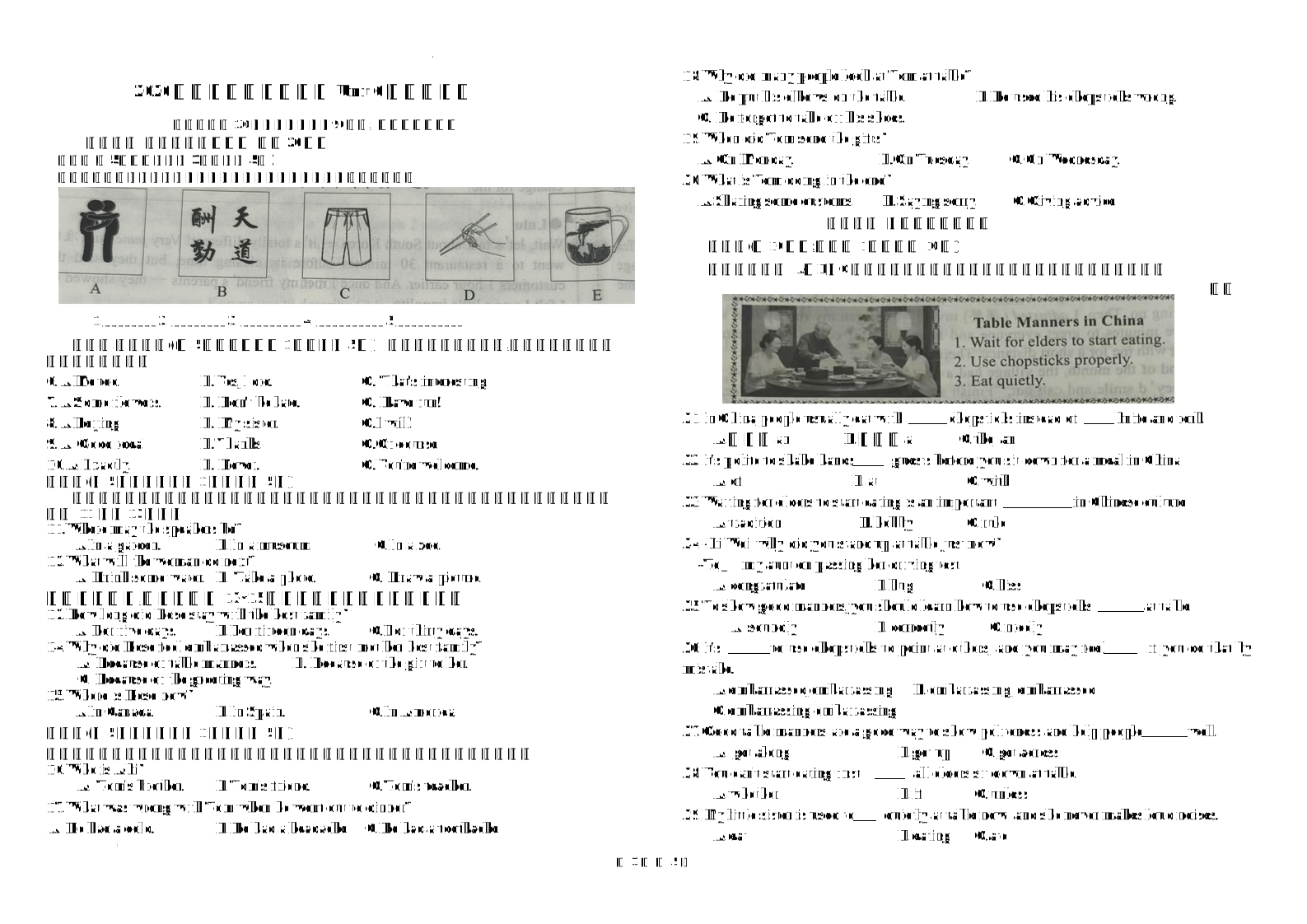
听句子录音,根据所听内容选择与句子意思一致的图画。句子读一遍。
1.________ 2. ________ 3. _________ 4. __________ 5.__________
第2节. 情景反应((共5小题,每小题1分,满分5分) 根据你所听到的句子,选出正确的答语。每个句子读两遍。
6.A.Me too. B.Yes,I did. C. That's interesting.
7.A.Some flowers. B. Don't be late. C. Have fun!
8.A.Beijing B. My sister. C.I will!
9.A. Good idea! B.Thanks. C.Of course.
10.A.Exactly. B. Never. C.You're welcome.
第三节(共5小题,每小题1分,满分5分)
听对话录音,根据所听内容选出能回答所提问题的正确选项。对话读两遍。听第一段对话,回答第 11 和第12小题。
11.Where may the speakers be?
A.In a garden. B.In a museum. C.In a zoo.
12.What will the woman do next?
A. Drink some water. B. Take a photo. C. Draw a picture.
听第二段对话,选出能回答13~15小题的最佳选项。对话读两遍
13.How long did Rose stay with the host family?
A. For five days. B.For fifteen days. C.For thirty days.
14.Why did Rose feel embarrassed when she first met her host family?
A. Because of table manners. B. Because of the gift to her.
C. Because of the greeting way.
15.Where is Rose now?
A.In Canada. B.In Spain. C.In America.
第四节(共5小题,每小题1分,满分5分)
听短文录音,根据所听内容选择能填入空白处或回答问题的正确选项。短文读两遍。
16.Who is Aki?
A. Tom's brother. B.Tom's friend. C.Tom's teacher.
17.What was wrong with Tom when he went out to dinner?
A. He had a cold. B.He had a headache. C.He had a toothache.
18.Why did many people look at Tom at table?
A. He put his elbows on the table. B.He used his chopsticks wrong.
C. He forgot to take off his shoes.
19.When did Tom send the gifts?
A. On Monday. B.On Tuesday. C.On Wednesday.
20.What is Tom doing in the end?
A.Sharing some customs. B.Saying sorry. C.Giving advice.
第二部分 :语言知识运用)
第一节(共10小题;每小题1分,满分10分)
单项选择。从 A、B、C三个选项中选出一个能回答问题或填入空白处的最佳选
1、
21.In China,people usually eat with chopsticks instead of knife and fork.
A.不填;an B.不填:a C.the; an
22.It's polite to shake hands guests before you sit down for a meal in China
A.of B.at C.with
23.Waiting for elders to start eating is an important in Chinese culture
A.tradition B.hobby C.rule
24.-Li Wei, why did you stand up at table just now?
-To_ my aunt on passing her driving test.
A.congratulate B.hug C.kiss
25.To show good manners,you should learn how to use chopsticks at table.
A. soundly B.correctly C.nicely
26.It's to use chopsticks to point at others, and you may feel if you do that by mistake.
A.embarrassed;embarrassing B.embarrassing; embarrassed
C.embarrassing;embarrassing
27.Good table manners are a good way to show politeness and help people well.
A. get along B.get up C.get across
28.You can't start eating first all elders sit down at table.
A.whether B.if C.unless
29.My little sister is used to quietly at table now, and she never makes loud noises.
A.eat B.eating C.ate
30.---Mark,why didn’t you answer my call at 7 p.m yesterday?
---Sorry,I about table manners with my dad.
A.was talking B.talked C.talk
完形填空
阅读下面短文,掌握其大意,然后从各题所给的三个选项中选出最佳答案。
My name is Vince and I’m from the United States. This is my first time in Japan. I found a job in a big factory about half a month ago. One day some new colleagues (同事) invited me to have dinner in a new restaurant. At first, I was quite 31 and learned to use chopsticks with them, but problems started later.
That day, I had a cold. I didn’t feel 32 with my nose, so I turned away from the table and blew (擤) my nose. My colleagues 33 me in surprise. They explained to me that in Japan, people don’t blow their noses in public— especially at table. I felt very 34 and really regretted 后悔 doing that.
When I was trying to stick my 35 in my bowl of rice, one of my colleagues said, “Don’t do that. Just leave them on the table.” Later, I found that leaving your chopsticks in your rice 36 death in Japanese culture!
The next time I needed to blow my nose, I 37 the table and went to the washroom. It was almost time to leave 38 I came back. I noticed there were some small bowls with water in them on the table. It smelt good and I started drinking it before it got cold. Then I saw some of my colleagues cover their mouths. They were trying not to laugh. “What’s 39 ?” I asked the colleague next to me. “It’s for 40 your fingers,” he said. For a moment, I didn’t know what to say or do.
31.A.excited B.exciting C.angry
32.A.careless B.shy C.comfortable
33.A.looked at B.worried about C.disagreed with
34.A.embarrass B.embarrassed C.embarrassed
35.A.spoons B.chopsticks C. knives
36.A.means B.accepts C.refuses
37.A.touched B.left C.changed
38.A.if B.though C.when
39.A.wrong B.important C.popular
40.A.protecting B.washing C.shaking
二、阅读理解(每小题2分 共30分)
A
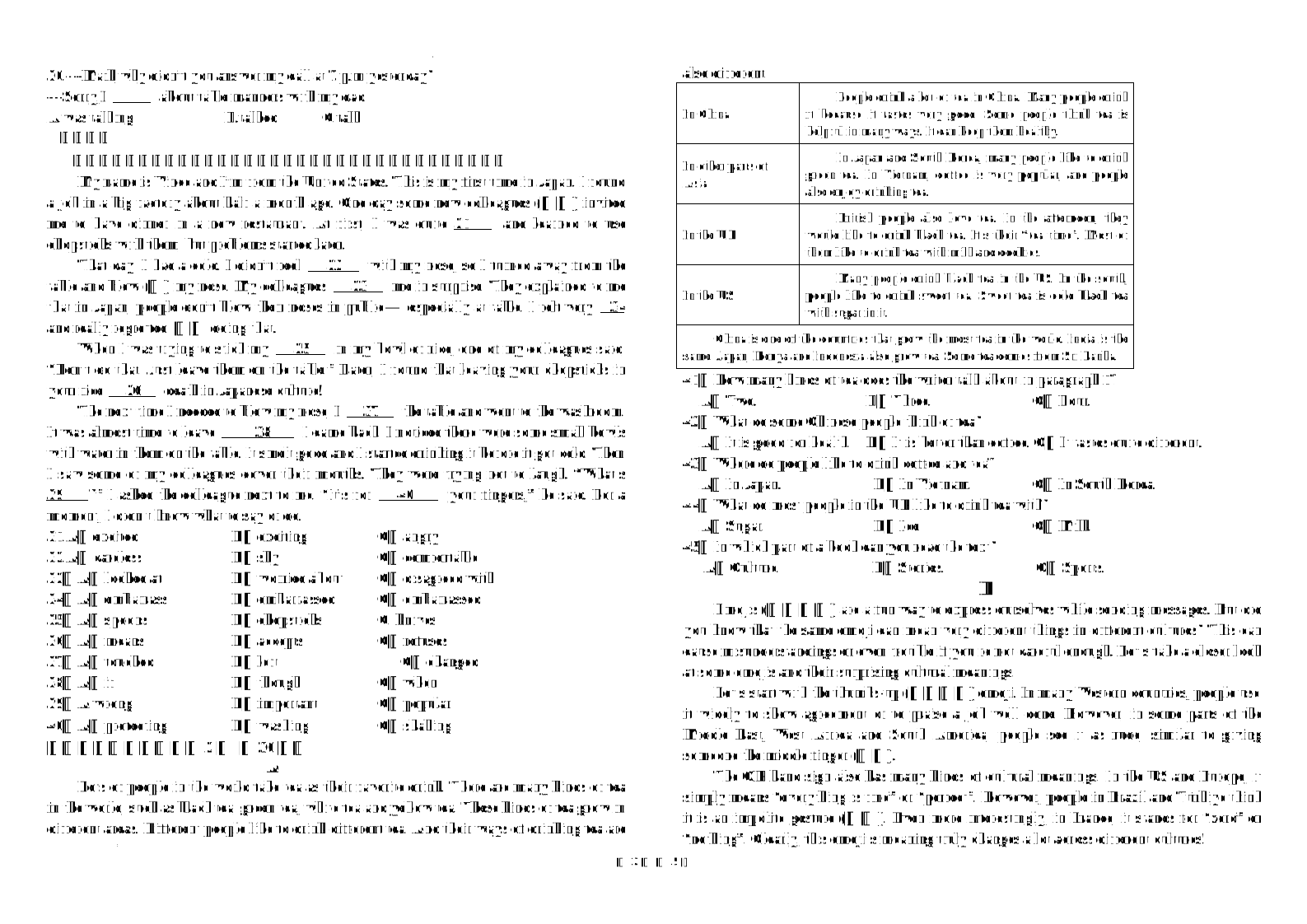
Lots of people in the world take tea as their favorite drink. There are many kinds of tea in the world, such as black tea, green tea, white tea and yellow tea. These kinds of tea grow in different areas. Different people like to drink different tea. And their ways of drinking tea are also different.
In China
People drink a lot of tea in China. Many people drink it because it tastes very good. Some people think tea is helpful in many ways. It can keep them healthy.
In other parts of Asia
In Japan and South Korea, many people like to drink green tea. In Vietnam, coffee is very popular, and people also enjoy drinking tea.
In the UK
British people also love tea. In the afternoon, they would like to drink black tea. It’s their “tea time”. Most of them like to drink tea with milk and cookies.
In the US
Many people drink black tea in the US. In the south, people like to drink sweet tea. Sweet tea is cold black tea with sugar in it.
China is one of the countries that grow the most tea in the world. India is the same. Japan, Kenya and Indonesia also grow tea. Some tea comes from Sri Lanka.
41.How many kinds of tea does the writer talk about in paragraph 1?
A.Two. B.Three. C.Four.
42.What do some Chinese people think of tea?
A.It is good for health. B.It is better than coffee. C.It tastes quite different.
43.Where do people like to drink coffee and tea?
A.In Japan. B.In Vietnam. C.In South Korea.
44.What do most people in the UK like to drink tea with?
A.Sugar. B.Ice. C.Milk.
45.In which part of a book can you read the text?
A.Culture. B.Stories. C.Sports.
B
Emojis (表情符号) are a fun way to express ourselves while sending messages. But did you know that the same emoji can mean very different things in different cultures? This can cause misunderstandings or even trouble if you’re not careful enough. Let’s take a closer look at some emojis and their surprising cultural meanings.
Let’s start with the thumbs-up (竖大拇指) emoji. In many Western countries, people use it widely to show agreement or to praise a job well done. However, in some parts of the Middle East, West Africa and South America, people see it as rude, similar to giving someone the middle finger (手指).
The OK hand sign also has many kinds of cultural meanings. In the US and Europe, it simply means “everything is fine” or “perfect”. However, people in Brazil and Türkiye think it is an impolite gesture (手势). Even more interestingly, in France, it stands for “zero” or “nothing”. Clearly, this emoji’s meaning truly changes a lot across different cultures!
The folded hands emoji also carries different meanings. In Western cultures, many people take it as a high-five—a gesture of celebration. But in most Asian cultures, it is a way to express thanks or greet others.
The crossed fingers emoji can also get you into trouble. In the UK, the US and Canada, crossing fingers is a common way to wish someone good luck. However, in Vietnam, you’d better think twice before using the gesture, as it has an unexpected negative meaning there.
Understanding these cultural differences can help avoid misunderstandings when communicating across cultures.
46.1. What does the thumbs-up emoji mean in most Western countries?
A. It is seen as rude B. It shows agreement or praise C. It means nothing
47.Which of the following has the most meanings according to the article?
A. B. C.
48. What does the OK hand sign stand for in France?
A. Everything is good B. An impolite gesture C. Zero or nothing
49. What do Asian people usually use the folded hands emoji to do?
A. Celebrate happily B. Express thanks or greet others C. Wish others good luck
50. Why should we learn different meanings of emojis?
A. To stay away from misunderstandings B. To use fewer emojis C. To create new emojis
C
Chopsticks have been used in Asia for over 3,000 years. The earliest chopsticks were discovered in Henan, China about 1200 BCE. Over the next 2,000 years, they spread throughout East and Southeast Asia.
The three most well-known types are Chinese, Japanese, and Korean. Chinese chopsticks are longer with wide, rounded points at the end, mostly made of plastic or bamboo. While Japanese chopsticks are shorter and more pointed. Korean ones are flat rather than round and made of metal rather than wood. It’s said that ancient Royalty (皇室) used silver chopsticks to see if their food was poisoned (有毒的). In Southeast Asia, Vietnamese chopsticks are similar to Chinese ones.
Chopsticks are not just eating tools. A proper chopstick grip (握法) can greatly improve dining experience. First, place the top part of two sticks between your thumb and index finger. Hold the upper chopstick gently with your first three fingers while resting the lower one at your ring finger. Meanwhile, put your thumb at the side of your index-finger nail. The upper stick is moved up and down with the movements of the index finger and middle finger. This way, pieces of food can be easily grasped between the tips of the chopsticks.
Understanding chopstick manners is also necessary.The first rule is to grab and not stab (刺入) food with the tip of your chopsticks. Second, don’t set chopsticks vertically (垂直的) into the rice in your bowl. In some cultures, such positioning of chopsticks is considered as a symbol associated with death. Third, watch where you point your chopsticks. It’s rude to point them directly at others.
Following the guidelines above, you not only show respect for the cultural traditions about chopsticks, but also enrich your overall dining experience.
51.We can learn about the ________ of chopsticks in Paragraph 2.
①
②
③
④
⑤
features
discovery
materials
types
sales
A.①③④ B.③④⑤ C.①②③
52.How many rules about using chopsticks rightly are there in Paragraph 4?
A.Two B.Three C.Five
53.Which of the following pictures describes the proper chopstick grip?
A. B. C.
54.What is the best title of the passage?
A.Chopsticks, Treasure of Asian culture B.The table manners in Asia.
C.Chopsticks,ancient eating tools
55.What would be the best structure of the passage?
A. B. C.
四、六选五
Going to visit your neighbor is fun. You will be good friends after you spend time together. 56
When to get to your neighbor’s home
When a neighbor invites you , you need to get to his or her home on time . If he or she asks you to come at 3:00, you should get there before 3:05. 57
What to take
58 Presents like a box of chocolate or a CD are good , because you can share them.
A little present is a way to show your neighbors that you are happy to be with them.
How to say hello
When you visit a neighbor , you may also meet his or her father and mother . You should take them who you are and they may tell you their names 59
It will show that you respect them. Another way to show respect is to call them madam or sir.
It is a cool thing to visit a neighbor’s house. Be nice to your neighbor and your neighbor’s parents, 60
根据材料内容,从下面六个选项中选出能填入文中空缺处的最佳选项,使文章意思、内容完整。
A.Please use Mr. or Mrs. to call them.
B.Here are the ways to be a good visitor.
C.We should say “Hello” to our neighbors .
D.But usually it’s a good idea to get there at the right time.
E.and then you will be welcomed again.
F.Often it’s nice to take something to your neighbor’s house.
56. 57. 58. 59. 60.
第三部分
五、 任务型读写(61-65 小题, 每题1分; 66-67 小题, 每小题2分;68小题6分)
阅读下面材料,按要求完成下列各题。
Kids aren’t born with good manners. They learn manners firstly from parents, so the most important way you can pass good manners to your kids is to show an example and keep talking about good manners at home.
You can’t avoid these two passwords in your home: “please” and “thank you”. Start by teaching them when your children are only months old. As they get older, remind them gently when they forget. They will get in the habit of saying “May I please have a glass of milk?” instead of “I want milk!”
My daughter went through a shy phase (阶段). She found it difficult to say “thank you” to people she didn’t know well. I knew that she wasn’t being impolite—she just wasn’t used to talking with strangers. Children shouldn’t try to be impolite, and parents can offer help.
Picking nose, talking while eating, running around. These acts are usually seen in childhood. For all these acts, you can find a simple password口令 that gives your child a sign to show they are not welcome in public places.
Good manners make children grow into polite persons,and it helps kids build nice relationships with people around.
Start with “please” and “thank you”
To help kids form good manners, parents should set good examples and talk about 61 with kids.
Say “please” and
“thank you”
We should use “please” and “thank you” at home.
Parents should 62 children when they are months old.
If children don’t remember to say the words, remind them.
Help children go
through a shy
phase
Children weren’t 63 with strangers,but it doesn’t mean they are impolite.
Children should try to be polite, and parents can offer help.
64 a simple
password as a
sign
Some actions shouldn’t be seen as bad manners, but they are not welcome 65 .
Parents can use a simple password to stop children from acting in that way.
Task Ⅰ: Finish the chart according to the article. Fill in each blank with no more than 3 words.(每空不超过3个词)
61. 62. 63. 64. 65.
Task Ⅱ:Answer the following questions.
66. Who do kids learn good manners from firstly?
67. What two words are important manners passwords at home?
68.What do you think of good manners?Why ?Explain you reasons in about 20 words.
六、书面表达
假设你叫Li Hua,你的美国朋友Jack要到一个中国朋友家里做客,他对中国的餐桌礼仪不是很了解,请你根据下列提示给他写一封电子邮件,给他一些建议。
提示:
1. 可以带一个小礼物,准时或提前到主人家。 2. 吃饭时,等主人邀请时你才能开始吃。
3. 中国人习惯用筷子吃饭,不能用筷子指任何人。4. 如果吃饱了,可以告诉主人并表示感谢。
5. ……
要求:100词左右
Dear Jack,
I’m glad that you will visit one of your Chinese friends. Table manners are important for Chinese. Here are some suggestions for you.
第 2 页 共 4 页
学科网(北京)股份有限公司
学科网(北京)股份有限公司
$
Unit 6 答案
1-5 BECDA 6-10 BABCA
11-15 ABBCA 16-20 BACAC
21-25 BCAAB 26-30 BACBA
31-35 ACCB B 36-40ABCAB
41-45CABCA 46-50BCCBA
51-55ABCAC 56-60 BDFAE
61. good manners
62. start by teaching
63.used to talking
64.Find /Use
65.in public (places)
66.Parents
67. "please" and "thank you".
68.Useful、Helpful、Great/Good Because good manners make children grow into polite persons,and it helps kids build nice relationships with people around.
Dear Jack,
I’m glad that you will visit one of your Chinese friends. Table manners are important for Chinese. Here are some suggestions for you.
First, you can bring a small gift like a box of candies, and arrive at the host’s home on time or a few minutes earlier. Second, don’t start eating until the host invites you to. Third, we Chinese usually eat with chopsticks. Never point at anyone with them, as it is quite impolite. If you are full, you can tell the host politely and thank them for the delicious meal. Besides, praising the food will make the host very happy.
Hope you have a great time in China!
Yours,
Li Hua
学科网(北京)股份有限公司
$Unit . six. 一听句子选图画,看图听句子,选出与句子一致的图画,每个句子读一遍。Number one, mary enjoys learning chinese calligraphy. Number two, ligia always offers her friends some tea when they visit her. Number three, it's improper to wear shorts to some formal events in many countries. Number four, you should learn the rules about how to use chopsticks properly. Number five in canada is polite to hug close friends or family members win greeting. 2、情景反应根据你所听到的句子,选出正确的答语,每个句子读。两遍。Number six, did you shake hands with your new friends? Did you shake hands with your . new friends? Number seven, what should I take with me to the party? What should I take with me to the party? Number eight, who will you visit when you arrive in china? Who will you visit when you arrive in china? Number nine, can you give me some advice on table manners? Can you give me some advice on table manners? Number ten, people greet each other differently in different cultures. People greet each other differently in different cultures. 3、对话理解。听第一段对话,选出能回答11、12小题的最佳选项对话读两遍。Look over there. In chinese gardens. We put rocks together to make them look like small mountains. beautiful in my country. Rocks just stay where they naturally are. Come with me to the water. You can see many fish there. Wow, they're bright red. Let me take a picture. Look over there in chinese gardens. We put rocks together to make them look like small mountains. beautiful in my country. Rocks just stay where they naturally are. Come with me to the water. You can see many fish there. Wow, they're bright red. Let me take a picture. 听第二段对话,选出能回答13至15小题的最佳选项对话读两遍。Rose, how did your school trip to spain go last month? I had a great time there, staying with the host family for fifteen days. What was your host family like? They were kind took a good care of me when they first met me. They all gave me a hug and a kiss on both cheeks. I felt embarrass here. We would just say hi, and maybe we shake hands. No touching, unless we know . someone well. yes. And Kelly, my host sister, will come to canada next month. SHE might find us a bit cold, i'm afraid. Rose, how did your school trip to spain go last month? I had a great time there, staying with the host family for fifteen days. What was your host family like? They were kind took a good care of me. When they first met me. They all gave me a hug and a kiss on both cheeks. I felt embarrass here. We would just say hi and maybe shake hands. No touching, unless we know someone will. yes. And Kelly, my host sister, will come to canada next month. He might find us a bit cold, i'm afraid. 4、短文理解根据你所听到的短文内容,选出最佳选项,短文读两遍。Hi, everyone. I'm tom. Last week, I took a trip to japan and stayed with my friend archie and his family. I went there without reading about their customs. One night, hockey's parents took us out to dinner. I had a bad cold and blew my nose in front of others. That was impolite there. What's worse, I forgot to take off my shoes when we went to our table. Then many people looked at. When okey told me later, I felt terrible. I bought gifts for oke's parents and send them on monday. Maybe I didn't have to send them anything, but I really wanted to say sorry to them. So before traveling to a new place, remember to learn about its local customs. Hi everyone, i'm tom. Last week, I took a trip to japan and stayed with my friend archie and his family. I went there without reading about their customs. One night, rocky's parents took us out to dinner. I had a bad cold and blew my nose in front of others. That was impolite there. What's worse, I forgot to take off my shoes when we went to our table. Then many people looked at when OK told me later, I felt terrible. I bought gifts for oke's parents and send them on monday. Maybe I didn't have to send them anything, but I really wanted to say sorry to them. So before traveling to a new place, remember to learn about its local customs. 听力部分到此结束,请同学们继续答题。
资源预览图
1
2
相关资源
由于学科网是一个信息分享及获取的平台,不确保部分用户上传资料的 来源及知识产权归属。如您发现相关资料侵犯您的合法权益,请联系学科网,我们核实后将及时进行处理。