西藏拉萨市第二高级中学2025-2026学年高二下学期期中英语考试
2026-05-19
|
3份
|
29页
|
30人阅读
|
0人下载
资源信息
| 学段 | 高中 |
|---|---|
| 学科 | 英语 |
| 教材版本 | - |
| 年级 | 高二 |
| 章节 | - |
| 类型 | 试卷 |
| 知识点 | - |
| 使用场景 | 同步教学-期中 |
| 学年 | 2026-2027 |
| 地区(省份) | 西藏自治区 |
| 地区(市) | 拉萨市 |
| 地区(区县) | - |
| 文件格式 | ZIP |
| 文件大小 | 39.61 MB |
| 发布时间 | 2026-05-19 |
| 更新时间 | 2026-05-21 |
| 作者 | 匿名 |
| 品牌系列 | - |
| 审核时间 | 2026-05-19 |
| 下载链接 | https://m.zxxk.com/soft/57936710.html |
| 价格 | 1.00储值(1储值=1元) |
| 来源 | 学科网 |
摘要:
**基本信息**
该高二英语期中试卷以科技前沿与文化传承为双主线,通过听力、阅读、语言运用及写作模块,全面考查语言能力、文化意识与思维品质,如阅读A篇2050年科技生活与B篇袁隆平事迹的素材融合。
**题型特征**
|题型|题量/分值|知识覆盖|命题特色|
|----|-----------|----------|----------|
|听力|20题/30分|日常交际、教育科技(SmartLearn)|情境真实,如咨询电话、城市规划话题,考查信息提取能力|
|阅读|20题/50分|科技(智能家居)、人物(袁隆平)、教育思考|梯度设计,A篇细节理解与D篇推理判断结合,培养批判性思维|
|语言运用|25题/30分|语法(时态、介词)、完形(2035科技场景)|语法填空融入屠呦呦事迹,完形通过科幻情境考查词汇运用|
|写作|2题/40分|应用文(肢体语言)、读后续写(学习互助)|应用文聚焦跨文化沟通,续写通过学习困境叙事提升逻辑表达能力|
内容正文:
2025-2026学年高二第二学期英语期中考试
参考答案及高频词汇总结
第1部分 听力 1.5分*20=30分
题号
1
2
3
4
5
6
7
8
9
10
11
12
13
14
15
16
17
18
19
20
答案
B
C
C
B
A
C
A
C
B
C
C
A
A
B
C
B
B
B
A
C
第2部分 阅读理解 2.5分*20=50分
题号
21
22
23
24
25
26
27
28
29
30
31
32
33
34
35
36
37
38
39
40
答案
B
B
A
A
B
C
B
B
D
A
C
B
C
B
C
C
F
A
D
E
第三部分 语言应用
第一节 完型填空 1分*15=15分
题号
41
42
43
44
45
46
47
48
49
50
51
52
53
54
55
答案
C
D
C
A
D
C
A
D
D
B
A
C
B
C
D
第二节 语法填空 1.5分*10=15分
56.graduation 57.years 58.to establish 59.which 60.a 61.traditional 62.Eventually 63.on 64.most effective 65.was awarded
应用文写作:
Dear Tony,
I am more than thrilled to have received your letter where you mention that you will come to my school as an exchange student next month and I would like to extend my warmest welcome to you.
As is known to us all, body language varies from country to country. When exchanging greetings, people in China will shake hands with each other to convey our kindness, while nodding and giving a big thumb are what we usually use when showing our agreement. However, some Chinese may think it is impolite to show their disagreement directly and thus they may frown or keep silent to imply their disapproval. All in all, in China, people express our emotions in a reserved way and try to avoid too much body contact.
By the way, I would also like to invite you to live in my home so that you can know more about our traditional customs. Look forward to your arrival.
Yours,
Li Hua
读后续写: Paragraph 1:
I took a deep breath and looked at Mrs. Chen, who smiled gently at me. Her warm smile gave me the courage I needed. I closed my eyes for a second, trying to recall the first sentence of my speech. When I opened them again, I whispered the first words, my voice trembling slightly. As I went on, I found myself remembering more and more. I spoke about small acts of kindness I’d seen, like helping a classmate pick up books or sharing snacks. With each word, my voice grew steadier, and my hands stopped shaking. I even made eye contact with a few classmates, who nodded softly at me.
Paragraph 2:
When I finished my speech, the whole class burst into applause. I stood there, shocked, my face turning red with joy and relief. Mrs. Chen walked over and patted my shoulder gently. “You did it,” she said, her eyes full of pride. After class, several classmates came up to me and told me they loved my speech. Some even said I sounded confident. That day, I realized that bravery isn’t about being fearless — it’s about trying even when you’re scared. I finally stepped out of my shell, and for the first time, I felt seen and heard.
答案解析
阅读A
21. 细节理解题 答案B
原文:allowing the home to sense our moods and requirements
句意:智能家居可感知人的情绪与需求
A 需要下达所有指令(错误,无需下达指令)
B 人工智能感知情绪和需求(正确)
C 只用全息电视(错误,只是其中一种设备)
D 完全没有互动科技(错误)
22. 细节理解题 答案B
原文:have no need for books, using tablets and laptops instead
不用纸质书本,使用平板、笔记本电脑等电子设备
A 纸张 C 钢笔 D 黑板 均为传统教具,全部排除
B 电子阅读器属于电子学习工具,故选B
23. 细节理解题 答案A
原文:about half of the world’s current jobs will disappear, taken over by AI
全球现有一半工作会被人工智能取代
A 人工智能将取代全球半数现有工作(正确)
B 无重大影响(错)
C 创造更多岗位(文中未提及)
D 劳动力保持不变(错)
阅读B
24. 答案A 解析:文章首句直接点明 Yuan Longping, known as the “father of hybrid rice”,袁隆平被誉为杂交水稻之父,其余选项文中无依据。
25. 答案B 解析:原文第二段第一句 Yuan Longping was born in 1930 in Beijing,出生于1930年。
26. 答案C 解析:原文 he chose to study agriculture and received an education at Southwest Agricultural College in Chongqing,就读于西南农学院。
27. 答案B 解析:原文 One characteristic of hybrids is that they usually attain a higher yield than conventional crops.杂交作物的特点就是产量比传统农作物更高,A表述相反,C、D均不是文中提到的特点。
阅读C
28. 答案B 解析:文中提到学习外语能让其他国家的人理解自己所说所想,故选外语。
29. 答案D 解析:原文原句 Nearly everything they study at school has some practical use in their life,在校所学科目几乎都具备实际用处。
30. 答案A 解析:懂得如何学习的人永远容易获得成功,学会学习是成功关键。
31. 答案C 解析:上学不只是学知识,更是为未来生活、工作做好全方位准备。
阅读D
32. 答案B解析:结合上下文,理科生只专注本专业,不敢去接触别的课程,branch out 意为尝试新事物、拓展兴趣。
33. 答案C解析:他们害怕自己喜欢别的选修课,在同龄人眼中显得怪异、与众不同,所以只埋头学专业课。
34. 答案B 解析:院系主任支持,但其他教授持不赞同、反对态度,对外界兴趣表示质疑与不满。
35. 答案C 解析:文章主旨:鼓励理科专业的大学生跳出局限,多培养课外兴趣、学习不同课程,全面发展。
七选五
36 答案C
解题分析
前文关键词:regular hours(固定时间)、brain works best
后文关键词:study subjects at certain times
逻辑:前文说固定作息利于大脑高效运转,后文讲固定时间学习科目
选C原因:选项里brain、regular time 与原文原词呼应,承接作息规律带来的学习状态,承上启下。
答案F
解题分析
本段中心:create a good study environment 打造良好学习环境
前文关键词:quiet、no distractions
逻辑:前文说学习环境要安静无干扰,顺接反面环境带来的影响
选F原因:messy space(杂乱环境)和前文整洁安静形成对比,distract 与distractions 同根词复现,语境高度贴合。
38.答案A
解题分析
位置:段首小标题
后文核心词:big difficult tasks、small parts、finish step by step
选A原因:选项break difficult tasks into small parts 和后文完全同义匹配,直接概括整段主旨。
39.答案D
解题分析
前文关键词:long hours studying、tired、lose focus
逻辑:长时间学习疲惫注意力下降,后文引出休息
选D原因:breaks(休息)对应前文疲劳问题,时间时长贴合学习常识,前后因果衔接。
40.答案E
解题分析
本段主旨:review your knowledge 复习知识
后文关键词:go over notes、keep knowledge fresh
选E原因:regular review 与段落中心词review 原词复现,long-term remember 对应巩固记忆,贴合结尾总结逻辑。
完形填空
41. C but
前文:像从梦中醒来;后文:很快发现来到2035年
前后转折关系,用but。
42. D waving
搭配:wave to sb 向某人挥手
机器人热情朝我挥手打招呼。
43. C wondering
语境:我立刻点头,心里想知道这座城市是什么样子。
44. A astonished
前文看见纵横交错空中车道,我满脸吃惊,机器人见状开始讲解。
45. D advanced
固定搭配:advanced technology 先进技术,贴合未来2035设定。
46. C realized
走进餐厅,我意识到这里没有菜单。
47. A instrument
服务员用特殊仪器扫描身体,其余词汇不符合场景。
48. D sprang
spring out of seat 猛地从座位上跳起来,被扫描举动吓到。
49. D suited
机器算出身体所需,挑选最适合我们的食谱。
50. B preferences
电子屏幕可根据个人喜好选择就餐环境。
51. A suddenly
按下沙滩按键,突然就感受到海风。
52. C sigh
can’t help but sigh 不由得感慨,感叹科技发展飞速。
53. B eventually
游玩过后,最终回到火车站。
54. C got on
固定短语:get on the train 登上火车。
55. D fantastic
这场穿越未来的梦十分奇妙美好,选fantastic绝妙的。
词汇总结
阅读A
一、重点必背词汇(高二难度 带音标+释义)
1. reality /riˈæləti/ n. 现实;实际情况
2. mere /mɪə(r)/ adj. 仅仅的;只不过
3. decade /ˈdekeɪd/ n. 十年
4. unfold /ʌnˈfəʊld/ v. 展开;逐渐呈现
5. dig into 深入探究;钻研
6. requirement /rɪˈkwaɪəmənt/ n. 需求;要求
7. command /kəˈmɑːnd/ n. 命令;指令 v. 指挥
8. interactive /ˌɪntərˈæktɪv/ adj. 交互式的;互动的
9. hologram /ˈhɒləɡræm/ n. 全息影像
10. verbally /ˈvɜːbəli/ adv. 口头地;言语上地
11. commonplace /ˈkɒmənpleɪs/ adj. 普遍的;常见的
12. physically /ˈfɪzɪkli/ adv. 实地地;身体上地
13. tablet /ˈtæblət/ n. 平板电脑
14. laptop /ˈlæptɒp/ n. 笔记本电脑
15. enroll /ɪnˈrəʊl/ v. 入学;注册
16. globalize /ˈɡləʊbəlaɪz/ v. 使全球化
17. workforce /ˈwɜːkfɔːs/ n. 劳动力;全体员工
18. radical /ˈrædɪkl/ adj. 彻底的;根本的
19. career /kəˈrɪə(r)/ n. 职业;生涯
20. take over 接管;取代
二、长难短语
1. be filled with 充满
2. dig into 深入了解
3. call up 调出;唤起
4. get better 不断发展;越来越好
5. change the face of 改变……面貌
6. career change 转行
阅读B
1. hybrid /ˈhaɪbrɪd/ adj.杂交的 n.杂交作物
2. continual /kənˈtɪnjuəl/ adj.持续的;频繁的
3. slim /slɪm/ adj.苗条的;纤细的
4. devote /dɪˈvəʊt/ v.致力于;奉献
5. pursue /pəˈsjuː/ v.追求;从事
6. career /kəˈrɪə(r)/ n.职业;事业
7. concern /kənˈsɜːn/ v.使担忧;涉及
8. harvest /ˈhɑːvɪst/ n.&v.收成;收获
9. shortage /ˈʃɔːtɪdʒ/ n.短缺;不足
10. tackle /ˈtækl/ v.解决;处理
11. agriculture /ˈæɡrɪkʌltʃə(r)/ n.农业
12. researcher /rɪˈsɜːtʃə(r)/ n.研究员
13. boost /buːst/ v.提升;增加
14. yield /jiːld/ n.产量 v.产出
15. convince /kənˈvɪns/ v.使确信;说服
16. creation /kriˈeɪʃn/ n.创造;培育
17. variety /vəˈraɪəti/ n.品种;种类
18. characteristic /ˌkærəktəˈrɪstɪk/ n.特征 adj.典型的
19. attain /əˈteɪn/ v.获得;达到
20. conventional /kənˈvenʃənl/ adj.传统的;常规的
21. pollinate /ˈpɒlɪneɪt/ v.授粉
22. debate /dɪˈbeɪt/ n.&v.辩论;争论
23. assumption /əˈsʌmpʃn/ n.假设;假定
24. intense /ɪnˈtens/ adj.巨大的;强烈的
25. enormous /ɪˈnɔːməs/ adj.庞大的;巨大的
26. domestic /dəˈmestɪk/ adj.国内的;家用的
27. consumption /kənˈsʌmpʃn/ n.消耗;消费量
28. comprise /kəmˈpraɪz/ v.由……组成
29. generate /ˈdʒenəreɪt/ v.培育;产生
30. invaluable /ɪnˈvæljuəbl/ adj.极宝贵的
31. contribution /ˌkɒntrɪˈbjuːʃn/ n.贡献
32. leisure /ˈleʒə(r)/ n.闲暇;休闲
33. celebrity /səˈlebrəti/ n.名望;名人
34. donation /dəʊˈneɪʃn/ n.捐赠;捐款
35. ongoing /ˈɒnɡəʊɪŋ/ adj.持续进行的
36. envision /ɪnˈvɪʒn/ v.设想;展望
37. sorghum /ˈsɔːɡəm/ n.高粱
38. broom /bruːm/ n.扫帚
39. peanut /ˈpiːnʌt/ n.花生
40. vision /ˈvɪʒn/ n.愿景;视野
41. salty /ˈsɔːlti/ adj.含盐的;盐碱的
高频短语
1. be known as 作为……闻名
2. work the land 耕种田地
3. devote one’s life to 毕生致力于
4. pursue a career 从事一份职业
5. food shortage 粮食短缺
6. graduate from 从……毕业
7. technical difficulty 技术难题
8. expand output 提高产量
9. depend on 依靠;依赖
10. far from the case 事实远非如此
11. care little for 不在乎;看淡
12. fulfil one’s dream 实现梦想
13. open up 开辟;开垦
阅读C
1. mathematics /ˌmæθəˈmætɪks/ n. 数学
2. geography /dʒiˈɒɡrəfi/ n. 地理
3. practical /ˈpræktɪkl/ adj. 实用的;实际的
4. education /ˌedʒuˈkeɪʃn/ n. 教育
5. continue /kənˈtɪnjuː/ v. 继续
6. successful /səkˈsesfl/ adj. 成功的
7. uneducated /ʌnˈedʒukeɪtɪd/ adj. 未受过教育的
8. purpose /ˈpɜːpəs/ n. 目的;意图
9. benefit from 从……中获益
10. prepare for 为……做准备
11. above all 首先;最重要的是
12. on the other hand 另一方面
阅读D
1. icebreaker /ˈaɪsbreɪkə(r)/ n. 破冰活动
2. seminar /ˈsemɪnɑː(r)/ n. 研讨会;研讨课
3. major /ˈmeɪdʒə(r)/ n. 专业 adj. 主要的
4. impact /ˈɪmpækt/ v.&n. 影响
5. branch out 拓展范围;尝试新事物
6. peer /pɪə(r)/ n. 同龄人;同伴
7. optional /ˈɒpʃənl/ adj. 可选择的;选修的
8. well-rounded /ˌwel ˈraʊndɪd/ adj. 全面发展的
9. implicitly /ɪmˈplɪsɪtli/ adv. 含蓄地;暗中地
10. skepticism /ˈskeptɪsɪzəm/ n. 怀疑态度
11. requirement /rɪˈkwaɪəmənt/ n. 要求;必修内容
12. enroll /ɪnˈrəʊl/ v. 入学;注册
13. bandwidth /ˈbændwɪdθ/ n. 精力;余力
14. medieval /ˌmediˈiːvl/ adj. 中世纪的
15. disapproval /ˌdɪsəˈpruːvl/ n. 不赞成;反对
七选五
1. habit /ˈhæbɪt/ n. 习惯
2. essential /ɪˈsenʃl/ adj. 极其重要的;必不可少的
3. academic /ˌækəˈdemɪk/ adj. 学业的;学术的
4. effectively /ɪˈfektɪvli/ adv. 有效地
5. reduce /rɪˈdjuːs/ v. 减少;降低
6. stress /stres/ n. 压力 v. 使焦虑
7. practical /ˈpræktɪkl/ adj. 实用的;切实可行的
8. fixed /fɪkst/ adj. 固定的;确定的
9. schedule /ˈʃedjuːl/ n. 计划表;日程表
10. routine /ruːˈtiːn/ n. 常规;惯例
11. stick to 坚持;遵守
12. comfortable /ˈkʌmftəbl/ adj. 舒适的
13. distraction /dɪˈstrækʃn/ n. 分心的事物;干扰
14. supply /səˈplaɪ/ n. 用品;物资 v. 提供
15. stationery /ˈsteɪʃənri/ n. 文具
16. associate /əˈsəʊsieɪt/ v. 联想;联系
17. assignment /əˈsaɪnmənt/ n. 作业;任务
18. overwhelming /ˌəʊvəˈwelmiŋ/ adj. 令人难以承受的
19. split /splɪt/ v. 拆分;分割
20. specific /spəˈsɪfɪk/ adj. 具体的;明确的
21. manageable /ˈmænɪdʒəbl/ adj. 易完成的;易处理的
22. motivate /ˈməʊtɪveɪt/ v. 激励;激发
23. fatigue /fəˈtiːɡ/ n. 疲劳;疲惫
24. concentration /ˌkɒnsnˈtreɪʃn/ n. 注意力;专注
25. stretch /stretʃ/ v. 伸展;舒展
26. reflect /rɪˈflekt/ v. 反思;思考
27. strengthen /ˈstreŋθn/ v. 加强;巩固
28. continuous /kənˈtɪnjuəs/ adj. 持续的;不间断的
29. effort /ˈefət/ n. 努力
30. second nature 自然而然的习惯;本能
重点短语
1. academic success 学业有成
2. study schedule 学习计划表
3. study space 学习空间
4. get into study mode 进入学习状态
5. in one sitting 一口气;一次性
6. stay motivated 保持积极性
7. regular breaks 定时休息
8. long-term memory 长期记忆
9. achieve goals 实现目标完形填空
完形填空
1. terminal /ˈtɜːmɪnl/ n. 终点站;终点
2. enthusiastically /ɪnˌθjuːziˈæstɪkli/ adv. 热情地
3. lane /leɪn/ n. 车道;航线
4. astonished /əˈstɒnɪʃt/ adj. 惊讶的
5. advanced /ədˈvɑːnst/ adj. 先进的;高级的
6. eliminate /ɪˈlɪmɪneɪt/ v. 消除;清除
7. jam /dʒæm/ n. 堵塞;拥挤
8. scan /skæn/ v. 扫描;浏览
9. instrument /ˈɪnstrəmənt/ n. 仪器;器具
10. fright /fraɪt/ n. 惊吓;恐惧
11. spring /sprɪŋ/ v. 跳;跃起
12. recipe /ˈresəpi/ n. 食谱;配方
13. suit /suːt/ v. 适合;满足
14. preference /ˈprefrəns/ n. 偏爱;喜好
15. breeze /briːz/ n. 微风;和风
16. sigh /saɪ/ v. 叹息;感慨
17. rapidly /ˈræpɪdli/ adv. 迅速地
18. familiar /fəˈmɪliə(r)/ adj. 熟悉的
重点短语
1. wake up 醒来
2. turn around 转身
3. show sb around 带某人参观
4. put into place 实施;启用
5. traffic jam 交通堵塞
6. figure out 弄清楚;查明
7. can’t help but do 忍不住做某事
8. get on 登上(交通工具)
听力原文:
Text 1时间
W:What's the time by your watch? M:8:20.But It's 5 minutes slow.
Text 2(旅行)
W:You'd better fasten your seat belt,sir.We'll be coming onto I
and soon.
M:Oh,thank you.Landing is the best part of the flight.
Text3(日常活动)
M:Can you stay for supper?
W:l'd like to,but I have to buy some meat and vegetables b
efore my brother comes home from his office.
Text 4(计划与安排)
M:We are going to have a dance party at Tom's.Can you come?
W:I wish I could, but I have to nurse the patients on weekends.
Text 5(语言学习)
M:Have you any difficulty with the pronunciation,Sara?
W:No,I haven't much difficulty with the pronunciation.l can pronounce English well,but I cannot spell it.
Text 6(地点与方向)
W:Excuse me.Can you tell me the way to the Public Library?
M:The Public Library?But there are so many public libraries in London.Which one do you want to go to?
W:The nearest one.
M:That's rather far away,too.You'd better take a bus."Take the No.7 bus to the zoo,then change to the No.9 bus and get off at the end.
W:And where's the No.7 bus-stop,please?
M:Go straight down the street,and turn left at the traffic lights.Then take the second turning on the right,and you'll fin d the bus-stop near the corner. You can't miss it.
W:Thank you very much. M:Not at all.
Text 7(娱乐)
W:Hi, George.11 I loved your concert last night! How are you?
M:I'm a little bit tired.We didn't go to bed until 5:00 in the
morning.And I injured my leg before the show.But I feel better this afternoon.I slept all morning.How did you like the show?
W:1 loved it. Your singing was great When are you playing next?
M:We have our next show here in New York this Thursday.
W:I would love to go,but I have to stay and work here at the store.
M:Well,maybe you can see us next week when we play in Washington.
W:Yeah, maybe. I'm planning to go to San Francisco on vacation in April, so I may not be able to travel to Washington
Text 8(学校生活)
W:Hi,Martin.How are you?
M:Fine,but busy.We've got some exams next week-remember?
W:I know."How much work did you do last night?
M:.None.I went to the cinema.What about you?
W:had no time last night.It was my sister's birthday,so we all went out to dinner.
M:Have you done any work this morning?
W:Some,but not a lot.Anyway,I rang to ask you something.Do you know where my physics book is?
M:I've got no idea,but you can borrow mine if you want.
W:Thanks.
M:Let's meet outside Natbank in High Street at lunch time.I'll bring my physics book to you.
W:Good idea.I'm very worried about the physics exam.Have you got any old exam papers? I'd really like to look through them.
M:I haven't,but my brother's got some.I'll bring them with me at lunch time.
W:Wonderful! See you at 12:30.OK?
Text 9(图书馆)
W:Are you having a problem?
M:Yes."I have to do a research paper for history.There's a major book that I need,but I can't find it. W:Did you try the card list? M:Yes,but it's not there.
W:Well,if it's a recent book,it won't be in the card list. All information about books since 1995 is in the computer.I advise you to try that. M:No wonder!This book was published in 1998.
W:All you have to do is to type in the title or the writer's name.
M:Do you mean it will tell me whether the book is out or not?
W:Yes,it will.It will also give you the due date if it is out.the book is in the library,it will tell you where you can find the book.
Text 10(学校生活)
M:Ours is an international language college.As you can see,there are a lot of buildings in the college." It can be difficult for new students to find their way around,so we're taking you on this quick walk around.The college used to have four departments:English,French,German and Russian.But there is now also a Chinese department.At the moment we're outside your department,1 the English department which is the largest department in the college.There are over 75 students in each grade and we have35 teachers,including 15 professors. The teachers are from different countries,mainly from the USA and Canada,with a few from England and Australia.You'll have all your classes here in this building.Now,let's walk over to the main library which is the largest building in the college just next to the English department building
学科网(北京)股份有限公司
$与听力专项训练30,每段对话或独白后有几个小题,从题中所给的ABC3个选项中选出最佳选项,并标在试卷的相应位置。听每段对话或独白前,你将有时间阅读各个小题,每小题5秒钟。听完后各小题将给出5秒钟的作答时间,每段对话或独白读两遍。What's the time by your watch? Eight, twenty, but it's five minutes slow. What's the time by your watch? Eight, twenty, but it's five minutes slow. You'd Better fasten your seat belt. Sir will be coming onto land soon. Oh, thank you. Landing is the best part of the flight. You'd Better fasten your seat belt. Sir will be coming onto land soon. Oh, thank you. Landing is the best part of the flight. Can you stay for supper? I'd like to, but I have to buy some meat and vegetables before my brother comes home from his office. Can you stay for supper? I'd like to, but I have to buy some meat and vegetables before my brother comes home from his office. We are going to have a dance party at tomes. Can you come? I wish I could, but I have to nurse the patients on weekends. We are going to have a dance party at tom's. Can you come? I wish I could, but I have to nurse the patients on weekends. Have you any difficulty with the pronunciation? Sarah. no, I haven't much difficulty with the pronunciation. I can pronounce english well, but I cannot spell IT. Have you any difficulty with the pronunciation? Sarah, no, I much difficulty with the pronunciation. I can pronounce english well, but I cannot spell IT. 听下面一段对话,回答第六和第7两个小题。现在你有10秒钟的时间阅读这两个小题。Excuse me, can you tell me the way to the public library. the public library, but there are so many public libraries in london. Which one do you want to go to? The nearest one . that's rather far away too. You'd Better take a bus. Take the number seven bus to the zoo, then change to the number nine bus and get at the end. And where's the number seven bus stop? Please go . straight down the street and turn left at the traffic lights, then take the second turning on the right and you'll find the bus stop near the corner. You can't miss IT. Thank you very much. Not at all. Excuse me, can you tell me the way to the public library. the public library, but there are so many public libraries in london. Which one do you want to go to? The nearest one . that's rather far away too. You'd Better take a bus, take the number seven bus to the zoo, then change to the number nine bus and get off at the end. And where's the number seven bus stop? Please go straights down the street and turn left at the traffic lights, then take the second turning on the right, and you'll find the bus stop near the corner. You can't miss you. Thank you very much. Not at all. 听下面一段对话,回答第八和第9两个小题。现在你有10秒钟的时间阅读这两个小题。Hi George. I loved your concert last night. How are you? I'm a little bit tired. We didn't go to bed until five o'clock in the morning, and I injured my leg before the show, but I feel Better this afternoon. I slept all morning. How did you like the show? I loved IT. Your singing was great. When are you playing next? We have our next show here in new york this thursday. I would love to go, but I have to stay and work here at the store. Well, maybe you can see us next week when we play in washington. Yeah, maybe i'm planning to go to some Francisco on vacation in April, so I may not be able to travel to washington. Hi George. I loved your concert last night. How are you? I'm a little bit tired. We didn't go to bed until five o'clock in the morning, and I injured my leg before the show, but I feel Better this afternoon. I slept all morning. How did you like the show? I loved IT. Your singing was great. When are you playing next? We have our next show here in new york this thursday. I would love to go, but I have to stay and work here at the store. Well, maybe you can see us next week when we play in washington. Yeah, maybe i'm planning to go to some Francisco on vacation in April, so I may not be able to travel to washington. 听下面一段对话,回答第十至第十二三个小题。现在你有15秒钟的时间阅读这三个小题。Hi, Martin, how are you? Fine. but busy. We've got some exams next week. remember? I know how much work did you do? Last night I went to the cinema. What about? I had no time. Last night, I was my sister's birthday, so we all went out to dinner. Have you done any work this morning? Some, but not a lot. Anyway, I want to ask you something. Do you know where my physics book is? I've got no idea, but you can borrow mine if you want. thanks. Lets meet outside that bank in high street at lunch time. I'll bring my physics book to you. Good idea. I'm very worried about the physics exam. Have you got any old exam papers? I'd really like to look through them. I haven't, but my brothers got some. I'll bring them with me . at lunch time. wonderful. See you at twelve thirty. okay. Hi Martin. How are you? Fine, but busy. We've got some exams next week. remember? I know how much work did you do last night? I went to the cinema. What about you? I had no time. Last night. I was my sister's birthday, so we all went out to dinner. Have you done any work this morning? Some, but not a lot. Anyway, I rank to ask you some. Do you know where my physics book is? I've got no idea, but you can borrow mine if you want. thanks. Let's meet outside that bank in high street at lunch time. I'll bring my physics book to you. Good idea. I'm very worried about the physics exam. Have you got any old exam papers? I'd really like to look through them. I haven't, but my brother's got some. I'll bring them with me at lunch time. wonderful. See you at twelve thirty, okay? 听下面一段对话,回答第13至第16 4个小题。现在你有20秒钟的时间阅读这四个小题。Are you having a problem? Yes. I have to do a research paper for history. There's a major book that I need, but I can't find that. Did you try the card list? Yes, but it's not there. Well. if its a recent book, IT won't be in the card list. All information about books since nineteen ninety five is in the computer. I advise you to try that. No wonder this book was published in nineteen ninety eight. All you have to do is to type in the title or the writers name. Do you mean IT will tell me whether the book is . out or not? Yes, IT will. IT will also give you the due date if IT is out. If the book is in the library, IT will tell you where you can find the book. Are you having a problem? Yes. I have to do a research paper for history. There's a major book that I need, but I can't find that. Did you try the card list? Yes, but it's not there. Well. if its a recent book, IT won't be in the card list. All information about books since nineteen ninety five is in the computer. I advise you to try that. No wonder this book was published in nineteen ninety eight. All you have to do is to type in the title or the writer's name. Do you mean IT will tell me whether the book is . out or not? Yes, IT will. IT will also give you the due date if IT is out. If the book is in the library, IT will tell you where you can find the book. 听下面一段独白,回答第17至第24个小题。现在你有20秒钟的时间阅读这四个小题。As as an international language college, as you can see, there are a lot of buildings in the college IT can be difficult for new students to find their way around, so we are taking you on this quick walk around. The college used to have four departments, english, french, german and russian, but there is now also a chinese department. At the moment, we're outside your department, the english department, which is the largest department in the college, there are over seventy five students in each grade, and we have thirty five teachers, including fifteen professors. The teachers are from different countries, mainly from the USA and canada, with a few from england and australia. You'll have all your classes here in this building. No, let's walk over to the main library, which is the largest building in the college, just next to the english department building as as an international language college. As you can see, there are a lot of buildings in the college IT can be difficult for new students to find their way around, so we are taking you on this quick walk around. The college used to have four departments, english, french, german and russian, but there is now also a chinese department. At the moment, we're outside your department, the english department, which is the largest department in the college, there are over seventy five students in each grade, and we have thirty five teachers, including fifteen professors. The teachers are from different countries, mainly from the U. S. A. And canada, with a few from england and australia. You'll have all your classes here in this building. No, let's walk over to the main library, which is the largest building in the college, just next to the english department building. 第二节到此结束,听力部分到此结束。
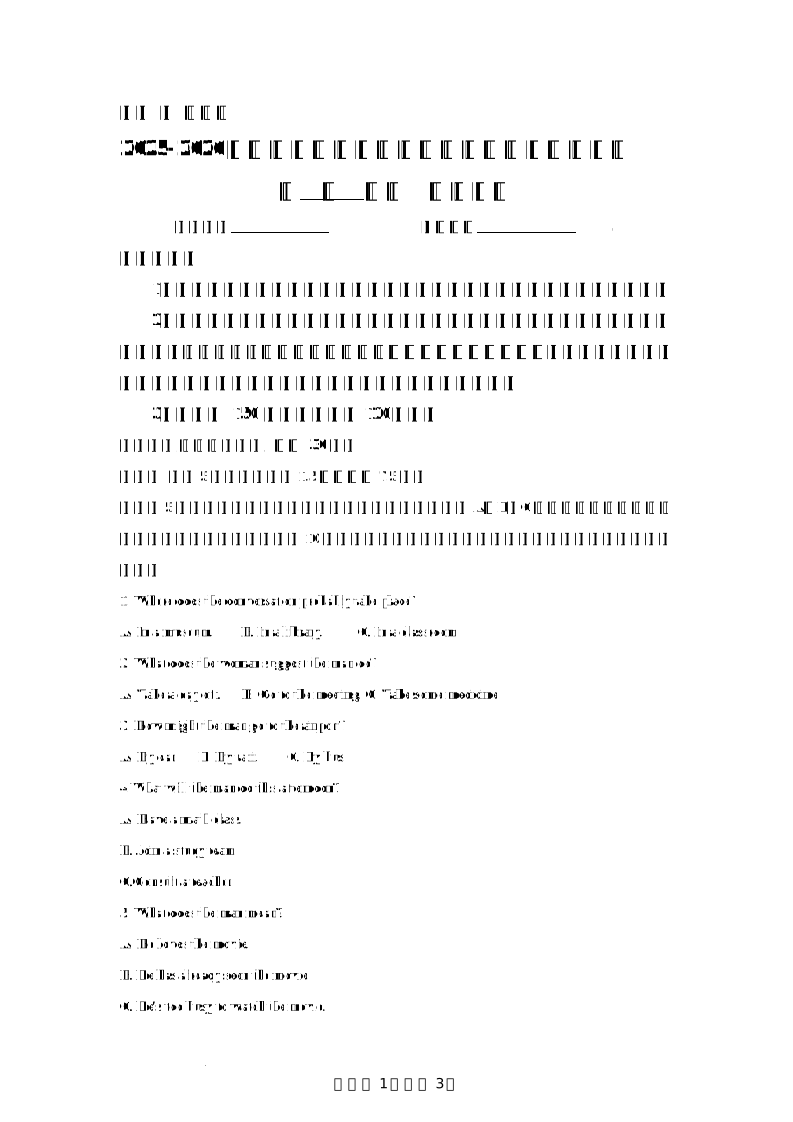
绝密 ★ 启用前
2025-2026学年第二学期拉萨市第三高级中学期中考试
高 二 年级 英语试卷
命题人: 审题人: .
注意事项:
1、答卷前,考生务必将自己的姓名、考生号等填写在答题卡指定位置上。
2、作答选择题时,选出每小题答案后,用铅笔把答题卡对应题目的答案标号涂黑。如需改动,用橡皮擦干净后,再选涂其它答案标号。作答非选择题时,将答案用黑色签字笔写在答题卡上。写在本试卷上无效。
3、试卷共 150 分,考试时间120分钟。
第一部分;听力(共两节, 满分 30 分)
第一节 (共5小题:每小题1.5分,满分7.5分)
听下面5段对话,每段对话后有一个小题,从题中所给的A、B、C三个选项中选出最佳选项,听完每段对话后,你都有10秒钟的时间来回答有关小题和阅读下一小题。每段对话读两遍。
1. Where does the conversation probably take place?
A. In a museum. B. In a library. C. In a classroom
2. What does the woman suggest the man do?
A. Take a day off. B. Go to the meeting. C. Take some medicine
3. How might the man go to the airport?
A. By car. B. By taxi. C. By bus.
4.What will the man do this afternoon?
A. Have a math class.
B. Join a study team.
C.Consult a teacher
5. What does the man mean?
A. He loves the movie.
B. He has already seen the movie.
C. He's too busy to watch the movie.
第二节 (共 15 小题;每小题 1.5分, 满分 22.5分)
听下面5段对话或独白。每段对话或独白后有几个小题,从题中所给的A、B、C三个
选项中选出最佳选项。听每段对话或独白前,你将有时间阅读各个小题,每小题5秒钟;
听完后,各小题将给出5秒钟的作答时间。每段对话或独白读两遍。
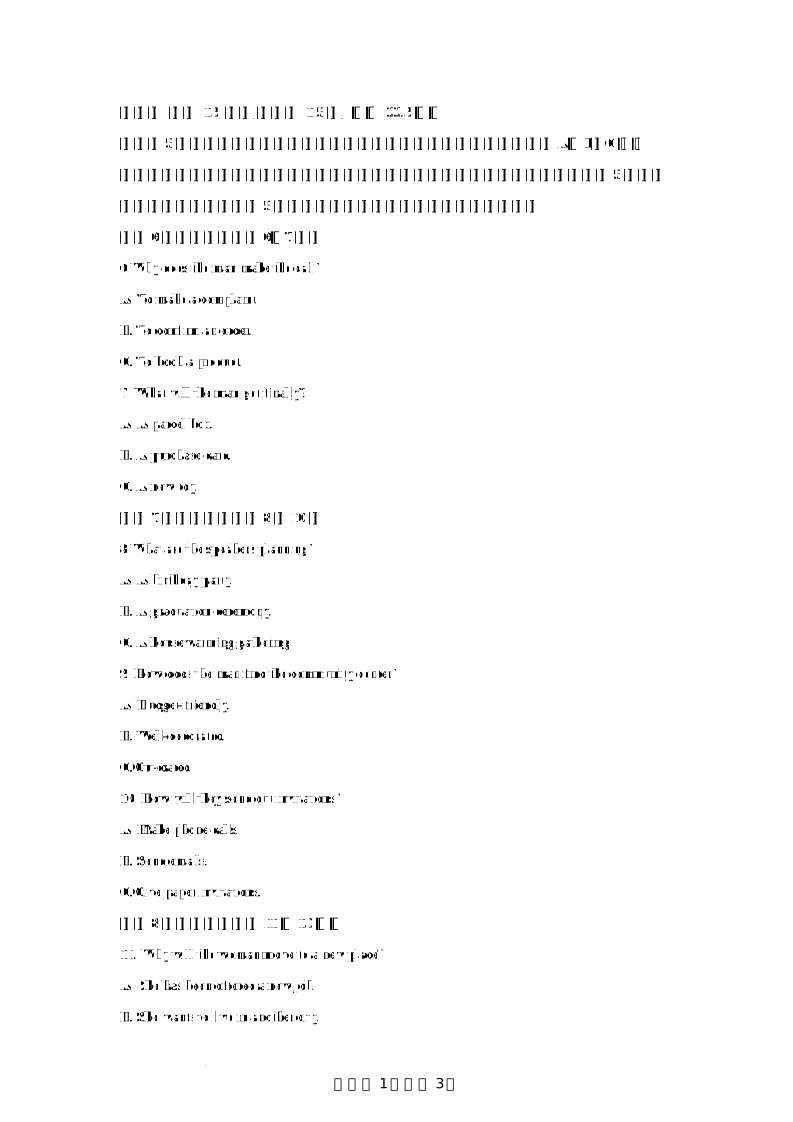
听第6段材料,回答第6、7题。
6.Why does the man make the call?
A. To make a complaint.
B. To confirm an order.
C. To book a product.
7. What will the man get finally?
A. A parcel box.
B. A purchase card.
C. A new toy.
听第7段材料,回答第8至10题
8.What are the speakers planning?
A. A birthday party.
B. A graduation ceremony.
C. A housewarming gathering
9. How does the man find the community center?
A. Budget-friendly.
B. Well-decorated.
C.Out-dated.
10. How will they send out invitations?
A. Make phone calls.
B. Send emails.
C.Give paper invitations.
听第8段材料,回答第11至13题。
11. Why will the woman move to a new place?
A. She has been offered a new job.
B. She wants to live in another city.
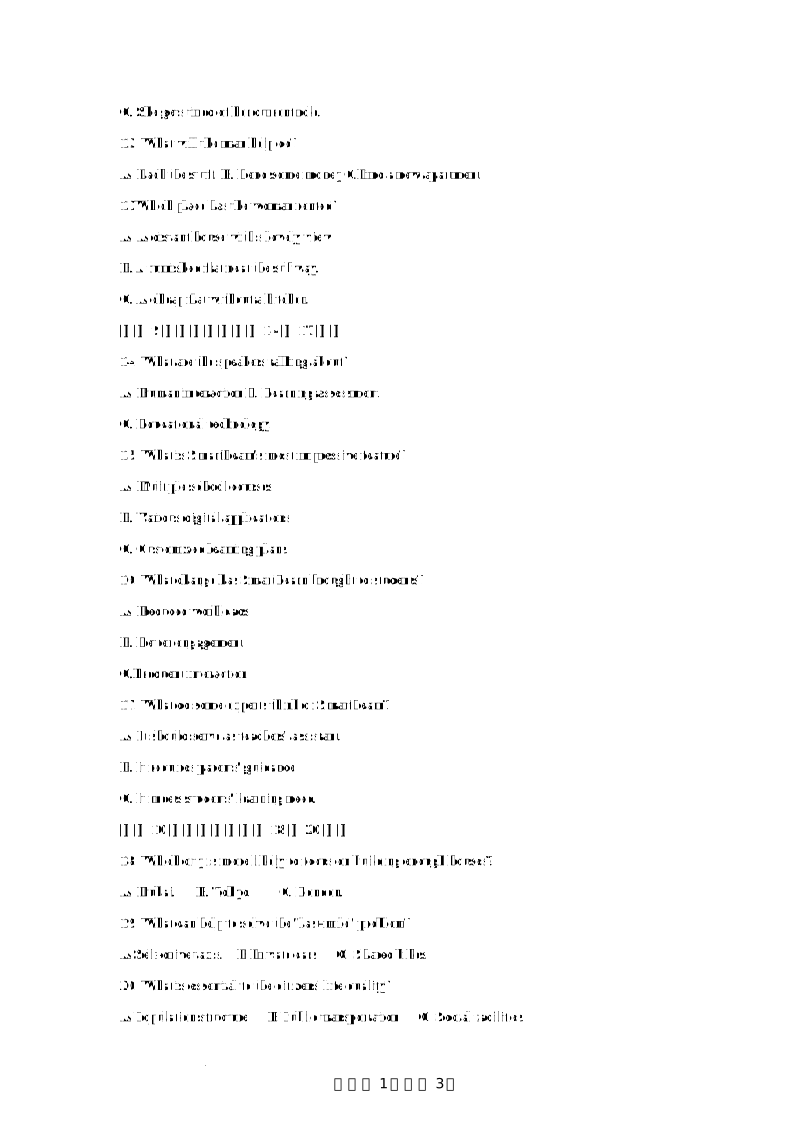
C. She gets tired of her current role.
12. What will the man help do?
A. Pack the stuff. B. Lend some money C.Find a new apartment.
13Which place has the woman rented?
A. A distant house with s lovely view
B.A furnished flat neat the subway.
C. A cheap flat without a kitchen.
听第9段材料,回答第14至17题。
14. What are the speakers talking about?
A. Human interaction B. Learning assessment.
C. Educational technology.
15. What is SmartLearn's most impressive feature?
A. Multiple school courses.
B. Various digital applications
C. Customized learning plans.
16. What change has SmartLearn brought to students?
A. Reduced workloads.
B. Better engagement.
C.Frequent interaction.
17. What do some experts think of SmartLearn?
A. It should serve as teachers' assistant.
B. It requires parents' guidance.
C. It meets students' learning need.
听第10段材料,回答第18至20题。
18. Which city is more likely to focus on building enough houses?
A. Dubai. B. Tokyo. C. London.
19. What can help to solve the "last-mile" problem?
A.Self-drive taxis. B Private cars C. Shared bikes.
20. What is essential to the citizens' life quality?
A.Population structure B.Public transportation C. Social facilities.
第二部分 第二部分 阅读(共两节, 满分50分)
第一节(共15小题:每小题2.5分, 满分37.5分)
阅读下列短文, 从每题所给的A、B、C、D四个选项中选出最佳选项。
A
Our reality is now filled with things that were mere dreams in the past few decades. Seeing how
the past is unfolded, why did a little digging into what life might look like in 2050 for us.
Real Estate
Smart Homes in 2050 will have full AI activation functions, allowing the home to sense our moods and requirements without giving it a single command. Additionally, interactive hologram televisions will exist, meaning that you can verbally call up your hologram TV and it will appear right in front of you.
Education
By 2050, completely digital schools will be commonplace, even if we have physically attended schools, they will have no need for books, using tablets and laptops instead. For higher education, experts believe that more than 70 percent of the student population will be enrolled in online degrees, making education more globalized.
Artificial Intelligence
Something that may be available for everyone is artificial intelligence, the development of artificial intelligence will only get better through the years. But the rise of AI will of course change the face of the workforce. Not only that but the job market will also face radical change. And with the way things are going, about half of the world’s current jobs will disappear, taken over by AI machines and robots. Some of us will definitely need to consider a career change.
21.What can be expected in smart homes by 2050?
A.Commands for all functions.
B.AI senses moods and needs.
C.Only hologram TVs used.
D.No interactive tech at all.
22.If you are educated in a digital school by 2050, what tools will you use?
A.Paper. B.E-readers. C.Pens. D.Boards.
23.What is the predicted impact of AI on the job market by 2050?
A.AI will replace about half of the world’s current jobs.
B.AI will have no significant impact on the job market.
C.AI will create more job opportunities.
D.The workforce will remain unchanged by the rise of AIOur reality is now filled with things.
B
Yuan Longping, known as the “father of hybrid rice”, was one of China’s most famous scientists. Yet, he considered himself a farmer because he continually worked the land in his research. Indeed, his slim but strong body was just like that of millions of Chinese farmers, to whom he had devoted his life.
Yuan Longping was born in 1930 in Beijing. His parents wanted him to pursue a career in science or medicine. However, what concerned him most was that farmers often had poor harvests and sometimes even had a serious shortage of food to eat. To tackle this crisis, he chose to study agriculture and received an education at Southwest Agricultural College in Chongqing.
After graduating in 1953, he worked as a researcher. Yuan Longping realised that larger fields were not the solution. Instead, farmers needed to boost yields in the fields they had. How this could be done was a challenging question at the time. Yuan was convinced that the answer could be found in the creation of hybrid rice. A hybrid is a cross between two or more varieties of a species. One characteristic of hybrids is that they usually attain a higher yield than conventional crops. However, whether it was possible to develop a hybrid of self-pollinating plants such as rice was a matter of great debate. The common assumption then was that it could not be done. Through intense effort, Yuan overcame enormous technical difficulties to develop the first hybrid rice that could be used for farming in 1974. This hybrid enabled farmers to expand their output greatly.
Today, it is estimated that about 60 percent of domestic rice consumption in China is comprised of crops generated from Yuan’s hybrid strains, and his strains have allowed China’s farmers to produce around 200 million tons of rice per year. Yuan’s innovation has helped feed not just China, but many other countries that depend on rice as well, such as India and Vietnam. Because of his invaluable contributions, Yuan Longping received numerous awards both in China and abroad.
Given that Yuan’s hybrids made him quite wealthy, one might think he would have retired to a life of leisure. However, this is far from the case. Deep down, Yuan was still very much a farmer at heart. As a man of the soil, he cared little for celebrity or money. Instead, he made large donations to support agricultural research.
What impressed people most about Yuan Longping was his ongoing ability to fulfil his dreams. Long ago, he envisioned rice plants as tall as sorghum, with each ear of rice as big as a broom, and each grain of rice as huge as a peanut. He succeeded in producing a kind of rice that could feed more people at home and abroad. His later vision for “seawater rice” also became a reality, and potentially opened up nearly one million square kilometres of salty land in China for rice production. Even in his later years, Yuan Longping was still young at heart and full of vision, and everyone was always excited to see what he would dream up next.
24.What is Yuan Longping known as?
A.The father of hybrid rice. B.The father of wheat.
C.The father of corn. D.The father of vegetables.
25.When was Yuan Longping born?
A.1920. B.1930. C.1940. D.1950.
26.In which college did Yuan Longping receive his education?
A.Southeast Agricultural College. B.Northwest Agricultural College.
C.Southwest Agricultural College. D.Northeast Agricultural College.
27.What is one characteristic of hybrid crops?
A.They have lower yields than conventional crops.
B.They usually attain a higher yield than conventional crops.
C.They are more difficult to grow.
D.They need larger fields.
C
Have you ever asked yourself why children go to school? You probably say that they go to learn their own language and English, mathematics, geography (地理), history, science and all the other subjects.
We send our children to school to prepare them for the time when they grow up and have to work for themselves. They learn their own language so that they know and understand what others tell them. They learn English in order to be able to benefit from what people in western countries have written and said, and in order to make people from other countries understand what they themselves mean. They learn mathematics in order to be able to measure and count things in their daily life, geography in order to know something about the world around them, and history to know something about the human beings they meet every day. Nearly everything they study at school has some practical use in their life, but is that the only reason why they go to school?
No. There is more in education than just learning facts. We go to school above all to learn how to learn so that we can continue to learn when we have left school. A man who really knows how to learn will always be successful, because whenever he has to do it he does it in the best way. The uneducated person, on the other hand, either is unable to do something new or does it badly. The purpose of school, therefore, is not just to teach languages, mathematics, geography, etc., but to teach students the way to learn.
28.In order to make other people from foreign countries understand you, you should learn ________.
A.modern science B.foreign languages
C.geography D.history
29.Nearly all the subjects they learn at school have ________.
A.no use in their future life B.little use in their future life
C.nothing to do with their daily life D.some practical use in their life
30.A person will surely be successful if he really knows ________.
A.how to learn B.some foreign languages
C.something new D.several subjects
31.On the whole, children go to school ________.
A.to learn science and languages B.to learn how to be good students
C.to get ready for their future D.to make new friends
D
In college, I usually looked forward to the icebreaker games at the start of some of my classes. We’d go around the circle, tell everyone our name, year, and major, and successfully waste time on the first day of class when the professor didn’t have anything educational planned.
But the icebreakers I looked forward to weren’t happening in my science classes. Kids were in creative writing seminars. I loved the writing classes. I had no idea — and, frankly, didn’t much care — how and whether my classes would impact my career. I liked science, and I liked writing, so maybe I’d combine them, or maybe not?
But I have this fear that some science students avoid branching out, not because they don’t want to, but because they believe they’re not supposed to. They see their peers keeping their heads down, only focused on science, science, science, and they don’t want to admit loving their optional medieval history seminar and become a weirdo (怪人) in the eyes of others.
“Be well-rounded,” we’re often told. Yes, no one directly discouraged me from taking a variety of classes in college. But I can’t honestly say we always treat it that way. And although my graduate department head nicely allowed me to take writing classes, other professors didn’t share the same open-mindedness, showing disapproval or skepticism towards any outside academic interest.
The science, we’re told, either frankly or implicitly, is the important part. You got a good grade in organic chemistry? Amazing! You’re going places! The other subjects are either requirements to bear or optional activities that can be approached with minimal effort.
And it’s fine if that’s what you prefer. But take my word for it: You can be a scientist and do other things, too — and the time while you’re enrolled in school is a perfect opportunity. If you find yourself debating whether to add a little nonscience to your science training, consider your interests, and consider your bandwidth, but don’t let weird guilt hold you back.
So go ahead, add a class, and add a hobby.
32.What does the underlined phrase “branching out” in paragraph 3 probably mean?
A.Developing new branches. B.Trying new things.
C.Pursuing new careers. D.Stepping out of comfortable zones.
33.Why do some science students only focus on their major according to the text?
A.They have no other hobbies. B.They get no support from parents.
C.They are afraid of appearing different. D.They dislike any icebreaker games.
34.What is other professors’ attitude towards taking writing classes in college?
A.Approving. B.Opposed. C.Objective. D.Tolerant.
35.What’s the author’s purpose in writing the text?
A.To inspire people to develop interests in science.
B.To point out the importance of writing to science.
C.To encourage science students to explore other interests.
D.To call for the diversified development of college education.
第二节(共5小题;每小题2.5分,满分12.5分)
阅读下面短文, 从短文后的选项中选出可以填入空白处的最佳选项。选项中有两项为多余选项。
How to Build Good Study Habits
Developing good study habits is essential for academic success. It not only helps you learn more effectively but also reduces stress during exams. Here are some practical tips to get you started:
Set a fixed study schedule
Our brains work best when we follow a routine. 36 For example, you could study math from 7:00 to 8:30 every evening and English in the morning. Stick to your schedule as much as possible, even on weekends.
Create a comfortable study space
Find a quiet, well-lit area where you can focus without distractions. 37 Make sure your study space has all the supplies you need, such as books, notebooks, and stationery. Avoid studying in bed or on the couch, as these places are associated with relaxation.
38
Large assignments or study goals can feel overwhelming. Breaking them down into smaller, specific tasks makes a big difference. Instead of trying to finish an entire textbook chapter in one sitting, split it into sections and deal with one at a time. This will make your tasks more manageable and help you stay motivated.
Take regular breaks
Studying for hours without stopping can lead to fatigue (疲劳) and reduced concentration. 39 During your break, stretch, drink water, or take a short walk — avoid using your phone or watching TV, as these activities can make it harder to get back to studying.
Review and reflect regularly
Learning doesn’t end when you finish studying. 40 Review your notes within 24 hours of learning new materials, and reflect on what you’ve learned. This will strengthen your memory and show where you need more practice. With continuous efforts, these habits will become second nature and help you achieve your academic goals.
A.Split difficult tasks into smaller parts.
B.Plan your daily study time in advance.
C.This helps your brain get into “study mode” at the right time.
D.It’s important to take short breaks every 45-60 minutes.
E.Regular review is key to long-term memory of knowledge.
F.A disordered environment can make it hard to concentrate.
G.You should also ask your teachers for feedback on your progress.
第三部分 语言运用(共二节, 满分30分)
第一节 完形填空(共15小题;每小题1分, 共15分)
阅读下面短文,从短文后各题所给的四个选项(A、B、C和D)中,选出可以填入空白处的最佳选项。
“Ladies and gentlemen, the time train has arrived at the terminal!” It felt like I had woken up from a dream, 41 soon discovered I had come to 2035. Suddenly, I heard a strange voice calling my name. I turned around, only to find a robot 42 to me enthusiastically. “I’ll show you around the city in 2035!” I nodded immediately, 43 what the city would be like.
Once I walked out of the train station, many crossed air lanes came into view. The robot, seeing how 44 I was, explained the new traffic system to me. The system was put into place by many famous engineers using highly 45 technology. In fact, it eliminated (消除) the issue of traffic jams entirely.
Next we made our way to a restaurant nearby. Just as I 46 that there was no menu, a waiter began to scan my body with a special 47 , which gave me a big fright, so I 48 out of my seat immediately. The robot explained it was just a machine that was able to figure out what our body needed and chose the recipe that 49 us most. The waiter then introduced me to the electronic screen that allowed me to choose the environment according to my 50 . I pressed the “beach” button on the screen and 51 I felt a sea breeze. I couldn’t help but 52 at how rapidly technology had advanced.
We 53 returned to the train station. Just as I 54 the train, I heard a familiar voice calling my name. I opened my eyes to see my mom standing over me. What a 55 dream!
41.A.while B.so C.but D.if
42.A.singing B.flying C.screaming D.waving
43.A.getting B.knowing C.wondering D.wandering
44.A.astonished B.scared C.bored D.moved
45.A.standard B.developing C.unusual D.advanced
46.A.founded B.heard C.realized D.reminded
47.A.instrument B.button C.engine D.accelerator
48.A.took B.left C.danced D.sprang
49.A.attracted B.offered C.provided D.suited
50.A.reference B.preferences C.appetite D.place
51.A.suddenly B.sadly C.absolutely D.casually
52.A.aim B.guess C.sigh D.stare
53.A.immediately B.eventually C.occasionally D.hardly
54.A.put off B.brought in C.got on D.looked into
55.A.terrible B.practical C.awful D.fantastic
第二节(共10小题;每小题1.5分 ,满分15分)
阅读下面材料,在空白处填入适当的内容(1个单词)或括号内单词的正确形式。
Tu Youyou was born in Zhejiang Province in 1930. She studied medicine in Peking University and after 56 (graduate), she became a member of China Academy of Chinese Medical Sciences. Later, she studied Chinese medicine for two and a half 57 (year), and gained a deep knowledge about traditional practices. In 1969, she was chosen 58 (establish) a team to find a cure for malaria, 59 is a deadly disease that killed millions of people every year With 60 long time of no success, Tu Youyou supposed Chinese herbs might break through the problem. Then she studied ancient Chinese medical literature, and visited experts in 61 (tradition) Chinese medicine. She and her team used modern research methods to study the Chinese herbs. 62 (eventual), they found out a promising chemical-artemisinin. She tested it first on animals and then 63 herself and her teammates. The test was a success. Now the artemisinin is the world’s 64 (effect) drug for fighting malaria. In 2015, Tu Youyou 65 (award) a Nobel Prize for her work.
第四部分写作(共两节,满分40分)
第一节(满分15分)
假设你是李华,你的美国笔友Tony下个月要以交换生的身份来到你校交流,发邮件向你询问中国人在日常交际中常见的肢体语言。请你回复邮件,内容包括:
1.欢迎他的到来;
2.介绍日常生活中常见的肢体语言;
3.邀请他到时住在你家。
注意:1.词数100左右 ;
2.可适当增加细节,以使行文连贯。
Dear
Tony,_______________________________________________________________________________________________________________________________________________________________________________________________________________________________________________________________________________________________________________________________________________________________________________________________________________________________________________________________________ Yours, Li Hua
第二节(满分25分)
阅读下面材料,根据其内容和所给段落开头语续写两段,使之构成一篇完整的短文。
Lena had always been confident in her studies — until she entered high school. In her first math class, Mr. Carter wrote a series of expressions on the blackboard. While most of her classmates nodded and took notes, the symbols “x” and “y” seemed to swim before her eyes. She felt as if she were listening to a “foreign language”.
The confusion only grew when she sat down to do her homework. For two hours she remained at her desk, staring at the textbook and the blank pages of her notebook. She reread the first question ten times, but the numbers refused to make sense. Upset and ashamed, she never felt so defeated by a subject.
Her anxiety deepened over the following days. She stopped raising her hand. She was worried that her questions would sound stupid. One day, Mr. Carter called on her to answer a question. Lena stood up, her face burning with embarrassment because she was totally clueless about the answer. But a boy named Jax said in a low voice, “Even a middle schooler knows that!”
Lena bit her lip and sank back into her seat with her head hanging very low. Seeing this, Mr. Carter asked Lena to stay after class. Instead of criticizing her, he said gently, “I notice you’ve been struggling, Lena. Math can be tough at first. Like learning to play a musical instrument, it requires the right method and a lot of practice. I have talked to Zoe and she has agreed to help you. You know, she is a kind girl and is always ready to help.”
The next day, Mr. Carter rearranged the seats, and Zoe became Lena’s new deskmate.
注意:1.续写词数应为150个左右;
2.请按如下格式在答题卡的相应位置作答。
Every afternoon, the two girls studied together.
__________________________________________________________________________________________________________________________________________________________________________________________________________________________________________________________________________________________________________________________________________________________________________________________________________________________________________________________________________
One month later, the result of the first math exam came out.
__________________________________________________________________________________________________________________________________________________________________________________________________________________________________________________________________________________________________________________________________________________________________________________________________________________________________________________________________________
试卷第1页,共3页
试卷第1页,共3页
学科网(北京)股份有限公司
2023年秋季学期拉萨市第三高级中学期中考试 第 2 页 共 2 页
学科网(北京)股份有限公司
$
资源预览图
1
2
3
相关资源
由于学科网是一个信息分享及获取的平台,不确保部分用户上传资料的 来源及知识产权归属。如您发现相关资料侵犯您的合法权益,请联系学科网,我们核实后将及时进行处理。