四川八年级英语下学期期中阶段测试(人教版Units 1-4)
2026-05-19
|
4份
|
20页
|
49人阅读
|
0人下载
资源信息
| 学段 | 初中 |
|---|---|
| 学科 | 英语 |
| 教材版本 | 初中英语人教版八年级下册 |
| 年级 | 八年级 |
| 章节 | Unit 3 Growing Up |
| 类型 | 试卷 |
| 知识点 | - |
| 使用场景 | 同步教学-期中 |
| 学年 | 2026-2027 |
| 地区(省份) | 四川省 |
| 地区(市) | - |
| 地区(区县) | - |
| 文件格式 | ZIP |
| 文件大小 | 20.31 MB |
| 发布时间 | 2026-05-19 |
| 更新时间 | 2026-05-19 |
| 作者 | 特别秀 |
| 品牌系列 | - |
| 审核时间 | 2026-05-19 |
| 下载链接 | https://m.zxxk.com/soft/57935353.html |
| 价格 | 2.00储值(1储值=1元) |
| 来源 | 学科网 |
摘要:
**基本信息**
该试卷为四川八年级英语下学期期中测试,覆盖人教版八年级下册U1-4,以原创情境(如学校活动、台风经历、“spring break”社会热点)为载体,融合听力、阅读、语言运用及写作,全面考查学生语言理解与表达能力,体现思维品质与跨文化意识。
**题型特征**
|题型|题量/分值|知识覆盖|命题特色|
|----|-----------|----------|----------|
|听力理解|20题/30分|日常对话、旅行活动、健康建议|图片匹配与独白理解结合,情境贴近生活|
|阅读理解|20题/40分|学校活动、个人经历、自然景观、健康知识|原创文本占比高,设七选五题型,考查信息筛选与逻辑推理|
|语言知识运用|30题/45分|词汇辨析、语法应用、完形填空|以情感表达、旅行经历为主题,考查语境中语言运用|
|写作|6题/35分|阅读回答、邮件写作|结合社会热点“春假”设计阅读表达,邮件写作贴近学生课余生活,培养跨文化沟通能力|
内容正文:
四川八年级英语下学期期中阶段测试
(新版人教版八年级下册U1-4)答案及解析
第一部分:听力
1-5 ABCBA 6-10 BCBBC 11-15 BAABA 16-20 CACBA
第二部分:阅读理解(共40分)
A篇(学校活动通知)
21. If Lin Qiang wants to go to DIY workshop, he must get to school ______.
答案:C(before 10:00 a.m.)
解析:文中DIY Workshop时间:10:00 a.m. - 12:00 a.m.,所以必须在10点前到校。
22. The Pet Show will be held ______.
答案:C(on the school playground)
解析:原文:“Join in our pet show on the school playground.”
23. Students will ______.
答案:D(play outdoor games for three hours this Saturday)
解析:户外游戏时间:1:00 p.m. - 4:00 p.m.,共3小时。其他选项无依据。
24. We can find this passage ______.
答案:B(in a school magazine)
解析:内容为学校周末活动,适合校刊。不是故事书、科学网站或字典。
B篇(台风经历)
25. How did the writer's family get the news about the typhoon?
答案:C(By listening to the radio)
解析:原文第2句:“That day, our family heard the news over the radio.”
26. What did the writer's father do before the strong winds came?
答案:B(He put pieces of wood over the windows.)
解析:原文:“My father put pieces of wood over the windows before strong winds came.”
27. When did the typhoon go away?
答案:B(On Wednesday)
解析:台风在周二晚上来,第二天上午11点风开始减弱,下午1点结束,第二天即周三。
28. What can we know from the text?
答案:D(The writer's family prepared well for the typhoon.)
解析:最后一句父亲说:“That's because we prepared very well.” 其他选项与原文相反或未提及。
C篇(花之谷)
29. How does the writer start the passage?
答案:A(By asking questions)
解析:开头:“When it comes to the Himalayas, what do you have in your mind? High mountains? White snow?” 连续提问。
30. What does the underlined word "them" refer to in paragraph 3?
答案:D(The wild plants)
解析:第3段:“There are also a lot of wild plants... Some of them are hard to find anywhere else...” “them”指代前文的wild plants。
31. What is the structure of the passage?
答案:A(①总起 → ②地点与花 → ③植物与动物 → ④保护措施)
解析:①提出问题引入;②描述花;③介绍植物和动物;④变成国家公园及规则。结构对应A选项。
32. What's the passage mainly about?
答案:A(It tells the facts about the Valley of Flowers.)
解析:全文介绍花之谷的位置、花卉、植物、动物及保护情况,是事实性说明。
D篇(头痛原因)
33. Which of the following activities may cause a headache?
答案:B(Staying up too late)
解析:原文第2段:“staying up too late... can cause a headache.”
34. What kind of food can cause a headache in kids?
答案:D(Hot dogs)
解析:第4段:“Some foods can cause headaches... such as bacon, bologna, and hot dogs.”
35. Which of the following is wrong?
答案:C(Riding in a car can't cause headaches.)
解析:原文第3段:“Some kids get headaches from riding in a car or bus.” 所以C错误。
36. The passage mainly tells us ______.
答案:B(what causes headaches)
解析:全文列举了各种头痛原因:疾病、活动、情绪、食物、遗传等。
第三部分:七选五(共8分)
37. B(Here is how to get started.)
解析:前句说现在是探索的好时机,后文给出具体方法,B承上启下。
38. E(If my friends came to town for the first time, where would I advise them to go?)
解析:本段主题“Act like a tourist”,问自己如果是游客会推荐去哪,E符合。
39. C(Then try to think about which place is the best to explore.)
解析:先网上研究,然后思考最佳地点,C逻辑连贯。
40. A(Find out a guided tour.)
解析:下一段标题“Take a photography walk”之前,先有“guided tour”段落。该段首句“With an adult's guide, look up walking tours”,A选项概括。
第四部分:完形填空(共30分)
A篇(情绪管理)
41. A(normal)
解析:这些感受是生活的“正常”部分。搭配“a normal part of life”。
42. C(upset)
解析:因为考试不及格,感到“沮丧”。upset符合。
43. C(Everybody)
解析:“每个人都会犯错”,固定表达“Everybody makes mistakes.”
44. A(study)
解析:下次“学习”更努力。study harder。
45. A(proud)
解析:赢得比赛感到“骄傲”。proud。
46. D(place)
解析:在新“地方”或见新人时紧张。place。
47. D(joined)
解析:加入篮球队。join the team。
48. B(negative)
解析:positive or negative(积极或消极)。negative。
49. B(dealing with)
解析:处理感受的方式。dealing with。
50. C(Sharing)
解析:分享感受有助于感觉更好。sharing。
B篇(大连之旅)
51. B(favorite)
解析:但大连之旅是“最喜欢的”。favorite one。
52. C(took)
解析:乘坐快速火车。take a train。
53. B(water)
解析:那么多蓝色的“水”,看不到尽头。water。
54. A(beach)
解析:在柔软的“沙滩”上。beach。
55. C(moving)
解析:海浪和海风不断“移动”向海滩。moving to the beach。
56. A(picked)
解析:捡起很多贝壳。pick up shells。
57. D(afraid)
解析:想坐快艇但有点“害怕”。afraid。
58. D(yourself)
解析:妈妈鼓励“你自己”勇敢。try to be yourself。
59. B(started)
解析:快艇“开始”快速行驶。started to run。
60. C(fun)
解析:有很多“乐趣”。have a lot of fun。
第Ⅱ卷(非选择题,共50分)
第一部分:语法填空(共15分)
61. more
解析:句型“The more I read, the more I wanted to know.” 越……越……
62. myself
解析:by myself(我自己)。主语I,用反身代词。
63. walked
解析:walked into the bookshop(走进)。一般过去时。
64. Luckily
解析:副词修饰整个句子,“幸运的是,没人注意到我”。
65. to read
解析:went there to read(去那里读书),不定式表目的。
66. nervously
解析:副词修饰replied,“紧张地回答”。
67. shop
解析:clean the shop(打扫书店)。
68. cleaning
解析:spend time doing sth.(花时间做某事)。
69. writers
解析:one of the best writers(最好的作家之一),可数名词复数。
70. difference
解析:make a big difference to my life(对我生活产生大影响)。
第二部分:任务型阅读(共10分)
71. Why does the government like the idea of spring break? (no more than 13 words)
答案:Because it wants families to travel in quiet times and spend more money.
解析:原文:“The government likes the idea. It wants families to travel in quiet times and spend more money.”
72. When is the spring break in Chengdu? (no more than 5 words)
答案:From April 1 to 3.
解析:原文:“students in Chengdu will have a 3-day break from April 1 to 3.”
73. How many travel places does the writer mention in paragraph 3? (no more than 1 word)
答案:Six.
解析:第3段提到:Sanya, Kunming, Guangzhou, Hong Kong, Macao, Bangkok or Singapore(共6个地方)。
74. What does Qi Chunguang from Tuniu think of spring breaks? (no more than 11 words)
答案:He thinks they help families go on trips and learn new things.
解析:原文:“Qi Chunguang... says spring breaks help families go on trips and learn new things.”
75. What does Lu Ming suggest companies should do for parents? (no more than 8 words)
答案:Give parents paid leave.
解析:原文:“He wants companies to give parents paid leave.”
评分意见
1. 每题按5个档次给分,依次为2分、1.5分、1分、0.5分和0分。
2. 意思相符,语法、结构正确,拼写无误,得2分。
3. 语法与拼写错误,错误1到2个,扣0.5分,3个及3个以上扣1分;相同错误按 1个计算;大小写和标点出错原则上不扣分。
4. 超出词数扣0.5分。
第二节 书面表达(共25分)
一、评分原则
1. 本题总分为25分,按5个档次给分。
2. 保持整体评分原则,即先根据文章所表达的内容完整性和语言质量初步确定其所属 档次,然后以该档的要求来衡量,确定或调整档次,最后给分。
3. 词数少于60,从总分中减去2分。
4. 评分时,应注意的主要内容为:内容要点、应用词汇和语法结构的准确性、上下文 的连贯性及语言的得体性。
5. 拼写与标点符号是准确性的一个方面,评分时,应视其对交际的影响程度予以考虑。 英、美拼写及词汇用法均可接受。
6. 同类错误不重复扣分。
7. 如内容与试题无关或空白卷,不给分。
二、内容要点
1. How did it start?
2. When do you do it now?
3. Where do you do it now?
4. Why do you like it?
三、各档次给分范围和要求 第五档(21~25分)
完成了试题规定的任务。
覆盖所有内容要点。
较强的语言运用能力,词汇丰富,句式多样,语言地道,有个别小的语言错误,但不 影响意义表达。
有效地使用了语句间的连接成分,使全文结构紧凑。
完全达到了预期的写作目的。
第四档(16~20分)
完成了试题规定的任务。
虽漏掉1、2个次重点,但覆盖所有主要内容。
较好的语言能力,意义表达基本准确流畅,用词和句式有一定变化,有个别小的语言 错误,但不影响主要意义的表达。
应用了简单的语句间连接成分,使全文结构紧凑。
达到了预期的写作目的。
第三档(11-15分)
基本完成了试题规定的任务。
虽漏掉一些内容,但覆盖所有主要内容。
语言能力一般,句式结构单一,词汇使用有限,语言错误较多,在一定程度上影响了 意义表达,但要点的关键意义能表达出来。
应用简单的语句间连接成分,使全文内容连贯。
整体而言,基本达到了预期的写作目的。
第二档(6~10分)
未恰当完成试题规定的任务。
漏掉或条款式描述一些主要内容,写了一些无关内容。
语言能力较差,语言错误较多,严重影响了意义表达,仅少数句子能表达意义。
较少使用语句间的连接成分,内容缺少连贯。
信息未能清楚传达给读者。
第一档(1~5分)
未恰当完成试题规定的任务。
语言能力极差,基本无完整句子,仅有一些单词与试题要求的内容相关。
0分
未能传达给读者任何信息:内容太少,无法评判;写的内容均与所要求内容无关或所 写内容无法看清。
四、说明:
1. 内容要点可用不同方式表达。
2. 应紧扣主题,可适当发挥。
3. 按要点和语言质量给分,不以字取人。
【参考范文】
Dear Peter,
I’m glad to hear from you. I’d like to share my favourite free-time activity with you.My favourite activity is reading. I started it when I was seven years old because my mom told me stories every night. Now I read books every evening after finishing my homework. I usually read in my bedroom. I like reading because it lets me know about the world and makes me smart. It also helps me relax when I feel tired.What about you? Please write to me soon.
Yours,
Yaming
学科网(北京)股份有限公司
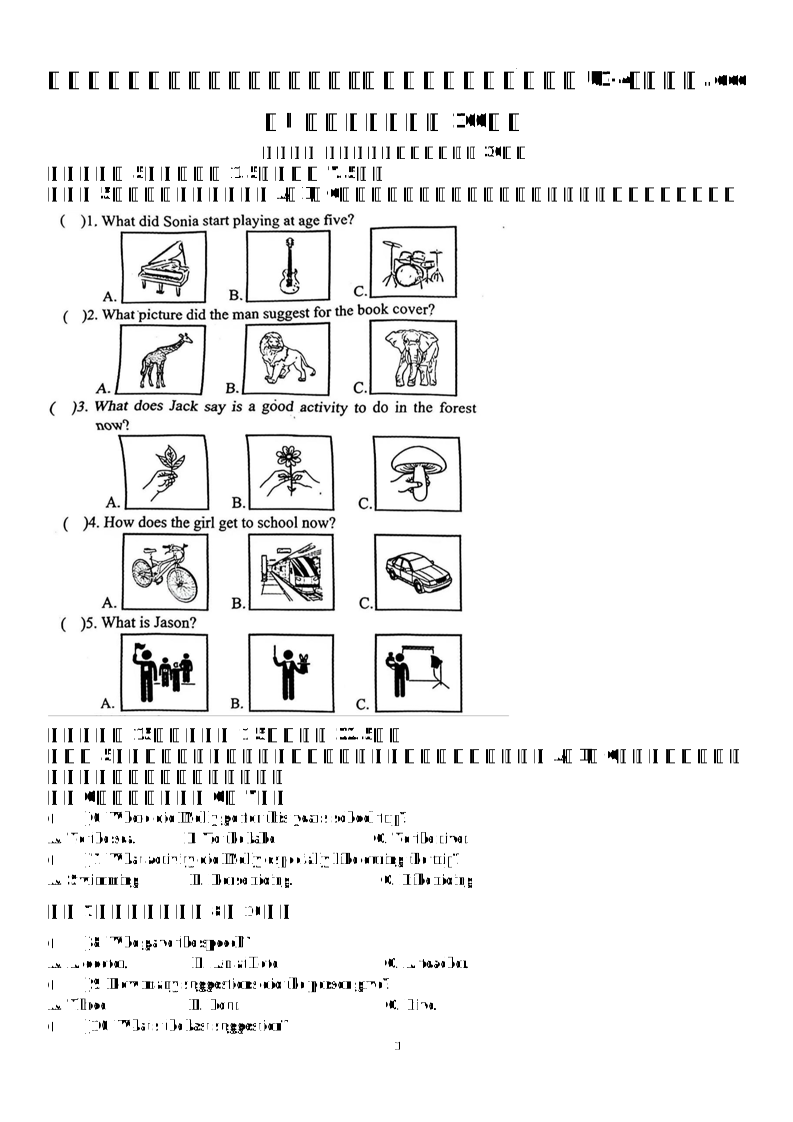
$期中综合能力评估。第一节听下面5段对话,从题中所给的ABC3个选项中选出与其意思相符的图片,每段对话读一遍。Number one, sonya, you play the piano so well. thanks. Actually, I started playing the piano at the age of five. Number two, my book tells a story about a teenage girl. SHE travels across africa and see a lot of amazing animals. Then you can draw a picture of a lion on the cover of your book to go with your story. Number three, i'm going to have a walk in the forest. Would you like to join me? jack? sure. And Susan, the forest is lovely in autumn and is the perfect time for collecting mushrooms. Number four, you are looking well. Amy, do you still ride your bike to school? Well, it's really good exercise for me, I know, but it's hard in winter, so I take the subway to school now. Number five, what do you think of Jason's job? interesting. He has so many opportunities to travel. He meet so many different people and shows them around really interesting places. 第二节听下面5段对话或独白。每段对话或独白后有几个小题,从题中所给的ABC3个选项中选出最佳选项,每段对话或独白读两遍。听第六段材料,回答第6至7题。I think this year's school trip to the lake was much Better than last. Yeah, to the sea. Moi. yeah. Dan, the other class only went to the river. We did so many activities. I loved horse riding. That was fun. Oh, I especially like riding our bikes. I think this year's school trip to the lake was much Better than last. Yeah, to the sea. Moi. yeah. Dan, the other class only went to the river. We did so many activities. I loved horse riding. That was fun. Oh, I especially like riding our bikes. 听第七段材料回答第8至10题. an athlete gave a speech at my school. What do the athlete talk . about how to a injuries while running? Oh, sounds useful. How many suggestions did the athlete give for? First, where the right shoes. Second, warm up before you run. Third, run on a playground. Finally, stop and rest at the first sign of pain. An athlete gave a speech at my school. What do the athlete? K about . how to avoid injuries while running? Oh, sounds useful. How many suggestions did the athlete give for? First, where the right shoes. Second, warm up before you run. Third, run on a playground. Finally, stop and rest at the first sign of pain. 听第八段材料,回答第11至13题。What time is IT, tony? We're going to be late. It's a quarter past seven, where on time, don't panic. But I thought we had to be at the restaurant by seven thirty for the party. We'll never make IT there with all this evening traffic. I think we will rush hour is almost over, but give the host a quick call to say we might be a few minutes late. Good idea, our apologize and let them know. What time is IT, tony? We're going to be late. It's a quarter past seven. We're on time. Don't panic. But I thought we had to be at the restaurant by seven thirty for the party. We'll never make IT there with all this evening traffic. I think we will rush hour is almost over, but give the host a quick call to say we might be a few minutes late. Good idea. I apologize and let them know. 听第九段材料,回答第14至16题。How was your holiday? Jc, what did you and your friends do? Well, I played the violin a lot. I'm in the school concert next week, and I need to . get ready for IT. Oh yes, I remember. Did sophie practice with you? No, he played football all week with her team. Sounds great. And what about sam? He went away with his parents. They drove around east china. Stain in different places. How was your holiday, Jessie? What did you and your friends do? Well, I played the violin a lot. I'm in the school concert next week, and I need to get . ready for IT. Oh yes, I remember. Did sophie practice with you? No, he played football all week with her team. Sounds great. And what about sam? He went away with his parents. They drove around east china. Stain in different places. 听第十段材料,回答第17至20题。I'm suzy. I only started gardening as a hobby last june. I was watching AT, V program about a family growing all their own fruit and vegetables. And I thought IT was a really good idea. I didn't know IT, but I am really good at growing things. Last month, I picked plenty of cucumbers from the garden. This month, my garden has lots of strawberries, and i'd like to sell some of them to my neighbors so I can save money to buy some beautiful flowers for my garden. Sometimes gardening is really hard work, but that's a good thing because IT helps me stay fit. I used to go to the gym, but now I don't need to. I'm suzy. I only started gardening as a hobby. Last june, I was watching AT, V program about a family growing all their own fruit and vegetables. And I thought IT was a really good idea. I didn't know IT, but I am really good at growing things. Last month, I picked plenty of cucumbers from the garden. This month, my garden has lots of strawberries, and i'd like to sell some of them to my neighs, so I can save money to buy some beautiful flowers for my garden. Sometimes gardening is really hard work, but that's a good thing because IT helps me stay fit. I used to go to the gym, but now I don't need to.
Sheet1
四川八年级英语下学期期中阶段测试(新版人教版八年级下册U1-4)命题双向细目表
题号 题型 分值 考查模块 知识点/技能 认知层次 难度系数 预估得分率 备注
1 听力-选图片 1.5 听力理解 人物活动(五岁开始的活动) 理解 0.85 0.8 Unit 1
2 听力-选图片 1.5 听力理解 书籍封面图片建议 理解 0.80 0.75 Unit 2
3 听力-选图片 1.5 听力理解 森林活动建议 理解 0.80 0.75 Unit 3
4 听力-选图片 1.5 听力理解 上学交通方式 理解 0.85 0.8 Unit 4
5 听力-选图片 1.5 听力理解 人物身份判断 理解 0.80 0.75 Unit 1-4
6 听力-对话理解 1.5 听力理解 学校旅行地点 理解 0.75 0.7 Unit 1
7 听力-对话理解 1.5 听力理解 旅行最喜欢活动 理解 0.75 0.7 Unit 1
8 听力-对话理解 1.5 听力理解 演讲者身份 理解 0.70 0.65 Unit 2
9 听力-对话理解 1.5 听力理解 建议数量 识记 0.75 0.7 Unit 2
10 听力-对话理解 1.5 听力理解 最后一条建议 理解 0.70 0.65 Unit 2
11 听力-对话理解 1.5 听力理解 时间判断 理解 0.75 0.7 Unit 3
12 听力-对话理解 1.5 听力理解 人物情绪 理解 0.70 0.65 Unit 3
13 听力-对话理解 1.5 听力理解 下一步行动 理解 0.70 0.65 Unit 3
14 听力-对话理解 1.5 听力理解 假期乐器 理解 0.75 0.7 Unit 4
15 听力-对话理解 1.5 听力理解 假期运动 理解 0.75 0.7 Unit 4
16 听力-对话理解 1.5 听力理解 旅行交通方式 理解 0.75 0.7 Unit 4
17 听力-独白理解 1.5 听力理解 园艺起因 理解 0.65 0.6 Unit 1
18 听力-独白理解 1.5 听力理解 本月售卖物品 理解 0.65 0.6 Unit 1
19 听力-独白理解 1.5 听力理解 园艺购买物品 理解 0.65 0.6 Unit 1
20 听力-独白理解 1.5 听力理解 过去健身方式 理解 0.65 0.6 Unit 1
21 阅读理解-A 2 阅读理解 DIY Workshop时间细节 理解 0.85 0.8 Unit 2
22 阅读理解-A 2 阅读理解 Pet Show地点细节 理解 0.85 0.8 Unit 2
23 阅读理解-A 2 阅读理解 活动细节判断 应用 0.75 0.7 Unit 2
24 阅读理解-A 2 阅读理解 文章出处判断 应用 0.70 0.65 Unit 2
25 阅读理解-B 2 阅读理解 台风消息获取方式 理解 0.80 0.75 Unit 3
26 阅读理解-B 2 阅读理解 父亲防风措施 理解 0.80 0.75 Unit 3
27 阅读理解-B 2 阅读理解 台风离开时间 理解 0.75 0.7 Unit 3
28 阅读理解-B 2 阅读理解 文章细节推断 应用 0.70 0.65 Unit 3
29 阅读理解-C 2 阅读理解 文章开篇方式 理解 0.75 0.7 Unit 4
30 阅读理解-C 2 阅读理解 代词指代判断 理解 0.75 0.7 Unit 4
31 阅读理解-C 2 阅读理解 文章结构分析 应用 0.65 0.6 Unit 4
32 阅读理解-C 2 阅读理解 主旨大意归纳 应用 0.65 0.6 Unit 4
33 阅读理解-D 2 阅读理解 头痛诱因(熬夜) 理解 0.80 0.75 Unit 1
34 阅读理解-D 2 阅读理解 诱发头痛食物 理解 0.80 0.75 Unit 1
35 阅读理解-D 2 阅读理解 细节正误判断 应用 0.70 0.65 Unit 1
36 阅读理解-D 2 阅读理解 段落主旨归纳 应用 0.65 0.6 Unit 1
37 阅读理解-七选五 2 阅读理解 段落主旨句 应用 0.70 0.65 Unit 2
38 阅读理解-七选五 2 阅读理解 上下文逻辑 应用 0.70 0.65 Unit 2
39 阅读理解-七选五 2 阅读理解 步骤衔接 应用 0.70 0.65 Unit 2
40 阅读理解-七选五 2 阅读理解 小标题归纳 应用 0.65 0.6 Unit 2
41 完形填空 1.5 语言知识 形容词(情绪正常) 理解 0.85 0.8 Unit 1
42 完形填空 1.5 语言知识 形容词(沮丧) 理解 0.80 0.75 Unit 1
43 完形填空 1.5 语言知识 代词(每个人) 理解 0.80 0.75 Unit 1
44 完形填空 1.5 语言知识 动词(努力学习) 理解 0.85 0.8 Unit 1
45 完形填空 1.5 语言知识 形容词(自豪) 理解 0.80 0.75 Unit 2
46 完形填空 1.5 语言知识 名词(新环境) 理解 0.75 0.7 Unit 2
47 完形填空 1.5 语言知识 动词(加入球队) 理解 0.75 0.7 Unit 2
48 完形填空 1.5 语言知识 形容词(消极) 理解 0.70 0.65 Unit 3
49 完形填空 1.5 语言知识 动词短语(处理情绪) 理解 0.70 0.65 Unit 3
50 完形填空 1.5 语言知识 动名词(表达情绪) 理解 0.70 0.65 Unit 3
51 完形填空 1.5 语言知识 形容词(最喜欢) 理解 0.85 0.8 Unit 4
52 完形填空 1.5 语言知识 动词(乘火车) 理解 0.80 0.75 Unit 4
53 完形填空 1.5 语言知识 名词(海水) 理解 0.80 0.75 Unit 4
54 完形填空 1.5 语言知识 名词(沙滩) 理解 0.85 0.8 Unit 4
55 完形填空 1.5 语言知识 动词(移动) 理解 0.75 0.7 Unit 4
56 完形填空 1.5 语言知识 动词(捡贝壳) 理解 0.75 0.7 Unit 4
57 完形填空 1.5 语言知识 形容词(害怕) 理解 0.70 0.65 Unit 4
58 完形填空 1.5 语言知识 反身代词(你自己) 理解 0.70 0.65 Unit 4
59 完形填空 1.5 语言知识 动词(开始加速) 理解 0.75 0.7 Unit 4
60 完形填空 1.5 语言知识 名词(乐趣) 理解 0.75 0.7 Unit 4
61 词汇运用 1.5 语言知识 比较级(more) 识记 0.80 0.75 Unit 1-4
62 词汇运用 1.5 语言知识 反身代词(myself) 识记 0.75 0.7 Unit 1-4
63 词汇运用 1.5 语言知识 动词过去式(walked) 识记 0.80 0.75 Unit 1-4
64 词汇运用 1.5 语言知识 副词(Luckily) 识记 0.75 0.7 Unit 1-4
65 词汇运用 1.5 语言知识 副词(often) 识记 0.80 0.75 Unit 1-4
66 词汇运用 1.5 语言知识 副词(nervously) 识记 0.70 0.65 Unit 1-4
67 词汇运用 1.5 语言知识 形容词(excited) 识记 0.75 0.7 Unit 1-4
68 词汇运用 1.5 语言知识 动名词(cleaning) 识记 0.70 0.65 Unit 1-4
69 词汇运用 1.5 语言知识 名词复数(readers) 识记 0.70 0.65 Unit 1-4
70 词汇运用 1.5 语言知识 名词(difference) 识记 0.70 0.65 Unit 1-4
71 阅读表达 2 写作/表达 细节回答(政府原因) 应用 0.65 0.6 Unit 1-4
72 阅读表达 2 写作/表达 细节回答(成都时间) 应用 0.70 0.65 Unit 1-4
73 阅读表达 2 写作/表达 数字统计(地点数量) 应用 0.75 0.7 Unit 1-4
74 阅读表达 2 写作/表达 观点归纳(专家看法) 应用 0.65 0.6 Unit 1-4
75 阅读表达 2 写作/表达 细节建议(公司做法) 应用 0.65 0.6 Unit 1-4
76 书面表达 25 写作/表达 邮件写作(课余活动) 创造 0.60 0.55 Unit 1-4
$
四川八年级英语下学期期中阶段测试(新版人教版八年级下册U1-4)测试卷.doc第Ⅰ卷(选择题,共100分)
第一部分 听力理解(共两节,满分30分)
第一节(共5题;每小题1.5分,满分7.5分)
听下面5段对话,从题中所给的A、B、C三个选项中选出与其意思相符的图片。每段对话读一遍。
第二节(共15题;每小题1.5分,满分22.5分)
听下面5段对话或独白。每段对话或独白后有几个小题,从题中所给的A、B、C三个选项中选出最佳选项。每段对话或独白读两遍。
听第6段材料,回答第6至7题。
( )6. Where did Molly go for this year's school trip?
A. To the sea. B. To the lake. C. To the river.
( )7. What activity did Molly especially like during the trip?
A. Swimming. B. Horse riding. C. Bike riding
听第7段材料,回答第8至10题。
( )8. Who gave the speech?
A. A doctor. B. An athlete. C. A teacher.
( )9. How many suggestions did the person give?
A. Three. B. Four. C. Five.
( )10. What's the last suggestion?
A. Wear the right shoes. B. Do warm-up exercises. C. Stop in time to rest.
听第8段材料,回答第11至13题。
( )11. What time is it?
A.6:45. B.7:15. C.7:30.
( )12. How does the woman feel?
A. Worried. B. Happy. C. Mad.
( )13. What will the woman do?
A. Make a phone call. B. Send a text message. C. Check an email.
听第9段材料,回答第14至16题。
( )14. What musical instrument did Jessie play during her holiday?
A. The flute. B. The violin. C. The accordion.
( )15. What sport did Sophie play all week?
A. Football. B. Basketball. C. Badminton.
( )16. How did Sam travel during his holiday?
A. By bus. B. By train C. By car.
听第10段材料,回答第17至20题。
( )17. What inspired Susie to garden?
A. A TV programme. B. A school task. C. Her dad's suggestion.
( )18. What would Susie like to sell to her neighbours this month?
A. Peanuts B. Cucumbers. C.Strawberries.
( )19. What does Susie want to buy for her garden?
A. Garden scissors. B. Flowers. C. A bird table.
( )20. How did Susie use to keep fit?
A. By working out in the gym. B. By jogging in the park. C. By doing yoga at home
第2部分 阅读理解(共两节,满分40分)
第一节(共16题;每小题2分,满分32分)
阅读下列短文,从短文后各题所给的A、B、C、D四个选项中选出最佳选项。
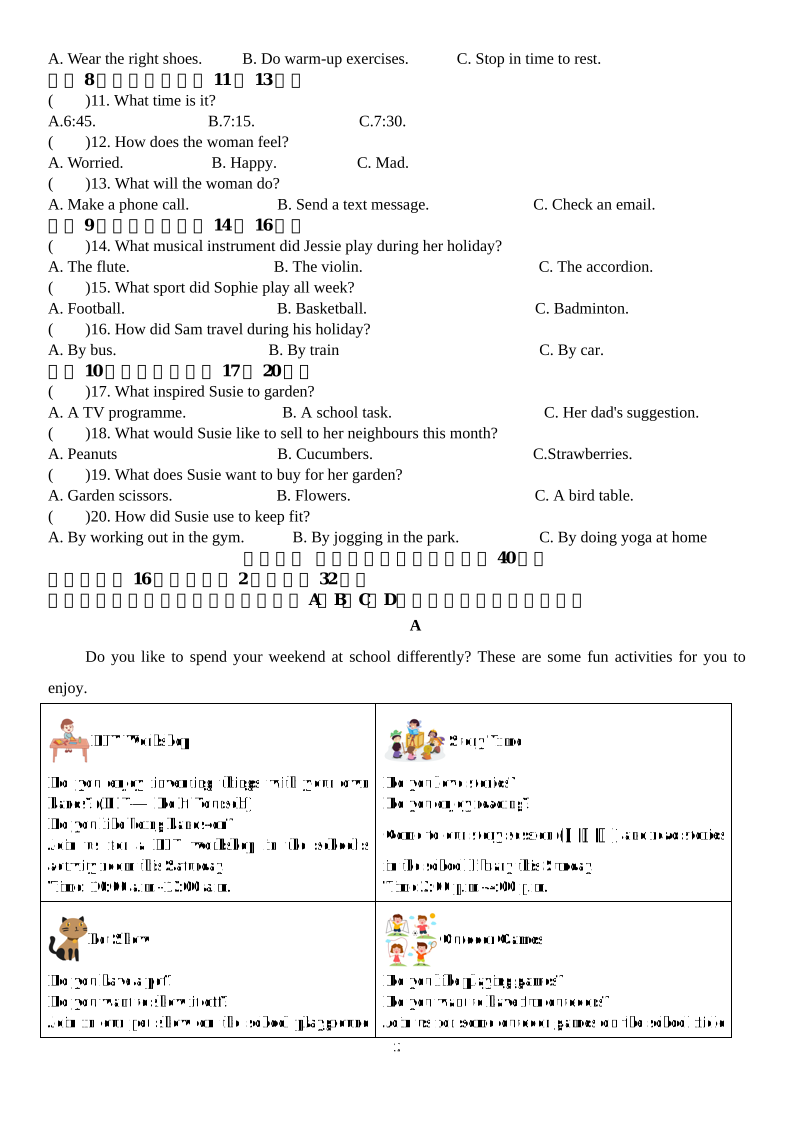
A
Do you like to spend your weekend at school differently? These are some fun activities for you to enjoy.
DIY Workshop
Do you enjoy inventing things with your own hands? (DIY— Do It Yourself)
Do you like being hands-on?
Join us for a DIY workshop in the school’s activity room this Saturday.
Time: 10:00 a.m.-12:00 a.m.
Story Time
Do you love stories?
Do you enjoy reading?
Come to our story session (故事会) and read stories in the school library this Sunday.
Time:2:00 p.m.-4:00 p.m.
Pet Show
Do you have a pet?
Do you want to show it off?
Join in our pet show on the school playground this Saturday and Sunday.
Time: 11:00 a.m.-5:00 p.m.
Outdoor Games
Do you like playing games?
Do you want to have fun outdoors?
Join us for some outdoor games on the school field this Saturday.
Time: 1:00 p.m.-4:00 p.m.
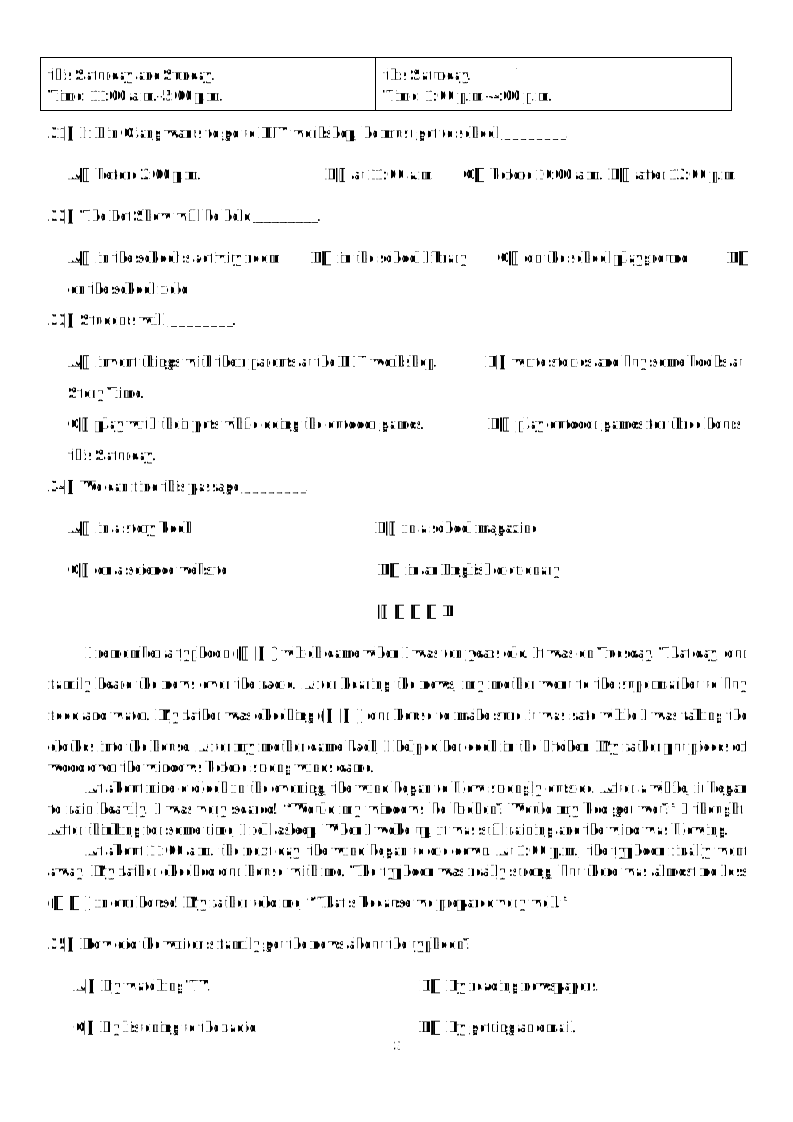
21.If Lin Qiang wants to go to DIY workshop, he must get to school ________.
A.before 2:00 p.m. B.at 11:00 a.m. C.before 10:00 a.m. D.after 12:00 p.m.
22.The Pet Show will be held ________.
A.in the school’s activity room B.in the school library C.on the school playground D.on the school field
23.Students will ________.
A.invent things with their parents at the DIY workshop. B.write stories and buy some books at Story Time.
C.play with their pets while doing the outdoor games. D.play outdoor games for three hours this Saturday.
24.We can find this passage ________.
A.in a story book B.in a school magazine
C.on a science website D.in an English dictionary
(原创)B
I remember a typhoon (台风) which came when I was ten years old. It was on Tuesday. That day, our family heard the news over the radio. After hearing the news, my mother went to the supermarket to buy food and water. My father was checking (检查) our house to make sure it was safe while I was taking the clothes into the house. After my mother came back, I helped her cook in the kitchen. My father put pieces of wood over the windows before strong winds came.
At about nine o’clock in the evening, the wind began to blow strongly outside. After a while, it began to rain heavily. I was very scared! “Would my windows be broken? Would my bed get wet?” I thought. After thinking for some time, I fell asleep. When I woke up, it was still raining and the wind was blowing.
At about 11:00 a.m. the next day, the wind began to die down. At 1:00 p.m., the typhoon finally went away. My father checked our house with me. The typhoon was really strong, but there was almost no loss (损失) in our house! My father told me, “That’s because we prepared very well.”
25.How did the writer’s family get the news about the typhoon?
A.By watching TV. B.By reading newspapers.
C.By listening to the radio. D.By getting an email.
26.What did the writer’s father do before the strong winds came?
A.He bought food and water. B.He put pieces of wood over the windows.
C.He helped cook in the kitchen. D.He took the clothes into the house.
27.When did the typhoon go away?
A.On Tuesday. B.On Wednesday. C.On Thursday. D.On Friday.
28.What can we know from the text?
A.The writer was not afraid of the typhoon.
B.The writer’s mother checked their house after the typhoon.
C.The writer lost his house because of the typhoon.
D.The writer’s family prepared well for the typhoon.
C
①When it comes to the Himalayas(喜马拉雅山脉), what do you have in your mind? High mountains? White snow? Both answers are right, but in the mountains there is a place called the Valley of Flowers(花之谷) and you can see a very different scene there. It is home to pretty flowers, wild plants and endangered animals.
②The Valley of Flowers is in Uttarakhand (北阿坎德邦), one state in the north of India. It is more than 87. 5 square kilometres. There are flowers everywhere. However, these flowers are not quite the same as what we often see. They grow in high places in the mountains. There are hundreds of different kinds of flowers in this valley. They bloom (开花) between June and September. When the flowers bloom, the valley looks like a magical world with different colours.
③There are also a lot of wild plants, such as trees and grass, in the Valley of Flowers. They are special. Some of them are hard to find anywhere else in the world! What’s more, some endangered animals live in the valley, like snow leopards (雪豹).
④Now people have turned the Valley of Flowers into a national park. Visitors can’t build anything or live there. They can’t even stay there for too long at a time. They can only stay there for one day. It’s probably not long enough for visitors to see all the real beauty there.
29.How does the writer start the passage?
A.By asking questions. B.By telling a story.
C.By giving an example. D.By showing some numbers.
30.What does the underlined word “them” refer to in paragraph 3?
A.The trees. B.The animals. C.The flowers. D.The wild plants.
31.What is the structure of the passage? (①= paragraph 1, ②= paragraph 2…)
A. B. C. D.
32.What’s the passage mainly about?
A.It tells the facts about the Valley of Flowers.
B.It describes the beautiful scene of the Himalayas.
C.It asks more people to visit the Valley of Flowers.
D.It explains the problems of some national parks in India.
(原创)D
Sometimes a headache is just a part of another illness, such as a cold, flu or sore throat. When you get better, the headache gets better, too.
If you’re not sick, other activities may also cause a headache. For example, staying up too late, not eating a meal, or playing in the hot sun too long can cause a headache.
Excitement about a special event or worry about something, a school exam, for example, can also cause headaches. Some kids get headaches from riding in a car or bus, or from straining (过分使用) their eyes by spending too much time watching TV or using a computer.
Some foods can cause headaches in some kids, such as bacon, bologna, and hot dogs. The caffeine in sodas, chocolate, coffee, and tea may cause headaches, too. Kids don’t need caffeine, so it’s a good idea to control it in their diet.
Sometimes no one knows why a kid gets headaches, but if you get them, the chances (机会) are someone in your family gets them, too. The headaches are often inherited. In other words, they run in the family.
33.Which of the following activities may cause a headache?
A.Sleeping early. B.Staying up too late.
C.Eating a meal. D.Reading books in the sun.
34.What kind of food can cause a headache in kids?
A.Ice cream. B.Hot food. C.Some vegetables. D.Hot dogs.
35.Which of the following is wrong?
A.Sometimes a headache is a part of other illnesses.
B.Some kids have headaches because of using a computer.
C.Riding in a car can’t cause headaches.
D.Sometimes people don’t know why kids have headaches.
36.The passage mainly tells us________.
A.what are headaches B.what causes headaches
C.different kinds of headaches D.how to deal with headaches
第二节(共4题;每小题2分,满分8分)
(原创)根据短文内容,从短文后的选项中选出能填入空白处的最佳选项。选项中有一项为多余选项。
You may be too busy to notice the wonderful world where you live. Taking time to know your own town or city can help you see it in a new way. With the warm weather outside, now is a good time to go exploring (探索) with a trusted adult. 37
Act like a tourist.
Many times, when you live in a place, you never really explore some of the most exciting parts like a tourist. Start by asking yourself this question: 38 Maybe you can visit a historic (历史的) building, a nice park, or a new ice cream store.
Consider local attractions (当地的景点).
First, do some research online and talk to an adult about where to go. 39 A local museum or zoo might have a new show. You might also head to a national park for a hike.
40
With an adult’s guide, look up walking tours for a whole new way to explore your city. Some cities offer walking tours about a theme, like food or local parks.
Take a photography (摄影) walk.
Pick a theme for your photos, like special dishes, local waterways, or lovely birds. And at the end of the day, you can look back on all your explorations.
A.Find out a guided tour.
B.Here is how to get started.
C.Then try to think about which place is the best to explore.
D.If I have never been to the town before, when is the best time to explore?
E.If my friends came to town for the first time, where would I advise them to go?
37.___________ 38.__________ 39.____________ 40.______________
第3部分 语言知识运用(一)(共20小题; 每题1.5分,满分30分)
A
Everyone has different feelings every day. Sometimes we feel happy, and sometimes we feel sad. These feelings are a 41 part of life.
Last week, my friend Lily felt 42 because she failed her maths test. She thought she wasn’t smart enough. I told her, “Don’t worry! 43 makes mistakes. You can 44 harder next time. ” She smiled and said, “Thank you for encouraging me!”
On the other hand, my brother Tom felt 45 yesterday. He won the first prize in a singing competition (比赛). He said, “I’m so excited! All my hard work paid off.”
Sometimes, we also feel nervous when we are in a new 46 or meet new people. For example, when I first 47 the basketball team, I felt nervous. But after practicing with my teammates, I became more confident.
In fact, we should dare to face our feelings whether they are positive or 48 . Different people may have different ways of 49 their feelings. It’s a good way to talk about our feelings with family or friends. If we keep our bad feelings inside, we may feel worse. 50 our feelings helps us feel better and understand ourselves more.
41.A.normal
B.useful
C.hurtful
D.clear
42.A.happy
B.excited
C.upset
D.thankful
43.A.Nobody
B.Whoever
C.Everybody
D.Somebody
44.A.study
B.play
C.sleep
D.kick
45.A.proud
B.bored
C.tired
D.sad
46.A.process
B.time
C.action
D.place
47.A.stood
B.saw
C.put
D.joined
48.A.bright
B.negative
C.low
D.mad
49.A.agreeing with
B.dealing with
C.connecting with
D.covering with
50.A.Testing
B.Showing
C.Sharing
D.Fighting
(原创)B
Like many other young people, I’m interested in taking a trip. Every year my parents take me to different places on vacation. I enjoyed myself in all these places. But the trip to Dalian was my 51 one.
I remember I was ten years old that summer. I 52 a fast train to Dalian with my mother. When we got there, the first thing was to see the sea. Before I was there, I never saw the sea. It was really great. There was so much blue 53 that you couldn’t see the end.
On the soft 54 , I took off (脱下) my shoes, running and jumping. Sea waves and sea wind kept 55 to the beach. They seemed to be telling me some great stories. When walking on the beach, I 56 a lot of shells. They were really wonderful.
Later, I sat on the beach to have a rest and enjoyed the sunshine. Then I got into the water. The water kept making me up and down like a swing. Just at that time, I saw a yacht (快艇) running on the water. I wanted to sit on it, but I was kind of 57 .
Then my mother said to me, “Dear, just go for it and try to be 58 . If you are scared, just shout!” As a result, I got on the yacht. Soon it 59 to run quickly and I felt like I was flying. I liked this kind of feeling so much that I was not afraid anymore. It was exciting! You never know until you try something.
I really enjoyed that vacation. It taught me a lot and I had a lot of 60 with it. I’ll never forget this trip.
51.A.busy
B.favorite
C.useful
D.difficult
52.A.sold
B.expected
C.took
D.found
53.A.sky
B.water
C.sunshine
D.wind
54.A.beach
B.bed
C.sofa
D.train
55.A.walking
B.touching
C.moving
D.waiting
56.A.picked
B.broke
C.bought
D.won
57.A.bored
B.tired
C.glad
D.afraid
58.A.you
B.me
C.myself
D.yourself
59.A.hoped
B.started
C.planned
D.promised
60.A.experience
B.time
C.fun
D.difference
第Ⅱ卷 (非选择题,共50分)
第4部分 语言知识运用(二)(共10小题; 每题1.5分,满分15分)
用方框中所给单词的适当形式填空,使短文通顺、正确、连贯,每个单词限用一次。
excite walk writer nervous much different I read clean lucky
When I was in primary school, I fell in love with reading in my free time. The books brought a wonderful world to me. The more I read, the 61 I wanted to know. However, my parents didn’t have much money to buy so many books. I had to solve the problem 62 .
There was a bookshop near my home. There were some science-fiction books in it. They were my favourites. One day I 63 into the bookshop and picked up a book. It was written in French. I didn’t know whether I could read there without buying any books. To make sure of it, I just read a few pages and then put it back. 64 , no one noticed me. After that, I went there 65 regularly. Several days later, while I was reading, the owner came up and asked, “Do you like reading?” I looked down and replied 66 , “Yes.” “Don’t worry,” he said. “You may read books here if you help me clean the shop.” I felt quite 67 , “Wow! It’s so kind of you!” From then on, I spent a little time 68 the shop. After that, I quietly read there. Finally, I became one of the best 69 in our school.
Now studying in high school, I can borrow books from the library. Although there are some e-books with the development of technology, I still love reading in the library. My hobby of reading is kept. It will make a big 70 to my life.
61. _____________61._____________ 63._____________ 64._____________ 65._____________
66. _____________ 67._____________ 68._____________ 69. _____________70. _____________
第5部分 写作(共两节,满分35分)
第1节 阅读表达(共5题;每小题2分,满分10分)
(原创)阅读下面短文并回答问题,然后将答案写到相应的位置上。注意词数要求。
China’s tourism(旅游业) will grow this spring. Many provinces will give primary and middle school students a “spring break”. People also talked about this at the Two Sessions. The government likes the idea. It wants families to travel in quiet times and spend more money.
Many cities have plans. For example, students in Chengdu will have a 3-day break from April 1 to 3. If they take the Tomb Sweeping Day holiday too, they can have 6 days off. Nanjing and Suzhou have similar plans.
Travel companies say the tourism market will grow fast this spring. LY. com says people now book twice as many flights for late March and early April as before. Popular places for family trips are Sanya (beaches), Kunming (nice weather), and Guangzhou (good food). Some families also want to go to Hong Kong, Macao, Bangkok or Singapore.
Experts think this is good for families and the economy. Qi Chunguang from Tuniu says spring breaks help families go on trips and learn new things. He says if the break is in late April, people can also use the May Day holiday for a longer trip.
Lu Ming, a government worker, thinks all of China should use this policy. He says it helps students feel less stressed. It also lets parents travel with their kids. He wants companies(公司) to give parents paid leave. Then families can enjoy their time together and be happier.
71.Why does the government like the idea of spring break? (no more than 13 words)
72. When is the spring break in Chengdu? (no more than 5 words)
73.How many travel places does the writer mention in paragraph 3? (no more than 1 words)
74.What does Qi Chunguang from Tuniu think of spring breaks? ( no more than 11 words)
75.What does Lu Ming suggest companies should do for parents? ( no more than 8 words)
第二节 书面表达(满分25分)
76.假如你是Yaming, 你的英国笔友Peter想了解你最喜爱的课余活动, 请你根据以下4个问题提示,给他回一封邮件谈谈你最爱的课余活动。
1. How did it start? 2. When do you do it now? 3. Where do you do it now? 4. Why do you like it?
提示词:
favourite free-time activity, started, because, I find it fun to... , it lets me..., it makes me...
要求: 1.不要用真实姓名和校名,注意卷面整洁。
2.内容必须包括问题提示的所有内容,可适当发挥,使短文完整、流畅;80词左右; 开头和结尾已给出, 不计入总词数。
Dear Peter,
I’m glad to hear from you. I’d like to share my favourite free-time activity with you.
___________________________________________________________________________________________________________________________________________________________________________________________________________________________________________________________________________________________________________________________________________________________________________________________________________________________________________________________________________________________________________________________________________________________________________________________________________________________________________________________________________________________________________________________________________________________________________________________________________________________________________________________________________________________________________________________________________________________________________________________________________________________________________________________________________________________________________________________________________________________________________
What about you? Please write to me soon.
Yours,
Yaming
2
1
学科网(北京)股份有限公司
$
资源预览图
1
2
3
相关资源
由于学科网是一个信息分享及获取的平台,不确保部分用户上传资料的 来源及知识产权归属。如您发现相关资料侵犯您的合法权益,请联系学科网,我们核实后将及时进行处理。