Unit 5 单元测试 2025-2026学年人教版八年级英语下册
2026-05-17
|
3份
|
7页
|
250人阅读
|
3人下载
资源信息
| 学段 | 初中 |
|---|---|
| 学科 | 英语 |
| 教材版本 | 初中英语人教版八年级下册 |
| 年级 | 八年级 |
| 章节 | Unit 5 Nature's Temper |
| 类型 | 作业-单元卷 |
| 知识点 | - |
| 使用场景 | 同步教学-单元练习 |
| 学年 | 2026-2027 |
| 地区(省份) | 全国 |
| 地区(市) | - |
| 地区(区县) | - |
| 文件格式 | ZIP |
| 文件大小 | 12.74 MB |
| 发布时间 | 2026-05-17 |
| 更新时间 | 2026-05-17 |
| 作者 | huiyang1119 |
| 品牌系列 | - |
| 审核时间 | 2026-05-17 |
| 下载链接 | https://m.zxxk.com/soft/57898980.html |
| 价格 | 1.00储值(1储值=1元) |
| 来源 | 学科网 |
摘要:
**基本信息**
本单元卷聚焦自然灾害安全主题,整合听力理解、语篇阅读、书面表达等题型,覆盖初中英语Unit5核心语言技能与安全知识,适配单元复习场景,通过真实情境培养学生语言能力与问题解决思维。
**题型特征**
|题型|题量/分值|知识覆盖|命题特色|
|----|-----------|----------|----------|
|听力|25小题/30分|灾害情境对话、短文信息捕捉|含台风/洪水等真实场景,听图表填空考查信息转换能力|
|阅读理解|15小题/30分|安全活动广告、人物故事、科学项目介绍|语篇类型多样,如Lily善意板故事渗透文化意识,Storm Watch项目培养思维品质|
|书面表达|1题/15分|台风经历描述|要求用when/while等连词,融合时间逻辑与情感表达,提升语言综合运用能力|
内容正文:
2025--2026学年 八下半期参考答案
A卷
1-5 BBBBA 6-10 DBECA 11-15 BACBC 16-20 CABCB
21. September 22. continuously/without stopping 23.flooded,passable 24. volunteers 25. lesson
26-30. EABDC 31-35 ABECD
36-40 ABBBB 41-45 ABBCA
46-50. BCCAB 51-55 BACAB 56-60 BCACB
B卷
1、 61. difference 62. care 63. staying 64. danger 65. power
66.communicating 67. keep 68. emergence 69. protecting 70. becoming
2、 71-75 ECADF
3、 A. 76. worries 77. smartly 78. before
79. explanation 80.communicate
B. 81. It is hard for them to get to school on time, and some even have to stay home because their homes are not safe enough.
82. She saw her students struggling in the rain, getting wet and catching colds, which made her decide to create the kit.
83. Useful and practical(或Helpful and safe)
84. It keeps their books dry, provides light if the power goes out, and gives them first-aid supplies and water.
85. It is light and easy to carry, helps students stay safe at school, and also helps families stay safe at home during storms.
四、 书面表达评分标准:
【评分标准】
(一)总则
1. 本题总分为15分,按所给内容要点和行文评分。
2. 评分时应注意两个方面:内容要点完整;语意正确、行文流畅。
(二)要点内容、行文认定及分值
1. 内容要点认定及分值
①台风来临之前(听到天气预报,做至少两个准备)(3分)
②台风过程中(听收音机,打牌等)(共4分)
③台风过后(小区情况,帮助打扫等)(3分)
④你的感受(2分)
2. 行文认定及分值
①文章结构完整,句式多样,衔接自然。(3分)
②文章结构较完整,句式较多样,衔接较自然。(2分)
③文章结构不完整,句式单一,衔接不够自然。(1分)
④行文影响达意。(0分)
(三)One possible version:
A Terrible Typhoon
Before the typhoon came, we watched the weather reporter carefully and closed all the windows and doors quickly.
While we stayed inside the house safely, the wind blew very strongly. We listened to the radio for news and played cards happily. When the heavy rain went away, the typhoon finally ended.
After the typhoon passed, our neighbourhood looked dirty and messy. All people worked together to clean up the streets.
I felt nervous at first but very warm later.
【听力材料】
一、听句子,根据所听到的内容选择正确答语。每小题念两遍。
1. Oh! A terrible flood hit my town and many houses got flooded.
2 .It’s important to learn about natural disasters.
3. The weather report says there will be a heavy snowstorm tomorrow.
4. Where was the girl when the typhoon hit?
5. What should we do when a snowstorm comes?
二、听句子,选择与所听句子内容相符的图片。每小题念两遍。
6. Hide under a strong table when an earthquake happens.
7. We must close all the windows before the typhoon comes.
8. The dry weather often causes a big wildfire in the forest.
9. Firefighters try their best to save people in the flood.
10. We can know the coming disaster from the weather report.
三、听对话,根据对话内容选择正确答案。每小题念两遍。
听第1段对话,回答第11、12小题
M: What were you doing when the earthquake started, Mary?
W: I was reading a book in my room.
M: Did you feel scared? Where did you hide?
W: Yes, I was very scared. I hid under a table quickly. How about you?
M: My family were in my uncle’s house. I stayed in the bathroom at that time.
听第2段对话,回答第13、14小题
M: Did you know the typhoon would come yesterday?
W: No, I didn’t. I didn’t watch the weather report at all.
M:Weren’t you prepared for it?
W: Fortunately, my father asked us to cover our windows, move our things off the floor. So we stayed at home safely.
听第3段对话,回答第15至17小题
M: Did the heavy rain start yesterday?
W: Yes, it rained heavily from about 4 p.m.
M: Did it bring any problems to your home?
W: Yes, we lost power all of a sudden.
M: Who helped your family out?
W: Some kind relatives came and gave us some flashlights and candles.
听第4段对话,回答第18至20小题
W: What do you do, Alex?
M: My job is to help people in natural disasters.
W: Were you in the forest during the wildfire in Chongqing?
M: Yes, I went there to help put out fires.
W: You are really a hero in my heart.
四、听短文,根据短文内容完成图表中所缺信息。短文念三遍。
Last September 2024, a terrible heavy rainstorm hit a small town in the south of China. It rained heavily and continuously for over 20 hours. The rain brought a big flood quickly.
Many houses were flooded and the local people were in great danger. The roads were full of water and they were not passable at all.
At that time, firefighters and kind volunteers came right away. They tried their best to save people and move them to safe places.
From this disaster, all of us learned a useful lesson: we should learn more about natural disasters and know how to protect ourselves from danger.
学科网(北京)股份有限公司
$一听句子,根据所听到的内容选择正确答语,每小题念两遍。One, oh, a terrible flooded my talent. Many houses got flooded. Oh, a terrible flooded my talent. Many houses got flooded. Two, it's important . to learn about natural disasters. It's important to learn about natural disasters. Three, the weather reports says there will be a heavy snowstorm tomorrow. The weather reports says there will be a heavy snowstorm tomorrow. For where . was the . girl when the typhoon hit? Where was the . girl when the typhoon hit? What should we do when a snowstorm comes? What should we do when a snowstorm comes? 2、听句子,选择与所听句子内容相符的图片,每小题念两遍。Six hide under a strong table when an earthquake happens. Six hide under a strong table when an earthquake happens. Seven, we must close all the windows before the typhoon comes. Seven, we must close all the windows before the typhoon comes. Eight, the dry weather often causes a big wildfire in the forest. The dry weather often causes a big wild fire in the forest. Nine firefighters to try their best to save people in the flood. Nine firefighters try their best to save people in the flood. Ten, we can know the coming disaster from the weather report. Ten, we can know the coming disaster from the weather report. 3、听对话,根据对话内容选择正确答案,每小题念两遍,听第一段对话,回答第十一、十二小题。What were you doing when the earthquake started? Mary. I was reading a book in my room. Did you feel scared? Where did you hide? Yes, I was very scared. I hit under a table quickly. How about you? My family were in my uncle's house. I stayed in the bathroom at that time. What were you doing when the earthquake started? Mary. I was reading a book . in my room. Did you feel scared? Where did you hide? Yes, I was very scared. I hit under the table quickly. How about you? My family were in my uncle's house. I stayed in the bathroom at that time. 听第二段对话,回答第十三、十四小题。did you know that typhoon would come yesterday? No, I didn't. I didn't watch the weather report at all. We are you prepared for IT? Fortunately. my father asked us to cover our windows and move our things off the floor, so we stayed at home safely. Did you . know the typhoon would come yesterday? No, I didn't. I didn't watch the weather report at all. We are you prepared for IT? Fortunately. my father asked us to cover our windows and move our things off the floor, so we stayed at home safely. 听第三段对话,回答第15至17小题。Did the heavy rain start yesterday? Yes. IT rained heavily from about for P. M. Did IT bring any problems to your home? Yes, we lost power all of a sudden to . help your family out. Some kind relatives came and gave us some flashlights and candles. Did the heavy rain start yesterday? Yes. IT rained heavily from about for P. M. Did you bring any problems to your home? Yes, we lost power all of a sudden to help . your family out. Some kind relatives came and gave us some flashlights and candles. 听第四段对话,回答第18至20小题。what do you do, alex? My job . is to help people in natural disasters. Were you in the force during the wildfire in chongqing? Yes, I went there to help put out fires. You were really a hero in my heart. What do you do? alex? My job . is to help people in natural disasters. Were you in the forest during the wildfire in chong ching? Yes, I went there to help put out files. You are really a hero in my heart. 4、听短文,根据短文内容完成图表中所缺信息,短文念三遍。Last september two thousand twenty four, a terrible heavy rainstorm hit a small town in the south of china. IT rained heavily and continuously for over twenty hours. The rain brought a big flood quickly. Many houses were flooded, and the local people were in great danger. The roads were full of water, and they were not possible at all at that time. Firefighters and kind volunteers came right away. They tried their best to save people and move them to save places from this disaster. All of us learned a useful lesson. We should learn more about natural this and know how to protect ourselves from danger. Last september two thousand twenty four, a terrible heavy rain storm hit a small town in the south of china. IT rained heavily and continuously for over twenty hours. The rain brought a big flood quickly. Many houses were flooded and the local people were in great danger. The roads were full of water, and they were not possible at all at that time. Firefighters and kind volunteers came right away. They try their best to save people and move them to safe places from this disaster. All of us learn at a useful lesson. We should learn more about natural disasters and know how to protect ourselves from danger. Blast, september two thousand twenty four, a terrible heavy rainstorm hit a small town in the south of china. IT rained heavily and continuously for over twenty hours. The rain brought a big flood quickly. Many houses were flooded and the local people were in great danger. The roads were full of water, and they were not possible at all. At that time. Firefighters and kind volunteers came right away. They tried their best to save people and move them to save places from this disaster. All of us learned a useful lesson. We should learn more about natural disasters and know how to protect ourselves from danger.
Unit5
A卷(共100分)
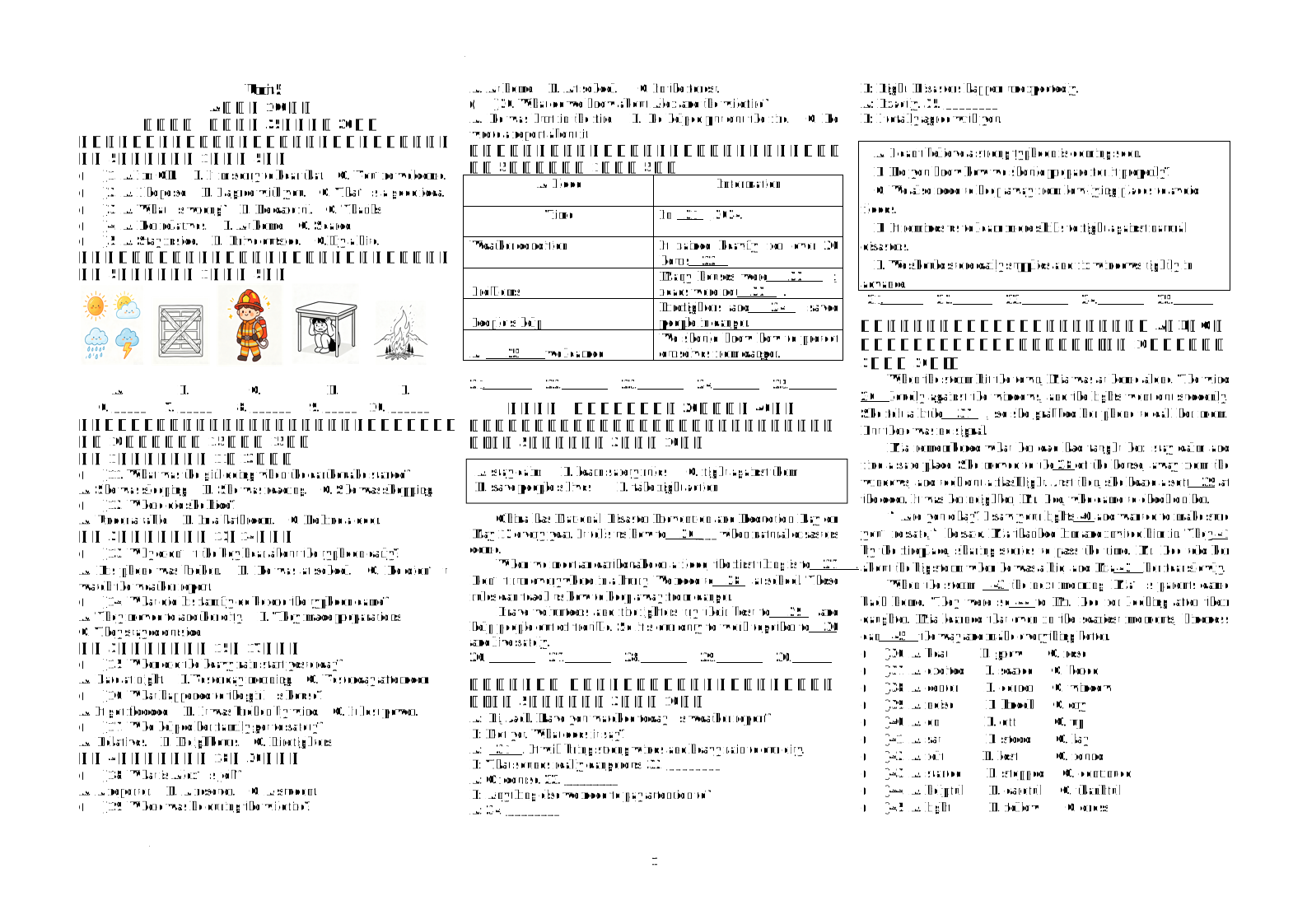
第一部分 听力(共25小题;计30分)
一、听句子,根据所听到的内容选择正确答语。每小题念两遍。(共5小题,每小题1分,计5分)
( )1. A.I’m OK. B. I’m sorry to hear that. C. You’re welcome.
( )2. A. I hope so. B. I agree with you. C. That’s a good idea.
( )3. A. What’s wrong? B. Be careful. C. Thanks.
( )4. A. Her relatives. B. At home. C. Scared.
( )5. A. Stay inside. B. Drive outside. C.Fly a kite.
2、 听句子,选择与所听句子内容相符的图片。每小题念两遍。(共5小题,每小题1分,计5分)
A. B. C. D. E.
6. _____ 7. _____ 8. ______ 9. _____ 10. ______
三、听对话,根据对话内容及问题选择正确答案。每小题念两遍。
(共10小题,每小题1.5分,计15分)
听第1段对话,回答第11、12小题。
( )11. What was the girl doing when the earthquake started?
A. She was sleeping. B. She was reading. C. She was shopping.
( )12. Where did she hide?
A. Under a table. B. In a bathroom. C. Behind a door.
听第2段对话,回答第13、14小题。
( )13. Why didn’t the boy hear about the typhoon early?
A. His phone was broken. B. He was at school. C. He didn’t watch the weather report.
( )14. What did his family do before the typhoon came?
A. They moved to another city. B. They made preparations.
C. They stayed outside.
听第3段对话,回答第15至17小题。
( )15. When did the heavy rain start yesterday?
A. Late at night. B.Yesterday morning. C. Yesterday afternoon.
( )16. What happened to the girl’s house?
A. It got flooded. B. It was broken by wind. C. It lost power.
( )17. Who helped her family get to safety?
A. Relatives. B. Neighbours. C. Firefighters.
听第4段对话,回答第18至20小题。
( )18. What is Alex’s job?
A. A reporter. B. A rescuer. C. A student.
( )19. Where was he during the wildfire?
A. At home. B. At school. C. In the forest.
( )20. What do we know about Alex and the wildfire?
A. He was hurt in the fire. B. He helped put out the fire. C. He wrote a report about it.
四、听短文,根据短文内容完成图表中所缺信息。短文念三遍。(共5小题,每小题1分,计5分)
A Flood
Information
Time
In 21 ,2024.
Weather condition
It rained heavily for over 20 hours 22
Problems
Many houses were 23 ; roads were not 23 .
People’s help
Firefighters and 24 saved people in danger.
A 25 we learned
We should know how to protect ourselves from danger.
21. 22. 23. 24. 25.
第二部分 基础知识运用(共20小题;计40分)
五、阅读短文,从方框内的选项中选出可以填入空白处的最佳选项。(共5小题;每小题2分,计10分)
A. stay calm B. learn safety rules C. fight against them
D. save people’s lives E. take right action
China has National Disaster Prevention and Reduction Day on May 12 every year. It tells us how to 26 ___ when natural disasters come.
When we meet an earthquake or a flood, the first thing is to 27 . Don’t run everywhere in a hurry. We need to 28 at school. These rules can teach us how to keep away from danger.
Brave volunteers and firefighters try their best to 29 and help people out of trouble. So it’s our duty to work together to 30 and live safely.
26. 27. 28. 29. 30.
6、 补全对话。 根据对话内容,从方框中选出最佳选项补全对话。(共5小题,每小题2分,计10分)
A: Hi, Jack. Have you watched today’s weather report?
B: Not yet. What does it say?
A: 31 . It will bring strong winds and heavy rain to our city.
B: That sounds really dangerous. 32. ________
A: Of course. 33. ________
B: Anything else we need to pay attention to?
A: 34. ________
B: Right. Disasters happen unexpectedly.
A: Exactly. 35. ________
B: I totally agree with you.
A. I can't believe a strong typhoon is coming soon.
B. Do you know how we should prepare for it properly?
C. We also need to keep away from low-lying places to avoid floods.
D. It reminds us to learn more skills to fight against natural disasters.
E. We should store daily supplies and fix windows tightly in advance.
31. 32. 33. 34. 35.
7、 完形填空。阅读下面短文,根据短文内容,从A、B、C三个选项中选出可以填入空白处的最佳选项。(共10小题;每小题2分,计20分。)
When the storm hit the town, Mia was at home alone. The wind 36 loudly against the windows, and the lights went out suddenly. She felt a little 37 , so she grabbed her phone to call her mom. But there was no signal.
Mia remembered what her dad had taught her: stay calm and find a safe place. She moved to the 38 of the house, away from the windows, and took out a flashlight. Just then, she heard a soft 39 at the door. It was her neighbor, Mr. Lee, who came to check on her.
“Are you okay? I saw your lights 40 and wanted to make sure you’re safe,” he said. Mia thanked him and invited him in. They 41 by the fireplace, sharing stories to pass the time. Mr. Lee told her about the big storm when he was a kid, and Mia 42 her fear slowly.
When the storm 43 the next morning, Mia’s parents came back home. They were so 44 to Mr. Lee for looking after their daughter. Mia learned that even in the scariest moments, kindness can 45 the way and make everything better.
( )36. A. beat B. grew C. rose
( )37. A. excited B. scared C. bored
( )38. A. center B. corner C. window
( )39. A. noise B. knock C. cry
( )40. A. on B. off C. up
( )41. A. sat B. stood C. lay
( )42. A. felt B. lost C. found
( )43. A. started B. stopped C. continued
( )44. A. helpful B. careful C. thankful
( )45. A. light B. follow C. cross
第三部分 阅读理解(共15小题;计30分)
八、阅读下面材料,根据材料内容选择最佳选项。(共15题;每小题2分,计30分)
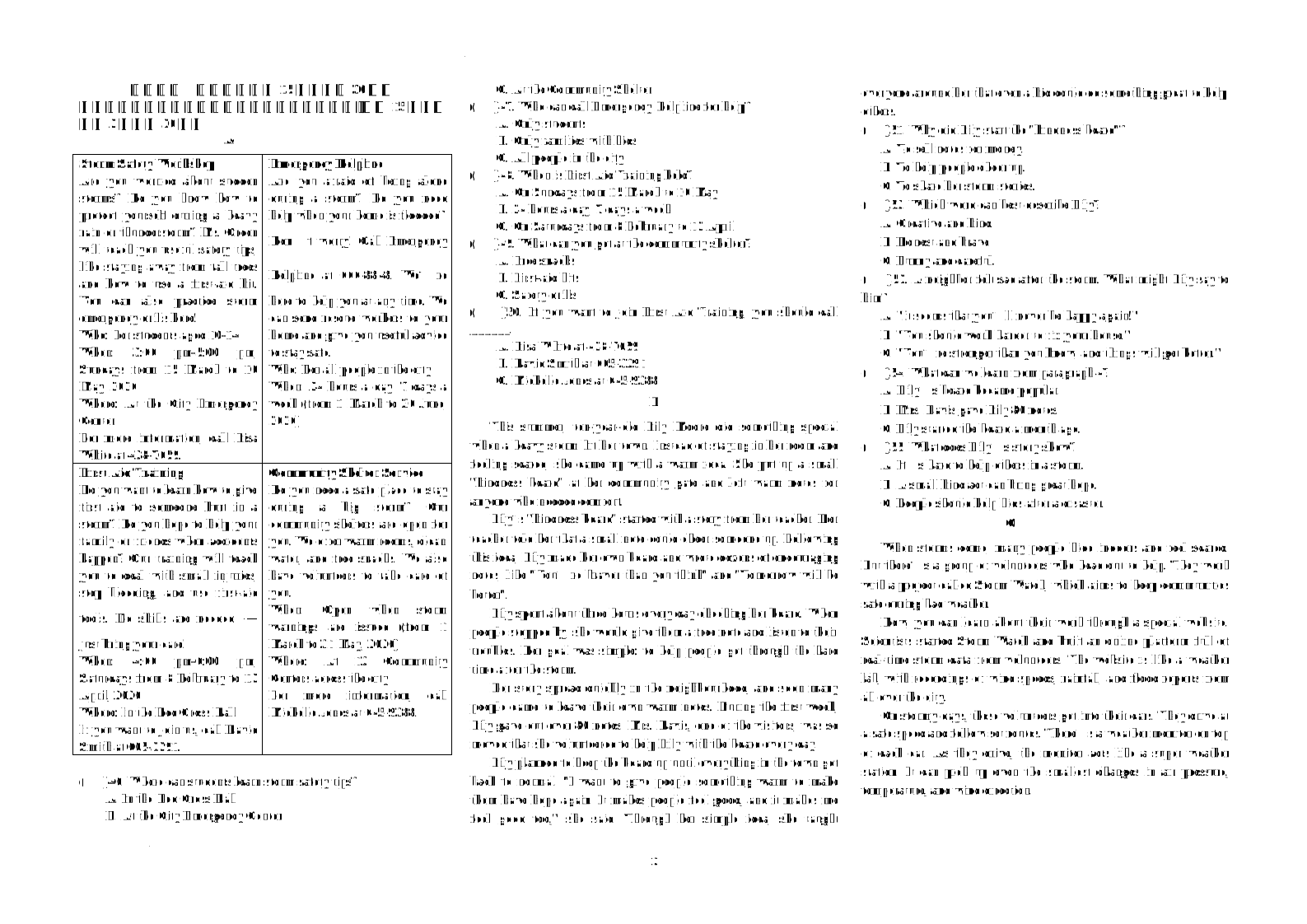
A
Storm Safety Workshop
Are you worried about sudden storms? Do you know how to protect yourself during a heavy rain or thunderstorm? Ms. Green will teach you useful safety tips, like staying away from tall trees and how to use a first-aid kit. You can also practice storm emergency drills here!
Who: For students aged 10-14
When: 3:00 pm-5:00 pm, Sundays from 15 March to 10 May, 2026
Where: At the City Emergency Center
For more information, call Lisa White at 428-7659.
Emergency Helpline
Are you afraid of being alone during a storm? Do you need help when your home is flooded? Don’t worry! Call Emergency Helpline at 666-8848. We’re here to help you at any time. We can send rescue workers to your home and give you useful advice to stay safe.
Who: For all people in the city
When: 24 hours a day, 7 days a week (from 1 March to 30 June, 2026)
First Aid Training
Do you want to learn how to give first aid to someone hurt in a storm? Do you hope to help your family or friends when accidents happen? Our training will teach you to deal with small injuries, stop bleeding, and use first-aid tools. No skills are needed — just bring your care!
When: 4:00 pm-6:00 pm, Saturdays from 8 February to 12 April, 2026
Where: In the Red Cross Hall
If you want to join us, call David Smith at 605-3291.
Community Shelter Service
Do you need a safe place to stay during a big storm? Our community shelters are open for you. We offer warm rooms, clean water, and free snacks. We also have volunteers to take care of you.
When: Open when storm warnings are issued (from 1 March to 31 May, 2026)
Where: At 12 Community Centers across the city
For more information, call Michelle Jones at 645-9388.
( )46. Where can students learn storm safety tips?
A. In the Red Cross Hall
B. At the City Emergency Center
C. At the Community Shelter
( )47. Who can call Emergency Helpline for help?
A. Only students
B. Only families with kids
C. All people in the city
( )48. When is First Aid Training held?
A. On Sundays from 15 March to 10 May
B. 24 hours a day, 7 days a week
C. On Saturdays from 8 February to 12 April
( )49. What can you get at the community shelter?
A. Free snacks
B. First-aid kits
C. Safety drills
( )50. If you want to join First Aid Training, you should call ______.
A. Lisa White at 428-7659
B. David Smith at 605-3291
C. Michelle Jones at 645-9388
B
This summer, ten-year-old Lily Moore did something special when a heavy storm hit her town. Instead of staying in her room and feeling scared, she came up with a warm idea. She put up a small "kindness board" at her community gate and left warm notes for anyone who needed comfort.
Lily’s "kindness board" started with a story from her teacher. Her teacher told her that a small note could cheer someone up. Following this idea, Lily made her own board and wrote dozens of encouraging notes, like "You’re braver than you think" and "Tomorrow will be better".
Lily spent about three hours every day checking her board. When people stopped by, she would give them a free note and listen to their troubles. Her goal was simple: to help people get through the hard time after the storm.
Her story spread quickly in the neighbourhood, and soon many people came to leave their own warm notes. During the first week, Lily gave out over 80 notes. Mrs. Davis, one of the visitors, was so moved that she volunteered to help Lily with the board every day.
Lily planned to keep the board up until everything in the town got back to normal. "I want to give people something warm to make them have hope again. It makes people feel good, and it makes me feel good too," she said. Through her simple idea, she taught everyone around her that even a kid could do something great to help others.
( )51. Why did Lily start the "kindness board"?
A. To sell notes for money.
B. To help people cheer up.
C. To share her storm stories.
( )52. Which word can best describe Lily?
A. Creative and kind.
B. Honest and brave.
C. Funny and careful.
( )53. A neighbor felt sad after the storm. What might Lily say to him?
A. "It seems that you’ll never be happy again!"
B. "You should work harder to fix your house."
C. "You’re stronger than you know, and things will get better."
( )54. What can we learn from paragraph 4?
A. Lily’s board became popular.
B. Mrs. Davis gave Lily 80 notes.
C. Lily started the board a month ago.
( )55. What does Lily’s story show?
A. It’s hard to help others in a storm.
B. A small kind act can bring great hope.
C. People should help kids after a disaster.
C
When storms come, many people hide indoors and feel scared. But there’s a group of volunteers who head out to help. They work with a project called Storm Watch, which aims to keep communities safe during bad weather.
Now, you can learn about their work through a special website. Scientists started Storm Watch and built an online platform full of real-time storm data from volunteers. The website is like a weather lab, with recordings of wind speeds, rainfall, and flood reports from all over the city.
On stormy days, these volunteers get into their cars. They drive at a safe speed and follow set routes. There’s a weather monitor on top of each car. As they drive, the monitor acts like a super weather station. It can pick up even the smallest changes in air pressure, temperature, and wind direction.
After the volunteers finish their routes, they send these data to the scientists right away. The scientists use computers to turn the raw data into easy-to-read weather reports for local people.
What are scientists trying to achieve by doing this? Maria Green, one of the founders of Storm Watch, explains, “Storms are sensitive to small changes in the atmosphere, so the data we collect can reflect the safety of an area. For example, if the wind speed rises sharply, it might mean a tornado is coming. By studying these data, scientists can send out warnings earlier and keep people away from danger.”
So, why not join this project to help protect your community and learn more about storms?
( )56. What can we infer from paragraph 1?
A. Storms are only dangerous for people indoors.
B. Some volunteers work to help during storms.
C. All people hide indoors when storms come.
( )57. How do volunteers collect storm data?
A. By acting like a super weather station.
B. By talking with local people in the community.
C.By driving cars with monitors at a safe speed.
( )58. The underlined word “reflect” probably means “______”.
A. show
B. change
C. protect
( )59. What does the writer think of the Storm Watch project?
A. It is of little importance.
B. It is only useful for scientists.
C. It helps protect communities from storms.
( )60. What is the main purpose of the passage?
A. To describe different ways to study storms.
B. To introduce a project and encourage people to join it.
C. To show the differences between small storms and big storms.
B卷(共50分)
一、短文填空 从下面方框中选出10个单词,将其正确形式填入短文,使短文意思正确通顺(每词限用一次)。(共10小题,每小题1分,计10分)
careful dangerous emergent powerful communication catch protect different stay keep listen become
When heavy rainstorms come, many people don’t know how to stay safe. But learning some safety rules can make a big 61 .
First, you should pay 62 to the weather report. If a storm warning is announced, stay indoors and avoid 63 outside. Going out in a storm puts you in great 64 . Second, if you are outside, move to a safe building quickly. Don’t stay under trees or near 65 lines, as they can be very dangerous.
Many people think that only adults need to know these rules, but every person, even kids, should learn them. When a storm comes, 66 with your family is necessary. You can make a safety plan together, so everyone knows what to do.
Also, it’s important to 67 your phone charged. If there is an 68 , you can call for help right away. Don’t try to be a hero and take risks. Remember, 69 yourself is the most important thing.
Trust me. Following these rules can stop the situation 70 even worse. Taking safety seriously is the first step to deal with all the challenges during a storm.
61.
62.
63.
64.
65.
66.
67.
68.
69.
70.
二、补全短文 根据短文内容,从短文后的A~F选项中选出5个适当的选项补全短文。(共5小题;每小题1分,计5分)
Do you find it hard to stay safe or communicate well during heavy rainstorms? This kind of panic is common. Many people
don’t know what to do when storms come, and they often make wrong decisions. 71 So how can they deal with this? Here are helpful ways.
Learn to get storm warnings in time. You can use weather apps or listen to local radio for real-time information. You can say, “I’ve got a storm warning, so let’s move indoors right away.” 72 Your family will understand the danger and follow you. So always put safety first.
73 Talking about safety plans can feel hard at first, so begin with simple talks. For example, try saying “Let’s prepare flashlights and water before the storm” instead of “It’s fine, we don’t need anything.” 74 Over time, you’ll feel more confident when talking about safety in different situations.
Use confident body language when talking about storm safety. Your body sends messages before you speak. Stand straight, look others in the eye, and speak clearly. 75
By practising these steps daily, you’ll find your voice and become more comfortable keeping yourself and others safe. Safety grows when you choose both careful preparation and clear communication.
A. Start small.
B. Ask for help from neighbours.
C. These words keep things clear and urgent.
D. The more you talk about safety, the easier it becomes.
E. Although it seems like no big deal, it often puts everyone in danger later.
F. These actions make you appear confident and help others trust your advice.
71.
72.
73.
74.
75.
三、 阅读表达(共10小题;计20分)
A. 完成图表 根据短文内容,完成图表中所缺信息。(共5小题,每小题2分;计10分)
Now, heavy rainstorms are becoming more and more frequent, especially in summer. And children often meet sudden storms when going to school or playing outside. Parents are worried that their children may face dangers in bad weather.
As the saying goes, "Prevention is better than cure." In monitoring children's outdoor activities during storms, the saying works well. So many parents feel they need to keep an eye on their children's activities to keep them away from danger.
However, there is a misunderstanding about what "prevention" really means. Many people believe that prevention is all about stopping children from going out at any sign of rain. But this doesn't work well in practice. On the one hand, it's hard for parents to fully stop children from going out. On the other hand, if children are never exposed to rainy situations, they won't learn how to deal with them by themselves. The best way is to teach children what to do when they come across a sudden rainstorm.
If parents choose to guide their children's storm safety, they should do it in a smart way. Then, how? First, parents should let their children know that they'll teach them safety rules before the storm comes. Second, have an open conversation and clearly explain how to stay safe in storms. Third, be careful. There is a line between protecting children and over-controlling them. Parents should discuss the safety plans with their children and listen to their opinions and then let them set the details themselves.
In short, instead of just stopping children from going out, parents should teach children how to stay safe in storms. This way, children can learn to protect themselves wisely in bad weather.
Advice:
• Parents should tell children about the decision 78 the storm comes.
• Parents should have an open conversation and a clear79 on how to stay safe in storms.
• Parents should 80 with their children and ask children to set details themselves.
Many parents choose to 77 guide their children's storm safety.
Heavy rainstorms are frequent, which causes 76 for parents.
76. 77. 78. 79. 80.
B. 任务型阅读 根据课文短文内容,按要求回答问题。(共5小题;每小题2分,计10分)
Heavy rainstorms are common in summer, and they can bring serious problems to people’s lives. For students in small towns, it is sometimes hard to get to school on time when roads are flooded. Some students even have to stay home because their homes are not safe enough.
To help students stay safe during storms, a teacher named Ms. White came up with an idea. One rainy day, she saw her students struggling with heavy books and umbrellas in the rain. Many of them got wet and caught colds. This experience made her want to create a “storm safety kit” for every student.
The kit is made of a strong, waterproof bag. Inside, there is a small flashlight, a first-aid kit, some water, and a piece of plastic to keep books dry. The flashlight can last up to 10 hours, so students can see clearly if the power goes out. The kit is light and easy to carry, so students can take it with them every day.
The kit is not just for students. It also helps families stay safe at home during storms. Ms. White says, “The kit is more than just a bag of things; it’s a way to teach kids how to protect themselves in bad weather.”
81.What problem do students in small towns face during heavy rainstorms?
__________________________________________________
82.What made Ms. White decide to create the “storm safety kit”?
_________________________________________________
83. Which two words can best describe the “storm safety kit”?
_________________________________________________
84. How does the “storm safety kit” help students?
_________________________________________________
85. What are the advantages of the “storm safety kit”?
________________________________________________
四、书面表达 (15分)
假设你遇到台风天气。描述你和家人的经历。
Before
weather reporter, windows...
During
radio, cards,...
After
neighbourhood, clean up
Feeling
要求:
1. 包含提示内容,可适当发挥;
2.注意时间副词跟连词。 when 跟while必须使用至少一次;
3. 词数70左右。
1
1
学科网(北京)股份有限公司
$
资源预览图
1
2
相关资源
由于学科网是一个信息分享及获取的平台,不确保部分用户上传资料的 来源及知识产权归属。如您发现相关资料侵犯您的合法权益,请联系学科网,我们核实后将及时进行处理。