Unit 6 Crossing Cultures-SectionA 1a-2d 课件2025-2026学年人教版英语八年级下册
2026-05-15
|
14页
|
1810人阅读
|
12人下载
普通
内容正文:
Unit 6 Crossing Cultures
Section A How different are our cultures?
(1a-2d)
Look and share.
• What Chinese cultural elements (元素) can
you see in the photo?
A Chinese fan, Chinese characters, Caishen,
and Chinese painting.
• Do you think the girl in the photo likes to learn
about Chinese culture? How do you know?
Yes.
She smiles. She looks interested in Chinese
culture.
2010年,联合国将中国农历二十四节气的 “谷雨”(Grain Rain) 这天定为 “联合国中文日”(UN Chinese Language Day), 2020年又将其发展为 “国际中文日”。该节日通过汉字演变展, 诗词飞花令、书法绘画、品茗论道等活动展现中华优秀传统文化魅力,推动中华文化走向世界。
?
BIG
Question
How do we communicate with people from different cultures?
we need to learn about their traditions and customs.
we need to know what is considered polite or impolite.
we must not judge their cultures based on our own.
…
2
• How do Chinese people often greet each other?
We usually say “ni hao” or shake hands.
/ʃeɪk/
Think and share.
• Do you know any other ways of greeting?
3
Example:
In Picture ..., people ... to greet each other.
A
D
B
E
C
F
___ shake hands ___ bow ___ bump fists
___ rub noses ___ kiss on the cheek ___ hug
D
C
B
E
A
F
Match the greetings with the pictures.
/baʊ/
/bʌmp/ /fɪst/
/rʌb/
/kɪs/ /tʃiːk/
/hʌɡ/
1a
4
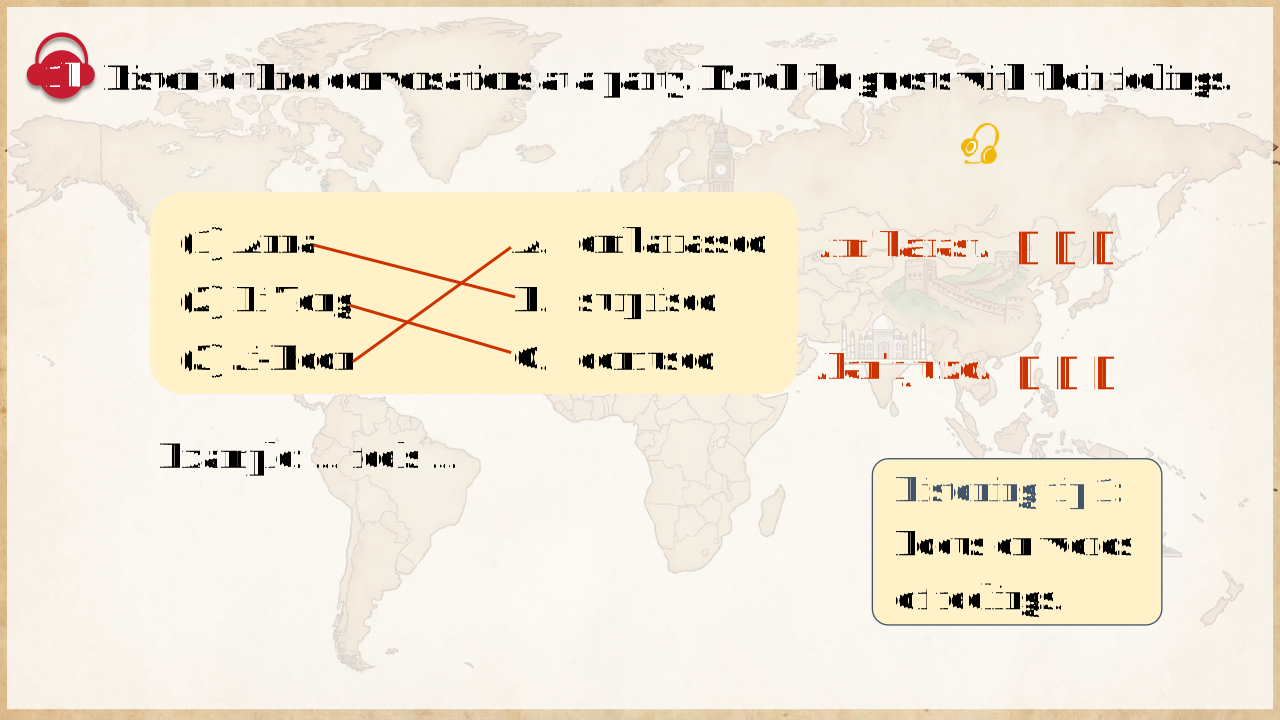
The High School Attached to Tsinghua University is having a welcoming party for the international students.
Listen to three conversations at a party. Match the guests with their feelings.
embarrassed
surprised
confused
A.
B.
C.
(1) Anna
(2) Li Tong
(3) Ji-Hoon
/ɪmˈbærəst/
/kənˈfjuːzd/
尴尬的
困惑的
Example: ... feels ...
Listening tip 1:
Focus on words
of feelings.
1b
6
Listen again. Share your ideas on why they have these feelings.
Listening tip 2:
Focus on words
of greetings.
Name Feeling Reason
Anna surprised
Li Tong confused
Ji-Hoon embarrassed
Kaito ______ when they meet.
She doesn’t know how to ______ others in the UK.
In Korean culture, people don’t usually ______ to say hello.
bows
greet
kiss
Example: ... feels ..., because ...
In a word, that’s because their cultures are ________.
different
1b
7
Note-taking tip: Write the first letters of key words.
Anna
(US) Kaito
(Japan) Harry
(UK) Marie
(France)
• say “hello”
• shake hands
Example: In ..., people usually ... to greet others.
Listen again. Complete the table with the common greetings in each country.
• bow
• say “hello”
• hug sometimes
• kiss friends on the
cheek
1c
8
What country do the following photos remind you of?
Taj Mahal
Bollywood musical
curry
namaste
(1) Many people like / do not like curry.
(2) It is usually OK to be late / early when visiting friends.
(3) People will usually offer you some tea / fruit when you visit them.
(4) People usually wear clothes which cover their arms / legs.
(5) It is rude / polite to give or take things with your left hand.
(6) Dishes with beef are common / uncommon.
/ʌnˈkɒmən/ 罕见的
Complete the sentences about Indian culture.
2a
/ˈkʌri/
Talk about the topics of these pictures.
_______ habits
eating
food
greeting
animal
2b
What are the topics of the pictures?
Indians often greet each other by putting their hands together and saying “Namaste”. This greeting comes from their culture and means “ I respect you”.
Listen to the conversation and number the pictures in the order of the topics mentioned.
Listening tip
Focus on the topic.
1
2
3
4
2b
Listen again and complete the sentences.
(1) In India, people have a special __________. They press their palms together,
__________, and say “Namaste.”
(2) People in India use their __________ hand to eat. They may not always eat
with a __________ and fork.
(3) People often eat __________ curry. It’s popular in India.
(4) In India, _________ are very special to many people. They can _________
anywhere they like.
greeting
bow
right
knife
a lot of
cows
walk
Summarize the topics.
Greeting
Eating habits
Popular food
Special animal
2c
Imagine a friend is going to visit India. Tell him or her about Indian customs.
A: How do people in India greet others?
B: ...
A: What special food do Indian people often eat?
B: ...
2d
Other
99685.18
Blues
73220.555
$
资源预览图

1

2

3

4

5
6
相关资源
示范课
由于学科网是一个信息分享及获取的平台,不确保部分用户上传资料的 来源及知识产权归属。如您发现相关资料侵犯您的合法权益,请联系学科网,我们核实后将及时进行处理。