2026年广东省广州市中考英语二模模拟预测卷
2026-05-15
|
12页
|
432人阅读
|
11人下载
资源信息
| 学段 | 初中 |
|---|---|
| 学科 | 英语 |
| 教材版本 | 初中英语沪教牛津版(广州深圳沈阳通用)(2012)九年级下册 |
| 年级 | 九年级 |
| 章节 | 综合复习与测试 |
| 类型 | 试卷 |
| 知识点 | - |
| 使用场景 | 中考复习-二模 |
| 学年 | 2026-2027 |
| 地区(省份) | 广东省 |
| 地区(市) | 广州市 |
| 地区(区县) | - |
| 文件格式 | DOCX |
| 文件大小 | 41 KB |
| 发布时间 | 2026-05-15 |
| 更新时间 | 2026-05-15 |
| 作者 | 金科白云 |
| 品牌系列 | - |
| 审核时间 | 2026-05-15 |
| 下载链接 | https://m.zxxk.com/soft/57877214.html |
| 价格 | 1.00储值(1储值=1元) |
| 来源 | 学科网 |
内容正文:
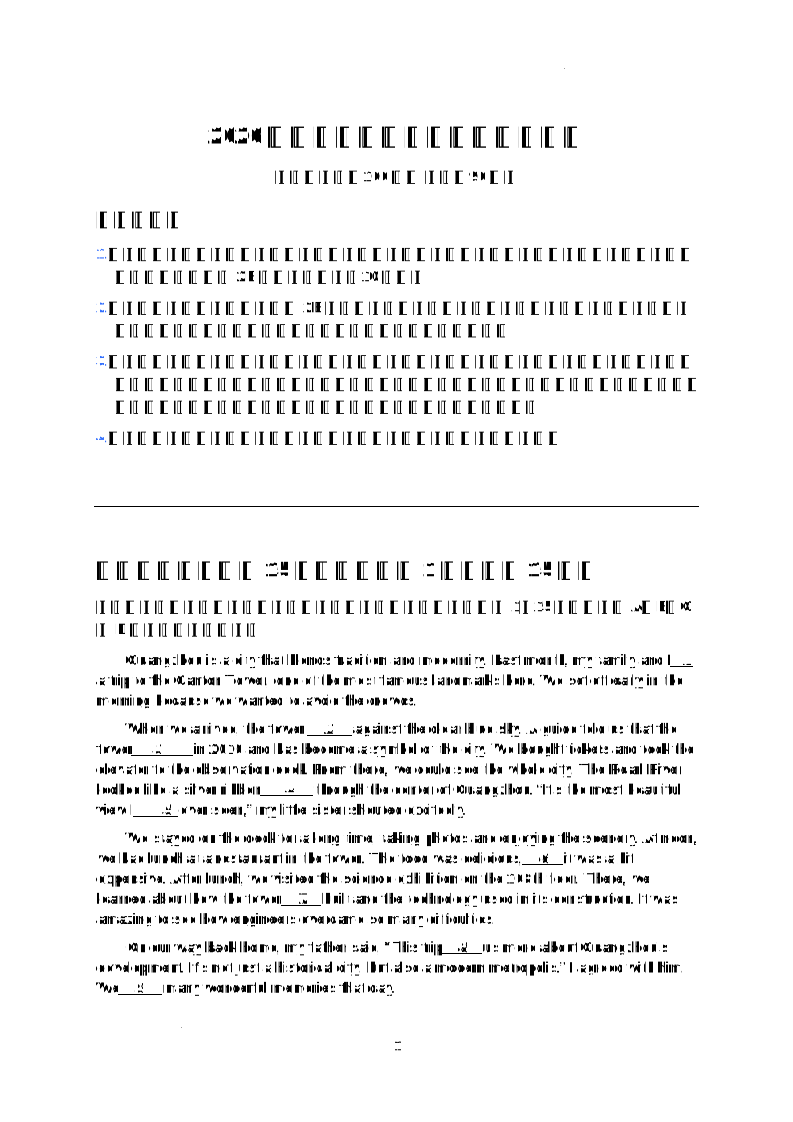
2026广州市中考英语二模模拟预测卷
(考试时间:100 分钟 满分:90 分)
注意事项:
1.答题前,考生务必在答题卡上用黑色字迹的圆珠笔或钢笔填写自己的学校、班级、姓名、试室号和座位号,用 2B 铅笔填涂考号(10 位)。
2.选择题每小题选出答案后,用 2B 铅笔把答题卡上对应题目的答案标号涂黑;如需改动,用橡皮擦干净后,再选涂其他答案标号。答案不能答在试卷上。
3.非选择题答案必须用黑色字迹的圆珠笔或钢笔写在答题卡各题目指定区域内的相应位置上;如需改动,先划掉原来的答案,然后再写上新的答案,改动后的答案也不能超出指定区域;不准使用铅笔、涂改液和修正带。不按以上要求作答的答案无效。
4.考生必须保持答题卡的整洁,作答结束后,将本卷和答题卡一并交回。
一、语法选择(共 15 小题;每小题 1 分,满分 15 分)
阅读下面短文,按照句子结构的语法性和上下文连贯的要求,从 1~15 各题所给的 A、B、C 和 D 项中选出最佳选项。
Guangzhou is a city that blends tradition and modernity. Last month, my family and I 1 a trip to the Canton Tower, one of the most famous landmarks here. We set off early in the morning because we wanted to avoid the crowds.
When we arrived, the tower 2 against the clear blue sky. A guide told us that the tower 3 in 2010 and has become a symbol of the city. We bought tickets and took the elevator to the observation deck. From there, we could see the whole city. The Pearl River looked like a silver ribbon 4 through the center of Guangzhou. “It’s the most beautiful view I 5 ever seen,” my little sister shouted excitedly.
We stayed on the deck for a long time, taking photos and enjoying the scenery. At noon, we had lunch at a restaurant in the tower. The food was delicious, 6 it was a bit expensive. After lunch, we visited the science exhibition on the 108th floor. There, we learned about how the tower 7 built and the technology used in its construction. It was amazing to see how engineers overcame so many difficulties.
On our way back home, my father said, “This trip 8 us more about Guangzhou’s development. It’s not just a historical city, but also a modern metropolis.” I agreed with him. We 9 many wonderful memories that day.
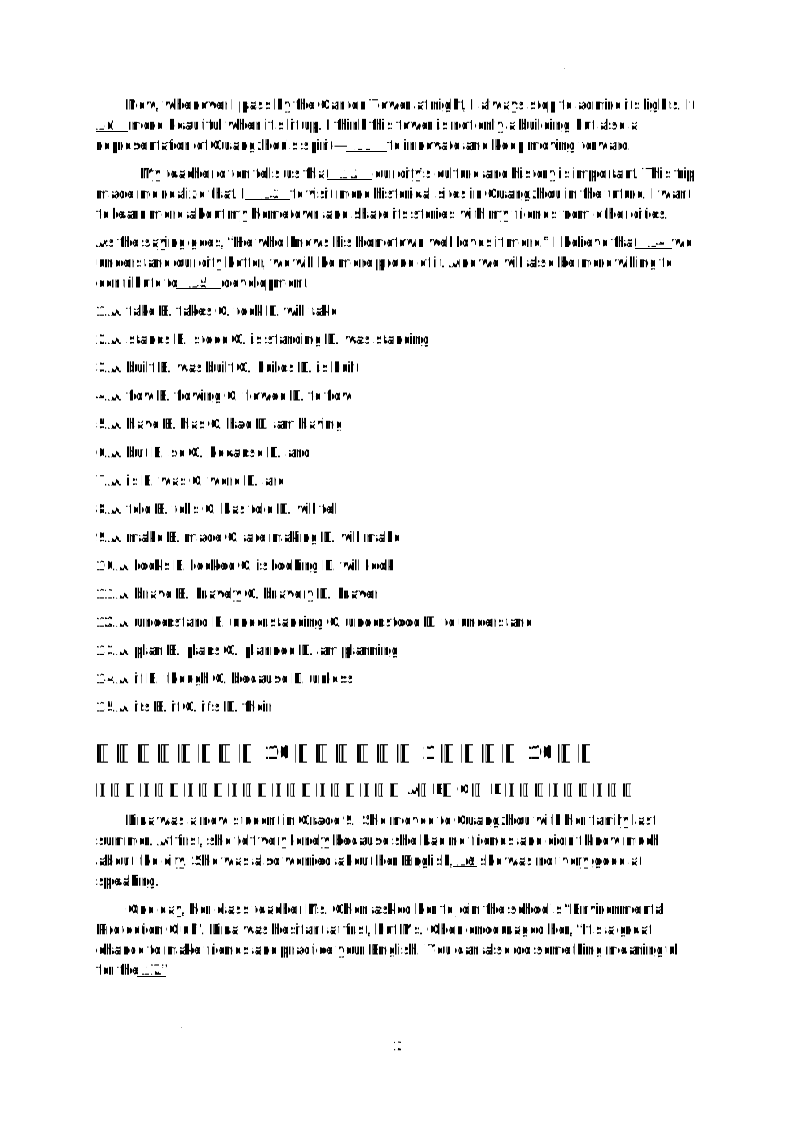
Now, whenever I pass by the Canton Tower at night, I always stop to admire its lights. It 10 more beautiful when it’s lit up. I think this tower is not only a building but also a representation of Guangzhou’s spirit— 11 to innovate and keep moving forward.
My teacher often tells us that 12 our city’s culture and history is important. This trip made me realize that. I 13 to visit more historical sites in Guangzhou in the future. I want to learn more about my hometown and share its stories with my friends from other cities.
As the saying goes, “He who knows his hometown well loves it more.” I believe that 14 we understand our city better, we will be more proud of it. And we will also be more willing to contribute to 15 development.
1.A. take B. takes C. took D. will take
2.A. stands B. stood C. is standing D. was standing
3.A. built B. was built C. builds D. is built
4.A. flow B. flowing C. flowed D. to flow
5.A. have B. has C. had D. am having
6.A. but B. so C. because D. and
7.A. is B. was C. were D. are
8.A. told B. tells C. has told D. will tell
9.A. make B. made C. are making D. will make
10.A. looks B. looked C. is looking D. will look
11.A. brave B. bravely C. bravery D. braver
12.A. understand B. understanding C. understood D. to understand
13.A. plan B. plans C. planned D. am planning
14.A. if B. though C. because D. unless
15.A. its B. it C. it’s D. their
二、完形填空(共 10 小题;每小题 1 分,满分 10 分)
阅读下面短文,掌握其大意,然后从各题所给的 A、B、C 和 D 项中选出最佳选项。
Lina was a new student in Grade 9. She moved to Guangzhou with her family last summer. At first, she felt very lonely because she had no friends and didn’t know much about the city. She was also worried about her English, 16 she was not very good at speaking.
One day, her class teacher Ms. Chen asked her to join the school’s “Environmental Protection Club”. Lina was hesitant at first, but Ms. Chen encouraged her, “It’s a great chance to make friends and practice your English. You can also do something meaningful for the 17.”
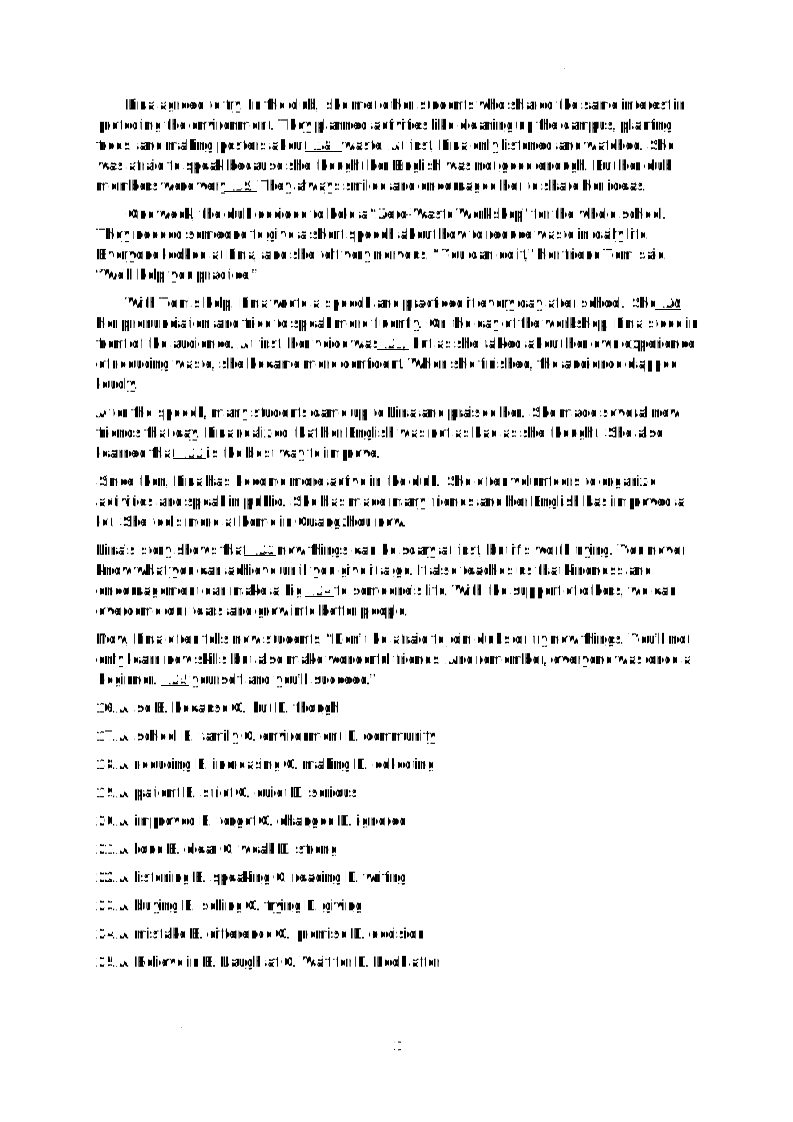
Lina agreed to try. In the club, she met other students who shared the same interest in protecting the environment. They planned activities like cleaning up the campus, planting trees, and making posters about 18 waste. At first, Lina only listened and watched. She was afraid to speak because she thought her English was not good enough. But her club members were very 19. They always smiled and encouraged her to share her ideas.
One week, the club decided to hold a “Zero-Waste Workshop” for the whole school. They needed someone to give a short speech about how to reduce waste in daily life. Everyone looked at Lina, and she felt very nervous. “You can do it,” her friend Tom said. “We’ll help you practice.”
With Tom’s help, Lina wrote a speech and practiced it every day after school. She 20 her pronunciation and tried to speak more fluently. On the day of the workshop, Lina stood in front of the audience. At first, her voice was 21, but as she talked about her own experience of reducing waste, she became more confident. When she finished, the audience clapped loudly.
After the speech, many students came up to Lina and praised her. She made several new friends that day. Lina realized that her English was not as bad as she thought. She also learned that 22 is the best way to improve.
Since then, Lina has become more active in the club. She often volunteers to organize activities and speak in public. She has made many friends and her English has improved a lot. She feels more at home in Guangzhou now.
Lina’s story shows that 23 new things can be scary at first, but it’s worth trying. You never know what you can achieve until you give it a go. It also teaches us that kindness and encouragement can make a big 24 to someone’s life. With the support of others, we can overcome our fears and grow into better people.
Now, Lina often tells new students, “Don’t be afraid to join clubs or try new things. You’ll not only learn new skills but also make wonderful friends. And remember, everyone was once a beginner. 25 yourself and you’ll succeed.”
16.A. so B. because C. but D. though
17.A. school B. family C. environment D. community
18.A. reducing B. increasing C. making D. collecting
19.A. patient B. strict C. quiet D. serious
20.A. improved B. forgot C. changed D. ignored
21.A. loud B. clear C. weak D. strong
22.A. listening B. speaking C. reading D. writing
23.A. buying B. selling C. trying D. giving
24.A. mistake B. difference C. promise D. decision
25.A. Believe in B. Laugh at C. Wait for D. Look after
三、阅读(共两节,满分 35 分)
第一节 阅读理解(共 15 小题;每小题 2 分,满分 30 分)
阅读下列短文,从每题所给的 A、B、C 和 D 项中选出最佳选项。
(A)
Guangzhou Zoo is one of the oldest zoos in South China. It was founded in 1958 and covers an area of 42 hectares. The zoo is home to more than 4,000 animals from over 400 species, including giant pandas, South China tigers, and Asian elephants.
Visitors can enjoy various activities at the zoo. There are animal shows every morning and afternoon, such as the sea lion performance and the bird show. Children can also take part in the “Feed the Animals” activity, where they can feed goats, sheep, and deer with special food bought from the zoo.
The zoo is also an educational center. It offers guided tours for students, during which they can learn about animal habits, conservation status, and the importance of protecting wildlife. There are also information boards around the zoo with detailed introductions to each animal.
Guangzhou Zoo is open from 8:00 a.m. to 6:00 p.m. every day. The ticket price is 20 yuan for adults and 10 yuan for children between 1.2 meters and 1.5 meters. Children under 1.2 meters can enter for free. You can take subway Line 5 to XiaoBei Station and then take bus No. 199 to reach the zoo.
26.When was Guangzhou Zoo founded?
A. In 1948. B. In 1958. C. In 1968. D. In 1978.
27.What activity can children take part in at the zoo?
A. Training sea lions. B. Feeding certain animals.
C. Taking care of giant pandas. D. Giving speeches about wildlife.
28.How much should a family with one adult and two children (1.3 meters and 1.1 meters) pay for the tickets?
A. 20 yuan. B. 30 yuan. C. 40 yuan. D. 50 yuan.
(B)
Wang Yaping is a famous Chinese astronaut who has made great achievements in space exploration. She was born in 1980 in Shandong Province. Wang dreamed of flying into space when she was a little girl. To realize her dream, she worked very hard at school and joined the army after graduating from high school.
In 2010, Wang was selected as a member of China’s astronaut team. She underwent strict training for years. The training was very difficult, but she never gave up. She once said, “Space exploration is a challenging job, but I’m willing to take on the challenge for my country.”
In 2013, Wang became the second Chinese woman to fly into space. She stayed in the Shenzhou X spacecraft for 15 days. During her mission, she gave a science lecture to students on Earth, which was watched by millions of people. Her lecture made space science more popular among young people.
In 2021, Wang flew into space again as part of the Shenzhou XIII mission. This time, she stayed in the Tiangong space station for six months. She carried out many scientific experiments and helped build the space station. She also gave another science lecture, showing students how things work in space.
Wang Yaping is a role model for many people. She has shown that with hard work and perseverance, women can achieve great things in space exploration. She often encourages young people to follow their dreams and never give up. “No matter how difficult the road is, keep moving forward,” she said. “Your dreams will come true if you work hard enough.”
29.What did Wang Yaping do after graduating from high school?
A. She went to college. B. She joined the army.
C. She became an astronaut. D. She gave science lectures.
30.How many days did Wang stay in space during her first mission?
A. 15 days. B. 30 days. C. 6 months. D. 1 year.
31.What did Wang Yaping do during her space missions?
A. She trained new astronauts.
B. She built the Tiangong space station alone.
C. She gave science lectures to students.
D. She visited other countries’ space stations.
32.What can we learn from Wang Yaping’s story?
A. Space exploration is easy. B. Perseverance leads to success.
C. Only men can be astronauts. D. Dreams are not important.
(C)
Dim sum is a traditional Cantonese food that is popular all over the world. It consists of small dishes of food, such as dumplings, buns, and pastries. The history of dim sum dates back to the Tang Dynasty, over 1,000 years ago. At that time, travelers stopped at tea houses along the way to rest and eat small snacks, which later developed into dim sum.
In Guangzhou, dim sum is usually eaten for breakfast or brunch. People often go to tea houses with family or friends to enjoy dim sum and drink tea. This is called “yum cha” in Cantonese. Yum cha is not just about eating; it’s also a social activity. People talk, laugh, and spend quality time together while enjoying their food.
There are hundreds of different kinds of dim sum. Some of the most popular ones include har gow (shrimp dumplings), siu mai (pork dumplings), char siu bao (barbecued pork buns), and egg tarts. Each kind of dim sum has a unique taste and shape. Making dim sum requires skill and patience. Many dim sum chefs train for years to master the art.
In recent years, dim sum has become more popular internationally. Many tea houses have opened in countries like the United States, Canada, and Australia. People from all over the world love the delicious taste of dim sum and the unique dining experience it offers.
To promote dim sum culture, the Guangzhou government holds a Dim Sum Festival every year. During the festival, visitors can taste different kinds of dim sum, watch cooking demonstrations by famous chefs, and learn about the history of dim sum. The festival has become a popular event that attracts tourists from all over the world.
33.When did dim sum first appear?
A. During the Tang Dynasty. B. During the Song Dynasty.
C. During the Ming Dynasty. D. During the Qing Dynasty.
34.What does “yum cha” mean in Cantonese?
A. Eating dinner. B. Drinking tea and eating dim sum.
C. Cooking dim sum. D. Selling dim sum.
35.Which of the following is a popular kind of dim sum?
A. Sushi. B. Pizza. C. Har gow. D. Noodles.
36.What happens during the Guangzhou Dim Sum Festival?
A. Chefs compete to make the largest dim sum.
B. Visitors can taste different kinds of dim sum.
C. People sell dim sum at low prices.
D. Tourists learn to speak Cantonese.
(D)
The “shared bicycle” has become a common sight in Guangzhou in recent years. It is a convenient and environmentally friendly way to travel. Shared bicycles are available 24 hours a day, and users can rent them with a simple scan of a QR code on their phones.
Using shared bicycles has many advantages. First, it’s cheap. Users only need to pay 1-2 yuan per hour. Second, it’s good for the environment. Riding bicycles produces no pollution, which helps reduce air pollution in the city. Third, it’s a good form of exercise. Riding a bicycle for a short distance is a great way to stay healthy.
However, shared bicycles also bring some problems. Some users park the bicycles randomly, which blocks sidewalks and roads. This causes inconvenience to pedestrians and drivers. Another problem is that some bicycles are damaged or stolen. To solve these problems, the Guangzhou government has made some rules. For example, users who park bicycles improperly will be fined. The government has also set up designated parking areas for shared bicycles.
Many companies are also taking action to improve the situation. They are using technology to track the bicycles and remind users to park them properly. Some companies are also replacing old bicycles with new ones that are more durable.
Shared bicycles have changed the way people travel in Guangzhou. They have made short-distance trips easier and more convenient. They have also helped promote a greener lifestyle. With the joint efforts of the government, companies, and users, shared bicycles will continue to serve the city better. As a user, we should follow the rules and take good care of the bicycles. Only in this way can we enjoy the benefits of shared bicycles for a long time.
37.How can users rent shared bicycles in Guangzhou?
A. By paying cash. B. By scanning a QR code.
C. By showing their ID cards D. By calling the company.
38.What is one advantage of using shared bicycles?
A. It’s fast for long-distance trips. B. It’s expensive but comfortable.
C. It produces no pollution. D. It doesn’t require any exercise.
39.What problem do shared bicycles bring?
A. They are too expensive for most users. B. They are not available at night.
C. Some users park them randomly. D. They are difficult to rent.
40.What has the Guangzhou government done to solve the problems of shared bicycles?
A. It has banned shared bicycles in the city. B. It has set up designated parking areas.
C. It has increased the rental price. D. It has stopped companies from operating.
第二节 阅读填空(共 5 小题;每小题 1 分,满分 5 分)
阅读短文及文后选项,选出可以填入空白处的最佳选项。选项中有一项为多余选项。
How to Be a Good Volunteer
Volunteering is a great way to help others and make a difference in society. If you want to be a good volunteer, here are some useful tips:
41.______ Before you start volunteering, think about your interests and skills. For example, if you like working with children, you can volunteer at a primary school. If you are good at speaking English, you can help teach English to the elderly. Choosing a volunteer activity that matches your interests and skills will make you more passionate and effective.
42.______ When you volunteer, you need to be reliable. If you promise to help at a certain time, make sure you arrive on time. Don’t cancel your volunteer work unless it’s an emergency. Organizations rely on volunteers, so your reliability is very important.
43.______ As a volunteer, you may need to work with other people. Teamwork is key to completing tasks successfully. Listen to others’ ideas and cooperate with them. Be friendly and respectful to your teammates, and help each other when needed.
44.______ Volunteering is not about getting rewards. It’s about helping others and contributing to society. Be humble and don’t expect praise for your work. Remember that even small acts of kindness can make a big difference to someone’s life.
45.______ When you volunteer, you will learn new skills and gain valuable experience. Be open to learning from others, whether it’s your teammates or the people you are helping. Ask questions if you don’t know how to do something, and be willing to try new things. This will not only make you a better volunteer but also help you grow as a person.
A. Be reliable
B. Choose the right activity
C. Be open to learning
D. Work well in a team
E. Expect big rewards
F. Be humble
四、写作(共三节,满分 30 分)
第一节 语篇填词(共 5 小题;每小题 1 分,满分 5 分)
阅读短文,根据上下文和所给的首字母写出所缺单词。注意使用正确形式,每空限填一词。答卷时,要求写出完整单词。
Guangzhou is a city that cares about the environment. Last month, our school organized a “Zero-Waste Week” activity to encourage students to reduce waste and protect the environment. It was a very meaningful experience that taught us a lot.
During the week, we took part in various activities. On Monday, we listened to a lecture about the importance of reducing waste. The speaker told us that the average person produces about 1 kilogram of waste every day, which is harmful to the (46)e.______. We were shocked by this number and realized that we need to do something to change it.
On Wednesday, we had a “Zero-Waste Lunch” activity. Students brought their own reusable lunch boxes and chopsticks instead of using disposable ones. We also learned how to sort garbage into different categories, such as recyclable, non-recyclable, and kitchen waste. It was interesting to see how much waste we could reduce by making small(47) c.______ to our daily lives.
On Friday, we made posters about zero-waste living and put them up around the school. We wanted to spread the idea to more students and teachers. Many students were inspired by our posters and said they would start practicing zero-waste living at home.
The “Zero-Waste Week” activity was a great (48)s______. It not only helped us learn about environmental protection but also changed our habits. We now use reusable water bottles, avoid buying products with too much packaging, and recycle as much as possible. We also learned that protecting the environment is everyone’s responsibility.
Our teacher told us that small actions can make a big difference. If everyone does their part, we can create a cleaner and greener world. We hope that more schools and communities will organize similar activities to raise (49)a______ about zero-waste living.
In the future, we will continue to practice zero-waste living and encourage our family and friends to join us. We believe that with our efforts, we can protect the environment and make our city more beautiful. This activity has taught us that we have the power to change the world for the (50)b______.
第二节 完成句子(共 5 小题;每小题 2 分,满分 10 分)
根据所给的汉语内容,用英语完成下列句子。每空限填一词。
51.广州塔是多么壮观啊!
__________ __________ the Canton Tower is!
52.我们通过参加志愿者活动学会了如何帮助他人。
We learned how to help others __________ __________ in volunteer activities.
53.为了保护环境,我们应该少用一次性产品。
We should use fewer disposable products __________ __________ we can protect the environment.
54.王亚军不仅是一位优秀的宇航员,还是一位好老师。
Wang Ya ping is __________ __________ an excellent astronaut __________ __________ a good teacher.
55.自从 2010 年以来,广州已经发生了巨大的变化。
Great changes __________ __________ __________ in Guangzhou since 2010.
第三节 书面表达(共 1 题,满分 15 分)
假设你所在的学校上周举办了 “零废弃周”(Zero-Waste Week)活动,请你以 “Our Zero-Waste Week” 为题,写一篇英文短文,向学校英文报投稿。
内容包括:
1.活动时间:上周(6 月 3 日 - 6 月 7 日);
2.活动内容:听环保讲座、零废弃午餐、制作宣传海报;
3.你的感受和收获。
注意:
1.词数 80 左右;
2.开头已给出,不计入词数;
3.不得透露真实姓名和学校信息。
参考词汇:零废弃周 Zero-Waste Week;环保讲座 environmental protection lecture;一次性产品 disposable products;宣传海报 promotional poster
Our Zero-Waste Week
Last week, from June 3rd to June 7th, our school held a Zero-Waste Week.
参考答案
一、语法选择(1-15 小题)
1.C 2. B 3. B 4. B 5. A 6. A 7. B 8. C 9. B 10. A 11. C 12. B 13. A 14. A 15. A
二、完形填空(16-25 小题)
16.B 17. C 18. A 19. A 20. A 21. C 22. B 23. C 24. B 25. A
三、阅读
第一节 阅读理解(26-40 小题)
26.B 27. B 28. B 29. B 30. A 31. C 32. B 33. A 34. B 35. C 36. B 37. B 38. C 39. C 40. B
第二节 阅读填空(41-45 小题)
41.B 42. A 43. D 44. F 45. C
四、写作
第一节 语篇填词(46-50 小题)
46.environment 47. changes 48. success 49. awareness 50. better
第二节 完成句子(51-55 小题)
51.How spectacular
52.by participating
53.so that
54.not only; but also
55.have taken place
第三节 书面表达(参考范文)
Our Zero-Waste Week
Last week, from June 3rd to June 7th, our school held a Zero-Waste Week. We had various meaningful activities. On Monday, we listened to an environmental protection lecture and learned how much waste we produce daily. On Wednesday, we had a zero-waste lunch with reusable boxes and chopsticks. We also made promotional posters to spread the idea of reducing waste.
This activity changed my habits. I now avoid disposable products and sort garbage at home. It made me realize that everyone can contribute to environmental protection. I’ll keep practicing zero-waste living and encourage others to join me.
1
学科网(北京)股份有限公司
$
资源预览图
1
2
3
相关资源
由于学科网是一个信息分享及获取的平台,不确保部分用户上传资料的 来源及知识产权归属。如您发现相关资料侵犯您的合法权益,请联系学科网,我们核实后将及时进行处理。