Unit 6 Famous people in history(句型转换情景对话专练)英语新教材沪教版五四制六年级下册
2026-05-14
|
2份
|
12页
|
446人阅读
|
11人下载

资源信息
| 学段 | 初中 |
|---|---|
| 学科 | 英语 |
| 教材版本 | 初中英语沪教版(五四学制)六年级下册 |
| 年级 | 六年级 |
| 章节 | Unit 6 Famous people in history |
| 类型 | 题集-专项训练 |
| 知识点 | - |
| 使用场景 | 同步教学-单元练习 |
| 学年 | 2026-2027 |
| 地区(省份) | 上海市 |
| 地区(市) | - |
| 地区(区县) | - |
| 文件格式 | ZIP |
| 文件大小 | 88 KB |
| 发布时间 | 2026-05-14 |
| 更新时间 | 2026-05-21 |
| 作者 | 初高中原创精品库 |
| 品牌系列 | 上好课·上好课 |
| 审核时间 | 2026-05-14 |
| 下载链接 | https://m.zxxk.com/soft/57860479.html |
| 价格 | 3.00储值(1储值=1元) |
| 来源 | 学科网 |
摘要:
**基本信息**
以历史名人为主题,分基础与提升两级,通过情景对话训练功能句型转换,系统融合语言能力与文化意识。
**专项设计**
|模块|题量/典例|题型特征|知识逻辑|
|----|-----------|----------|----------|
|基础篇|5个对话(孔子、爱因斯坦等)|简单情境下的感叹、询问、认同等基础句型|围绕中外名人成就,构建“主题认知-基础句型应用”逻辑|
|提升篇|5个对话(居里夫人、郑和等)|复杂情境下的评价、总结、拓展等进阶表达|深化名人精神品质,形成“文化理解-功能句型拓展”链条|
内容正文:
Unit 6 Famous people in history
句型转换情景对话专练
基础篇
情景对话 01
Situation: Tom 和 Lily 在聊中国古代思想家孔子,探讨他的思想影响。
Tom: Lily, we learned about Confucius in history class today. He’s a great ancient Chinese thinker.
Lily: 1. ________! (感叹孔子很伟大) What did he teach people?
Tom: He taught people to be kind to others and respect their parents.
Lily: 2. ________? (询问他的思想影响)
Tom: Many of his sayings are still used today, like “Do not do to others what you do not want done to you.”
Lily: 3. ________. (表达认同)
Tom: 4. ________? (建议一起阅读相关书籍)
Lily: That’s a good idea!
【答案】
1.How great Confucius is / What a great thinker Confucius is
2.What influence have his ideas had on us
3.I totally agree with that / Those ideas are truly meaningful
4.Why not read some books about Confucius this weekend
【解析】
1.考查感叹句,围绕 “孔子伟大” 展开,用 How + 形容词 / What+a + 名词结构,thinker(思想家)是本单元核心词汇,贴合主题。
2.考查特殊疑问句(询问影响),疑问词 What influence/How,have influenced 是现在完成时,体现 “思想持续的影响”,符合语境。
3.考查认同类交际句,I totally agree with that/Those ideas are truly meaningful 表达对孔子思想价值的认可,valuable/meaningful 是单元核心词汇。
4.考查建议类句型,Why not... 与 Shall we... 形成题型多样化,read books about sb(阅读关于某人的书籍)是基础表达,推动对话深入了解名人。
情景对话 02
Situation: 老师 Miss Wang 和学生 David 在聊科学家爱因斯坦,了解他的科学成就。
Miss Wang: David, do you know Albert Einstein? He’s one of the greatest scientists in history.
David: 1. ________. (一般疑问句肯定回答) I know he proposed the theory of relativity.
Miss Wang: 2. ________! (感叹回答正确) What else do you know about him?
David: 3. ________. (否定并求助) . Could you tell me more?
Miss Wang: Sure. He was born in Germany and made great contributions to physics.
David: 4. ________. (表达敬佩) .
【答案】
1.Yes, I do
2.How correct your answer is / What a good answer you gave
3.I only know this fact about him
4.I really admire his intelligence and diligence
【解析】
1.考查一般疑问句肯定回答,问句以 Do you 开头,直接用 Yes, I do 作答,衔接后文对爱因斯坦成就的说明。
2.考查感叹句,聚焦 “回答正确”,两种结构均符合要求,well-informed(知识渊博的)是单元拓展词汇,体现老师对学生的肯定。
3.考查否定类交际句,I don’t know much else/I only know this fact about him 表达 “了解有限”,衔接后文求助,符合学生向老师请教的场景。
4.考查敬佩类句型,I really admire...(我非常敬佩……),intelligence and diligence(智慧与勤奋)是对名人品质的评价,贴合主题,情感真挚。
情景对话 03
Situation: Amy 和 Emma 在聊中国古代医药学家李时珍,讨论他的著作《本草纲目》。
Amy: Emma, have you heard of Li Shizhen? He was a famous Chinese pharmacist in the Ming Dynasty.
Emma: 1. ________. (一般疑问句否定回答) What did he do?
Amy: He spent 27 years writing “Compendium of Materia Medica” (《本草纲目》).
Emma: 2. ________! (感叹耗时长久且不易) . What’s the book about?
Amy: It records thousands of medicinal herbs and their uses.
Emma: 3. ________? (询问著作的意义)
Amy: It has helped many people treat diseases and is still useful today.
Emma: 4. ________. (评价李时珍的品质)
【答案】
1.No, I haven’t
2.How difficult and time-consuming it was / What a long and hard process it was
3.What is the significance of this book
4.His patience and dedication are truly admirable
【解析】
1.考查一般疑问句否定回答,问句以 Have you 开头,直接用 No, I haven’t 作答,衔接后文对李时珍事迹的询问。
2.考查感叹句,围绕 “著作编写耗时久、难度大” 感叹,time-consuming/difficult 是单元核心词汇,体现对名人付出的认可。
3.考查特殊疑问句(询问意义),What is the significance of... 是单元重点句型,significance(意义)与 important 同义,体现词汇替换,符合中考句转思路。
4.考查评价类句型,His...are truly admirable(他的…… 真令人敬佩),patience and dedication(耐心与奉献)是对名人品质的核心评价,贴合主题。
情景对话 04
Situation: 家长 Mr. Smith 和孩子 Lucy 在聊发明家爱迪生,学习他的探索精神。
Mr. Smith: Lucy, do you know Thomas Edison? He invented many useful things.
Lucy: 1. ________. (肯定并补充) He invented the light bulb. It changed people’s lives.
Mr. Smith: 2. ________! (感叹发明很伟大) Do you know how many times he failed before succeeding?
Lucy: 3. ________? (询问失败次数)
Mr. Smith: More than 1,000 times. But he never gave up.
Lucy: 4. ________. (表达感悟) . I should never give up easily.
【答案】
1.That’s right. He was a great inventor
2.How great his invention is / What a wonderful invention it is
3.I don’t know. Could you tell me
4.We should learn from his perseverance
【解析】
1.考查肯定类补充句,That’s right 肯定对方问题,同时补充 “爱迪生是伟大的发明家”,inventor(发明家)是单元核心词汇,信息完整。
2.考查感叹句,聚焦 “发明伟大”,invention(发明)是单元核心词汇,两种结构均符合六年级表达习惯,贴合场景。
3.考查疑问类交际句,先表达 “不知道” 再询问,符合孩子对名人故事的好奇,衔接后文家长的解答。
4.考查感悟类句型,His perseverance is worth learning/We should learn from his perseverance(他的毅力值得学习),perseverance(毅力)是单元重点词汇,体现对名人精神的感悟,升华主题。
情景对话 05
Situation: Bob 和 Peter 在聊中国古代诗人李白,欣赏他的诗歌魅力。
Bob: Peter, I love Tang poetry. Li Bai is my favorite poet.
Peter: 1. ________! (感叹李白很著名) I’ve read his poem “Quiet Night Thought” too.
Bob: It’s such a beautiful poem. 2. ________? (询问李白的诗歌特点)
Peter: They are full of imagination and very easy to recite.
Bob: 3. ________. (表达认同) He is called “Poet Immortal”.
Peter: 4. ________? (询问是否想了解更多诗歌)
Bob: Sure! That would be fun.
【答案】
1.How famous Li Bai is / What a famous poet Li Bai is
2.What characteristics do his poems have
3.That’s exactly why people call him the “Poet Immortal”
4.Why not learn more of his poems with me
【解析】
1.考查感叹句,围绕 “李白著名” 感叹,poet(诗人)是单元核心词汇,两种结构均符合六年级水平,贴合诗歌主题。
2.考查特殊疑问句(询问特点),What characteristics/What are...like 均可,characteristics(特点)是单元拓展词汇,推动对话探讨诗歌魅力。
3.考查认同类补充句,That’s exactly why...(这正是…… 的原因),衔接前文对诗歌特点的描述和 “诗仙” 的称号,逻辑连贯。
4.考查建议类句型,Why not... 语气活泼,learn more of his poems(学习更多他的诗歌)与前文呼应,贴合 “欣赏诗歌” 的场景。
提升篇
情景对话 01
Situation: 老师 Ms. Green 和学生 Cindy 在聊科学家居里夫人,了解她的成就与精神。
Ms. Green: Cindy, have you heard of Marie Curie? She was a great female scientist.
Cindy: 1. ________. (一般疑问句肯定回答) She discovered radium and won two Nobel Prizes.
Ms. Green: 2. ________! (感叹成就非凡) . What do you admire most about her?
Cindy: 3. ________. (表达敬佩的品质)
Ms. Green: 4. ________. (总结观点)
Cindy: Yes! I want to be as hard-working as her.
【答案】
1.Yes, I have
2.How extraordinary her achievements are / What extraordinary achievements she made
3.Her courage and devotion to science are what I admire most
4.She is a role model for women around the world
【解析】
1.考查一般疑问句肯定回答,问句以 Have you 开头,直接用 Yes, I have 作答,衔接后文对居里夫人成就的说明。
2.考查感叹句,聚焦 “成就非凡”,extraordinary achievements(非凡成就)是单元核心短语,体现对名人的高度认可。
3.考查品质评价句,Her...are what I admire most(她的…… 是我最敬佩的),courage and dedication(勇气与奉献)是对科学家精神的核心评价,贴合主题。
4.考查总结类句型,set a good example/role model(树立好榜样)是单元重点短语,总结居里夫人的全球影响,升华主题。
情景对话 02
Situation: Lisa 和 Sophia 在聊中国古代航海家郑和,讨论他的航海壮举。
Lisa: Sophia, our history teacher told us about Zheng He. He was a famous navigator in the Ming Dynasty.
Sophia: 1. ________! (感叹航海壮举) What did he do?
Lisa: He led seven ocean voyages and visited many countries in Asia and Africa.
Sophia: 2. ________? (询问航海的意义)
Lisa: To promote friendly exchanges between China and other countries.
Sophia: 3. ________. (表达赞赏)
Lisa: 4. ________. (补充影响)
【答案】
1.What a remarkable maritime feat it was / How remarkable his maritime journeys were
2.What was the significance of his ocean voyages
3.I really admire his bravery and vision
4.They have become an important part of Chinese history
【解析】
1.考查感叹句,围绕 “航海壮举” 感叹,maritime feat/journeys(航海壮举 / 旅程)是单元核心短语,remarkable(非凡的)是单元拓展词汇,贴合场景。
2.考查特殊疑问句(询问目的 / 意义),What was the purpose/significance of... 是单元重点句型,promote friendly exchanges(促进友好交流)是核心短语,推动对话了解航海价值。
3.考查赞赏类句型,I really admire his...(我非常敬佩他的……),bravery and vision(勇气与远见)是对航海家品质的评价,情感真挚。
4.考查补充类句型,补充航海壮举在历史中的地位,They 指代前文的 voyages,避免重复,逻辑连贯。
情景对话 03
Situation: 同学 Jack 和 David 在聊文学家莎士比亚,探讨他的文学作品。
Jack: David, do you know William Shakespeare? He’s a famous British playwright.
David: 1. ________. (一般疑问句肯定回答) I read his play “Romeo and Juliet” last year.
Jack: 2. ________! (感叹作品很经典) What do you think of his plays?
David: They are very moving and reflect human nature well.
Jack: 3. ________? (询问其他作品)
David: He wrote “Hamlet” and “Macbeth” too. They are all famous.
Jack: 4. ________. (建议观看戏剧)
【答案】
1.Yes, I do
2.How classic his works are / What classic works he has written
3.Are there any other famous plays by him
4.Why not watch a film adaptation of his play sometime
【解析】
1.考查一般疑问句肯定回答,问句以 Do you 开头,直接用 Yes, I do 作答,衔接后文对莎士比亚作品的分享。
2.考查感叹句,围绕 “作品经典” 感叹,classic works(经典作品)是单元核心短语,贴合文学主题。
3.考查特殊疑问句(询问其他作品),Are there any other... 句式规范,playwright(剧作家)是单元核心词汇,推动对话了解更多文学成就。
4.考查建议类句型,Why not... 语气活泼,movie version/film adaptation(电影版本 / 改编版)是同义替换,符合中考句转思路,贴合 “了解文学作品” 的场景。
情景对话 04
Situation: 兄妹 Lucas 和 Emma 在聊中国古代数学家祖冲之,了解他的数学贡献。
Lucas: Emma, did you know Zu Chongzhi? He was a great ancient Chinese mathematician.
Emma: 1. ________. (一般疑问句否定回答) What did he achieve in mathematics?
Lucas: He calculated the value of pi (π) more accurately than anyone before him.
Emma: 2. ________! (感叹成就令人惊叹) . How did he do that without modern tools?
Lucas: He worked very hard and used simple tools to do thousands of calculations.
Emma: 3. ________. (表达敬佩)
Lucas: 4. ________. (补充影响)
【答案】
1.No, I didn’t
2.How amazing his achievement is / What an amazing mathematical achievement he made
3.I deeply admire his intelligence and hard work
4.His contribution had a great influence on global mathematics
【解析】
1.考查一般疑问句否定回答,问句以 Did you 开头,直接用 No, I didn’t 作答,衔接后文对祖冲之成就的询问。
2.考查感叹句,围绕 “数学成就令人惊叹” 感叹,mathematical achievement(数学成就)是单元核心短语,accurately(精确地)是单元拓展词汇,贴合场景。
3.考查敬佩类句型,I deeply admire his...(我深深敬佩他的……),intelligence and hard work(智慧与勤奋)是对数学家品质的核心评价,情感饱满。
4.考查补充类句型,补充祖冲之成就的全球影响,contribution(贡献)与 achievement 同义,体现词汇灵活性,逻辑连贯。
情景对话 05
Situation: 老师 Mr. Brown 和学生 Linda 在聊历史名人的共同品质,探讨成功的秘诀。
Mr. Brown: Linda, we’ve talked about many famous people in history. What do they have in common?
Linda: 1. ________. (肯定并总结) They all worked very hard and never gave up easily.
Mr. Brown: 2. ________! (感叹总结到位) What else do you think is important for their success?
Linda: They were curious and loved learning new things.
Mr. Brown: 3. ________? (询问最敬佩的历史名人)
Linda: I admire Madame Curie most. She devoted her life to science.
Mr. Brown: 4. ________. (总结观点)
【答案】
1.Most of them share the quality of perseverance and hard work
2.How well you summarized their common qualities / What a good summary you made
3.Who is the famous person in history that you admire the most
4.Their spirits and qualities are always an inspiration to us
【解析】
1.考查总结类句型,用 “Most of them share the quality of...” 总结历史名人的共同品质,perseverance(毅力)是单元核心词汇,信息完整。
2.考查感叹句,聚焦 “总结到位”,summarized/summary 是单元拓展词汇,体现老师对学生的肯定,语气亲切。
3.考查特殊疑问句(询问最敬佩的名人),疑问词 Who/Which,admire most(最敬佩)是核心表达,贴合主题,推动对话分享个人观点。
4.考查总结类句型,inspiration(鼓舞人心的人 / 事)与 encourage 同义,总结历史名人精神的激励作用,升华单元主题,语气积极向上。
1 / 8
学科网(北京)股份有限公司
$
Unit 6 Famous people in history
句型转换情景对话专练
基础篇
情景对话 01
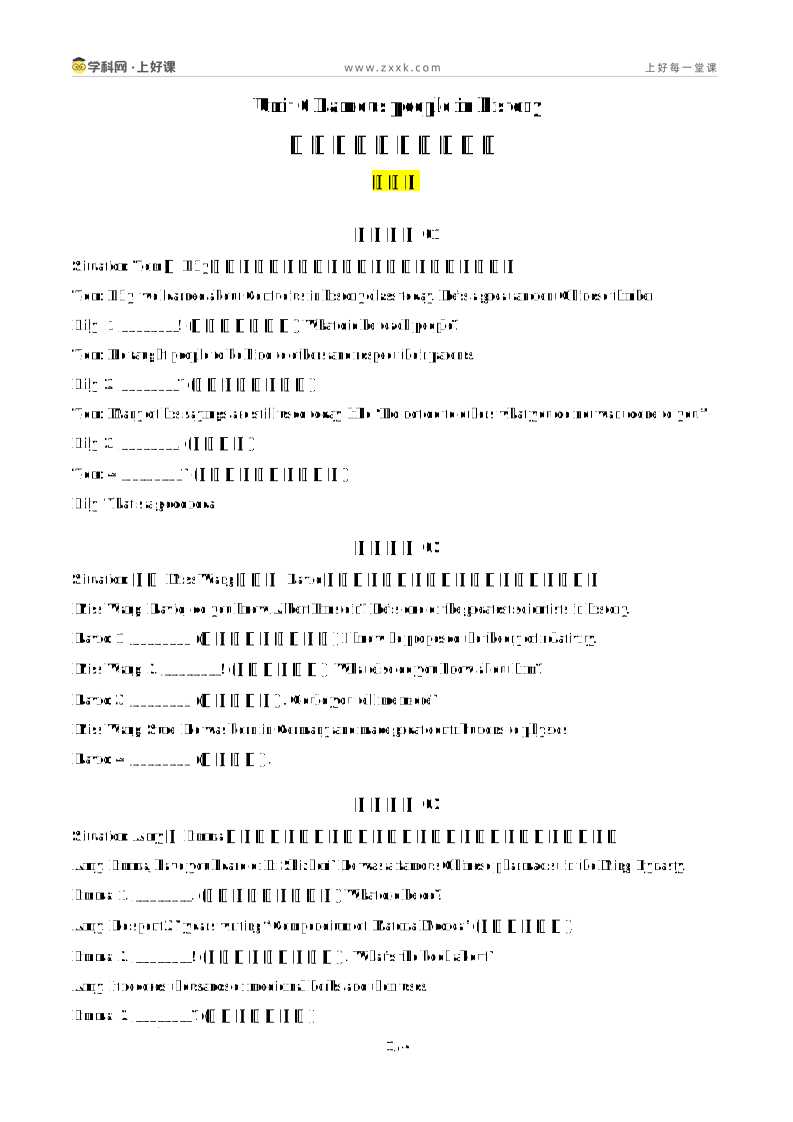
Situation: Tom 和 Lily 在聊中国古代思想家孔子,探讨他的思想影响。
Tom: Lily, we learned about Confucius in history class today. He’s a great ancient Chinese thinker.
Lily: 1. ________! (感叹孔子很伟大) What did he teach people?
Tom: He taught people to be kind to others and respect their parents.
Lily: 2. ________? (询问他的思想影响)
Tom: Many of his sayings are still used today, like “Do not do to others what you do not want done to you.”
Lily: 3. ________. (表达认同)
Tom: 4. ________? (建议一起阅读相关书籍)
Lily: That’s a good idea!
情景对话 02
Situation: 老师 Miss Wang 和学生 David 在聊科学家爱因斯坦,了解他的科学成就。
Miss Wang: David, do you know Albert Einstein? He’s one of the greatest scientists in history.
David: 1. ________. (一般疑问句肯定回答) I know he proposed the theory of relativity.
Miss Wang: 2. ________! (感叹回答正确) What else do you know about him?
David: 3. ________. (否定并求助) . Could you tell me more?
Miss Wang: Sure. He was born in Germany and made great contributions to physics.
David: 4. ________. (表达敬佩) .
情景对话 03
Situation: Amy 和 Emma 在聊中国古代医药学家李时珍,讨论他的著作《本草纲目》。
Amy: Emma, have you heard of Li Shizhen? He was a famous Chinese pharmacist in the Ming Dynasty.
Emma: 1. ________. (一般疑问句否定回答) What did he do?
Amy: He spent 27 years writing “Compendium of Materia Medica” (《本草纲目》).
Emma: 2. ________! (感叹耗时长久且不易) . What’s the book about?
Amy: It records thousands of medicinal herbs and their uses.
Emma: 3. ________? (询问著作的意义)
Amy: It has helped many people treat diseases and is still useful today.
Emma: 4. ________. (评价李时珍的品质)
情景对话 04
Situation: 家长 Mr. Smith 和孩子 Lucy 在聊发明家爱迪生,学习他的探索精神。
Mr. Smith: Lucy, do you know Thomas Edison? He invented many useful things.
Lucy: 1. ________. (肯定并补充) He invented the light bulb. It changed people’s lives.
Mr. Smith: 2. ________! (感叹发明很伟大) Do you know how many times he failed before succeeding?
Lucy: 3. ________? (询问失败次数)
Mr. Smith: More than 1,000 times. But he never gave up.
Lucy: 4. ________. (表达感悟) . I should never give up easily.
情景对话 05
Situation: Bob 和 Peter 在聊中国古代诗人李白,欣赏他的诗歌魅力。
Bob: Peter, I love Tang poetry. Li Bai is my favorite poet.
Peter: 1. ________! (感叹李白很著名) I’ve read his poem “Quiet Night Thought” too.
Bob: It’s such a beautiful poem. 2. ________? (询问李白的诗歌特点)
Peter: They are full of imagination and very easy to recite.
Bob: 3. ________. (表达认同) He is called “Poet Immortal”.
Peter: 4. ________? (询问是否想了解更多诗歌)
Bob: Sure! That would be fun.
提升篇
情景对话 01
Situation: 老师 Ms. Green 和学生 Cindy 在聊科学家居里夫人,了解她的成就与精神。
Ms. Green: Cindy, have you heard of Marie Curie? She was a great female scientist.
Cindy: 1. ________. (一般疑问句肯定回答) She discovered radium and won two Nobel Prizes.
Ms. Green: 2. ________! (感叹成就非凡) . What do you admire most about her?
Cindy: 3. ________. (表达敬佩的品质)
Ms. Green: 4. ________. (总结观点)
Cindy: Yes! I want to be as hard-working as her.
情景对话 02
Situation: Lisa 和 Sophia 在聊中国古代航海家郑和,讨论他的航海壮举。
Lisa: Sophia, our history teacher told us about Zheng He. He was a famous navigator in the Ming Dynasty.
Sophia: 1. ________! (感叹航海壮举) What did he do?
Lisa: He led seven ocean voyages and visited many countries in Asia and Africa.
Sophia: 2. ________? (询问航海的意义)
Lisa: To promote friendly exchanges between China and other countries.
Sophia: 3. ________. (表达赞赏)
Lisa: 4. ________. (补充影响)
情景对话 03
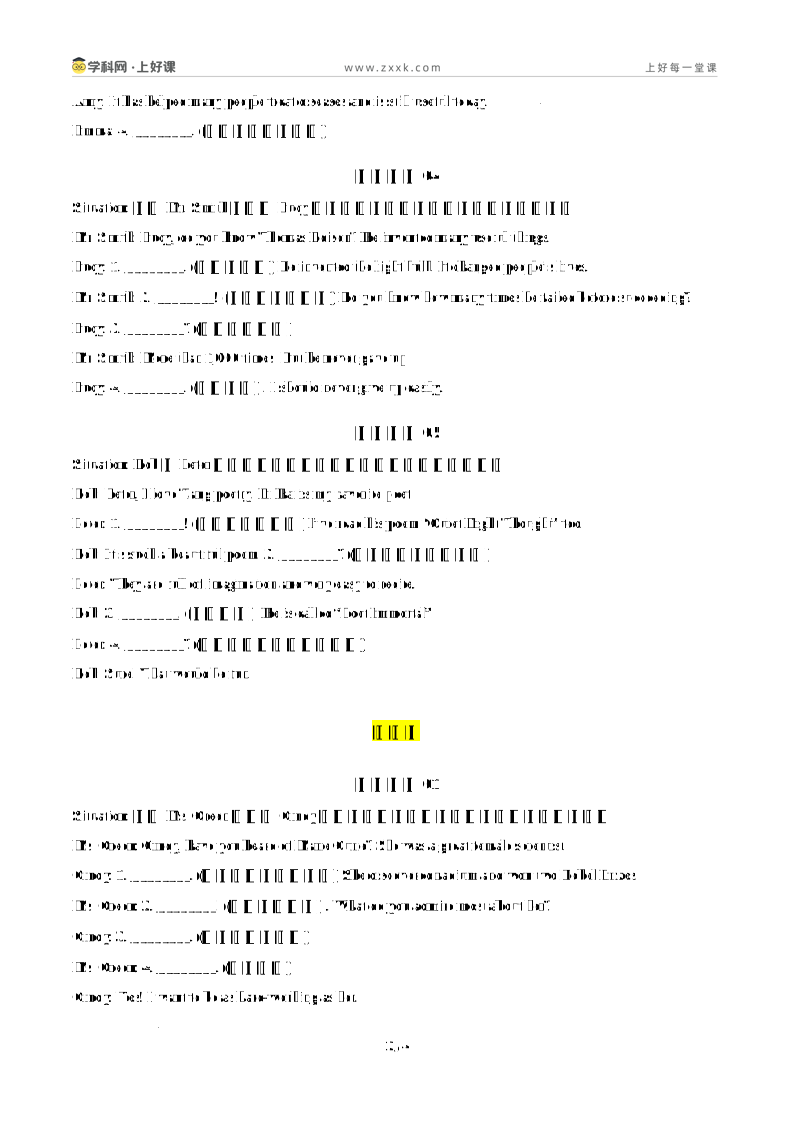
Situation: 同学 Jack 和 David 在聊文学家莎士比亚,探讨他的文学作品。
Jack: David, do you know William Shakespeare? He’s a famous British playwright.
David: 1. ________. (一般疑问句肯定回答) I read his play “Romeo and Juliet” last year.
Jack: 2. ________! (感叹作品很经典) What do you think of his plays?
David: They are very moving and reflect human nature well.
Jack: 3. ________? (询问其他作品)
David: He wrote “Hamlet” and “Macbeth” too. They are all famous.
Jack: 4. ________. (建议观看戏剧)
情景对话 04
Situation: 兄妹 Lucas 和 Emma 在聊中国古代数学家祖冲之,了解他的数学贡献。
Lucas: Emma, did you know Zu Chongzhi? He was a great ancient Chinese mathematician.
Emma: 1. ________. (一般疑问句否定回答) What did he achieve in mathematics?
Lucas: He calculated the value of pi (π) more accurately than anyone before him.
Emma: 2. ________! (感叹成就令人惊叹) . How did he do that without modern tools?
Lucas: He worked very hard and used simple tools to do thousands of calculations.
Emma: 3. ________. (表达敬佩)
Lucas: 4. ________. (补充影响)
情景对话 05
Situation: 老师 Mr. Brown 和学生 Linda 在聊历史名人的共同品质,探讨成功的秘诀。
Mr. Brown: Linda, we’ve talked about many famous people in history. What do they have in common?
Linda: 1. ________. (肯定并总结) They all worked very hard and never gave up easily.
Mr. Brown: 2. ________! (感叹总结到位) What else do you think is important for their success?
Linda: They were curious and loved learning new things.
Mr. Brown: 3. ________? (询问最敬佩的历史名人)
Linda: I admire Madame Curie most. She devoted her life to science.
Mr. Brown: 4. ________. (总结观点)
1 / 8
学科网(北京)股份有限公司
$
资源预览图
1
2
所属专辑

相关资源
由于学科网是一个信息分享及获取的平台,不确保部分用户上传资料的 来源及知识产权归属。如您发现相关资料侵犯您的合法权益,请联系学科网,我们核实后将及时进行处理。