Unit 6导学案(Grammar Focus-4d)2025-2026学年人教版英语八年级下册
2026-05-13
|
2页
|
240人阅读
|
21人下载
普通
资源信息
| 学段 | 初中 |
|---|---|
| 学科 | 英语 |
| 教材版本 | 初中英语人教版八年级下册 |
| 年级 | 八年级 |
| 章节 | Grammar Focus |
| 类型 | 学案-导学案 |
| 知识点 | - |
| 使用场景 | 同步教学-新授课 |
| 学年 | 2026-2027 |
| 地区(省份) | 全国 |
| 地区(市) | - |
| 地区(区县) | - |
| 文件格式 | DOCX |
| 文件大小 | 32 KB |
| 发布时间 | 2026-05-13 |
| 更新时间 | 2026-05-14 |
| 作者 | 悠&沫 |
| 品牌系列 | - |
| 审核时间 | 2026-05-13 |
| 下载链接 | https://m.zxxk.com/soft/57835490.html |
| 价格 | 0.50储值(1储值=1元) |
| 来源 | 学科网 |
摘要:
该初中英语导学案聚焦八年级下册Unit 6语法复习,核心知识点为unless条件、so…that结果、as soon as时间状语从句及-ing/-ed形容词区别。通过自主学习中“带个小礼物”“握手”等文化短语和句子复习旧知,搭建从文化主题到语法学习的衔接支架。
这份资料特色显著,将语法学习与“文化冲击”语篇结合,合作探究对比-ing/-ed形容词意义培养思维品质,拓展延伸详解从句“主将从现”原则提升语言能力。当堂检测分层练习巩固,注重文化意识培育,引导理解文化多元性,自主与合作学习结合发展学习能力。
内容正文:
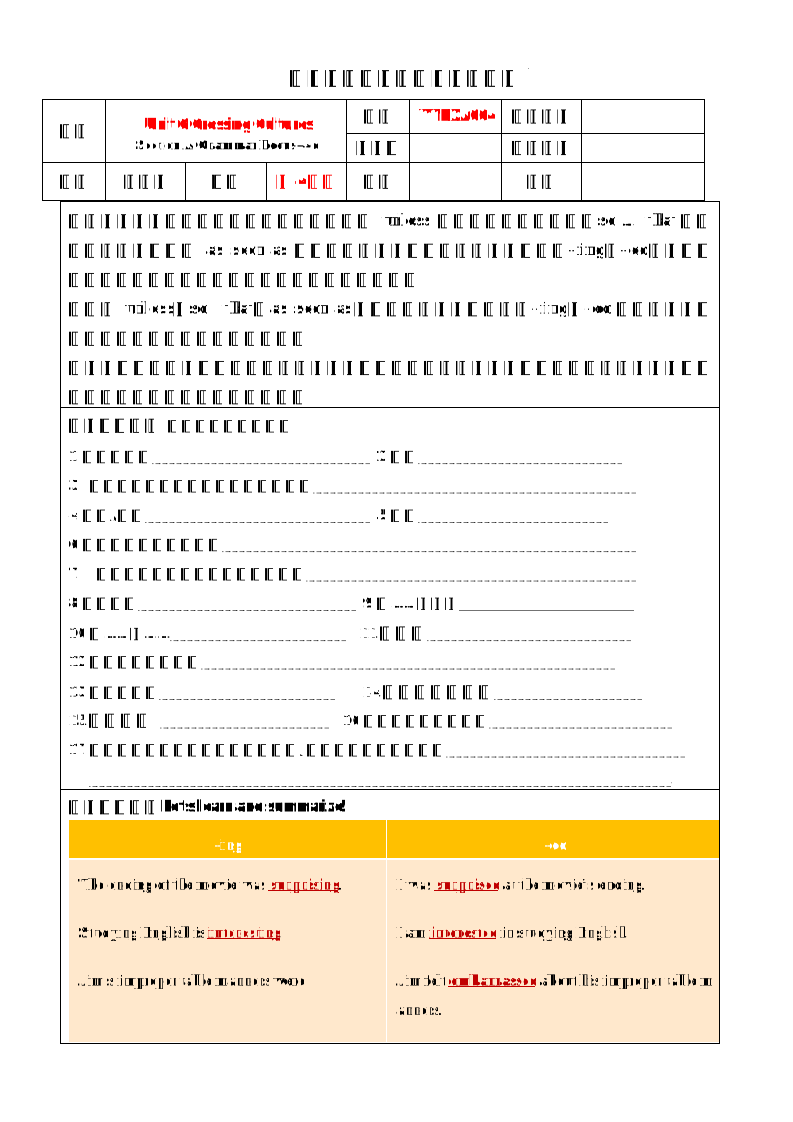
初中部八年级下册英语导学案
课题
Unit 6 Crossing Cultures
Section A Grammar Focus--4d
编号
YYDXA004
使用班级
主备人
使用时间
课型
复习课
课时
第4课时
姓名
序号
【学习目标】能够理解并在语境中准确使用 unless 引导的条件状语从句、so … that引导的结果状语从句和 as soon as 引导的时间状语从句;能够理解后缀为-ing和-ed的形容词的意义区别,并在语境中恰当运用这两类形容词。
能够将 unless、so. that、as soon as引导的状语从句和后缀为-ing和-ed 的形容词综合运用于文化冲击相关内容的语篇。
【学习重难点】能够理解世界文化的多元性和丰富性,培养对不同文化的好奇心和同理心,不断积累文化知识,拓宽文化视野
【自主学习】 完成下列短语和句子
1.带个小礼物_______________________________ 2.握手_____________________________
3. 在日本,我们一看到老师就会鞠躬。______________________________________________
4.脱下/起飞________________________________ 5.按时___________________________
6.期待某人(不)做某事___________________________________________________________
7. 把筷子插在米饭碗里是不礼貌的。_______________________________________________
8.文化冲击_______________________________ 9.和……不一样_________________________
10.一……就……_________________________ 11.下飞机_____________________________
12.站在我的左右两侧___________________________________________________________
13.尽管,虽然_________________________ 14.大量的,许多的_____________________
15.私人空间 ________________________ 16.发现更多的文化差异__________________________
17.但是一旦我习惯了,我就越发好奇,乐于去了解当地文化。__________________________________
___________________________________________________________________________________.
【合作探究】Let’s learn and summarize!
-ing
-ed
The ending of the movie was surprising.
Studying English is interesting.
Jim’s improper table manners were
embarrassing.
The novel tells a confusing story.
I was surprised at the movie’s ending.
I am interested in studying English.
Jim felt embarrassed about his improper table manners.
I got confused trying to make sense of the story.
形容词后缀 -ing 意为“____________”,通常用来描述事物的属性或特性,有时也可用来表述人的特性。含有后缀 –ing 的形容词表示某物或人的特性,具有主动意义
形容词后缀 -ed 意 “___________________”,一般用来描述人的感受或情绪。含有后缀 -ed 的形容词则表示某人因受影响而产生的感受或情绪,具有被动意义。
【拓展延伸】Language points
1. unless: 条件状语从句一般由if引导,也可以由unless引导,它相当于if...not.... 它和时间状语从句一样,当主句是一般将来时或含有情态动词或祈使句时,从句用一般现在时,即“主将从现”原则
2. so…that… so…that…表示“ 如此......以至于......”。用so…that…来连接两个简单句。so的后面跟形容词或副词。that 引导的是结果状语从句。
3. as soon as as soon as表示一…...就…... 引导时间状语从句中, 指未发生的动作时,规律是:主句为一般将来时,从句用一般现在时代替一般将来时 , 即: “主将从现”原则。指紧接着已发生的两个短动作时,主从句都用一般过去时。
【当堂检测】一、用所给词的适当形式填空
1. The film was so _____________ that we left it in the middle. (bore)
2. The students were _______________ in examining the dead body in the mortuary. (interest)
3. It's _________________ to be caught telling a lie. (embarrass)
4. The children are _____________ about the holiday in Spain. (excite)
5. It was so ______________ to hear that the project was a great success. (satisfy)
6. They were _________________ about the result. (disappoint)
7. He was ______________ to discover that he had left no money. (shock)
8. He was _____________ when he heard that there had been an accident. (worry)
二、用 so ... that, unless, as soon as 填空:
1. The movie was _________ interesting _________ I watched it twice.
2.Don't disturb him _________ he finishes his work.
3.________________ I receive your email, I'll reply immediately.
4.She was _________ tired _________ she fell asleep at her desk.
5. You can't enter the building ____________ you have a pass.
6.______________ you taste this dish, you’ll love it.
学科网(北京)股份有限公司
$
资源预览图
1
相关资源
由于学科网是一个信息分享及获取的平台,不确保部分用户上传资料的 来源及知识产权归属。如您发现相关资料侵犯您的合法权益,请联系学科网,我们核实后将及时进行处理。