Unit 6 Section A Grmmar Focus (4a~4c)课件 2025-2026学年人教版八年级英语下册
2026-05-12
|
27页
|
715人阅读
|
7人下载
普通
资源信息
| 学段 | 初中 |
|---|---|
| 学科 | 英语 |
| 教材版本 | 初中英语人教版八年级下册 |
| 年级 | 八年级 |
| 章节 | Grammar Focus |
| 类型 | 课件 |
| 知识点 | - |
| 使用场景 | 同步教学-新授课 |
| 学年 | 2026-2027 |
| 地区(省份) | 全国 |
| 地区(市) | - |
| 地区(区县) | - |
| 文件格式 | PPTX |
| 文件大小 | 8.68 MB |
| 发布时间 | 2026-05-12 |
| 更新时间 | 2026-05-12 |
| 作者 | 微信用户 |
| 品牌系列 | - |
| 审核时间 | 2026-05-12 |
| 下载链接 | https://m.zxxk.com/soft/57817788.html |
| 价格 | 1.00储值(1储值=1元) |
| 来源 | 学科网 |
内容正文:
Unit 6
Crossing Culture
Crossing Culture
Section A Grammar Focus (4a ~ 4c)
How different are our cultures ?
Think and Talk
We learned about English and Chinese table manners last class. What do you remember about table manners ?
Think and Talk
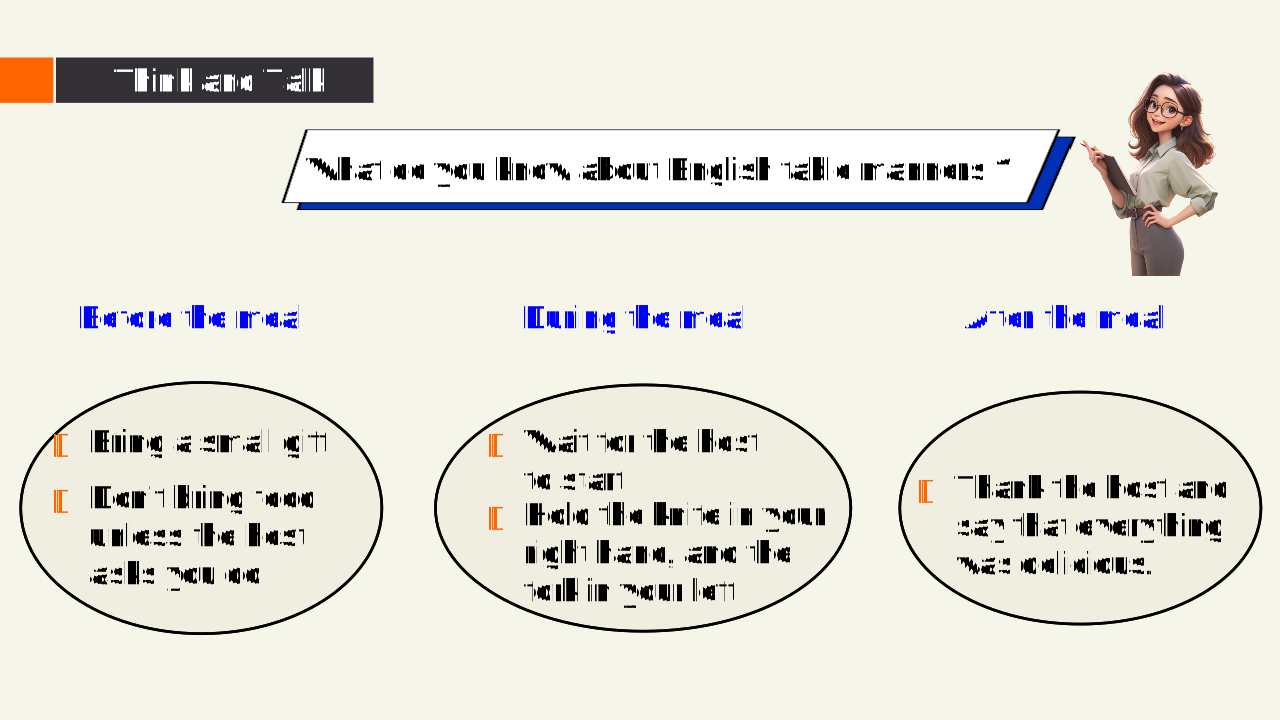
What do you know about English table manners ?
Before the meal
During the meal
After the meal
Bring a small gift
Don’t bring food unless the host asks you do
Wait for the host to start
Hold the knife in your right hand, and the fork in your left
Thank the host and say that everything was delicious.
Think and Talk
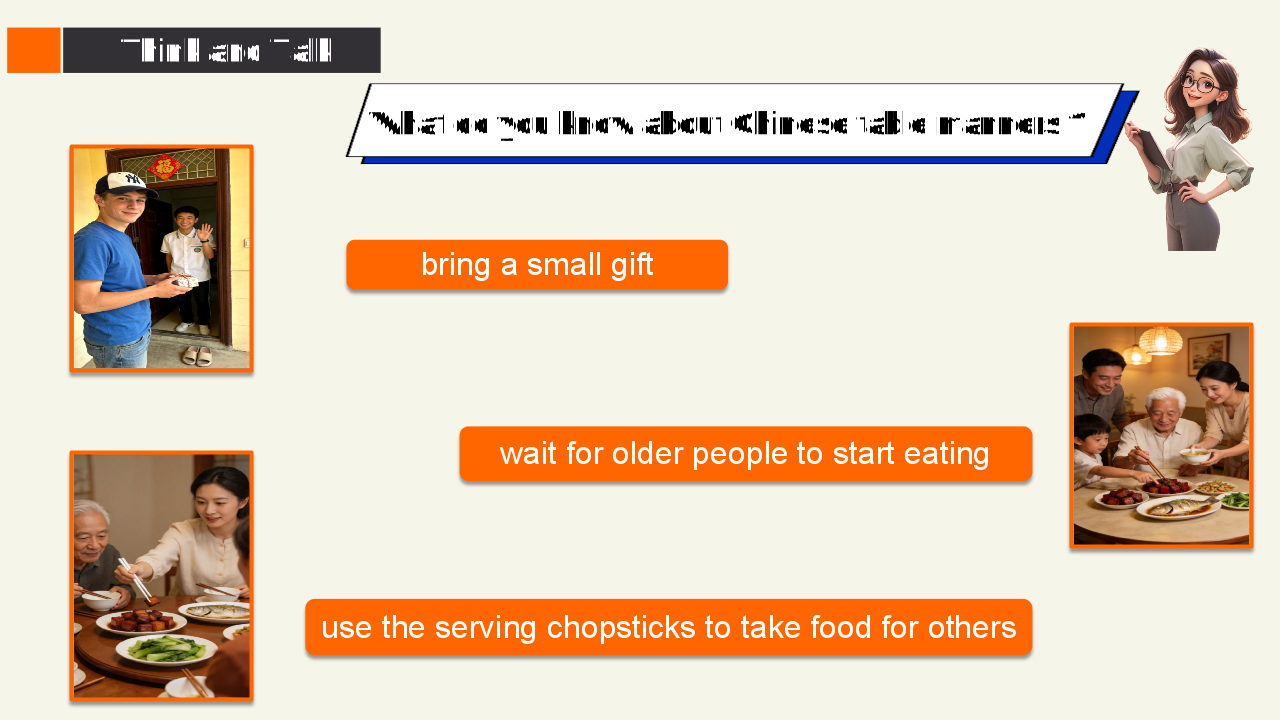
What do you know about Chinese table manners ?
bring a small gift
use the serving chopsticks to take food for others
wait for older people to start eating
Think and Talk
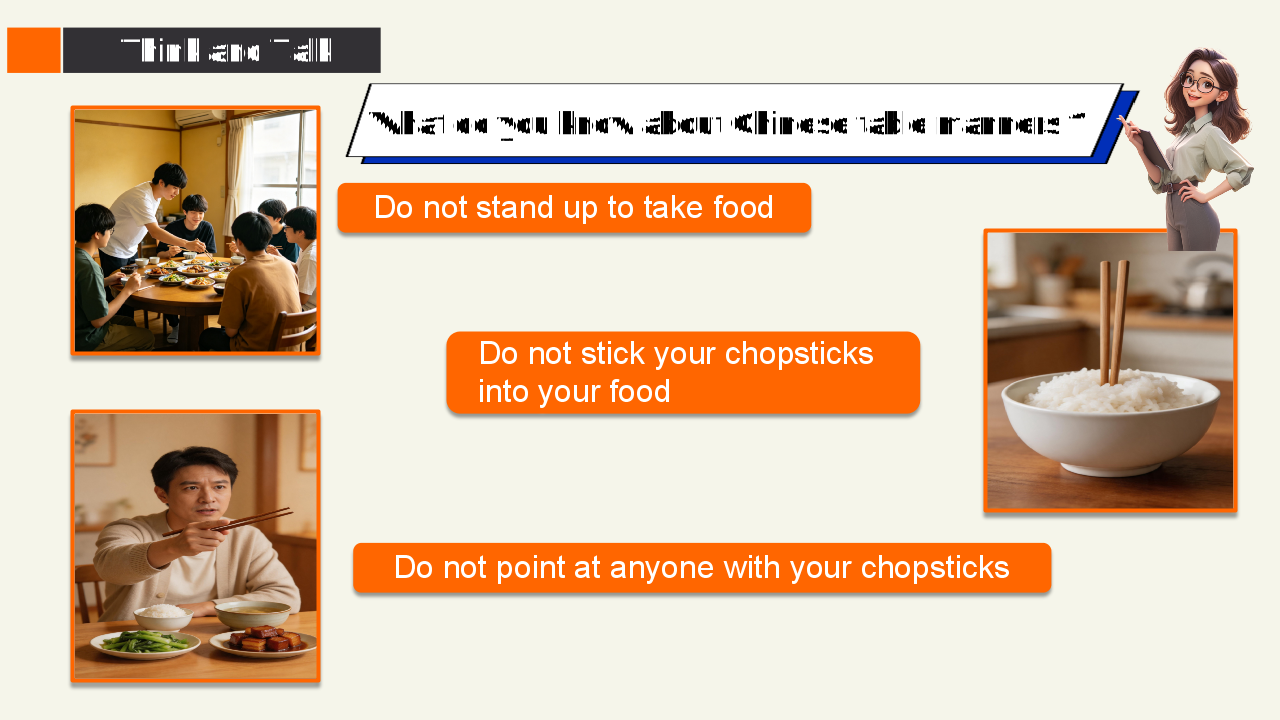
What do you know about Chinese table manners ?
Do not stand up to take food
Do not stick your chopsticks
into your food
Do not point at anyone with your chopsticks
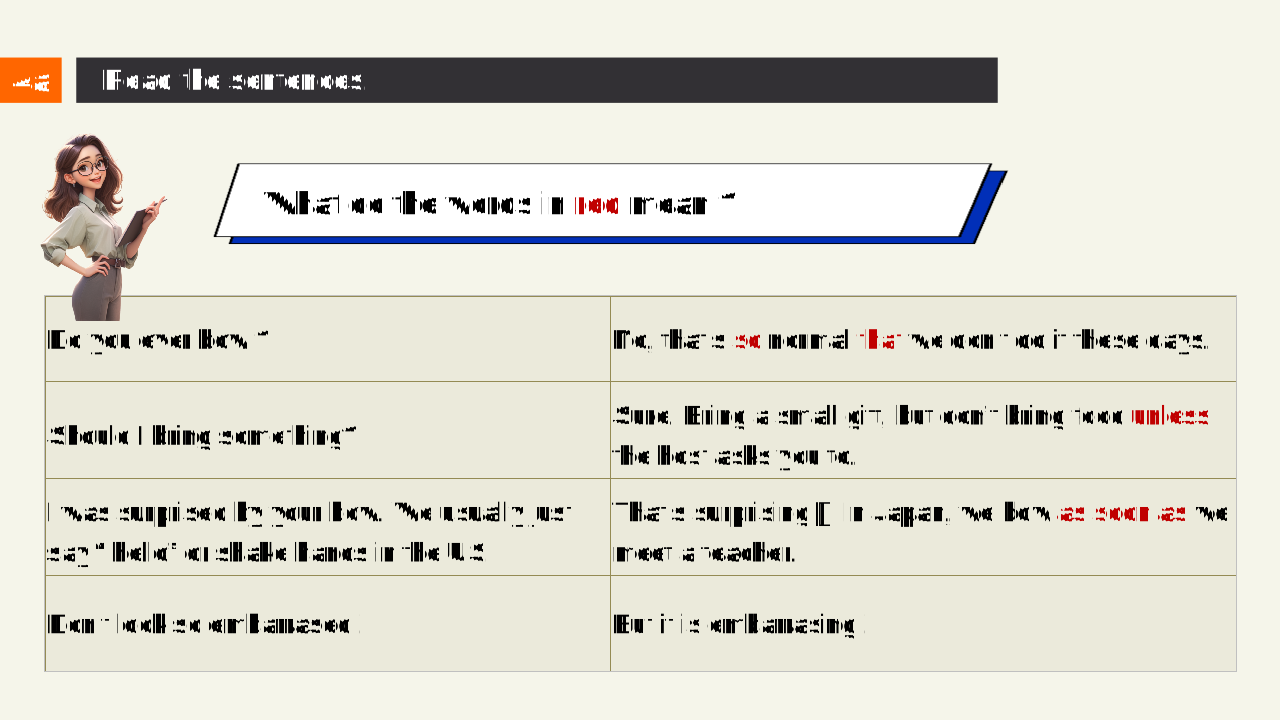
Read the sentences.
4a
Do you ever bow ? No, that’s so normal that we don’t do it these days.
Should I bring something? Sure. Bring a small gift, but don’t bring food unless the host asks you to.
I was surprised by your bow. We usually just say “ hello” or shake hands in the US. That’s surprising !In Japan, we bow as soon as we meet a teacher.
Don’t look so embarrased ! But it is embarrasing !
What do the words in red mean ?
Read the sentences.
4a
What do the words in red mean ?
No, that’s so normal that we don’t do it these days.
In the sentence above, so ... that means _______________.
In the sentence above, so ... that talks about the _______ we don’t bow.
A. time (时间) B. result (结果) C. condition (条件)
如此……以至于
B
Read the sentences.
4a
What do the words in red mean ?
Bring a small gift, but don’t bring food unless the host asks you to.
In the sentence above, unless means _______________.
In the sentence above, unless talks about the _______ we don’t bow.
A. time (时间) B. result (结果) C. condition (条件)
除非
C
Read the sentences.
4a
Fill in the blanks with if (如果) or unless.
unless = if ... not.
Don’t bring food unless the host asks you to.
_______ the host doesn’t ask you to bring food, you cannot bring it.
_______ the host asks you to bring food, you cannot bring it.
If
Unless
Read the sentences.
4a
What do the words in red mean ?
In Japan, we bow as soon as we meet a teacher.
In the sentence above, as soon as means _______________.
In the sentence above, as soon as talks about the _____ we don’t bow.
A. time (时间) B. result (结果) C. condition (条件)
一...就
A
Read the sentences.
4a
主句与从句均为完整的 __________.
That’s so normal that we don’t do it these days.
Bring a small gift, but don’t bring food unless the host asks you to.
In Japan, we bow as soon as we meet a teacher.
主 句
从 句
主 句
从 句
主 句
从 句
句子
Read the sentences.
4a
That’s so normal that we don’t do it these days.
Bring a small gift, but don’t bring food unless the host asks you to.
In Japan, we bow as soon as we meet a teacher.
so ... that=so+_______________ that,意为 _________________,
说明事情发生的 __________。
as soon as 意为 ____________,说明事情发生的 __________。
unless 意为 __________,说明事情发生的 __________。
形容词或副词
如此…以至于…
结果
一…就…
时间
除非
条件
Combine the sentences using the words in brackets.
4b
1. Türkiye: People don’t kiss one another on the cheek. They can do so if they are
good friends. (unless)
______________________________________________________________
2. Japan: Take off your shoes. You do this when you enter someone’s home. (as soon as)
______________________________________________________________
3. Kenya: Being late is common. You should be patient and not expect people to be on time.
(so ... that)
______________________________________________________________
In Türkiye, people don’t kiss one another on the cheek unless they are good friends.
In Japan, take off your shoes as soon as you enter someone’s home.
In Kenya, Being late is so common that you should be patient and not expect to be on time.
expect sb.to do sth.
Combine the sentences using the words in brackets.
4b
4. China: Sticking chopsticks into a bowl of rice is very rude. You should avoid it.
(so ... that)
______________________________________________________________
_______________________________________________________________
5. Mexico: Don’t use someone’s first name if you don’t know him or her well.
You can use it if the person invites you to do so. (unless)
______________________________________________________________
______________________________________________________________
In China, sticking chopsticks into a bowl of rice is so rude that you should avoid it.
In Mecixo, don’t use someone’s first name unless the person invites you to do so.
stick ... into...
stick to
avoid sth.
avoid doing sth.
invite sb. to do sth.
Read the sentences.
4a
Do you ever bow ? No, that’s so normal that we don’t do it these days.
Should I bring something? Sure. Bring a small gift, but don’t bring food unless the host asks you to.
I was surprised by your bow. We usually just say “ hello” or shake hands in the US. That’s surprising !In Japan, we bow as soon as we meet a teacher.
Don’t look so embarrased ! But it is embarrasing !
How are the pairs of words in blue used differently ?
Read the sentences.
4a
How are words in blue used ?
That’s surprising !
But it is embarrasing !
The blue words end in __________.
They are ____________.
They are used to describe ____________.
The subjects are usually ______ or the symbols of_______.
ing
adjectives
things
things
things
Read the sentences.
4a
Find out the subject
Don’t look so embarrased !
A. We B. You
Read the sentences.
4a
How are words in blue used ?
I was surprised by your bow.
You don’t look so embarrased !
The blue words end in __________.
They are ____________.
They are used to describe ____________________.
The subjects are usually _______ or the symbols of________.
ed
adjectives
the feelings of persons
persons
persons
Read the sentences.
4a
--ing --ed
That’s surprising !
But it is embarrasing !
The novel tells a
confusing story. I was surprised by your bow.
You don’t look so embarrased !
I got confused trying to make
sense of the story.
The blue words are _________.
Words that end in -ed describe how someone ________.
Words that end in -ing describe the features of __________ or _______
adj. 形容词
feels
something
someone
Language Points
4a
常见类似的形容词
原形 -- ing -- ed
confuse
embarrass
surprise
interest
bore
excite
disappoint
relax
move
touch
confusing
confused
embarrassing
embarrassed
surprising
surprised
interesting
interested
boring
bored
exciting
excited
disappointing
disappointed
relaxing
relaxed
moving
moved
touching
touched
Complete the passage with the words in the box.
4c
surprising surprised interesting interested
so ... that as soon as unless
Do you know what culture shock is? You may feel it when you experience a new culture, because the new culture is ________ different from your own ________ you feel ________. For example, I experienced this _________ I got off the plane in Peru last year. People were standing on my right and left, even though there was plenty of space on the bus! That was really ________ to me.
so
that
surprised
as soon as
surprising
Complete the passage with the words in the box.
4c
surprising surprised interesting interested
so ... that as soon as unless
In Germany, people usually like more personal space, and we don’t stand close to someone ________ we know them very well. But once I was used to it, I became more curious and ________ in learning about the culture there. It’s so _________ to discover cultural differences like this!
unless
interested
interesting
Read the passage and answer questions.
4c
Can you tell where the writer is from ? How do you know ?
What are the cultural differences between Peru and Germany ?
The writer is from Germany.
The writer says “we” when referring to German culture.
In Beru, People like standing close to each other, even though there is plenty of space !
In Germany, people usually like more personal space, and they don’t stand close to someone unless they know them very well.
Let’s learn the passage .
4c
Do you know what culture shock is? You may feel it when you experience a new culture, because the new culture is so different from your own that you feel surprised. For example, I experienced this as soon as I got off the plane in Peru last year. People were standing on my right and left, even though there was plenty of space on the bus! That was really surprising to me. In Germany, people usually like more personal space, and we don’t stand close to someone unless we know them very well. But once I was used to it, I became more curious and interested in learning about the culture there. It’s so interesting to discover cultural differences like this!
personal
= person + al
cultural
= culture去e + al
Language Points
But once I was used to it, I became more curious and interested in learning about the culture there.
once
连词,表示“一旦.....就.....”
= as soon as
eg. Once you start, you must not give up.
adv,表示“一次”
eg. We have a class meeting once a week.
adv,表示“曾经,从前”
eg. He once lived in the countryside.
She was once a famous singer.
Language Points
But once I was used to it, I became more curious and interested in learning about the culture there.
be used to sth.
习惯某物
eg. She was once afraid of the dark, now she is used to the dark.
习惯做某事
eg. We are used to cooking at home.
曾经做某事,过去常常做某事
eg. Young people used to order takeout food online.
be used to doing sth.
used to do sth.
Unit 6
Thank you !
Thank you !
$
资源预览图
1
2
3
4
5
6
相关资源
由于学科网是一个信息分享及获取的平台,不确保部分用户上传资料的 来源及知识产权归属。如您发现相关资料侵犯您的合法权益,请联系学科网,我们核实后将及时进行处理。