Unit 5 Section B 3a-3d Writing(同步实用课件)-2025-2026学年八年级英语下册同步实用课件(新教材人教版)
2026-05-13
|
32页
|
2355人阅读
|
17人下载
精品
资源信息
| 学段 | 初中 |
|---|---|
| 学科 | 英语 |
| 教材版本 | 初中英语人教版八年级下册 |
| 年级 | 八年级 |
| 章节 | 3a-3d |
| 类型 | 课件 |
| 知识点 | - |
| 使用场景 | 同步教学-新授课 |
| 学年 | 2026-2027 |
| 地区(省份) | 全国 |
| 地区(市) | - |
| 地区(区县) | - |
| 文件格式 | PPTX |
| 文件大小 | 24.84 MB |
| 发布时间 | 2026-05-13 |
| 更新时间 | 2026-05-13 |
| 作者 | shangwan1991 |
| 品牌系列 | - |
| 审核时间 | 2026-05-13 |
| 下载链接 | https://m.zxxk.com/soft/57808569.html |
| 价格 | 3.00储值(1储值=1元) |
| 来源 | 学科网 |
内容正文:
Learning objectives
Knowledge:Master time-order words, weather-related vocabulary, and the use of past continuous & simple past tense in narratives.
Skills:Be able to order events, talk about personal experiences, and write a story about a bad day.
Affective:Develop a positive attitude towards unexpected situations and build confidence in sharing experiences.
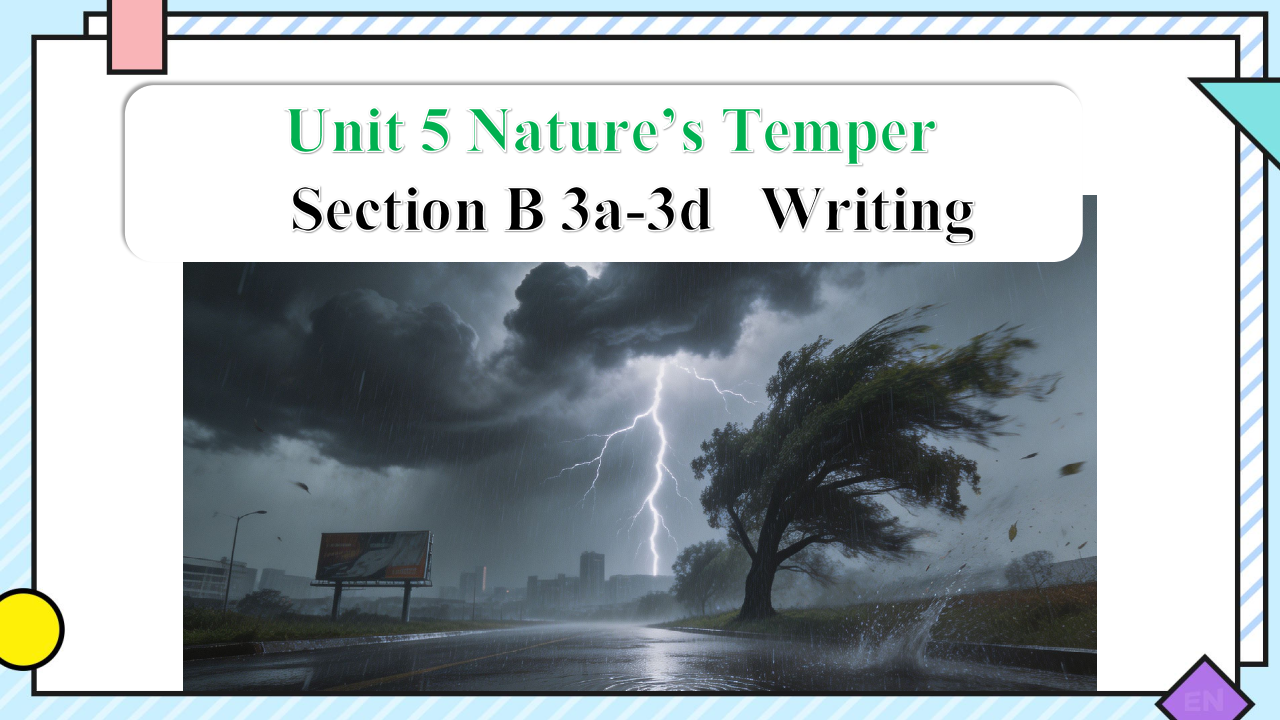
Unit 5 Nature’s Temper
Section B 3a-3d Writing
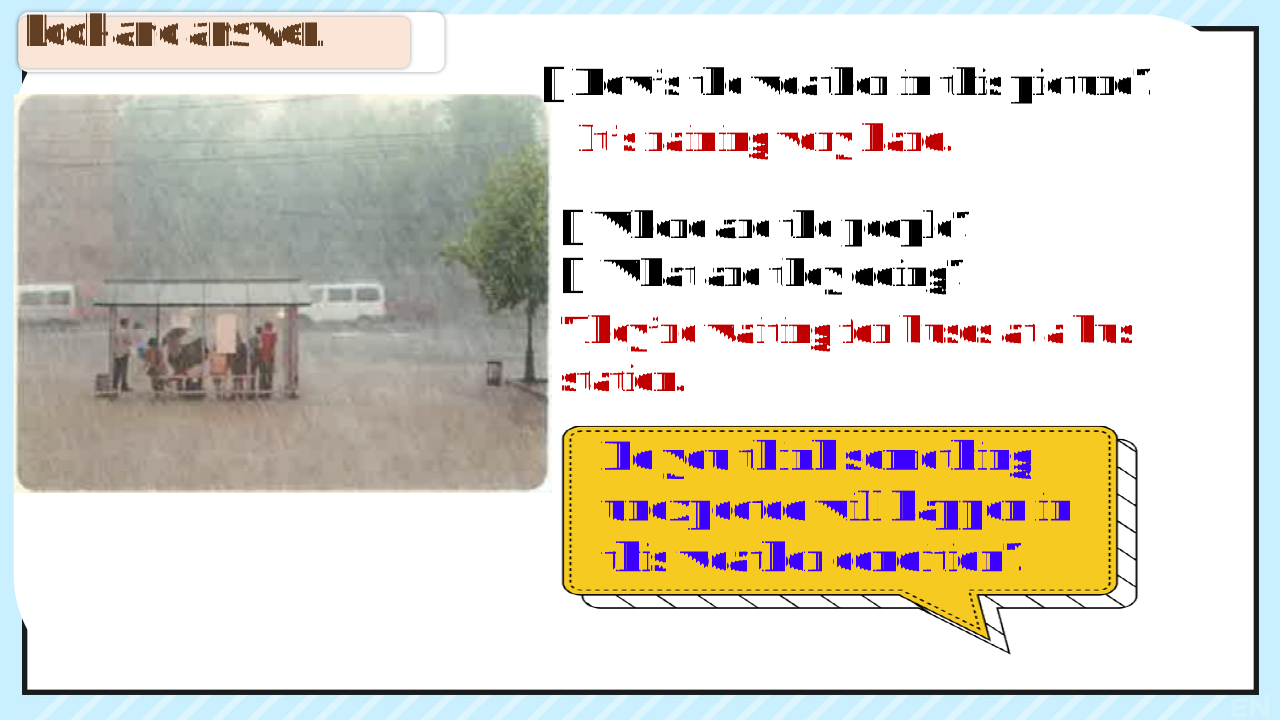
Look and answer.
How’s the weather in this picture?
It’s raining very hard.
Where are the people?
What are they doing?
They’re waiting for buses at a bus station.
Do you think something unexpected will happen in this weather condition?
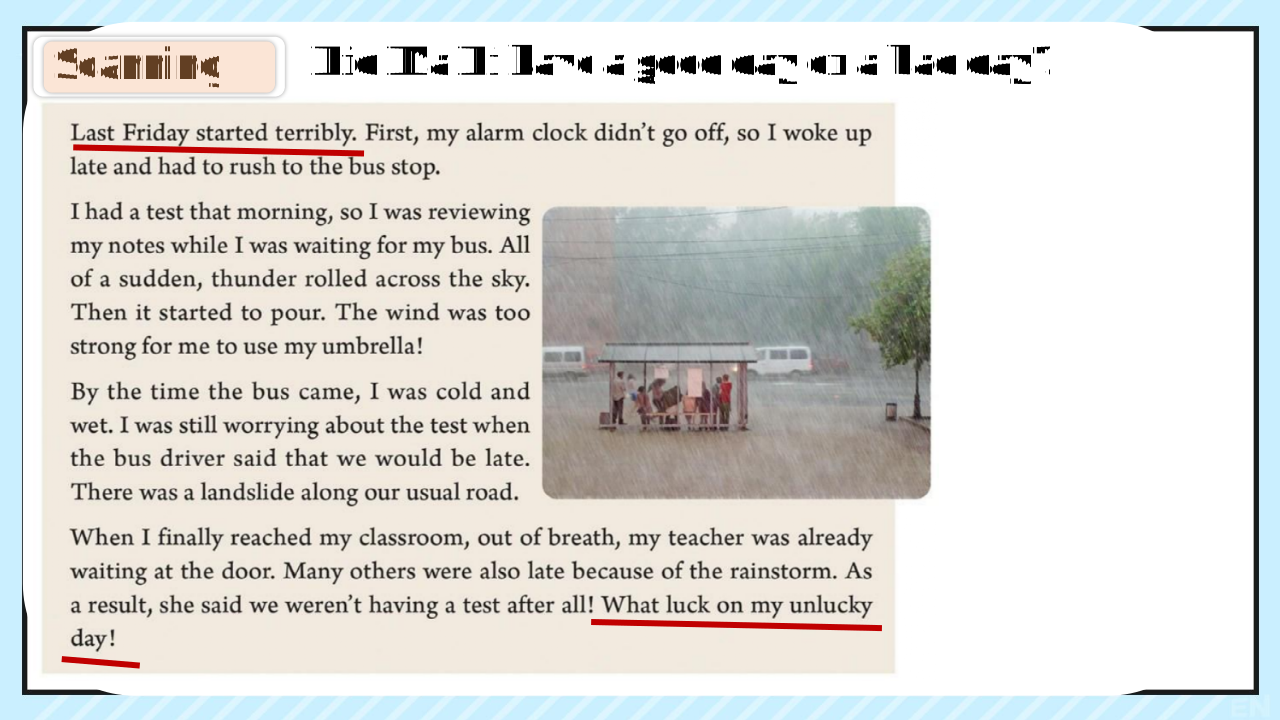
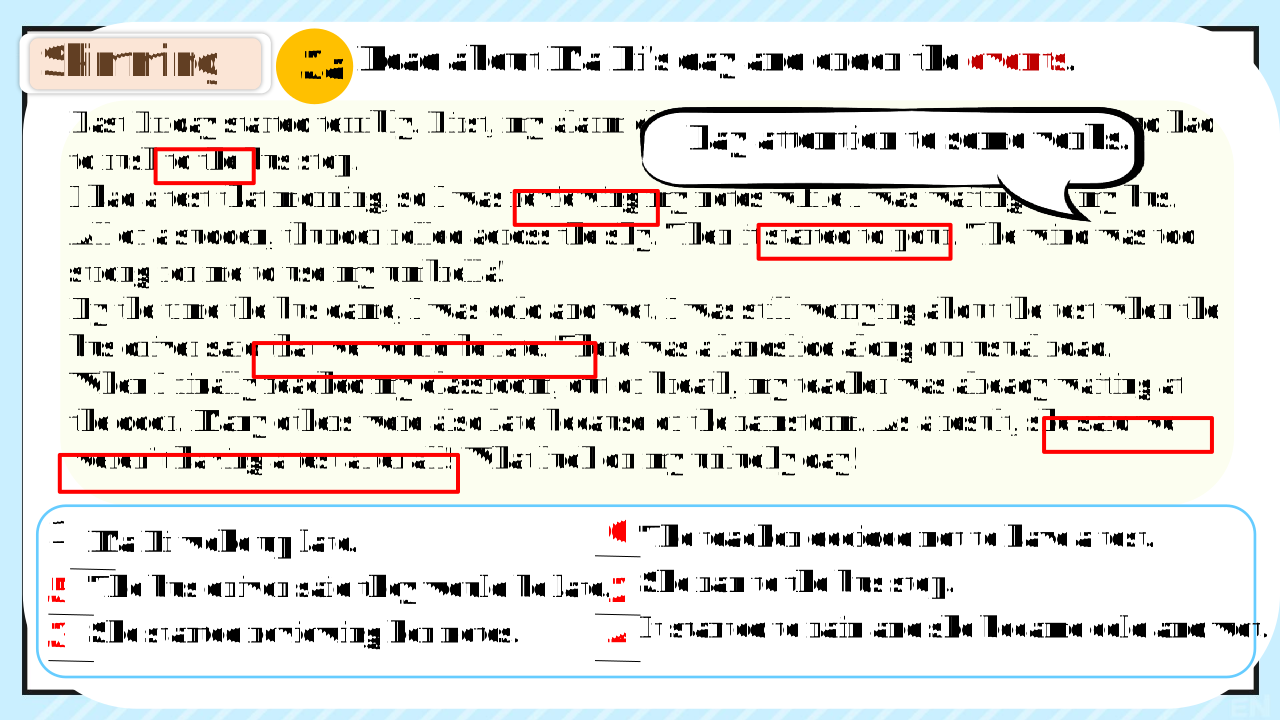
Scanning
Did Ma Li have a good day or a bad day?
Read about Ma Li's day and order the events.
Ma Li woke up late.
The bus driver said they would be late.
She started reviewing her notes.
Last Friday started terribly. First, my alarm clock didn’t go off, so I woke up late and had to rush to the bus stop.
I had a test that morning, so I was reviewing my notes while I was waiting for my bus. All of a sudden, thunder rolled across the sky. Then it started to pour. The wind was too strong for me to use my umbrella!
By the time the bus came, I was cold and wet. I was still worrying about the test when the bus driver said that we would be late. There was a landslide along our usual road.
When I finally reached my classroom, out of breath, my teacher was already waiting at the door. Many others were also late because of the rainstorm. As a result, she said we weren’t having a test after all! What luck on my unlucky day!
The teacher decided not to have a test.
She ran to the bus stop.
It started to rain and she became cold and wet.
1
2
3
4
5
6
3a
Pay attention to some verbs.
Skimming
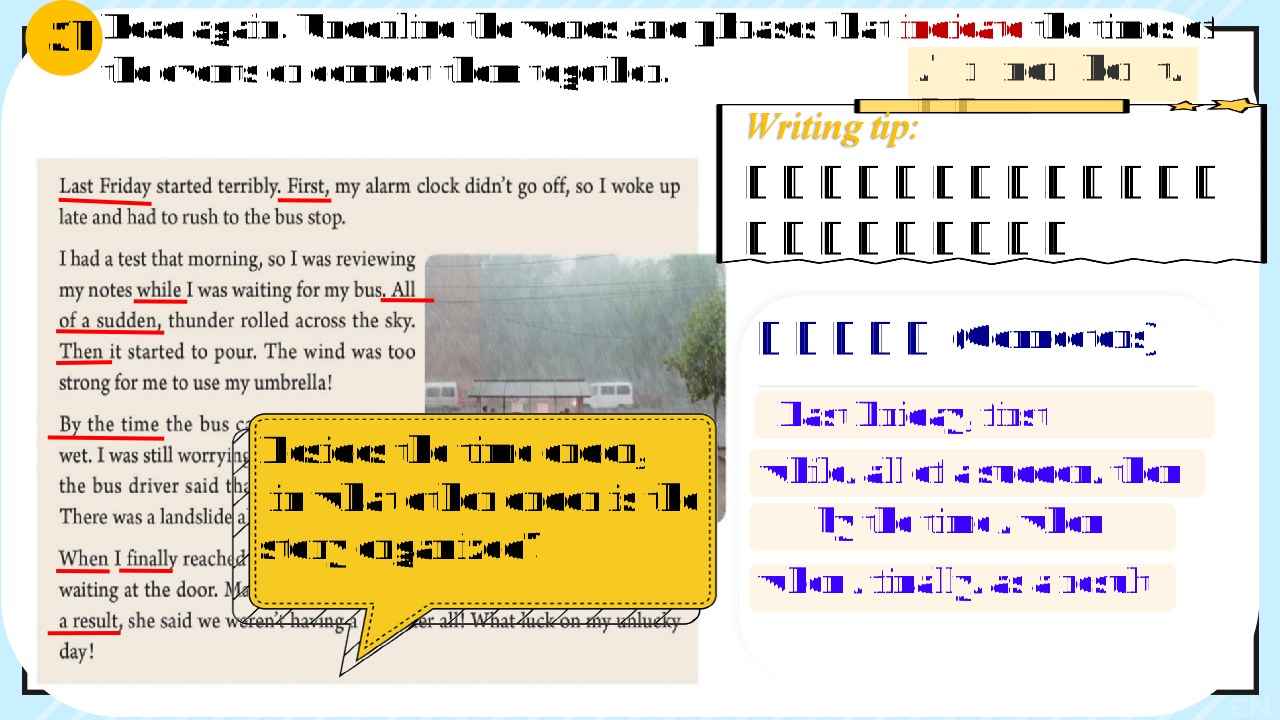
时间连接词 (Connectors)
Last Friday, first
while/ all of a sudden/ then
by the time / when
when / finally/ as a result
Read again. Underline the words and phrases that indicate the times of the events or connect them together.
3b
/ˈɪndɪkeɪt/ 表明
Writing tip:
按时间顺序描述事件,注意连接词的使用和递进。
Besides the time order,
in what other order is the
story organized?
Writing tip:
按地点顺序描述事件,推动故事情节的发展。
Detail Para 1 Para 2 Para 3 Para 4
Time last Friday, first while, all of a sudden, then by the time, when when, finally
Place
home
bus stop
classroom
bus
Let’s analyze
How to make a story vivid?
rush to
rolled
pour
Writing tip:
Tip1: Use vivid and accurate
(具体准确的) verbs.
Let’s analyze
How to make a story vivid?
Writing tip:
Tip2:Use five senses rules
What she heard:
thunder rolled across...
What she saw:
It started to pour.
How she felt:
The wind was too strong for me to use...
I was cold and wet.
一般过去时(突发)
did
过去进行时(情景)
was/were+doing
Let’s analyze
How to make a story vivid?
Writing tip:
Tip3:Use different tenses.
Think about a day when you experienced bad weather. Discuss the events of your day with a partner.
3c
Last _______, I had a bad day.
While I was ____________, it started to _________.
All of a sudden,I ____________. I saw_________ and heard ____________.
As a result, _________.I felt _________ because _________.
1. What kind of bad weather was it?
2. What were you doing when the bad weather started?
3. What did you see, hear, or do during the bad weather? How did you feel?
4. What happened or went wrong because of the bad weather?
Write a story about your day. Use 3a as an example.
Last Friday, I had a really bad day. While I was having breakfast with my younger sister, the sky was growing darker and darker. I heard thunder and saw lightning. When I left the house, ...
3d
Why do we need the first sentence?
Topic sentence expresses what the paragraph is about.
Supporting details make the stories completed and vivid.
Let’s write
Ending
Tip 2: Write in time or place order.
To make the story vivid, use vivid and accurate verbs; use five senses rules; use different tenses.
Beginning
Tip 1: Give a brief introduction and use topic sentences.
Tip 3: Add your own thoughts or comments in the end.
Body
A day with bad weather
题目:My Day in Bad Weather(100词左右)
要求:1.使用含when/while的句子以及时间连接词
2.描述自己在极端天气的经历
3.包括天气类型,自己当时正做什么,所见所闻所感
时态:一般过去时和过去进行时
人称:第一,三人称
框架:开头:交代时间,引入话题和天气情况
中间:介绍糟糕的经历(所见所闻,所做所感)
结尾:表达感受和收获,总结全文
Writing
此课件为蜗牛英语圈原创课件,已申请版权,侵权必究法律责任
开头(交代糟糕的一天)
Last [day] started terribly. First, _____________, so I had to _______________.
(示例:Last Monday started terribly. First, my alarm didn’t go off, so I had to rush to school without breakfast.)
转折(描述突发状况)
All of a sudden, _________. Then it started to ___________. _______________!
(示例:All of a sudden, the sky turned dark. Then it started to rain heavily. I forgot to take my umbrella!)
递进(叠加困境)
By the time _______, I was ________. I was still _________ when _________.
(示例:By the time I reached the bus stop, I was wet and cold. I was still worrying about being late when the bus driver said the bus was delayed.)
反转(坏事变好事的结尾)
As a result, _______________. What luck on my unlucky day!
(示例:As a result, our teacher put off the test and let us dry our clothes first. What luck on my unlucky day!)
Last Friday, I had a really terrible day. While I was having breakfast with my younger sister, the sky was growing darker and darker. I heard thunder and saw lightning.
When I left the house, it started to pour heavily. I rushed to the bus stop, but I forgot to take my umbrella. By the time the bus arrived, my shoes and socks were completely wet. What’s worse, the bus got stuck in a traffic jam because of the rain. When I finally got to school, I realized I had left my English workbook at home. My English teacher was angry and gave me a warning. In the afternoon, the rain stopped, but I slipped on the wet playground and fell down. I hurt my knee and had to go to hospital.
What a terrible day! I’ll be more careful next time!
My Day in Bad Weather
1.What kind of bad weather was it?
2.What were you doing when the bad weather started?
rain,wind,thunderstorm,snow...
Sentence starters:
It was a ________.
There was a ________.
The weather was ________.
Example: It was a thunderstorm. Thunder rolled across the sky.
Sentence starters:
I was ________ when the weather started.
I was ________ while I was ________.
Example: I was walking to school when the rain started.
设置场景
Use while or when to set the scene.
3.What did you see, hear, or do during the bad weather? How did you feel?
See saw, noticed, watched lightning, dark clouds, trees bending, water rising
Hear heard, listened to thunder, wind howling, rain hitting the roof
Feel felt, touched cold, wet, wind blowing
Example: I heard thunder and saw lightning. I felt cold and scared.
4.What happened or went wrong because of the bad weather?
got wet / cold;
umbrella broke / blew away;
missed the bus / train;
traffic jam;
arrived late;
event was canceled
Sentence starters:
Because of the rain, I ________.
The wind was so strong that ________.
As a result, ________.
Then, ________.
Example: Because of the rain, I missed the bus. As a result, I was late for school.
行业PPT模板http:///hangye/
行业PPT模板http:///hangye/
单击此处编辑母版标题样式
单击此处编辑母版文本样式
单击此处编辑母版文本样式
二级
三级
四级
五级
Last Friday, I had a really bad day. It was a stormy afternoon with freezing wind and heavy rain. I was walking to the bus stop when the sky suddenly grew dark. All of a sudden, I saw lightning and heard thunder roaring loudly. Then, the wind became so strong that it broke my umbrella! In minutes, I was completely wet and cold.
By the time I arrived at the bus stop, I found the bus service had been delayed due to the flood. The storm caused heavy traffic, and I was stuck for almost an hour.
When I finally got home, I was late for an important family dinner. To make things worse, I caught a cold the next morning.
What an unlucky and terrible day!
1. 闹钟响 __________________ 2. 醒来 _______________
3. 冲向公交站 ____________________
4. 经历我们人生中第一个自然灾害____________________
5. (声音 / 事物)隆隆地 / 缓缓地滚过、掠过 _____________
6. 看到闪电 _______________7. 太……而不能 ___________
8. 上气不接下气 _______________9. 听到雷声 _________________ 10. 因为糟糕的天气 ____________________
11.复习我的笔记____________________
12.越来越暗(天空) ____________________
13.结果______________ 14.等待公交车__________________
go off
wake up
rush to the bus stop
wait for the bus
roll across
because of the bad weather
too…to…
out of breath
as a result
review my notes
experience the first natural
disaster of our lives
see lightning
hear thunder
grow darker and darker
第七课时
15. 我的闹钟没响,所以醒晚了,不得不冲向公交站。
My alarm clock ______________, so I _________________ and ___________________________.
16. 我在等公交车的时候,突然雷声滚滚,天开始下起了倾盆大雨。
While I was waiting for my bus, ______________ thunder ______________ the sky and it ______________.
17. 风太大了,我根本撑不住伞,到公交车来的时候,我已经又冷又湿了。
The wind was_____________________ use my umbrella.
______________ the bus came, I was wet and cold.
didn't go off
woke up late
had to rush to the bus stop
all of a sudden
rolled across
started to pour
too strong for me to
By the time
18. 我还在担心考试的时候,司机说我们要迟到了,因为我们常走的路上发生了山体滑坡。
I was still ____________________ when the bus driver said we would be late, because there was a landslide _________.
19. 当我气喘吁吁地赶到教室时,老师已经在门口等我了。
When I finally reached our classroom, _____________ , my teacher was already _________________.
worrying about the test
along our usual road
out of breath
waiting at the door
1、 Over 5,000 firefighters, police, and volunteers all worked together to keep the people and their homes safe.超过5,000名消防员、警察和志愿者共同努力,保障了人民及其家园的安全。
(1)作不及物动词,意为“自愿做;义务做”。常用短语:volunteer to do sth自愿做某事
(2)作可数名词,意为“志愿者;自告奋勇者”。
Language points
2、My alarm clock didn’t go off. 我的闹钟没有响。
意为“(警报器等)发出响声”,相当于ring。
【拓展】go off还可意为“开火;(食物)变质;(电灯)熄灭”。
Meat goes off quickly in hot weather. 热天肉坏得快。
Suddenly,the lights went off. 灯突然熄灭了。
3、... So I was reviewing my notes while I was waiting for my bus. 所以我在等公共汽车的时候复习笔记。
(1)作动词,意为“复习;回顾;复查”。常用短语:review for… 为……复习
(2)作名词,意为“回顾;审查”。常用短语:
do/make a review of sth回顾某事
under review在审查中
4、The wind was too strong for me to use my umbrella! 风太大了,我没法打伞!
too+adj.+(for sb.) +to do sth. 太……(某人)不能……
该结构为肯定形式表达否定含义。
在too... to...结构中,如果too前面有not、never等词,此结构表示肯定意义。
You’re never too old to learn. 活到老,学到老。
5、 By the time the bus came, I was cold and wet.
到公共汽车来的时候,我又冷又湿。
by the time到……的时候
强调从句动作发生时,主句动作的结果状态。
常用于引导时间状语从句。
(1)主句一般过去时+从句一般过去时
By the time she woke up, her phone was dead.
她醒来时,手机已没电。
强调在从句动作完成时,主句动作已经完成。
(2)主句一般过去时+从句过去完成时(had+动词的过去分词)
By the time he came, I had cooked dinner.
他来的时候,我已经做好晚饭了。
6、 As a result, she said we weren't having a test after all!
结果她竟然说我们没有考试!
as a result 因此,结果
as a result of 因为,由于
表示结果,其后一般用逗号隔开。
表示原因,相当于because of,后常跟名词、代词。
Language points
7、 What luck on my unlucky day!
在不幸运的一天是多么幸运啊!
形容词,意为“不幸的;不顺利的;不吉利的”,是由形容词“lucky(幸运的)”前加否定前缀un构成的单词。
【拓展】形容词前可加否定前缀un的单词还有:
un+happy(快乐的)→unhappy不快乐的
un+usual(通常的;寻常的)→unusual特别的;不寻常的
小红书:Christina在努力
原创课件
Must-do 必做
1.Finish your writing and share it with your classmates. Then try to polish it.
Choose to do 选做
1. Search on the Internet and find more storied about bad weather.
Homework
$
资源预览图
1
2
3
4
5
6
所属专辑

相关资源
由于学科网是一个信息分享及获取的平台,不确保部分用户上传资料的 来源及知识产权归属。如您发现相关资料侵犯您的合法权益,请联系学科网,我们核实后将及时进行处理。